In short
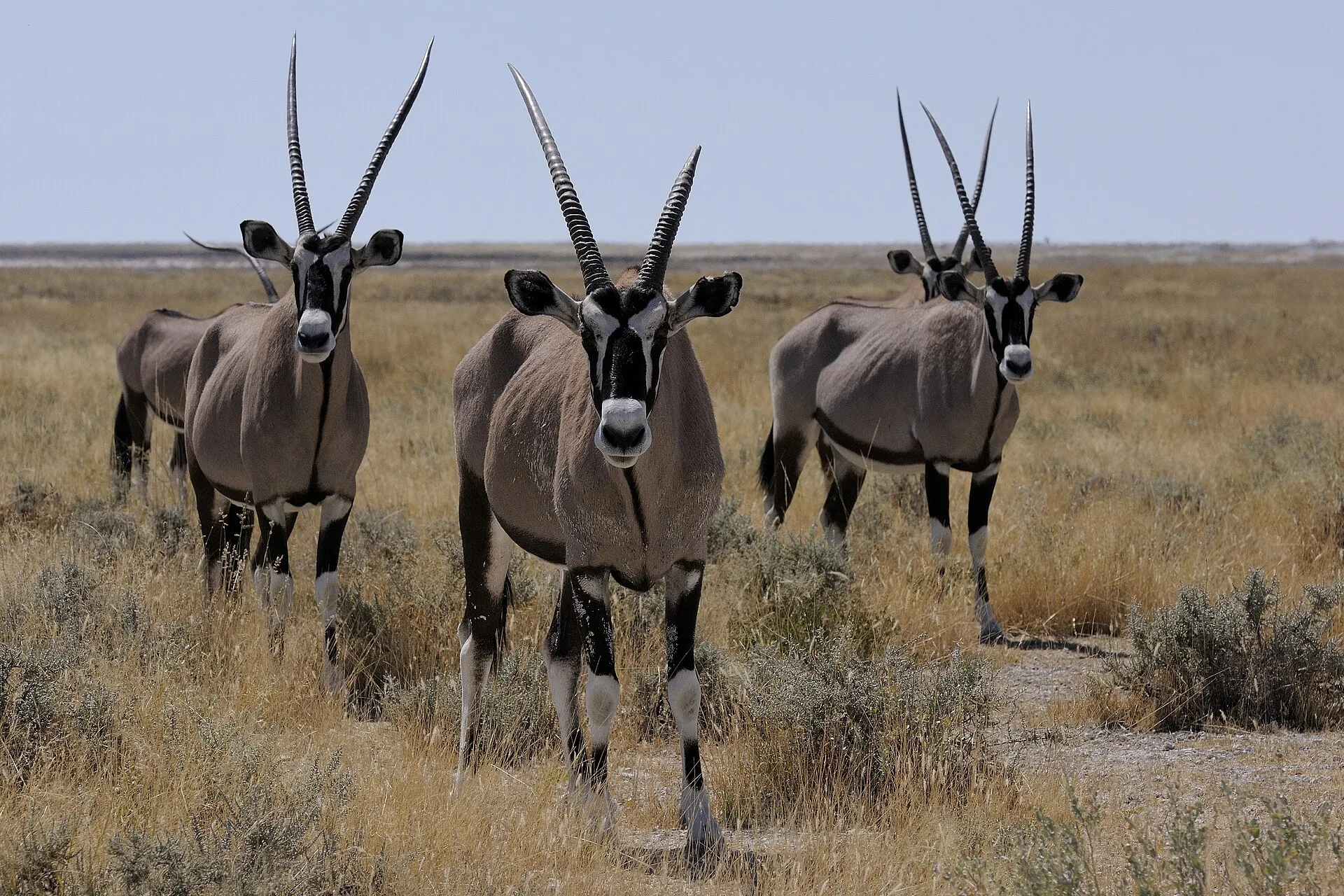
- Etosha holds most of the big animals: elephant, black and white rhino, lion, leopard, cheetah, giraffe, zebra, oryx and springbok. It has no buffalo, hippo or crocodile.
- The north-west (Damaraland and Kaokoland) has wildlife living in true desert, outside any fence: elephants and lions adapted to the dry riverbeds, free-roaming black rhino, giraffe and Hartmann's mountain zebra.
- The north-east (Zambezi Region) is river country: hippo, crocodile, buffalo, big elephant herds and more than 400 bird species.
- The coast belongs to Cape fur seals, flamingos, dolphins and the rarely seen brown hyena.
- Namibia has an estimated 1,200 cheetahs, more than any other country, and one of Africa's most important black rhino populations. Most cheetahs live on farmland, not in parks.
Four wildlife regions
Rain decides where animals live in Namibia. It falls in summer, and it falls far more in the north-east, which receives over 600 mm in a good year, than on the coast, which gets almost none. Between those extremes the country divides into four wildlife regions that feel like different countries.
Etosha and the central savanna is the Namibia of the photographs: pale grass, mopane woodland and a salt pan, with large herds that depend on a few dozen waterholes through the dry winter. The private reserves and cattle farms of the central plateau, between Windhoek and Etosha, hold much of the country's cheetah, leopard and antelope.
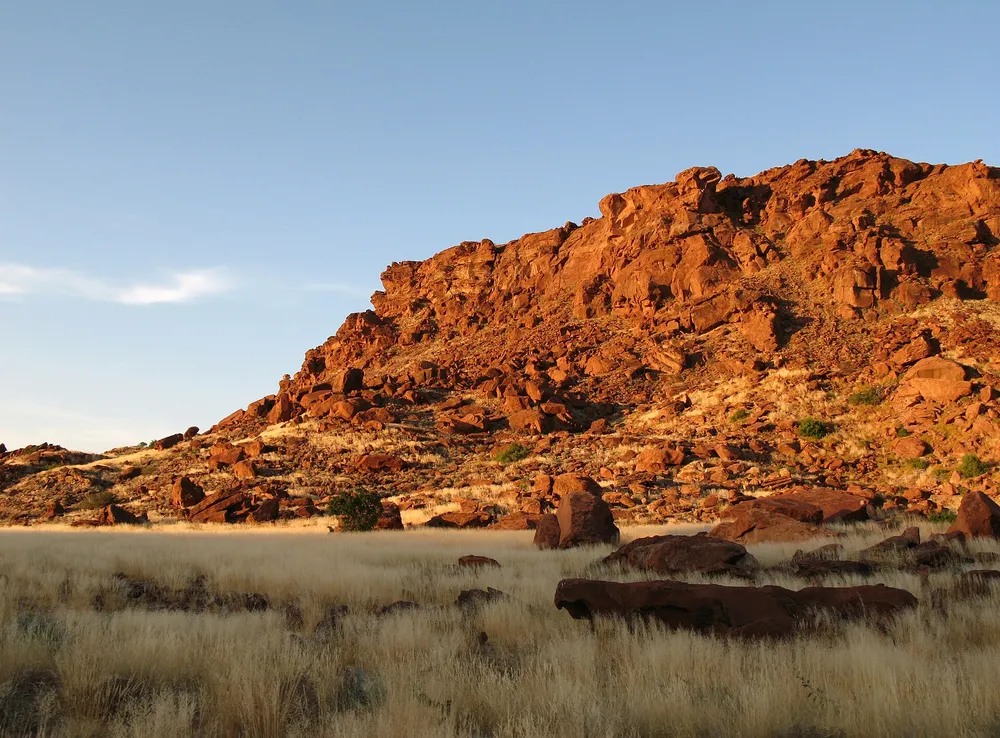
The arid north-west runs from the Brandberg to the Kunene River. There are no park fences here: wildlife shares communal land with Damara, Herero and Himba farmers under Namibia's conservancy system, which gives rural communities rights over, and income from, the wildlife on their land. The animals are thinly spread and finding them takes effort, which is much of the appeal.
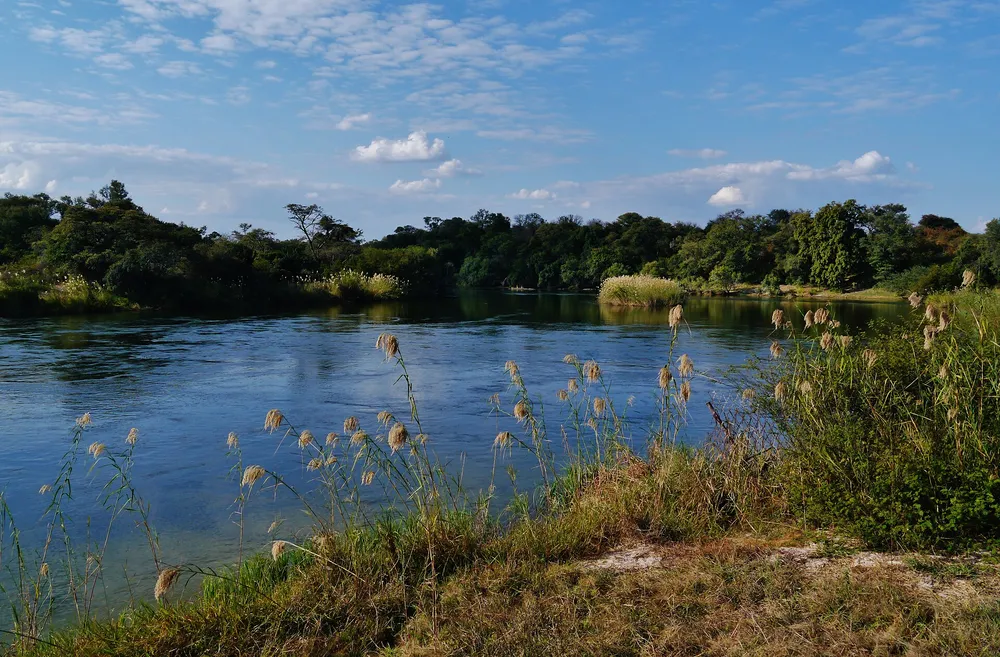
The north-eastern rivers, the Okavango, Kwando, Linyanti, Chobe and Zambezi, bring permanent water, floodplains and tall woodland, and with them the species that the rest of Namibia lacks.
The Namib and the coast are home to specialists: oryx and springbok that can go without drinking, the small creatures of the dunes, and the marine life of the cold Benguela Current.
Where to see each animal
The table gives the most reliable place for each species and the best season. 'Dry season' means roughly May to October.
| Animal | Best places | Best time | Chance |
|---|---|---|---|
| Elephant | Etosha waterholes; Bwabwata and Mudumu on the Kwando | Dry season | ●●●●● |
| Desert-adapted elephant | Huab, Aba-Huab, Ugab and Hoanib riverbeds, with a local guide | All year; easier in the dry months | ●●●○○ |
| Black rhino | Etosha's floodlit waterholes; tracking on foot in the Palmwag area | Dry season; at night in Etosha | ●●●●○ |
| White rhino | Private reserves such as Okonjima; Waterberg; occasionally eastern Etosha | All year | ●●●○○ |
| Lion | Etosha (Okondeka, Rietfontein, the plains near Okaukuejo and Halali) | Dry season, early morning | ●●●●○ |
| Leopard | Okonjima Nature Reserve; Halali's Moringa waterhole; night drives | All year | ●●○○○ |
| Cheetah | Cheetah Conservation Fund and Okonjima area; open plains of Etosha | All year | ●●○○○ |
| Giraffe | Etosha, especially the east; Damaraland riverbeds | All year | ●●●●● |
| Plains zebra, wildebeest | Etosha | All year; at water in the dry season | ●●●●● |
| Hartmann's mountain zebra | Western Etosha, Damaraland, the Naukluft, hills around Windhoek | All year | ●●●○○ |
| Gemsbok (oryx), springbok | Etosha, the Namib, the Kalahari: almost everywhere | All year | ●●●●● |
| Buffalo, hippo, crocodile | Zambezi Region rivers and parks; buffalo also on the Waterberg | Dry season | ●●●●○ |
| Brown hyena | Coast near Lüderitz; Okonjima; rarely elsewhere | Night and dawn | ●○○○○ |
| Cape fur seal | Cape Cross; Pelican Point at Walvis Bay | All year; pups from late November | ●●●●● |
| Flamingos | Walvis Bay lagoon; Etosha Pan after heavy rain | All year at Walvis Bay | ●●●●● |
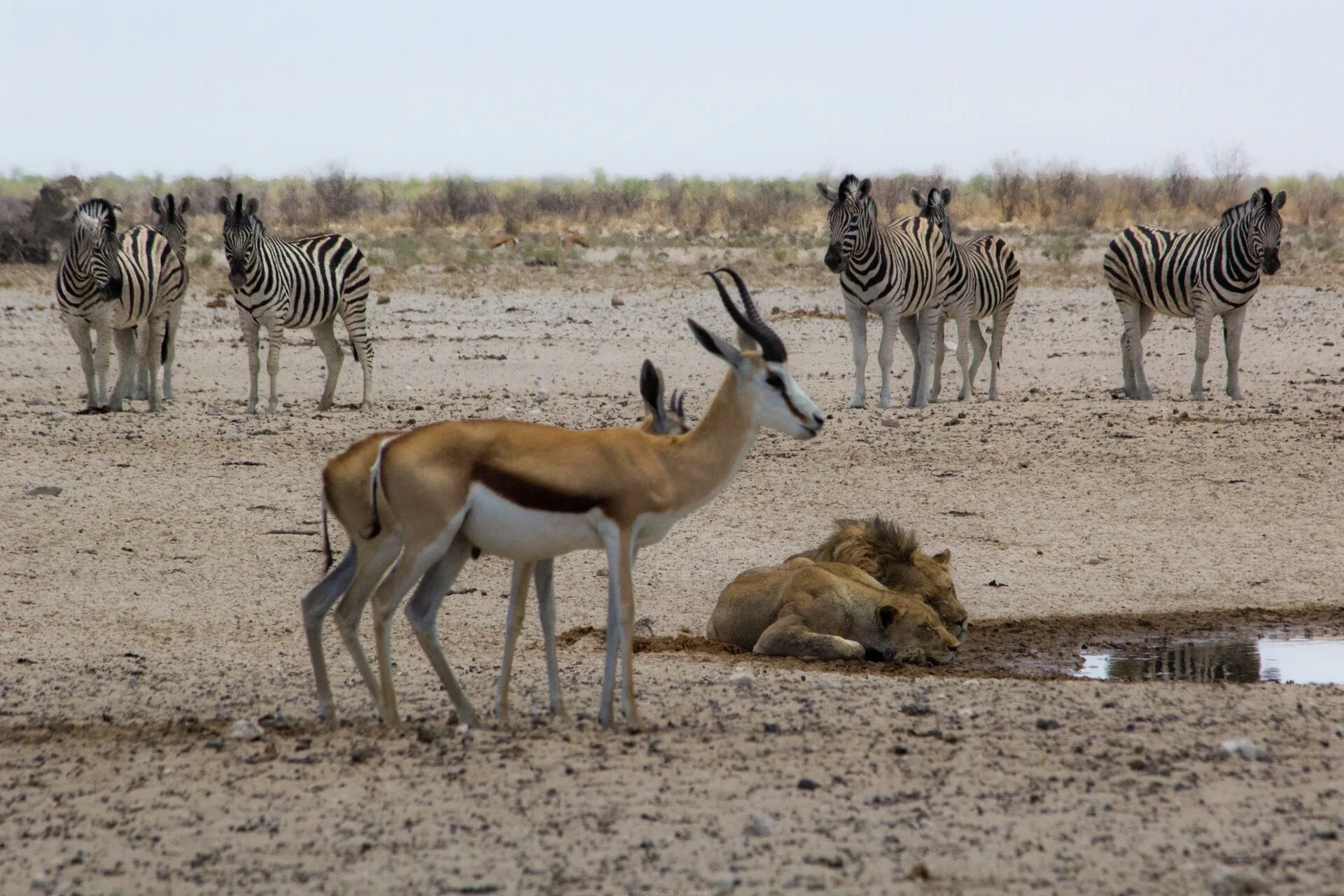
A springbok drinks within sight of a resting lion, with zebras holding back, at an Etosha waterhole.
Elephants, and the ones that live in the desert
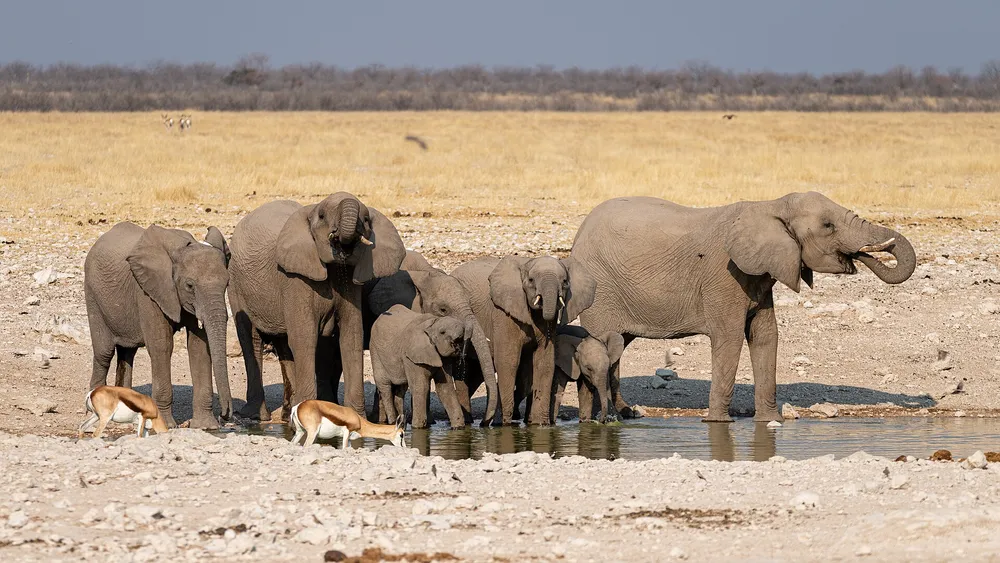
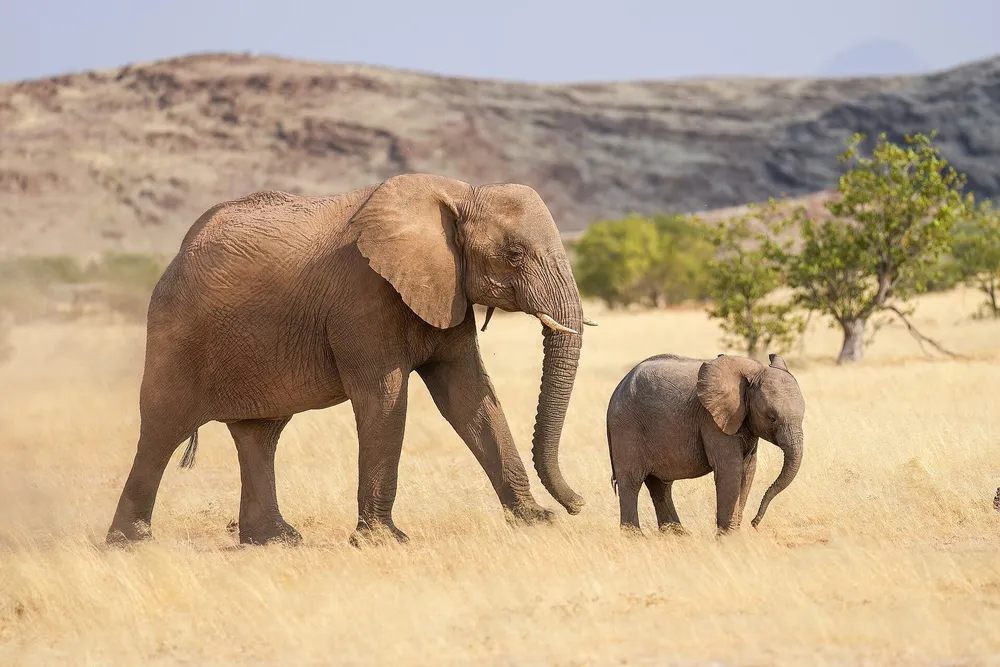
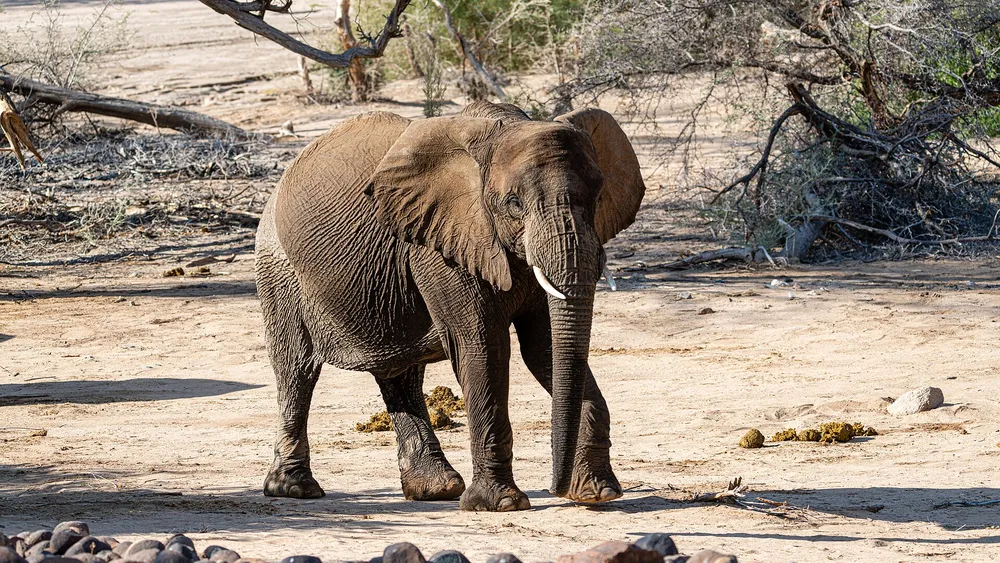
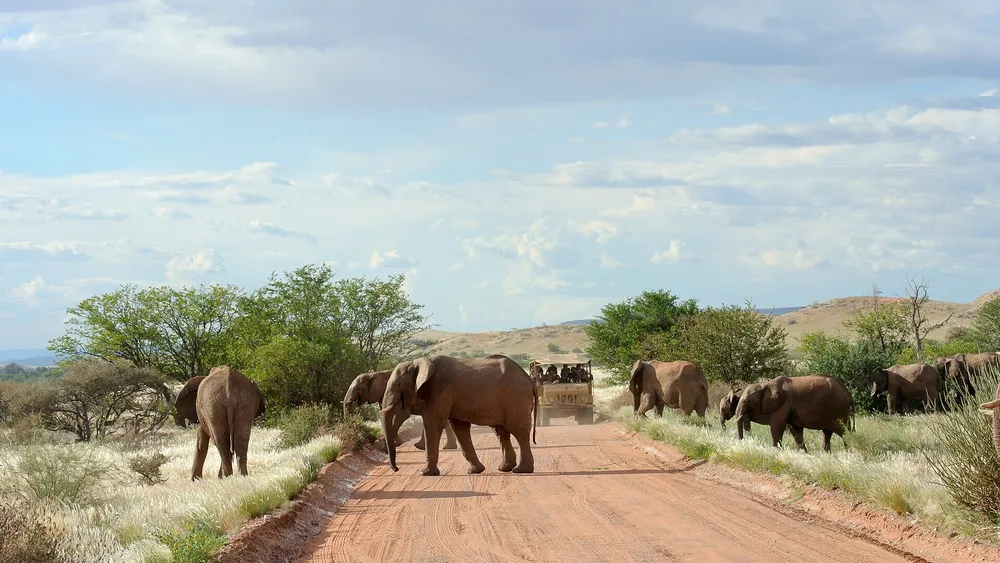
Namibia's elephants are concentrated in two areas. Etosha's are the ones most visitors meet: big-bodied animals with short, often broken tusks, usually dusted white with the clay of the pan. In the dry season breeding herds arrive at waterholes such as Okaukuejo, Nebrownii and Goas at a fast walk, drink, bathe and leave within half an hour, so it pays to wait. The second population lives in the north-east, where herds move freely between Namibia, Botswana, Angola and Zambia; on the Kwando River in the dry season you may see several hundred in an afternoon.
The desert-adapted elephants of the Kunene Region are the same species, the African savanna elephant, living at the edge of what is possible. Small family groups follow the sandy beds of rivers that flow only briefly after rain, the Ugab, Huab, Hoanib and Hoarusib, feeding on ana trees and digging for water. They walk long distances between feeding grounds and water and have learned to go several days without drinking. Their feet look larger than those of other elephants because they spread on soft sand, and their behaviour is their own: this is knowledge passed down within families, which is why each animal matters.
You do not find them by accident. Guides from the lodges and community camps around Twyfelfontein and in the Ugab and Hoanib valleys know which stretch of river the herds are using. Go with them: the riverbeds are deep sand, the elephants are easily cornered between the banks, and several have been shot after conflicts with people. See Damaraland for how to arrange it.
Rhino: Namibia's quiet success
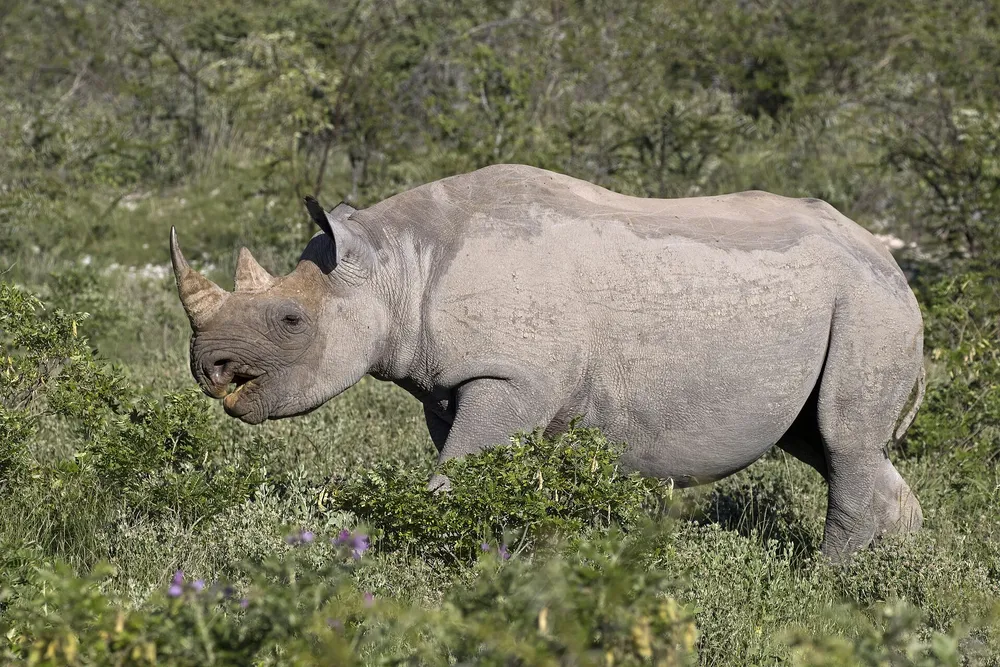
Namibia is one of the strongholds of the black rhino. The south-western subspecies, larger and adapted to dry country, lives in Etosha, which holds most of the national population, and in the rocky desert of the north-west, where it survives outside any national park on communal land. That free-roaming population is the largest of its kind in the world, and it exists because of a decision made in the 1980s: Save the Rhino Trust, founded in 1982, began employing local people, some of them former poachers, to patrol and monitor the animals. Community rangers from the surrounding conservancies still do that work today.
For visitors there are two ways to see a black rhino. The easy one is to sit at the floodlit waterhole at Okaukuejo or Halali after dark; rhino come to drink most nights in the dry season, and their meetings at the water, with much puffing and squealing, are some of the best wildlife watching in Africa. The demanding one is to track them on foot with rangers in the Palmwag area, starting before dawn and following spoor across basalt hills, sometimes for hours.
White rhino, a grazer and a calmer animal, was exterminated in Namibia in the 19th century and has been reintroduced to private reserves, the Waterberg and Etosha. Poaching remains a serious threat to both species: never publish where or when you saw a rhino.
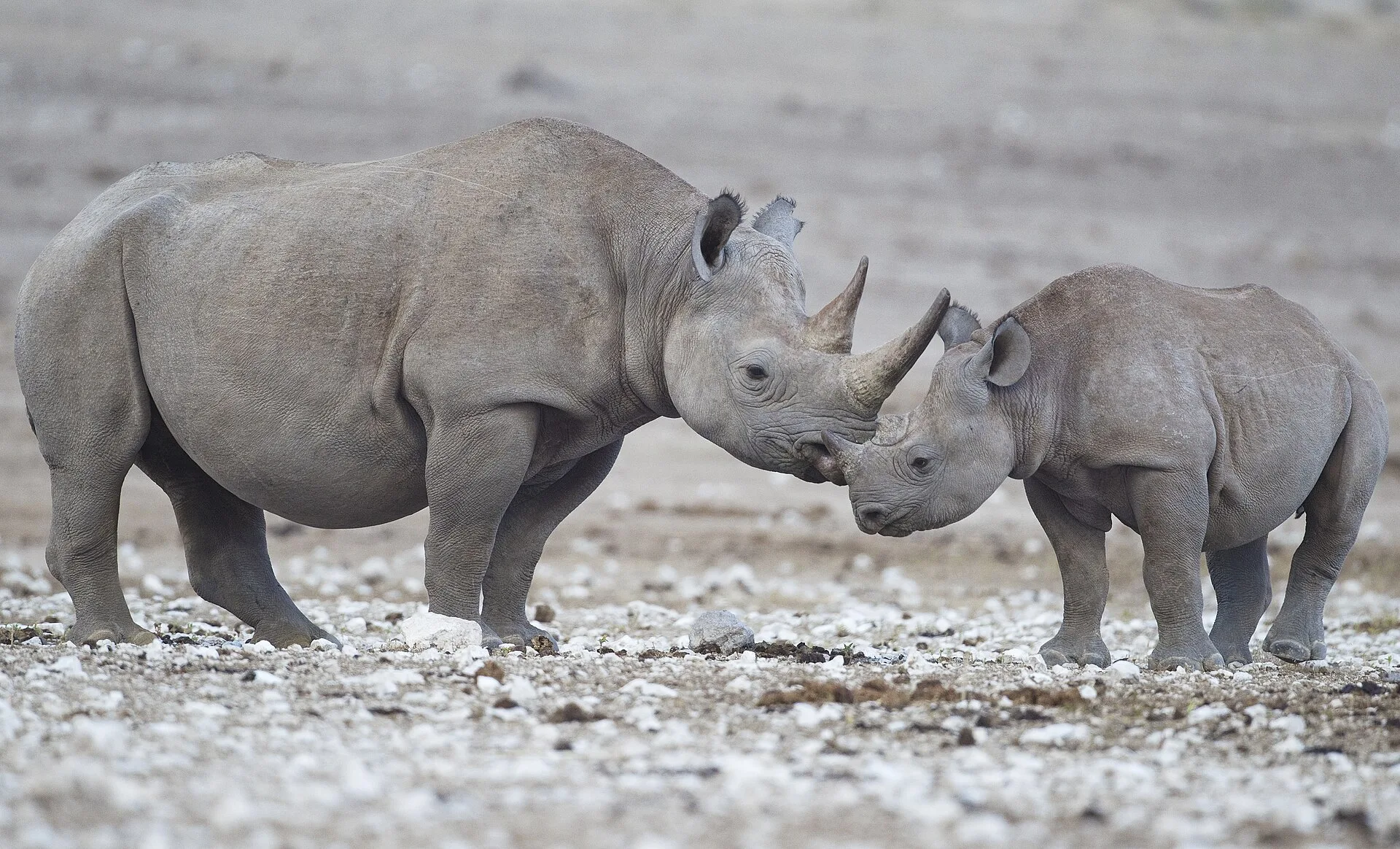
A black rhino and her calf in Etosha.
The cats: lion, leopard and cheetah
Lions are seen most reliably in Etosha, where prides hold territories around the main springs. Look for them in the first hour of daylight, on the open ground near Okondeka and along the edge of the pan; by mid-morning they will be flat in the shade and almost invisible. A much smaller number of lions live in the Namib itself, in the dry rivers and mountains of the north-west and occasionally on the beaches of the Skeleton Coast, where some have learned to hunt seals and seabirds. Researchers follow them closely; visitors very rarely see one. Lions also occur in the Zambezi Region.
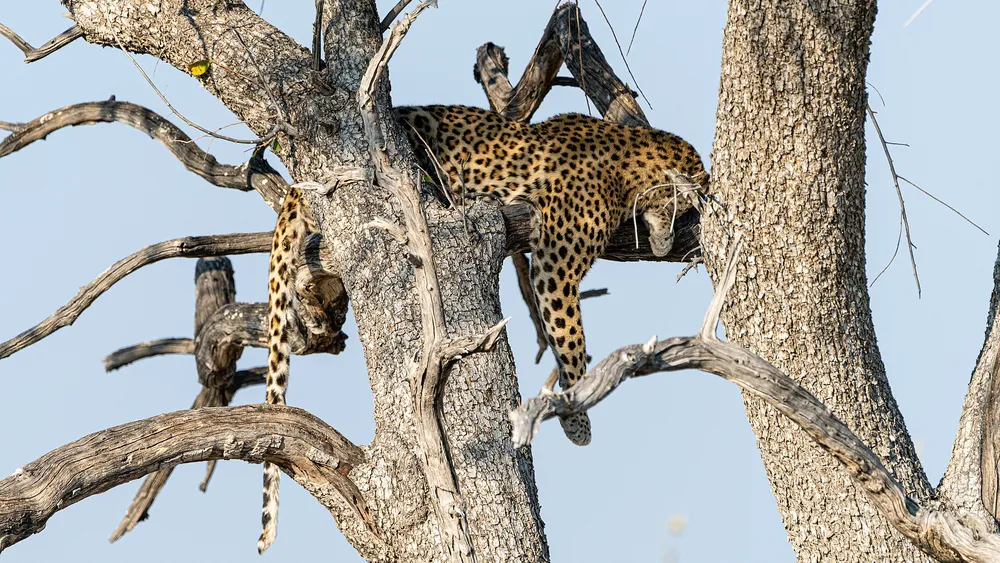
Leopards live throughout the country, including on farmland close to Windhoek, but they are secretive. Your best odds are on the Okonjima Nature Reserve south of Otjiwarongo, where the AfriCat Foundation has studied them for decades and guides locate individual animals. In Etosha, try the Moringa waterhole at Halali after dark, or an NWR night drive.
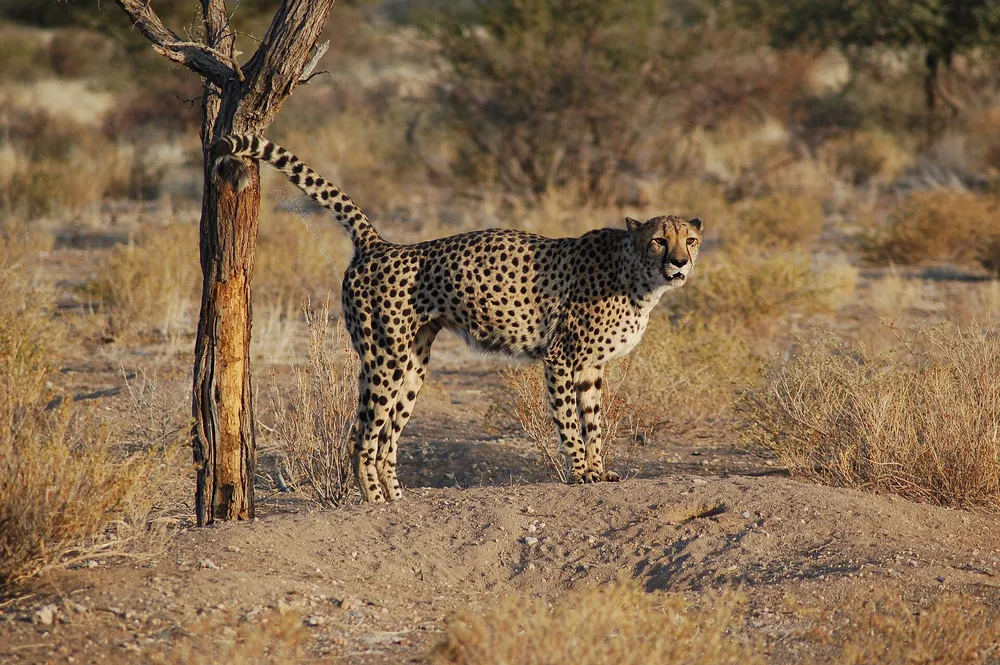
Cheetahs are Namibia's emblem in conservation. A national estimate presented in Windhoek in August 2026 put the population at about 1,200, the largest of any country, and most live on commercial livestock and game farms on the central plateau, where they have fewer lions and hyenas to compete with than inside the parks. That brings them into conflict with farmers, and the work of the Cheetah Conservation Fund near Otjiwarongo, from livestock-guarding dogs to research, is aimed at that conflict. Visitors can see cheetahs at the Fund's centre; wild ones in Etosha are most often found on the plains between Okaukuejo and Halali and around Namutoni. More in Waterberg and central Namibia.
Giraffe, zebra and the antelopes
The Angolan giraffe is common in Etosha, particularly in the wooded east, and walks the riverbeds of Damaraland far into the desert. Watching one drink, legs splayed and nervous, is a waterhole highlight.
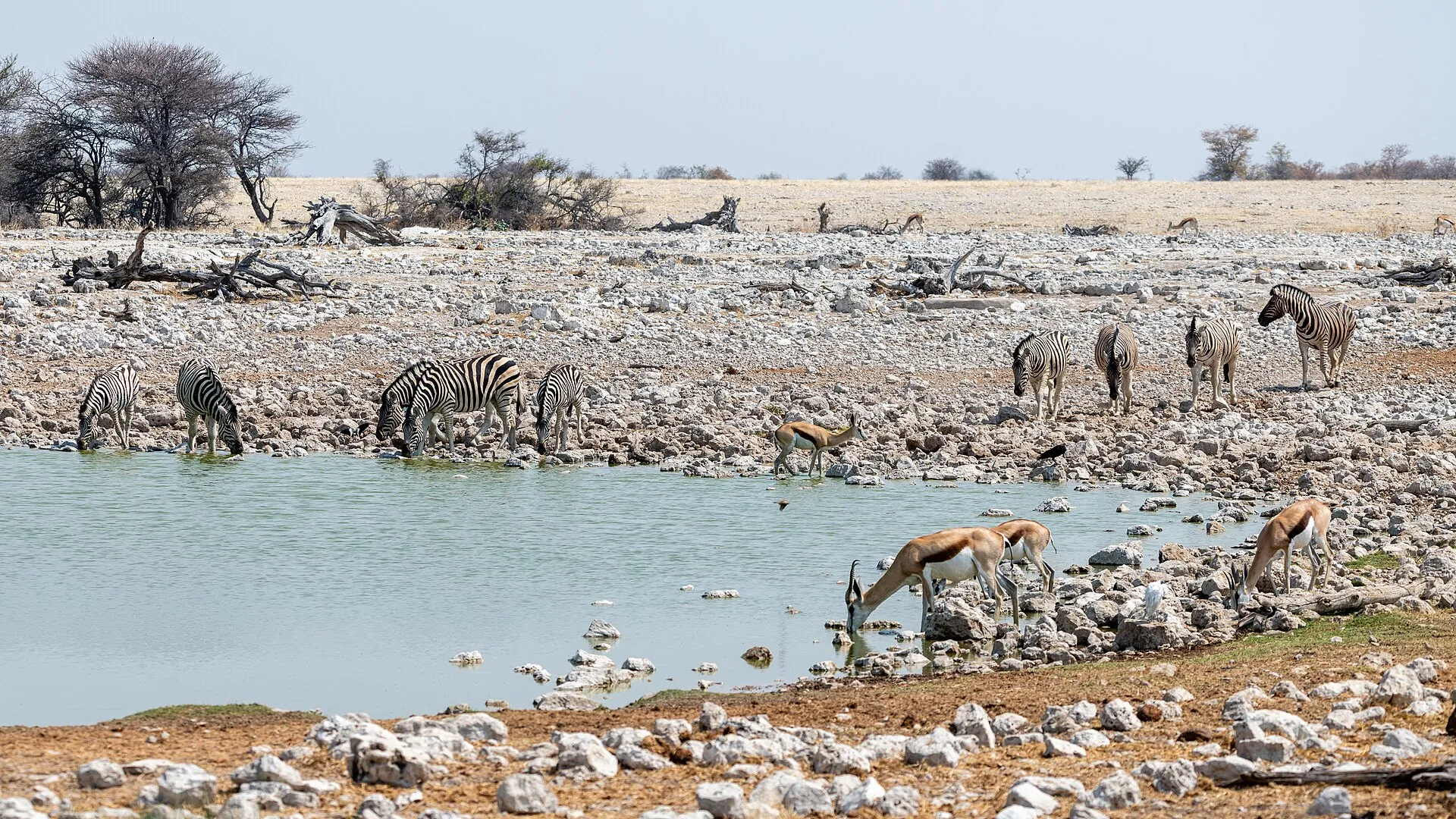
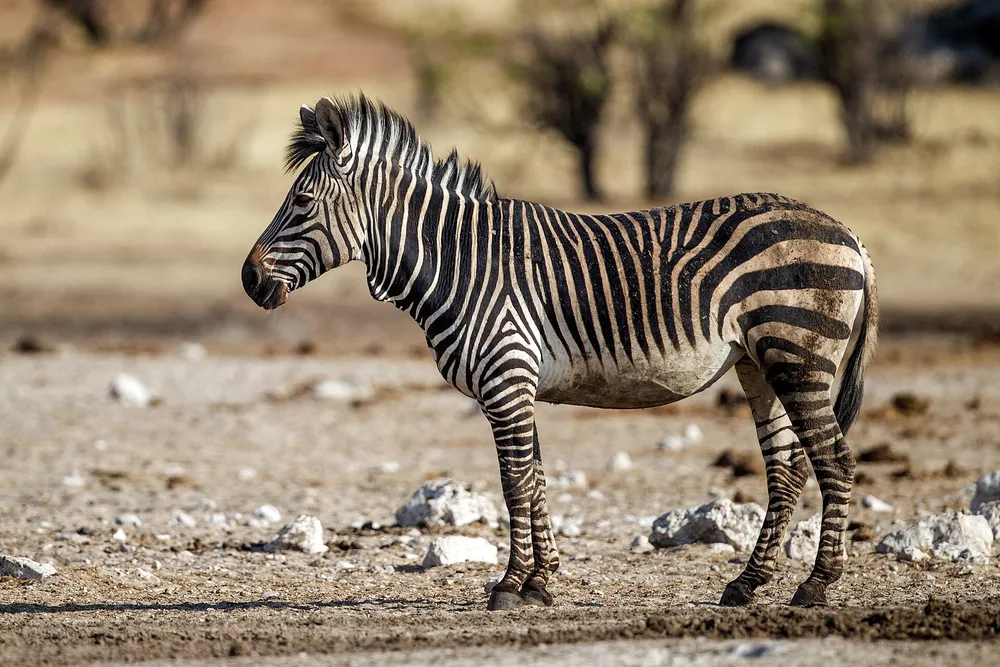
Namibia has two zebras. The plains zebra of Etosha gathers in herds of hundreds and has shadow stripes between the black ones. Hartmann's mountain zebra lives on the rocky escarpment that runs the length of the country: it has no shadow stripes, a white belly, a small dewlap under the throat and stripes that run down to the hooves. In the far west of Etosha you can see both species at the same waterhole.
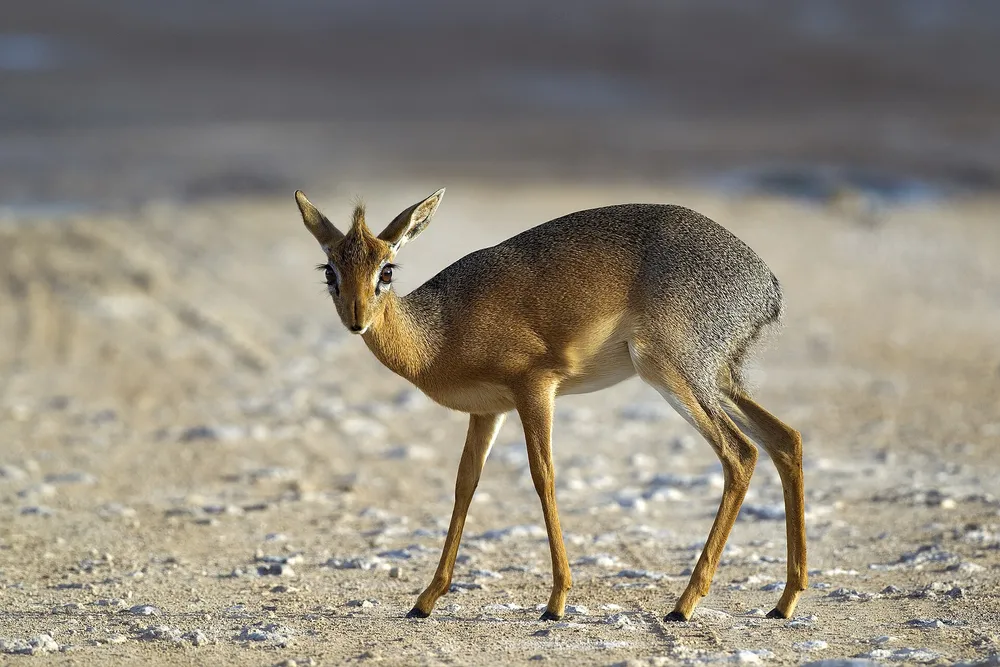
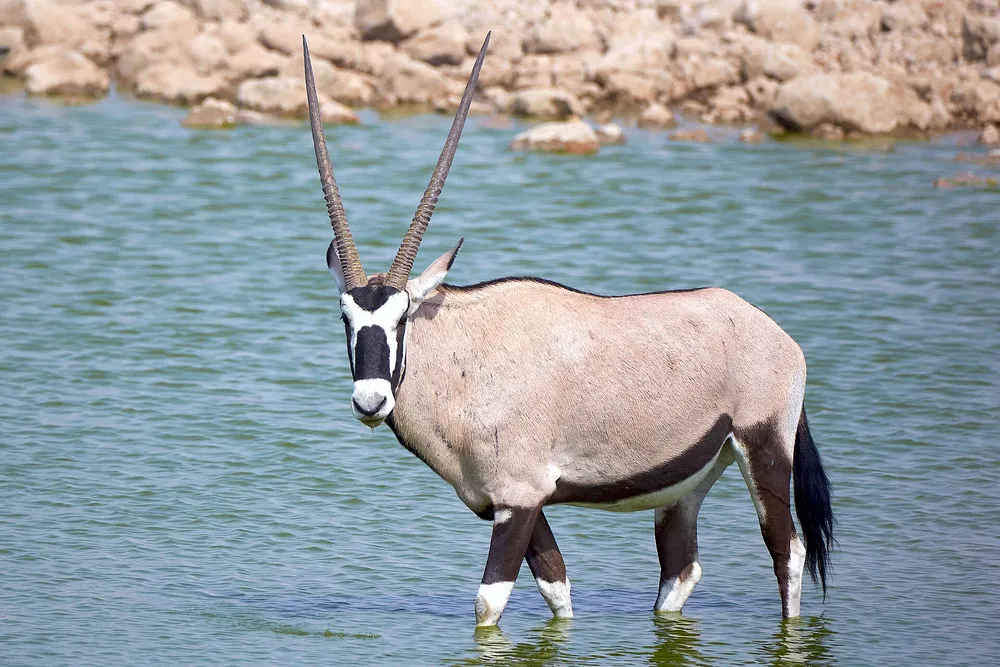
The gemsbok, or oryx, is the national animal, a heavy grey antelope with a black-and-white face and straight horns a metre long. It lives everywhere from Etosha to the dunes of Sossusvlei and tolerates heat by letting its body temperature rise rather than losing water. The springbok is the most numerous antelope; in the cool of the morning the young animals 'pronk', bouncing stiff-legged with the white crest on their backs fanned open. Etosha also has two specialities: the black-faced impala, a form found naturally only in north-western Namibia and south-western Angola, and the Damara dik-dik, barely 40 cm at the shoulder, in the thickets around Namutoni. Kudu, eland, red hartebeest and steenbok are widespread; roan and sable antelope are best looked for on the Waterberg and in the north-east.
River wildlife of the north-east
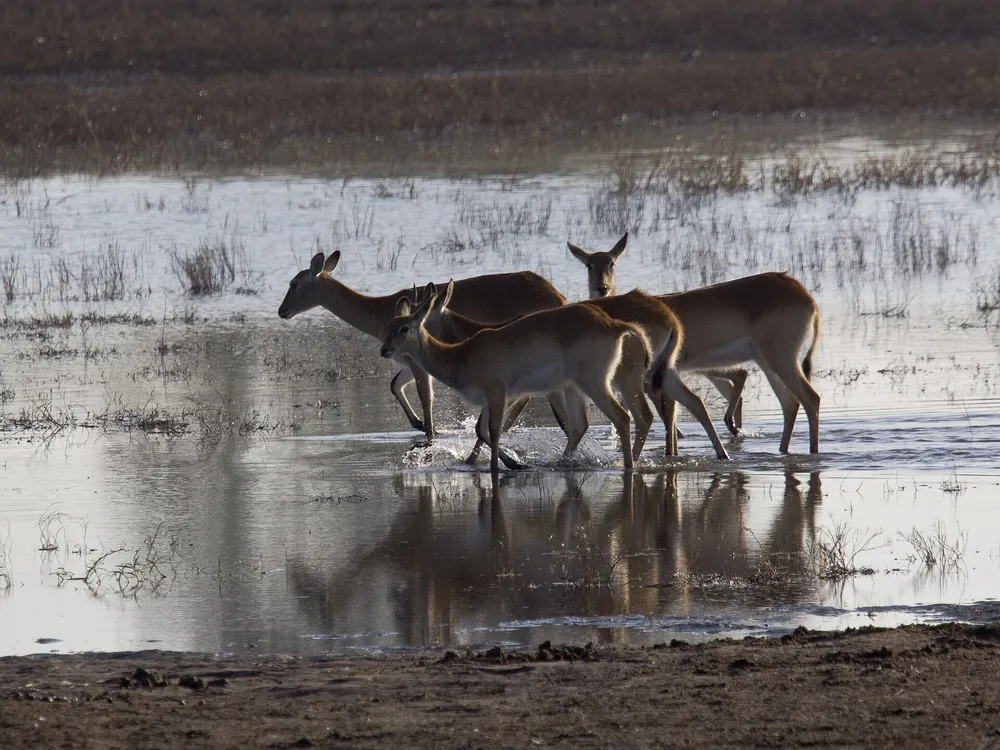
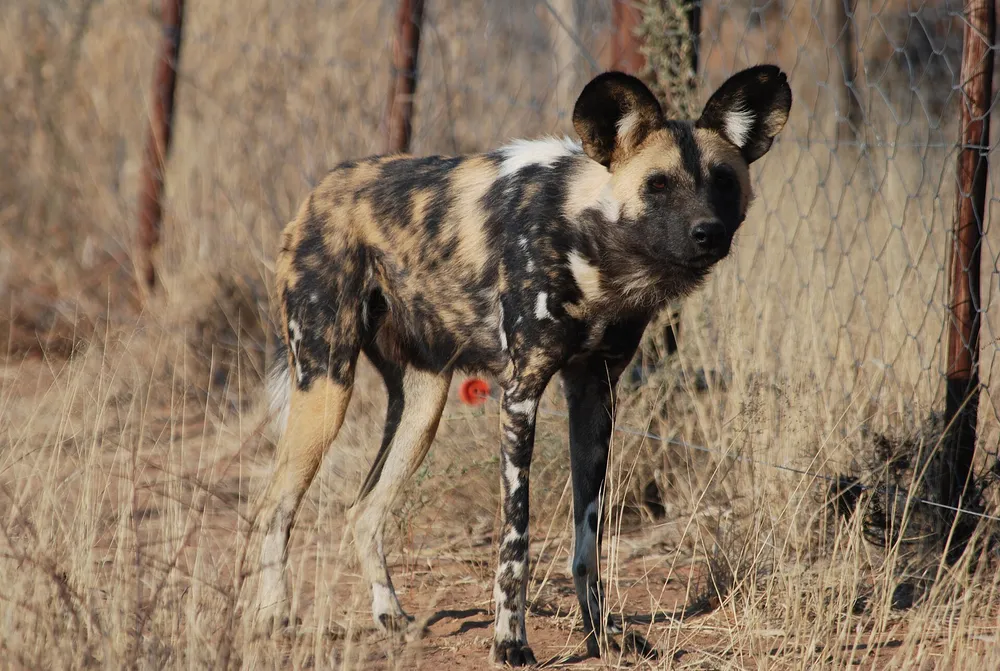
Everything that needs permanent water lives in the Zambezi and Kavango regions: hippo and Nile crocodile in every river, buffalo in herds on the floodplains, the swamp-loving red lechwe and the shy sitatunga, and, with luck, African wild dog, of which Namibia has only a few hundred at most. Elephants are the main event. Birding is the best in the country, with African fish eagle, African skimmer, Pel's fishing owl, and breeding colonies of southern carmine bee-eaters in the river banks in the spring months. The way to see it is from a boat. Details on the Zambezi Region page.
The coast: seals, flamingos and a shy hyena
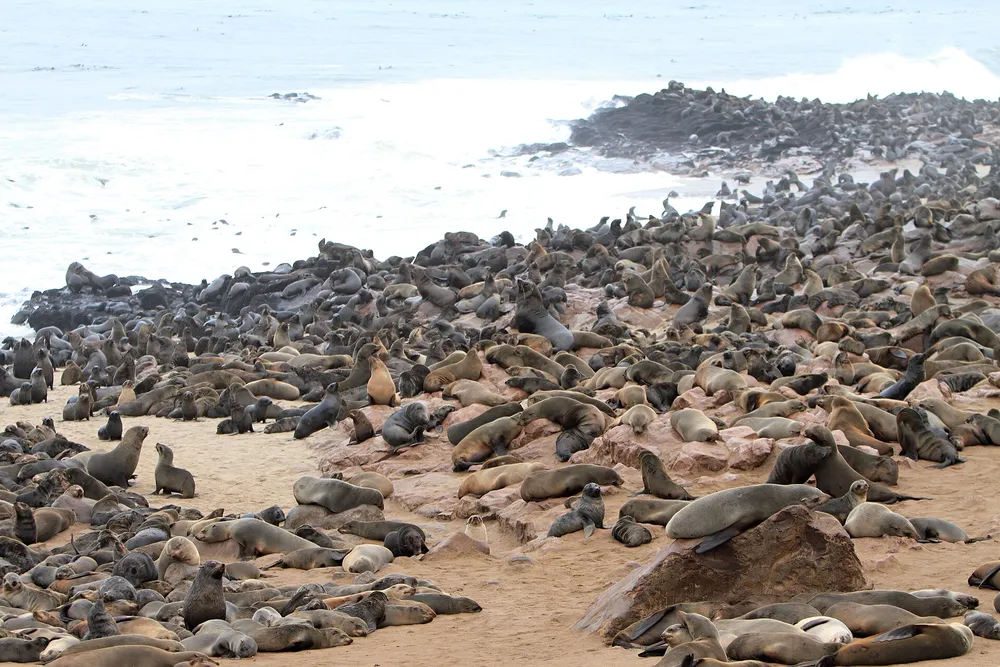
The cold, fish-rich Benguela Current supports the Cape fur seal in very large numbers. The colony at Cape Cross, north of Henties Bay, holds tens of thousands of animals at any time and far more in the breeding season, when the pups are born from late November into December; the noise and the smell are as memorable as the sight. At Walvis Bay, boats and kayaks go out to the seals at Pelican Point, where dolphins are often seen as well.
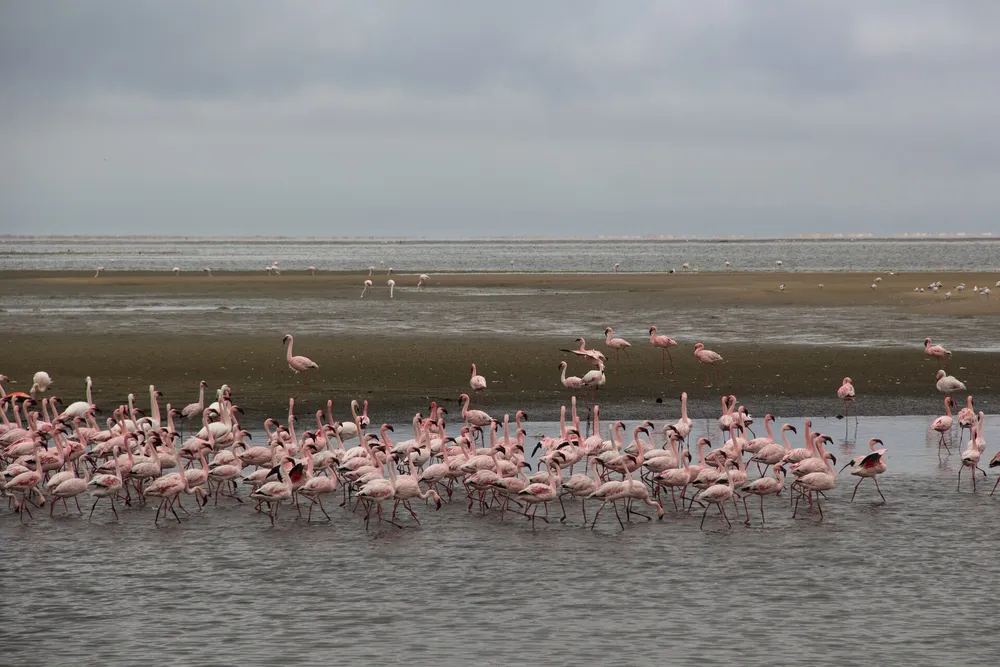
The Walvis Bay lagoon is one of the most important wetlands in southern Africa for greater and lesser flamingos, which feed there in thousands for most of the year and can be watched from the esplanade.
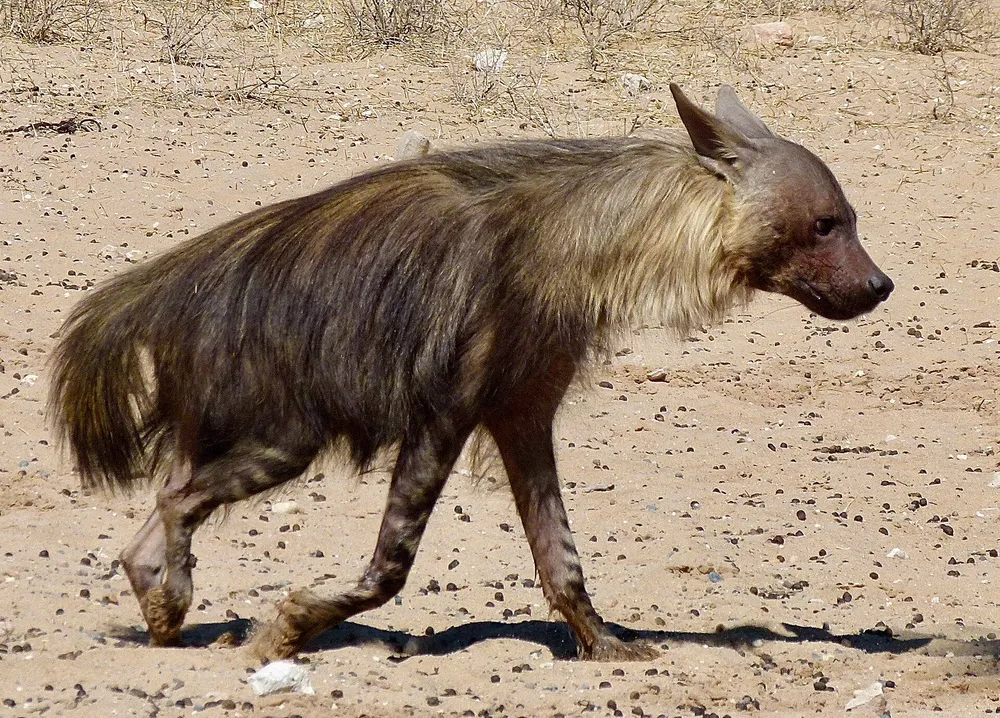
The brown hyena, called the strandwolf in Afrikaans, patrols the beaches at night scavenging seal pups and carrion. It is rare everywhere, and Namibia's coast is one of its strongholds, but you would be lucky to see more than its tracks. The coast pages cover these in detail: Skeleton Coast and Walvis Bay.
When to go for wildlife
| Season | Etosha and the centre | North-west | North-east rivers | Coast |
|---|---|---|---|---|
| May – July | Game gathering at water; cool and clear | Good tracking weather; elephants in the riverbeds | Floodwaters high early on; game improving | Seals and flamingos; cold, foggy mornings |
| August – October | Peak viewing; hot and dusty by October | Peak; animals near remaining water | Peak: big elephant and buffalo herds at the rivers; carmine bee-eaters nesting | Windy; seal colonies building for the breeding season |
| November – January | First rains scatter the herds; antelope lambing | Hot; animals disperse after rain | Hot, humid, first rains; migrant birds arrive | Seal pups at Cape Cross; warmest months |
| February – April | Green, young animals, birds; game dispersed | Rivers may flow; some tracks impassable | Wet; excellent birding; many park tracks flooded | Calm, mild weather |
Watching without harming
Namibia's wildlife is unusually tolerant of vehicles because, on the whole, visitors behave. Help to keep it that way.
- Give animals room. If an animal stops what it is doing and looks at you, you are too close. Never put your vehicle between an elephant and the rest of its herd, or between any animal and the water.
- Switch off and be quiet at waterholes. At the floodlit waterholes in the camps, whisper, keep phones silent and do not use flash.
- Stay in the vehicle and on the road in the parks. In the desert riverbeds of the north-west, drive only on existing tracks: tyre marks on the gravel plains last for decades and destroy lichen fields.
- Never feed anything, including the jackals, ground squirrels and hornbills in the camps. Fed animals become aggressive and are eventually shot.
- Keep rhino locations to yourself. Turn off geotagging and do not post sightings while you are still in the area.
- Choose activities that put the animal first. Avoid any place that offers petting, walking with or bottle-feeding of big cats. Reputable sanctuaries in Namibia do not allow visitors to touch carnivores.
- Keep well back from seals on beaches, and never walk between a seal and the sea.
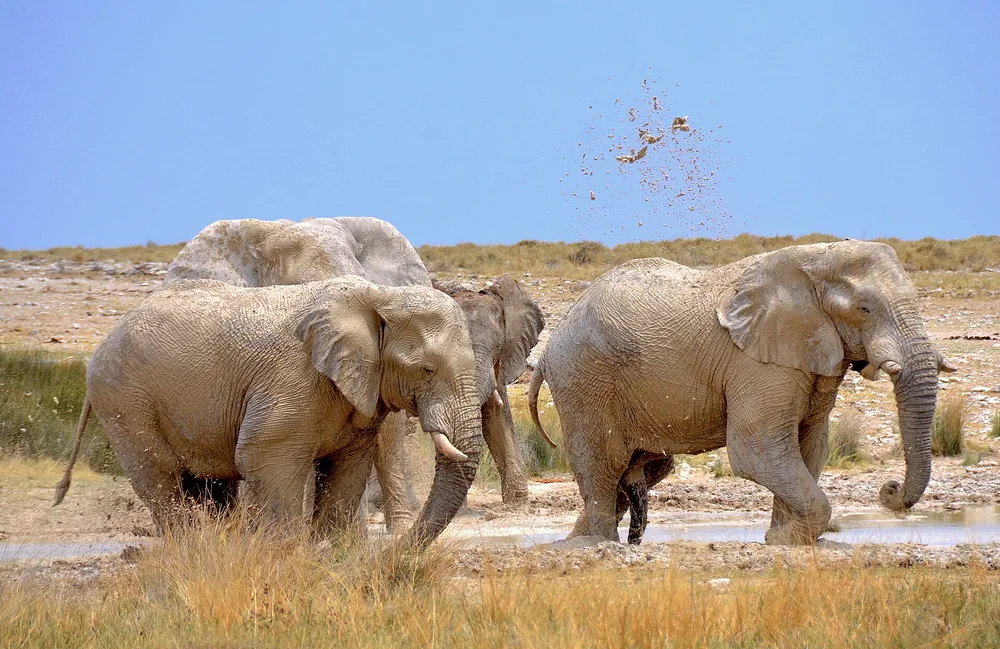
From Windhoek: 3-Day Etosha National Park Tour
The classic short safari: drive north from Windhoek, game drives on arrival, a full day among the waterholes and a final drive at sunrise before the road home. The simplest way to see Etosha without a car. Check the listing for the accommodation type and whether park fees are included.
Check availabilityBook via GetYourGuide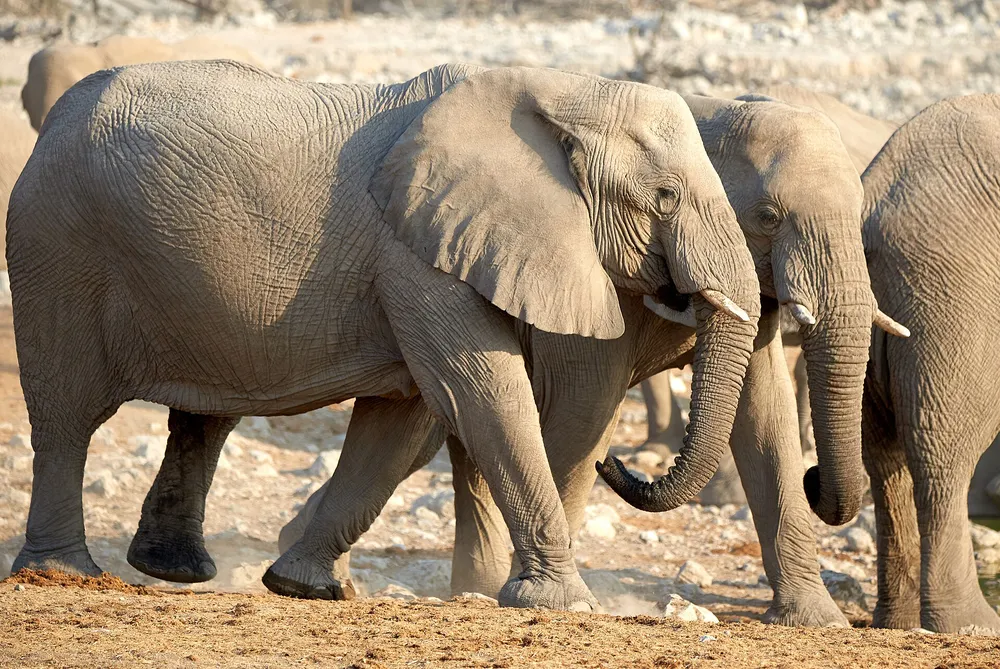
Etosha National Park: Full or Half-Day Game Drive
A guided game drive inside the park in a safari vehicle, for visitors already staying at or near Etosha. Half a day covers the waterholes around Okaukuejo; a full day reaches further along the pan. Check the meeting point and whether the park fee is included.
Check availabilityBook via GetYourGuide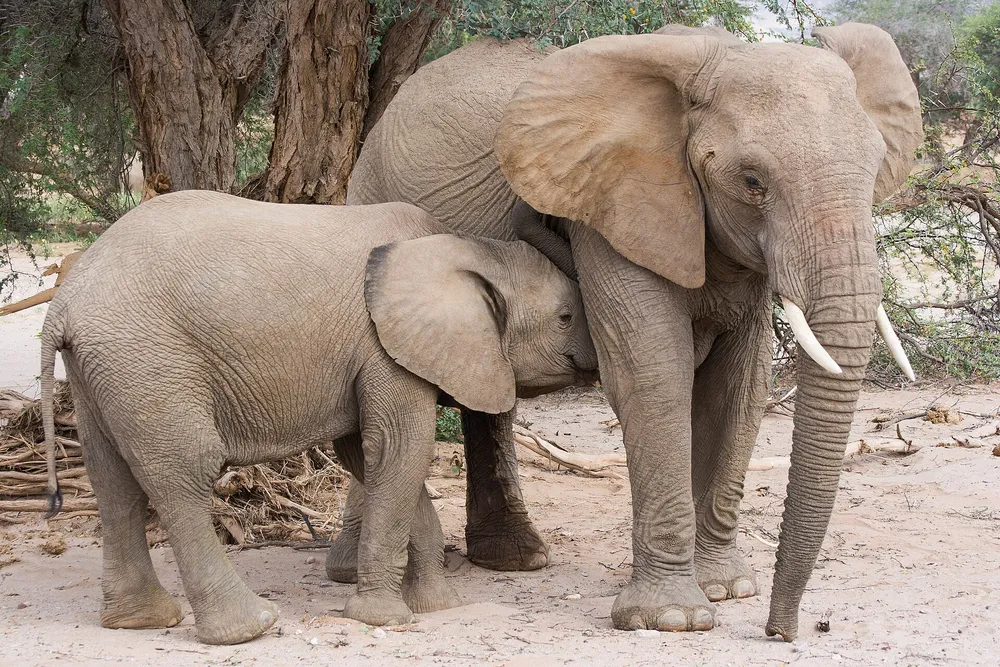
Twyfelfontein: Desert Elephants and Rock Art Private Tour
A private tour pairing the UNESCO-listed Twyfelfontein engravings with a search for desert-adapted elephants in the dry riverbeds, the two best reasons to stop in Damaraland.
Check availabilityBook via GetYourGuideTour listings are on GetYourGuide. Prices, dates and cancellation terms are shown live on each listing and can change; NamibiaSafaris.com may earn a commission at no extra cost to you.
Where to base yourself for wildlife
For a first trip, split your wildlife nights between Etosha and one contrasting area: Okonjima or the Waterberg on the way north, Damaraland for desert elephants and rhino tracking, or the Zambezi Region if you have three weeks. The lodges below are ones whose Booking.com pages we have checked; more by area on Etosha camps and lodges.
Okonjima Plains Camp
Central NamibiaOn the Okonjima reserve near Otjiwarongo, home of the AfriCat Foundation; air-conditioned rooms, pool and restaurant.
9.5Booking.com guest score · as checked in November 2026
See on Booking.comMushara Bush Camp
EtoshaRelaxed, family-friendly camp 8 km from Von Lindequist Gate, with family rooms, a pool and a children's playground.
9.2Booking.com guest score · as checked in November 2026
See on Booking.comGrootberg Lodge
DamaralandStone chalets on the edge of the Etendeka Plateau with far-reaching views; run to benefit the local community and conservation.
9.2Booking.com guest score · as checked in November 2026
See on Booking.comGondwana Namushasha River Lodge
Zambezi RegionA riverside lodge on the Kwando 24 km south of Kongola; boat cruises on the channels, pool and restaurant.
9.2Booking.com guest score · as checked in November 2026
See on Booking.comEtosha Village
EtoshaTwo kilometres from Etosha’s Anderson Gate: air-conditioned units with patios, two pools, restaurant and bar.
8.7Booking.com guest score · as checked in November 2026
See on Booking.comCheetah View Lodge
Central NamibiaThe Cheetah Conservation Fund's own lodge east of Otjiwarongo, with air-conditioned rooms and a restaurant.
8.7Booking.com guest score · as checked in November 2026
See on Booking.comSee all stays in Namibia on Booking.com
Accommodation links go to Booking.com, where you see live prices and availability. We do not list prices because they change daily; NamibiaSafaris.com may earn a commission.
Frequently asked questions
What animals can you see in Namibia?
In Etosha: elephant, black and white rhino, lion, leopard, cheetah, giraffe, plains zebra, wildebeest, oryx, springbok, kudu and many more. In the north-west: desert-adapted elephants, black rhino, giraffe and mountain zebra. In the north-east: hippo, crocodile and buffalo. On the coast: Cape fur seals, flamingos and dolphins.
Are there tigers, gorillas or wildebeest migrations in Namibia?
No. Tigers are not African animals, gorillas live in the forests of central Africa, and the great wildebeest migration takes place in Tanzania and Kenya. Namibia's speciality is desert-adapted wildlife and waterhole viewing in Etosha.
Where is the best place to see cheetahs in Namibia?
For a certain sighting, the Cheetah Conservation Fund near Otjiwarongo, where resident cheetahs that cannot be released are cared for. Wild cheetahs are seen in Etosha on the open plains, and on private reserves in central Namibia, but sightings need luck.
Can I see desert elephants on my own?
It is unwise and usually unsuccessful. The elephants move along sandy riverbeds where vehicles get stuck and where the animals can feel trapped. Local guides from lodges and community camps in Damaraland know where the herds are and how to approach them safely.
Is Namibia good for birdwatching?
Yes, particularly from November to April when migrants are present. Etosha has more than 400 recorded species, the Zambezi Region more still, and Walvis Bay lagoon is outstanding for flamingos and waders. Namibia's near-endemics, such as the dune lark and Rüppell's korhaan, live in the Namib and the escarpment.
Are wild animals dangerous to visitors?
Incidents are rare and almost always follow someone leaving a vehicle, approaching on foot or camping carelessly. Stay in your car in the parks, keep your tent zipped and food locked away, do not walk around unfenced camps after dark, and stay well back from elephants, especially in the riverbeds.
Sources and official information
Facts were checked against these official sources in November 2026. Park fees, gate times, visa rules and timetables change, so confirm before you go.
- meft.gov.na
- cheetah.org
- savetherhinotrust.org
- iucnredlist.org
- africat.org
- desertlion.info
- worldwildlife.org
- rsis.ramsar.org
NamibiaSafaris.com is an independent guide, not the official site of any tour operator, lodge, Namibia Wildlife Resorts or the Namibian government. Some links are affiliate links: tours go to GetYourGuide and accommodation goes to Booking.com, and we may earn a commission at no extra cost to you.