In short
- Park fees rose on 1 April 2026. Foreign adults now pay N$280 per person per day at Etosha, Namib-Naukluft (Sossusvlei), Skeleton Coast, Waterberg, Cape Cross and the Fish River Canyon, and N$200 at the north-eastern parks, plus N$60 per day for an ordinary vehicle.
- Visa: N$1,600 per adult for most European, North American and Australasian passports.
- Fuel: about N$26.50–28 a litre in October 2026; a two-week loop uses roughly N$5,500 of petrol in an SUV or N$9,500 of diesel in a loaded 4x4.
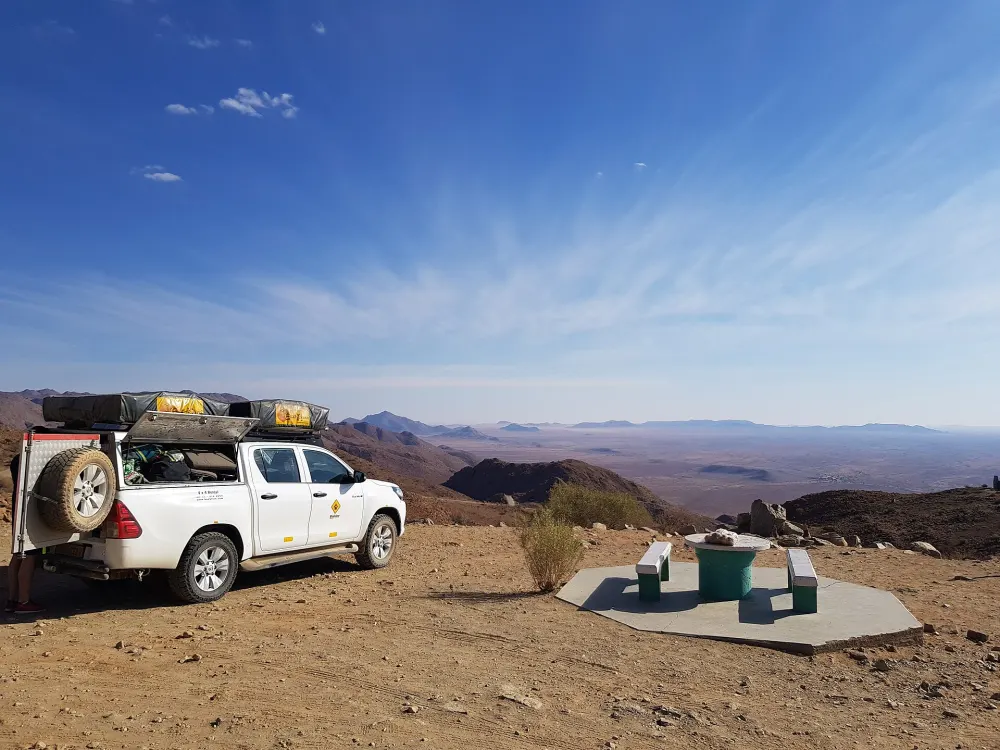
- The big variables are the vehicle and the beds. Camping with a rooftop tent is the cheapest way to see everything; private lodges with guided activities are the most expensive; small-group camping safaris sit in between and include a guide.
- Currency: the Namibian dollar (N$) is pegged 1:1 to the South African rand; roughly N$16.60 bought one US dollar in mid-November 2026.
How to think about the budget
Namibia is neither a cheap destination nor, by African safari standards, an expensive one. Its advantage is that you can choose your own level: the same waterhole at Okaukuejo is watched by campers who paid for a patch of ground and by guests of a lodge that charges fifteen times as much. Park fees are low compared with East Africa’s, there is no obligation to hire a guide, and supermarkets and fuel cost about what they do in South Africa.
A budget has two parts. The fixed costs — visa, park fees, fuel — are set by government and are the same for everyone; they are given below with their sources and dates. The variable costs — vehicle, accommodation, food, activities — depend on choices and season, and change too often for a printed figure to stay true, so this page gives the structure and tells you how to price each line yourself in a few minutes. Prices on booking platforms are live; this guide does not quote them.
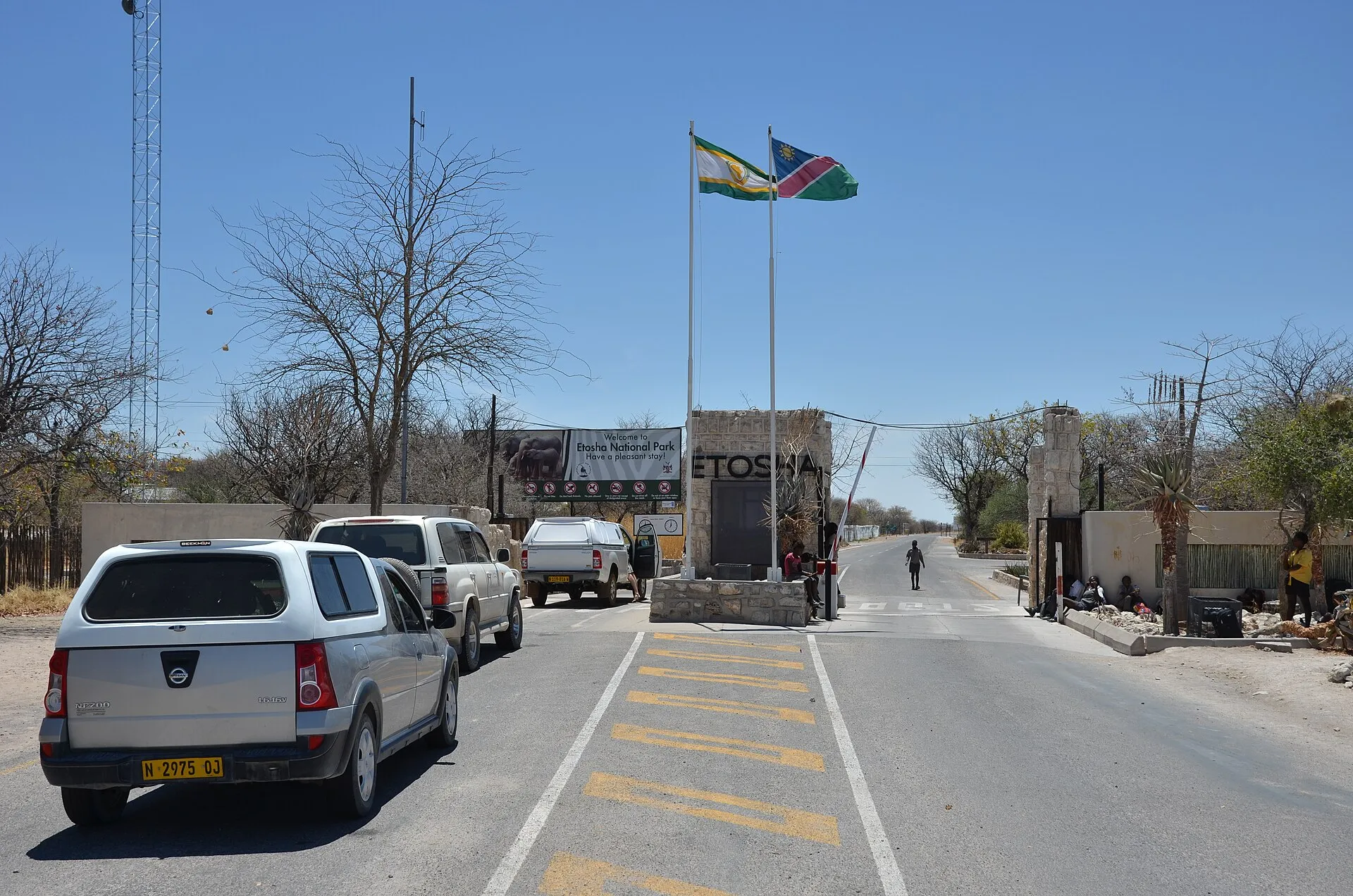
National park fees from 1 April 2026
The Ministry of Environment, Forestry and Tourism (MEFT) raised entrance fees for the first time in years by a notice in the Government Gazette of 1 April 2026. Each fee is now made up of an entrance fee and an equal conservation fee; the totals are what you pay. Fees are charged per person per day, and a separate daily fee applies to the vehicle. Children aged eight and under enter free.
| Park group | Foreign adult (16+) | Foreign child (9–15) | SADC adult | Namibian adult | Vehicle, up to 10 seats |
|---|---|---|---|---|---|
| Etosha, Namib-Naukluft (incl. Sossusvlei), Skeleton Coast, Dorob, Waterberg Plateau, Cape Cross, ǀAi-ǀAis (Fish River Canyon), Tsau ǁKhaeb (Sperrgebiet) | N$280 | N$180 | N$180 | N$60 | N$60 |
| Bwabwata, Mudumu, Nkasa Rupara, Khaudum, Mangetti, Popa Falls, Daan Viljoen, Hardap, Naute, Von Bach | N$200 | N$150 | N$130 | N$40 | N$60 |
| Sandwich Harbour (within Namib-Naukluft) | N$150 | N$100 | N$100 | N$50 | N$50 |
Other fixed costs
- Visa. N$1,600 per adult for the non-African visa-on-arrival nationalities, N$1,200 for the listed African ones, half for children aged 6–11 and free under 6. Details in the visa guide.
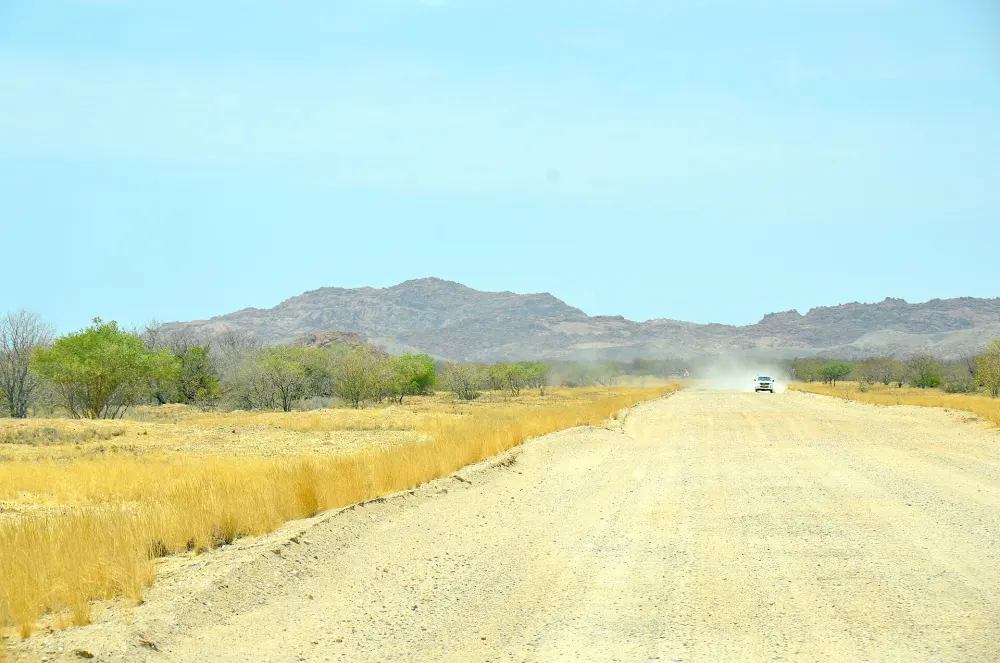
- Fuel. Pump prices are regulated and adjusted on the first Wednesday of each month. In October 2026 petrol cost N$26.58 a litre and diesel (50 ppm) N$27.86 at Walvis Bay, with inland prices a little higher. Prices moved by several dollars a litre during 2026, so recheck before you budget.
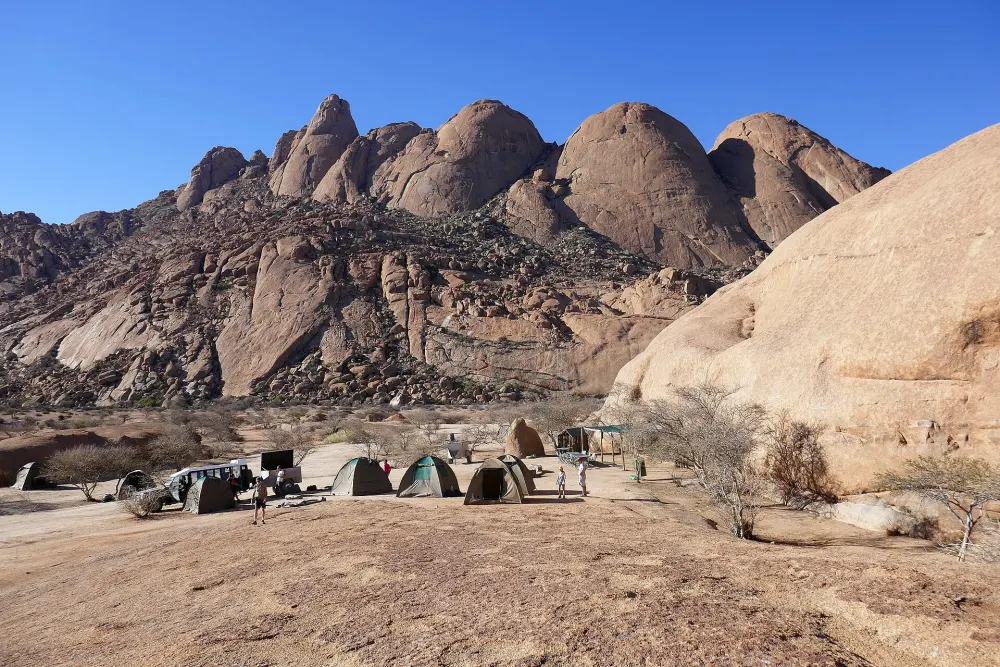
- Heritage and community sites. Places such as Twyfelfontein, the Petrified Forest, Kolmanskop and Spitzkoppe are run by the National Heritage Council, private concession holders or community trusts and charge their own entrance and guide fees, separate from MEFT’s. They are modest; carry cash.
- Cross-border charges. If you bring a foreign-registered vehicle, or take a Namibian rental into Botswana or South Africa, each country levies road and insurance charges at the border.
- Tourism levy and VAT are included in quoted accommodation prices; VAT is 15 %.
A fuel budget you can adapt
Multiply your route distance by the vehicle’s consumption and the pump price. The itineraries on this site give distances; add about 15 % for game drives and detours.
| Trip | Distance | SUV, petrol, ≈ 8 l/100 km | 4x4 pickup, diesel, ≈ 13 l/100 km |
|---|---|---|---|
| 7 days: dunes and coast | ≈ 1,300 km | ≈ 105 l · N$2,800 | ≈ 170 l · N$4,700 |
| 10 days: classic loop | ≈ 2,300 km | ≈ 185 l · N$4,900 | ≈ 300 l · N$8,300 |
| 14 days: classic loop, unhurried | ≈ 2,600 km | ≈ 210 l · N$5,500 | ≈ 340 l · N$9,400 |
| 21 days: full circuit | ≈ 3,700 km | ≈ 295 l · N$7,900 | ≈ 480 l · N$13,400 |
The variable costs, line by line
Vehicle. The largest single item on a self-drive trip. Daily rates climb steeply from a small 2WD car through a 2WD SUV to a 4x4 double cab, and again for a 4x4 fitted with rooftop tents and camping equipment — though the equipped camper replaces most accommodation costs. Rates are higher from July to October, lower for rentals of two weeks or more, and loaded with extras that matter: reduced insurance excess, tyre and windscreen cover, a second driver, one-way and cross-border fees. Compare total quotes, not headline day rates. See the self-drive guide.
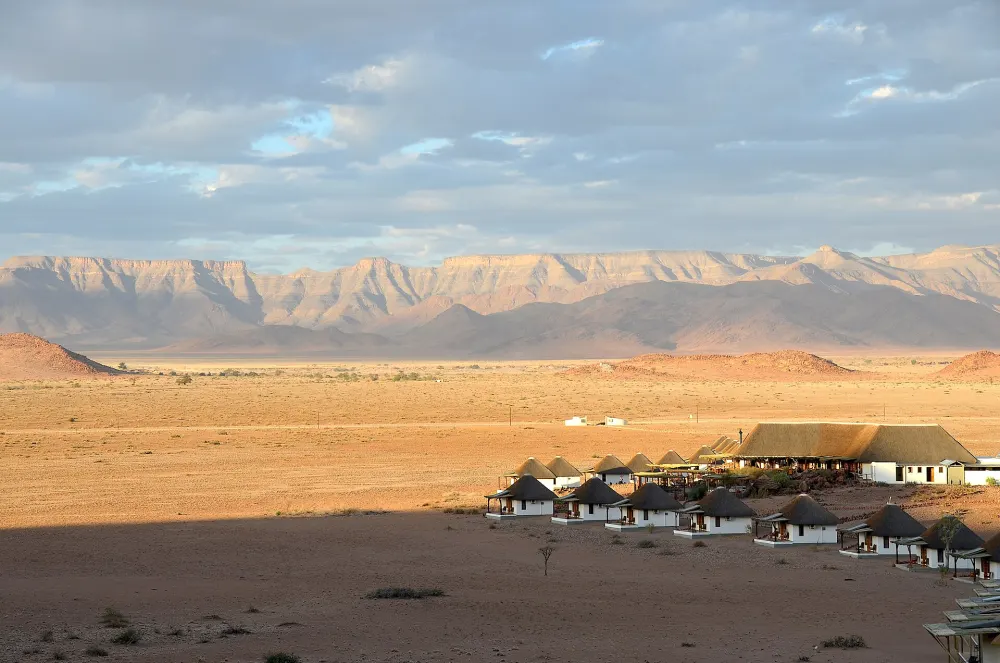
Accommodation. Roughly five levels: campsites; national-park rest camps and budget guesthouses; mid-range lodges and guest farms; upmarket lodges, usually priced with dinner and breakfast; and all-inclusive remote camps where guided activities, all meals and drinks are in the rate. The spread between the first and last is enormous. The accommodation guide explains each type and links to live prices.
Food. Supermarket prices in Windhoek, Swakopmund and the larger towns are comparable to South Africa’s, and self-catering campers eat well for little: meat for the braai is excellent and inexpensive. Restaurant meals in towns are moderate by European standards. Many lodges are far from any alternative and sell dinner at a set price; check whether your rate is bed-and-breakfast or includes dinner before comparing two places.
Activities. Self-driving in Etosha costs nothing beyond the park fee. Paid extras that most itineraries include are a guided game drive or two, the Sandwich Harbour 4x4 tour, a marine cruise or kayak trip at Walvis Bay, and a guided elephant or rhino excursion in Damaraland. A balloon flight or a scenic flight over the dunes is a splurge on a different scale. The tours page links to current prices.
Tips. Around 10 % in restaurants where service is not included; a few dollars for fuel attendants and car guards; and a daily tip for guides and camp staff, for which most lodges publish a guideline in the room. More in practical information.
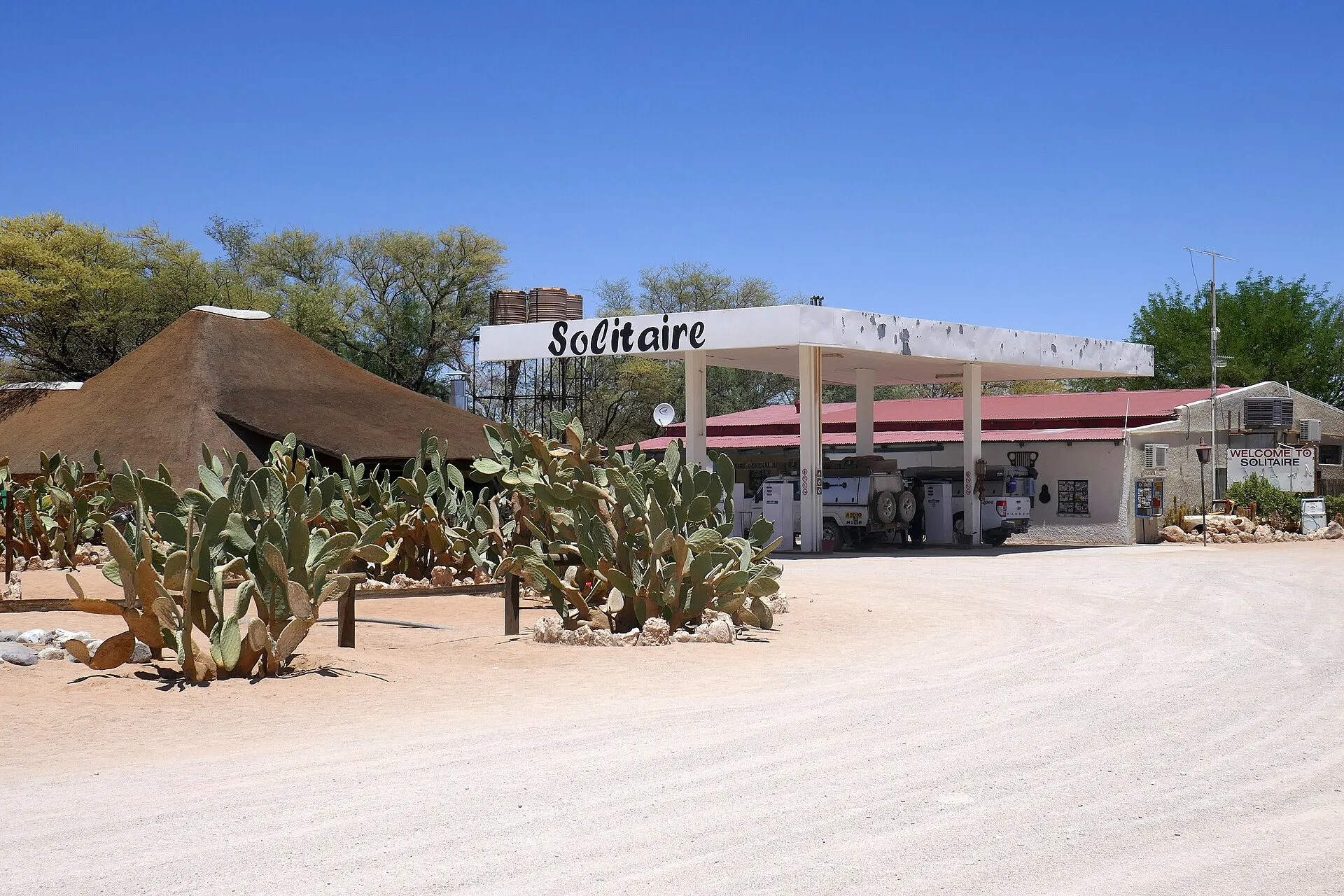
Fuel is a fixed cost you can calculate in advance: regulated prices, known distances.
Four ways to do it, compared
A scheduled small-group safari is often the cheapest way to travel alone, because the cost of the vehicle is shared between the group, and it can beat a couple’s self-drive budget on a short trip once car hire, fuel and park fees are added up. Three-day departures from Windhoek to Etosha and to Sossusvlei are sold in camping and lodging versions; pricing one of them for your dates takes a minute and gives a useful benchmark.
| Lowest costSelf-drive camping | Self-drive, lodges | Small-group guided safari | Private guide or fly-in | |
|---|---|---|---|---|
| Overall cost per personlower is better | ●○○○○ | ●●●○○ | ●●○○○ | ●●●●● |
| Vehicle | Equipped 4x4 — the main cost | SUV or 4x4 | Included | Included |
| Beds | Campsites, low per-person fees | The main cost; wide range | Included: tents or lodges depending on the tour | Included; top-end camps |
| Food | Supermarkets and braai | Lodge dinners plus picnic lunches | Mostly included | Included |
| Park fees | Pay at the gate | Pay at the gate | Normally included | Included |
| Guide | None | Optional lodge activities | Driver-guide throughout | Specialist guides |
| Best for | Independent travellers, longer trips | Comfort with freedom | Solo travellers and non-drivers | Short time, remote areas |
| Read the guide | Read the guide | See a 3-day example | Read the guide |
-
Self-drive camping
Lowest cost- Overall cost per person
- ●○○○○
- Vehicle
- Equipped 4x4 — the main cost
- Beds
- Campsites, low per-person fees
- Food
- Supermarkets and braai
- Park fees
- Pay at the gate
- Guide
- None
- Best for
- Independent travellers, longer trips
-
Self-drive, lodges
- Overall cost per person
- ●●●○○
- Vehicle
- SUV or 4x4
- Beds
- The main cost; wide range
- Food
- Lodge dinners plus picnic lunches
- Park fees
- Pay at the gate
- Guide
- Optional lodge activities
- Best for
- Comfort with freedom
-
Small-group guided safari
- Overall cost per person
- ●●○○○
- Vehicle
- Included
- Beds
- Included: tents or lodges depending on the tour
- Food
- Mostly included
- Park fees
- Normally included
- Guide
- Driver-guide throughout
- Best for
- Solo travellers and non-drivers
-
Private guide or fly-in
- Overall cost per person
- ●●●●●
- Vehicle
- Included
- Beds
- Included; top-end camps
- Food
- Included
- Park fees
- Included
- Guide
- Specialist guides
- Best for
- Short time, remote areas
Relative cost for two people sharing, editorial judgement as of November 2026. More dots = more expensive.
How to spend less without missing anything
- Travel in May, early June or November. Dry or nearly dry, good wildlife, and rates below those of July to October.
- Camp, at least some nights. Campsites at Sesriem, Etosha and Palmwag sit beside lodges that share their pools and restaurants. See camping.
- Hire the right vehicle, not the biggest. The classic loop in the dry season does not need a 4x4; the shuttle from the Sossusvlei car park covers the one stretch that does.
- Share. Four people in one 4x4 with two rooftop tents halve the largest cost.
- Stay inside the gates where it saves a paid activity. A night at an Etosha rest camp gives you the floodlit waterhole for nothing.
- Self-cater lunch. Lodge lunches add up; a cool box, bread and biltong do not.
- Drive less. Fewer one-night stops mean less fuel and fewer park-entry days, and a better trip.
- Book direct comparisons early. For peak months the affordable rooms sell first, and what remains in the last weeks is the expensive end.
Money on the road
Prices are quoted in Namibian dollars. South African rand notes and coins are accepted everywhere at par, but Namibian dollars are not accepted in South Africa, so spend or exchange them before you leave. Visa and Mastercard work in towns, at lodges, in supermarkets and at most fuel stations; cash is needed for small campsites, community fees, craft stalls and tips, and as a fallback when a card terminal is offline. ATMs are found in every town and at the airport. More in practical information.
Frequently asked questions
How much are Etosha park fees in 2026?
Since 1 April 2026 a foreign adult pays N$280 per day (N$140 entrance plus N$140 conservation fee), children aged 9–15 pay N$180, and children of eight and under are free. A car with up to ten seats costs N$60 per day. SADC nationals pay N$180 and Namibian citizens N$60.
Is Namibia expensive to visit?
It depends almost entirely on how you sleep and what you drive. A self-drive camping trip is one of the most affordable safaris in Africa; a fly-in itinerary of remote luxury camps is among the more expensive. Fixed costs such as park fees and fuel are moderate.
Is it cheaper to self-drive or take a tour in Namibia?
For two or more people on a trip of ten days or longer, self-driving with camping is usually cheapest. For solo travellers and for short trips of three to seven days, a scheduled small-group safari is often cheaper because the vehicle and guide are shared.
Can I pay park fees by card?
Usually yes at Etosha and Sesriem, but card machines are sometimes offline. Carry enough cash for a day’s fees for your party as a fallback, and keep the permit for the exit check.
Do I need cash in Namibia?
Yes, some. Cards cover lodges, supermarkets and most fuel, but small campsites, community-run sites, markets and tips are cash, and remote fuel pumps occasionally are too. Namibian dollars and South African rand are interchangeable inside Namibia.
Sources and official information
Facts were checked against these official sources in November 2026. Park fees, gate times, visa rules and timetables change, so confirm before you go.
NamibiaSafaris.com is an independent guide, not the official site of any tour operator, lodge, Namibia Wildlife Resorts or the Namibian government. Some links are affiliate links: tours go to GetYourGuide and accommodation goes to Booking.com, and we may earn a commission at no extra cost to you.