In short
- Three zones. Swakopmund to the Ugab River (Dorob National Park: open, easy, any car); the southern Skeleton Coast Park from the Ugab to Terrace Bay (gated, self-drive with rules); and the far north to the Kunene (concession area, fly-in or guided only).
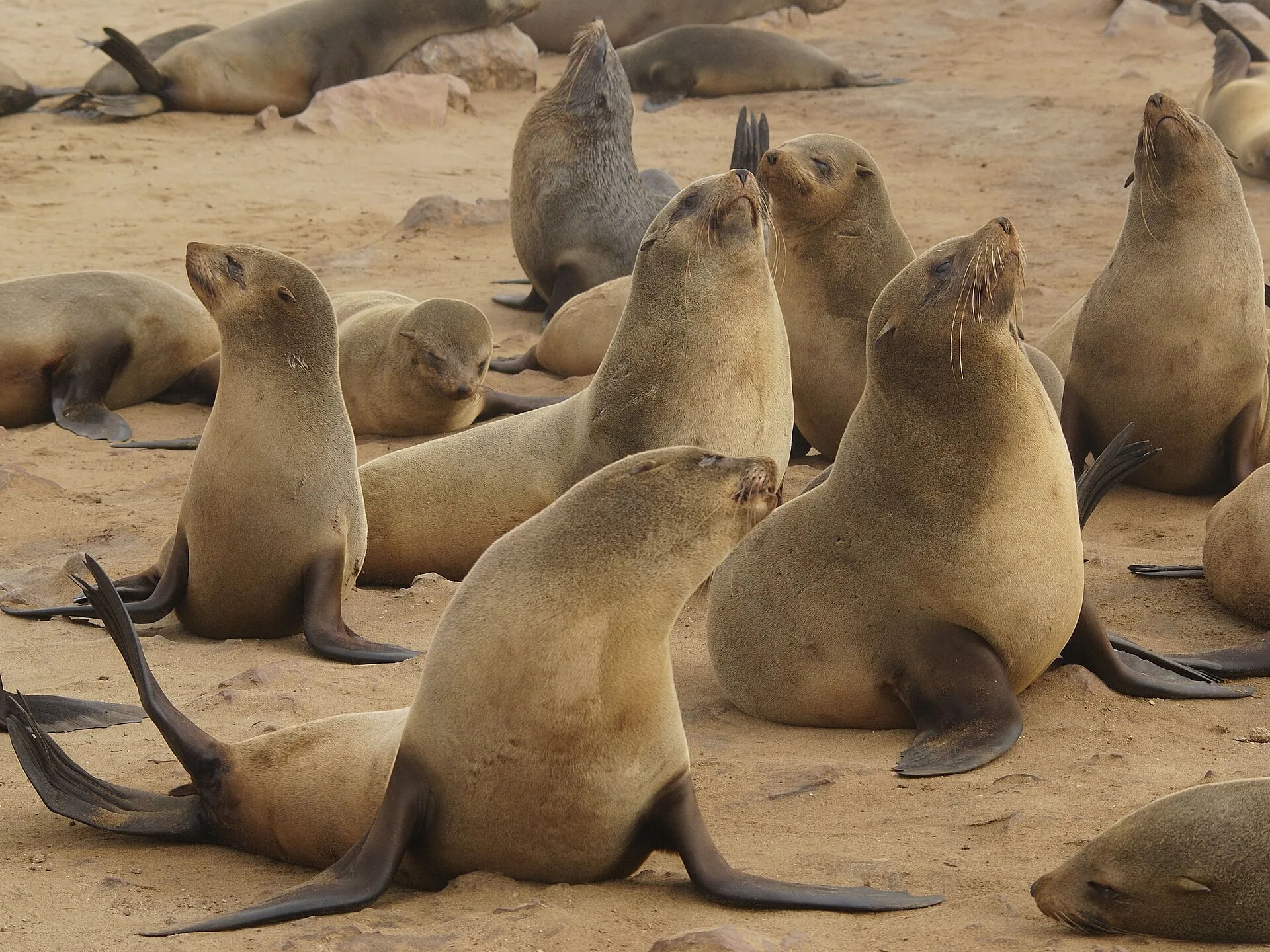
- Cape Cross, 120 km north of Swakopmund, holds one of the largest Cape fur seal colonies anywhere: up to about 210,000 animals in the November–December breeding season, according to the environment ministry.
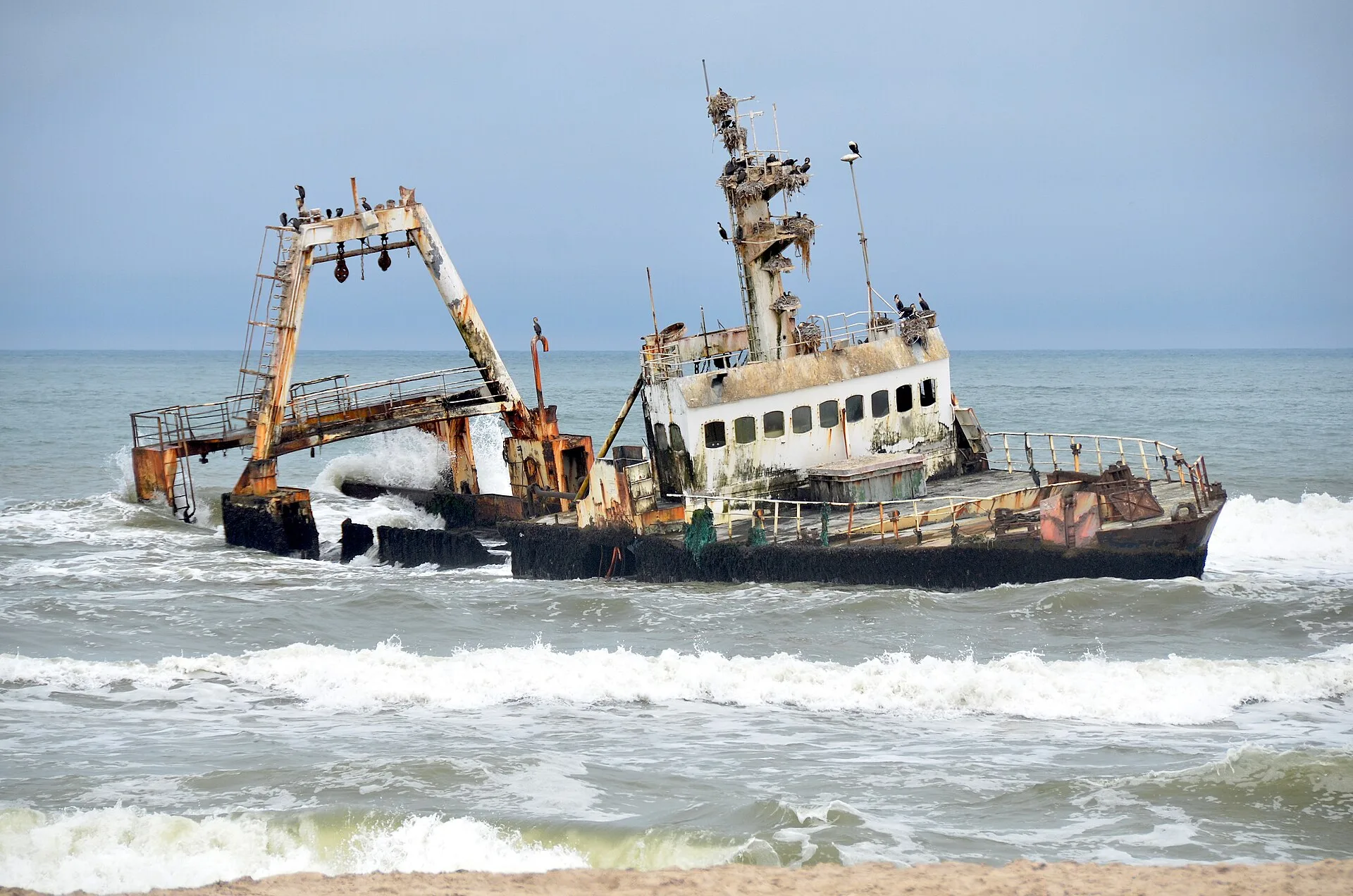
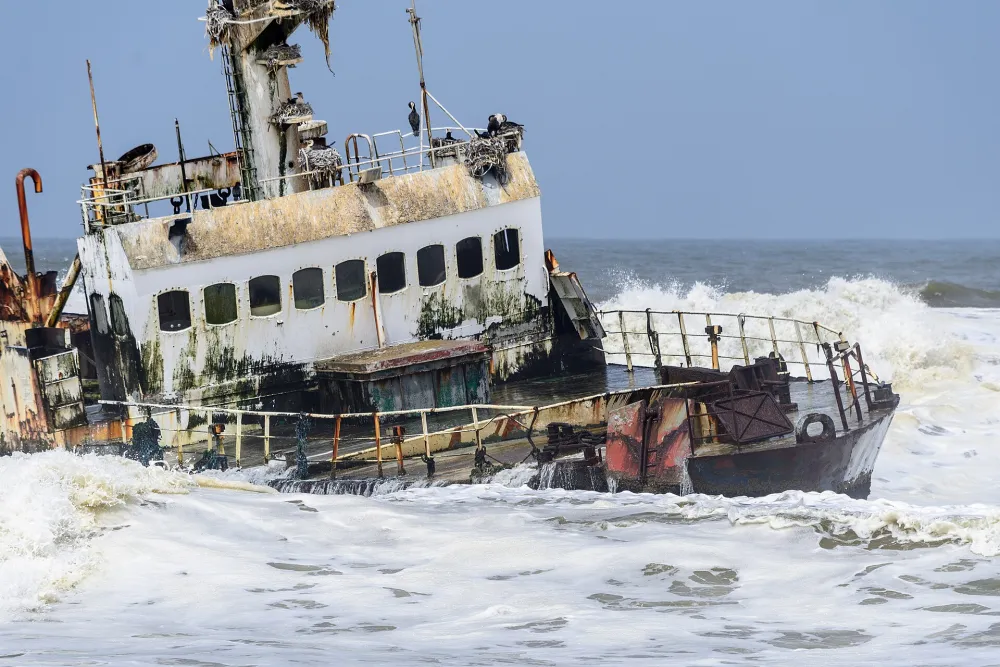
- The Zeila, a trawler stranded in 2008 just south of Henties Bay, is the most accessible wreck; most older wrecks have rusted to fragments.
- Park gates: Ugabmund on the coast and Springbokwasser inland. Day visitors may only transit between them and must enter by mid-afternoon; staying overnight needs a booking at Terrace Bay or (December–January) Torra Bay.
- Expect cold, fog and emptiness. That is the attraction. Carry fuel, water and a jacket, and stay on the road.
What the Skeleton Coast is, and what it is not
Strictly, the Skeleton Coast is the northern third of Namibia’s shoreline, from the Ugab River to the Kunene on the Angolan border; loosely, the name is used for everything north of Swakopmund. The cold Benguela Current runs along it, fog covers it on many mornings, a heavy swell breaks on a shore with almost no shelter, and behind the beach there is no fresh water for days in any direction. Sailors who got ashore from a wreck were not safe; they were stranded. Whale and seal bones from the whaling era, and later the ribs of ships, gave the coast its name, which was fixed by John Henry Marsh’s 1944 book about the wreck of the liner Dunedin Star.
First-time visitors sometimes expect beaches lined with ships and are disappointed. Most wrecks are a century old and have been reduced by surf and salt to an engine block or a few ribs, and the best-preserved lie in the closed north. What you actually come for is harder to photograph: the scale, the light through fog, a jackal trotting along an empty beach, seals in their tens of thousands, plains coloured by lichen, and the knowledge that the next person is a long way off.
The practical division is into three stretches, each with different rules.
| Stretch | Status | How you visit | Highlights |
|---|---|---|---|
| Swakopmund to the Ugab River (about 200 km) | Dorob National Park and Cape Cross Seal Reserve | Any car on the C34 salt road; day trip from Swakopmund | Zeila wreck, Henties Bay, lichen fields, Cape Cross |
| Ugab River to Terrace Bay | Skeleton Coast Park, southern section | Self-drive through the Ugabmund or Springbokwasser gate; transit by day or overnight with a booking | Park gates, wreck remains, old oil rig, Huab and Uniab river mouths, Torra Bay, Terrace Bay |
| Terrace Bay to the Kunene River | Skeleton Coast Park, northern section (concession area) | Fly-in safari or a stay at a concession lodge; no self-drive | Dune fields, Hoarusib clay castles, desert-adapted elephants and lions, remote wrecks |
Swakopmund to Henties Bay: salt road and the Zeila
The C34 north of Swakopmund is a salt road: gypsum and salt compacted with brine into a surface as smooth as tar when dry and as slippery as soap when fog has wetted it. Keep to about 80 km/h and brake gently. The sea is on your left the whole way; on the right the gravel plain rises imperceptibly towards mountains you cannot see.
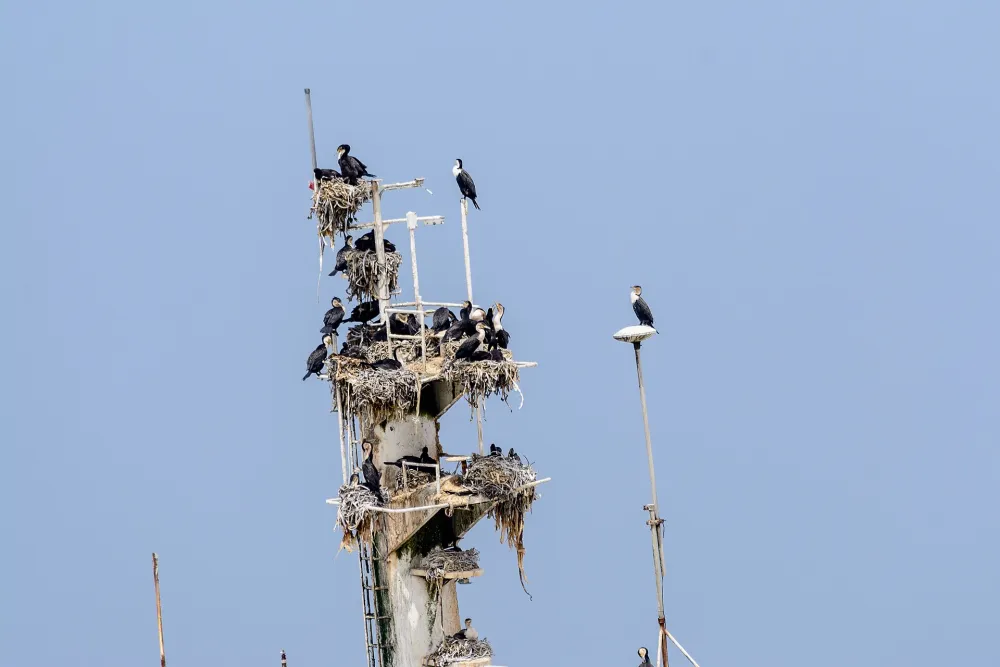
About 14 km before Henties Bay a sign points to the Zeila, a fishing trawler that was sold for scrap and broke its tow on the way to India, stranding here in August 2008. It sits upright in the surf a short walk from the track, crowded with cormorants, and is the wreck in most Skeleton Coast photographs. Do not leave valuables in the car, and decline politely if you do not want to buy from the gemstone sellers who wait at the turn-off.
Henties Bay (population 7,569 in 2023) grew from a fishing camp at the mouth of the Omaruru River, named after Major Hendrik “Henty” van der Merwe, who found fresh water here in 1929. It is a quiet holiday town for Namibian anglers, who cast from the beach for kabeljou, steenbras and galjoen; a fishing permit is required and bag limits apply. For travellers it is the last proper fuel, supermarket and ATM before the park, and a reasonable overnight stop. Guided shore-fishing days with tackle supplied can be booked from here.
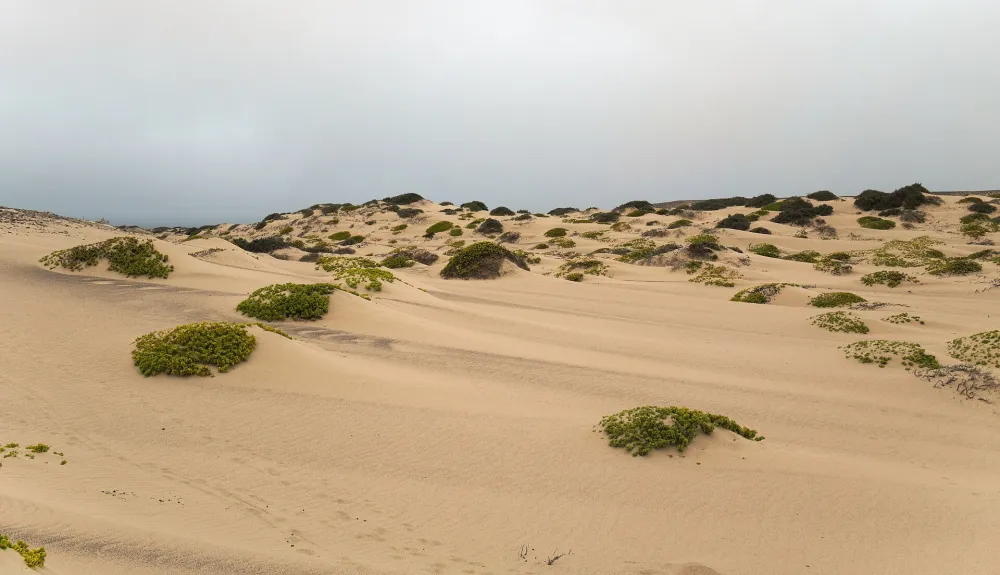
Between Henties Bay and Cape Cross the plains carry some of the Namib’s best lichen fields: grey and orange crusts that look dead until fog dampens them and they unfurl. They grow perhaps a millimetre a year, and a single set of tyre tracks destroys decades of growth, which is why off-road driving is a criminal offence here.
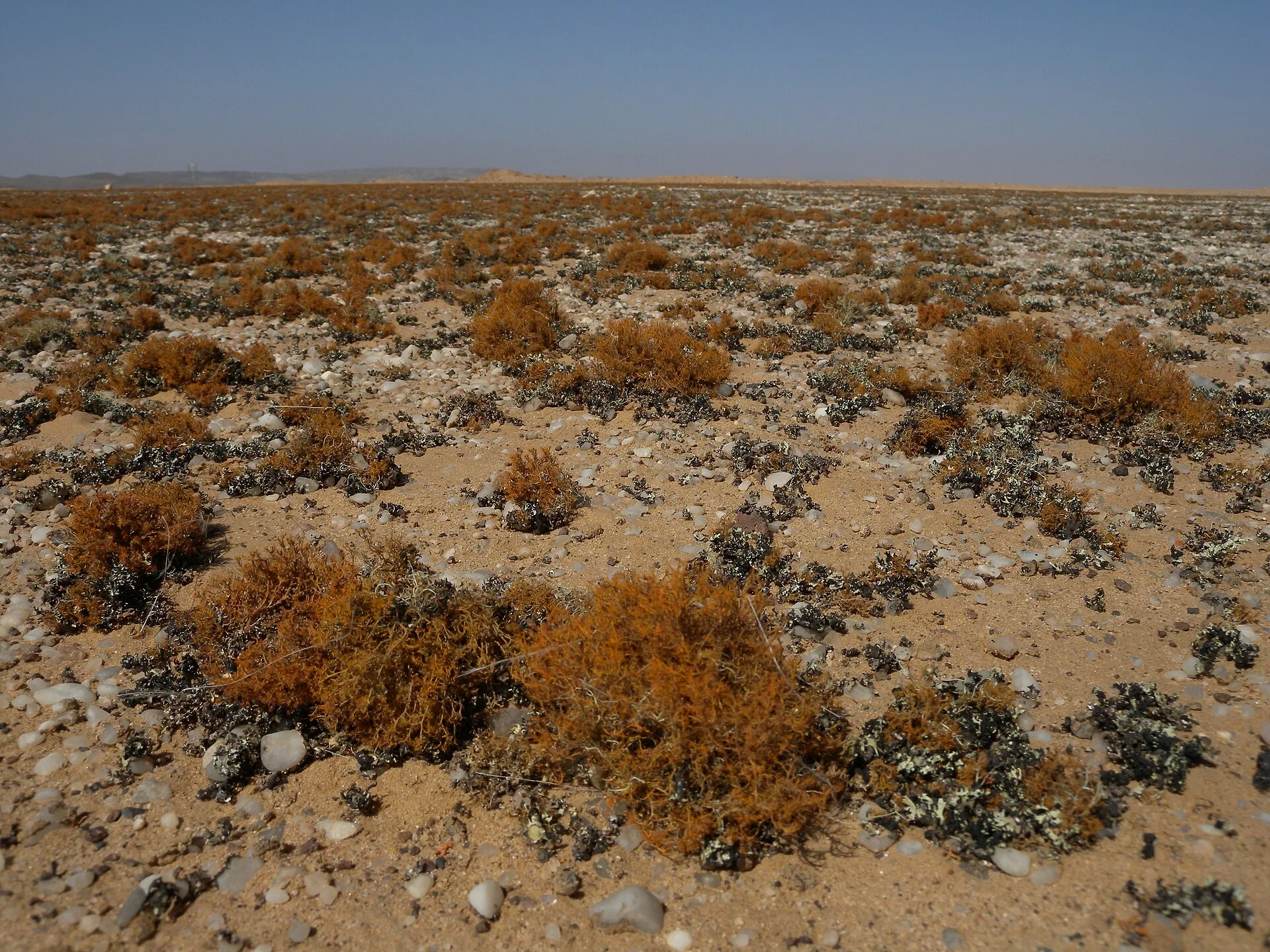
Lichen fields on the gravel plains depend on fog for water and are destroyed by tyres.
Cape Cross and Henties Bay guided tour
North from Swakopmund along the Skeleton Coast to Henties Bay and the seals of Cape Cross.
Check availabilityBook via GetYourGuide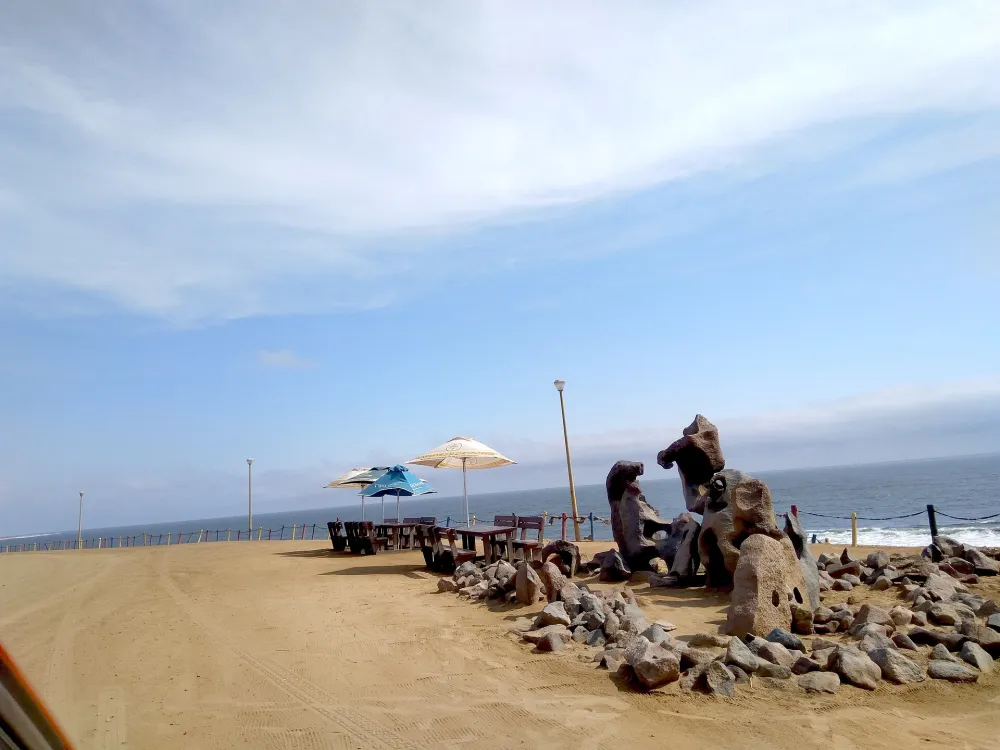
Henties Bay: full-day Skeleton Coast fishing tour with gear
Shore angling with a local guide on the beaches around Henties Bay, tackle supplied.
Check availabilityBook via GetYourGuideTour listings are on GetYourGuide. Prices, dates and cancellation terms are shown live on each listing and can change; NamibiaSafaris.com may earn a commission at no extra cost to you.
Cape Cross seal colony
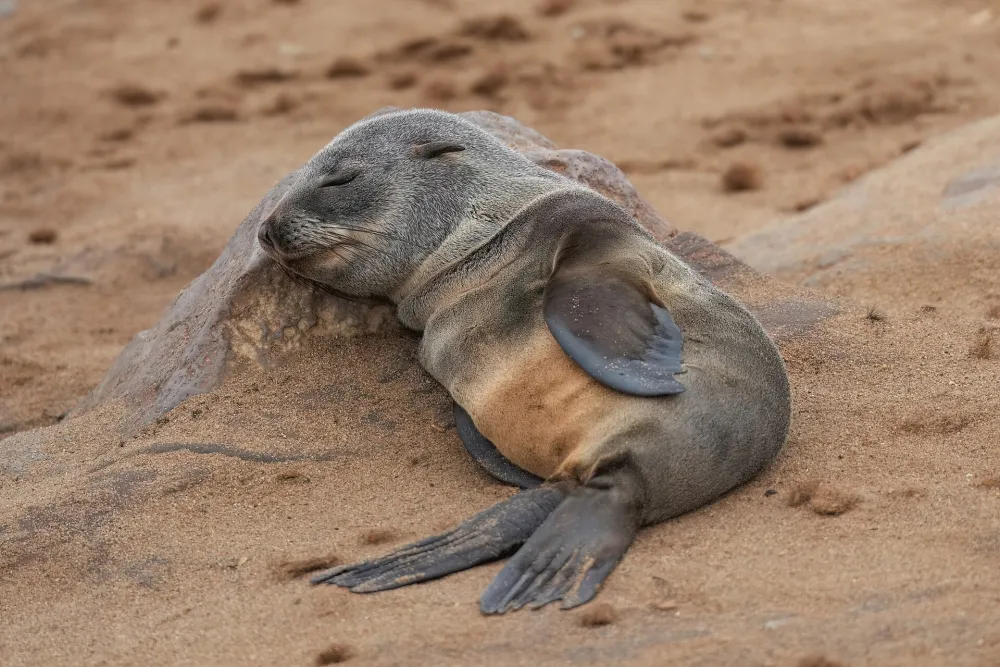
Sixty kilometres north of Henties Bay a short side road leads to Cape Cross Seal Reserve. You smell it before you see it, and hear it before you park: a continuous roar of bleating, barking and coughing from tens of thousands of Cape fur seals packed along the rocks and beach. A 200 m boardwalk of recycled plastic, suitable for wheelchairs, runs along the edge of the colony, with seals lying under, beside and occasionally on it.
- Mid-October: the bulls come ashore to claim territories. They can weigh over 300 kg at the start of the season and fight hard.
- Late November and December: the pups, black and wet, are born within a few weeks of each other. This is when numbers peak, at up to about 210,000 animals on the ministry’s figure. It is also when the colony is at its most brutal: many pups are crushed, lost or starve, and black-backed jackals and brown hyenas take their share. The smell is strongest now.
- The rest of the year: cows come and go to feed, pups grow and play in the shallows, and the colony is still enormous.
The cape matters historically too. In January 1486 the Portuguese navigator Diogo Cão set up a stone cross, a padrão, on this headland, the furthest south any European had then sailed. A German naval captain removed the original to Berlin in 1893; replicas stand on the site today, and in 2019 the German Historical Museum agreed to return the original to Namibia. A guano rush followed in the 1890s, with a small railway and a settlement, and ended within a decade.
- From Swakopmund
- 120 km; about 1.5 hours
- From Henties Bay
- 60 km
- Opening hours
- Published as 8:00 AM–5:00 PM (16 November–30 June) and 10:00 AM–5:00 PM (1 July–15 November); confirm before you go
- Fee from 1 April 2026
- N$280 per foreign adult, N$180 SADC, N$60 Namibian; N$60 per car
- Facilities
- Boardwalk, information boards, toilets, picnic site, basic campsites; no fuel, very little water
- Time needed
- 45–60 minutes at the colony
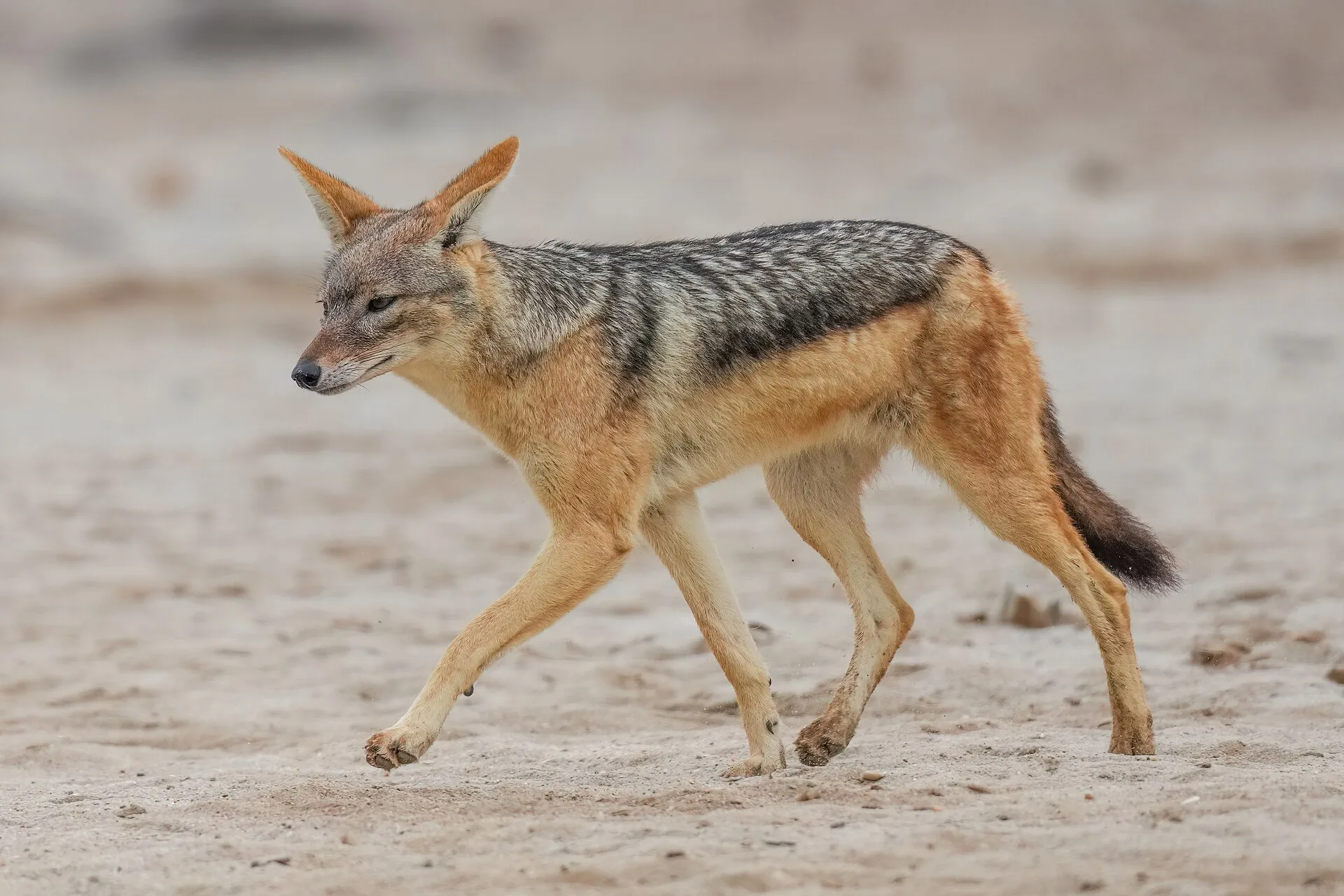
A black-backed jackal patrols the edge of the Cape Cross colony.
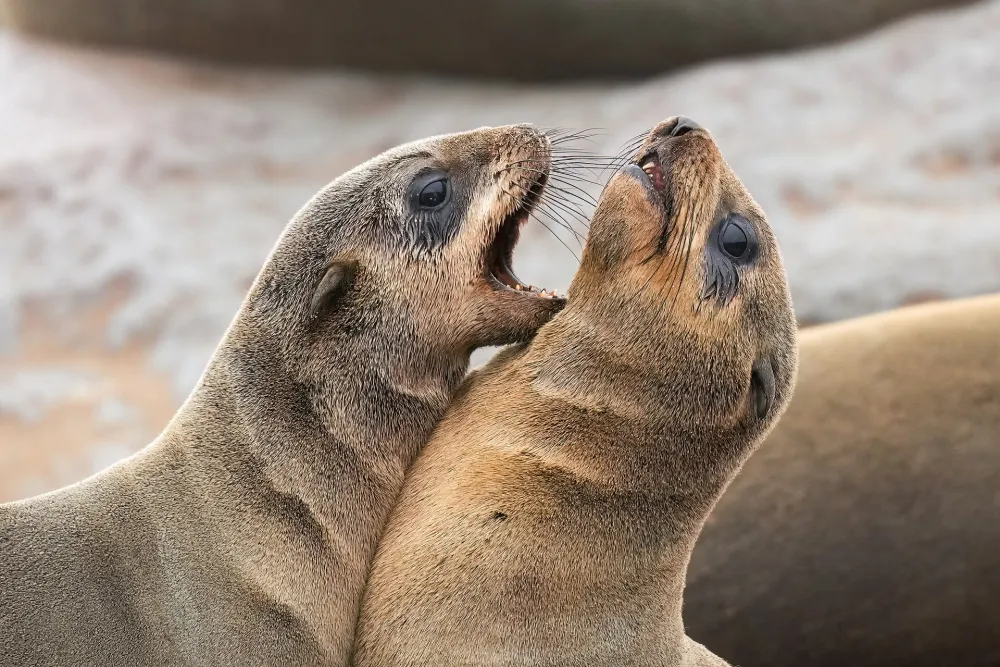
Skeleton Coast: Cape Cross seal colony tour
A guided day up the salt road to the Cape Cross seal colony, with the coast’s other stops on the way.
Check availabilityBook via GetYourGuideTour listings are on GetYourGuide. Prices, dates and cancellation terms are shown live on each listing and can change; NamibiaSafaris.com may earn a commission at no extra cost to you.
Entering Skeleton Coast Park: gates, permits and rules
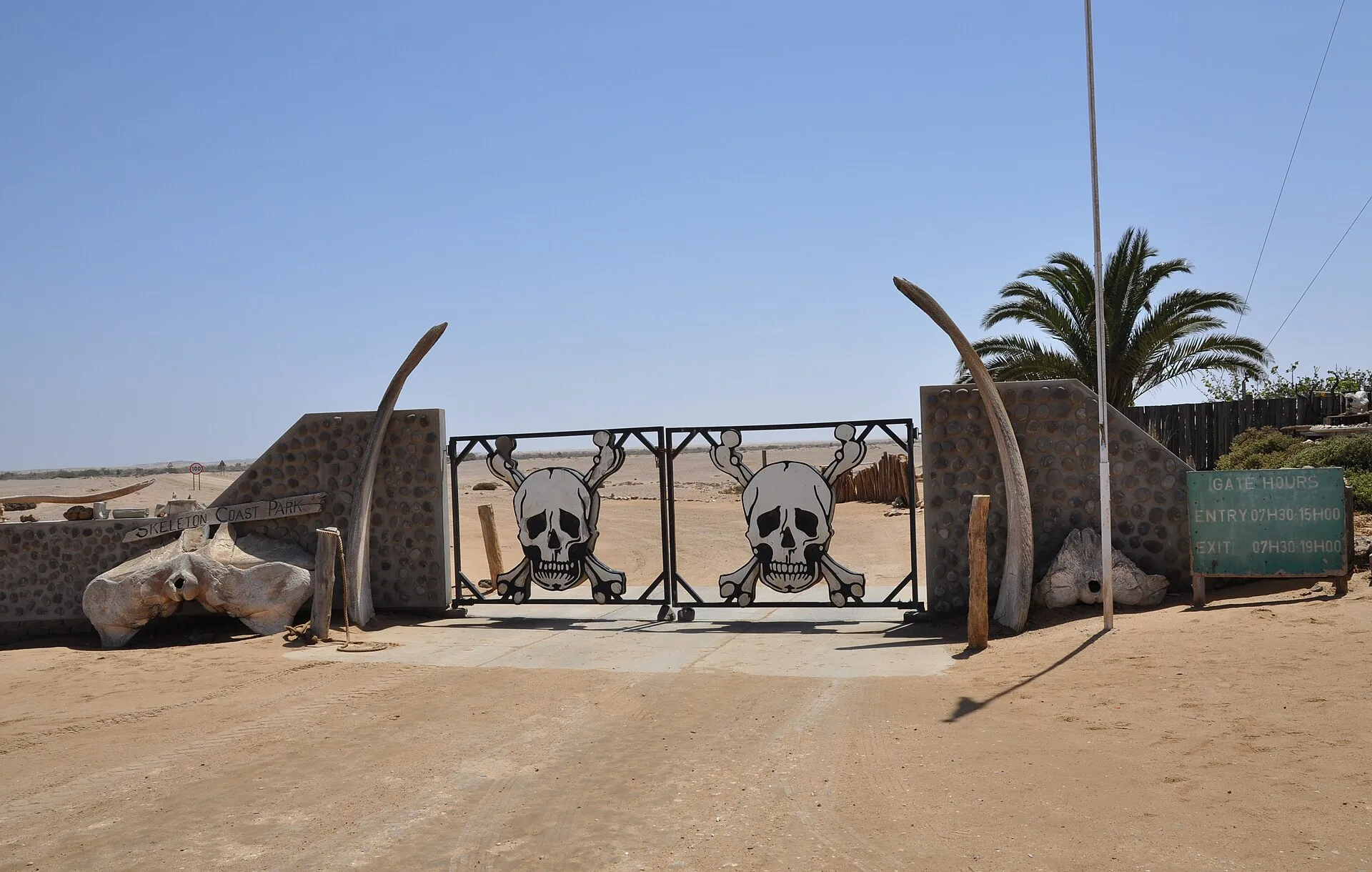
North of Cape Cross the C34 continues past the NWR angling camps at Mile 72 and Mile 108 to the Ugab River, about 200 km from Swakopmund, where a pair of gates decorated with skulls and crossbones marks the boundary of Skeleton Coast Park. The park was proclaimed in the early 1970s and runs 500 km to the Kunene. Its southern section, as far as Terrace Bay, is open to ordinary visitors under conditions; the roads are salt and gravel and a normal car with good tyres manages them in dry weather.
- Two gates: Ugabmund on the coast road and Springbokwasser in the east, on the C39 from Khorixas and Palmwag. The C34 and C39 meet inside the park near Torra Bay.
- Day transit: without an accommodation booking you may drive through from one gate to the other (roughly 160–180 km of park road) but may not continue north to Terrace Bay. Published gate times have the gates open from about sunrise or 7:30 AM, with last entry around 3:00 PM and exit by the evening; arrive after the cut-off and you will be turned back. Times differ between sources, so confirm them with the ministry or NWR for your date.
- Overnight: to stay you need a confirmed reservation at Terrace Bay (NWR resort, open all year, traditionally an anglers’ base, with rooms and meals) or at Torra Bay campsite, which NWR opens only in December and January. Show the booking at the gate.
- Fees: the standard park fee applies per person per day (N$280 for foreign adults from 1 April 2026) plus the vehicle fee.
- Fuel: fill up at Henties Bay, or at Khorixas or Palmwag if coming from the east. Fuel has been sold at Terrace Bay, but do not rely on it; ask NWR when you book. Carry water and a spare wheel.
- Rules: stay on the proclaimed road, do not collect stones, bones or wreckage, and do not drive on the beach. Angling is only allowed in designated zones with a permit.
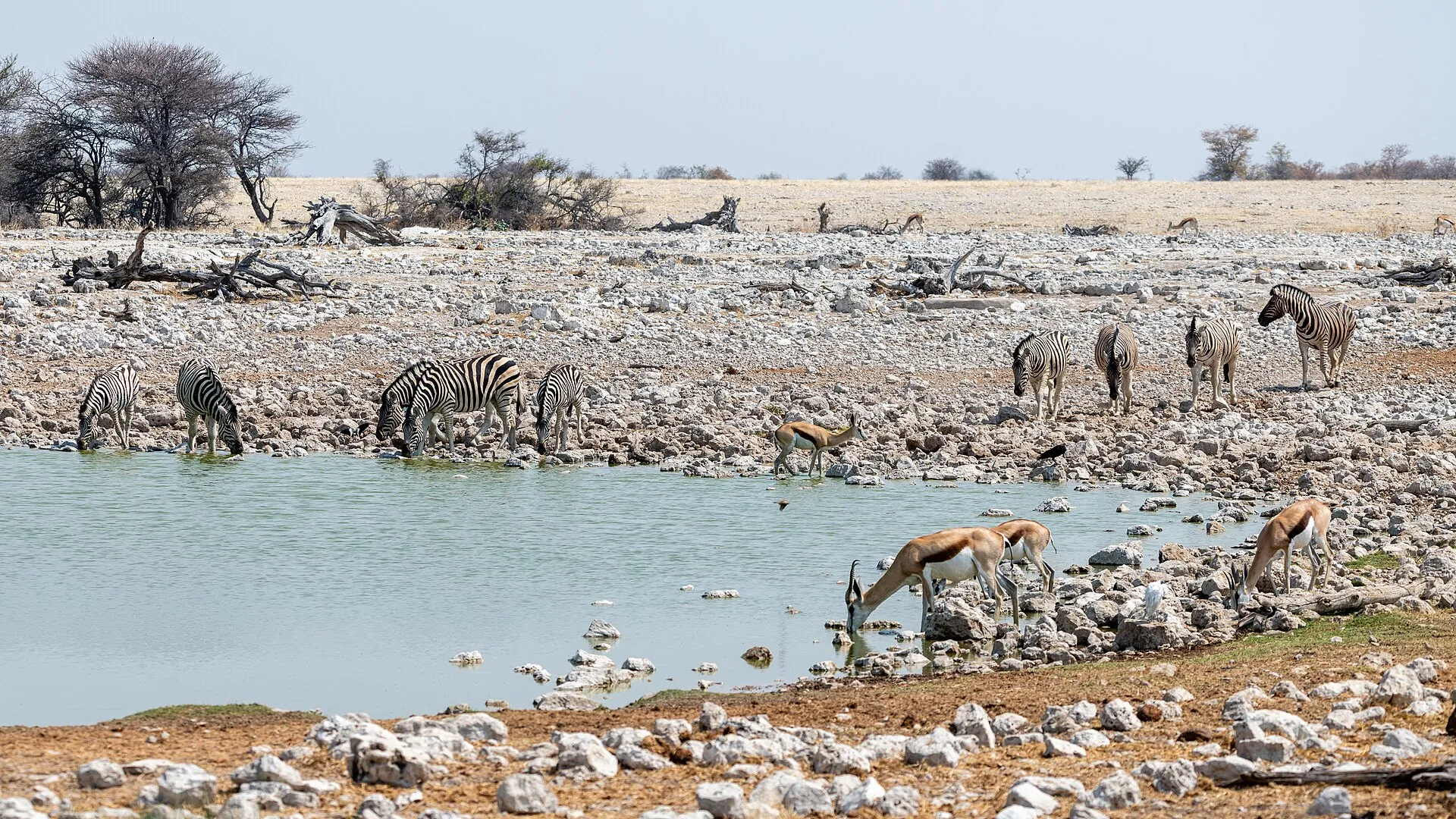
Inside, the sights are modest and widely spaced: the scattered timbers of the South West Seal, a fishing vessel lost in 1976, a little north of the Ugab gate; the collapsing frame of an abandoned oil-drilling rig from the 1960s–70s, now a cormorant roost; the reed-fringed lagoon at the Huab river mouth; and, between Torra Bay and Terrace Bay, the Uniab River delta, where a short walk leads to pools, a small waterfall and a canyon cut through red sandstone, and where oryx and springbok come down to drink. North of Torra Bay the first real dunes appear.
The classic use of the transit is as a through-route: up the coast from Swakopmund, out at Springbokwasser and on to Palmwag or Twyfelfontein in Damaraland. It is a long day, around 450 km from Swakopmund to Palmwag, so leave early.
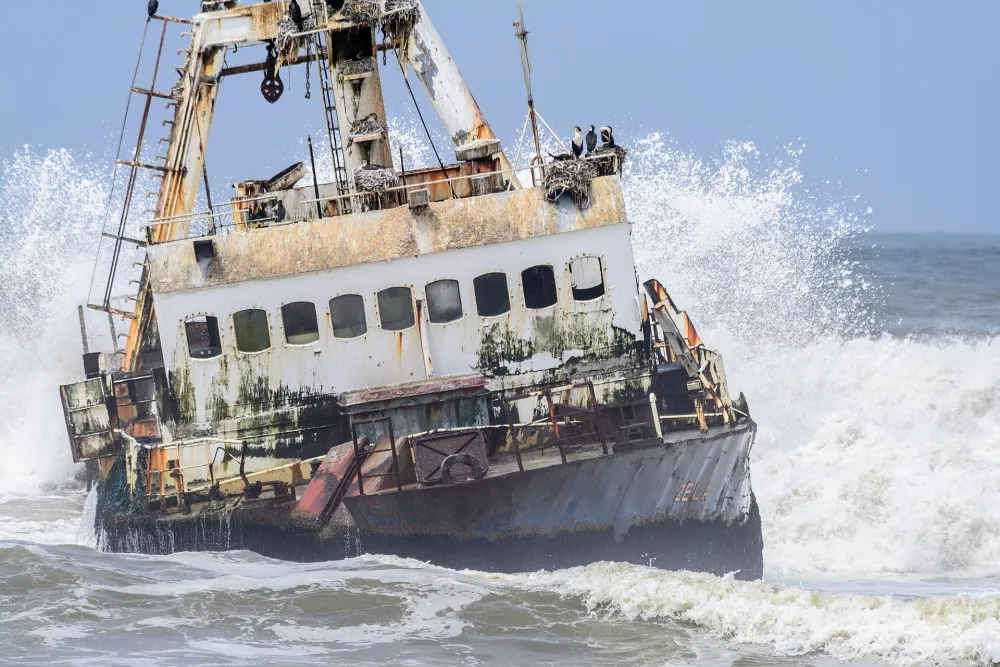
Skeleton Coast Park and shipwrecks
A long guided day that goes beyond Cape Cross to the Skeleton Coast Park and its wreck sites. Check the listing for how far north it runs.
Check availabilityBook via GetYourGuideTour listings are on GetYourGuide. Prices, dates and cancellation terms are shown live on each listing and can change; NamibiaSafaris.com may earn a commission at no extra cost to you.
The far north: fly-in country
Beyond Terrace Bay the park is a concession area closed to private vehicles. This is the Skeleton Coast of the documentaries: roaring dunes that hum underfoot, the eroded clay castles of the Hoarusib canyon with walls up to 70 m high, beaches strewn with agates and garnet sand, the remains of the Dunedin Star (1942) and of the aircraft and tug lost trying to rescue her passengers, and the dry riverbeds of the Hoanib and Hoarusib, used as corridors by desert-adapted elephants, giraffe, oryx, brown hyenas and a small, closely monitored population of desert lions that sometimes hunt seals on the beach. The Kunene River mouth, with its crocodiles and turtles, is the end of Namibia.
Access is by light aircraft, either on a multi-day fly-in safari that hops between simple camps, or by flying (or being driven on a guided transfer) to one of the few permanent lodges in or beside the park, in the Hoanib valley and on the coast north of Möwe Bay. These are among the most expensive stays in Namibia and are booked through safari operators, usually as part of a larger itinerary; see how a Namibia safari works for where fly-in trips fit. A scenic flight from Swakopmund up the coast to Cape Cross and the Brandberg gives a taste for a fraction of the cost: see scenic flights.
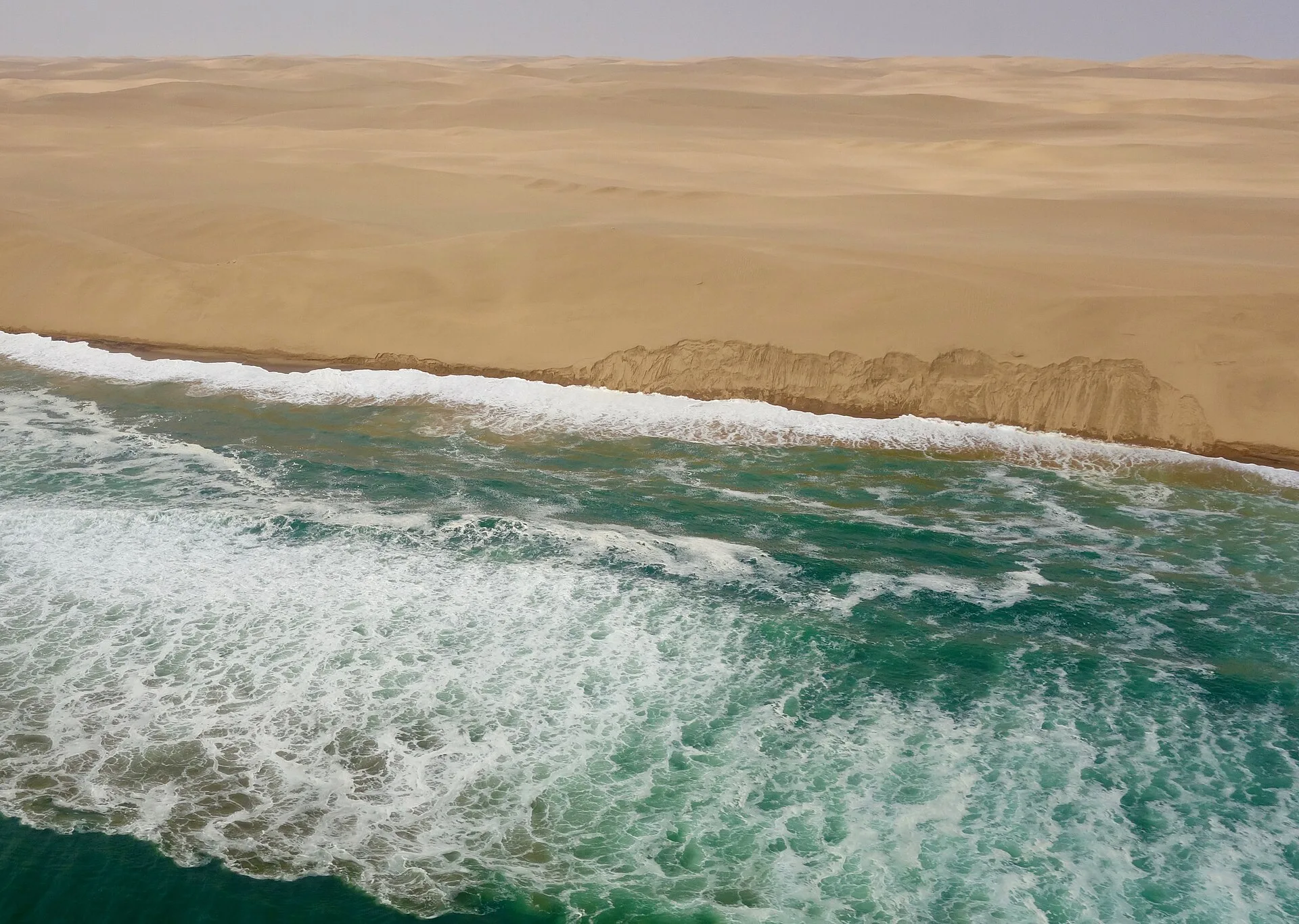
North of Torra Bay the dunes return and run to the Kunene.
Day trip, through-route or overnight?
- Half or full day from Swakopmund: the Zeila, Henties Bay and Cape Cross, 240 km round trip on easy roads. This is what most visitors do, self-drive or on a tour, and it is enough to understand the coast.
- Through-route to Damaraland: as above, then on through the park gates to Springbokwasser. A long, empty, memorable day for confident self-drivers.
- Overnight at Terrace Bay: for anglers and for people who want the silence. Book with NWR well ahead.
- Evening and night tours: with no towns for a hundred kilometres the night sky over the coastal plains is very dark when the fog stays offshore; stargazing trips run from Swakopmund.
Skeleton Coast stargazing tour
A night under the very dark skies of the coastal desert, with departures listed from Swakopmund or Windhoek.
Check availabilityBook via GetYourGuideTour listings are on GetYourGuide. Prices, dates and cancellation terms are shown live on each listing and can change; NamibiaSafaris.com may earn a commission at no extra cost to you.
Where to stay
Most people visit from Swakopmund (where to stay). To start further north, Henties Bay has self-catering apartments and guesthouses aimed at fishing families: DieStrandwolf Sea View Self Catering and First Group Desert Rose are on the seafront, and Huis Klipdrift offers apartments and B&B rooms with restaurants on site. There is a lodge beside the seal reserve at Cape Cross (search Cape Cross on Booking.com). Inside the park, Terrace Bay and Torra Bay are booked with Namibia Wildlife Resorts, and the basic coastal campsites at Mile 14, Jakkalsputz, Mile 72 and Mile 108 are NWR’s too.
DieStrandwolf Sea View Self Catering
Skeleton CoastBeachfront self-catering apartments in Henties Bay.
9.1Booking.com guest score · as checked in November 2026
See on Booking.comFirst Group Desert Rose
Skeleton CoastBeachfront two- and three-bedroom apartments in Henties Bay.
8.9Booking.com guest score · as checked in November 2026
See on Booking.comHuis Klipdrift Self Catering and B&B
Skeleton CoastApartments and rooms in Henties Bay with restaurants and a bar on site.
8.5Booking.com guest score · as checked in November 2026
See on Booking.comSee all stays in Henties Bay on Booking.com
Accommodation links go to Booking.com, where you see live prices and availability. We do not list prices because they change daily; NamibiaSafaris.com may earn a commission.
Weather and what to bring
The coast is cool all year, typically 12–22 °C, and often colder in the wind. Fog is frequent in the morning and can last all day in winter; when a winter east wind blows it is suddenly hot, dry and sandy. Bring a windproof jacket, long trousers and a hat that stays on. Sunscreen still matters: the fog burns off and the light is fierce.
In the car: a full tank, at least 5 litres of water per person, food, a spare wheel in good condition (two on the park transit), and a paper map or offline maps, because mobile coverage is patchy to non-existent north of Henties Bay.
Frequently asked questions
Can you drive the Skeleton Coast yourself?
Yes, as far as Terrace Bay. The C34 from Swakopmund to the Ugab River is open to any car. Inside Skeleton Coast Park you can transit between the Ugabmund and Springbokwasser gates by day, or go on to Terrace Bay with an accommodation booking. North of Terrace Bay is closed to private vehicles.
Do you need a 4x4 for the Skeleton Coast?
Not for the salt road to Cape Cross or, in dry conditions, for the main park road. A vehicle with good ground clearance and two spare wheels is advisable for the transit, mainly because help is far away.
What time do the Skeleton Coast Park gates close?
Published times put the last entry at about 3:00 PM at both Ugabmund and Springbokwasser, with the gates opening around sunrise or 7:30 AM. Sources differ slightly and times can change, so confirm with the Ministry of Environment, Forestry and Tourism or NWR.
When is the best time to visit Cape Cross?
Seals are there all year. For pups, go from late November to January. The colony is largest, loudest and smelliest in November and December.
Where can you see shipwrecks?
The Zeila (2008), about 14 km south of Henties Bay, is the easiest and most complete. Inside the park the South West Seal (1976) lies near the Ugab gate. The famous Eduard Bohlen is far to the south, between Walvis Bay and Lüderitz, and is seen on scenic flights.
Is the Skeleton Coast worth it?
As a day trip to Cape Cross from Swakopmund, yes for almost everyone. The park transit rewards travellers who like emptiness and long drives; those expecting dramatic wrecks around every corner are usually disappointed.
Are there lions on the Skeleton Coast?
A small population of desert-adapted lions lives in the river valleys of the northern park and occasionally reaches the beach. Self-drivers in the southern section are very unlikely to see one, but you should still not walk far from your vehicle.
Sources and official information
Facts were checked against these official sources in November 2026. Park fees, gate times, visa rules and timetables change, so confirm before you go.
- lac.org.na
- meft.gov.na
- embassyofnamibia.fr
- embassyofnamibia.fr
- nwr.com.na
- nwr.com.na
- nsa.org.na
- en.wikipedia.org
- en.wikipedia.org
- en.wikipedia.org
- desertlion.info
NamibiaSafaris.com is an independent guide, not the official site of any tour operator, lodge, Namibia Wildlife Resorts or the Namibian government. Some links are affiliate links: tours go to GetYourGuide and accommodation goes to Booking.com, and we may earn a commission at no extra cost to you.