In short
- Pack for a 25-degree swing in one day. In June to August dawn game drives are near freezing and midday is T-shirt weather; layers matter more than any single garment.
- Soft bags, not hard cases. They fit car boots and safari vehicles, and light-aircraft transfers impose strict weight and size limits set by the operator.
- Neutral colours, closed shoes, a wide-brimmed hat. Nothing technical is required; ordinary cotton and a fleece do the job.
- Do not forget: printed e-visa, driving licence, a plug adaptor for the South African three-pin socket (type M), a head torch, binoculars and a refillable water bottle.
- Buy it there: sunscreen, insect repellent, gas, firewood and food are all sold in Windhoek and Swakopmund.
The principle: layers and dust
Two facts about Namibia’s climate shape the bag. First, the air is dry and the sky is clear, so temperature tracks the sun: a July morning at Sesriem can begin at 0 °C and reach 24 °C by lunch, and an October afternoon in Etosha can pass 38 °C before a cool night. Second, everything gets dusty. Fine white dust in Etosha and red sand in the Namib work into zips, lenses and bags.
The answer to the first is three thin layers you can add and remove, not one heavy coat. The answer to the second is to bring less, in darker or sand-coloured fabrics, and to wash it: nearly every lodge offers laundry, and campsites have washing troughs and a climate that dries a shirt in an hour. A week’s clothing is enough for a trip of any length.
Lodges are informal. Nobody dresses for dinner, and the most upmarket camp in the country expects nothing smarter than a clean shirt.
Clothing
- 3–4 short-sleeved shirts or T-shirts and 2 long-sleeved shirts — the long sleeves are for sun on dune walks and for mosquitoes in the evening.
- 2 pairs of long trousers (one light, one sturdier) and 2 pairs of shorts.
- A warm fleece or light down jacket, all year: the desert is cold at night even in summer, and the coast is cool every day.
- A windproof shell. For open vehicles at dawn, boat trips at Walvis Bay, the wind at Lüderitz, and summer showers.
- In winter (May to September) add: a warm hat, gloves, a scarf or buff, thermal leggings to sleep in if camping, and thick socks.
- Wide-brimmed hat with a chin cord — the vehicle is open and the wind is strong — and sunglasses, ideally polarised.
- Closed walking shoes or light boots, already broken in, for dunes, rocky trails and thorny ground; sandals for camp and the car.
- Swimwear. Many lodges and campsites have pools, a real pleasure at midday.
- A sarong or kikoi: sunshade, towel, picnic cloth, dust cover for the camera.
Colours. Khaki, olive, stone and brown show dust least and are the convention on safari. In a closed vehicle the colour of your shirt makes no difference to the animals; on a walking safari guides ask for muted tones, and white and bright colours stand out. Dark blue and black attract tsetse flies elsewhere in Africa, but tsetse are not an issue on Namibia’s tourist routes. Camouflage-pattern clothing is best left at home in any southern African country.
What changes with the season
| May–September (dry, cold nights) | October–April (hot, rain possible) | |
|---|---|---|
| Dawn game drive | Fleece, shell, hat, gloves; a blanket if the lodge does not supply one | Light long sleeves; a fleece for the first hour |
| Midday | T-shirt and shorts | Loose, light, long sleeves; maximum sun cover |
| Evening | Warm jacket, long trousers | Long sleeves and trousers against mosquitoes in the north |
| Sleeping (camping) | Sleeping bag rated to about −5 °C, thermals, warm hat | Light sleeping bag or liner; ventilation |
| Extras | Lip balm and moisturiser for very dry air | Light rain jacket, dry bags for electronics, extra repellent |
Documents and money
- Passport, valid six months beyond arrival with three blank pages, and a printed e-visa if you applied online. See the visa guide.
- Full birth certificates for children under 18, plus consent affidavits if a parent is not travelling.
- Driving licence — the physical card — and an International Driving Permit if the licence is not in English.
- Printed confirmations of the vehicle rental and each night’s accommodation; there is often no signal when you need to look something up.
- Travel insurance details with the 24-hour emergency number, including air evacuation cover.
- Yellow fever certificate only if you are arriving from, or have had a long transit in, a risk country.
- Two bank cards on different networks, kept separately, and some cash in rand or Namibian dollars for fuel, tips and small campsites.
- Photos of all of the above stored offline on your phone and emailed to yourself.
Health and sun
- Sunscreen SPF 30–50 and lip balm with sun protection.
- Insect repellent with DEET 50 % or icaridin, for the north and for the rainy season.
- Antimalarial tablets if your route and month call for them — see health and safety.
- Prescription medicines in original packaging with a copy of the prescription.
- Rehydration salts, plasters and blister dressings, antiseptic, painkillers, antihistamine, anti-diarrhoeal.
- Eye drops and spare glasses; contact-lens wearers suffer in the dust.
- Hand sanitiser and a small pack of tissues for long-drop toilets at picnic sites.
Optics, camera and electronics
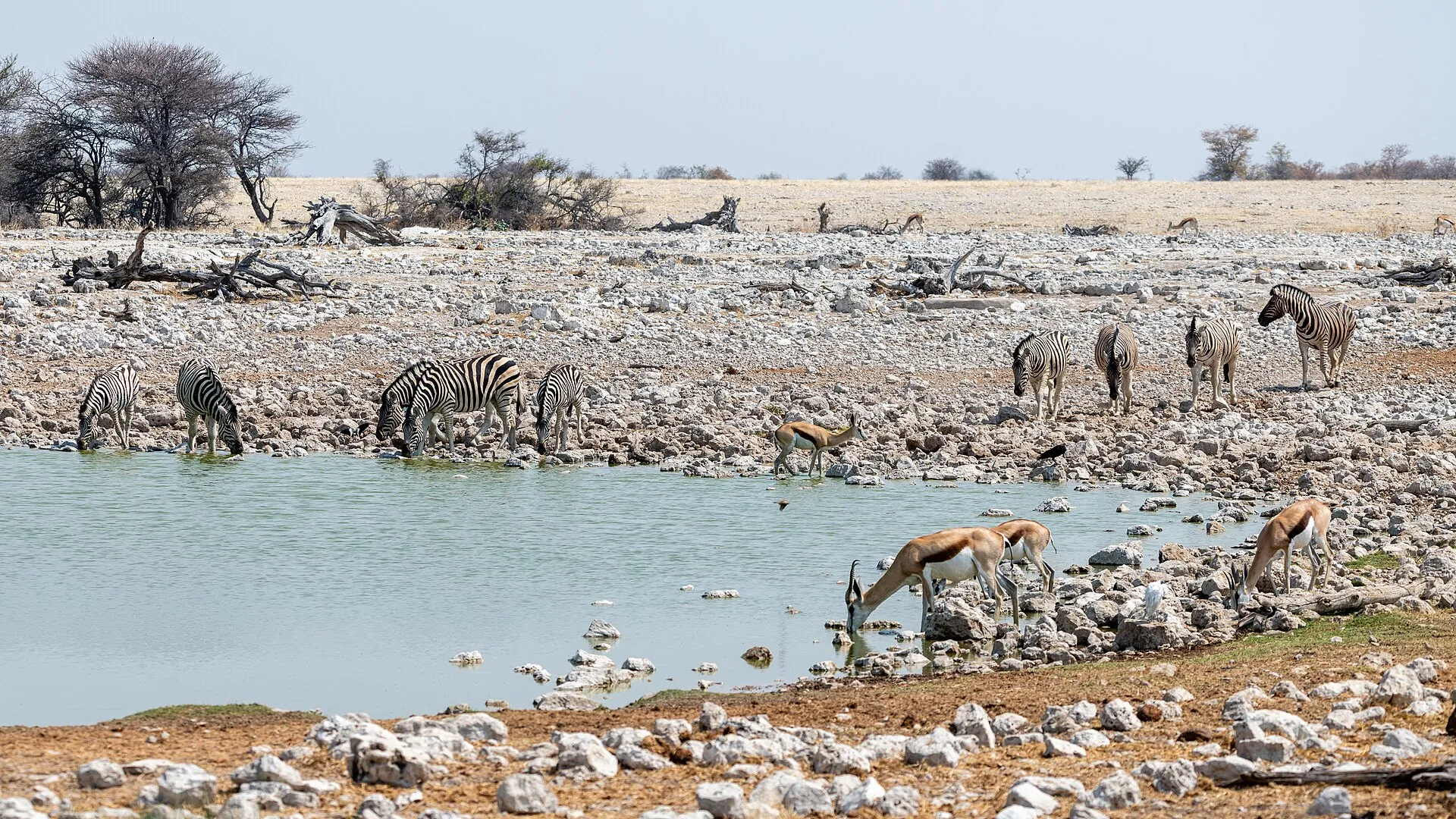
Binoculars are the single most useful object on a safari, and the one most often left behind. One pair per person, 8×32 or 8×42, transforms a waterhole from a view into a story. At Etosha’s floodlit waterholes they gather enough light to follow a rhino in the dark.
- Camera with a telephoto lens of at least 300 mm (full-frame equivalent) for wildlife; a wide-angle lens for dunes and night skies; a phone handles the rest. The photography guide goes into detail.
- Dust protection: a blower brush, lens cloths, and a zip-lock bag or dry bag for each body and lens. Change lenses inside the closed car.
- Spare batteries and memory cards. A 12 V car charger or a USB adaptor for the vehicle socket lets you charge while driving, which matters when camping.
- Plug adaptor for the South African three-round-pin socket (type M; type D is also found). Many lodges have a few European two-pin sockets as well, but do not count on it. A short multi-socket extension lead lets one adaptor serve several chargers.
- Head torch with spare batteries — essential at campsites and useful at lodges, where paths are unlit by design.
- Power bank.
- A beanbag (empty, filled with rice or beans on arrival) to steady a long lens on the car window.
Drones may not be flown in national parks, and flying one anywhere in Namibia requires prior authorisation from the Namibia Civil Aviation Authority. Unless you have arranged the paperwork, leave it at home.
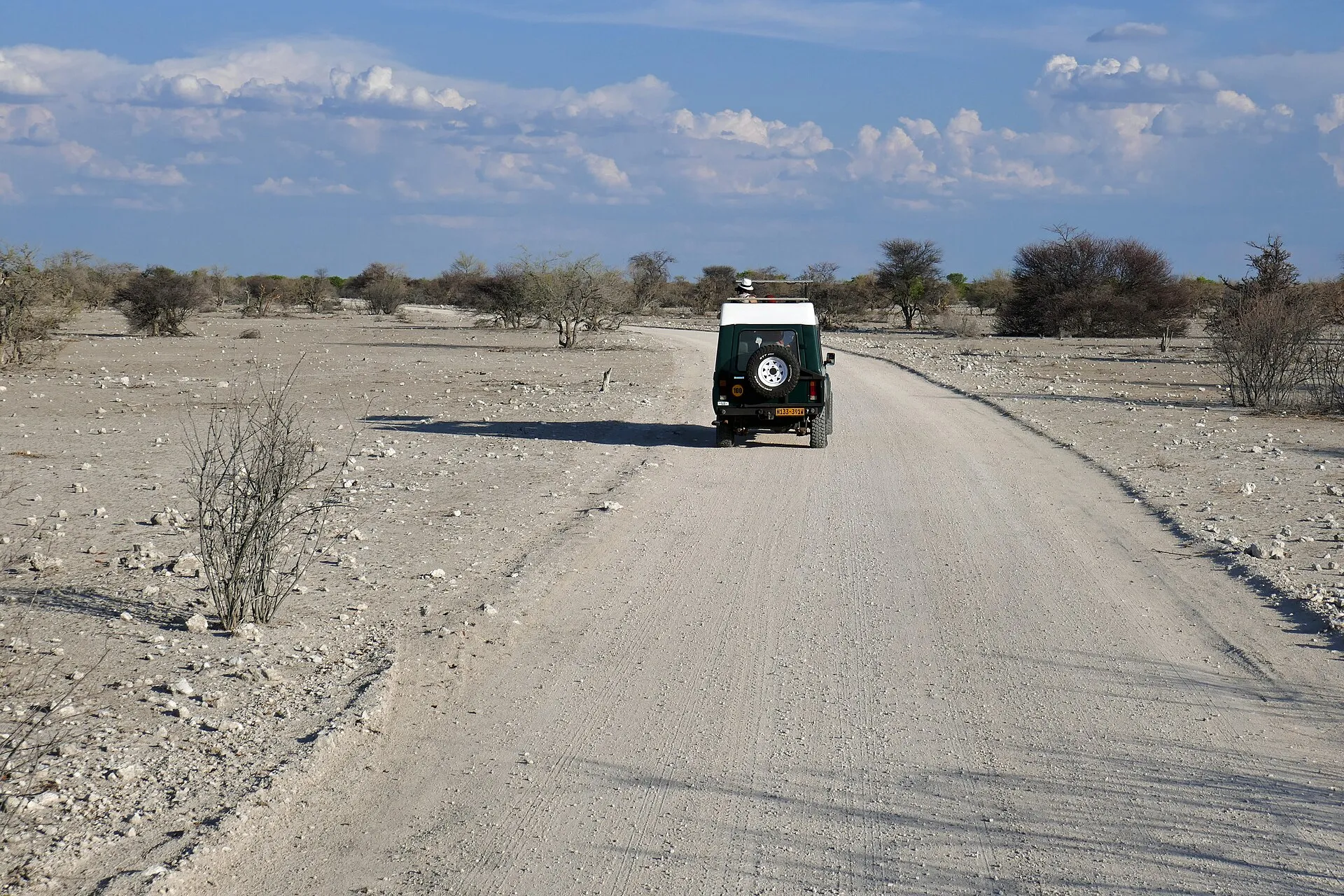
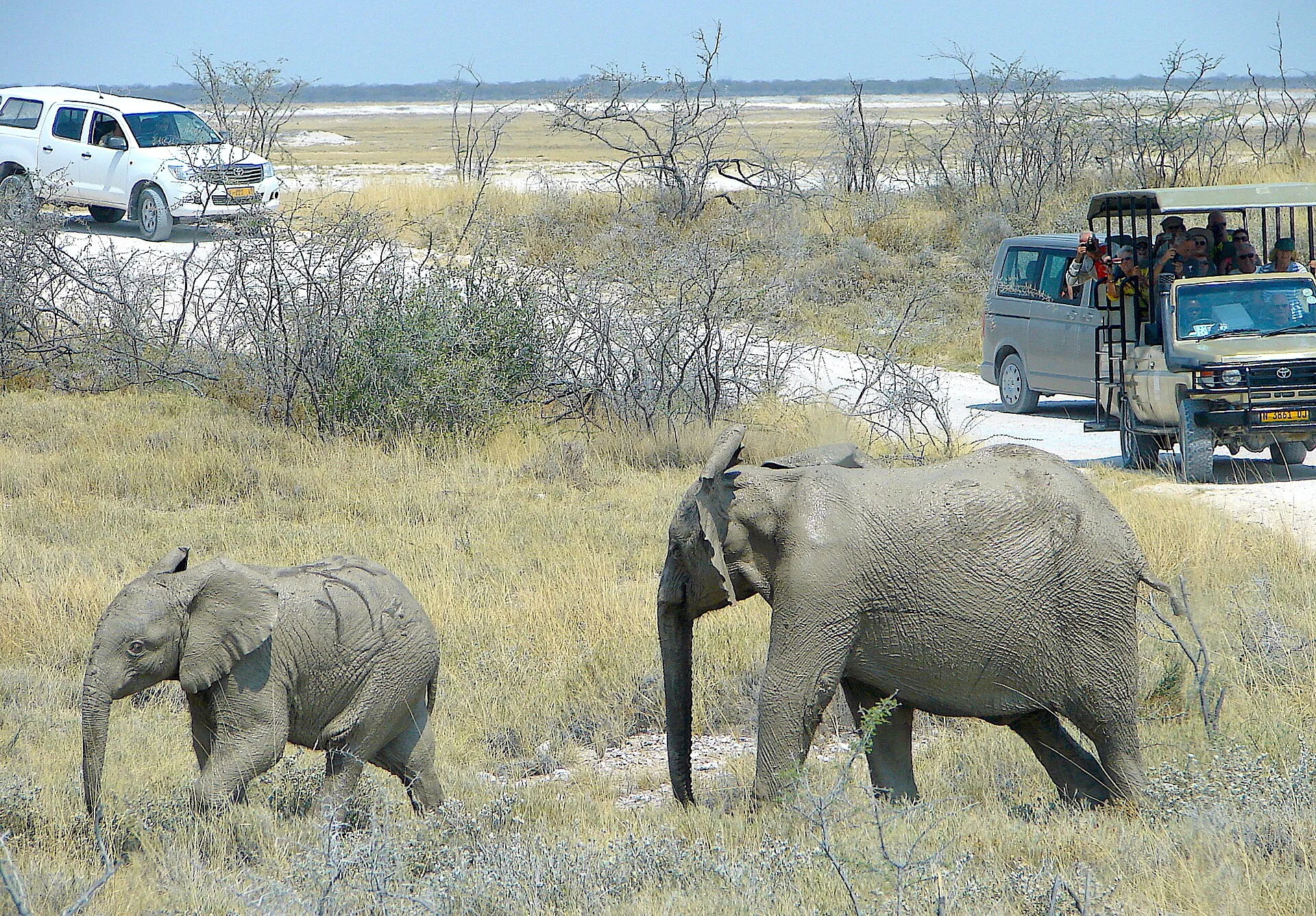
A long lens and binoculars earn their weight on every game drive.
For the car
- Water: 5 litres per person as a reserve that stays in the vehicle, plus the day’s drinking water. Buy 5-litre bottles in any supermarket.
- Offline maps downloaded for the whole country, and a paper road map.
- Cool box or the rental fridge stocked for picnic lunches; there are long stretches with no shop.
- Phone mount and charging cable.
- Small notes and coins for fuel attendants and car guards.
- Rubbish bags; carry everything out.
- A tyre-pressure gauge if the rental firm does not provide one, and work gloves for wheel changes.
The vehicle checks to make at handover are listed in the self-drive guide.
Extra for campers
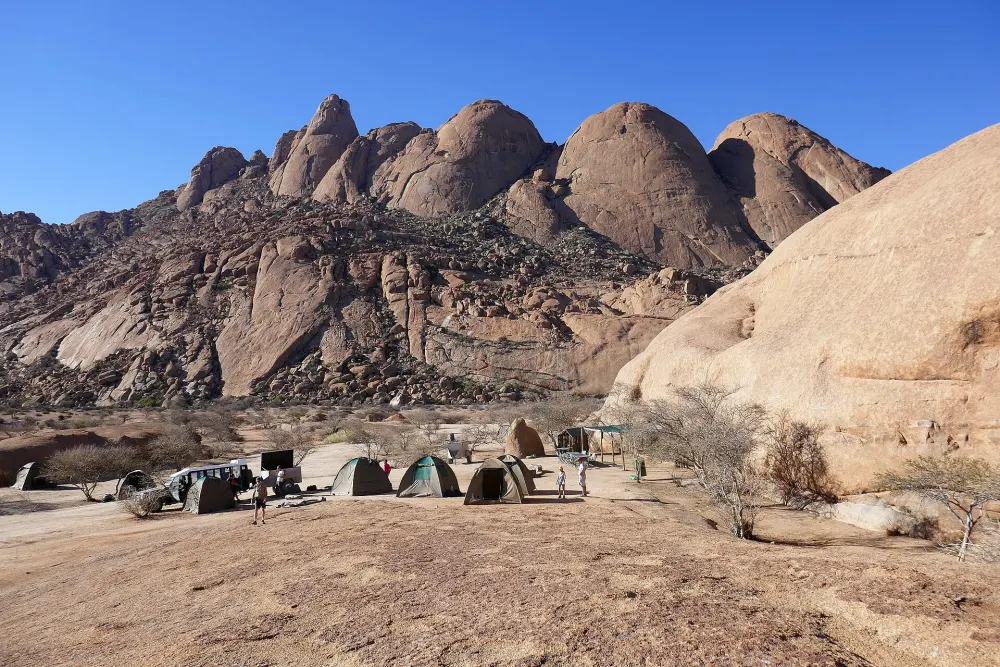
An equipped rental 4x4 comes with tent, mattresses, bedding or sleeping bags, table, chairs, cooker, gas, crockery, pots, a braai grid and a fridge. Ask for the inventory in advance and check it at the depot. What it will not have, and what experienced campers add:
- A warmer sleeping bag or an extra fleece blanket in winter; rental bags are often thin.
- A small pillow of your own.
- Lighter, matches and firelighters; buy firewood at fuel stations and camp shops, never collect it in parks.
- Dishcloths, sponge, washing-up liquid, a washing line and pegs.
- A sharp knife and a chopping board.
- Wet wipes and a quick-dry towel.
- Earplugs: jackals, lions and neighbours.
- A lantern for the table in addition to head torches.
More on sites, routines and rules in the camping guide.
Luggage for fly-in safaris and guided tours
Light aircraft that link lodge airstrips carry little, and operators set firm limits — commonly a total in the region of 15–20 kg per person including hand luggage, in soft bags without frames or wheels, because the hold is a small irregular locker. The exact allowance is on your ticket; exceed it and the bag may follow on a later flight. Leave surplus luggage with your Windhoek hotel.
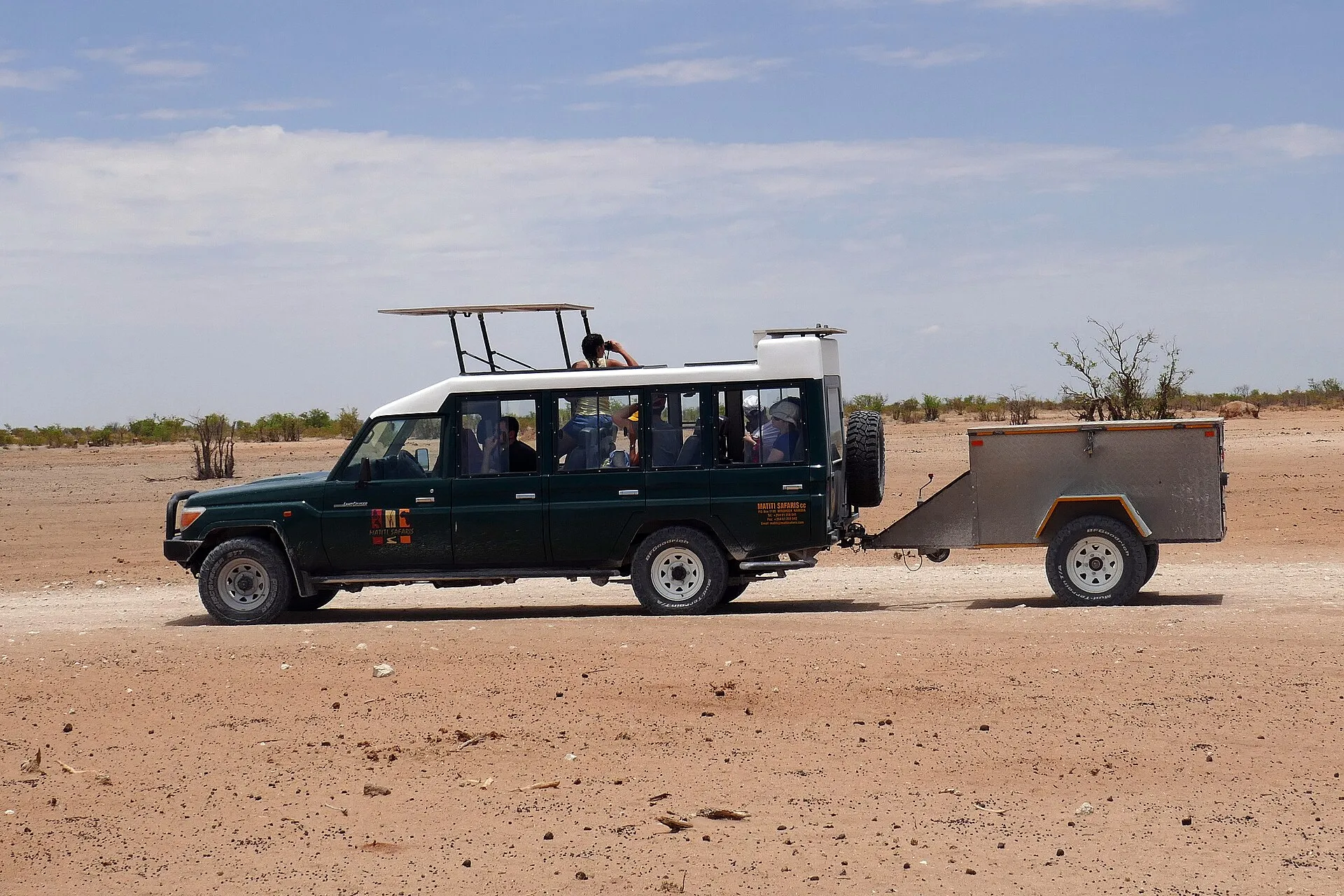
Scheduled group safaris ask for one soft bag and a daypack per person for the same reason: everything travels in a trailer or on a roof. Sleeping bags can usually be hired from camping-tour operators; check when booking.
What to leave behind, and what to buy in Namibia
Leave formal clothes, hairdryers (lodge electricity is often solar), valuable jewellery and more than one book’s worth of paper. Bring a sense of how little you need.
Windhoek and Swakopmund have supermarkets, pharmacies, outdoor shops and camera shops that sell almost everything on this list, usually for less than at home: sunscreen, repellent, hats, fleece jackets, gas canisters, cool boxes, torches. Small towns have a supermarket and a general store. Beyond them — Sesriem, Palmwag, Epupa, the Etosha camp shops — expect only basics, and stock up before you leave the tar.
Frequently asked questions
What should I wear on safari in Namibia?
Comfortable everyday clothes in neutral colours, in layers: T-shirt, long-sleeved shirt, fleece and a windproof jacket, with long trousers for evenings. Add a wide-brimmed hat and closed shoes. Nothing specialised is needed, and lodges are informal.
Do I need warm clothes in Namibia?
Yes. From May to September nights and early mornings are cold, at or near freezing in the desert and highlands, and open game-drive vehicles add wind chill. Even in summer the coast and desert nights are cool enough for a fleece.
What plug adaptor do I need for Namibia?
The South African large three-round-pin plug, type M, on a 220–240 V, 50 Hz supply. Type D sockets also exist. Adaptors are sold at the airport and in supermarkets in Windhoek.
Can I take a suitcase on a Namibian safari?
For a self-drive trip with lodges, yes. For guided group safaris and any light-aircraft transfer, use a soft bag without a frame or wheels and check the weight limit your operator sets, which is much lower than an airline’s.
Do I need binoculars?
They are strongly recommended. Much of Etosha’s wildlife is seen at a distance across open plains and waterholes, and a pair of 8×32 or 8×42 binoculars per person makes a large difference.
Sources and official information
Facts were checked against these official sources in November 2026. Park fees, gate times, visa rules and timetables change, so confirm before you go.
NamibiaSafaris.com is an independent guide, not the official site of any tour operator, lodge, Namibia Wildlife Resorts or the Namibian government. Some links are affiliate links: tours go to GetYourGuide and accommodation goes to Booking.com, and we may earn a commission at no extra cost to you.