In short
- Since 1 April 2025 Namibia requires a visa from citizens of countries that do not give Namibians visa-free entry. That now includes the UK, the USA, Canada, Australia, New Zealand, Japan and most of Europe, among them Germany, France, the Netherlands, Italy, Spain, Switzerland and Austria.
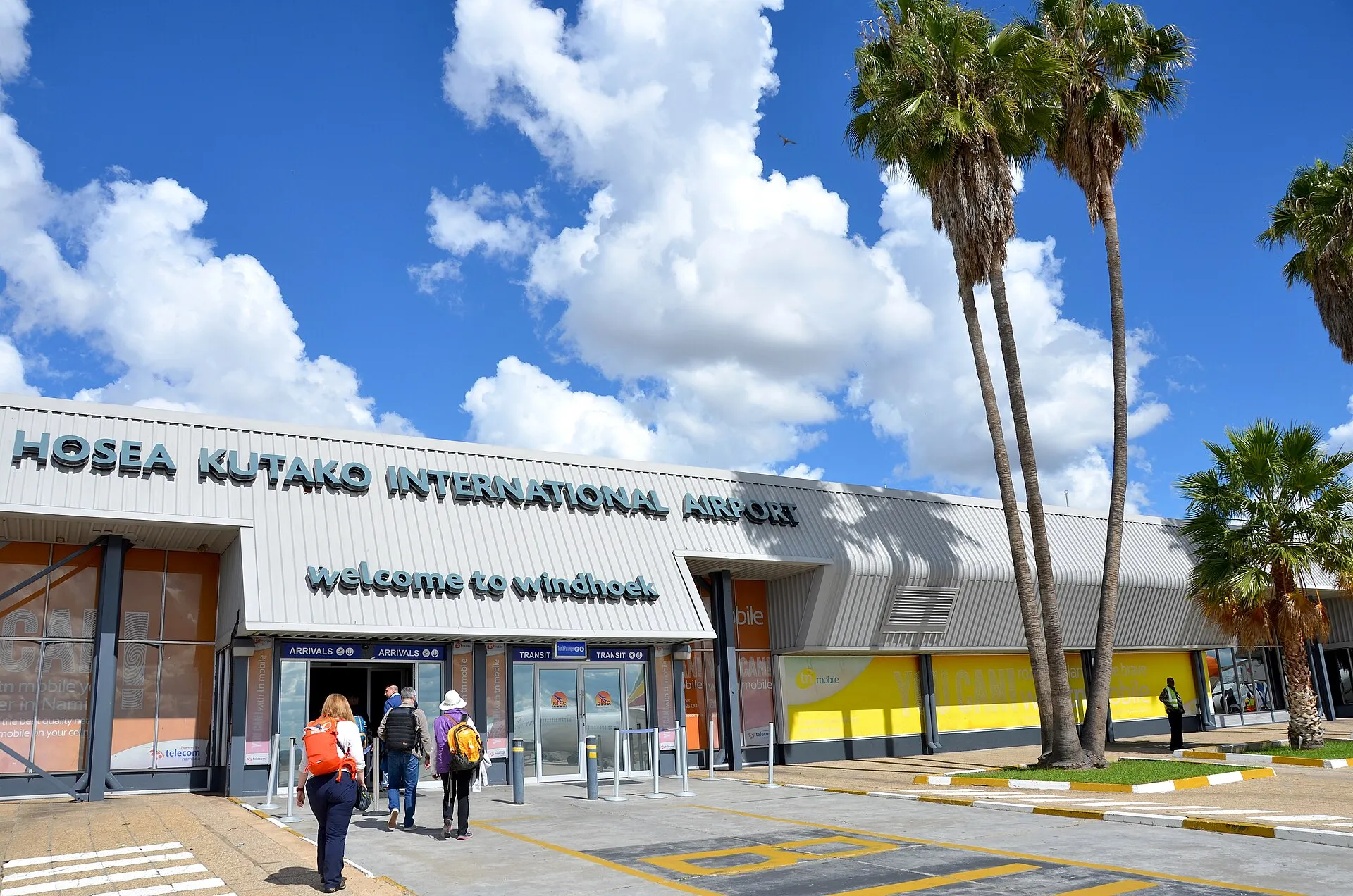
- How to get it: apply online before you travel on the ministry’s e-services portal (eservices.mhaiss.gov.na) and print the e-visa, or apply on arrival at one of the designated ports of entry, including Hosea Kutako International Airport and Walvis Bay Airport.
- Fee: N$1,600 per adult for non-African nationalities and N$1,200 for the listed African nationalities; children aged 6–11 pay half and under-6s nothing. In September 2025 the ministry announced an extra N$400 for applications made by hand at the counter, to start once gazetted, so apply online.
- No visa needed for citizens of South Africa, Botswana, Angola, Zambia, Zimbabwe, Brazil, Russia, Singapore, Malaysia and the other countries on the exemption list below.
- Carry: a passport valid for at least 6 months after arrival with 3 blank pages, a printed e-visa if you applied online, and a full birth certificate for every child under 18. Rules checked on 21 November 2026; confirm with the ministry or a Namibian embassy before you travel.
The short version
For decades visitors from about 30 Western countries walked into Namibia with nothing but a passport. That ended on 1 April 2025. The Ministry of Home Affairs, Immigration, Safety and Security (MHAISS) withdrew visa-free entry from every country that does not offer the same to Namibian citizens, and replaced it with a paid visa that can be obtained either online in advance or on arrival at the main airports and border posts.
The visa is a formality for holidaymakers, but it is no longer optional, the fee is per person, and a handful of smaller border posts cannot issue it. Everything on this page comes from the ministry’s own fact sheet, Namibian government notices and the travel advice of foreign ministries, checked on 21 November 2026. Visa rules are the part of a Namibia trip most likely to change, and the ministry describes its fees as subject to annual review, so treat this as a briefing and confirm the details on the official portal before you pay for flights.
- Regime in force since
- 1 April 2025
- Adult fee
- N$1,600 (non-African list) · N$1,200 (African list)
- Children
- 6–11 years half fee · under 6 free
- Apply online
- eservices.mhaiss.gov.na (print the e-visa)
- Maximum holiday stay
- Up to 90 days; you are given the number of days you ask for
- Passport
- Valid 6 months after arrival, 3 blank pages
- Ministry information line
- +264 81 951 0064 / 65 / 66
Who needs a visa
The ministry publishes the nationalities that must have a visa but may get it on arrival or as an e-visa. The first fact sheet (18 March 2025) named 33 countries outside Africa plus a list of African states; on 23 September 2025 the ministry added 36 more countries and territories. The lists below are the ones shown on the ministry’s own e-services portal when we checked it on 21 November 2026.
- Europe: Andorra, Austria, Belarus, Belgium, Bulgaria, Croatia, Cyprus, Czech Republic, Denmark, Estonia, Finland, France, Georgia, Germany, Greece, Hungary, Iceland, Ireland, Italy, Latvia, Liechtenstein, Lithuania, Luxembourg, Malta, Moldova, Monaco, Montenegro, the Netherlands, North Macedonia, Norway, Poland, Portugal, Romania, Serbia, Slovakia, Slovenia, Spain, Sweden, Switzerland, Ukraine, the United Kingdom, the Vatican, the Åland Islands and the Sovereign Order of Malta.
- The Americas: Argentina, Bolivia, Canada, Chile, the Dominican Republic, Ecuador, Haiti, Mexico, Nicaragua, Panama, Paraguay, Peru, Suriname, the United States, Uruguay and Venezuela, plus Anguilla, Antigua and Barbuda, Aruba, the Bahamas, Barbados, Bermuda, Grenada, Saint Kitts and Nevis, Saint Lucia, Saint Vincent and the Grenadines, and Trinidad and Tobago.
- Asia, the Middle East and the Pacific: Armenia, Australia, Azerbaijan, Brunei, Cambodia, Israel, Japan, Kazakhstan, Kyrgyzstan, the Maldives, Mongolia, New Zealand, Singapore, South Korea, Tajikistan, Thailand, Turkey, Turkmenistan, the United Arab Emirates, Uzbekistan and Vietnam, plus American Samoa, Kiribati, Tonga and Vanuatu.
- Africa (lower fee): Benin, Burkina Faso, Burundi, Cabo Verde, Cameroon, the Central African Republic, Chad, Comoros, Côte d’Ivoire, Djibouti, Equatorial Guinea, Eritrea, Gabon, Gambia, Ghana, Guinea, Guinea-Bissau, Liberia, Madagascar, Mauritania, Niger, Rwanda, São Tomé and Príncipe, Sierra Leone, Togo, Tunisia, Uganda and Western Sahara.
If your nationality is on neither these lists nor the exemption list in the next section — ordinary-passport holders from China, India and Nigeria, for example, were not on the portal’s list when we checked — you cannot simply turn up. You need a visa issued before travel, either through the same online portal (with more supporting documents and a longer wait) or through a Namibian embassy or high commission.
Dual nationals should travel on whichever passport gives the easier entry, and use the same passport to enter and leave.
Who does not need a visa
Citizens of the following countries enter Namibia without a visa on any type of passport, for holidays of up to three months in a calendar year:
- Southern and East Africa: Angola, Botswana, Eswatini, Kenya, Lesotho, Malawi, Mauritius, Mozambique, Seychelles, South Africa, Tanzania, Zambia and Zimbabwe.
- Elsewhere: Brazil, Cuba, Hong Kong SAR, Indonesia, Jamaica, Macau SAR, Malaysia, the Russian Federation and Singapore.
Singapore appears on both the exemption list and the visa-on-arrival list in the March 2025 fact sheet; Singaporean travellers should check the portal before departure. Visa-exempt visitors still need a passport with six months’ validity and blank pages, still fill in an arrival form, and are still given a fixed number of days by the immigration officer.
What it costs
The fee is the same whether you apply online or at the airport — with one caveat. In September 2025 the ministry announced that people who arrive without having applied online and fill in the paper form at the counter would pay an additional N$400, taking the total to N$2,000. The ministry said the start date would follow publication in the Government Gazette. At the time of checking we could not find confirmation that the surcharge is being collected, but the direction is clear: the online route is the one the government wants you to use, and it is the only way to be sure of paying N$1,600.
At the counter, payment is by card. Carry a second card, and enough cash in rand or Namibian dollars to cover the fee for your party in case the terminal is offline; cash acceptance at the counter is not something the ministry’s fact sheet promises.
| Traveller | Fee per person | Notes |
|---|---|---|
| Adult, non-African visa-on-arrival nationality | N$1,600 | Applies from age 12, according to the UK Foreign Office summary of the ministry’s rules |
| Child aged 6–11 | N$800 | Half fee |
| Child under 6 | Free | Still needs a passport and birth certificate |
| Adult, listed African nationality | N$1,200 | Children 6–11 are reported at half this fee |
| Manual application at the counter | N$1,600 + N$400 | Surcharge announced 23 September 2025, to apply once gazetted — see below |
| Visa-exempt nationality | No fee | Passport rules still apply |
Applying online, step by step
The online application is the same product as the visa on arrival, issued in advance. The ministry’s published procedure:
- Go to the ministry’s portal, eservices.mhaiss.gov.na, and register an account (one account can submit applications for a family).
- Log in and choose Visa on Arrival Application.
- Complete the form: passport details, dates, the number of days you want, where you will stay.
- Attach a scan of your passport photo page. The portal accepts files between 300 KB and 2 MB — a phone photo usually has to be resized.
- Pay online by card.
- Submit. The e-visa is issued through the portal; download it and print it. The ministry says a printed copy must be shown at the port of entry.
Where a visa on arrival is issued
You can apply in person only at the ports of entry the ministry has equipped for it. According to its fact sheet these are:
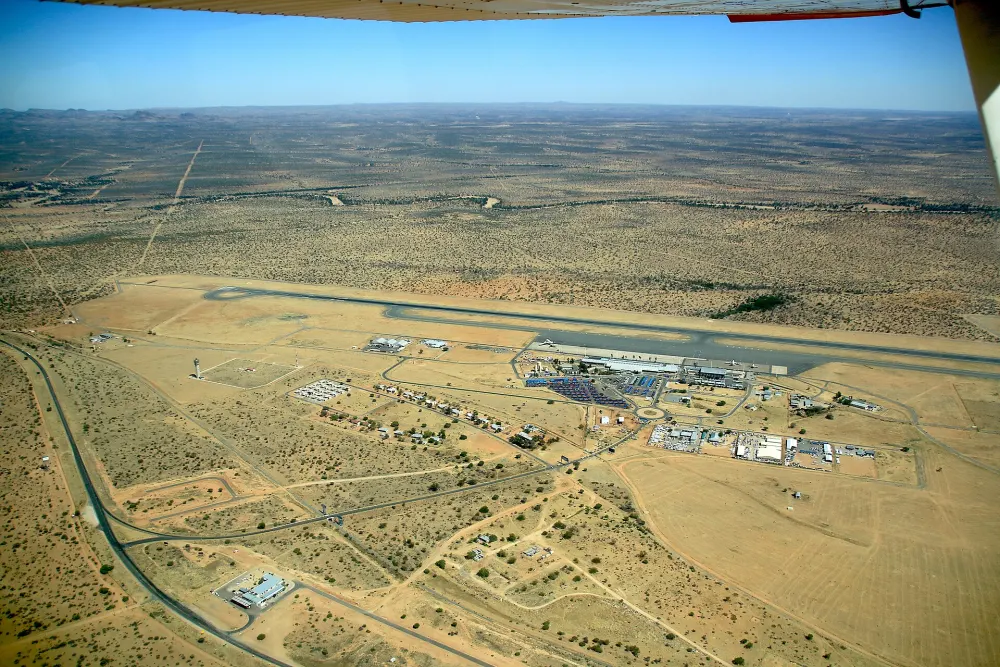
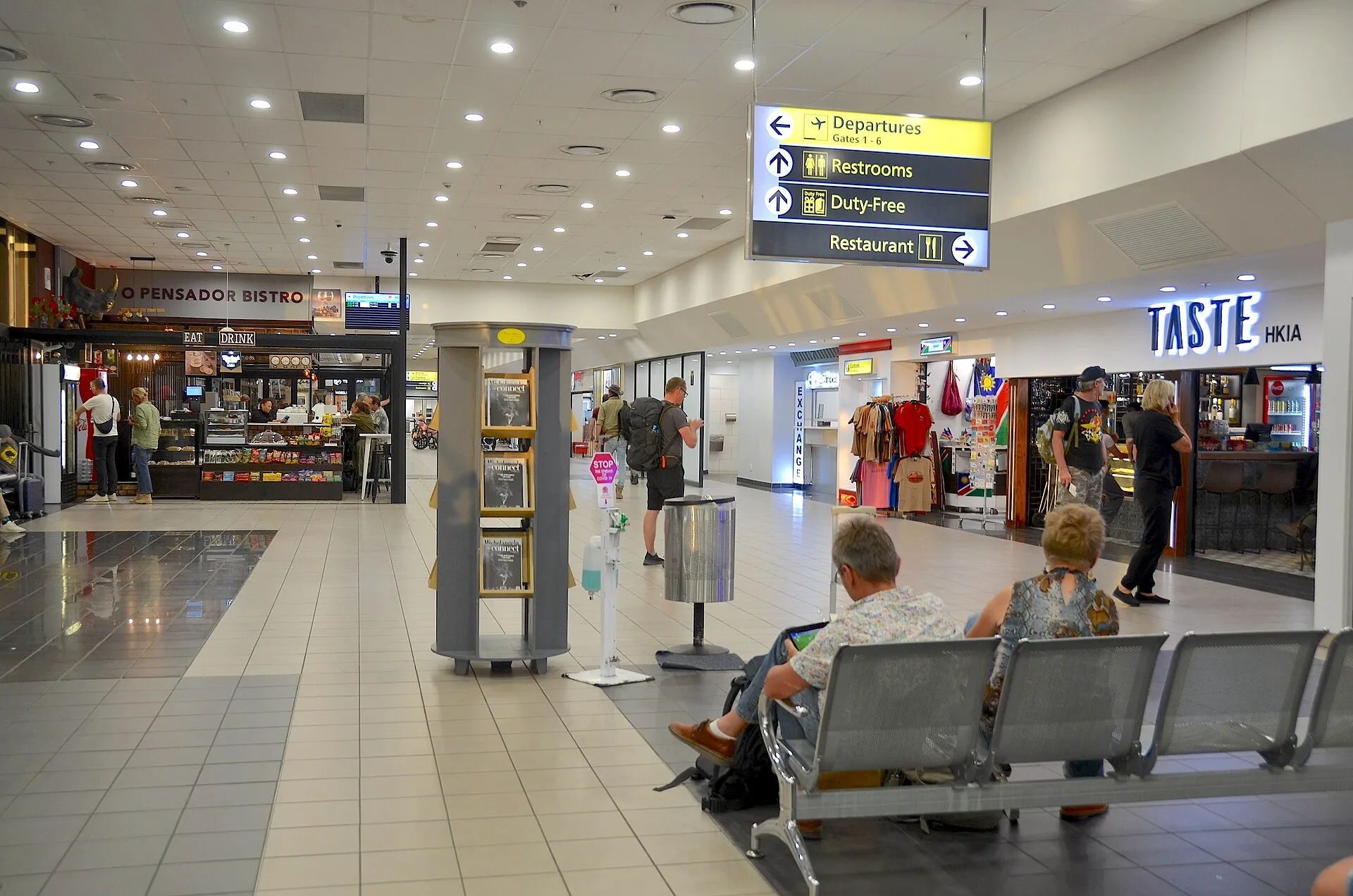
- Airports: Hosea Kutako International (Windhoek), Walvis Bay, Lüderitz and Oranjemund. (Lüderitz Airport appears both on this list and on the fact sheet’s list of places that cannot process e-visas; if you plan to fly in there from abroad, confirm with the ministry.)
- Harbours: Walvis Bay and Lüderitz (cruise passengers).
- South Africa border: Noordoewer (opposite Vioolsdrif, on the Cape Town road), Ariamsvlei (opposite Nakop, on the Upington road) and Oranjemund.
- Botswana border: Trans-Kalahari (Buitepos, opposite Mamuno), Mohembo and Ngoma.
- Zambia border: Katima Mulilo (Wenela bridge to Sesheke).
- Angola border: Oshikango, Ruacana and Katwitwi.
- Zambezi/Chobe river: Impalila Island.
An e-visa issued online is accepted at all gazetted ports of entry except a group of small posts and airfields that are not connected to the system. The fact sheet names Dobe, Kasika, Klein Manasse, Mata-Mata, Nkurenkuru, Sarasungu, Singalamwe and Vioolsdrift border posts and the airports at Gobabis, Grootfontein, Keetmanshoop, Lüderitz, Mpacha (Katima Mulilo), Ondangwa and Rundu. If you need a visa, do not plan to enter Namibia through any of those — the Mata-Mata gate from South Africa’s Kgalagadi Transfrontier Park is the one that catches self-drivers out.
Windhoek’s city airport, Eros, handles charters and domestic flights; if you are flying in on a private or charter flight from abroad, confirm the arrangements with the operator.
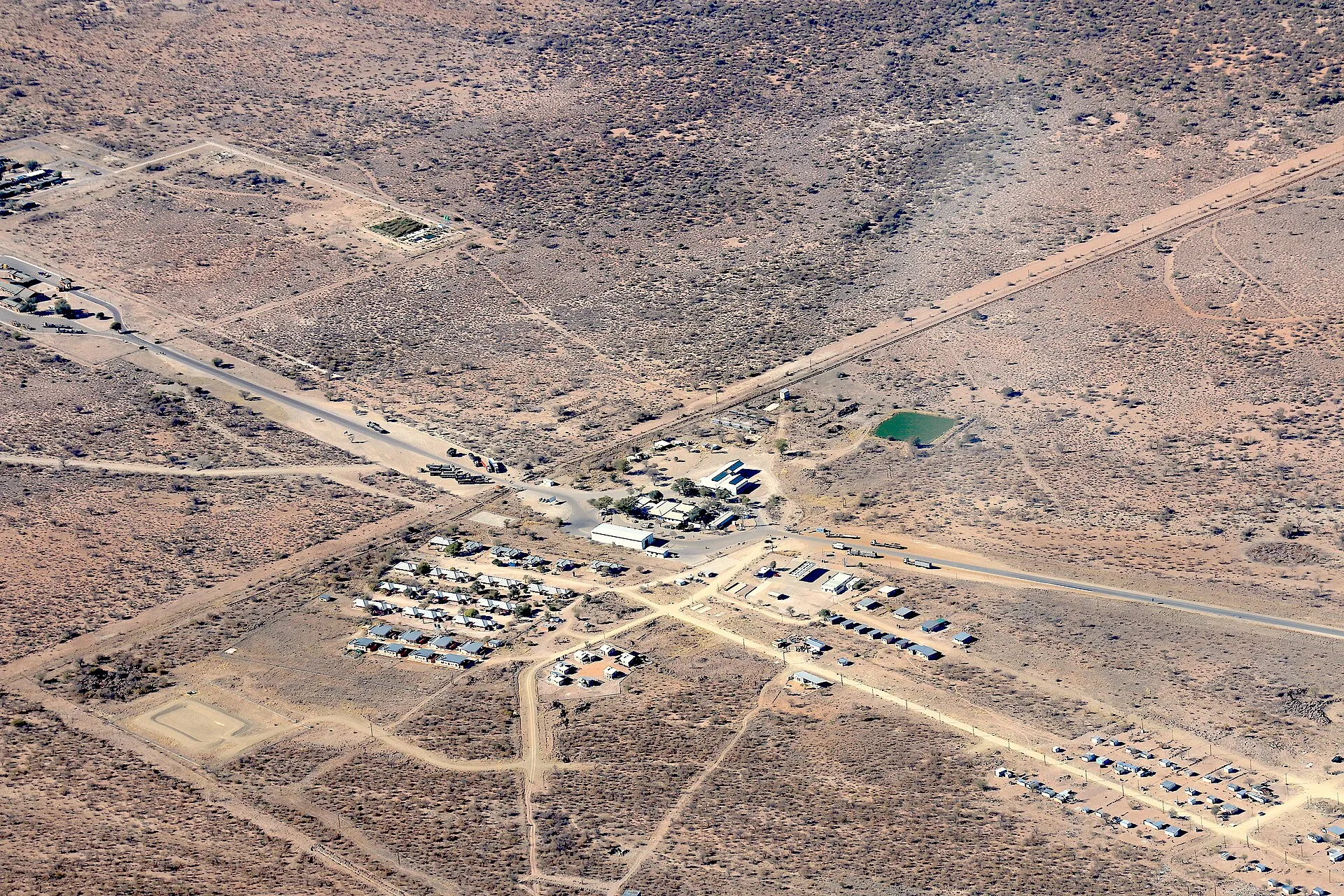
The Buitepos border post on the Trans-Kalahari Highway from Botswana, one of the crossings that issues visas on arrival.
Passport and documents to have ready
The ministry’s checklist for arriving visitors:
- Passport valid for at least six months from the day you arrive, with at least three blank pages. Airlines check this at departure and refuse boarding if it falls short.
- Printed e-visa, if you applied online.
- Return or onward ticket, if asked.
- Proof of accommodation or an itinerary — a booking confirmation, a tour voucher or an invitation letter from a host.
- Proof of funds for the stay.
- Health or travel insurance that covers medical costs.
- The arrival form, handed out on the aircraft or at the counter; everyone except returning residents completes one.
In practice officers at Windhoek’s airport ask most holidaymakers only for the passport, the visa and the address of the first night. Have the rest on your phone and on paper anyway: a self-drive itinerary with booked camps is the simplest proof of everything at once.
Travelling with children
Namibia applies child-protection rules at the border in the same spirit as South Africa once did, and it still enforces them. For every traveller under 18 carry:
- the child’s own passport;
- a full (unabridged) birth certificate naming both parents — the original or a certified copy. Short-form certificates that do not show the parents are not accepted;
- if the child travels with one parent, a signed consent affidavit from the other parent (or a death certificate or court order giving sole custody, where that applies);
- if the child travels with neither parent, consent affidavits from the parents or legal guardians, and for an unaccompanied child also a letter from the person receiving them with a contact address.
This wording follows the UK Foreign Office’s summary of Namibia’s requirements; the ministry’s fact sheet puts it more briefly as “full birth certificate and parental consent letter (if applicable)”. Documents not in English should be accompanied by a certified translation. Airlines apply the rule at check-in, and families routing through Johannesburg or Cape Town should also read South Africa’s current rules for minors in transit.
Yellow fever and health entry rules
Namibia has no yellow fever, and no vaccination is required of travellers arriving directly from Europe, North America, Asia or Australasia. A yellow fever vaccination certificate is required from travellers aged nine months and over who arrive from a country with a risk of yellow fever transmission, or who have spent more than 12 hours in transit in an airport in such a country. That matters if you fly via Addis Ababa, Nairobi or Luanda with a long layover, or arrive overland after travelling in Angola or Zambia’s north-west. The certificate is valid for life.
There were no Covid-related entry requirements at the time of checking. Malaria, vaccinations and what to pack in a medical kit are covered in health and safety.
Length of stay, stamps, extensions and work
A holiday visa lets you stay for the period you request, up to a maximum of 90 days, and the visa on arrival is described by the UK Foreign Office as multiple-entry for that period — useful if you plan a side trip to Victoria Falls or Chobe from the Zambezi Region and then come back.
Whatever you asked for, read the stamp before you leave the counter. Officers write the permitted number of days or an exit date by hand, and there is a long record of visitors being given fewer days than their trip needs. An overstay — even one caused by an officer’s slip — can mean detention, a fine and a missed flight. If the date is wrong, say so immediately.
Extensions are handled by the ministry’s immigration offices, in Windhoek and in the regional capitals, and must be requested before the original permission runs out. Holiday stays are capped at 90 days in a calendar year.
A visitor’s visa does not allow paid or unpaid work. Volunteering at a wildlife sanctuary, research, filming for commercial use and journalism all need the appropriate permit, arranged in advance through the host organisation or a Namibian diplomatic mission.
Border posts and opening hours
Most overland visitors use one of six crossings. Hours below are those published by the ministry in March 2024, the most recent official list we could find; the Oshikango crossing to Angola was reported to have moved to 24-hour operation in June 2024. The post on the far side of a border does not always keep identical hours, and Namibia does not change its clocks (UTC+2 all year), so allow a margin late in the day.
| Border post | Neighbour | Hours | Visa on arrival |
|---|---|---|---|
| Noordoewer / Vioolsdrif | South Africa (N7 from Cape Town) | 24 hours | Yes |
| Ariamsvlei / Nakop | South Africa (from Upington) | 24 hours | Yes |
| Trans-Kalahari (Buitepos) / Mamuno | Botswana (from Ghanzi, Maun) | 24 hours | Yes |
| Mohembo | Botswana (Okavango panhandle) | 06:00–18:00 | Yes |
| Ngoma | Botswana (Chobe, Kasane) | 08:00–18:00 | Yes |
| Katima Mulilo (Wenela) / Sesheke | Zambia | 24 hours | Yes |
| Oshikango / Santa Clara | Angola | 08:00–19:00 in the 2024 list; reported 24 hours since June 2024 | Yes |
| Ruacana | Angola | 08:00–19:00 | Yes |
| Oranjemund / Alexander Bay | South Africa | 06:00–22:00 | Yes |
| Velloorsdrift / Onseepkans | South Africa | 08:00–22:00 | No visa service listed |
| Sendelingsdrift (river pont) | South Africa (Richtersveld) | 08:00–16:30 | No visa service listed |
| Mata-Mata | South Africa (Kgalagadi Transfrontier Park) | 08:00–16:30 | No — e-visas are not processed here |
| Impalila Island | Botswana (Kasane, by boat) | 07:00–17:00 | Yes |
| Dobe | Botswana (from Nokaneng) | 07:30–16:30 | No — e-visas are not processed here |
Driving across: vehicle papers
Immigration is only half of an overland crossing. For a vehicle you need the registration papers, a letter from the rental company authorising cross-border travel if the car is hired, and proof of insurance. Foreign-registered vehicles pay Namibia’s cross-border road charge at the border and receive a permit that must be kept until exit; the amount depends on the vehicle class and is set by the Road Fund Administration, so ask your rental company for the current figure. The practical side — which rental firms allow which borders, and what Botswana and South Africa ask for in return — is in the self-drive guide.
Namibia is not part of the KAZA Univisa, which covers Zambia and Zimbabwe. If you add Victoria Falls to a Namibia trip you deal with each country’s own entry rules.
How to check before you travel
- The ministry’s portal (eservices.mhaiss.gov.na) shows the nationalities currently eligible and the live fee at the payment step.
- Your own foreign ministry’s travel advice for Namibia is updated when rules change; the UK, German, Swiss, Dutch, Canadian and US pages all carry an entry-requirements section.
- A Namibian embassy or high commission can confirm in writing — worth doing for unusual cases such as emergency passports, refugee travel documents or children travelling with grandparents.
- Your airline applies the rules it finds in its own database at check-in; if you are visa-exempt on one passport and not on another, tell the airline which one you are using.
With the paperwork done, the remaining arrival questions are practical ones: which airport, which transfer and where to collect a car. Those are in getting to Namibia.
Frequently asked questions
Do British, American, German or Australian citizens need a visa for Namibia?
Yes. Since 1 April 2025 all four, along with most of Europe, Canada, New Zealand and Japan, need a visa. It can be obtained online before travel through eservices.mhaiss.gov.na or on arrival at designated ports of entry such as Windhoek’s Hosea Kutako International Airport. The published fee is N$1,600 per adult.
Is it better to apply online or on arrival?
Online. It is the route the ministry recommends, it shortens the queue at the airport, and it avoids the N$400 surcharge that the ministry announced in September 2025 for paper applications at the counter. Print the e-visa and carry it with your passport.
How long can you stay in Namibia on a tourist visa?
Up to 90 days. You request the number of days you need and the officer writes the permitted stay in your passport. Check that entry before you leave the counter, because overstaying is treated seriously.
Do children need a visa for Namibia?
Children of visa-required nationalities need one too: free under the age of 6 and half fee from 6 to 11, according to the UK Foreign Office summary of the ministry’s rules. Every child under 18 must also travel with a full birth certificate showing both parents, plus consent affidavits if a parent is absent.
Can I get a Namibian visa at a land border?
At the main ones, yes: Noordoewer and Ariamsvlei from South Africa, Trans-Kalahari, Mohembo and Ngoma from Botswana, Katima Mulilo from Zambia and Oshikango, Ruacana and Katwitwi from Angola. Small posts such as Mata-Mata and Dobe cannot issue or process visas.
Do South Africans need a visa for Namibia?
No. South African citizens are on the exemption list, as are citizens of Botswana, Angola, Zambia, Zimbabwe and the other countries listed above. A passport valid for six months is still required.
Sources and official information
Facts were checked against these official sources in November 2026. Park fees, gate times, visa rules and timetables change, so confirm before you go.
- eservices.mhaiss.gov.na
- eservices.mhaiss.gov.na
- namibiaembassyusa.org
- gov.uk
- eiglaw.com
- namibia-forum.ch
- travelhealthpro.org.uk
- wwwnc.cdc.gov
NamibiaSafaris.com is an independent guide, not the official site of any tour operator, lodge, Namibia Wildlife Resorts or the Namibian government. Some links are affiliate links: tours go to GetYourGuide and accommodation goes to Booking.com, and we may earn a commission at no extra cost to you.