In short
- The big three for visitors: Etosha (wildlife), Namib-Naukluft (Sossusvlei and the dune sea) and the Skeleton Coast.
- Fees since 1 April 2026: N$280 per foreign adult per day at the eight flagship parks, N$200 at the north-eastern and smaller parks, N$150 for Sandwich Harbour; vehicles N$60 (N$50 at Sandwich Harbour).
- State parks are run by the Ministry of Environment, Forestry and Tourism (MEFT); accommodation inside them by Namibia Wildlife Resorts (NWR).
- Gates open at sunrise and close at sunset. Stay in your vehicle except where signs allow.
- Outside the parks, communal conservancies and private reserves protect as much land again and hold some of the best rhino, elephant and big-cat experiences.
How protected land works in Namibia
Roughly a sixth of Namibia is state-protected, and the parks join up: the entire Atlantic coast, from the Orange River to the Kunene, lies within a chain of national parks, and Etosha is linked to the Skeleton Coast by concessions and conservancies. Parks are proclaimed and managed by MEFT, whose rangers staff the gates and collect entrance fees. Rest camps and campsites inside are run by the state company NWR, or in a few cases by private concession holders.
Around and between the parks lie the communal conservancies — 86 of them — and private nature reserves, which are not national parks but are where many of the most rewarding guided activities take place. They charge their own fees, usually built into the price of a lodge or an activity.
The fee groups below come from the Government Gazette of 1 April 2026. Fees are per person per day, with a separate daily vehicle fee, and are paid at the gate or park office. Children of eight and under are free, those aged 9–15 pay a reduced fee, and citizens of SADC countries and Namibia pay less; the full table is in safari costs.
The national parks, in one table
| Park | Where | What it is | Foreign adult, per day | Access and stay |
|---|---|---|---|---|
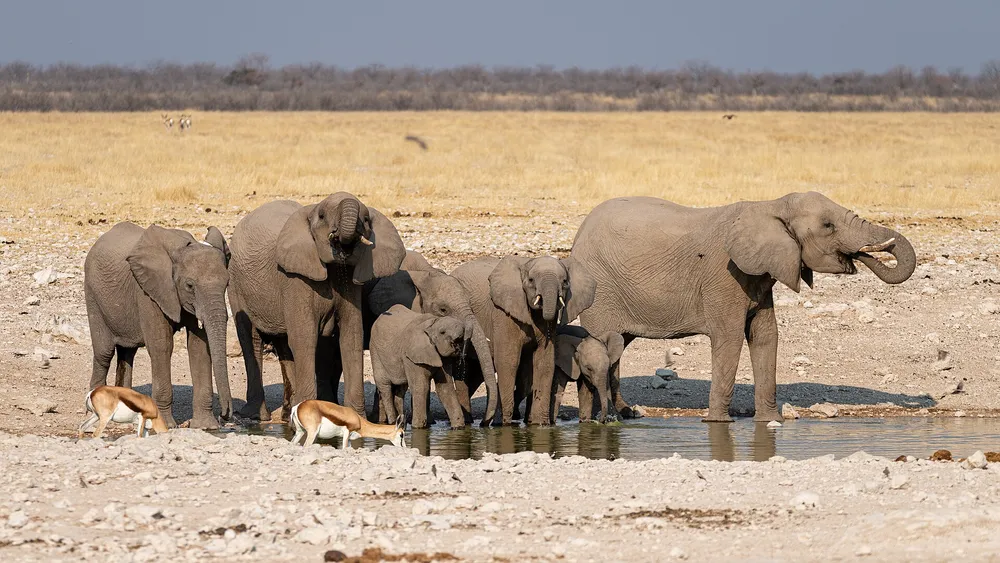
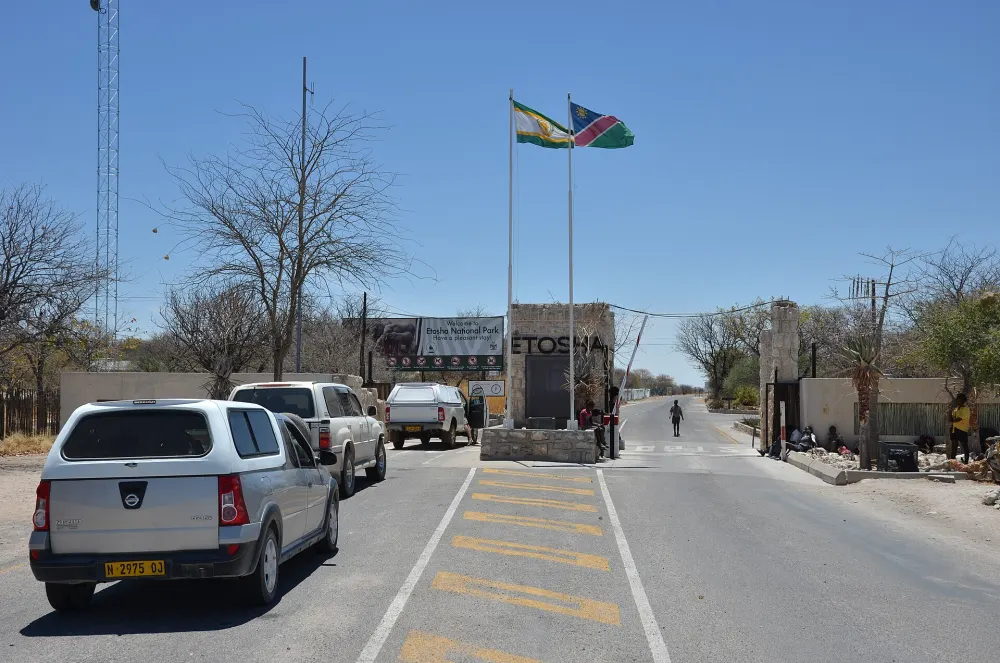
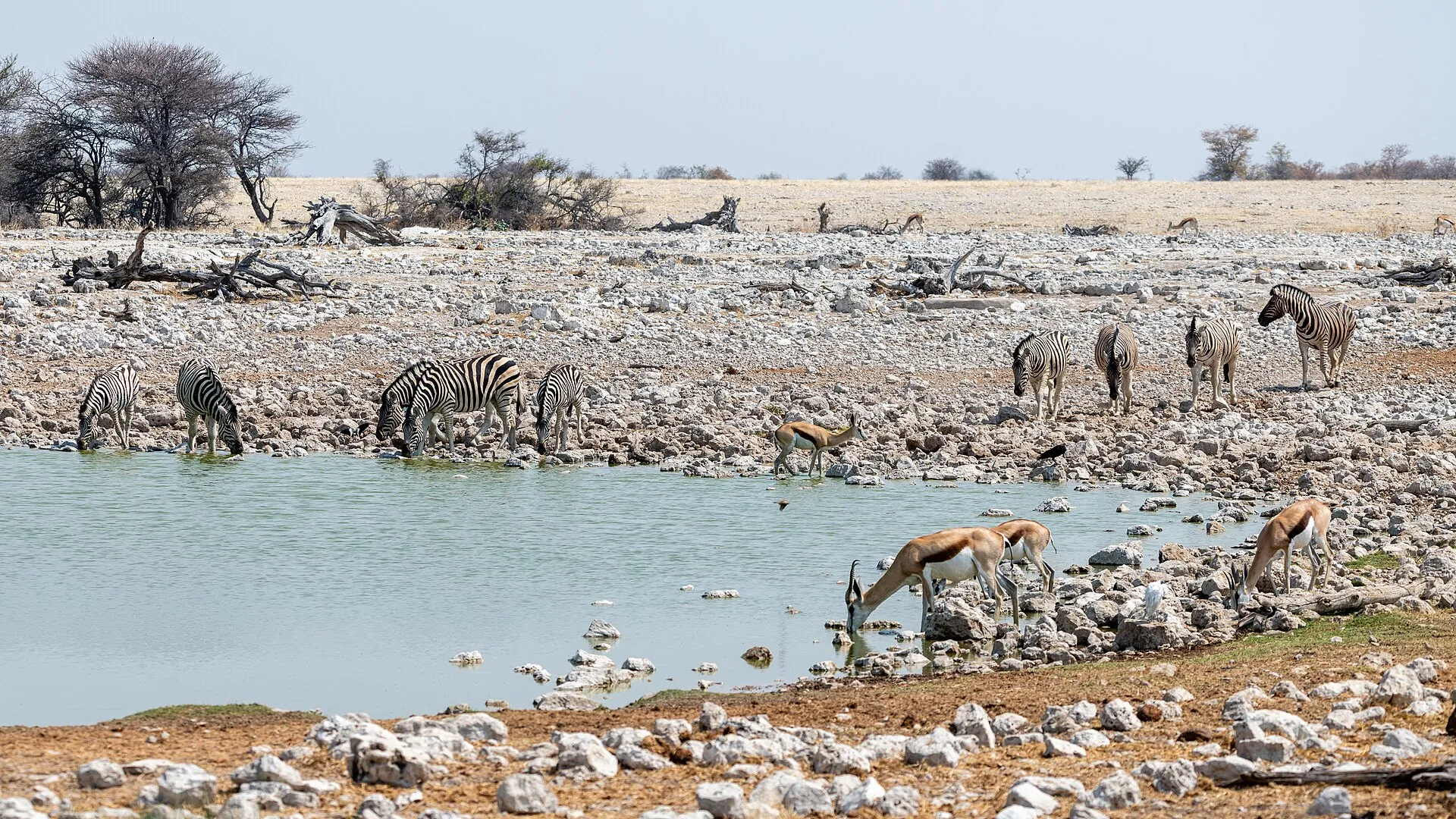
| Etosha National Park | North-central | 22,935 km² around a vast salt pan; elephant, lion, black and white rhino, giraffe, huge herds at waterholes | N$280 | Four gates; tar to Anderson and Von Lindequist. Six NWR camps inside, lodges at the gates. 2WD fine |
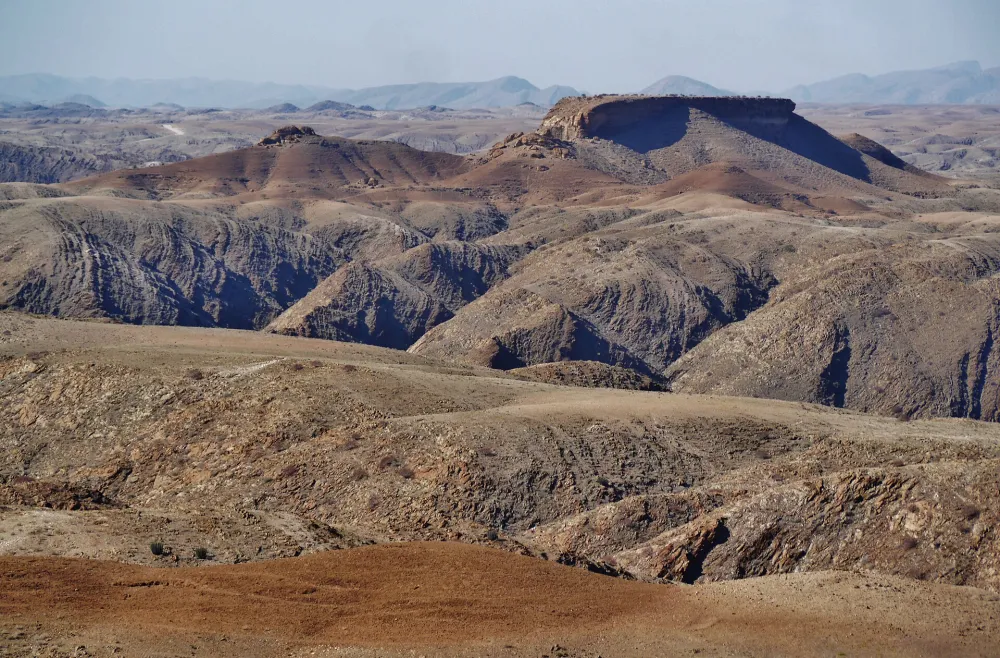
| Namib-Naukluft Park | Central coast and Namib | ≈ 49,800 km²: the dune sea with Sossusvlei and Deadvlei, the Naukluft mountains, Kuiseb Canyon, Welwitschia plains | N$280 | Sesriem gate for Sossusvlei (last 5 km 4x4 or shuttle). Permits for other sections from MEFT offices. NWR camps at Sesriem and Naukluft |
| Sandwich Harbour (part of Namib-Naukluft) | South of Walvis Bay | Dunes falling into a tidal lagoon; flamingos and seabirds | N$150 | 4x4 only, tide-dependent; in practice by guided tour. See Sandwich Harbour |
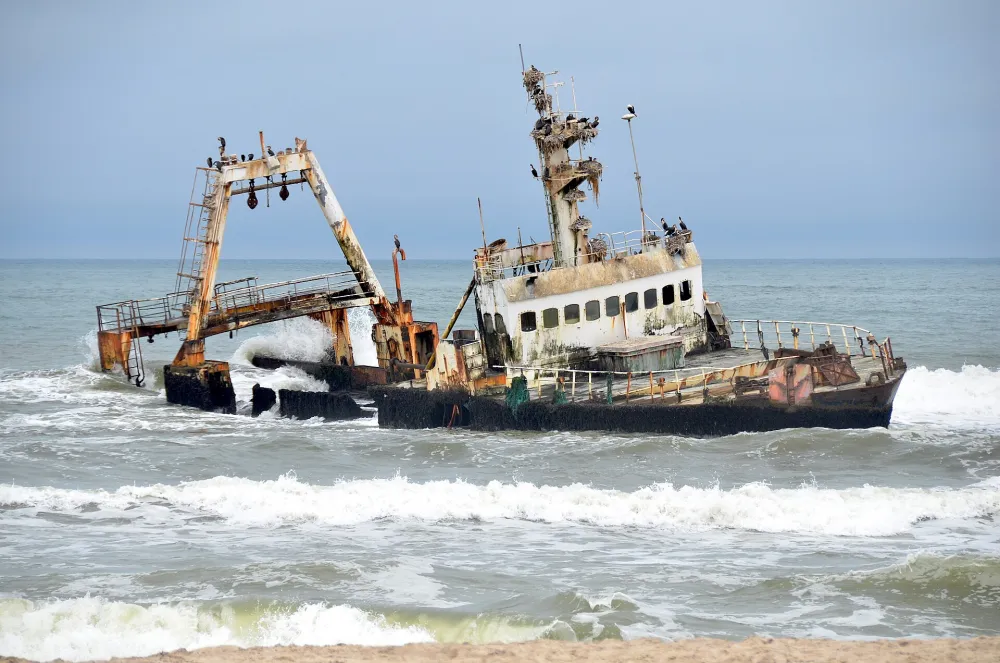
| Skeleton Coast Park | North-west coast, Ugab to Kunene | ≈ 16,800 km² of fog desert, shipwrecks, seals, desert lions and brown hyenas | N$280 | Southern section by road through the Ugab or Springbokwasser gates (day transit or NWR Terrace Bay/Torra Bay); the north by fly-in safari only |
| Dorob National Park | Central coast, Kuiseb to Ugab | The coast around Swakopmund, Walvis Bay and Henties Bay: dune belt, lichen fields, bird breeding areas | N$280 (as gazetted) | Open access on public roads; off-road driving is restricted to marked routes |
| Cape Cross Seal Reserve | About 120 km north of Swakopmund | One of the largest Cape fur seal breeding colonies; site of Diogo Cão’s cross | N$280 | Salt road (C34), 2WD. Day visit; walkways. No accommodation in the reserve |
| ǀAi-ǀAis/Richtersveld Transfrontier Park (Fish River Canyon) | Far south | The canyon, about 160 km long and up to 550 m deep; hot springs; shared with South Africa | N$280 | Gravel from the B1/B4; viewpoints from Hobas. NWR Hobas and ǀAi-ǀAis; private lodges east of the rim |
| Tsau ǁKhaeb (Sperrgebiet) National Park | South-west, around Lüderitz | The former diamond “forbidden zone”: succulent Karoo desert of global botanical importance, ghost towns | N$280 | Largely closed. Entry only with licensed concession operators, apart from sites such as Kolmanskop, which has its own permit |
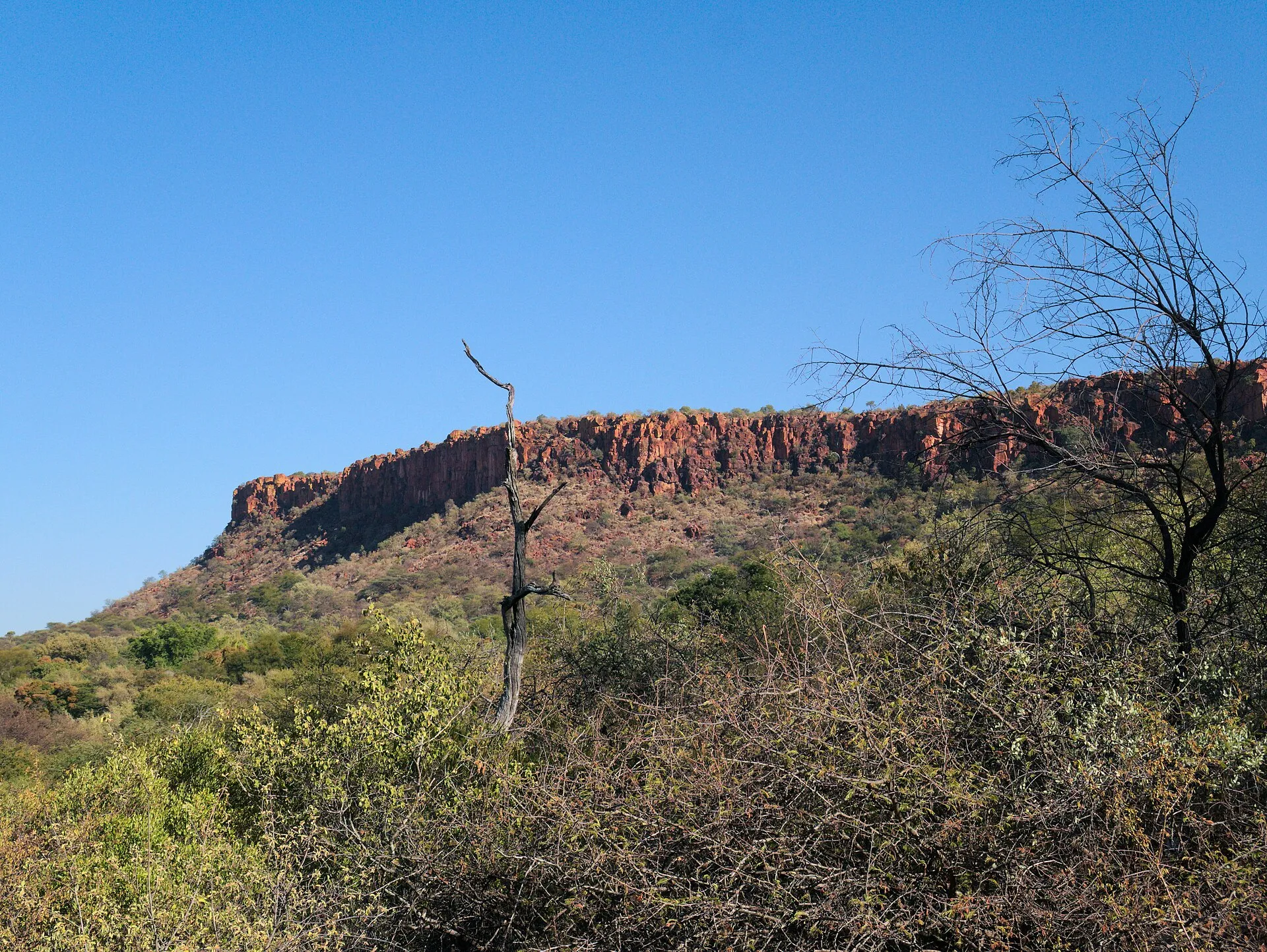
| Waterberg Plateau Park | Central, east of Otjiwarongo | 405 km² sandstone table mountain; a refuge for rhino, buffalo, sable and roan antelope | N$280 | Tar most of the way. No self-drive on the plateau: NWR game drives and guided or self-guided trails. NWR resort and private lodges |
| Bwabwata National Park | Zambezi and Kavango East | 6,274 km² between the Okavango and Kwando: elephant, buffalo, hippo, sable, wild dog; people live in its central zone | N$200 | The B8 crosses it. Core areas (Mahango, Buffalo, Kwando) by gravel and sand; 4x4 for most tracks. Lodges on the rivers |
| Mudumu National Park | Zambezi Region, Kwando River | Mopane woodland and floodplain; elephant, buffalo, roan, sitatunga | N$200 | From the C49; 4x4. Lodges and camps nearby |
| Nkasa Rupara National Park | Zambezi Region, far south | Namibia’s largest wetland, a miniature Okavango of channels and islands | N$200 | 4x4 essential; partly flooded in wet years. Very few visitors |
| Khaudum National Park | North-east, Botswana border | 3,842 km² of Kalahari woodland; elephant, roan, wild dog, lion. Unfenced and wild | N$200 | Deep sand: minimum two 4x4 vehicles, fully self-sufficient. For experienced parties only |
| Mangetti National Park | Kavango West | Small park protecting Kalahari woodland and rare antelope | N$200 | Off the B8 south of Rundu; limited facilities |
| Popa Falls Game Park | Divundu | Rapids on the Okavango River; birding | N$200 | Beside the B8. NWR resort |
| Daan Viljoen Game Park | 25 km west of Windhoek | Highland hills with zebra, kudu, giraffe; walking trails | N$200 | Tar from Windhoek. Good first or last day |
| Hardap, Naute and Von Bach game parks | Dams near Mariental, Keetmanshoop and Okahandja | Reservoirs with waterbirds and plains game | N$200 | Tar or short gravel; day visits and resort stays |
Which parks for which trip
- First visit, classic loop: Namib-Naukluft at Sossusvlei, Dorob and Sandwich Harbour on the coast, optionally Cape Cross, and Etosha. All reachable without a 4x4 except the last sandy kilometres at Sossusvlei and Sandwich Harbour, which are done by shuttle and guided tour.
- Wildlife above all: Etosha for three or four nights, plus a private reserve or the Waterberg on the way. See wildlife and the Big Five.
- Rivers and birds: Bwabwata, Mudumu and Nkasa Rupara in the Zambezi Region, June to October.
- Walking: the Naukluft trails, the Waterberg, and the Fish River Canyon hike in winter.
- Real remoteness: Khaudum, or a fly-in safari to the northern Skeleton Coast.
Beyond the state parks
Some of Namibia’s best-known wild places are not national parks at all.
- The Palmwag and Etendeka concessions and the conservancies of the north-west (Damaraland, Kaokoland): desert-adapted elephants, the free-roaming black rhino tracked on foot with Save the Rhino Trust-trained trackers, giraffe and desert lions, on communal land.
- NamibRand Nature Reserve, south of Sossusvlei: a private reserve of over 2,000 km² assembled from former sheep farms, and Africa’s first International Dark Sky Reserve. Access is for guests of its few lodges. See Namib-Naukluft.
- Private reserves at Etosha’s gates — on the eastern and southern boundaries — offer guided drives in open vehicles, night drives and hides that the park itself does not.
- Okonjima Nature Reserve, home of the AfriCat Foundation, and the Cheetah Conservation Fund near Otjiwarongo: leopard and cheetah research with visitor programmes. See Waterberg and the central plateau.
- Community sites: Spitzkoppe, the Brandberg and Twyfelfontein are managed by community trusts and the National Heritage Council, with their own entrance and guide fees.
- Nyae Nyae Conservancy around Tsumkwe: Juǀʼhoansi San land beside Khaudum, with pans that fill after rain.
Why this patchwork exists, and why it works, is explained in about Namibia.
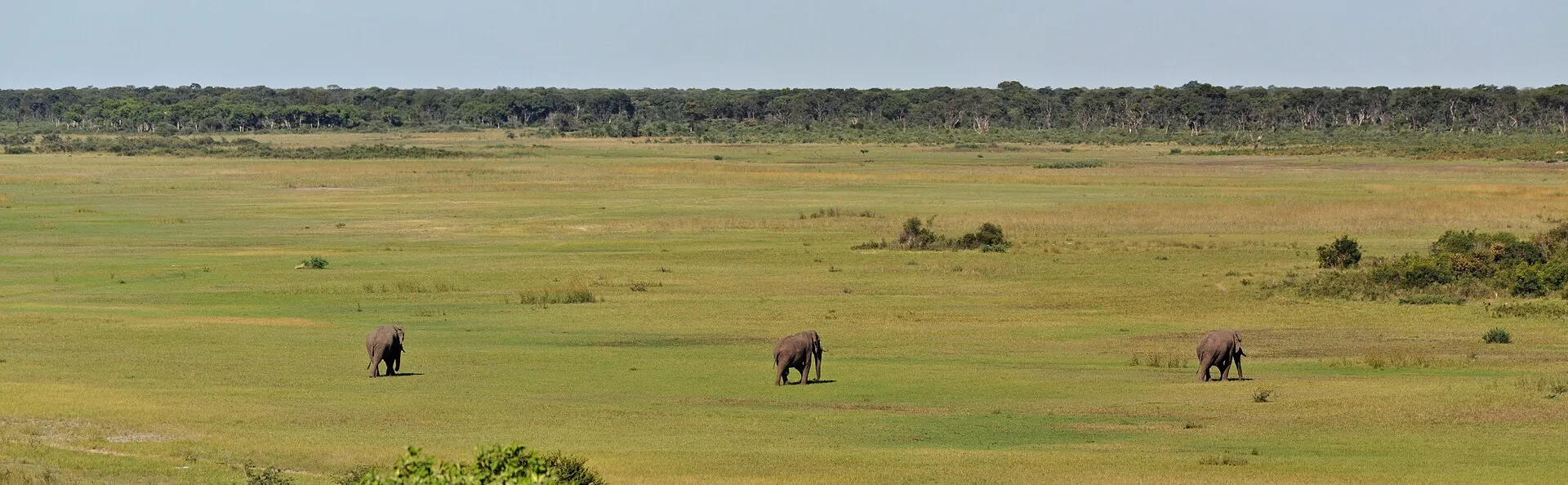
An omuramba — a fossil river valley — in Khaudum National Park, the wildest of Namibia’s parks.
Park rules that apply everywhere
- Hours: gates open at sunrise and close at sunset; you must be out of the park or inside a rest camp by then. Times are posted at each gate and change through the year.
- Stay in the vehicle except at rest camps, fenced picnic sites and signed viewpoints. Do not lean or sit out of windows or sunroofs near animals.
- Speed limit: 60 km/h in Etosha and as signed elsewhere. Animals have right of way.
- No off-road driving, no feeding, no litter, no drones, no pets, no firearms.
- Keep your permit. It is checked when you leave. Pay for the number of days you will be inside.
- Fill up before you enter; fuel inside parks is limited to the main Etosha camps and Sesriem.
- Plastic bags are banned in national parks; use reusable bags and boxes.
Current notices — closures after rain, gate times, booking contacts — are published by MEFT and NWR. If a rule matters to your plans, confirm it with them shortly before you travel.
A note on names
Several parks have changed names since independence, and maps lag behind. The Caprivi Game Park became part of Bwabwata; Mamili became Nkasa Rupara; the Sperrgebiet became Tsau ǁKhaeb; the National West Coast Recreation Area became Dorob; and the Fish River Canyon park is formally the Namibian half of the ǀAi-ǀAis/Richtersveld Transfrontier Park. Khaudum is also spelt Kaudom. In the far north-east, the park names Mahango, Buffalo and Kwando refer to core areas within Bwabwata.
Frequently asked questions
How many national parks does Namibia have?
About twenty state-protected areas, counting national parks, game parks and reserves. The largest and most visited are Etosha, Namib-Naukluft and the Skeleton Coast Park; together with Dorob and Tsau ǁKhaeb they protect the whole Namibian coastline.
What are the park fees in Namibia?
Since 1 April 2026 foreign adults pay N$280 per day at Etosha, Namib-Naukluft, Skeleton Coast, Dorob, Waterberg, Cape Cross, ǀAi-ǀAis and Tsau ǁKhaeb; N$200 at Bwabwata, Mudumu, Nkasa Rupara, Khaudum and the smaller game parks; and N$150 at Sandwich Harbour. Vehicles of up to ten seats pay N$60 per day.
Which is the best national park in Namibia for wildlife?
Etosha, by a wide margin, for numbers and ease of viewing. The parks of the Zambezi Region add buffalo, hippo and river scenery, and the conservancies of the north-west offer desert-adapted elephants and rhino tracking.
Can you self-drive in Namibia’s national parks?
Yes in most. Etosha and the road to Sossusvlei suit ordinary cars; the north-eastern parks and Khaudum need a 4x4. Exceptions are the Waterberg plateau, which is visited on guided drives or on foot, and the northern Skeleton Coast and Tsau ǁKhaeb, which are open only to licensed operators.
Do I need to book park entry in advance?
No. Entry permits are bought on arrival at the gate or park office. What needs advance booking is accommodation and campsites inside the parks, through Namibia Wildlife Resorts.
Sources and official information
Facts were checked against these official sources in November 2026. Park fees, gate times, visa rules and timetables change, so confirm before you go.
NamibiaSafaris.com is an independent guide, not the official site of any tour operator, lodge, Namibia Wildlife Resorts or the Namibian government. Some links are affiliate links: tours go to GetYourGuide and accommodation goes to Booking.com, and we may earn a commission at no extra cost to you.