In short
- A dozen peoples, one official language. The Aawambo of the north are about half the population; the Kavango peoples, Ovaherero, Damara, Nama, San, the communities of the Zambezi Region and Namibians of European and mixed descent make up the rest.
- Greet first. A handshake and “How are you?” before any question is the basic courtesy everywhere.
- Always ask before photographing people, and accept a no.
- Choose community-run visits to Ovahimba, San or Damara communities, with a local guide and a fee agreed in advance. Do not hand sweets or money to children.
- Buy crafts from makers at community markets and craft centres; never buy ivory, tortoiseshell or other wildlife products.
A country of many peoples
Namibia’s three million people do not share one culture, and the country’s constitution and its choice of English as a neutral official language both reflect a deliberate effort, after a century of colonial “divide and rule”, to build a nation from many communities. Ethnic labels are used here because they are how Namibians describe themselves, and because understanding who lives where makes sense of what you see from the road. They are not fixed boxes: people marry across them, move to town, and speak three or four languages in a day.
Two cautions. The terms inherited from colonial ethnography are often wrong or offensive — say San or the community’s own name, not “Bushman”, unless people use it of themselves; say Ovahimba or Himba, not “tribe”. And remember that the people you meet are citizens of a modern state with phones, school fees and opinions about the government, whatever they are wearing.
Who lives where
| People | Main home area | Language | What a visitor may notice |
|---|---|---|---|
| Aawambo (Ovambo) — eight related communities including Aakwanyama and Aandonga | The north-central regions between Etosha and Angola; also every town | Oshiwambo (Oshikwanyama, Oshindonga and other varieties) | Homesteads of huts within palisades, mahangu (pearl millet) fields, makalani palms, cuca shops; the heartland of SWAPO |
| Kavango peoples (Kwangali, Mbunza, Shambyu, Gciriku, Mbukushu) | Along the Okavango River around Rundu and Divundu | Rukwangali and related languages | Riverside villages, dugout canoes, fishing, renowned woodcarving |
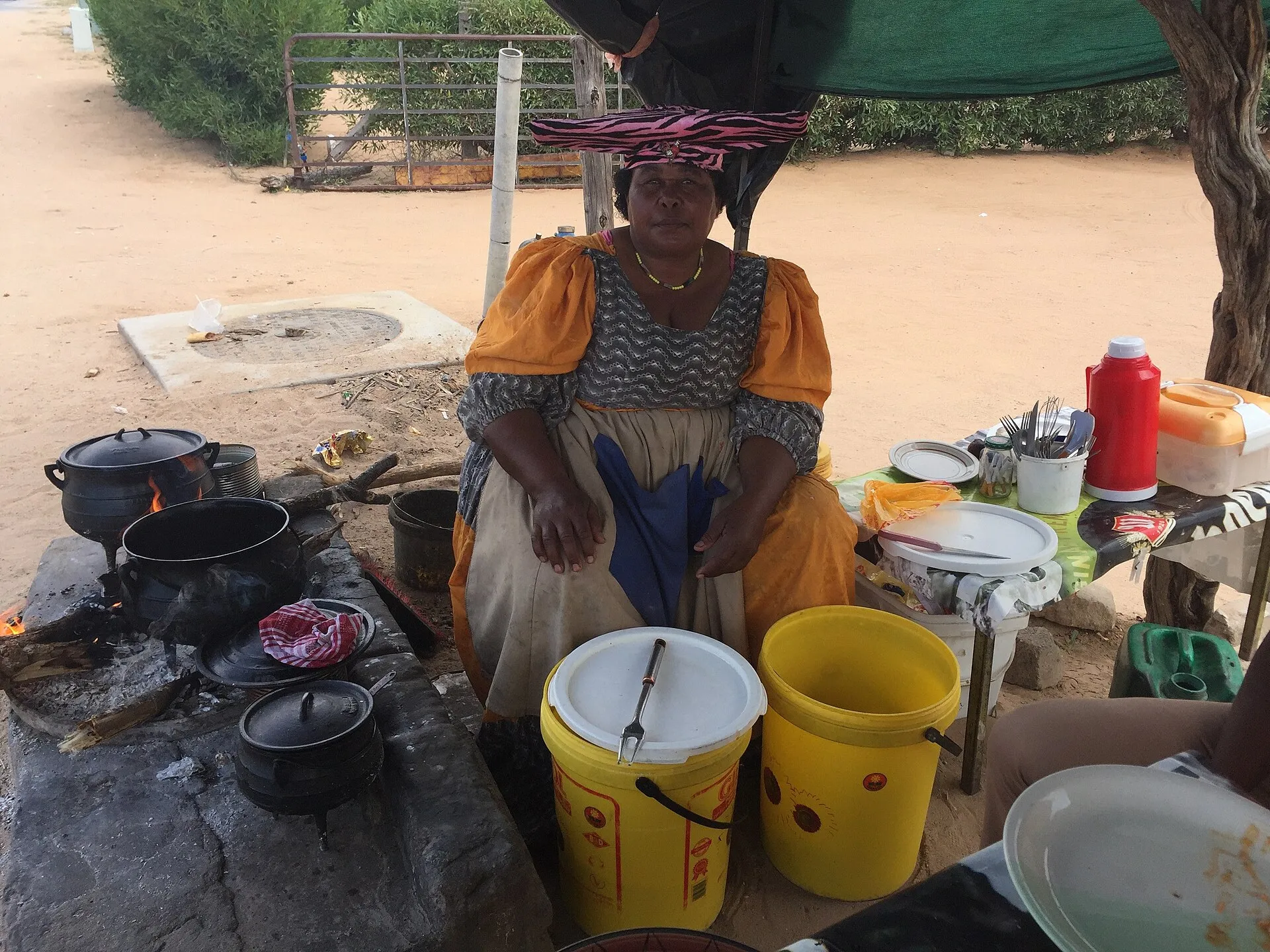
| Ovaherero | Central and eastern Namibia: Okahandja, Okakarara, Gobabis, the Waterberg | Otjiherero | Cattle-keeping; women’s long Victorian-style dresses and horn-shaped headdress |
| Ovahimba, Ovatjimba and related groups | The Kunene Region (Kaokoland): Opuwo, Epupa | Otjiherero (Himba variety) | Semi-nomadic herders; ochre body paste, elaborate hairstyles |
| Damara (ǂNūkhoen) | Damaraland: Khorixas, Uis, Sesfontein; Windhoek | Khoekhoegowab | Among the country’s oldest inhabitants; small-stock farming, living museum near Twyfelfontein |
| Nama | The south: Keetmanshoop, Gibeon, Bethanie, Warmbad | Khoekhoegowab | Pastoral heritage, praise poetry and music, patchwork dresses; leading role in the resistance of 1904–08 |
| San (Juǀʼhoansi, Haiǁom, !Kung, Khwe and others) | Tsumkwe and Nyae Nyae in the east; around Etosha; Bwabwata | Several distinct languages of different families | Southern Africa’s first people; tracking and plant knowledge; much dispossessed and marginalised |
| Peoples of the Zambezi Region (Masubia, Mafwe, Mayeyi and others) | The far north-east around Katima Mulilo | Silozi as a lingua franca, plus local languages | River and floodplain life, close ties to Zambia and Botswana |
| Rehoboth Basters | Rehoboth, south of Windhoek | Afrikaans | A community of mixed descent that trekked from the Cape and settled here in 1870 |
| Namibians of European descent | Windhoek, Swakopmund, commercial farms | Afrikaans, German, English | German colonial architecture, bakeries and carnival; guest farms |
| Batswana | Around Gobabis and the eastern border | Setswana | A small community linked to Botswana |
Languages and the click sounds
English will carry you everywhere, but it is a home language for very few, and a few words in someone’s own language are received with delight. Afrikaans — “Goeie môre”, “dankie” — is the safest second choice in the centre and south. In the north, “Wa lala po?” is an Oshindonga good morning.
The place names with strokes and exclamation marks come from Khoekhoegowab, the language of the Nama and Damara, and from the San languages, which use click consonants as ordinary sounds. Four are written: ǀ is a dental click, like the “tsk” of disapproval; ǁ is a lateral click, made at the side of the mouth as if urging on a horse; ǃ is a sharp pop with the tongue pulled down from the palate; ǂ is a softer, flatter palatal click. So ǀAi-ǀAis, the hot springs at the Fish River Canyon, and ǀUi-ǁAis, the Damara name for Twyfelfontein, each begin with a click. Nobody expects visitors to manage them, but trying is appreciated.
The Ovaherero and the dress
The long, full-skirted dress worn by Herero women — the ohorokova — is one of the most recognisable sights in Namibia, and one of the most misread. It derives from the clothing of nineteenth-century German missionaries’ wives, adopted and transformed over generations into a garment of several petticoats in bold fabrics, topped by the otjikaiva, a cloth headdress shaped to recall the horns of cattle, the centre of Herero life and wealth. Wearing it today is a statement of identity, dignity and survival by a people who were nearly destroyed under German rule (see history). It is worn daily by some older women and by many on Sundays, at weddings and funerals.
Each August, on the weekend nearest the 26th, Ovaherero gather at Okahandja to honour their chiefs buried there; men parade in military-style uniforms that are also a legacy, re-appropriated, of the colonial period. Visitors may watch respectfully. It is a commemoration, not a show.
The Ovahimba
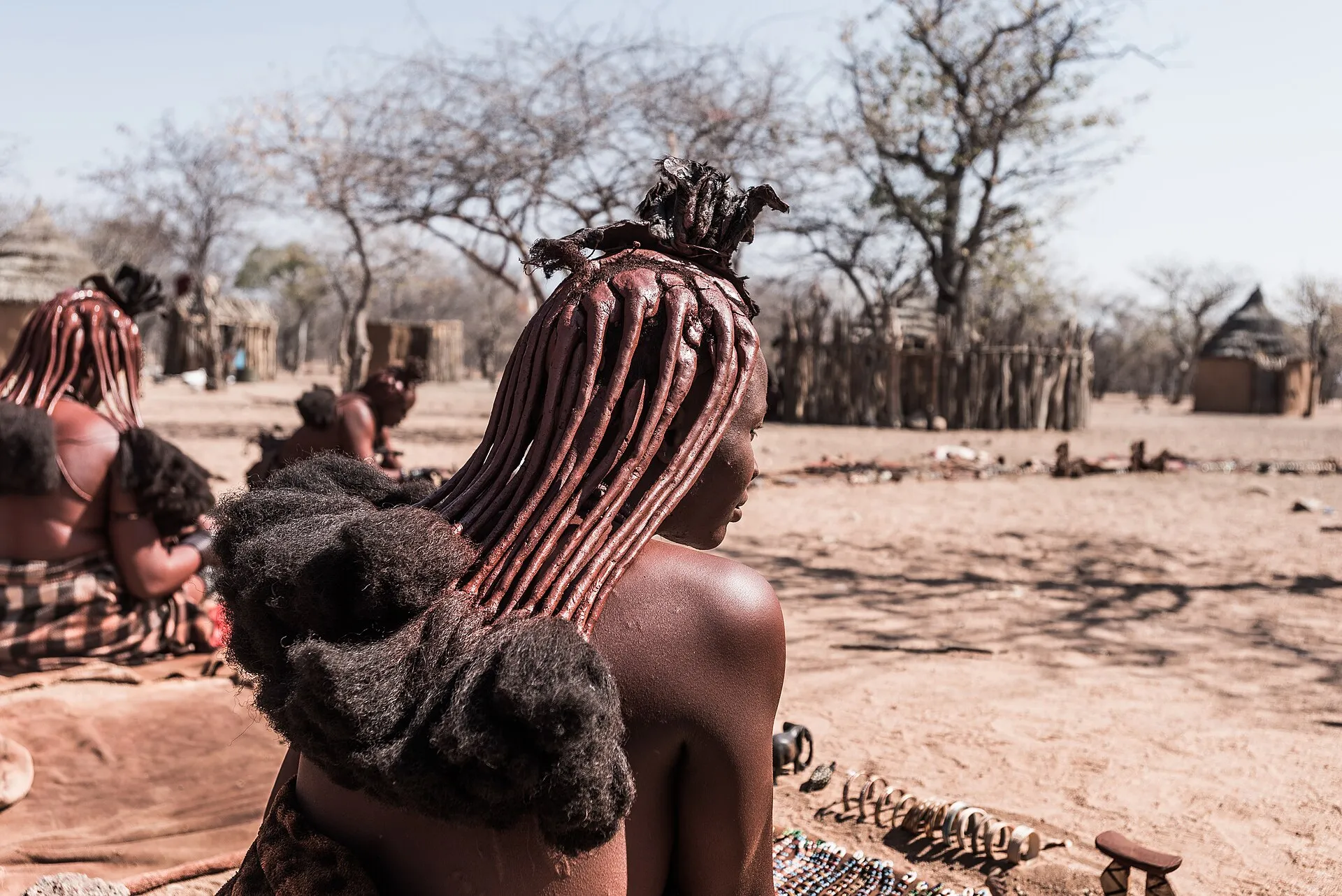
The Ovahimba of the Kunene Region are Otjiherero-speaking herders who, in the isolation of Kaokoland, kept a way of life that their relatives further south lost. Women cover their skin and hair with otjize, a paste of butterfat and ground red ochre that protects against sun and dryness and is considered beautiful; hairstyles and jewellery signal age and marital status. Homesteads are arranged around a cattle enclosure and a sacred fire, the okuruwo, which links the family to its ancestors — visitors should never walk between the fire and the main hut.
Their distinctive appearance has made the Ovahimba the most photographed people in Namibia, and that brings out the worst in tourism: vehicles stopping at roadside homesteads, cameras through windows, handfuls of sweets. It has also given some communities a real income on their own terms. The difference lies in how the visit is arranged.
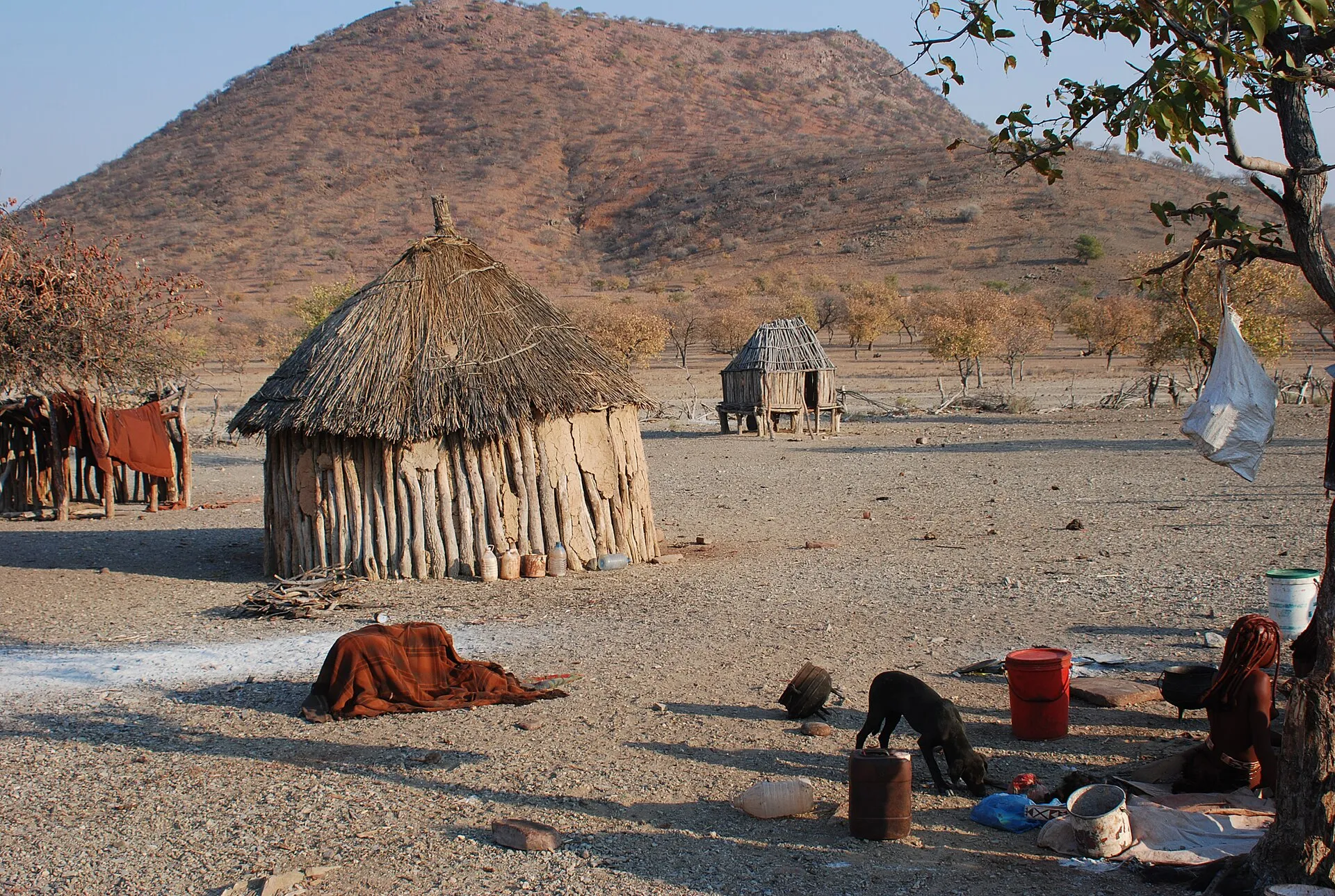
An Ovahimba homestead in the Kunene Region. Visit with a guide from the community, by arrangement.
The San
The San are the descendants of the hunter-gatherers who have lived in southern Africa for tens of thousands of years, and whose ancestors made the engravings at Twyfelfontein and the paintings of the Brandberg. “San” is an umbrella term for many distinct peoples — the Juǀʼhoansi of Nyae Nyae, the Haiǁom whose land became Etosha National Park, the Khwe of Bwabwata and others — speaking languages as different from one another as English is from Hungarian.
Almost no San live by hunting and gathering today. Most lost their land to farms, parks and other peoples during the twentieth century and are among the poorest Namibians. In the Nyae Nyae Conservancy around Tsumkwe, the Juǀʼhoansi retain rights to land and wildlife, and community-run “living museums” and guided bush walks let San guides demonstrate tracking, fire-making and plant knowledge for a fee that they control. Done that way, a visit is an exchange between a paying guest and a skilled teacher.
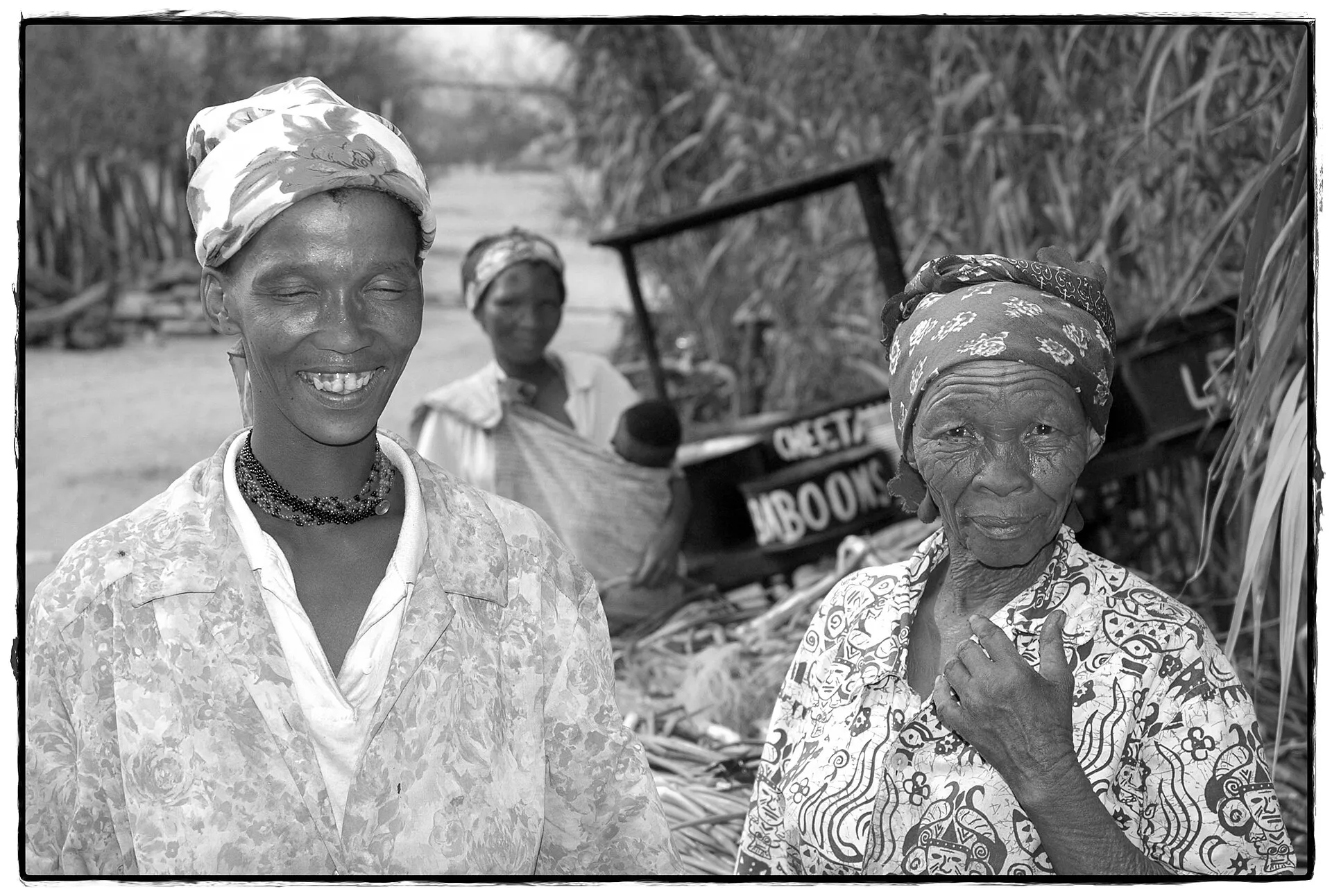
San people in north-eastern Namibia.
Visiting a community: getting it right
A village visit can be the most memorable hour of a trip or an embarrassment to everyone involved. Signs of a good one:
- The community runs it or has a clear agreement with whoever does — a conservancy, a living museum, a lodge that employs local guides. Ask who receives the fee.
- A guide from that community interprets, introduces you properly and translates both ways. Questions flow in both directions.
- The price is set and paid openly, often partly in useful goods such as maize meal, sugar or cooking oil bought with the guide’s advice, not in sweets.
- Photography is agreed at the start. In organised visits the fee normally covers it; even then, ask each person, show them the picture, and put the camera down for a while.
- You are a guest in a home. Wait to be invited in, accept a seat, do not wander into huts or stock enclosures, and dress modestly.
And the things to avoid: stopping uninvited at roadside homesteads; photographing people from the car; giving sweets, pens or money to children, which teaches begging and rots teeth where there is no dentist; bargaining aggressively over a bracelet that took a day to make; and treating anyone as an exhibit. If a visit feels staged and joyless, it probably is — say so to the operator afterwards.
Everyday etiquette
- Greetings matter. Say good morning and ask how someone is before anything else — at a fuel pump, a reception desk, a police checkpoint. The reply is “Fine, and you?” Then do business.
- Handshakes are standard, often the three-part African handshake (palm, thumbs, palm). Supporting your right forearm with your left hand as you shake or pass something is a sign of respect.
- Elders first. Greet the oldest person present before the others.
- Patience. Things take the time they take. Raising your voice ends cooperation.
- Dress is casual but neat in towns; beachwear belongs on the beach. In rural areas and churches, cover shoulders and knees.
- Religion. The great majority of Namibians are Christian, most of them Lutheran, a legacy of Finnish and German missions; Sunday is quiet.
- Sensitive subjects — land, the genocide, race — are discussed openly by Namibians, who will often raise them. Listen more than you opine.
Crafts and where to buy them
Buying crafts is the simplest way to put money directly into rural hands.
- Baskets woven from makalani palm by women in the north and north-east, in shapes and patterns particular to each area.
- Woodcarving from the Kavango and Zambezi regions: bowls, stools, animals, masks. The open-air market beside the road at Okahandja, north of Windhoek, is the largest outlet.
- Ostrich-eggshell beadwork made by San women: necklaces and bracelets of hand-drilled discs.
- Makalani nuts carved with animals and, on request, your name, sold by young men at car parks and viewpoints.
- Herero dolls in miniature ohorokova dresses, sold at roadside stalls by the women who sew them.
- Karakul wool rugs and wall hangings, hand-woven in Swakopmund and on farms.
- Gemstones and minerals — tourmaline, amethyst, rose quartz — from the Erongo and Damaraland, sold by small-scale miners along the roads near Uis and Spitzkoppe.
In Windhoek, the Namibia Craft Centre brings together work from co-operatives across the country at fixed prices. At markets and stalls, friendly bargaining is expected but margins are thin; a fair price is one both sides smile at. Do not buy ivory, tortoiseshell, animal skins, or anything made from protected species or plants — it is illegal to export and often illegal to possess.
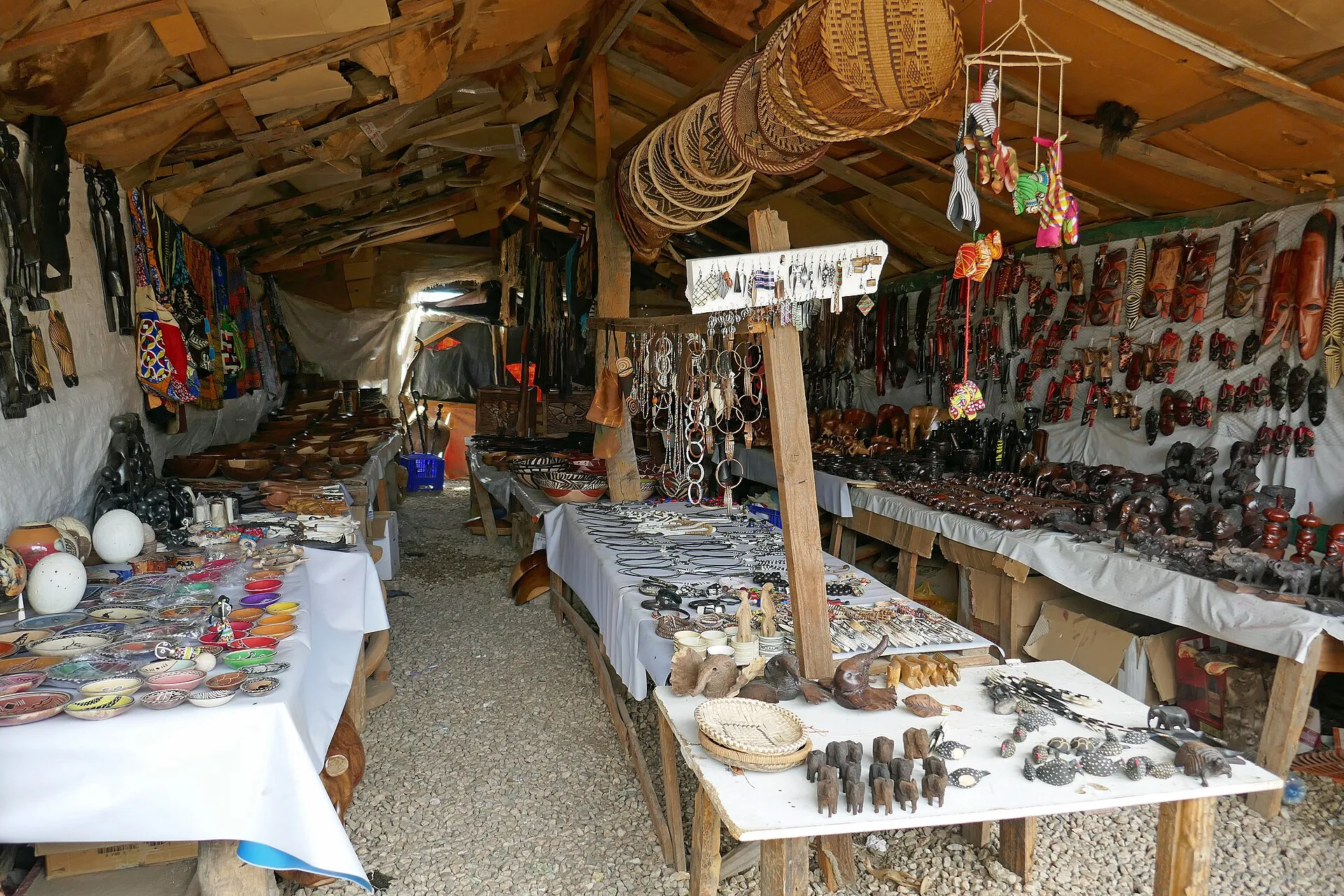
Carvings at the Okahandja craft market, mostly made in the Kavango and Zambezi regions.
Culture in the towns
Most Namibians under 30 live urban or half-urban lives, and town culture is where the country is being made. In Windhoek, a guided walk through Katutura — the township created in 1959 when black residents were forcibly moved from the “Old Location” — takes in the open-air kapana grills, markets and bars with someone who lives there. Swakopmund’s Mondesa offers the same, often with a home-cooked meal. Go with a resident guide, on foot or by bicycle, in daylight. The Windhoek and Swakopmund pages list options, and food and drink explains what you will be offered.
Frequently asked questions
What are the main ethnic groups in Namibia?
The Aawambo (Ovambo) of the north are the largest, about half the population. Others include the Kavango peoples, Ovaherero and Ovahimba, Damara, Nama, San, the peoples of the Zambezi Region, the Rehoboth Basters, and Namibians of European descent.
Is it ethical to visit a Himba village?
It can be, if the visit is arranged with the community, led by a local guide, paid for at an agreed rate that goes to the people visited, and conducted as a conversation. Avoid unannounced roadside stops, photographing without permission and giving sweets or money to children.
Why do Herero women wear Victorian dresses?
The ohorokova dress developed from the clothing of nineteenth-century German missionary women and was adopted and reshaped by the Ovaherero. With its horn-shaped headdress honouring cattle, it has become a symbol of Herero identity and endurance.
Can I take photos of people in Namibia?
Only with permission. Ask first, accept a refusal, and expect a fee where a community has organised visits on that basis. Do not photograph people from a vehicle.
What do the symbols in names like ǀAi-ǀAis mean?
They are click consonants used in Khoekhoegowab and the San languages. Four are written in Namibian place names: ǀ (dental), ǁ (lateral), ǃ (alveolar) and ǂ (palatal).
Sources and official information
Facts were checked against these official sources in November 2026. Park fees, gate times, visa rules and timetables change, so confirm before you go.
NamibiaSafaris.com is an independent guide, not the official site of any tour operator, lodge, Namibia Wildlife Resorts or the Namibian government. Some links are affiliate links: tours go to GetYourGuide and accommodation goes to Booking.com, and we may earn a commission at no extra cost to you.