In short
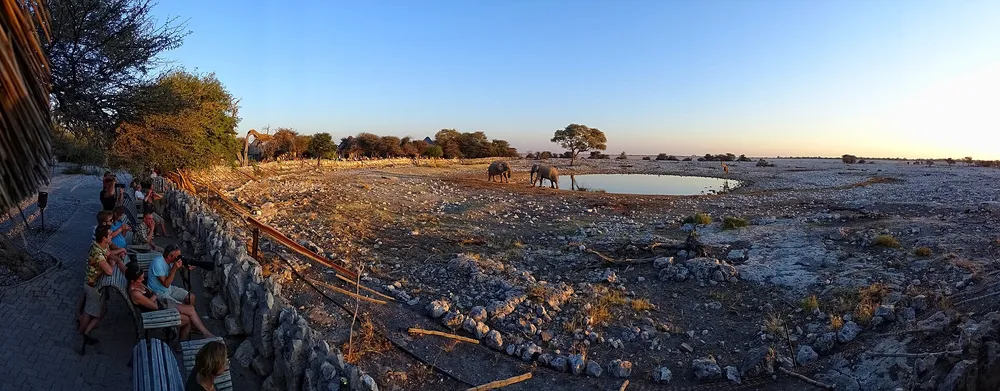
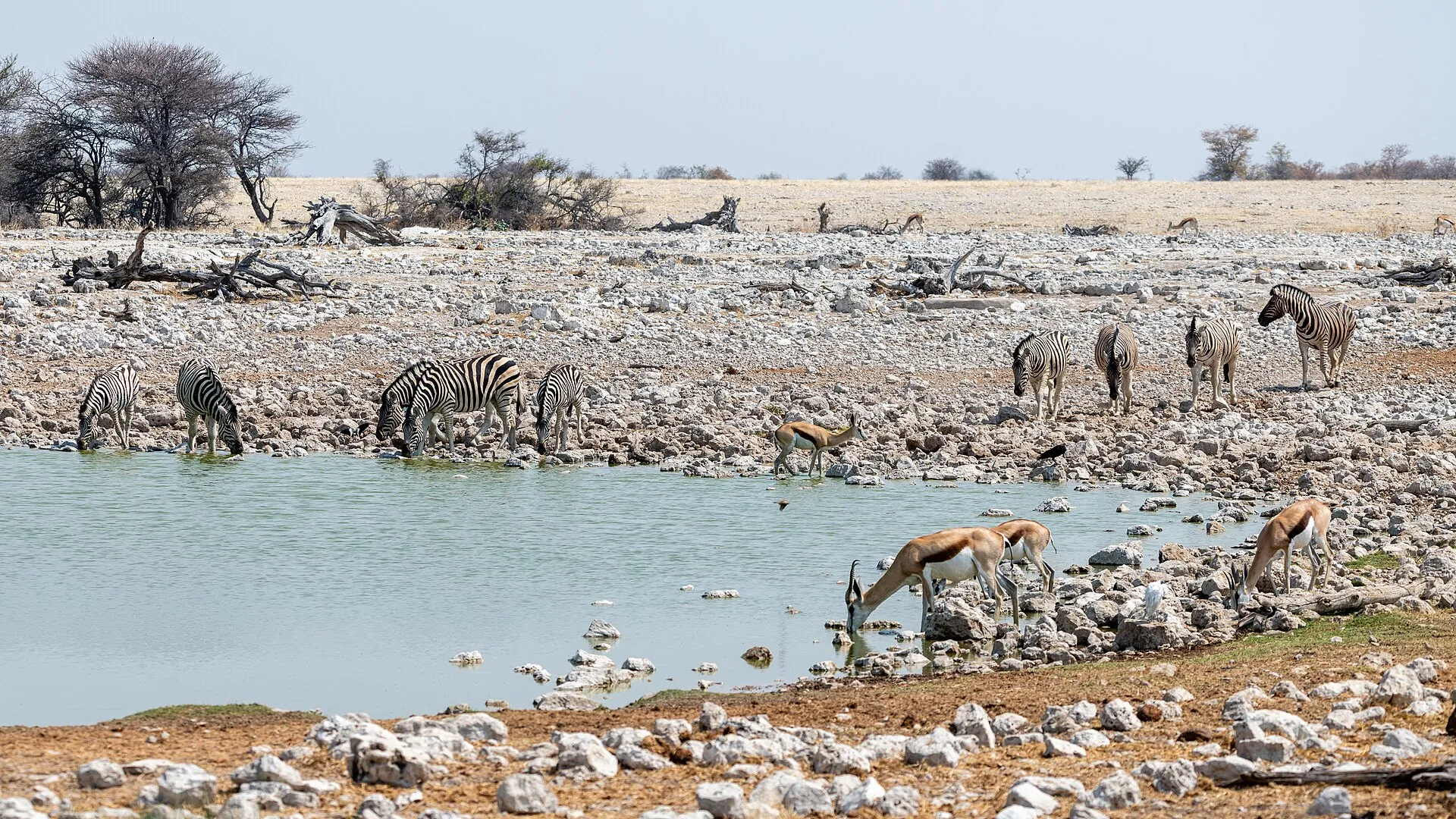
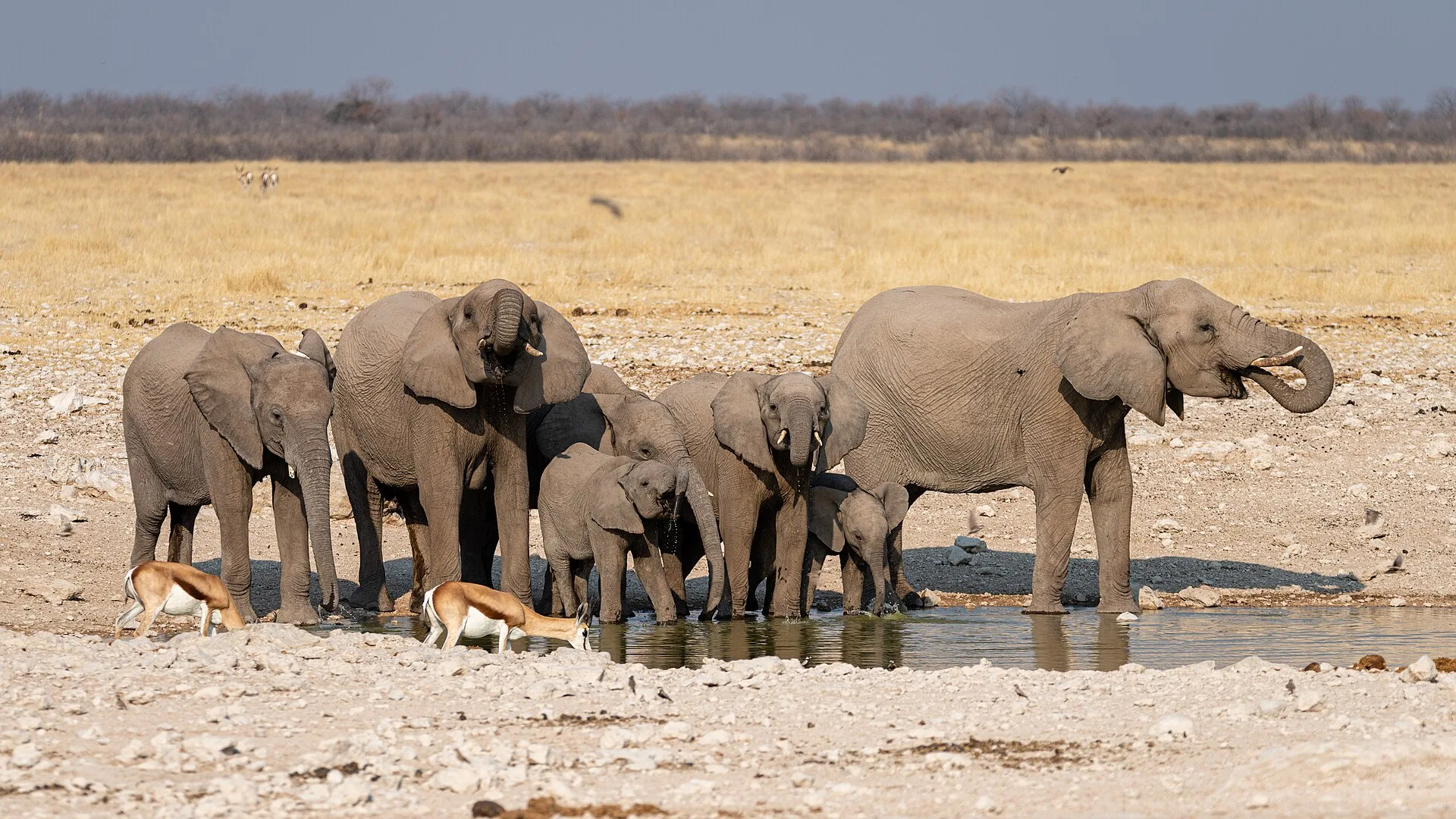
- Etosha is a waterhole park. In the dry season (May to October) you do not search for animals so much as wait for them: park at a spring on the edge of the salt pan and the game comes to you.
- Four gates: Anderson (south, for Okaukuejo), Von Lindequist (east, for Namutoni), Galton (south-west, for the quiet west) and King Nehale (north). All open at sunrise and close at sunset; the exact times change weekly and are posted at the gates and camps.
- Fees from 1 April 2026: N$280 per foreign adult per day, N$180 for children aged 9 to 15, free for 8 and under, plus N$60 per car.
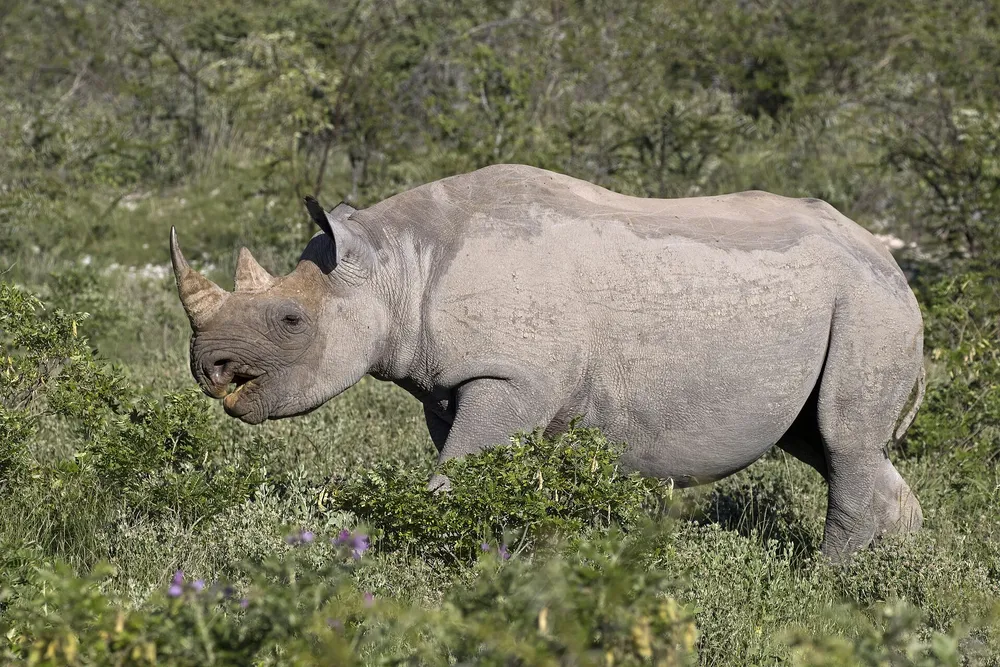
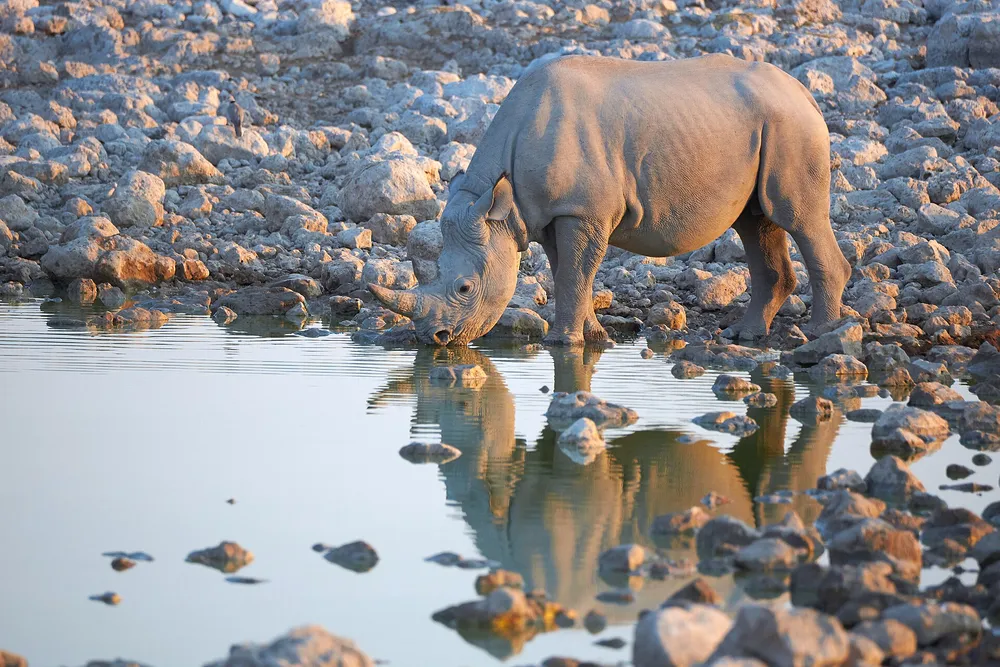
- No buffalo, hippo or crocodile. What Etosha does better than almost anywhere is black rhino, especially after dark at the floodlit waterholes of Okaukuejo and Halali.
- Any rental car can drive the main roads at the 60 km/h limit. Fuel is sold at Okaukuejo, Halali and Namutoni, but fill up before you enter. Drones may not be brought into the park at all.
The Great White Place
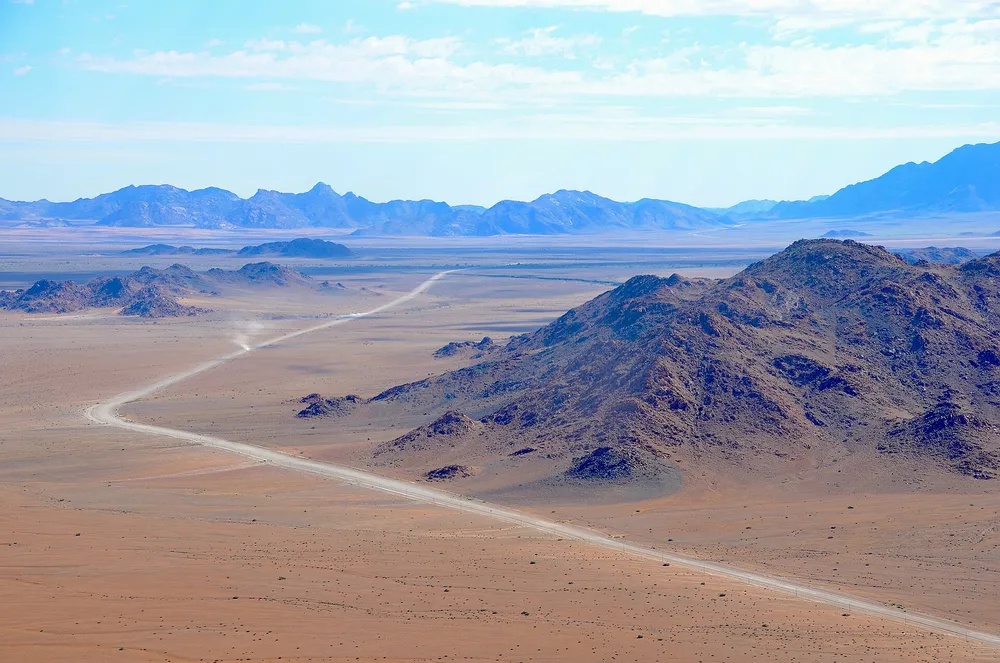
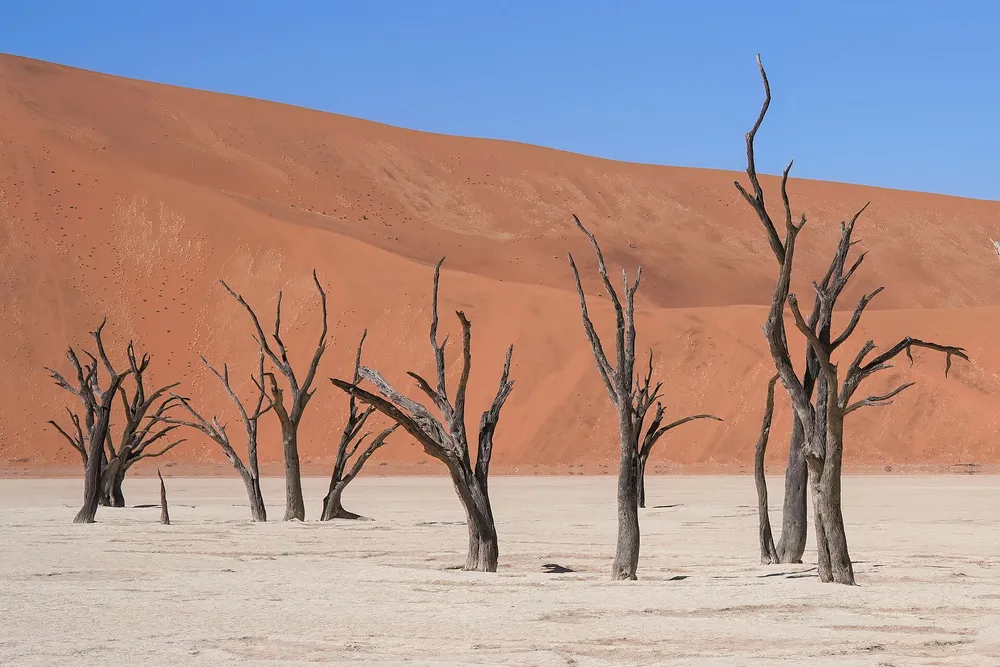
Etosha takes its name from the pan at its centre: a flat, salt-crusted lakebed about 120 km long and up to 50 km wide that covers close to a quarter of the park. The word comes from Oshindonga and is usually translated as the 'Great White Place'. For most of the year the pan is a shimmering white void where nothing grows and mirages float above the horizon. After good summer rains a few centimetres of water spread across parts of it and flamingos and pelicans arrive to breed; within weeks it is dry again.
The wildlife lives around the pan, not on it. Along the southern edge, where the limestone meets the clay, groundwater surfaces in a chain of springs, and these natural waterholes, together with boreholes drilled by the park, are what make Etosha work. When the rains end and the bush pans dry out, every animal in the park has to walk to one of them. The road from Okaukuejo to Namutoni follows that chain for about 135 km, and a visitor who simply drives it slowly, stopping at each spring, will see more large mammals in a day than in most parks in a week.
The park was proclaimed in 1907 by the German colonial governor, Friedrich von Lindequist, as a vast game reserve that reached the Atlantic; boundary changes reduced it to its present size by 1970. The Ministry of Environment, Forestry and Tourism (MEFT) gives the area as 22,935 km² and counts 114 mammal species and more than 400 birds. The Haiǁom, the San people whose home this was, were removed from the park in 1954; some of the waterhole names you will read on the map are theirs.
- Size
- 22,935 km² (MEFT); the pan covers roughly 4,800 km²
- Proclaimed
- 1907 as a game reserve; national park since 1967
- Species
- 114 mammals, more than 400 birds (MEFT)
- Gates
- Anderson, Von Lindequist, Galton, King Nehale; sunrise to sunset
- Speed limit
- 60 km/h
- From Windhoek
- 432 km to Okaukuejo (NWR figure), tarred as far as the gate
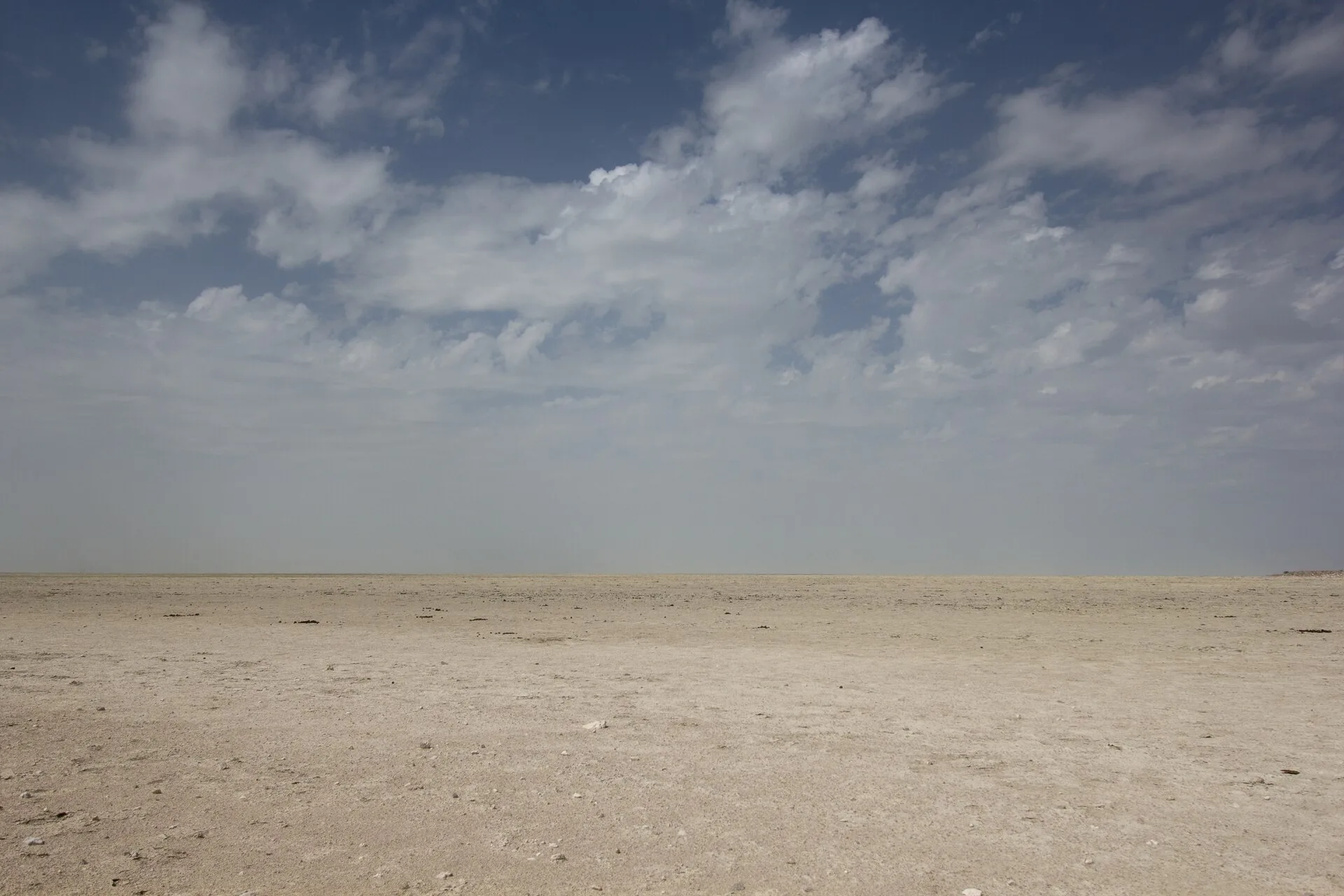
The edge of Etosha Pan: white clay to the horizon.
The four gates and how to reach them
Which gate you use depends on where you are coming from, and it is worth entering by one and leaving by another so that you cross the park instead of doubling back.
Anderson Gate (south) is the main entrance and the one most visitors from Windhoek use. The route is tar all the way: the B1 north to Otjiwarongo, then the C38 through Outjo, the last town with supermarkets, banks and fuel. From the gate it is 17 km to Okaukuejo, the park's largest camp and its administrative centre. The cluster of lodges on the C38 south of the gate is the biggest outside the park.
Von Lindequist Gate (east) is reached from the B1 between Tsumeb and Ondangwa; Namutoni camp, just inside the gate, is 110 km from Tsumeb according to NWR. Use it if you are arriving from the Waterberg, Grootfontein or the Zambezi Region, or leaving for them.
Galton Gate (south-west) opens onto the hilly, lightly visited western third of the park. It lies north of Kamanjab on the tarred C35 and is the natural entry from Damaraland, Palmwag or the Skeleton Coast. The west was once reserved for guests of Dolomite camp; today any visitor may drive it, but there is no fuel between the gate and Okaukuejo, some 180 km to the east.
King Nehale Gate (north), named after the Ondonga leader Nehale lya Mpingana, connects the park to the B1 near Omuthiya and to the densely populated north of Namibia. It gives access to the Andoni plains, about an hour's drive north of Namutoni, and suits travellers heading to or from Ruacana, Oshakati or Opuwo.
| Gate | Side | Approach | Nearest camp inside | Good for |
|---|---|---|---|---|
| Anderson | South | C38 from Outjo (tar) | Okaukuejo, 17 km | Windhoek, Swakopmund, most first visits |
| Von Lindequist | East | B1 and C38 from Tsumeb (tar) | Namutoni, just inside the gate | Waterberg, Zambezi Region, Tsumeb |
| Galton | South-west | C35 from Kamanjab (tar) | Dolomite; Olifantsrus campsite 70 km (NWR) | Damaraland, Palmwag, Kaokoland |
| King Nehale | North | B1 at Omuthiya | Namutoni, about an hour south | Owambo, Ruacana, Opuwo |
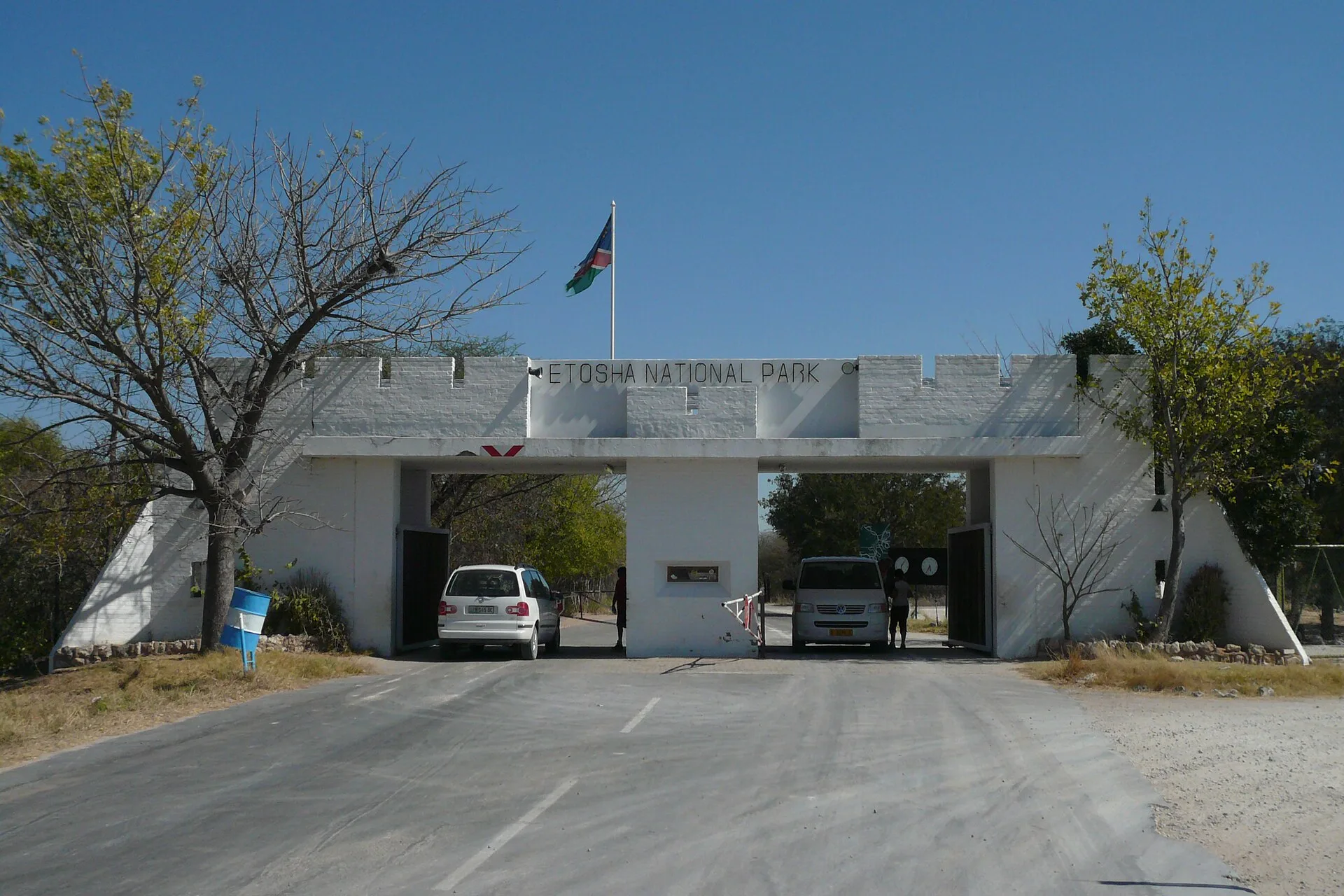
An entrance gate to Etosha National Park. All gates open at sunrise and close at sunset.
Gate times and the rules that matter
Etosha does not have fixed opening hours. The entrance gates and the gates of the camps open at sunrise and close at sunset, and because both move through the year the times are revised every week and posted at each gate and at every camp reception. As a guide, sunrise at Okaukuejo falls between roughly 6.15 AM in December and 7.30 AM in June and July, and sunset between about 6.20 PM in midwinter and 7.30 PM in midsummer (local time); the strip at the top of this page shows today's times.
The rule is enforced. If you are staying inside the park you must be through your camp gate by sunset; if you are staying outside you must be out of the park by then. Rangers do fine latecomers, and at 60 km/h a waterhole 40 km from camp is 40 minutes away at the very least, more with elephants on the road. Decide your turn-around time before you set out and keep to it.
- Stay in your vehicle everywhere except inside the camps and at the fenced picnic sites and toilets marked on the map. This applies to sunroofs and windows too: do not sit on the door or stand through the roof.
- Speed limit 60 km/h on all park roads. Most sightings are missed above 40 km/h, and animals have right of way.
- Stay on the roads. Driving off-road or onto the pan is prohibited and the tracks last for years.
- No drones. Since April 2025 MEFT has banned drones from Etosha altogether; visitors may not even carry one into the park, and any drone must be left at the entry gate and collected on the way out, which is awkward if you plan to leave by a different gate.
- No feeding, no noise at waterholes, engines off while you watch, and no pets or firearms.
- Keep your permit. You will be asked for it when you leave, and day fees are charged for every day you are inside.
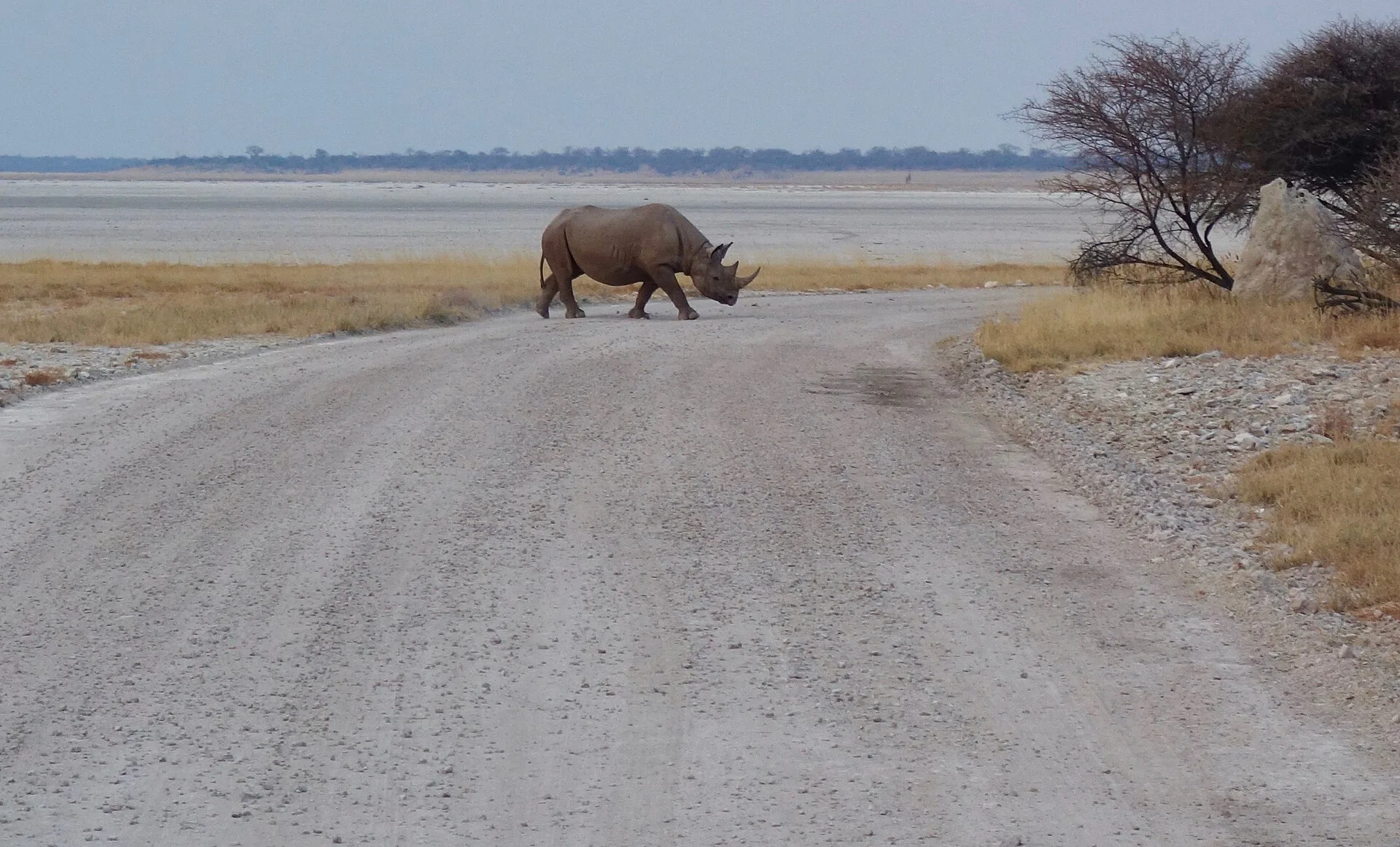
A black rhino crosses the road beside the pan. Animals have right of way, and the limit is 60 km/h.
Park fees from 1 April 2026
MEFT's revised fees came into force on 1 April 2026 and almost doubled the cost for foreign visitors. Etosha is in the higher-priced group of parks. The daily fee has two equal parts, an entrance fee and a conservation fee; the totals are shown here. Fees are per person per day, with a separate daily charge for the vehicle, and are paid at the park (follow the instructions you are given at the gate; carry a bank card and some cash in Namibian dollars or rand).
A couple from outside southern Africa in one rental car therefore pays N$620 for each day in the park. Organised tours may or may not include park fees in the price, so check the listing.
| Per day | Namibian citizen | SADC national | Other foreign visitor |
|---|---|---|---|
| Adult, 16 and over | N$60 | N$180 | N$280 |
| Child, 9 to 15 | Free | N$100 | N$180 |
| Child, 8 and under | Free | Free | Free |
| Vehicle, up to 10 seats | N$60 | N$60 | N$60 |
| Vehicle, 11 to 25 seats | N$150 | N$150 | N$150 |
Self-drive or guided game drives?
Self-drive is how most people see Etosha and it works well. Buy the park map at a camp shop, pick a cluster of waterholes and drive slowly between them in the first three hours after sunrise and the last two before sunset, when animals move and the light is good. In the middle of the day, do what the animals do: find a waterhole with shade, switch off and wait. Herds of zebra, springbok and elephant often drink between late morning and mid-afternoon in the dry season, and an hour spent at one good spring usually beats an hour of driving. Patience matters more than mileage.
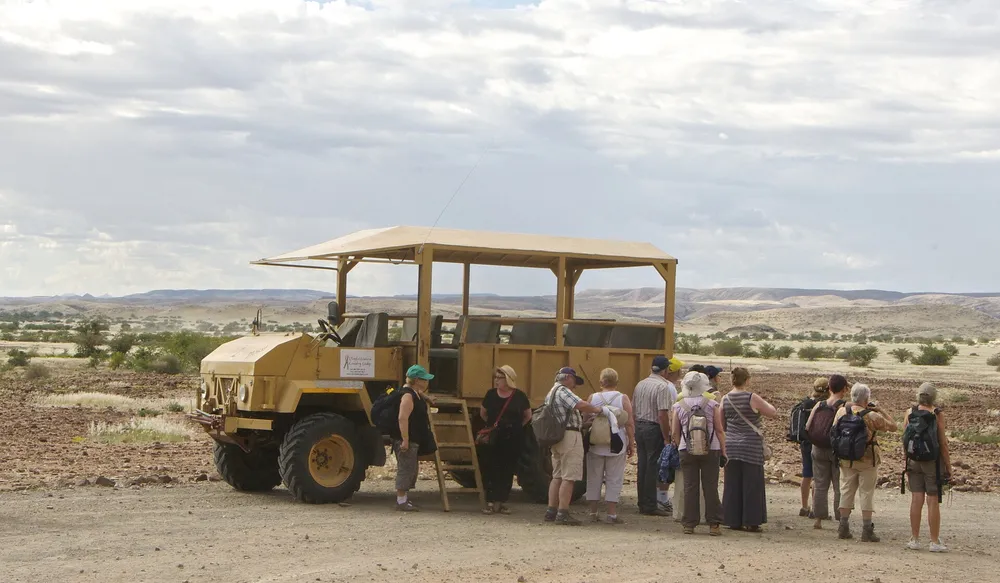
What you lack on your own is height, eyes and knowledge. A guide in an open safari vehicle sits a metre higher than you do in a saloon car, scans for a living, and hears from other guides where the lions were at dawn. If cats matter to you, a guided morning drive is the most efficient way to find them.
Namibia Wildlife Resorts runs guided drives from its camps for people staying there: morning and afternoon drives at N$650 per person and night drives at N$750 (NWR's published rates for November 2026 to October 2027). The night drive is the one thing you cannot do yourself, since private vehicles are locked in at sunset, and it is the best chance of seeing hunting lions, hyena, and smaller nocturnal animals such as aardwolf and genet. Book at reception as soon as you arrive; seats are limited.
Lodges outside the gates run their own morning and afternoon drives into the park in open vehicles, and independent guides offer half-day and full-day drives that collect you near Okaukuejo or the southern gate. These suit visitors staying outside the park and anyone who would rather look than drive.
Etosha National Park: Full or Half-Day Game Drive
A guided game drive inside the park in a safari vehicle, for visitors already staying at or near Etosha. Half a day covers the waterholes around Okaukuejo; a full day reaches further along the pan. Check the meeting point and whether the park fee is included.
Check availabilityBook via GetYourGuide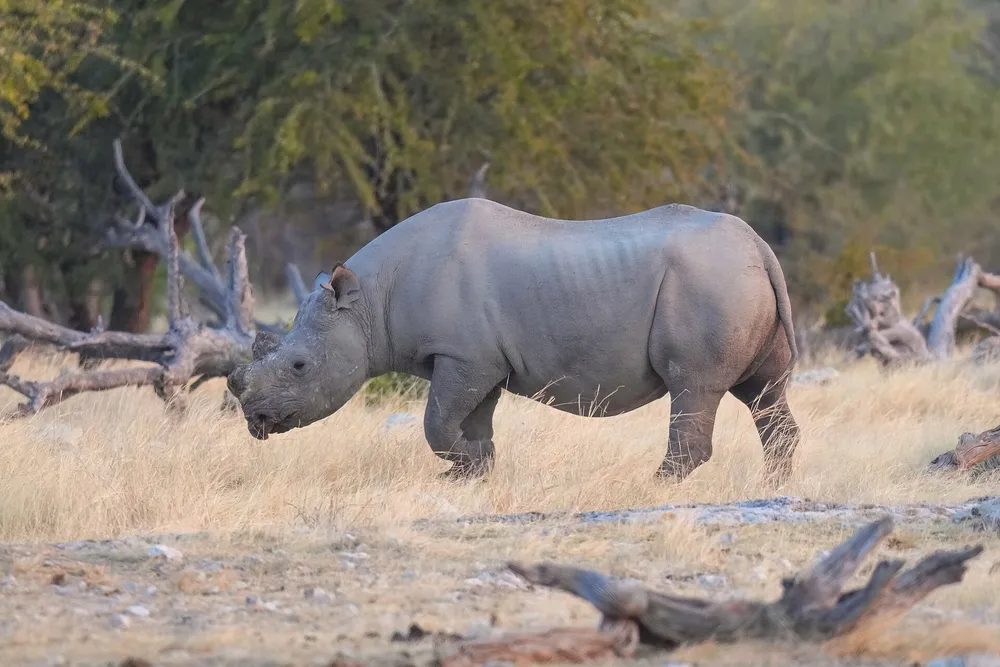
Etosha: 4x4 Open Private Safari, Full Day
A full day in an open 4x4 with a guide to yourselves: good for photographers, who can ask to wait for the light, and for families who want to set their own pace.
Check availabilityBook via GetYourGuide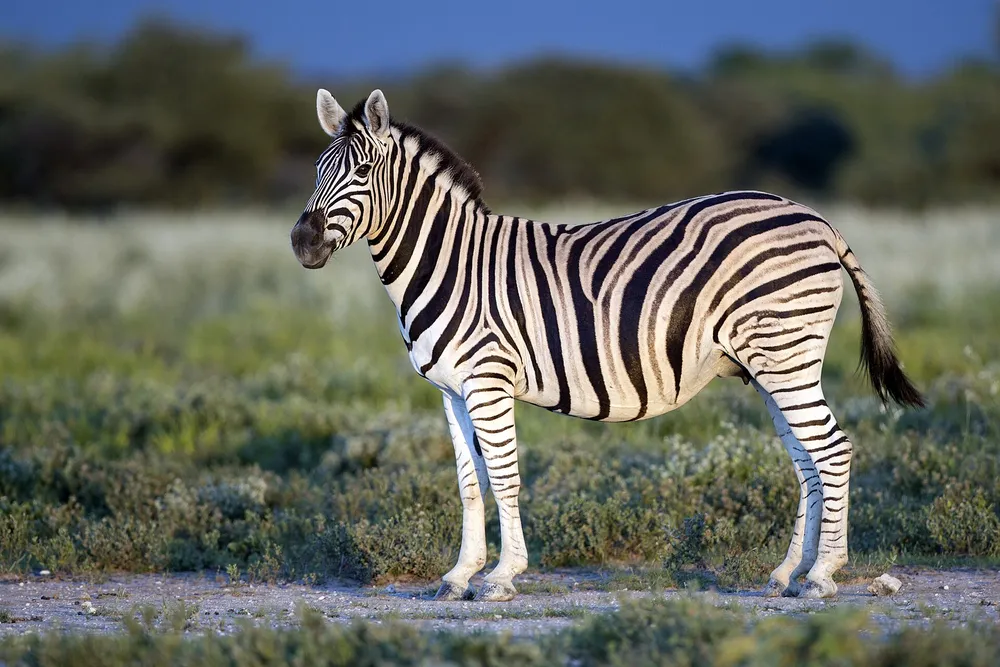
Etosha National Park: Full or Half-Day Game Drive (alternative departure)
A second listing of the guided half- or full-day drive in Etosha. Compare pick-up places and times with the other game-drive options.
Check availabilityBook via GetYourGuideTour listings are on GetYourGuide. Prices, dates and cancellation terms are shown live on each listing and can change; NamibiaSafaris.com may earn a commission at no extra cost to you.
Waterholes worth sitting at
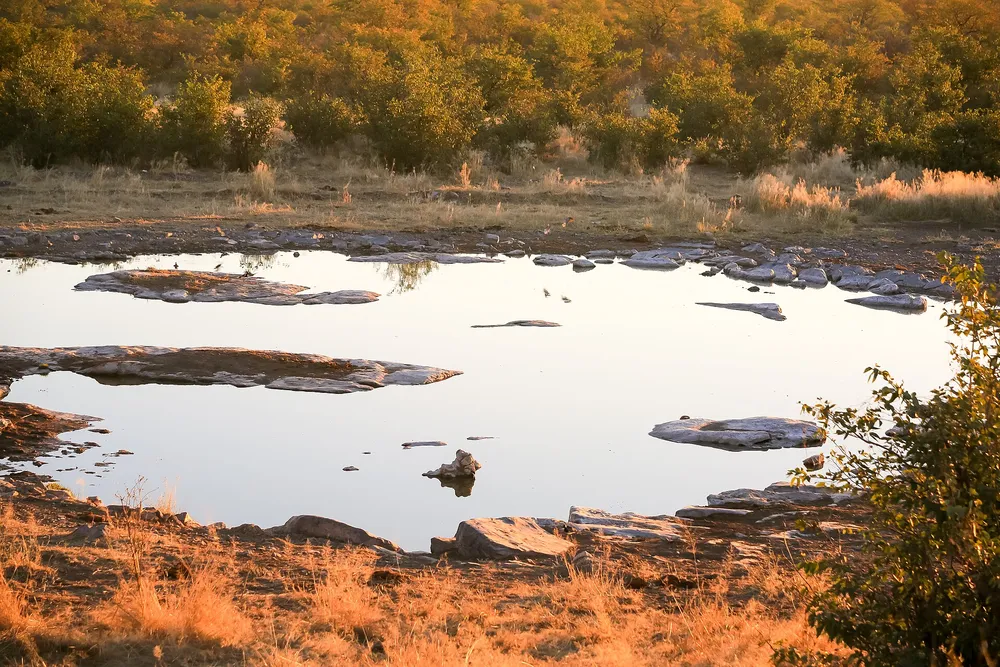
Etosha has dozens of named waterholes and they are not equal. Some are springs that never fail, some are pumped, some dry up, and conditions change from year to year, so ask at reception which ones are holding water and where the cats have been seen: each camp keeps a sightings book. These are the ones that most reliably reward an hour of your time in the dry season.
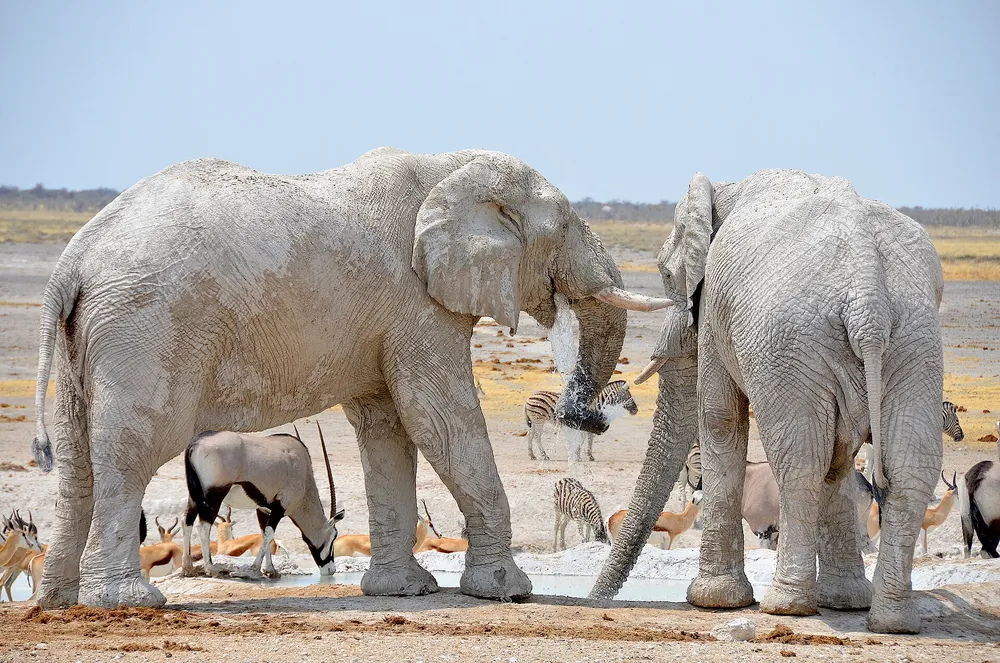
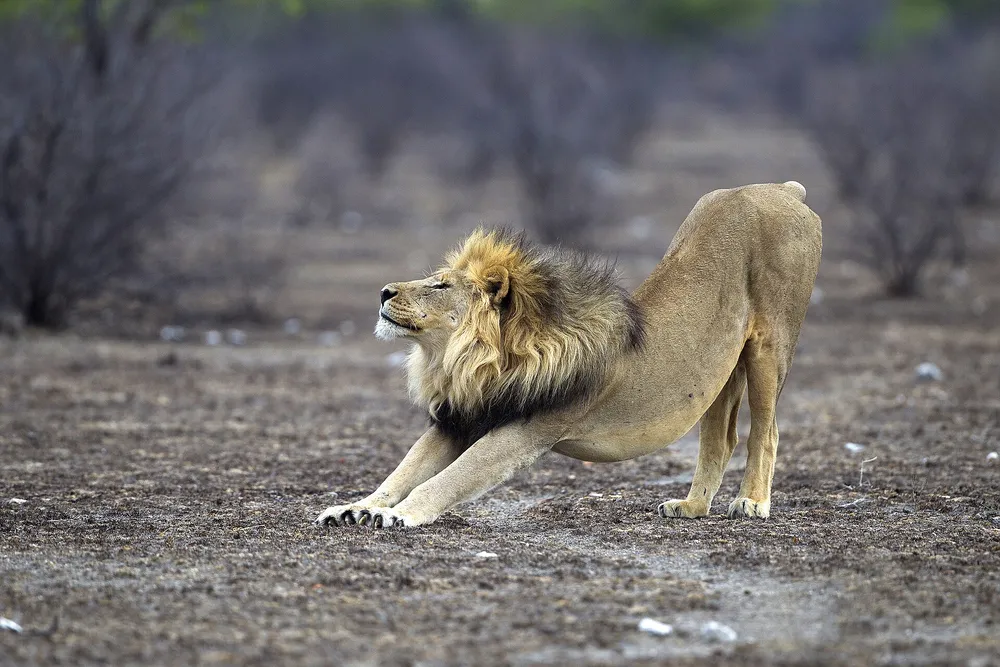
Around Okaukuejo. The camp's own floodlit waterhole is the most famous in Namibia and deserves the reputation: elephant herds in the late afternoon, and black rhino, sometimes several at once, in the hours after dark. Nebrownii, a short drive east, is a bare white bowl where elephant bulls plastered in pale clay gather at midday. Okondeka, on the western rim of the pan to the north, is a natural seep with a resident lion pride that often lies on the open ground in full view. The loop through Gemsbokvlakte, Olifantsbad and Aus to the south-east takes you into mopane woodland for elephant, kudu and black-faced impala.
Between Okaukuejo and Halali. Salvadora, Sueda and Charitsaub sit side by side on the lip of the pan with enormous views across the white flats; the surrounding plains are good cheetah and lion country. Rietfontein is a large spring with a wide parking area and a long record of lion sightings.
Around Halali. Moringa, the camp waterhole, is watched from tiered seating on a rocky hill a few minutes' walk from the chalets and is floodlit at night; it is the best place in the park to hope for a leopard, and black rhino and elephants are regular. Goas, to the east, is a pretty double pool popular with elephants and black-faced impala.
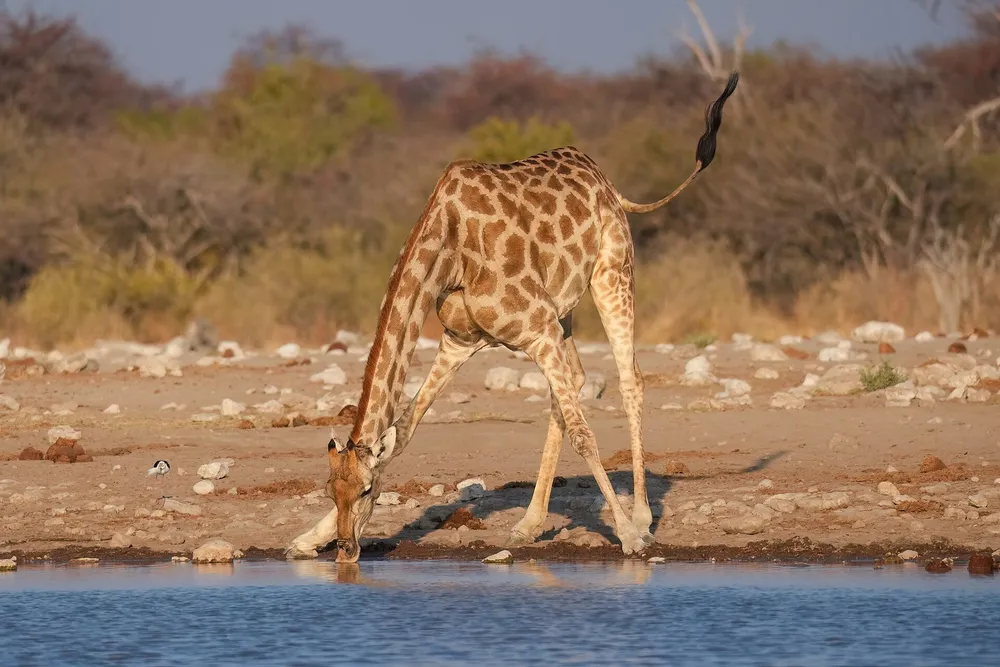
Around Namutoni. Chudop is an artesian spring ringed with reeds where giraffe, eland and zebra drink against a clean background. Klein Namutoni, close to camp, is the place for the last half hour of light, and the nearby Dik-dik Drive is where to look for the Damara dik-dik, an antelope the size of a hare. Kalkheuwel, on the road towards Halali, draws elephants in the dry months. North of camp, Fischer's Pan fills in a good rainy season and becomes the park's best birding, and the road continues past Tsumcor to the grassy Andoni plains.
The west. At Olifantsrus a two-level hide reached by a walkway looks straight down on a waterhole, and campers can use it after dark. Near Dolomite, NWR notes that both black and white rhino have been seen at Klippan. Traffic is thin enough here that you may have a waterhole to yourself for a morning.
| Waterhole | Nearest camp | Known for | Best time of day |
|---|---|---|---|
| Okaukuejo | Okaukuejo (in camp) | Black rhino and elephant; floodlit | Late afternoon and after dark |
| Nebrownii | Okaukuejo | Elephant bulls, big mixed herds | Late morning to mid-afternoon |
| Okondeka | Okaukuejo | Lions on the pan edge | Early morning |
| Salvadora, Sueda, Charitsaub | Halali or Okaukuejo | Plains game, cheetah, views of the pan | Morning |
| Rietfontein | Halali | Lions, elephants | Morning and late afternoon |
| Moringa | Halali (in camp) | Leopard, rhino, elephant; floodlit | Dusk and after dark |
| Goas | Halali | Elephants, black-faced impala | Midday |
| Chudop | Namutoni | Giraffe, eland, lion | Morning |
| Klein Namutoni | Namutoni | Giraffe, impala; Dik-dik Drive nearby | Last light |
| Olifantsrus hide | Olifantsrus | Elephant and rhino at close range | Afternoon and night |
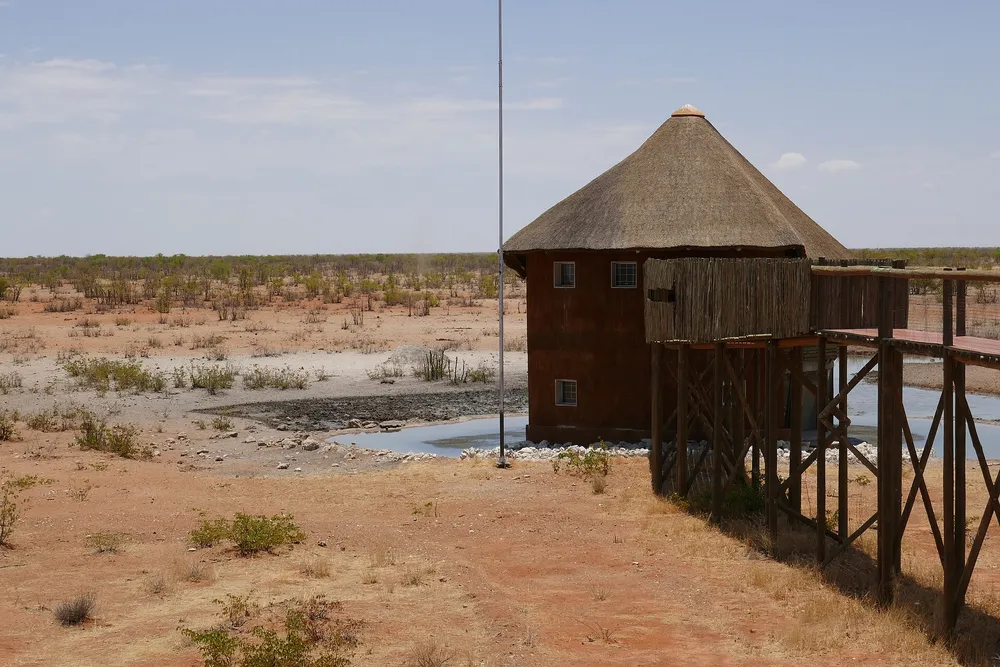
East, centre or west: choosing your part of the park
The park is about 300 km from end to end and the three sections feel different. With two or three nights, choose two adjoining areas; trying to cover everything means long days at the speed limit.
Okaukuejo and the south-centre is open, pale and stark: short grass, white dust, the pan as a backdrop. It has the heaviest concentration of plains game and the best-known waterholes, and also the most vehicles. If you have one night only, spend it here.
Halali, halfway along the pan, sits among mopane trees and dolomite hills, the only high ground in the centre of the park. It is quieter than the other two main camps and well placed for both directions.
Namutoni and the east is greener and more wooded, with tall makalani palms, more giraffe, the dik-dik and the black-faced impala, and the best birding. In summer the east receives more rain than the west.
The west, beyond the old cut-off at Ozonjuitji m'Bari, is hillier and redder, with far fewer visitors and the park's only Hartmann's mountain zebra. Distances between waterholes are long and facilities few, so it suits a second visit or travellers arriving from Damaraland who want to cross the whole park over two or three days.
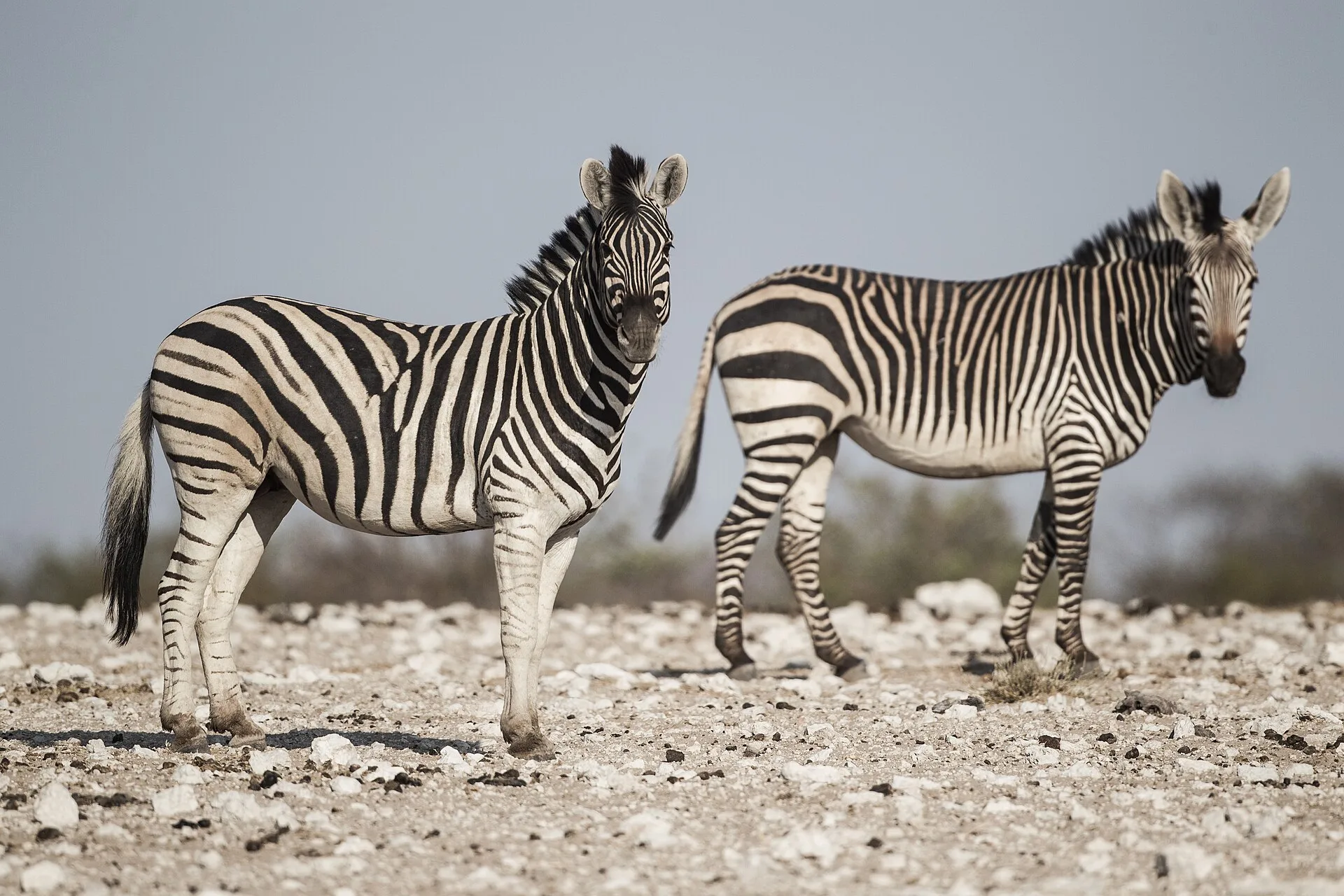
Only in the west of the park do the plains zebra (left) and Hartmann's mountain zebra share a waterhole.
What you see, season by season
Etosha is open all year and worth visiting in any month, but it is two different parks. In winter it is a study in white dust and animals; in summer it is green, stormy and full of birds, with the game spread thin.
| Months | Conditions | Wildlife | Good to know |
|---|---|---|---|
| May – June | Dry, cooling; bush still partly green | Game returning to the waterholes; fewer vehicles | Cold nights from June; good value |
| July – August | Dry, cool days, cold nights, dust | Large herds at water all day | Busiest weeks; camps booked far ahead |
| September – October | Very dry, hot by October, hazy | Peak concentrations; predators around the springs | Best viewing of the year; heat and dust |
| November – December | First storms, hot | Herds scatter after rain; springbok and other antelope begin to lamb | Malaria risk rises; lower rates |
| January – March | Rainy season, green, some roads muddy | Young animals, migrant birds; flamingos if the pan floods | Game harder to find; superb light |
| April | Rains ending, tall grass | Animals in good condition, still dispersed | Quiet and green |
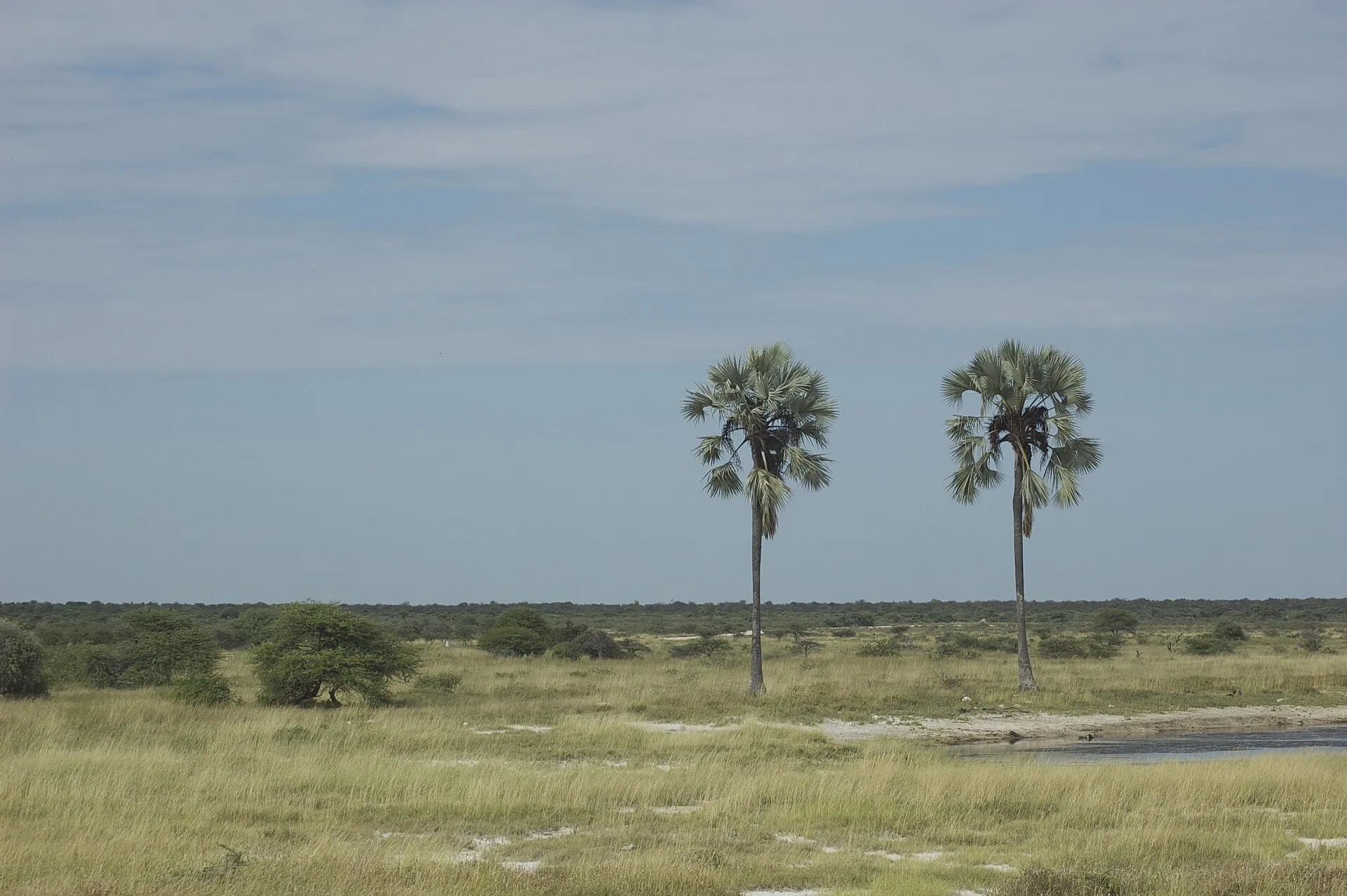
After the rains: green grass and standing water at Twee Palms, near Fischer's Pan.
The animals, and what is missing
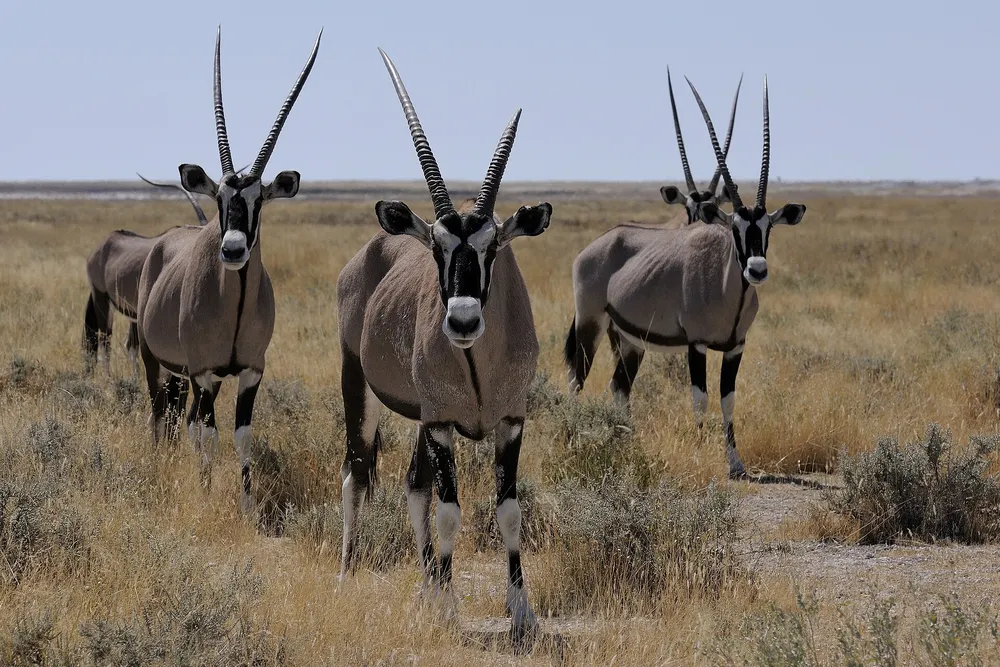
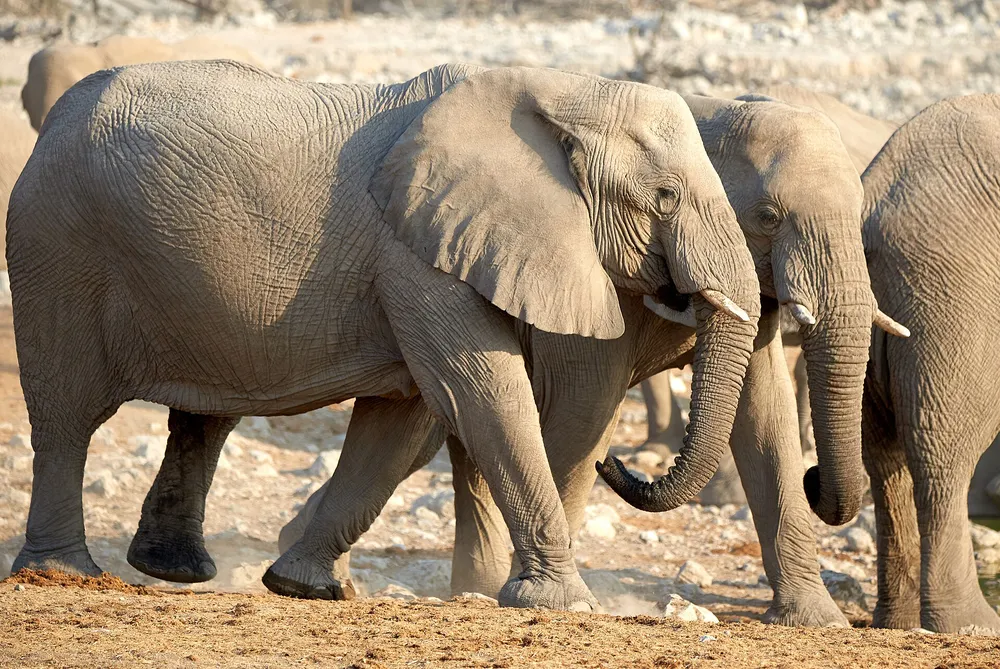
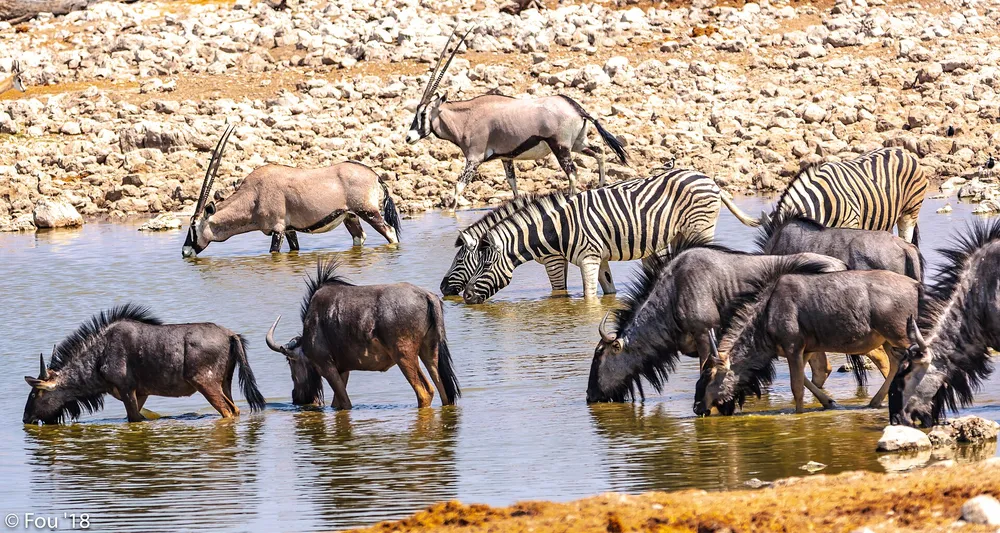
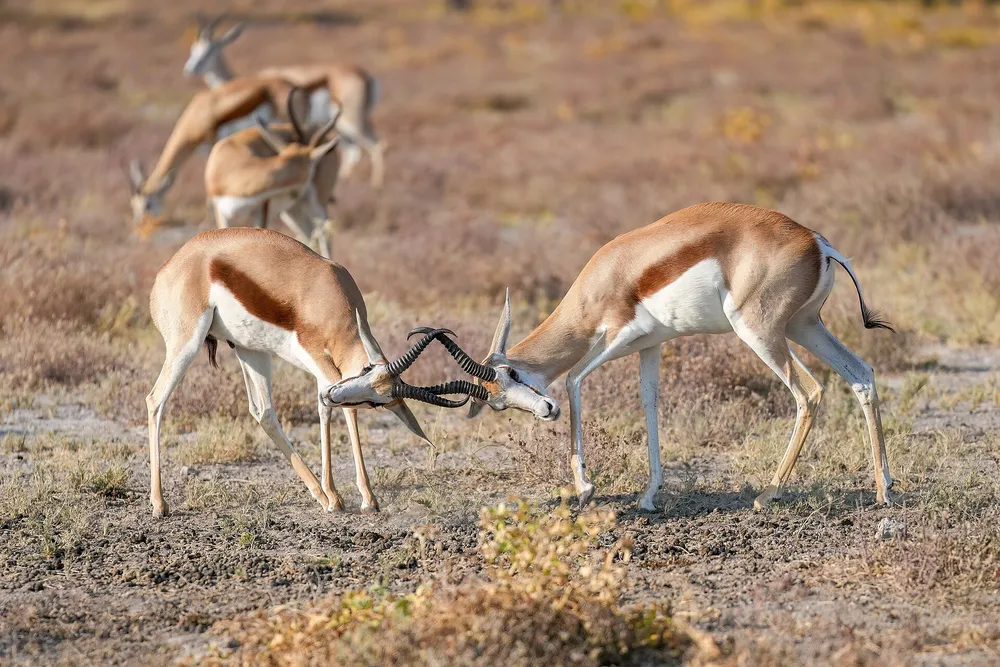
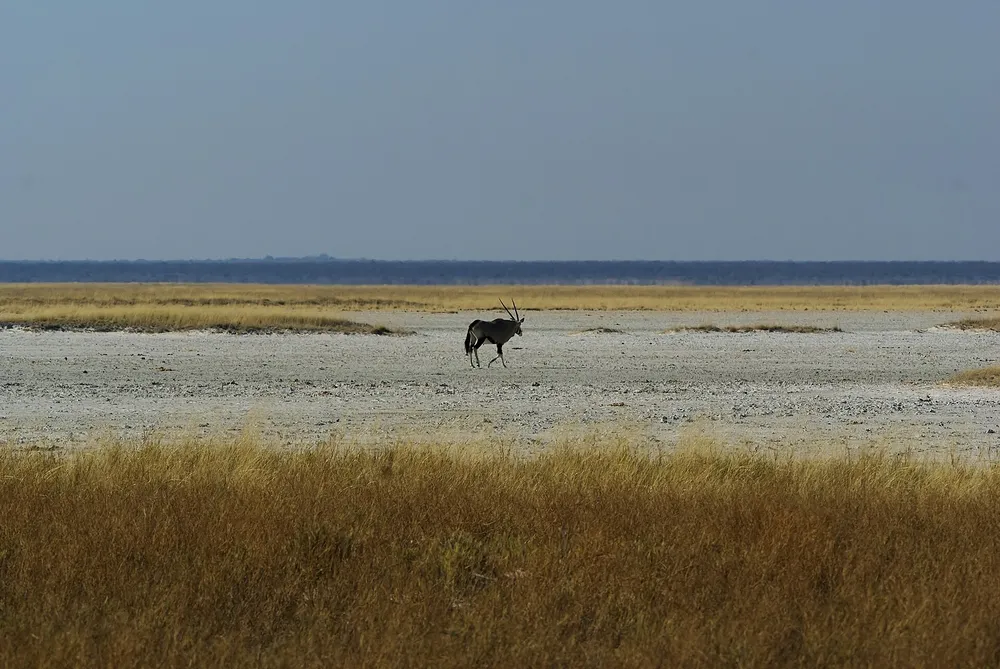
On a dry-season visit of two or three days most people see elephant, giraffe, plains zebra, blue wildebeest, springbok in thousands, gemsbok (oryx), red hartebeest, kudu, black-faced impala, warthog, black-backed jackal and spotted hyena, and usually lion. Etosha's elephants are among the tallest in Africa and carry small tusks; coated in white clay from the pan they look like ghosts. Black rhino are seen far more often here than in most African parks, mostly at dusk and after dark; white rhino have been reintroduced and are seen now and then, particularly in the east. Cheetah hunt the open plains but need luck, and leopard need more.
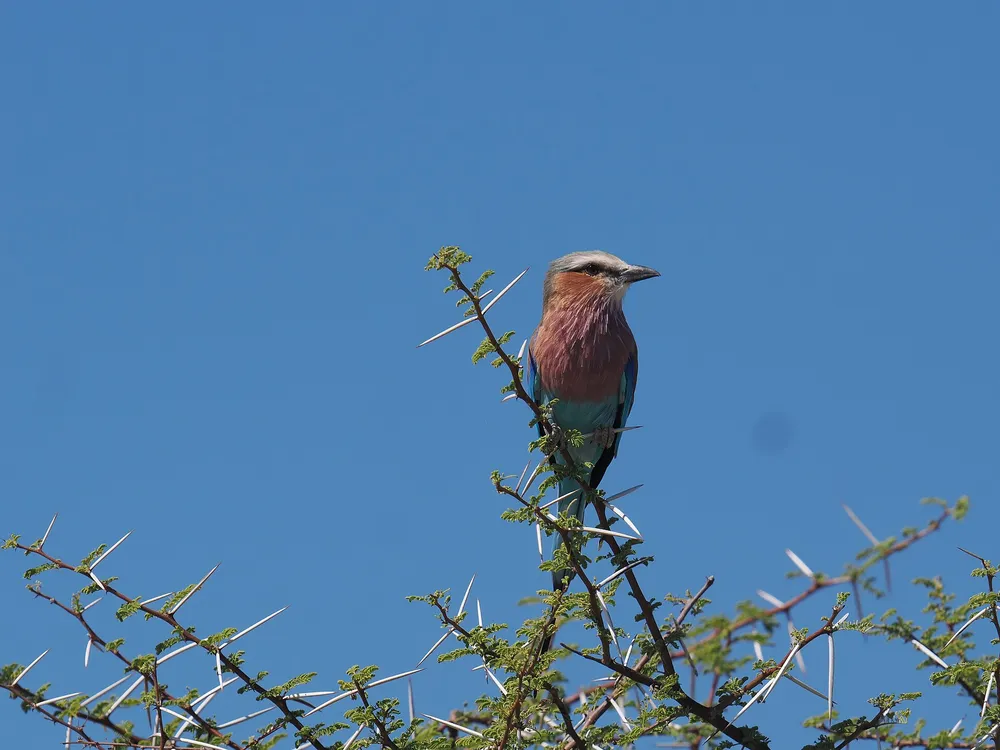
Etosha does not have buffalo, hippo or crocodile, and it lies outside the range of wild dog. If the Big Five is your aim, read our honest guide. Birders should look for kori bustard and northern black korhaan on the plains, blue crane near Fischer's Pan and Andoni, and eagles, vultures and the lilac-breasted roller everywhere.
Rhino poaching is a serious problem in the park. Do not post the location of a rhino sighting on social media, and report anything suspicious to camp staff.
Fuel, food, roads and health
Fuel. Okaukuejo, Halali and Namutoni each have a filling station, but pumps in the park have been known to run dry or break down. Arrive with a full tank from Outjo, Tsumeb, Omuthiya or Kamanjab and top up when you can. There is no fuel at Dolomite, Olifantsrus or Onkoshi.
Food and water. The three main camps have a restaurant, a bar, a kiosk and a small shop selling basics, firewood, cold drinks and curios. Self-caterers should shop in Outjo or Tsumeb. Carry several litres of drinking water in the car.
Roads. The main routes are tarred or wide gravel and fine for a two-wheel-drive car in the dry season, though corrugated in places; after heavy rain some loops close and low cars struggle with standing water. Tyres suffer on the sharp limestone, so check that your spare is sound and that you know how to change a wheel. You may only do so if you judge it safe, and it is wise to wave down another vehicle to keep watch.
Malaria. Etosha lies in the part of Namibia where malaria occurs. The risk is seasonal, highest during and after the rains (roughly November to June) and low in the dry winter months. See a travel clinic before your trip about preventive tablets, and use repellent and long sleeves in the evenings; more on our health and safety page.
After the 2025 fires. In late September 2025 wildfires burned a large part of the park (MEFT estimated about a third of its area), mainly in the west and around Halali. Camps and the main tourist roads stayed open, and Namibian media reported all facilities operating in the months that followed. Mopane savanna recovers quickly after rain, but you may still see burnt stretches.
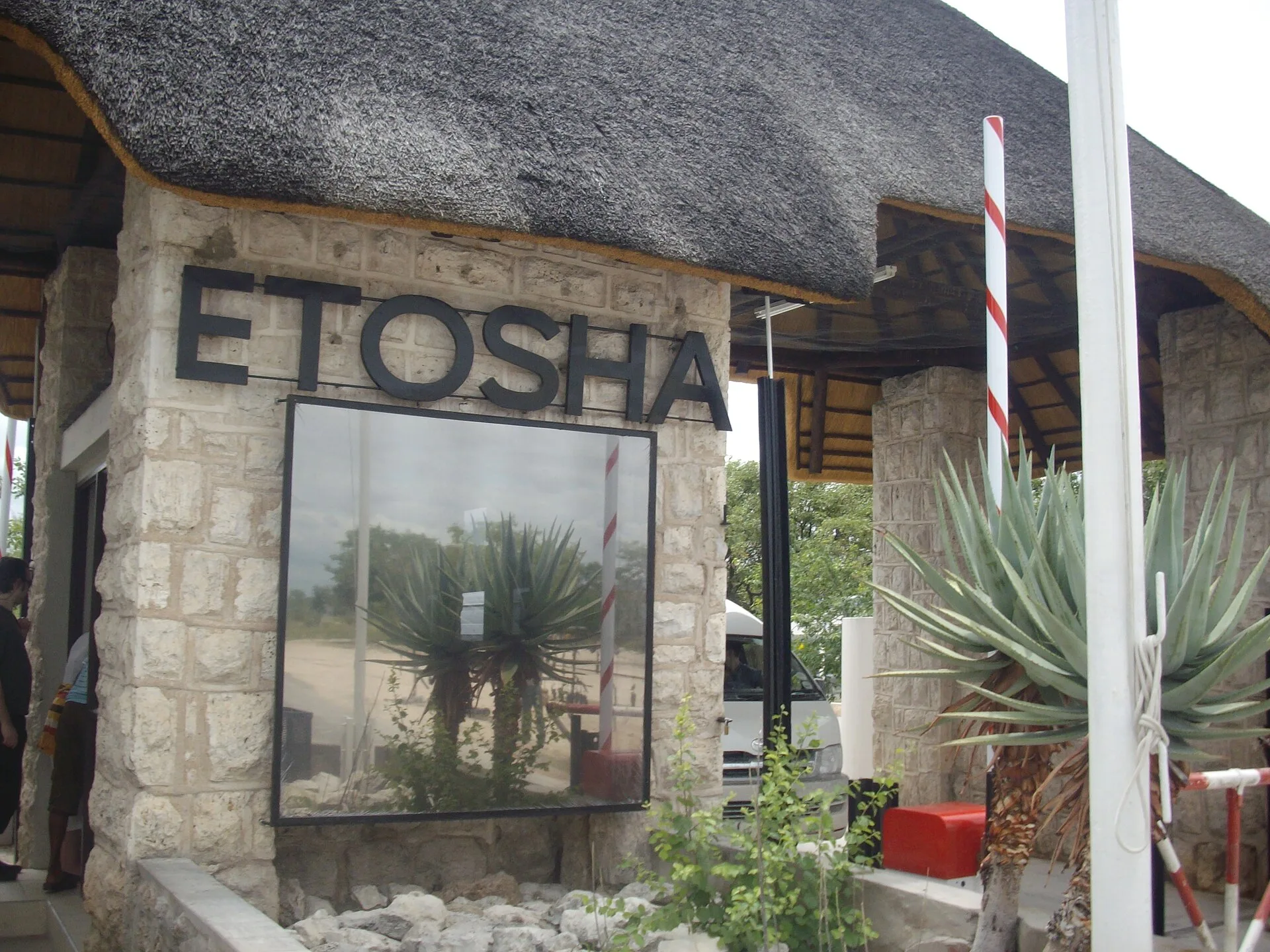
Fill the tank before you reach the gate; fuel inside the park is not guaranteed.
Where to stay and how to book a safari
Inside the park, Namibia Wildlife Resorts runs three large fenced camps (Okaukuejo, Halali, Namutoni), two smaller upmarket camps (Dolomite in the west and Onkoshi on the pan's north-eastern rim) and the Olifantsrus campsite. Staying inside means a floodlit waterhole on your doorstep and being first out at sunrise. Outside each gate, private lodges and reserves offer more comfort, better food and guided drives. We compare them all on the Etosha camps and lodges page.
If you would rather not drive, the three-day safaris from Windhoek include transport, a guide and accommodation, and are the simplest way to see the park. They are ranked with the other options on our tours page.
Etosha Village
EtoshaTwo kilometres from Etosha’s Anderson Gate: air-conditioned units with patios, two pools, restaurant and bar.
8.7Booking.com guest score · as checked in November 2026
See on Booking.comGondwana Etosha Safari Lodge
EtoshaOn a ridge 10 km south of Anderson Gate, with three pools, air-conditioned rooms and guided drives into the park at extra cost.
8.6Booking.com guest score · as checked in November 2026
See on Booking.comMushara Bush Camp
EtoshaRelaxed, family-friendly camp 8 km from Von Lindequist Gate, with family rooms, a pool and a children's playground.
9.2Booking.com guest score · as checked in November 2026
See on Booking.comOnguma Tamboti Campsite
EtoshaIn the Onguma Nature Reserve by Etosha’s Von Lindequist Gate; restaurant, bar and pool beside a waterhole.
9.3Booking.com guest score · as checked in November 2026
See on Booking.comGondwana Etosha King Nehale
EtoshaThe lodge for the northern gate: 5 km from King Nehale Gate, with air-conditioned rooms, family rooms and a restaurant.
9.4Booking.com guest score · as checked in November 2026
See on Booking.comToshari Lodge
EtoshaA garden lodge south of the Anderson Gate with a pool, a restaurant and rooms with private patios.
8.8Booking.com guest score · as checked in November 2026
See on Booking.comSee all stays in Etosha on Booking.com
Accommodation links go to Booking.com, where you see live prices and availability. We do not list prices because they change daily; NamibiaSafaris.com may earn a commission.
Frequently asked questions
What time do the Etosha gates open and close?
At sunrise and sunset. There are no fixed clock times: they shift weekly with the sun and are posted at every gate and camp reception. Expect roughly 6.15 to 7.30 AM for opening and 6.20 to 7.30 PM for closing depending on the month (local time). You must be out of the park or inside your camp by sunset.
How many days do you need in Etosha?
Two nights is the practical minimum and three is better. With three nights you can spend one or two at Okaukuejo and the rest at Halali or Namutoni, and see both ends of the main waterhole chain without rushing.
Can I drive in Etosha with a normal car?
Yes. In the dry season the main roads are suitable for any two-wheel-drive car driven carefully. A vehicle with higher clearance is more comfortable on corrugations and sees over the roadside grass, and is advisable in the rainy season.
Are there buffalo or hippos in Etosha?
No. Etosha has elephant, lion, leopard and both black and white rhino, but no buffalo, hippo or crocodile. Buffalo live on the Waterberg Plateau and in the Zambezi Region; hippos and crocodiles in the rivers of the north-east.
Is Etosha malaria-free?
No. It is in Namibia's malaria area, although the risk is low in the dry winter months and highest from about November to June. Ask a travel clinic about prophylaxis for your dates.
Can I take a drone into Etosha?
No. Since April 2025 drones may not be brought into the park, even unused. A drone must be left at the gate where you enter and collected when you leave.
Do I need to book park entry in advance?
Day entry is paid on arrival; there is no advance ticket for the park itself. What you must book ahead, often many months ahead for July to October, is accommodation inside the park.
Sources and official information
Facts were checked against these official sources in November 2026. Park fees, gate times, visa rules and timetables change, so confirm before you go.
- meft.gov.na
- lac.org.na
- nwr.com.na
- nwr.com.na
- nwr.com.na
- nwr.com.na
- nwr.com.na
- nwr.com.na
- observer24.com.na
- cdc.gov
- namibian.com.na
NamibiaSafaris.com is an independent guide, not the official site of any tour operator, lodge, Namibia Wildlife Resorts or the Namibian government. Some links are affiliate links: tours go to GetYourGuide and accommodation goes to Booking.com, and we may earn a commission at no extra cost to you.