In short
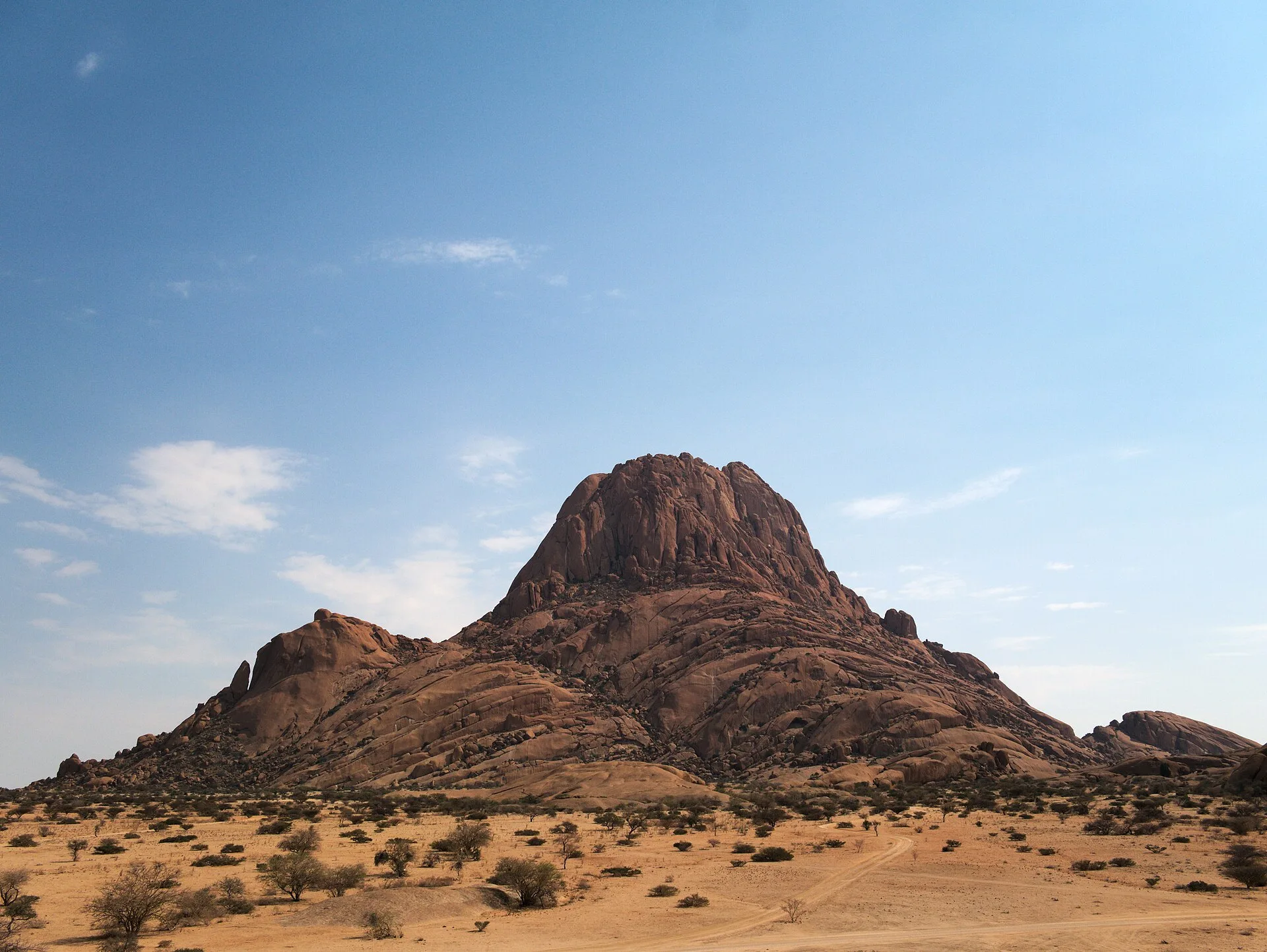
- What it is: a cluster of bald granite domes rising about 700 m out of a flat gravel plain between Usakos and the coast; the main peak is 1,728 m above sea level.
- Why go: an easy scramble to a natural rock arch, San rock paintings visited with community guides, superb sunrise and sunset colour, and some of the best wild camping in Namibia.
- Stay the night if you can. The granite turns orange and then red for a few minutes at each end of the day, and the stars are extraordinary; day visitors miss both.
- Access: about 150 km from Swakopmund and 280 km from Windhoek, the last 30–40 km on gravel that an ordinary car manages in dry weather.
- It is community land. Entrance, camping and guiding fees go to the local conservancy’s rest camp; rock-art sites are visited with a local guide only.
An island of granite
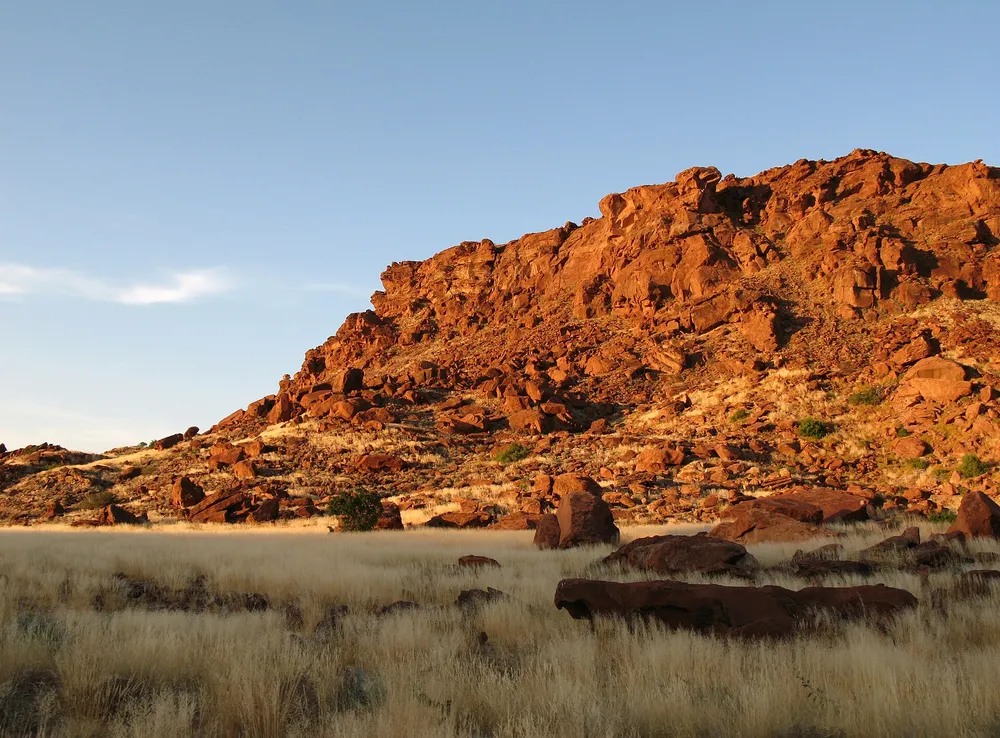
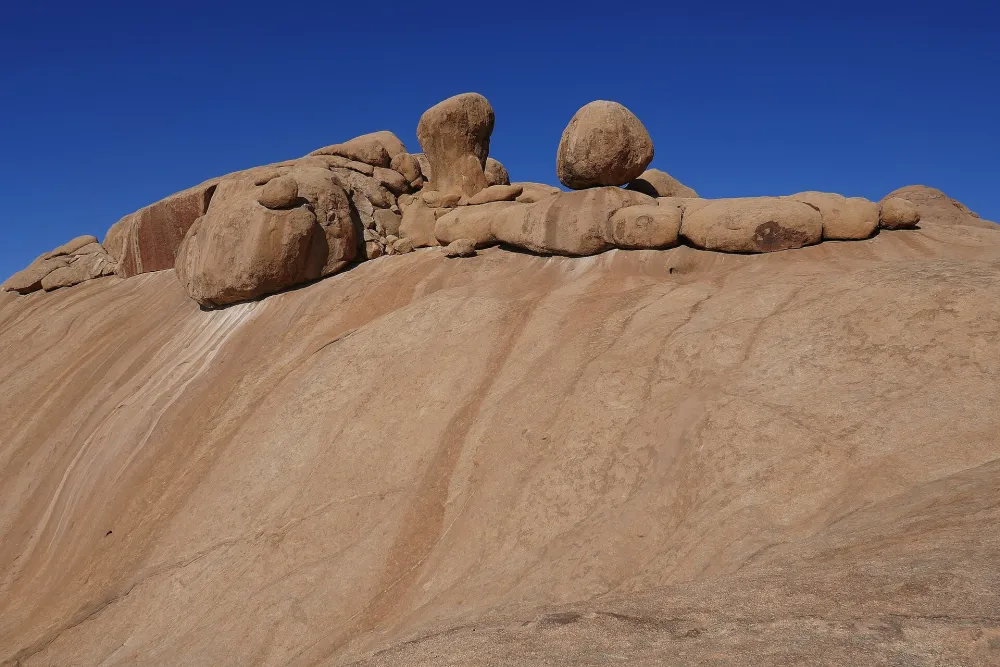
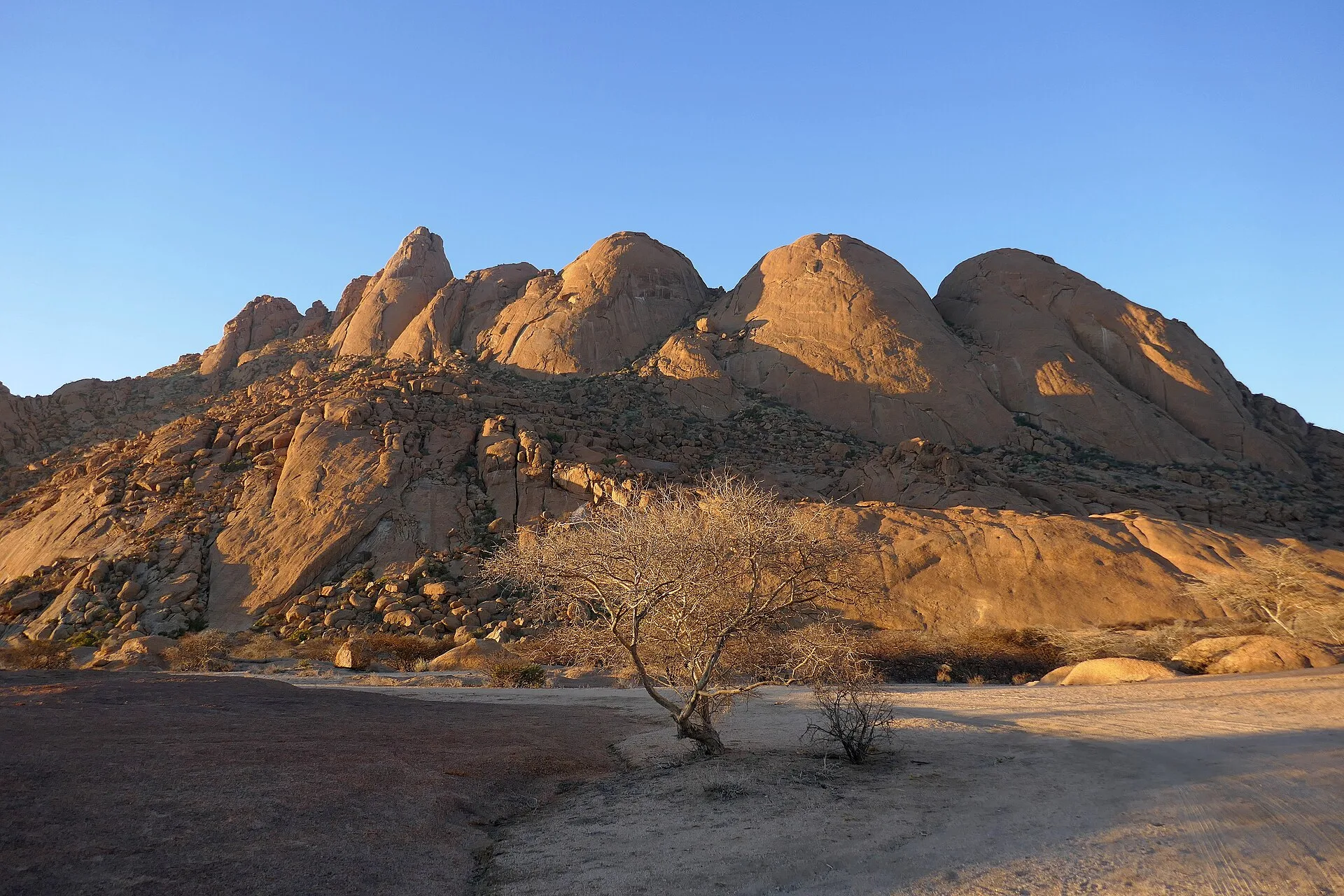
Drive the B2 between Usakos and Swakopmund on a clear day and the Spitzkoppe is on the northern horizon for an hour: a sharp main peak, the lower dome of the Klein (Little) Spitzkoppe to its west and the blocky wall of the Pontok Mountains to its east. They are inselbergs, “island mountains”: the cores of granite that cooled underground more than 120 million years ago, around the time Africa and South America split apart, and were left standing when the softer rock around them wore away.
The main peak reaches 1,728 m, some 700 m above the surrounding plain. “Matterhorn of Namibia” is the usual nickname and oversells the height while underselling the shape; the massif is less a single horn than a small, self-contained world of slabs, boulders the size of houses, natural bridges and hidden hollows that hold rainwater and trees. Stanley Kubrick used photographs of these rocks as backgrounds for the “Dawn of Man” sequence of 2001: A Space Odyssey.
People have used the shelter and water here for a very long time. The overhangs hold San rock paintings, and a German colonial trading post operated below the mountain from 1896. Today the area belongs to a communal conservancy, and the community runs the entrance gate, the campsite and the guiding.
- Highest point
- 1,728 m (about 700 m above the plain)
- From Swakopmund
- about 150 km, 2 hours
- From Windhoek
- about 280 km, 3.5 hours
- Nearest fuel and shops
- Usakos (about 50 km); also Henties Bay, Uis, Karibib
- Managed by
- The local community (Spitzkoppe Community Rest Camp)
- Malaria
- Not a malaria area
Getting there
- From Swakopmund: take the B2 east for about 120 km, turn left (north) onto the D1918 signposted for Henties Bay and Spitzkoppe, and after about 18 km right onto the D3716 to the gate. Tar, then roughly 30 km of gravel.
- From Windhoek: the B1 and B2 via Okahandja, Karibib and Usakos (fill up here), then 24 km further on the B2 to the same D1918 turn-off.
- From Henties Bay and the Skeleton Coast: the D1918 runs straight inland from the coast for about 100 km of gravel, a fine empty drive with the peaks growing ahead.
- Onwards to Damaraland: the D1930 leads north to Uis (fuel) and the Brandberg, for Twyfelfontein and Damaraland.
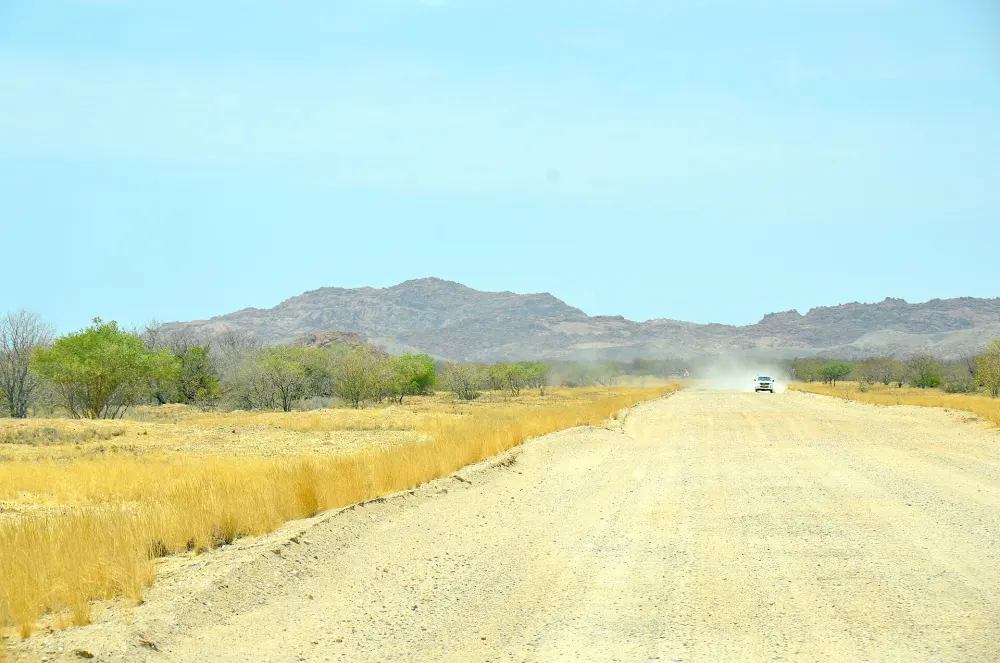
The gravel is normally in fair condition, with corrugations and the odd sandy patch; inside the reserve the tracks between campsites are rougher, and a vehicle with some ground clearance is more comfortable. After summer thunderstorms the dry riverbeds on the approach can run for a few hours: wait rather than cross flowing water. There is no fuel and almost no mobile signal at the mountain.
What to see
Pay at the gate, where you are given a map of the tracks and numbered campsites. The main sights lie around the base of the massif and take half a day at a relaxed pace.
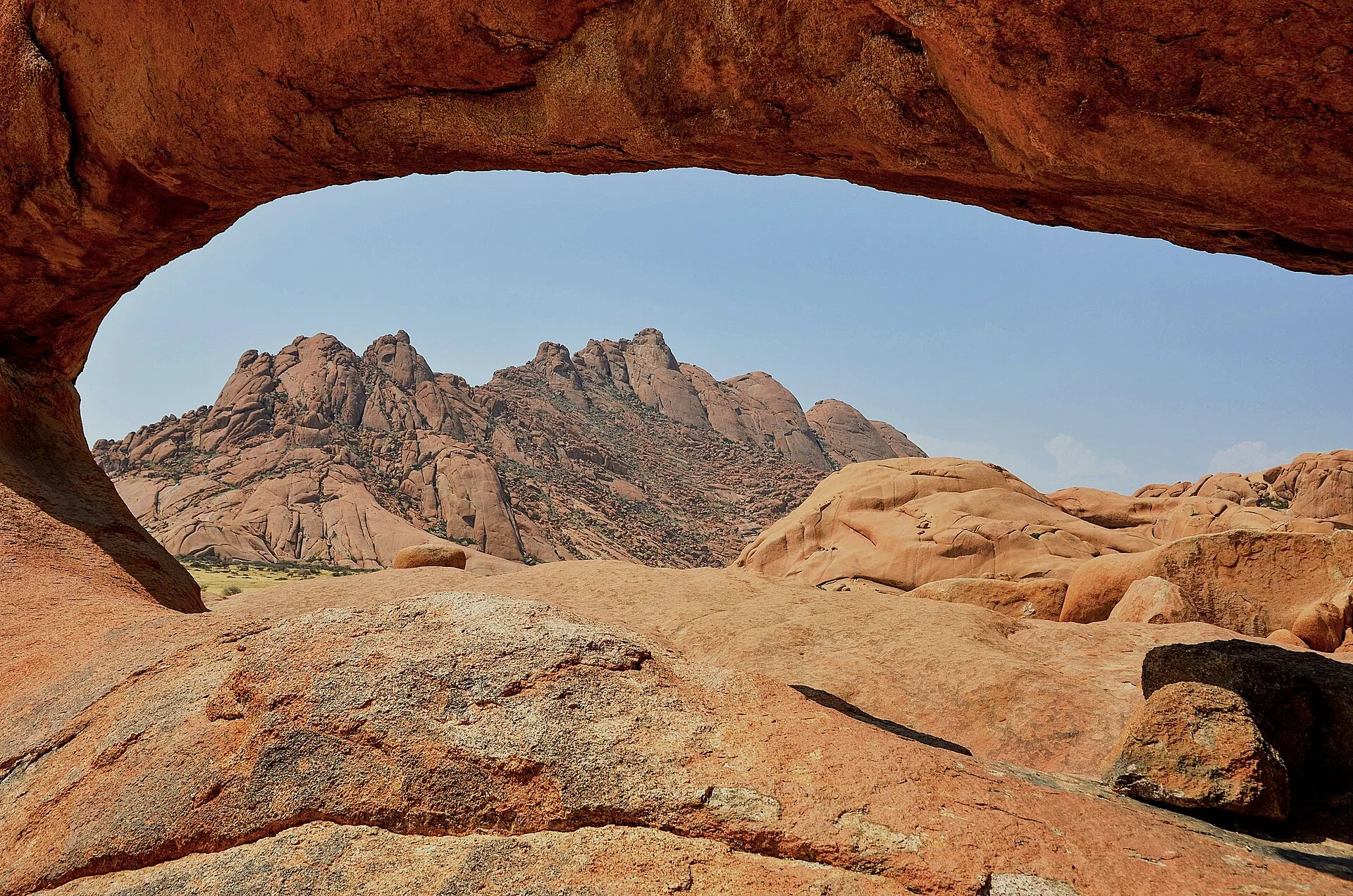
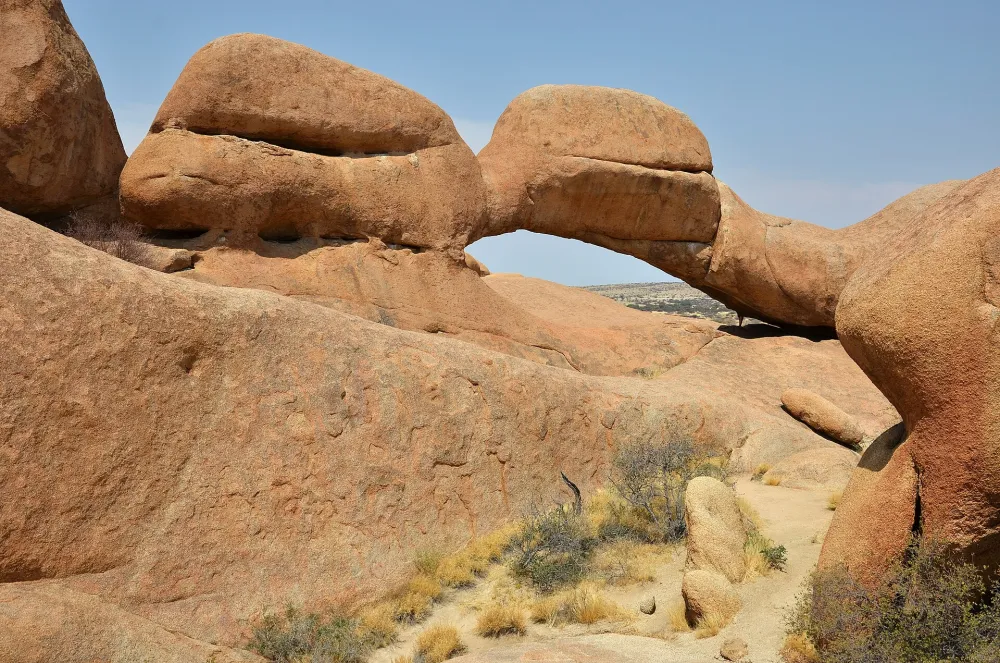
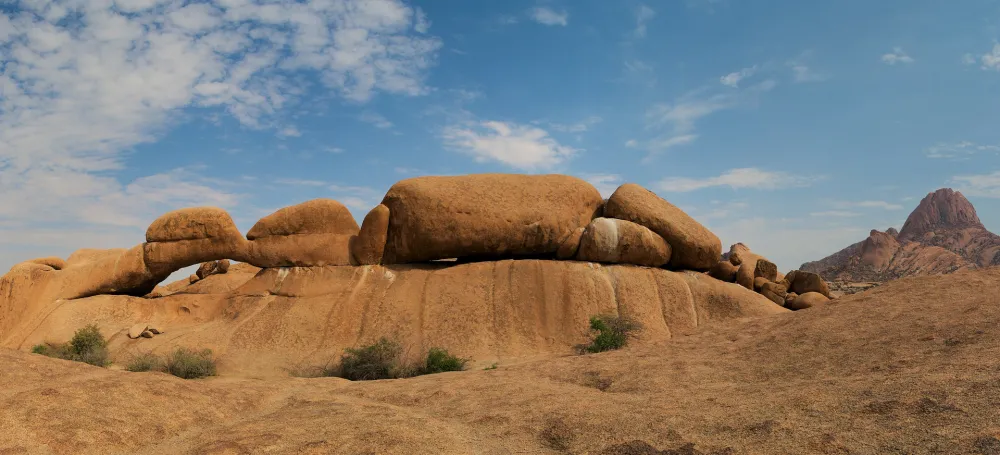
- The Rock Arch. A natural granite bridge spanning a gap between boulders on the south side, reached by a five-minute scramble up a slab from a small parking area. It frames the Pontok Mountains, faces west for sunset, and is the photograph of Spitzkoppe. At busy times you will queue for the classic angle; sunrise is much quieter.
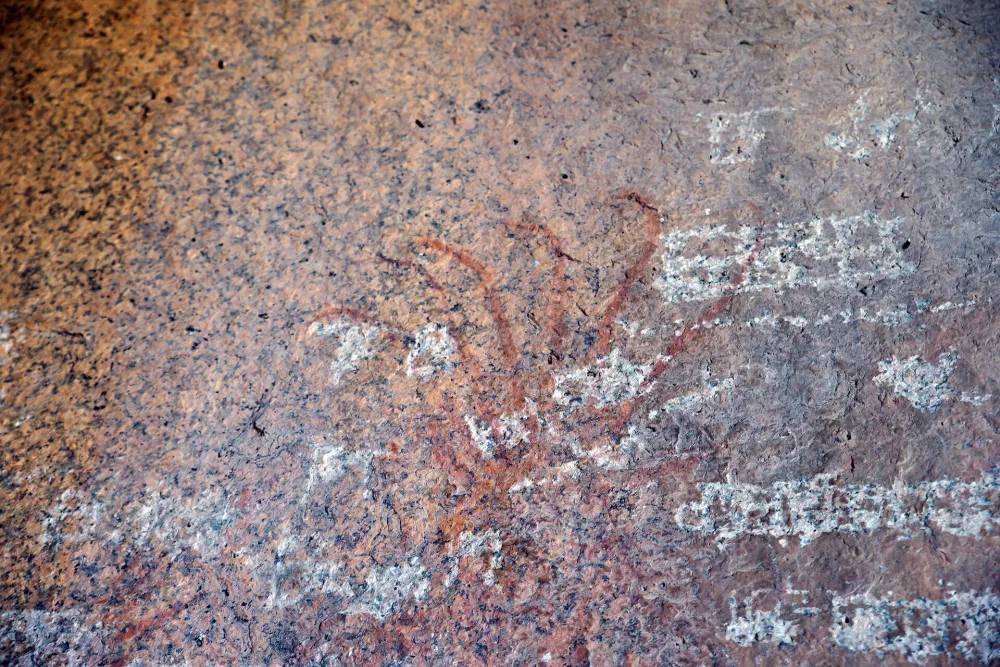
- Bushman’s Paradise. A broad overhang high on the eastern side with San paintings of people and animals. Access is up a steep, smooth granite slab with a fixed chain as a handrail; it needs shoes with good grip and is not for those unhappy on steep rock. Visits are with a community guide only. Some of the paintings here were badly damaged by earlier visitors, which is why the rule exists.
- Small Bushman’s Paradise and other panels. Easier to reach on foot from the tracks, again with a guide, who will also point out the plants the San used and explain what is known, and not known, about the images. The paintings are thought to be between about 2,000 and 4,000 years old.
- Rock pools. After good rain, hollows in the granite fill with water. Treat them as wildlife drinking places: no soap, no washing.
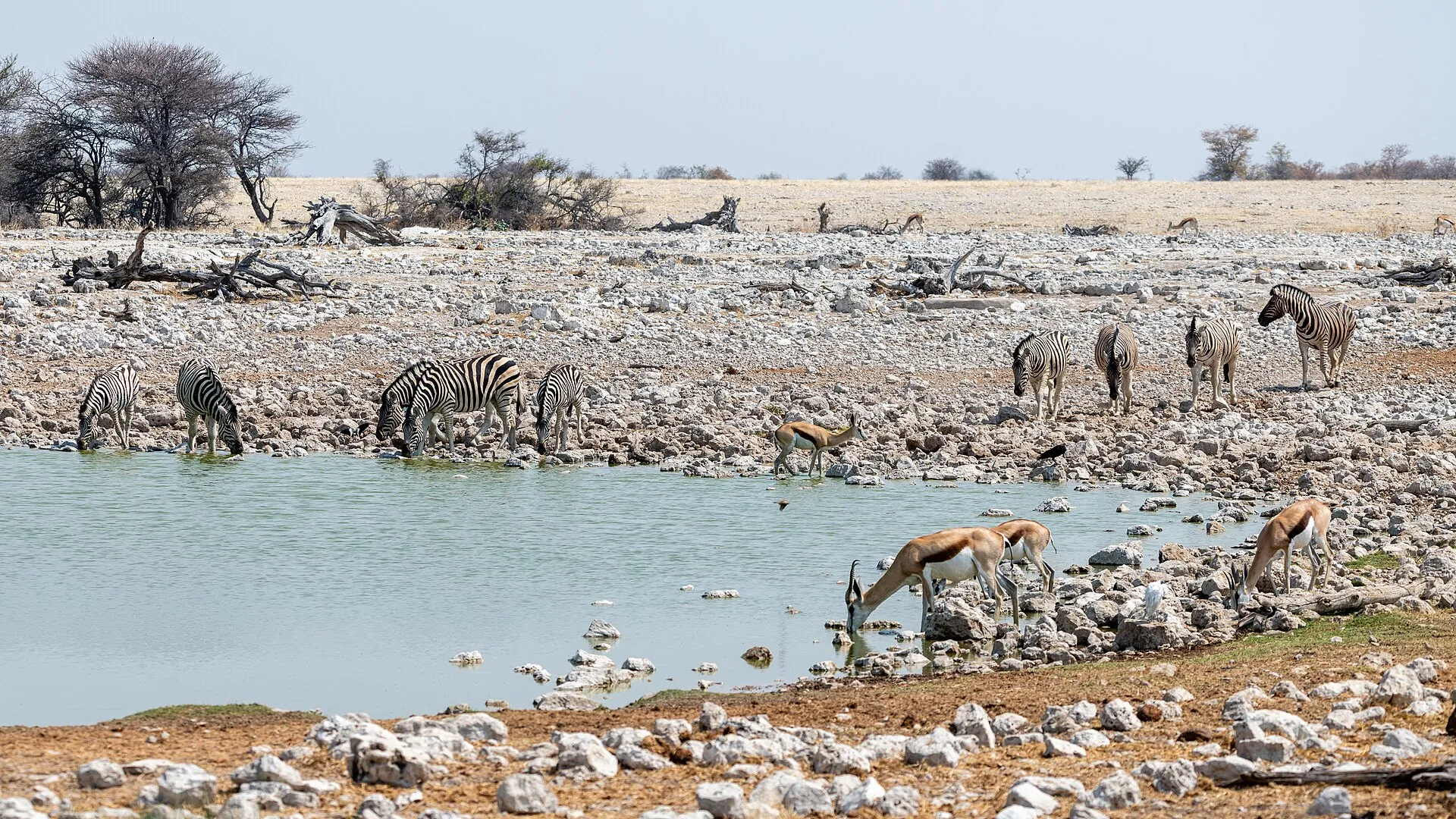
- The plains. Mountain zebra, springbok, klipspringer, rock hyrax (dassies) and many lizards live in and around the massif; you are most likely to see hyrax, ground squirrels and birds of prey.
Hiking, scrambling and climbing
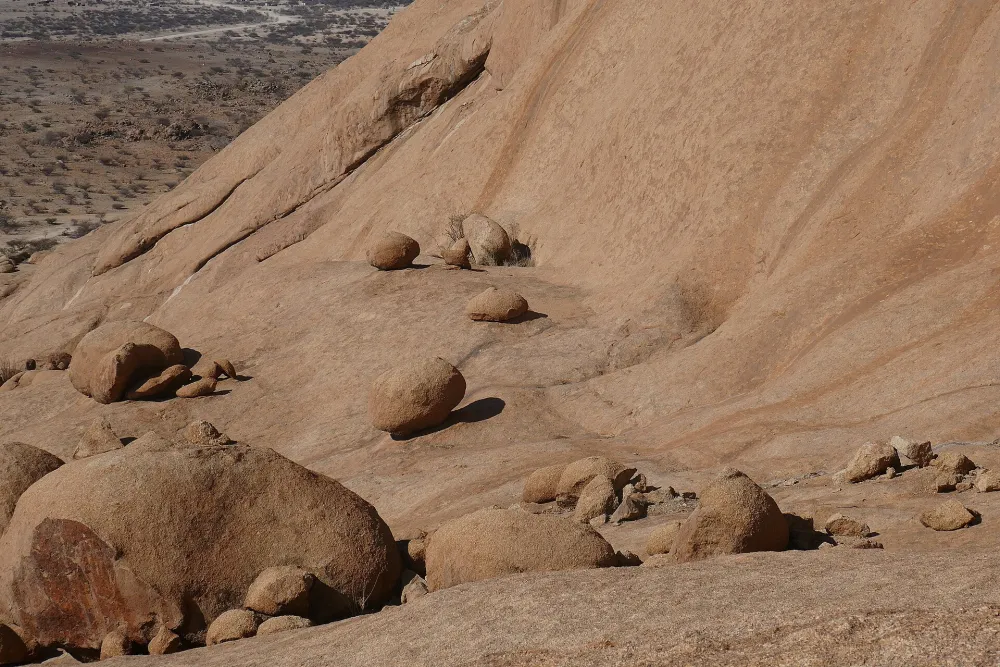
You can spend a happy day simply wandering over the lower slabs and boulder fields near your campsite; the granite is rough and grippy when dry. Beyond that, three levels of commitment are on offer.
- Guided hikes. Local guides lead half-day walks to rock-art sites and viewpoints and longer scrambles in the Pontok Mountains and to the so-called false summit of the main peak. These involve steep slabs, chains or short roped steps in places and a good head for heights, but no climbing skills. Start at dawn: there is no shade and summer temperatures pass 35 °C.
- Rock climbing. Spitzkoppe is Namibia’s best-known climbing area, with bolted sport routes on the boulders and lower walls and long traditional routes on the big faces. Bring your own equipment, or book a guided half or full day that supplies it.
- The summit. The first recorded ascent was in November 1946. The standard route is a long day of route-finding, scrambling and several pitches of genuine rock climbing, with abseils on the descent; it is a serious outing for experienced parties or with a qualified guide, and only in the cooler months.
The best conditions for anything strenuous are from about May to September, when days are mild and the rock is cool. In summer, climb at first light and be down by late morning.
Spitzkoppe: guided half-day hike
A half-day hike over the slabs and boulder fields with a guide who knows the routes.
Check availabilityBook via GetYourGuide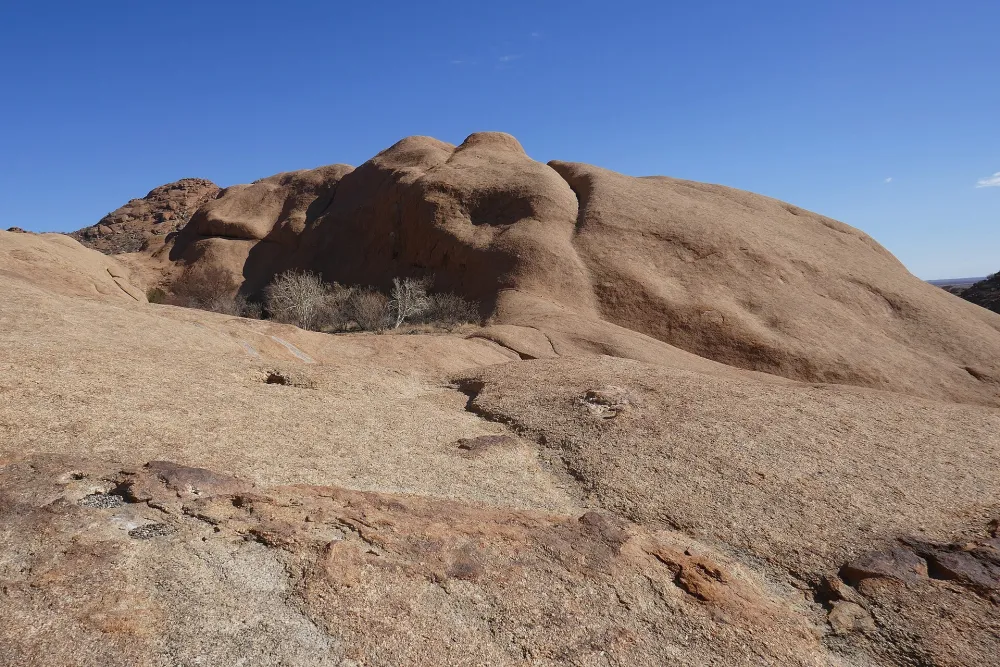
Spitzkoppe: guided full-day rock climbing
A full day on Spitzkoppe granite with a climbing guide and equipment.
Check availabilityBook via GetYourGuideTour listings are on GetYourGuide. Prices, dates and cancellation terms are shown live on each listing and can change; NamibiaSafaris.com may earn a commission at no extra cost to you.
Day trip or overnight?
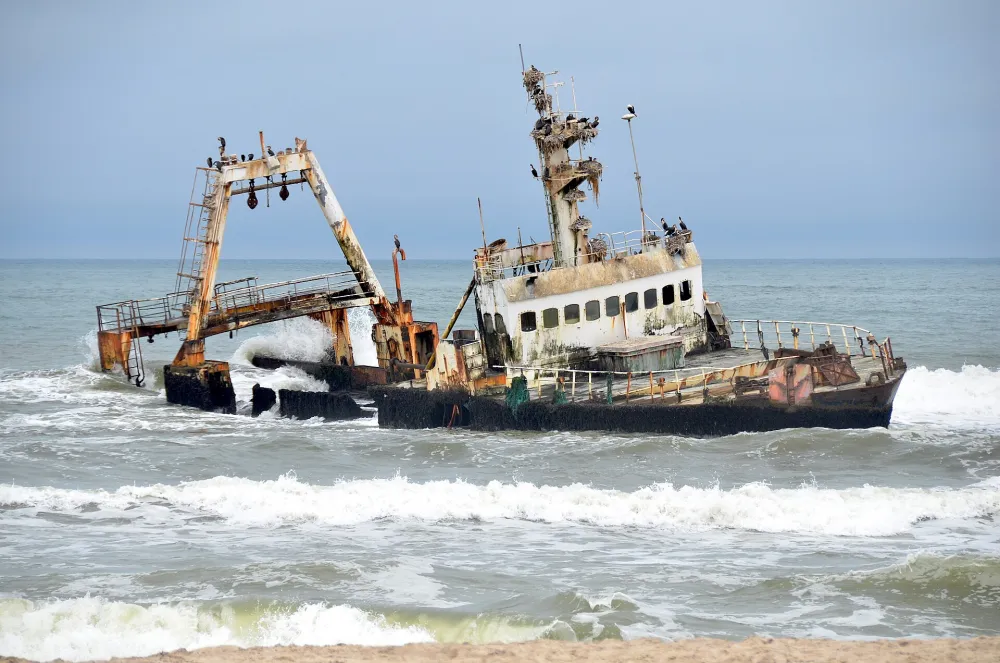
If you are driving the usual loop from Swakopmund towards Twyfelfontein or Etosha, Spitzkoppe is almost on the way, and a night here costs you very little time. If you are staying put on the coast, a guided day tour is a perfectly good way to see the arch and the paintings, and some combine it with the Zeila wreck near Henties Bay or a stop in Usakos. Two-day tours with a night under the rocks are the best of both for people without a vehicle.
| Day trip from Swakopmund | One night at Spitzkoppe | |
|---|---|---|
| Time on site | 3–4 hours in the middle of the day | Afternoon, sunset, night sky, sunrise |
| Light | Harsh and flat; hot from October to April | Orange granite at sunset and sunrise |
| Driving | About 300 km round trip | A natural stop between the coast and Damaraland or Etosha |
| What you do | Rock Arch, one guided rock-art walk | The same, plus a hike, a fire and the stars |
| Good for | Travellers based on the coast with a spare day; non-drivers on a tour | Self-drivers, campers, photographers |
From Swakopmund: full-day Spitzkoppe guided tour
A day trip from the coast to the granite peaks: the rock arch, a guided walk to San paintings and time among the boulders.
Check availabilityBook via GetYourGuide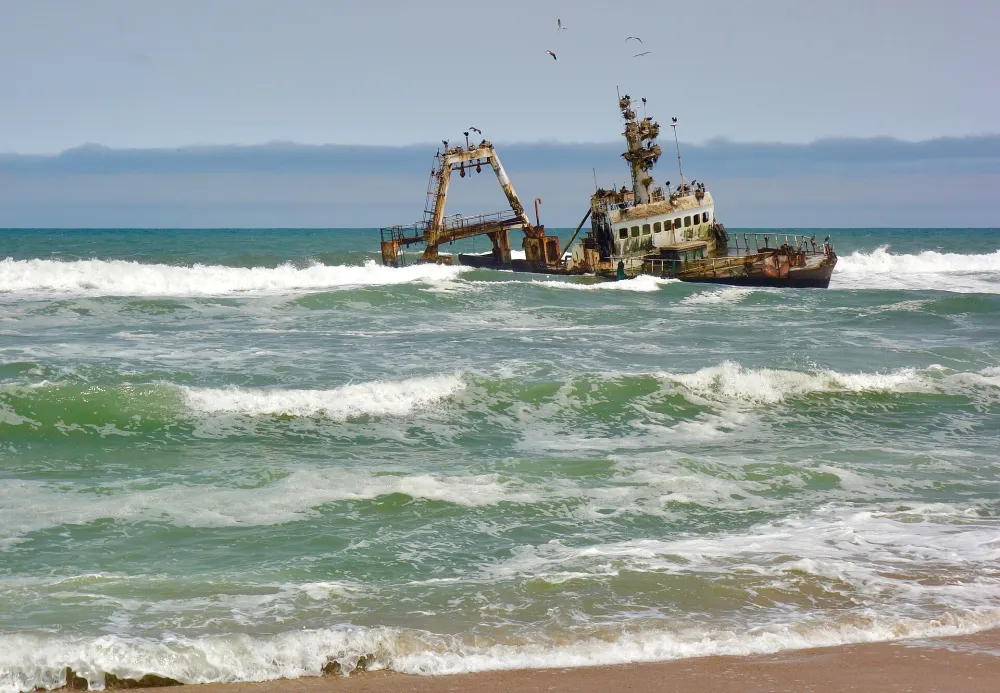
Spitzkoppe via the Zeila shipwreck
Combines the Zeila wreck near Henties Bay with the drive inland to Spitzkoppe.
Check availabilityBook via GetYourGuide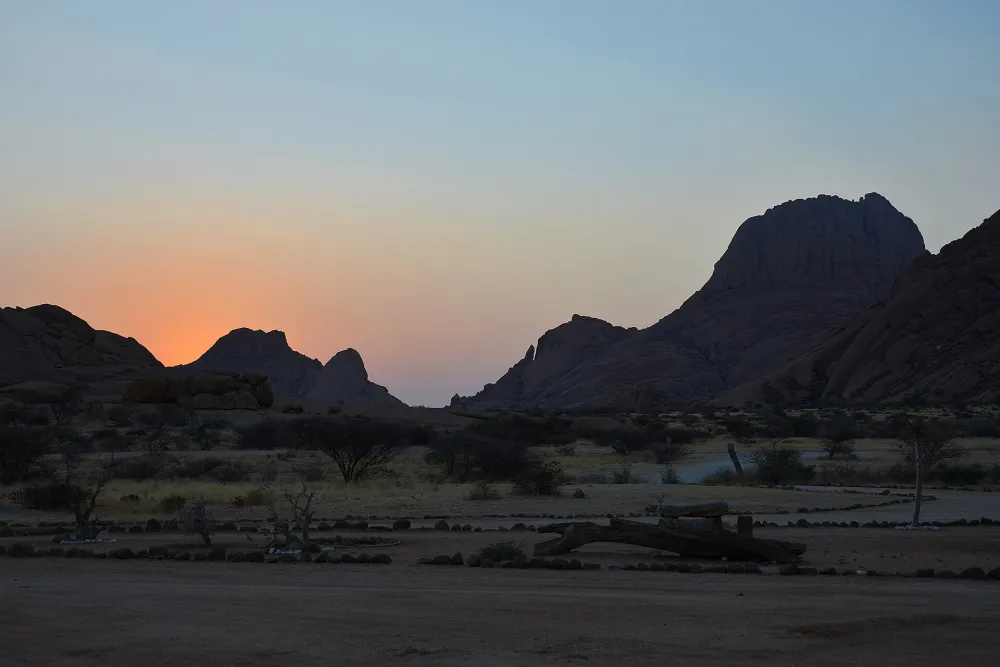
Spitzkoppe: arches, rock art and sunset views
A later departure that keeps you at the mountain for the evening colour on the granite.
Check availabilityBook via GetYourGuide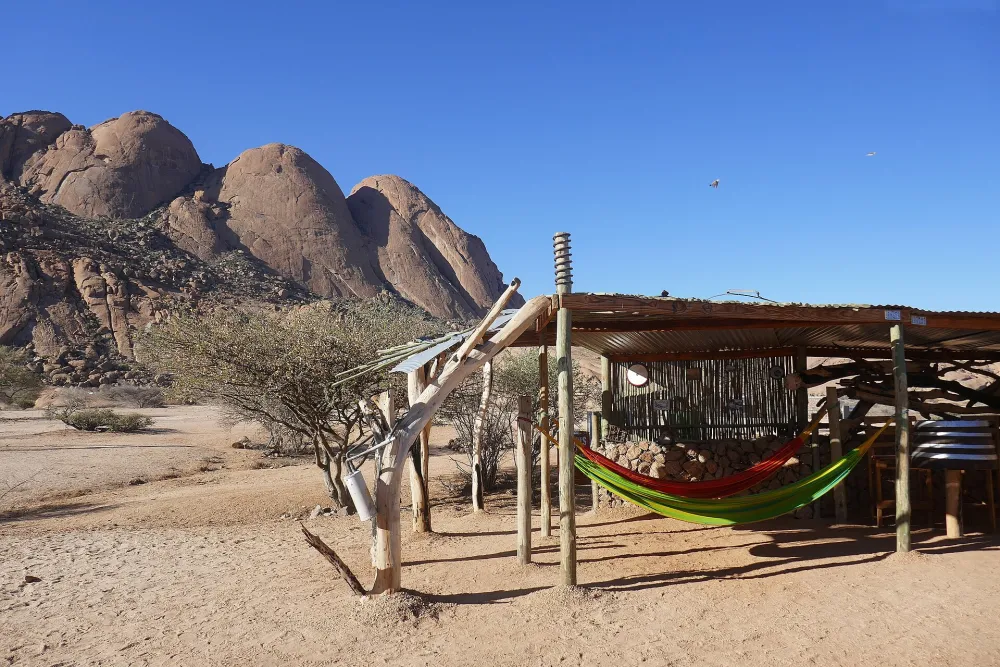
Spitzkoppe: 2-day budget adventure
Two days with a night at the mountain: the way to see sunset, the stars and sunrise without your own vehicle.
Check availabilityBook via GetYourGuideTour listings are on GetYourGuide. Prices, dates and cancellation terms are shown live on each listing and can change; NamibiaSafaris.com may earn a commission at no extra cost to you.
Camping and where to stay
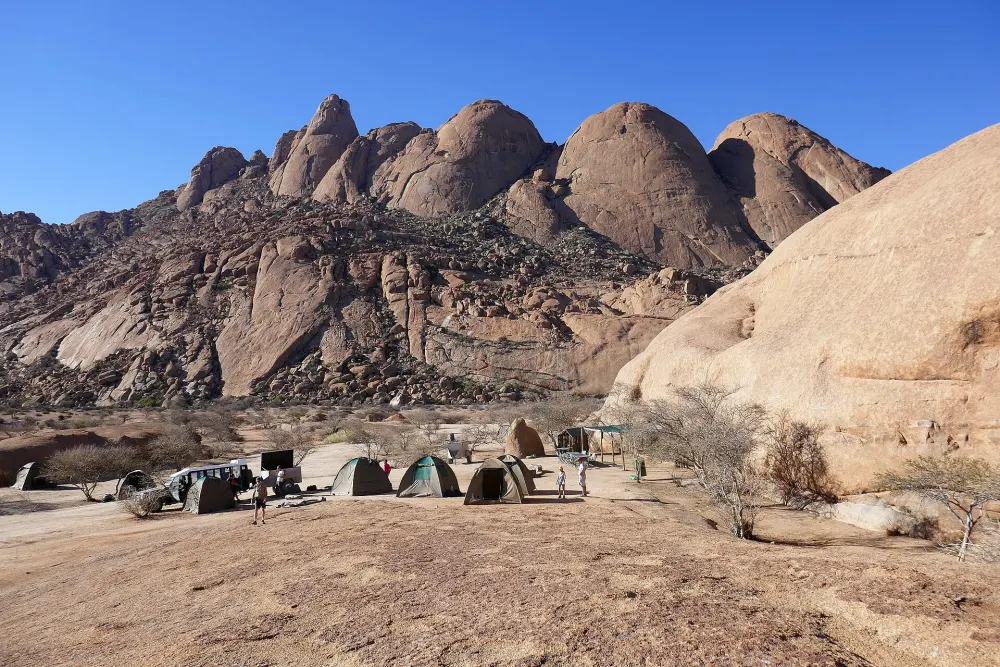
The Spitzkoppe Community Rest Camp has campsites scattered right around the base of the mountain, each tucked against its own boulders and often out of sight of the next. This is camping reduced to the essentials: a cleared pitch, a fireplace and a long-drop toilet nearby. There is no water or electricity at the sites; showers, flush toilets, a small bar-restaurant and drinking water are at the reception area near the gate. Bring all your water, food and firewood (sold at reception when available), and take all rubbish out.
Sites cannot always be reserved individually; in the high season arrive by early afternoon to choose a good one. Fees are charged per person for entry and for camping and are modest; visitors in 2025–26 reported paying somewhat over N$100 per person for day entry and around N$200 per person to camp, plus a small vehicle fee, with guides paid separately. Treat these as indications and carry cash.
If you prefer a bed:
- Spitzkoppen Lodge, set among the rock formations of the massif, has chalets on raised decks among the boulders, linked by walkways, with a pool. It is the comfortable way to be here at sunrise.
- Spitzkoppe Cabin Camp, on the D1918, offers simple self-catering cabins with a terrace and braai.
- In the Erongo Mountains, 60–70 km to the east, Hohenstein Lodge sits below the highest peak of the range, with a restaurant and pool; Booking.com guests score it 9.6 (as checked in November 2026). It suits travellers who want hiking and birding in the Erongo as well as a visit to Spitzkoppe.
- Around Usakos, Uitkyk Guest Farm and the self-catering apartments at Okambishi’s Rest are practical stops on the B2.
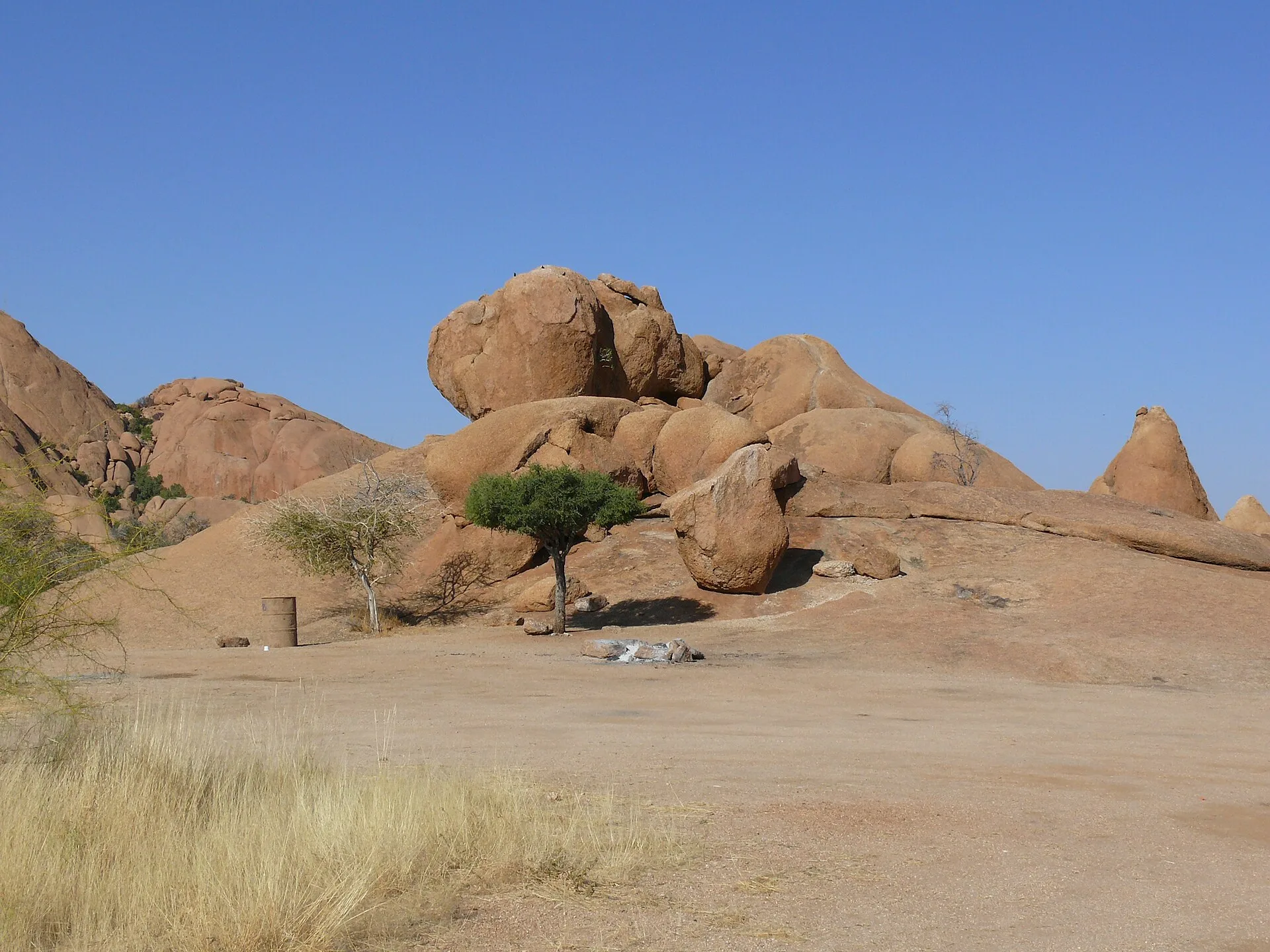
Campsites at Spitzkoppe are set among the boulders at the foot of the peaks.
Spitzkoppen Lodge
DamaralandChalets on raised decks among the granite of the Spitzkoppe, with a pool.
9.1Booking.com guest score · as checked in November 2026
See on Booking.comSpitzkoppe Cabin Camp
DamaralandSimple self-catering cabins with terrace and braai on the D1918.
8.7Booking.com guest score · as checked in November 2026
See on Booking.comHohenstein Lodge
DamaralandLodge below the highest peak of the Erongo Mountains with pool, restaurant and bar; about 62 km from Spitzkoppe.
9.6Booking.com guest score · as checked in November 2026
See on Booking.comUitkyk Guest Farm
DamaralandGuest farm near Usakos with two pools, restaurant and bar.
8.9Booking.com guest score · as checked in November 2026
See on Booking.comOkambishi’s Rest
DamaralandSelf-catering apartments with garden and braai near Usakos.
9.2Booking.com guest score · as checked in November 2026
See on Booking.comSee all stays in Spitzkoppe on Booking.com
Accommodation links go to Booking.com, where you see live prices and availability. We do not list prices because they change daily; NamibiaSafaris.com may earn a commission.
The Erongo Mountains next door
East of Spitzkoppe, between Usakos and Omaruru, the Erongo massif is the eroded remnant of a huge ancient volcano, about 30 km across, ringed by granite boulder country. It is quieter than Spitzkoppe and rich in the same things: rock paintings (the best known is the white elephant of Phillip’s Cave, a national monument on a private guest farm), enormous balanced boulders, and birds that are found almost only in this part of Namibia, such as the Hartlaub’s spurfowl, the rockrunner and the white-tailed shrike. Black rhino, mountain zebra and leopard live in the private conservancy that covers much of the range. Access is through the guest farms and lodges around the rim, which offer guided walks and drives; there is no public park.
The small art-and-wine town of Omaruru to the north-east and the mining village of Uis to the north-west are the other stops in the area; from Uis it is a short drive to the Brandberg, Namibia’s highest mountain, covered in Damaraland.
When to go and what to bring
Spitzkoppe can be visited all year. May to September is cool, dry and clear, with cold nights (near freezing in June and July) and the best conditions for hiking and stargazing. October to April is hot, often above 35 °C by day; the summer months bring occasional dramatic thunderstorms, green grass and full rock pools. Fog from the coast sometimes reaches this far on winter mornings.
- Water: 5 litres per person per day if camping, plus washing water.
- Firewood, a torch or headlamp, and warm clothing for the evening.
- Shoes with grippy soles; sandals are not enough for the slabs.
- Cash in Namibian dollars or rand for fees and guides.
- A full tank: the nearest fuel is at Usakos, Uis or Henties Bay.
Frequently asked questions
Can you visit Spitzkoppe without a 4x4?
Yes, in dry conditions. The approach roads are gravel but normally passable in an ordinary car driven slowly. A vehicle with higher clearance is more comfortable on the tracks between campsites.
Do you need a guide at Spitzkoppe?
You can drive and walk around the base and climb to the Rock Arch on your own. The rock-art sites, including Bushman’s Paradise, may be visited only with a community guide, arranged at the gate. Longer hikes and all climbing are best done with a guide unless you are experienced.
How long do you need?
Three to four hours covers the Rock Arch and one guided rock-art walk. An overnight stay adds sunset, the night sky and sunrise, which are the best of the place.
Is there water and electricity at the campsites?
No. Campsites have a fireplace and a dry toilet nearby. Showers, drinking water and a small restaurant are at reception. Bring everything you need.
Can anyone climb to the summit of Spitzkoppe?
No. The summit requires real rock climbing with ropes and takes a full day. It is for experienced climbers or guided parties. Guided hikes to lower viewpoints and in the Pontok Mountains suit fit walkers with a head for heights.
How old is the rock art?
The San paintings at Spitzkoppe are generally estimated at between about 2,000 and 4,000 years old. Many are faded and some were damaged in the past, so they are less vivid than those at the Brandberg, but the setting is remarkable.
How far is Spitzkoppe from Swakopmund?
About 150 km, or two hours’ drive: roughly 120 km on the tarred B2 and the rest on gravel.
Sources and official information
Facts were checked against these official sources in November 2026. Park fees, gate times, visa rules and timetables change, so confirm before you go.
NamibiaSafaris.com is an independent guide, not the official site of any tour operator, lodge, Namibia Wildlife Resorts or the Namibian government. Some links are affiliate links: tours go to GetYourGuide and accommodation goes to Booking.com, and we may earn a commission at no extra cost to you.