In short
- Two ways to camp: hire a 4x4 with rooftop tents and drive yourself, or join a guided camping safari where the crew drives, cooks and supplies the tents.
- Campsites are good. A standard Namibian pitch has shade, a braai place, a tap, a light and often a power point; many private sites give each pitch its own shower and toilet.
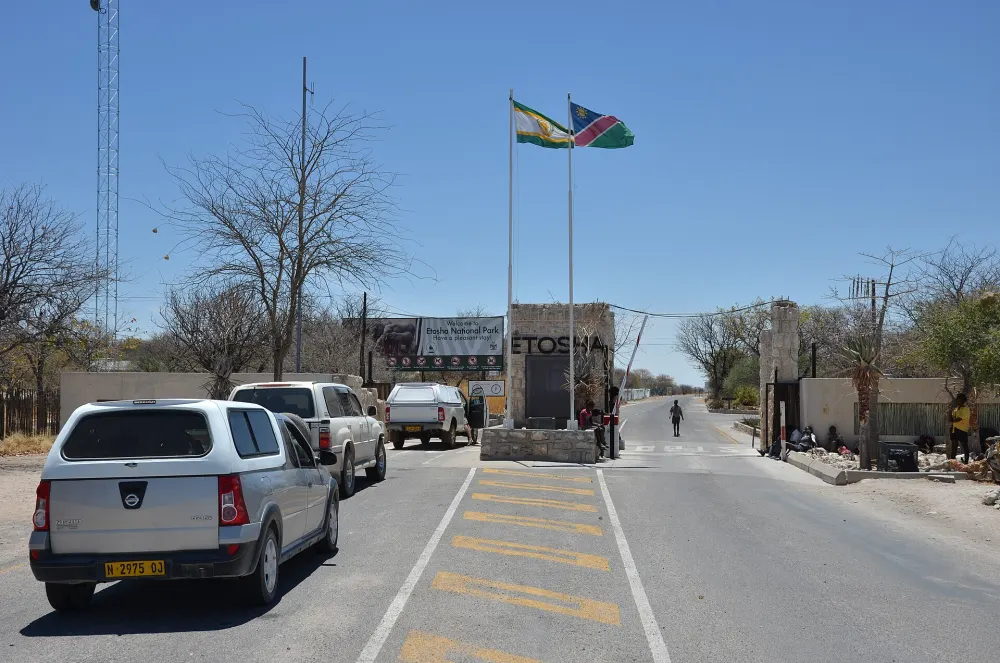
- Book the bottlenecks: campsites at Sesriem and inside Etosha sell out for July to October as early as the lodges do.
- Wild camping is not the norm. Land is either private, park or communal; use designated sites, and never camp in a dry riverbed.
- Winter nights are freezing. Bring or hire a sleeping bag rated to about −5 °C for June to August.
Why camp in Namibia
Camping is not the poor relation here. It is how Namibians and South Africans travel themselves, and the infrastructure reflects it: campsites are found beside nearly every lodge, at every national-park rest camp, on farms and in community conservancies, and they are built for people who arrive with a fridge and a cast-iron pot. The dry climate removes the usual miseries — it almost never rains in the camping season, there are few insects in winter, and the ground is firm.
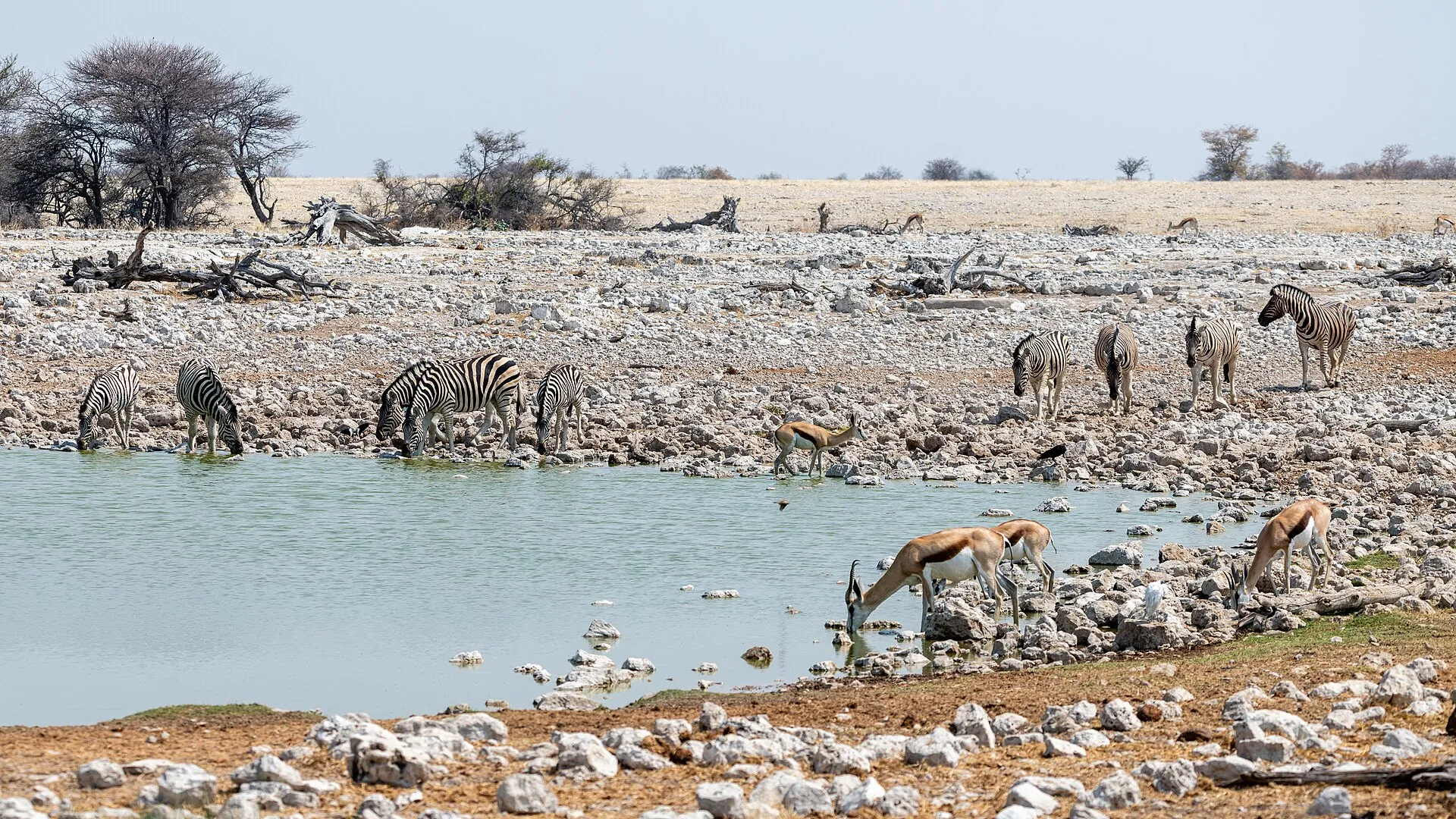
The rewards are specific. A camper at Okaukuejo walks from the fire to the floodlit waterhole in two minutes. A camper at Sesriem is inside the park gate and on the road to the dunes before the lodge guests outside have been let in. And everywhere, the night sky — Namibia has some of the darkest skies on the planet — is the ceiling.
It is also, by a distance, the least expensive way to travel; the safari costs page shows the comparison.
Self-drive camping: how it works
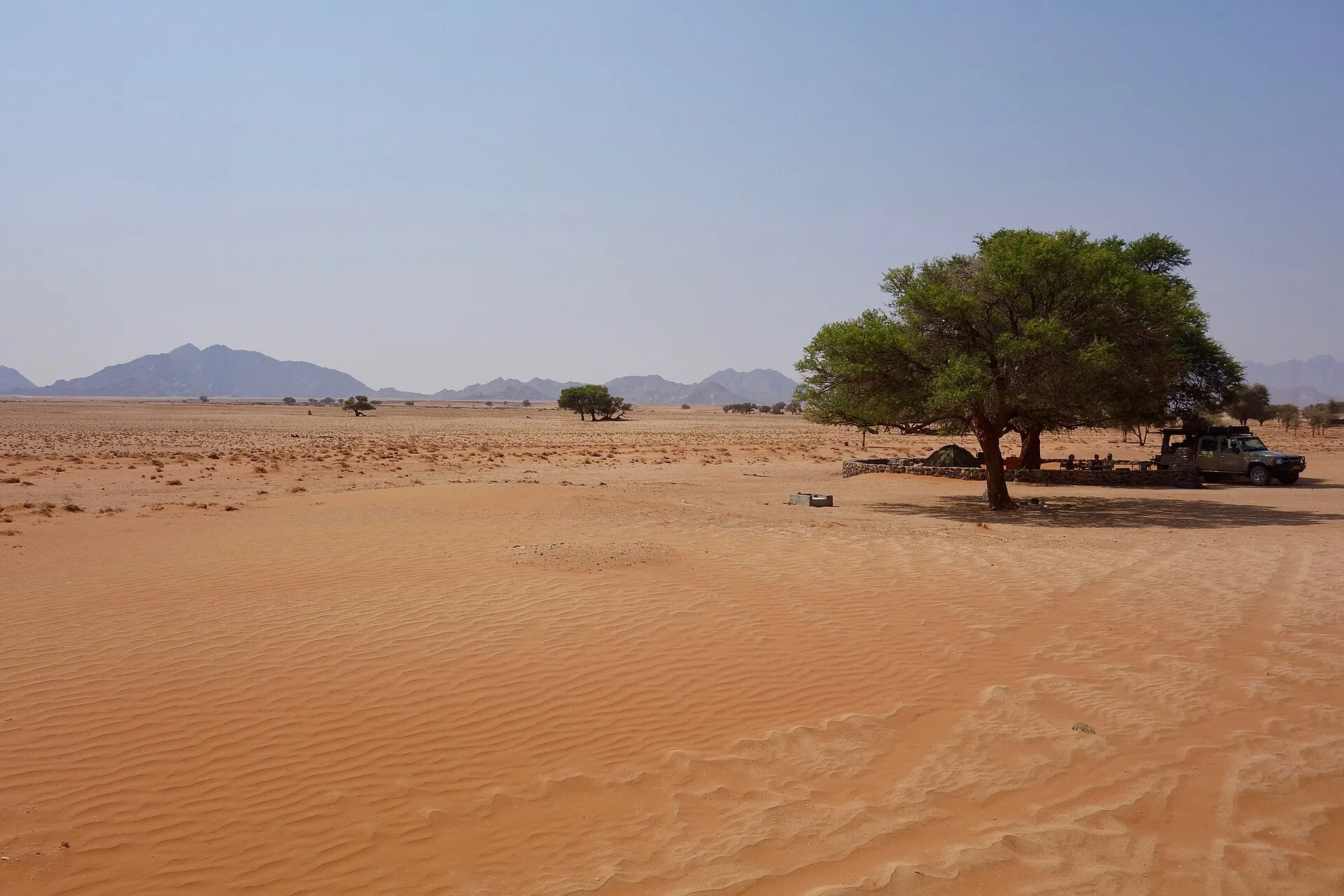
The standard package is a 4x4 double-cab pickup with one or two rooftop tents, rented fully equipped from a specialist in Windhoek. The tent unfolds from a box on the roof in a few minutes and contains a mattress and bedding; a ladder is the front door. In the back are a fridge-freezer on a second battery, a gas cooker and bottle, a water tank, table, chairs, pots, crockery, a braai grid, a spade and a compressor.
A day runs like this. Pack up after breakfast — twenty minutes once you have the routine. Drive in the cool of the morning, shop and refuel in whichever town you pass, arrive at the next site by mid-afternoon. Light the fire an hour before sunset; cook on the coals; wash up before dark, because that is when the jackals come. In Etosha, the afternoon game drive replaces the arrival and the fire is lit later.
The alternative to a rooftop tent is a ground tent carried in an SUV, which is cheaper and lets you leave camp set up while you drive, at the cost of more work each evening. A third option, sold by several lodge groups as “camping to go” or similar, is a pre-erected tent with beds, kitchen and bathroom at a campsite: camping without owning or carrying anything.
Vehicle choice, gravel driving and what to check at handover are in the self-drive guide.
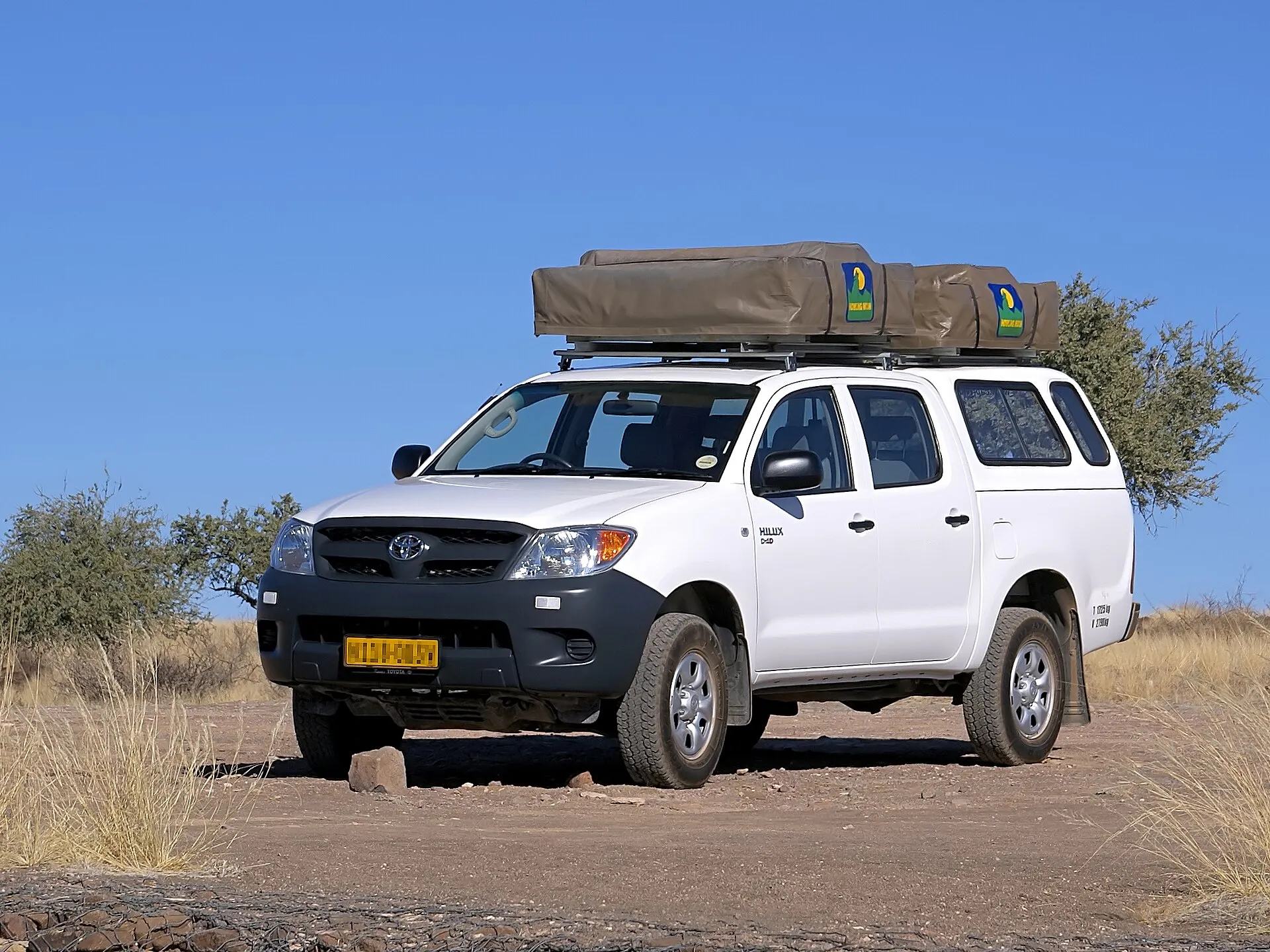
Rooftop tents: off the ground, quick to pitch, and the reason the vehicle must come with you on the morning game drive.
What a Namibian campsite is like
- NWR campsites inside the parks (Okaukuejo, Halali, Namutoni and Olifantsrus in Etosha; Sesriem; Hobas; Waterberg and others) are large, with numbered pitches around shared ablution blocks. Each pitch has a braai stand, a tap, a light and usually a power point. They can be noisy and the bathrooms are of variable standard, but the position is the point. The camp restaurant, shop, pool and fuel pump are open to campers.
- Private lodge campsites are generally the best equipped. Many have only five to fifteen pitches, each with its own shaded shelter, sink, braai, and a private shower and toilet. Campers can normally use the lodge pool, bar and restaurant and join its activities.
- Farm campsites are small and quiet, often just a few pitches near the farmhouse, with hot water from a wood-fired “donkey” boiler that you may need to light yourself.
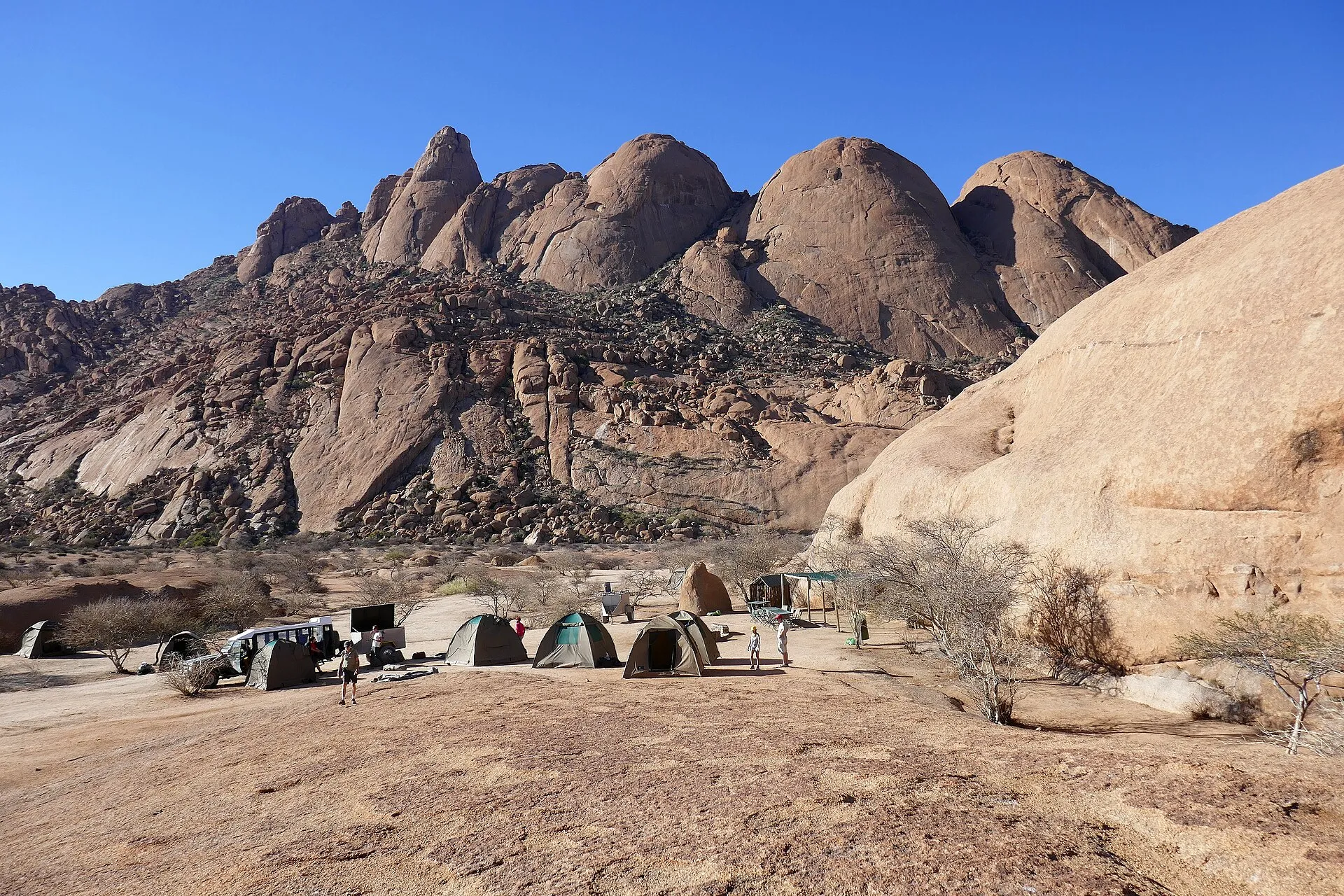
- Community campsites, owned by communal conservancies or local trusts, range from simple (long-drop toilet, bucket shower, magnificent setting) to excellent. Spitzkoppe’s scattered pitches among the boulders are the best known. Fees support the community directly.
- Bush camps in the remote north-west and in Khaudum have no facilities at all; you bring everything, including water, and take everything away.
Most sites sell firewood and ice. Few sell food beyond basics. Pitches are booked per site or per person per night depending on the operator, and park entrance fees are charged on top inside national parks.
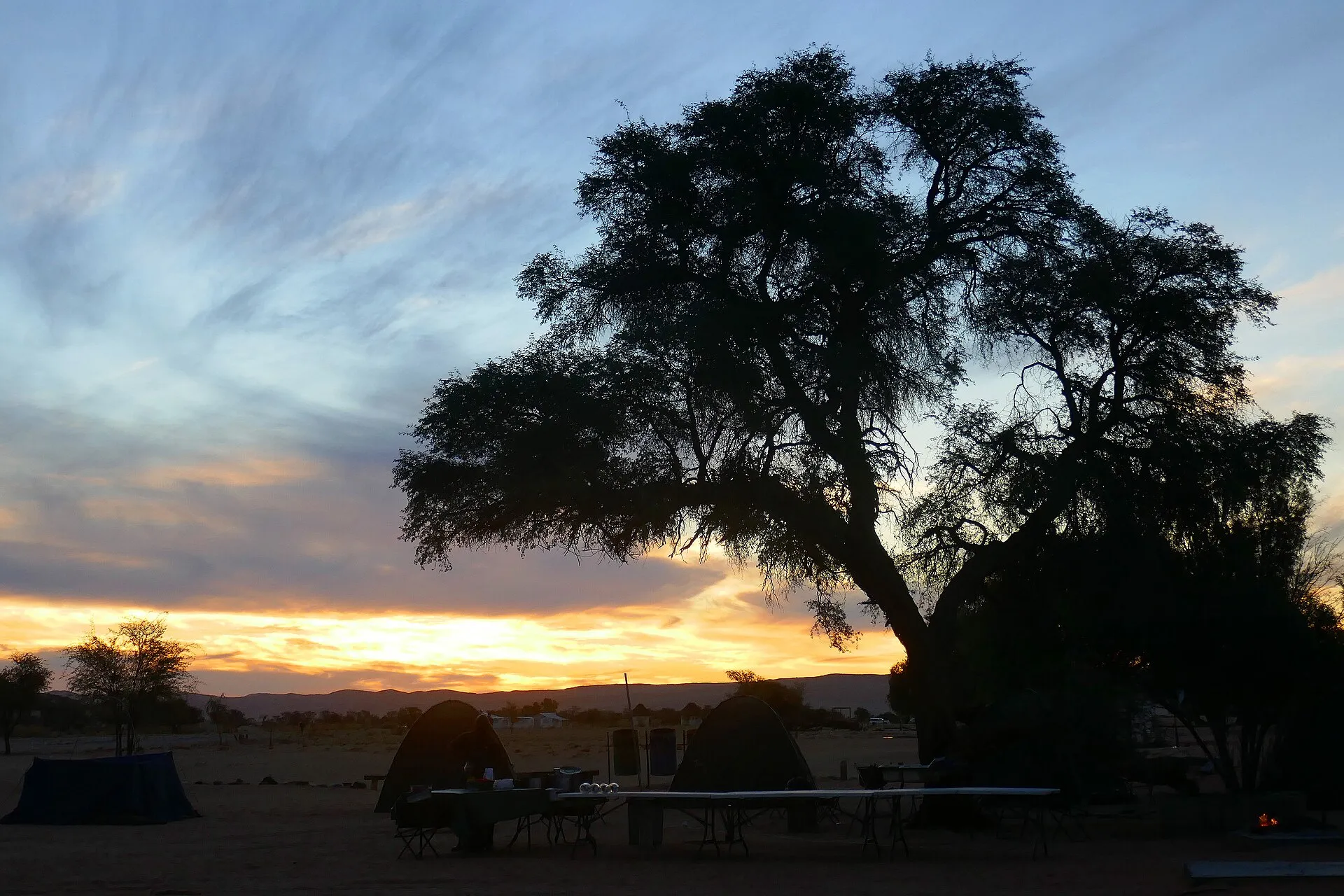
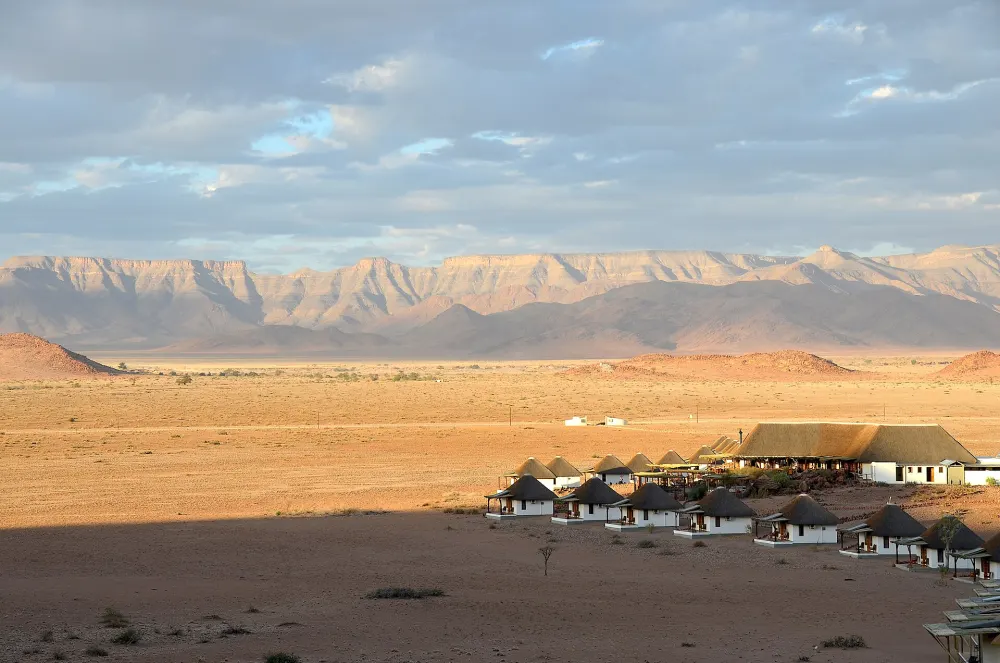
Evening at the Sesriem campsite, inside the park gate.
Good campsites, region by region
A short list of well-placed sites on the main routes. Those with a link are verified Booking.com listings with a strong guest score as checked in November 2026; NWR’s sites are booked through nwr.com.na.
| Area | Campsite | Why here |
|---|---|---|
| Sossusvlei | NWR Sesriem Campsite | Inside the park gate: first on the road to the dunes |
| Sossusvlei | Sossus Oasis Campsite | At the entrance gate to the park; pool |
| Sossusvlei | Little Sossus Campsite | In the Sesriem area; pool and a minimarket |
| Spitzkoppe | Spitzkoppe community rest camp | Pitches among the granite domes; basic facilities, unforgettable setting. See Spitzkoppe |
| Damaraland | Madisa Camp | On the D2612 in Damaraland; pool and bar |
| Palmwag | Gondwana Palmwag Campsite | Private ablutions; access to the lodge’s pool, restaurant and activities |
| Epupa Falls | Gondwana Omarunga Epupa-Falls Campsite | Near Epupa Falls; access to the lodge’s bar, restaurant and pool |
| Etosha, south | NWR Okaukuejo and Halali | Inside the park, floodlit waterholes |
| Etosha, south | Etosha Trading Post Campsite | On the C38, 6.5 km from the Anderson Gate; pool |
| Etosha, east | Onguma Tamboti Campsite | On the private Onguma reserve by the Von Lindequist Gate; restaurant, pool and a waterhole |
| Kalahari | Gondwana Kalahari Anib Camping2Go | Pre-erected tents with private bathroom and kitchenette, 30 km east of Mariental |
| Fish River Canyon | NWR Hobas | Ten kilometres from the main viewpoint |
| Zambezi Region | Gondwana Namushasha River Campsite | On the Kwando River near Bwabwata National Park; private ablutions, access to the lodge’s activities |
Sossus Oasis Campsite
Sossusvlei & the NamibAt the entrance gate to the park at Sesriem; pitches with a barbecue and shower, and a pool.
9.3Booking.com guest score · as checked in November 2026
See on Booking.comEtosha Trading Post Campsite
EtoshaOn the C38, 6.5 km from Etosha’s Anderson Gate, with a pool and garden.
9.2Booking.com guest score · as checked in November 2026
See on Booking.comOnguma Tamboti Campsite
EtoshaIn the Onguma Nature Reserve by Etosha’s Von Lindequist Gate; restaurant, bar and pool beside a waterhole.
9.3Booking.com guest score · as checked in November 2026
See on Booking.comGondwana Palmwag Campsite
DamaralandPitches with a fireplace and private ablutions at Palmwag; campers may use the lodge’s restaurant, bar and pool.
9.3Booking.com guest score · as checked in November 2026
See on Booking.comGondwana Namushasha River Campsite
Zambezi RegionOn the Kwando River near Bwabwata National Park; private ablutions and use of the lodge’s restaurant, bar and pool.
8.9Booking.com guest score · as checked in November 2026
See on Booking.comGondwana Kalahari Anib Camping2Go
KalahariPre-erected tents with private bathroom, terrace and kitchenette, 30 km east of Mariental.
9.0Booking.com guest score · as checked in November 2026
See on Booking.comSee all stays in Namibia on Booking.com
Accommodation links go to Booking.com, where you see live prices and availability. We do not list prices because they change daily; NamibiaSafaris.com may earn a commission.
Guided camping safaris
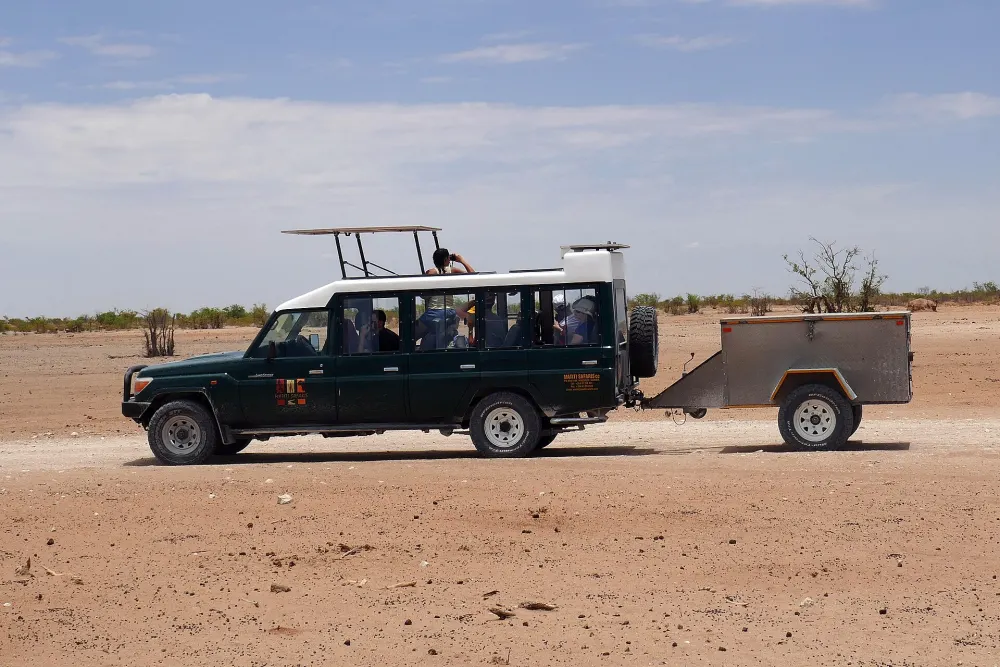
If you want the camping without the driving, a guided camping safari supplies a vehicle, a driver-guide, often a cook, and all the equipment. The classic format is a small group in a safari truck or minibus with a trailer; you help put up your own dome tent, sleep on a mat or stretcher, and eat meals cooked on the fire. “Participation” tours expect you to help with chores; “serviced” or “assisted” tours do it for you. Many operators run the same itinerary in a lodging version that swaps tents for rooms.
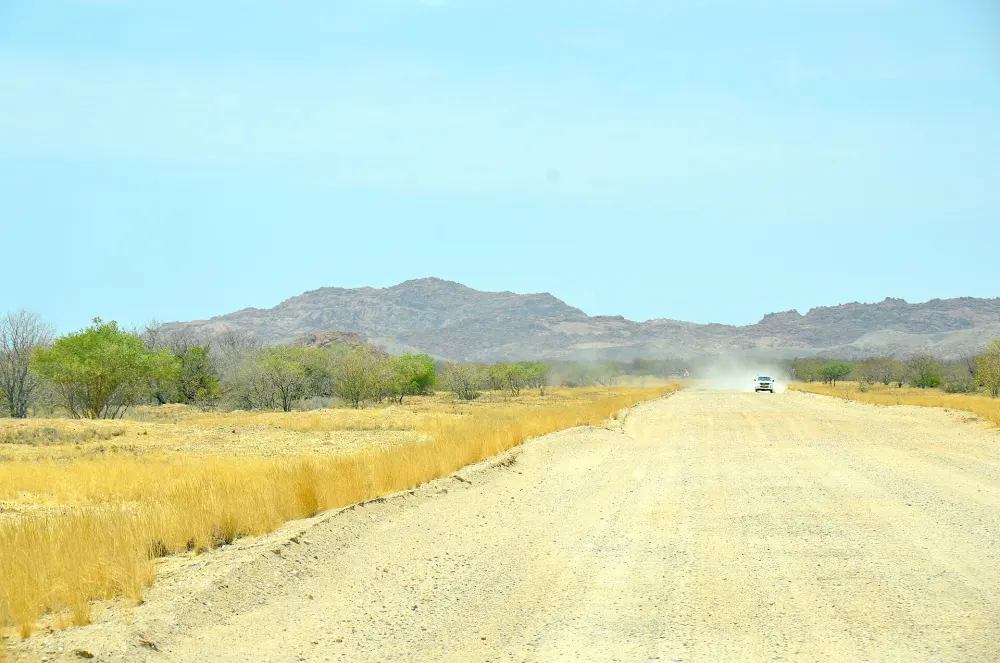
The standard building blocks are three-day trips from Windhoek to Sossusvlei and to Etosha, a four-day loop adding Swakopmund, and six- to seven-day circuits that link the desert, the coast and Etosha. They suit solo travellers — the cost of the vehicle is shared — and anyone uneasy about gravel roads. Check each listing for what is included: park fees, meals, sleeping bag hire and the type of tent vary.
How guided trips compare with driving yourself is laid out in how a Namibia safari works.
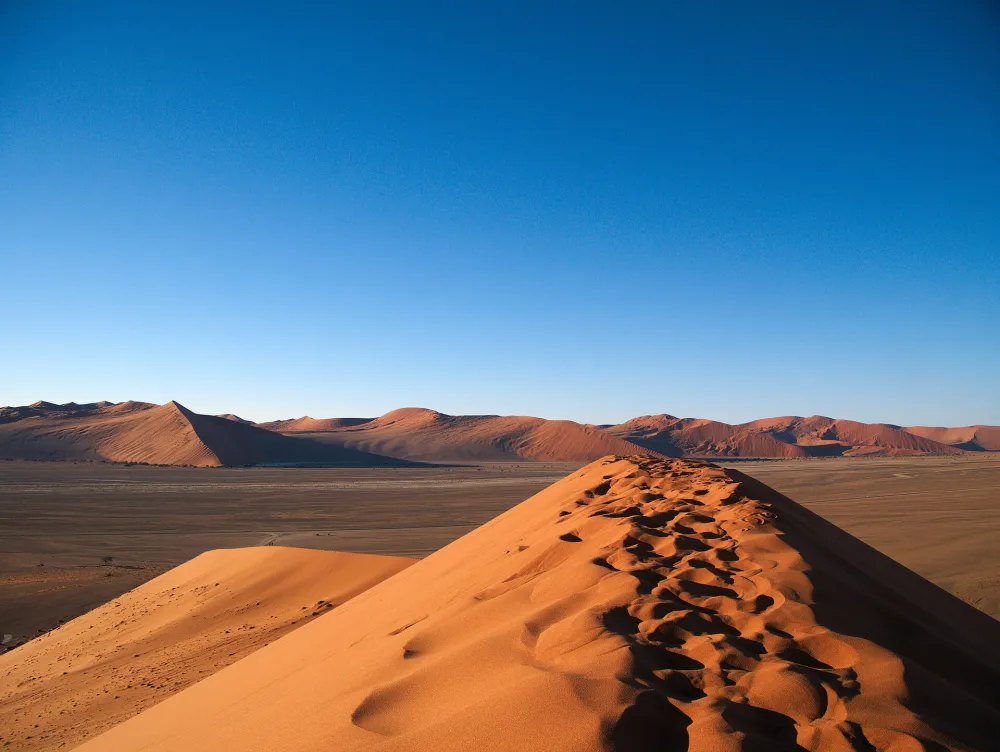
3-day Sossusvlei camping tour
Three days from Windhoek with camping near the park: the lowest-cost way to be at the dunes early. Expect to help pitch tents; check what equipment is supplied.
Check availabilityBook via GetYourGuide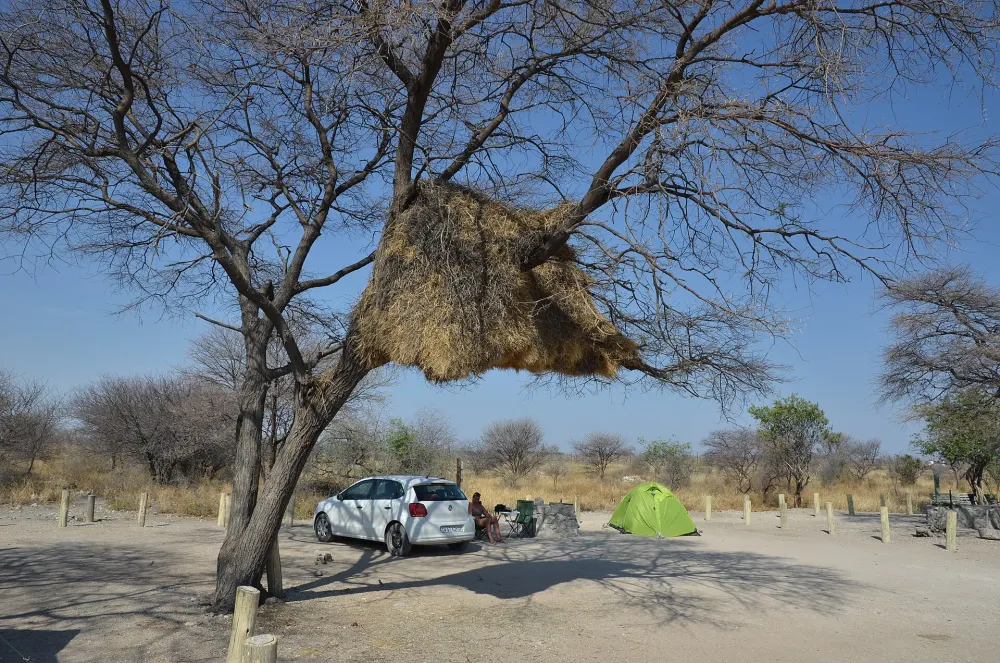
6 Days Sossusvlei, Swakopmund and Etosha: Camping
Dunes, coast and Etosha in six days on a camping basis, one of the lowest-cost ways to cover all three.
Check availabilityBook via GetYourGuide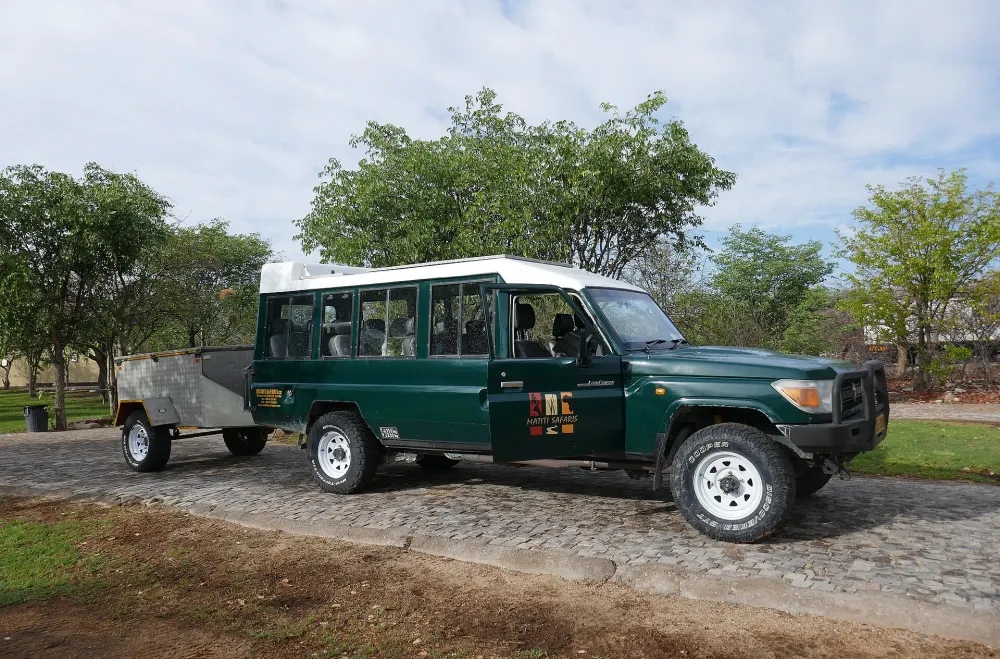
From Windhoek: 7-Day Namibia Camping Tour with Game Drive
A week under canvas covering the main highlights with at least one game drive: the budget-friendly way to see Namibia without a car. Nights are cold from June to August.
Check availabilityBook via GetYourGuideTour listings are on GetYourGuide. Prices, dates and cancellation terms are shown live on each listing and can change; NamibiaSafaris.com may earn a commission at no extra cost to you.
Gear: what is supplied and what to bring
An equipped rental should need nothing added except food, firewood and personal items. Before you leave the depot, open the tent, light the cooker, switch on the fridge and count the chairs. Then add:
- a warm sleeping bag or extra blanket for June to August — rental bedding is sometimes thin, and a night at −3 °C in a rooftop tent is long;
- head torches and a lantern;
- firelighters, matches and a pair of braai tongs if none is supplied;
- 5-litre water bottles for drinking, keeping the vehicle’s tank for washing;
- a washing line, pegs, cloths and biodegradable soap;
- a doormat or groundsheet for the foot of the ladder, which keeps sand out of the bed;
- a tablecloth and clips — wind is constant in the afternoon.
Clothing and personal kit are covered in the packing list.
Food, fire and water
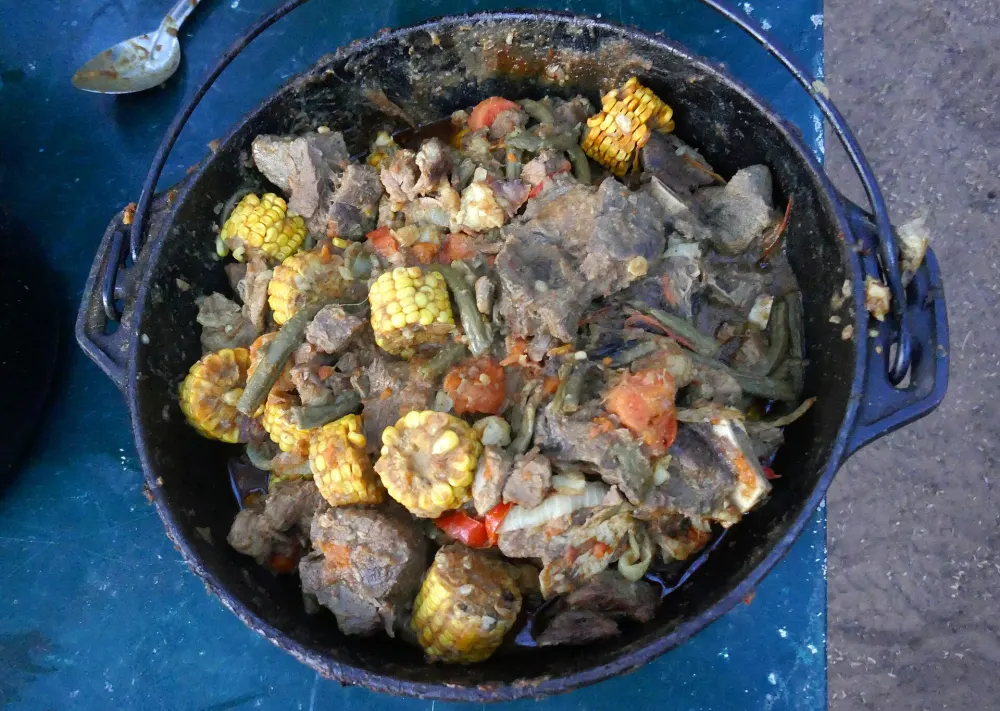
The braai — a wood or charcoal fire, a grid and meat — is the national way of cooking, and every pitch has a place for one. Buy meat vacuum-packed from supermarkets and butchers in Windhoek, Swakopmund, Otjiwarongo or Outjo; it keeps for days in the vehicle fridge. Remember the veterinary cordon: raw meat may not be carried south across the control fence that runs north of Etosha and near Palmwag, so plan to have eaten what you bought in the north before you cross it southbound. Recipes and what to try are in food and drink.
Buy firewood in bags from fuel stations, supermarkets and campsite offices. Collecting wood is forbidden in parks and unwelcome elsewhere: dead wood is habitat in a desert. Burn it in the braai place provided, keep the fire small, and drown it before bed — wind after midnight can carry embers into dry grass.
Water at campsites comes from boreholes and is usually drinkable; ask. In the north-west and the Namib, fill the tank whenever you can, and use it sparingly: you are in a desert.
Rules and good manners
- Camp only at designated sites. In national parks camping anywhere else is an offence; on private farmland you need the owner’s permission; in communal areas use the conservancy’s sites so that the fee reaches the community.
- Never camp in a dry riverbed. Rain falling far upstream sends flash floods down without warning, and riverbeds are the highways of desert elephants and lions.
- Be in camp by sunset inside parks. Gates close and there are fines.
- Lock food in the vehicle and take rubbish bags inside at night. Jackals, hyenas, honey badgers and baboons learn fast, and a fed animal becomes a problem animal that may be shot.
- Do not feed anything, however small and charming the ground squirrel.
- Keep noise and light down after 21:00 or so. People come for the silence and the stars; run no generator.
- At unfenced sites, do not walk beyond the lit area at night, keep the tent zipped and use the torch.
- Leave no trace: pack out all rubbish, including bottle tops and cigarette ends, and use the ablution block or a spade well away from water.
When to camp
May to September is the camping season: dry, insect-free, with warm days and cold nights. April and October are warmer at night and still dry. November to March is hot, and afternoon thunderstorms bring wind, lightning and brief heavy rain; rooftop tents cope, but choose pitches with a roofed shelter, close the tent before leaving for the afternoon, and expect mosquitoes in the north. On the coast, fog makes everything damp by morning in any month. Month-by-month detail is on the best time to visit page.
Frequently asked questions
Is camping in Namibia safe?
Yes, at designated campsites. Crime at campsites is rare, and the wildlife risks are managed by simple habits: keep food locked away, stay within the lit area at night at unfenced sites, never camp in riverbeds and be inside park camps by sunset.
Do I need to book campsites in advance in Namibia?
For Sesriem and the camps inside Etosha between July and October, yes, months ahead. Small private campsites near those parks also fill. Elsewhere and in the low season you can often book a few days ahead, but a reserved pitch removes the risk of a long drive to the next site.
Can you wild camp in Namibia?
Not as a rule. National parks allow camping only at designated sites, most other land is privately owned farmland, and in communal conservancies you are expected to use community campsites. The dense network of official sites makes wild camping unnecessary on normal routes.
What is a rooftop tent like to sleep in?
Comfortable: a firm mattress, good ventilation and a view. It is warmer than a ground tent in wind but still cold on winter nights, and you climb a ladder to reach it. The main drawback is that you must fold it away before driving anywhere.
How cold does it get when camping in winter?
Between June and August night temperatures in the Namib, the south and the central highlands commonly drop to freezing or a few degrees below. Days are sunny and around 20–25 °C. A sleeping bag rated to about −5 °C and thermal layers are advisable.
Sources and official information
Facts were checked against these official sources in November 2026. Park fees, gate times, visa rules and timetables change, so confirm before you go.
NamibiaSafaris.com is an independent guide, not the official site of any tour operator, lodge, Namibia Wildlife Resorts or the Namibian government. Some links are affiliate links: tours go to GetYourGuide and accommodation goes to Booking.com, and we may earn a commission at no extra cost to you.