In short
- A working port with a wild edge. Walvis Bay (population 102,704 in 2023) is Namibia’s main harbour; its shallow lagoon is a Ramsar wetland where flamingos feed a few metres from the promenade.
- Three classic outings, all in the morning: a catamaran cruise among dolphins, seals and pelicans; kayaking with seal pups at Pelican Point; and the 4x4 drive along the beach to Sandwich Harbour.
- Flamingos are present all year; numbers of all waterbirds peak in the southern summer, roughly October to April, when migrant waders arrive from the northern hemisphere.
- Dune 7 and the pink salt pans are short drives from town and can be done in an afternoon in any car.
- Swakopmund is 35 km north. Stay there for restaurants and atmosphere, here for quiet and to be first on the water.
The town and its odd history
Walvis Bay exists because of a sandspit. Pelican Point, a low finger of sand curling north for several kilometres, shelters the only natural deep-water harbour on the Namibian coast. Bartolomeu Dias anchored here in December 1487; American and British whalers used the bay in the eighteenth and nineteenth centuries (the name is Dutch for “whale bay”); and in 1878 Britain annexed the harbour and a small territory around it to keep it out of rival hands. So when Germany colonised the rest of the country in 1884, its best port was already British, which is why Swakopmund was built 35 km up the coast.
The enclave passed to the Cape Colony, then to South Africa, and South Africa kept it after Namibian independence in 1990. It was finally handed over on 1 March 1994. The town itself is a plain grid of low buildings between the harbour, the lagoon and the dunes, with fish factories, a container terminal with a dedicated cruise berth, and one of the largest solar salt works in Africa. Nobody comes for the architecture. They come for what lives in and around the water.
The Topnaar (ǂAonin), a Nama-speaking community, have lived along the lower Kuiseb River just south of town for centuries and still harvest the spiny !nara melon in the delta.
- Population
- 102,704 (2023 census)
- To Swakopmund
- 35 km, about 30 minutes
- To Windhoek
- about 390 km on the B2 via Swakopmund
- To Sesriem
- about 320 km via the C14 and Solitaire, mostly gravel
- Airport
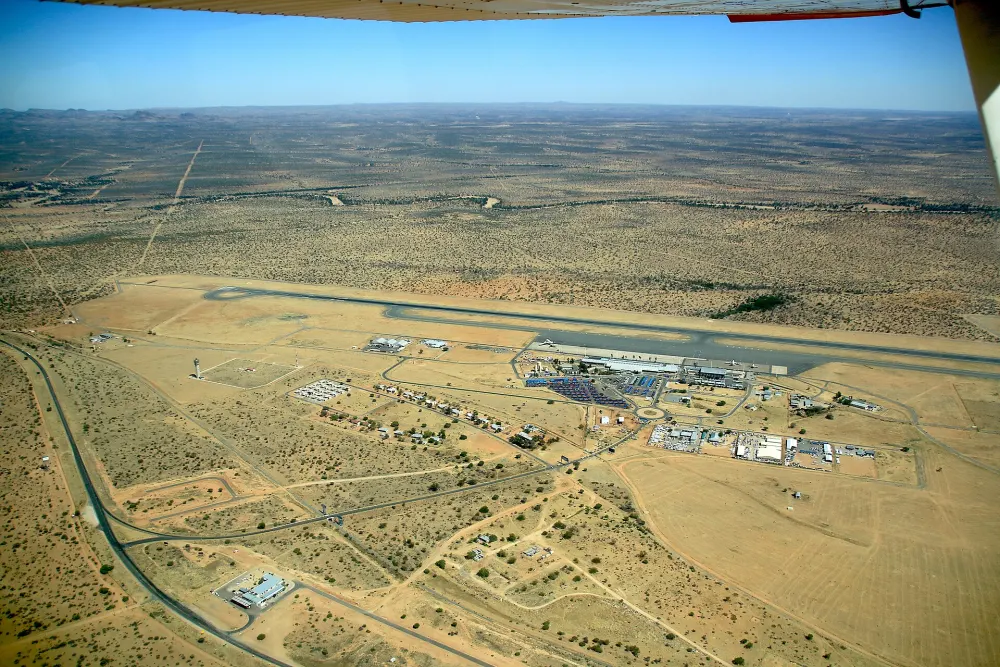
- Walvis Bay International, about 15 km east of town
- Wetland status
- Ramsar site since 1995
The lagoon and the flamingos
The lagoon is the southern, shallow end of the bay, a tidal mudflat a few kilometres long behind the town’s residential seafront. It is one of the most important coastal wetlands in southern Africa for birds and has been a Ramsar site since 1995; the neighbouring salt pans, which hold water at different depths and salinities, add feeding ground of their own.
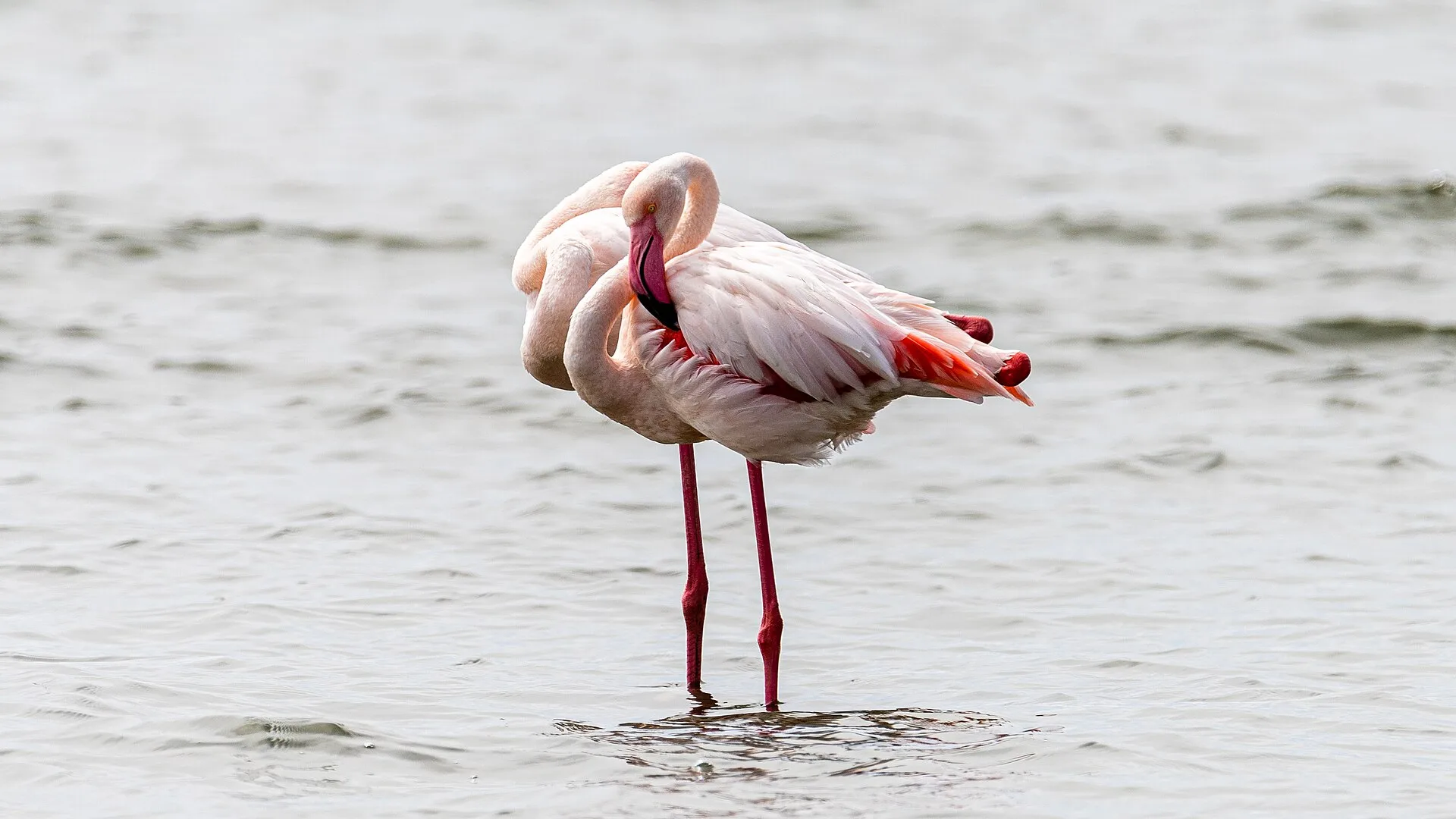
Both greater and lesser flamingos feed here, the greater taller and paler with a pink bill tipped black, the lesser smaller, deeper pink and with a dark red bill. They do not breed at the coast; when good rains fill Etosha Pan or the Makgadikgadi in Botswana, many leave to nest there and return afterwards with grey juveniles. On most days of the year there are thousands in view from the pavement.
- Where to look: walk or drive the Esplanade along the lagoon from the yacht club end southwards. The birds follow the tide line, so at high tide they are close to the wall and at low tide far out on the mud.
- When: early morning and the last hour before sunset for light and calm water. Summer (October–April) has the greatest variety, with sandpipers, plovers, terns and other migrants alongside resident pelicans, avocets and the tiny, near-endemic Damara tern.
- Further south: the road past the salt works towards Paaltjies runs between evaporation pans and the lagoon mouth and often has the densest flocks. It is a firm salt-and-gravel road as far as the angling spots; beyond that is 4x4 country and the park boundary.
Keep your distance and stay on the road or path: flamingos that are repeatedly flushed stop feeding. Drones disturb them badly and need permission.
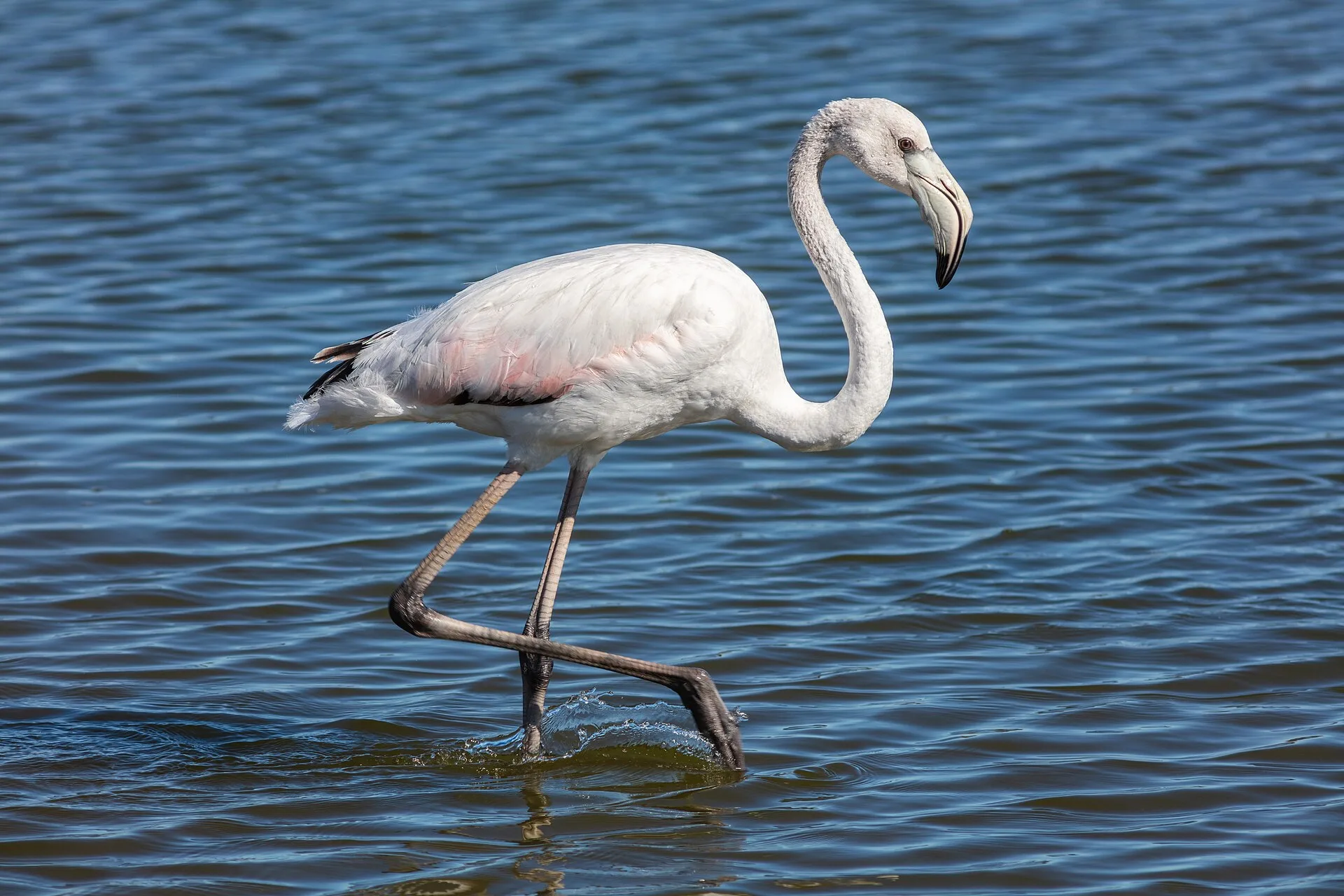
Flamingos feed on the tidal flats of the lagoon throughout the year.
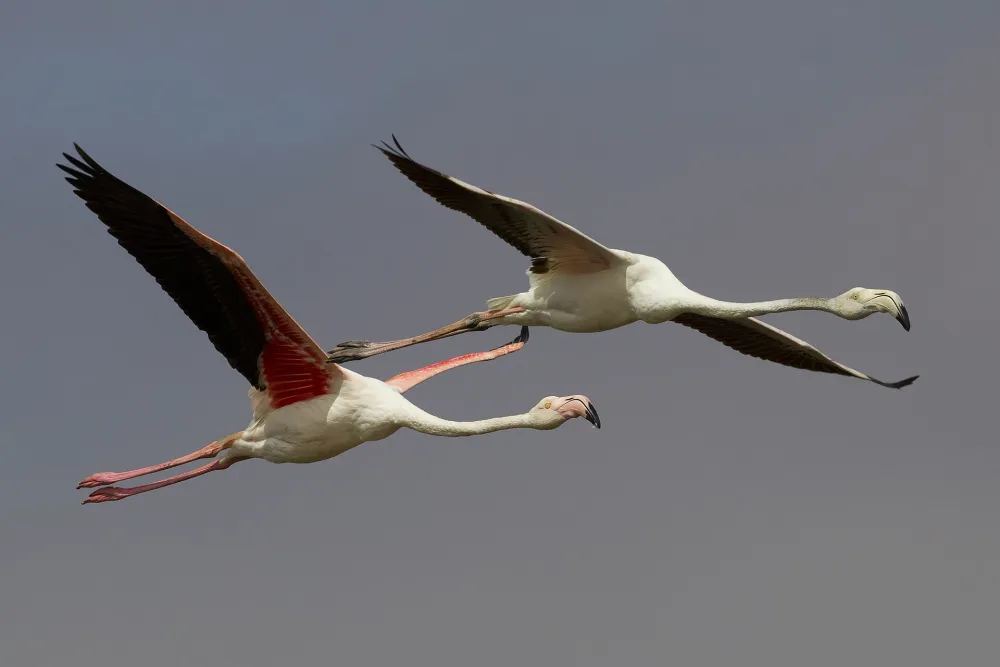
Walvis Bay: birdwatching tour with Pelican Point colony
A guided outing for flamingos, pelicans, terns and waders around the lagoon, salt pans and the Pelican Point sandspit.
Check availabilityBook via GetYourGuideTour listings are on GetYourGuide. Prices, dates and cancellation terms are shown live on each listing and can change; NamibiaSafaris.com may earn a commission at no extra cost to you.
Dolphin and seal cruises
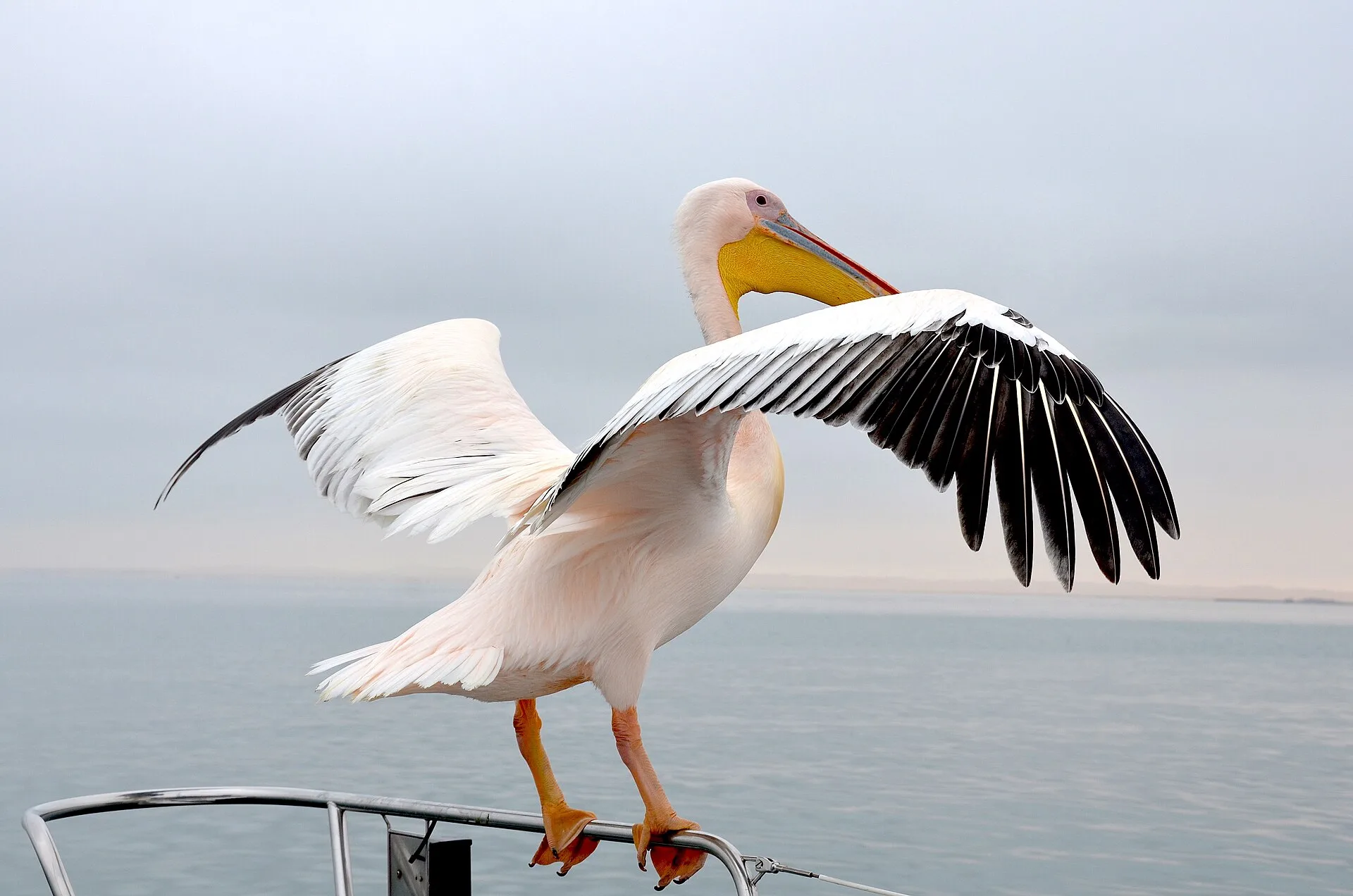
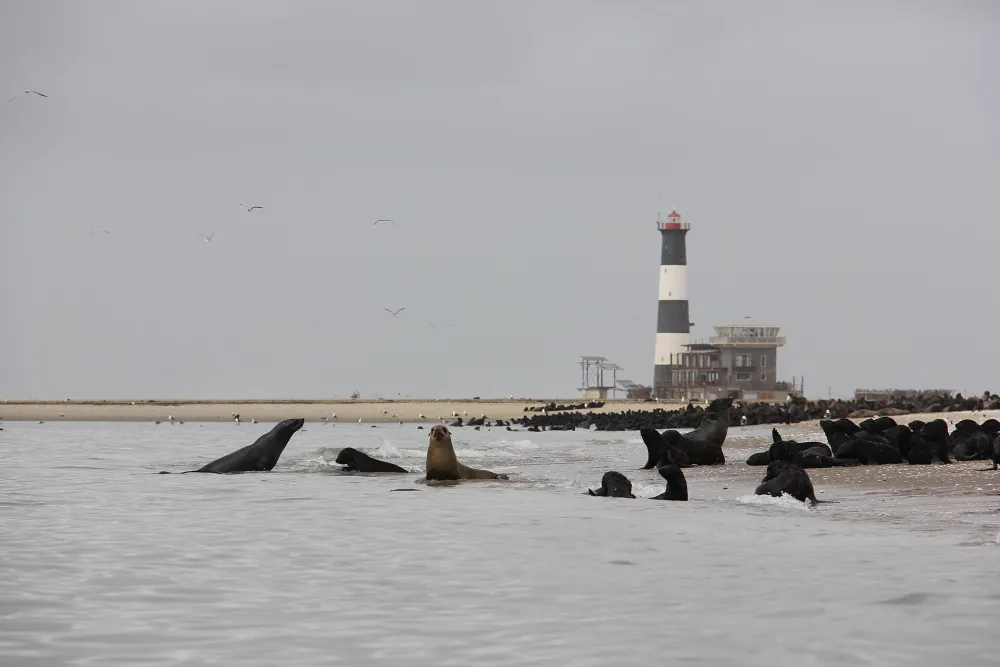
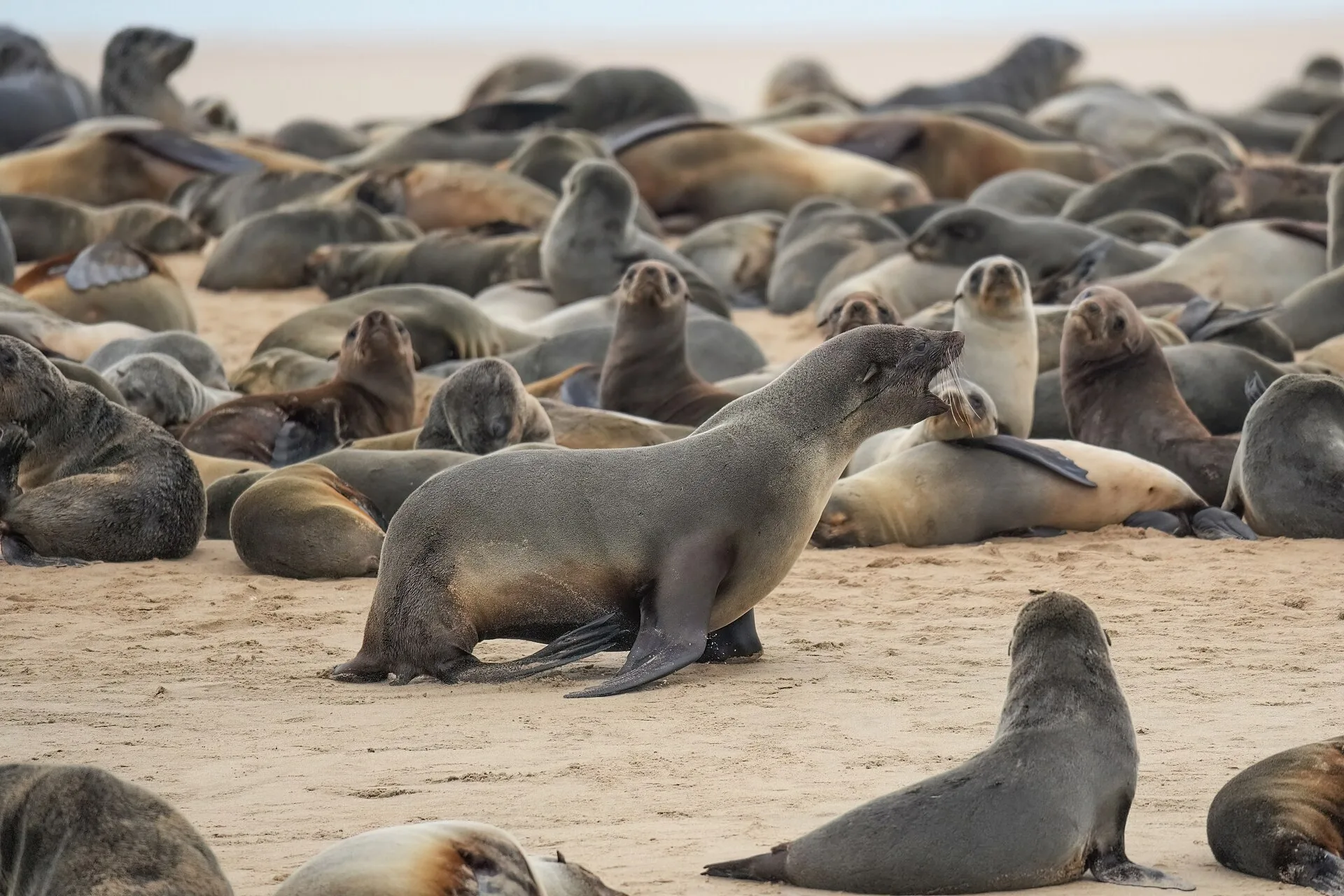
Every morning a small fleet of catamarans and motor boats leaves the Waterfront beside the yacht club for a cruise of three to four hours around the bay. The format is much the same on all of them. Within minutes a Cape fur seal hauls itself up the stern steps to be fed fish, and great white pelicans land on the roof for the same reason. The boat then runs out along the oyster farms and past anchored ships to Pelican Point, where a lighthouse stands above a seal colony tens of thousands strong.
Out here you look for dolphins. Heaviside’s dolphin, small, stocky and marked in grey, black and white, lives only in the Benguela Current off Namibia and western South Africa and is seen on most trips; bottlenose dolphins often ride the bow wave. From roughly July to November humpback whales pass on migration and southern right whales turn up occasionally. Sunfish (Mola mola) and leatherback turtles are summer possibilities. Sightings of wild animals are never guaranteed, and reputable skippers do not chase them.
On the way back most boats serve fresh Walvis Bay oysters, snacks and sparkling wine. Variations include smaller boats for a quieter trip, cruises with lunch, and combinations that put you ashore for a beach lunch or straight into a 4x4 for Sandwich Harbour in the afternoon.
- Sea conditions: the bay is sheltered and mornings are usually calm; it is a good choice for people who normally get seasick.
- Clothing: it is cold on the water, often under 15 °C with wind chill and fog. Wear a windproof jacket and closed shoes even if Swakopmund was sunny.
- Departure: generally around 8:30–9:00 AM, back by lunchtime. Transfers from Swakopmund hotels are widely offered.
- Children: the tame seals and pelicans make this the easiest wildlife outing in Namibia for small children.
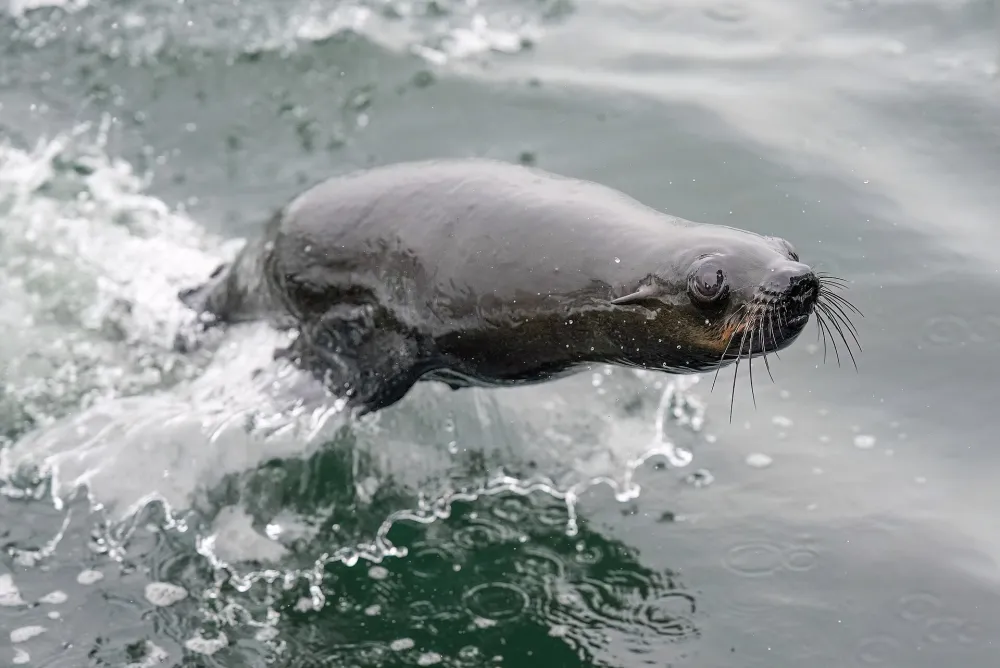
Walvis Bay: dolphin and seal catamaran cruise
The classic morning on the bay: seals and pelicans at close quarters, the Pelican Point colony, a search for Heaviside’s and bottlenose dolphins, and oysters on the way home.
Check availabilityBook via GetYourGuide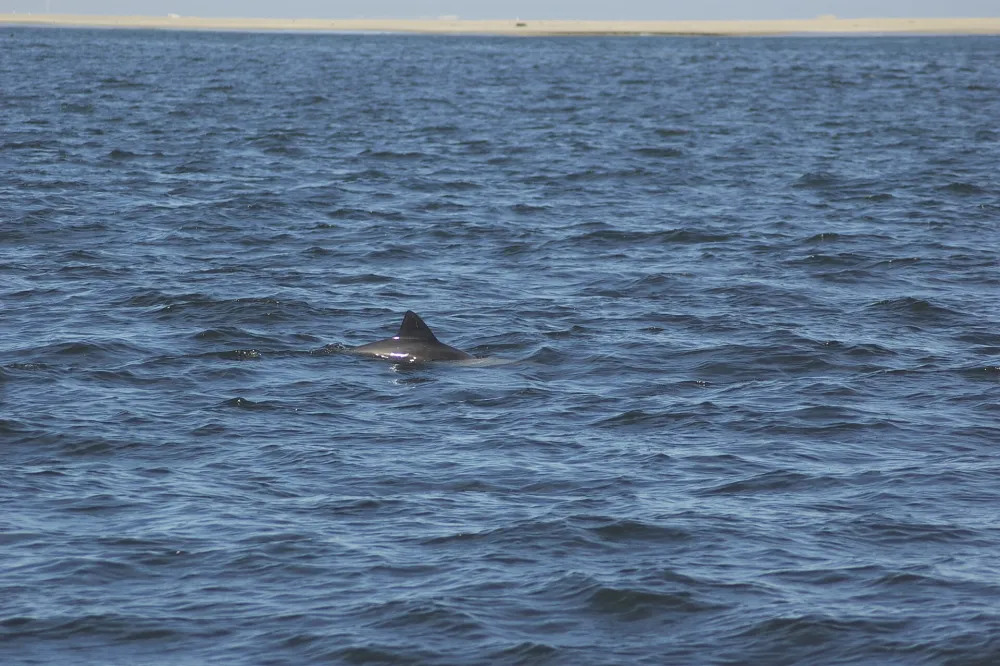
Walvis Bay: Namibian coast dolphin cruise with light lunch
A bay cruise to the seal colony and dolphin grounds with a light lunch on board.
Check availabilityBook via GetYourGuideTour listings are on GetYourGuide. Prices, dates and cancellation terms are shown live on each listing and can change; NamibiaSafaris.com may earn a commission at no extra cost to you.
Kayaking with seals at Pelican Point
This is the pick of the bay’s activities for anyone reasonably mobile. You are driven by 4x4 from town around the lagoon and out along the sandspit, about 40 minutes over salt road and beach, past flamingos, jackals trotting the tide line and the black-and-white lighthouse. At the point you launch stable sit-on-top double kayaks from the sheltered inner beach and paddle along the colony.
Young seals are intensely curious. They surround the boats, roll under the bow, tug at paddle blades and splash you; the adults watch from the beach. Pups are born on the sand in late November and December and are at their most playful in the water from about midsummer on. Dolphins sometimes pass close inshore. You are on the water for about one and a half to two hours and back in town by about noon.
- No experience is needed; the water is shallow and flat inside the point, and guides stay with the group.
- Operators supply waterproof jackets, trousers or splash gear and dry bags. Wear warm layers underneath and expect wet feet.
- Trips are cancelled in strong wind; mornings are calmest.
- Do not touch the seals or land in the colony.
The kayak trip combines well with Sandwich Harbour in one long day: paddle in the morning, eat on the beach, drive the dunes in the afternoon.
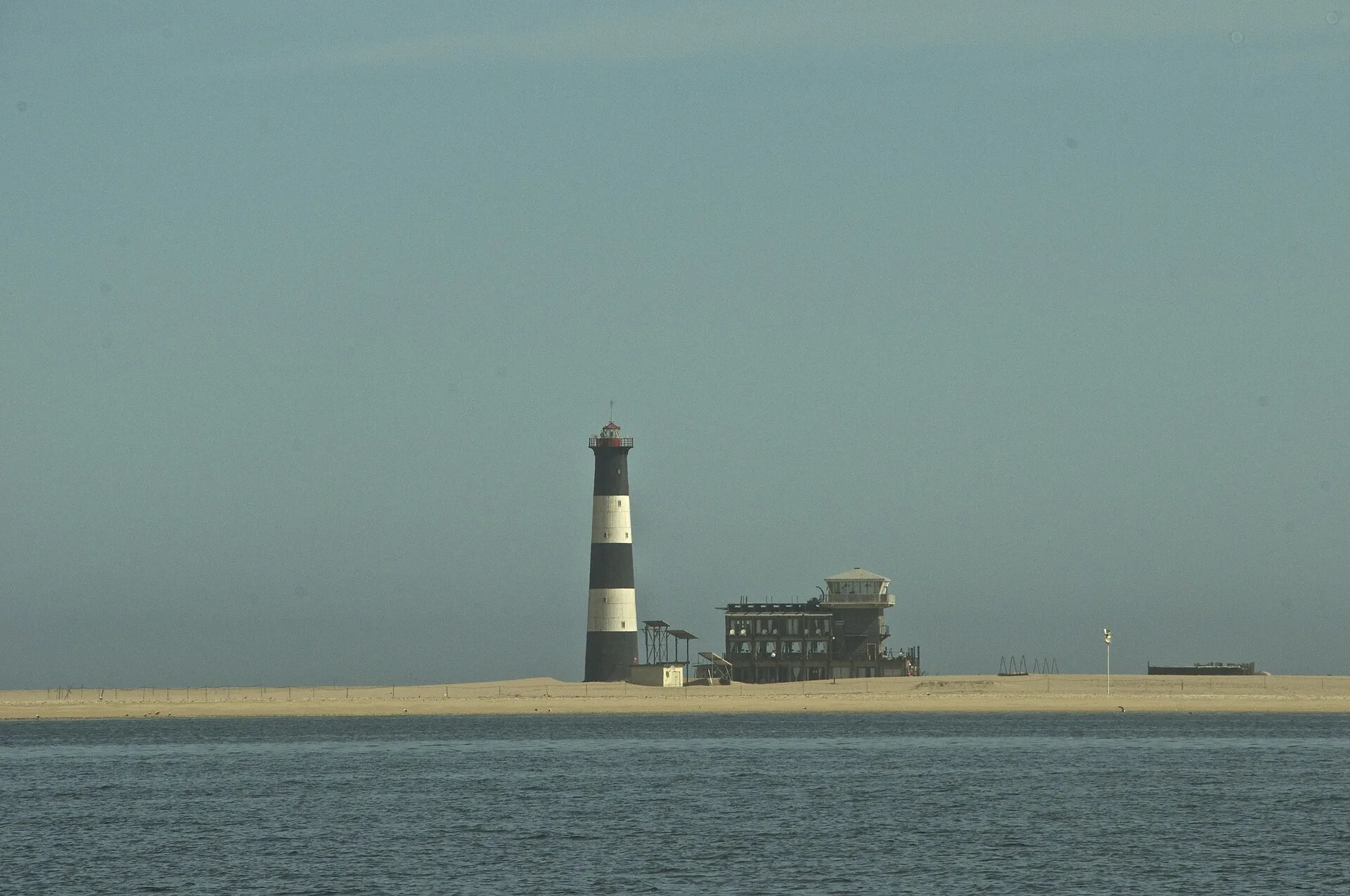
The lighthouse at Pelican Point, at the tip of the sandspit that makes the harbour.
Walvis Bay: Pelican Point kayaking tour
A 4x4 transfer along the sandspit, then a paddle in sheltered water among curious young Cape fur seals. No experience needed.
Check availabilityBook via GetYourGuide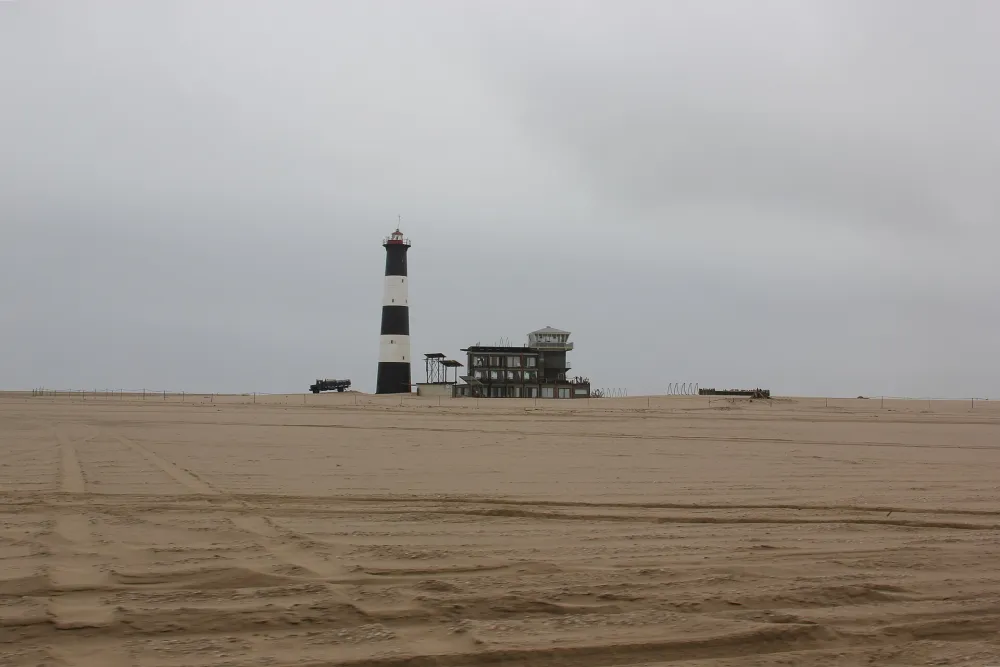
Pelican Point: kayak with seals experience
Sit-on-top kayaking beside the Pelican Point colony, with the drive past the lagoon’s flamingos on the way out.
Check availabilityBook via GetYourGuideTour listings are on GetYourGuide. Prices, dates and cancellation terms are shown live on each listing and can change; NamibiaSafaris.com may earn a commission at no extra cost to you.
Sandwich Harbour: the big day out
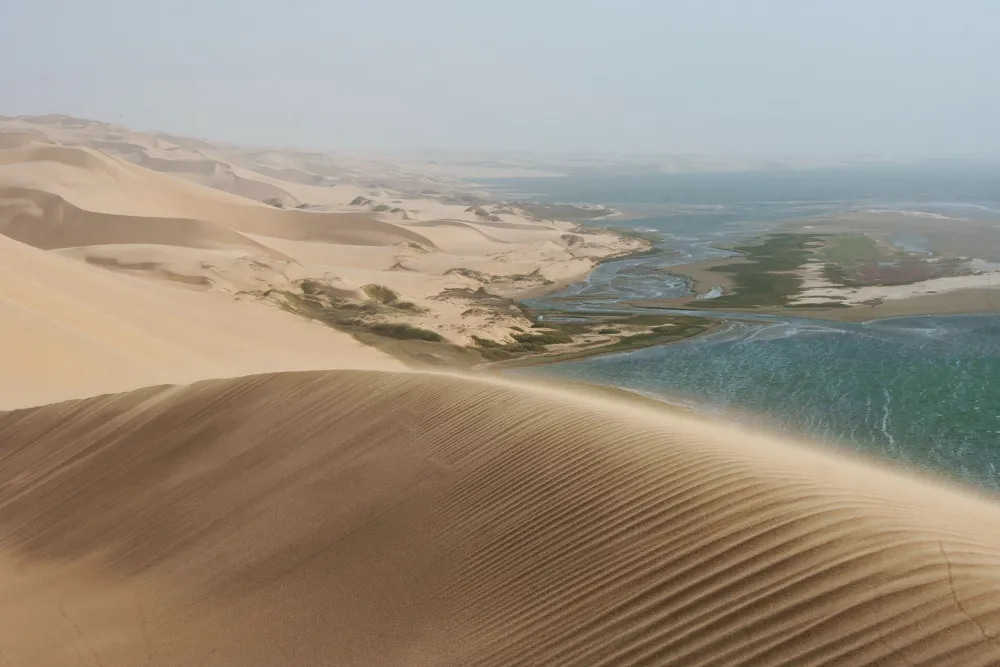
About 55 km south of town the dunes of the Namib Sand Sea come down to the ocean, and a lagoon lies trapped between them and the surf. Reaching it means driving the beach at low tide and climbing the dunes by 4x4 with someone who knows both. Tours leave from Walvis Bay as half-day (about 4–5 hours) and full-day trips, and most collect in Swakopmund as well. We describe the trip on our Sandwich Harbour page.
Sandwich Harbour has a whole sister site to itself. Before you choose, read its independent comparison of the best Sandwich Harbour tours from Walvis Bay, and, if you are thinking of driving yourself, its guide to getting to Sandwich Harbour, tides and permits.
Dune 7
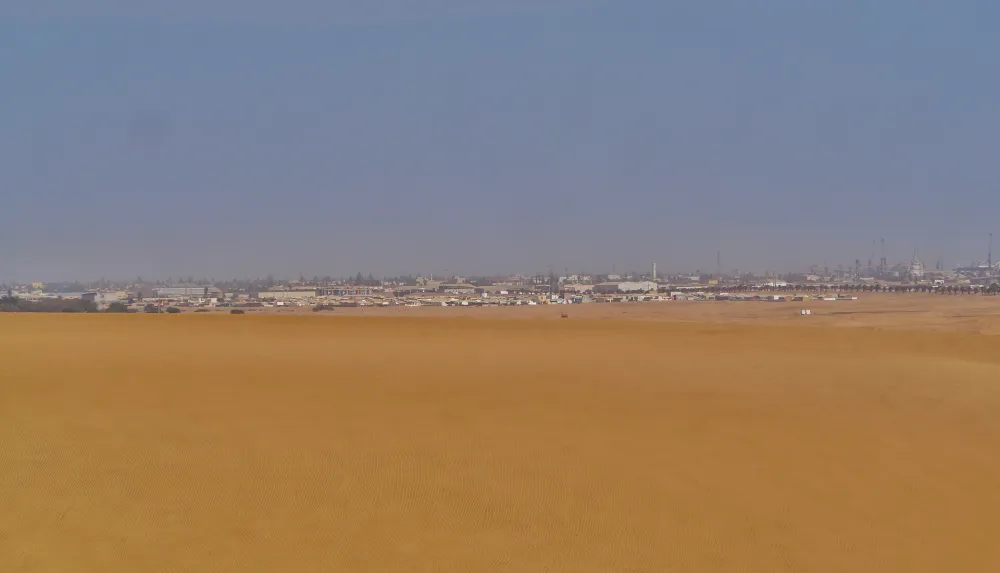
Ten kilometres east of town on the C14, where the railway to the interior passes through the dune belt, stands Dune 7, the highest dune of the coastal strip and the one everybody climbs. Heights of more than 380 m are widely quoted for it and are hard to square with what you see; what matters is that the direct line up the steep face takes a fit person 15 to 25 breathless minutes, two steps up and one back, and the longer ridge route on the left is easier. From the crest you look over a sea of dunes on one side and the gravel plain and the town on the other, and you descend in about a minute.
There are palm trees, picnic tables and braai places at the foot, and a kiosk and quad-bike operators nearby. An entrance fee has been charged at the gate since December 2022; bring some cash. Go in the late afternoon, when the sand has cooled and the low sun picks out the ripples; at midday the surface is too hot for bare feet. Sandboards and plastic sledges are sometimes for hire.
Half-day tours from Walvis Bay and Swakopmund bundle Dune 7 with the lagoon and the salt pans, which is useful if you have no car.
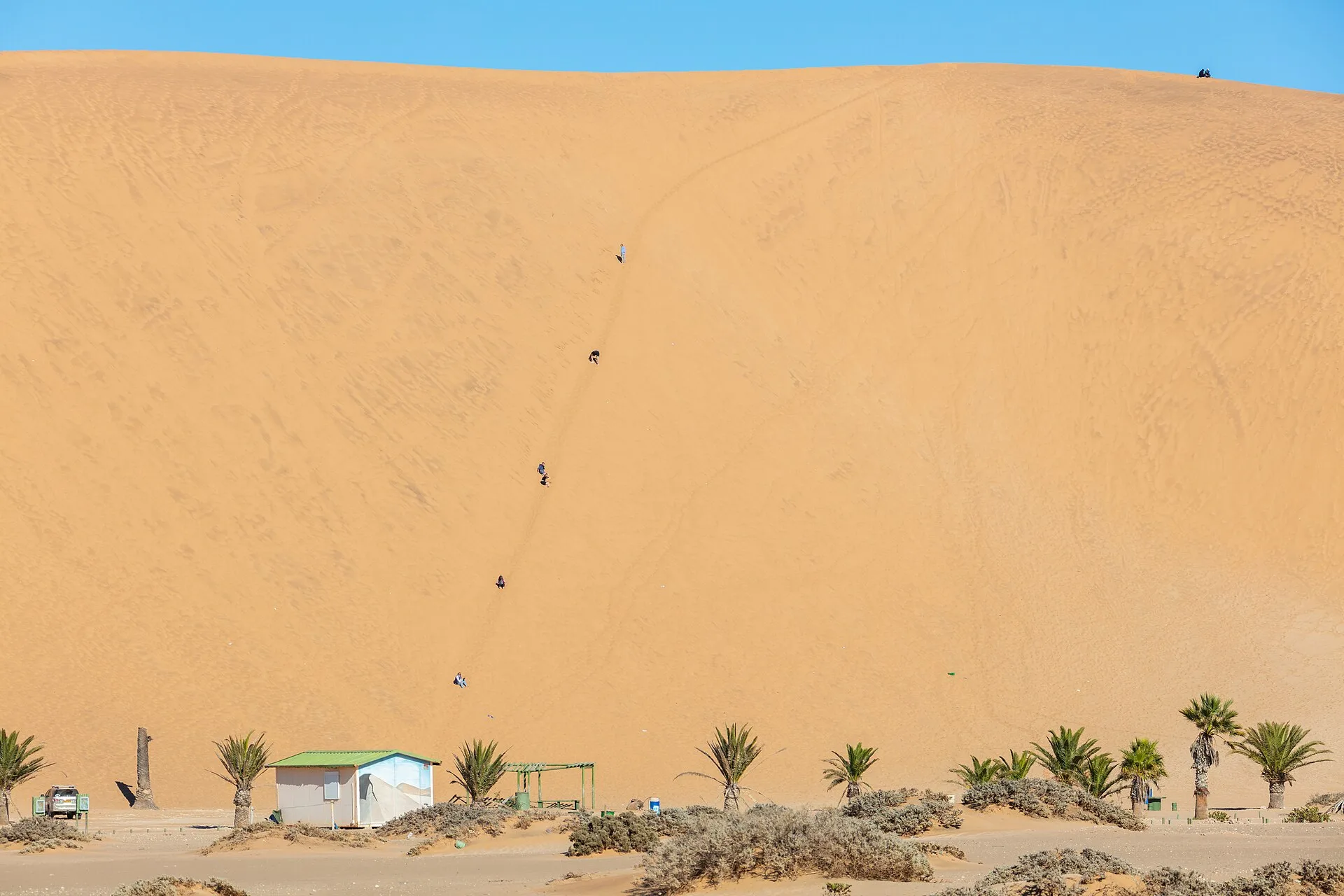
Dune 7, on the C14 east of Walvis Bay.
Walvis Bay: half-day tour with Dune 7 and the pink lake
The easy highlights without a car: the flamingo lagoon, the coloured salt pans and a climb up Dune 7.
Check availabilityBook via GetYourGuideTour listings are on GetYourGuide. Prices, dates and cancellation terms are shown live on each listing and can change; NamibiaSafaris.com may earn a commission at no extra cost to you.
The salt works and the “pink lake”
South-west of the lagoon, seawater is pumped through a chain of shallow evaporation ponds covering several thousand hectares. As the brine concentrates, salt-loving algae and micro-organisms multiply and tint the water, so that neighbouring pans can be green, rust, salmon and a strong pink. The colour is real and natural, though how pink depends on the salinity of the particular pan, the season and the light; a clear afternoon with the sun behind you is best, and some days are frankly beige. The works produce in the region of a million tonnes of salt a year, most of it for industry, and white salt mountains stand beside the road.
The pans are private industrial property: stay on the public road towards Paaltjies, do not walk on the pond walls and do not drive onto the works. The same ponds are full of flamingos, avocets and grebes, so the “pink lake” stop and the birdwatching stop are really the same place.
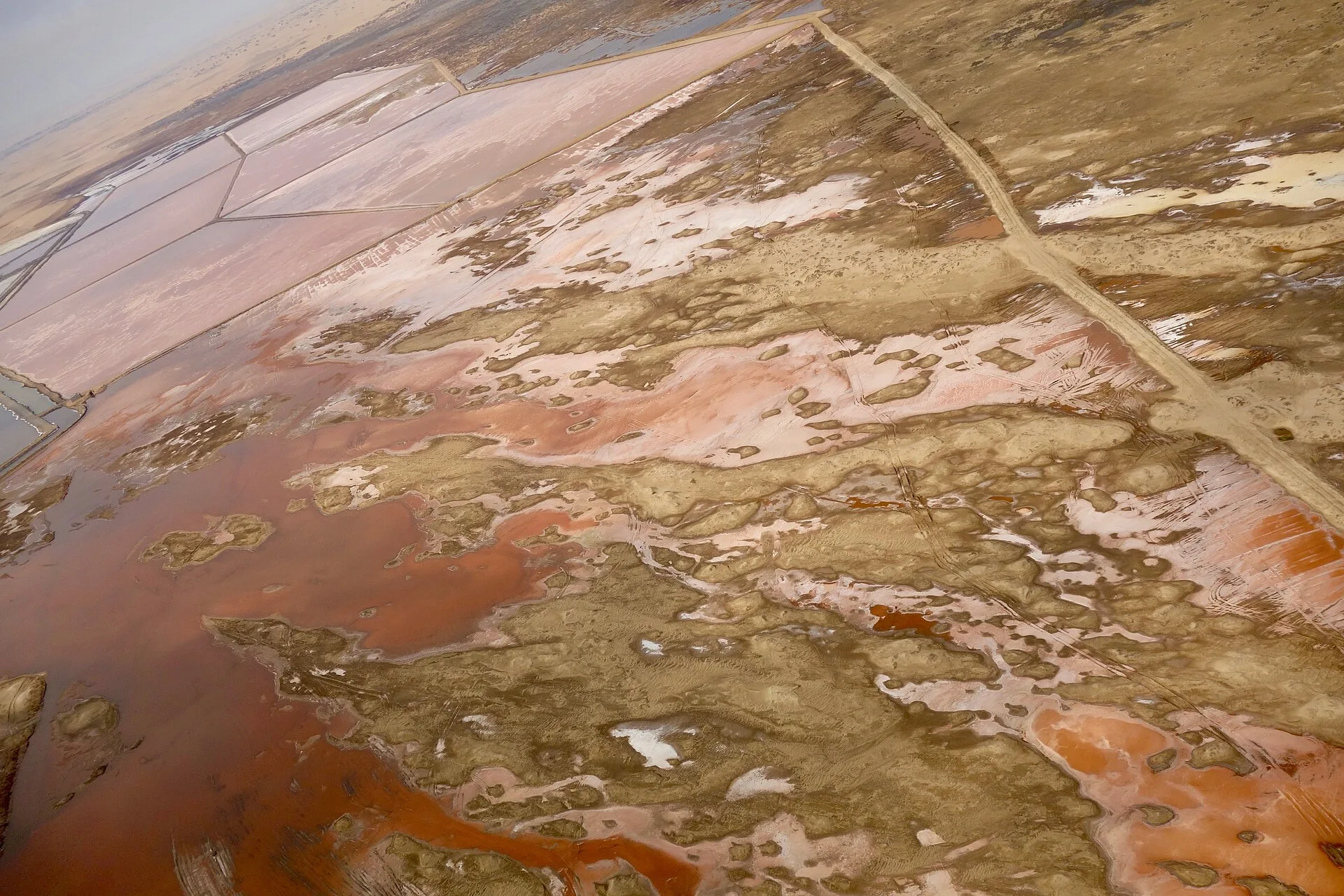
Evaporation ponds at the Walvis Bay salt works turn pink as the brine concentrates.
If you arrive by cruise ship
Walvis Bay is the main cruise call on the Namibian coast, and ships usually stay from morning to late afternoon. The berth is inside the commercial port; shuttle buses or pre-booked tour vehicles take passengers out through the gate, and independent operators meet their guests there by name. With six to eight hours ashore, realistic choices are:
- Sandwich Harbour by 4x4 (4–5 hours): the most memorable use of a port day, but dependent on the tide; operators who run dedicated cruise-passenger departures time them to the ship.
- Lagoon, pink pans and Dune 7 (3–4 hours): easy, flexible and suitable for limited mobility apart from the dune climb.
- A dolphin and seal cruise (3–4 hours): only if the departure time fits your ship’s arrival; ask before booking.
- Swakopmund (half day): 30 minutes each way for the old town, museum and coffee.
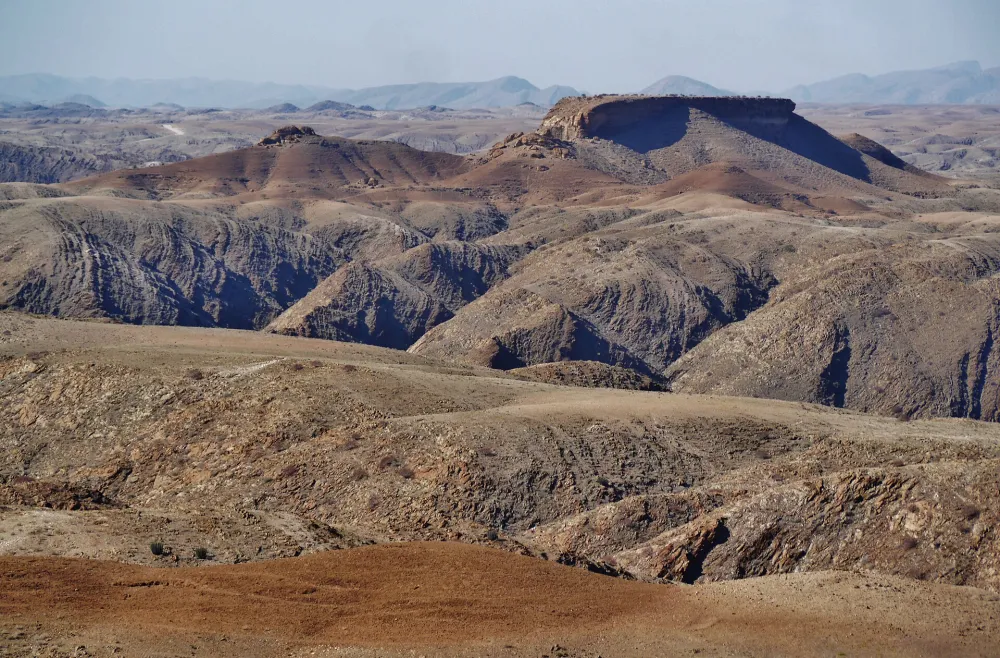
- Moon Landscape and welwitschia plains (4–5 hours): desert scenery without sand driving.
Book a tour that states it is for cruise passengers and guarantees your return time, carry your ship card and a photo ID for the port gate, and bring a warm layer: the quay is usually cold and often foggy when you step off.
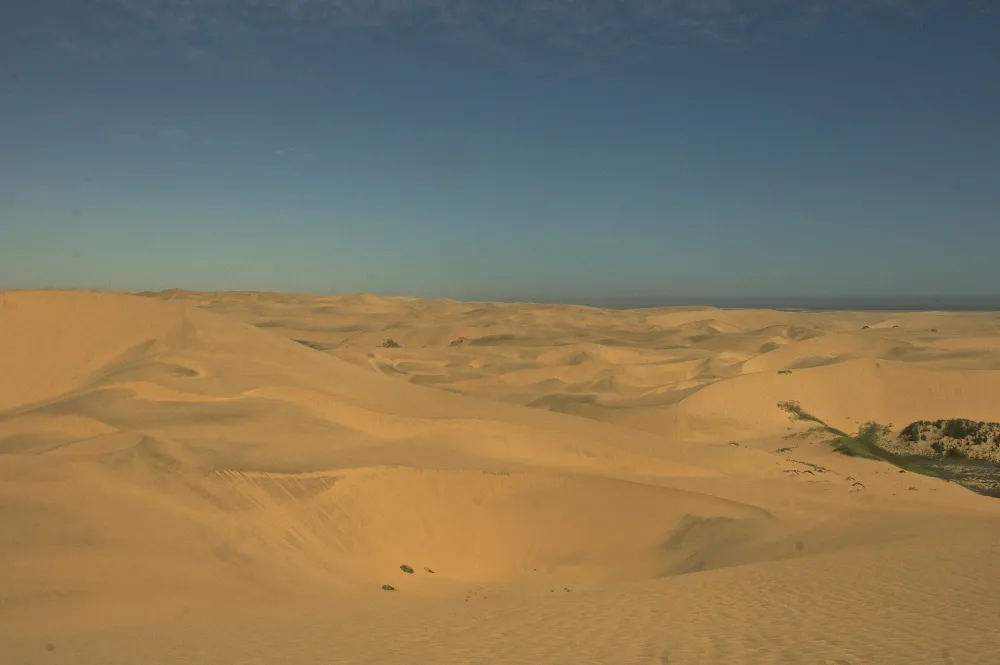
Sandwich Harbour tour for cruise-ship passengers
A 4x4 trip to Sandwich Harbour timed to ship arrivals and departures at the Walvis Bay cruise berth.
Check availabilityBook via GetYourGuide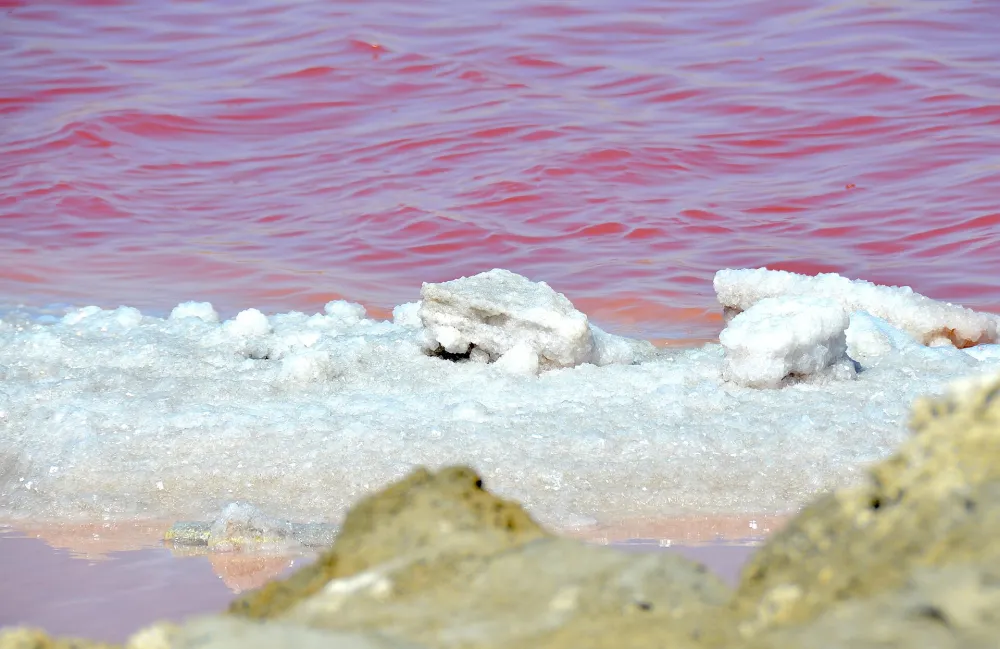
Walvis Bay shore excursion: pink lake, Dune 7 and photo stops
A short tour from the port for cruise passengers: salt pans, flamingos and Dune 7.
Check availabilityBook via GetYourGuideTour listings are on GetYourGuide. Prices, dates and cancellation terms are shown live on each listing and can change; NamibiaSafaris.com may earn a commission at no extra cost to you.
Where to stay in Walvis Bay
Choose the lagoon side of town (the suburbs of Meersig and Lagoon, along the Esplanade). You can walk to the flamingos, the Waterfront departure point is a short drive, and it is the quietest part of town.
- On the Esplanade: Protea Hotel by Marriott Walvis Bay Pelican Bay is the full-service hotel, with lagoon-view rooms and a restaurant; Flamingo Villas Boutique Hotel has rooms with balconies and lagoon views and its own restaurant; Oyster Box Guesthouse is a smaller guesthouse on the same front.
- Self-catering: Lagoon View Self Catering offers two-bedroom sea-view apartments on the Esplanade, a good fit for families.
- A block or two back: Langholm Hotel is a small hotel with a restaurant and bar in the Lagoon suburb; The Rez Guesthouse in Meersig is a well-reviewed bed and breakfast.
There is also accommodation at Long Beach (Langstrand), halfway to Swakopmund, which suits self-drivers who want sea views and do not mind driving to dinner.
Protea Hotel by Marriott Walvis Bay Pelican Bay
Walvis BayFull-service hotel on the Esplanade with lagoon-view rooms, restaurant and bar.
7.7Booking.com guest score · as checked in November 2026
See on Booking.comFlamingo Villas Boutique Hotel
Walvis BayA beachfront boutique hotel in Walvis Bay with sea views, a restaurant and a bar.
8.6Booking.com guest score · as checked in November 2026
See on Booking.comOyster Box Guesthouse
Walvis BayGuesthouse on the Esplanade facing the lagoon, with a bar.
8.4Booking.com guest score · as checked in November 2026
See on Booking.comLagoon View Self Catering
Walvis BayTwo-bedroom sea-view apartments on the Esplanade.
9.7Booking.com guest score · as checked in November 2026
See on Booking.comLangholm Hotel
Walvis BaySmall hotel with restaurant and bar in the Lagoon suburb.
9.0Booking.com guest score · as checked in November 2026
See on Booking.comThe Rez Guesthouse
Walvis BayBed and breakfast with a bar in Meersig, near the lagoon.
9.3Booking.com guest score · as checked in November 2026
See on Booking.comSee all stays in Walvis Bay on Booking.com
Accommodation links go to Booking.com, where you see live prices and availability. We do not list prices because they change daily; NamibiaSafaris.com may earn a commission.
Getting there and practicalities
- By road from Swakopmund: the B2 coast road, 35 km between the dunes and the sea. It is tarred, busy and often foggy; a second, inland road behind the dunes carries most of the trucks.
- From Sossusvlei: the C14 gravel road via Solitaire, the Gaub and Kuiseb passes and the Namib plains (about 320 km, 4.5–5.5 hours). The last hour is dead straight and hypnotic; take a break at the passes.
- By air: Walvis Bay International Airport, about 15 km east of town near Dune 7, has scheduled flights; routes and airlines change, so see getting to Namibia.
- Fuel, money, supplies: everything is available; this is the place to fix a tyre or restock before the long gravel legs north or south.
- Weather: cool, windy and frequently foggy in the morning all year, like Swakopmund. The wind usually rises after midday, which is why water activities are scheduled early.
- Safety: normal town precautions. Do not leave anything visible in a parked car at the lagoon or at Dune 7.
Frequently asked questions
When is the best time to see flamingos in Walvis Bay?
Flamingos are on the lagoon all year. Total bird numbers are highest in the southern summer, about October to April, when migrant waders are present. After very good inland rains many flamingos leave for a few months to breed on the salt pans of Etosha or Botswana.
Which is better, the dolphin cruise or kayaking at Pelican Point?
The cruise is comfortable, covers more of the bay, gives the best chance of dolphins and suits all ages. Kayaking is more active and puts you at water level among playful young seals. With two mornings, do both; with one, choose by how much you like being in a small boat.
Will you see whales?
Possibly between about July and November, when humpback whales migrate along the coast. They are a bonus, not the norm. Heaviside’s and bottlenose dolphins are seen far more reliably.
How high is Dune 7?
It is the highest dune in the coastal dune belt. Figures above 380 m are often quoted, but the climb from the car park is much less than that and takes most people 15 to 25 minutes.
Is the pink lake always pink?
No. The colour of each evaporation pond depends on how salty it is at the time, and on the light. Some ponds are vivid pink, others green or brown. Clear afternoons give the strongest colour.
Can you visit Sandwich Harbour without a tour?
It is legal with a park permit and a properly equipped 4x4, but the route depends on tides and soft sand, and hire-car contracts normally exclude it. Almost everyone goes with a guide.
How far is Walvis Bay from Swakopmund?
35 km, about 30 minutes by car on the coast road. Most tour operators collect guests from both towns.
Sources and official information
Facts were checked against these official sources in November 2026. Park fees, gate times, visa rules and timetables change, so confirm before you go.
- rsis.ramsar.org
- datazone.birdlife.org
- nsa.org.na
- namport.com.na
- airports.com.na
- meft.gov.na
- en.wikipedia.org
- en.wikipedia.org
- sandwichharbour.com
- sandwichharbour.com
NamibiaSafaris.com is an independent guide, not the official site of any tour operator, lodge, Namibia Wildlife Resorts or the Namibian government. Some links are affiliate links: tours go to GetYourGuide and accommodation goes to Booking.com, and we may earn a commission at no extra cost to you.