In short
- The B1 from Windhoek to Etosha is 430 km of tar. The country it crosses holds some of Namibia's best wildlife stops, and one or two nights here make the journey part of the trip.
- Okonjima Nature Reserve (22,000 ha), home of the AfriCat Foundation, is the best place in Namibia to see leopard. It takes overnight guests only; there are no day visits.
- The Cheetah Conservation Fund, 44 km east of Otjiwarongo, is open to day visitors 364 days a year and shows how Namibia's cheetahs are being kept alive on farmland.
- Waterberg Plateau Park is a sandstone table mountain with rhino, buffalo, sable and roan on top (guided drives only) and walking trails below. Foreign adults pay N$280 a day from 1 April 2026.
- Erindi Private Game Reserve is closed for renovation until further notice (checked November 2026); do not plan around it without confirming.
The road north
Most safaris begin with the same drive: north from Windhoek on the B1, through Okahandja and Otjiwarongo, then north-west to Outjo and Etosha's Anderson Gate, or straight on to Otavi and Tsumeb for the eastern gate. It can be done in five hours. Many people do exactly that after an overnight flight, which is the worst possible way to start a holiday and a common cause of accidents.
The better plan is to treat the central plateau as a destination. This is thornbush savanna at about 1,500 metres, divided into large cattle and game farms, and it supports most of Namibia's cheetahs and a great many leopards, which is why two of the country's leading carnivore organisations are based here. The Waterberg, the only real mountain on the route, adds rhino and buffalo and a sobering piece of history. A night on the way up and another on the way back turns two long transfer days into four short ones.
| From Windhoek | Distance | Driving time | Road |
|---|---|---|---|
| Okahandja | ≈ 70 km | ≈ 45 min | B1, dual carriageway for much of the way |
| Okonjima turn-off (south of Otjiwarongo) | ≈ 200 km | ≈ 2 h, plus 24 km of gravel to the lodges | B1 |
| Otjiwarongo | ≈ 250 km | ≈ 2.5 h | B1 |
| Cheetah Conservation Fund | ≈ 295 km | ≈ 3.25 h | B1, then 44 km of gravel from Otjiwarongo |
| Waterberg Plateau Park | ≈ 300 km | ≈ 3.25 h | B1, C22, then gravel for the last stretch |
| Etosha, Anderson Gate (via Outjo) | ≈ 415 km | ≈ 4.5 h | B1 and C38, all tar |
Okahandja: the craft market and Herero history
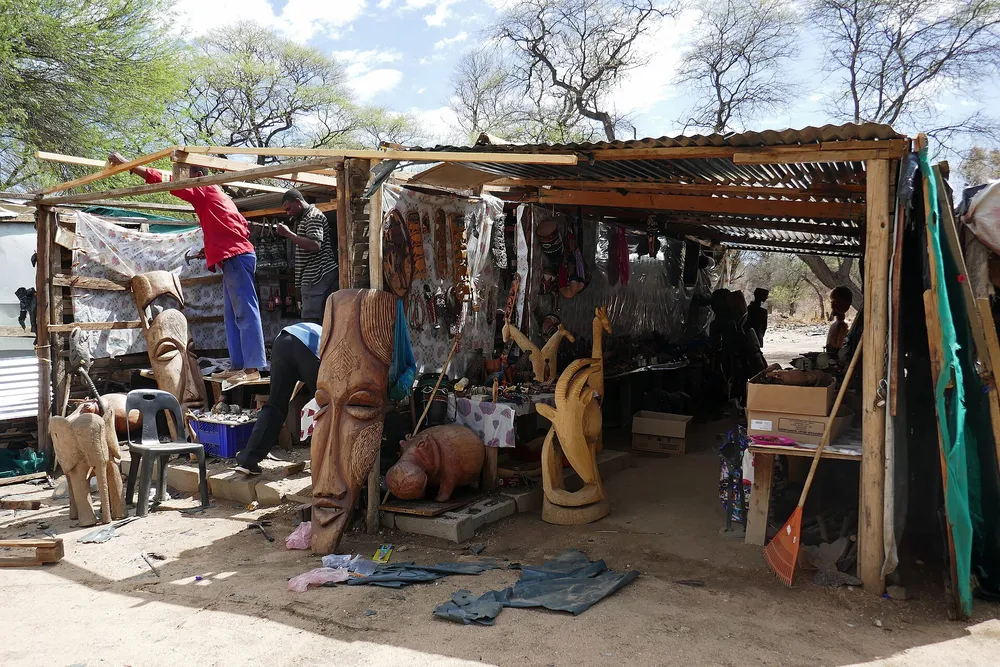
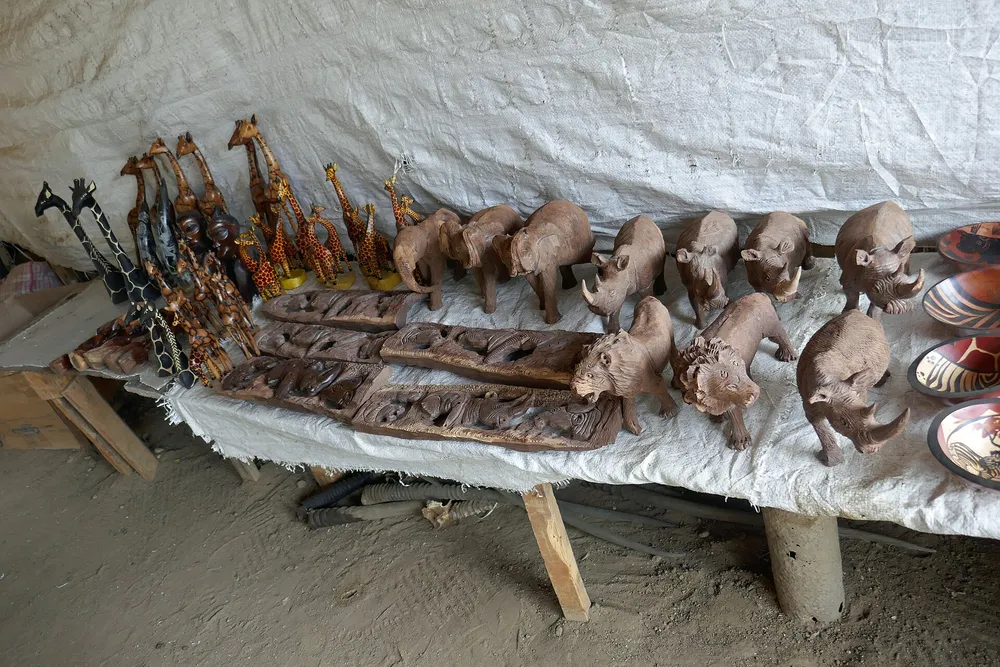
Okahandja, where the roads to the coast and the north divide, is the first natural stop. Its open-air woodcarvers' markets, at the southern and northern entrances to town, are the largest craft markets in the country: rows of stalls selling carved giraffes and hippos, masks, bowls, baskets and drums, much of it made by Kavango carvers from the north-east. Bargaining is expected and good-humoured. Ask what the wood is and avoid anything made from protected hardwoods or animal products; a wooden item may need to be declared when you fly home.
The town is also the traditional seat of the Ovaherero. Several of their leaders are buried here, among them Samuel Maharero, who led the rising against German rule in 1904, and each year on the weekend nearest 26 August Ovaherero from across Namibia gather for Herero Day, also called Red Flag Day, to process to the graves in military-style uniforms and long Victorian-style dresses. Visitors are welcome to watch respectfully from the roadside.
Just outside town, the Von Bach Dam supplies Windhoek with water and has a small resort, and there are guest farms in the hills on either side of the road.
Okahandja Country Hotel
Central NamibiaQuiet hotel under camelthorn trees just outside Okahandja, with a pool, a restaurant and a beer garden.
8.9Booking.com guest score · as checked in November 2026
See on Booking.comVon Bach Dam Resort
Central NamibiaResort on the Von Bach Dam near Okahandja with lake views, a pool and a restaurant.
8.2Booking.com guest score · as checked in November 2026
See on Booking.comKhaya Guesthouse
Central NamibiaGuesthouse in Okahandja with air-conditioned rooms, a pool and a restaurant.
9.1Booking.com guest score · as checked in November 2026
See on Booking.comSee all stays in Okahandja on Booking.com
Accommodation links go to Booking.com, where you see live prices and availability. We do not list prices because they change daily; NamibiaSafaris.com may earn a commission.
Okonjima and the AfriCat Foundation
About two and a half hours from Windhoek, a signposted gate on the B1 leads to Okonjima Nature Reserve, 22,000 hectares of plains and sandstone hills below the Omboroko Mountains. It began as a cattle farm whose owners, the Hanssen family, lost calves to leopards, started studying the cats instead of shooting them, and in 1991 founded the AfriCat Foundation. For many years AfriCat was known for rescuing and rehabilitating cheetahs and leopards trapped on farmland. Its focus has since moved to long-term research inside the fenced reserve, on leopard, brown hyena and pangolin, and to environmental education.
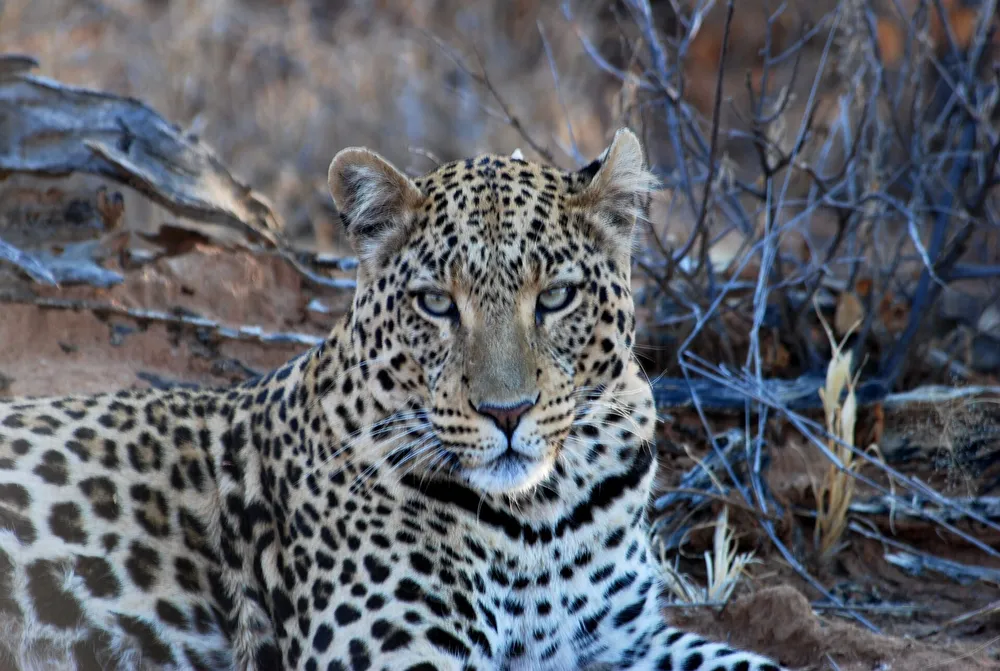
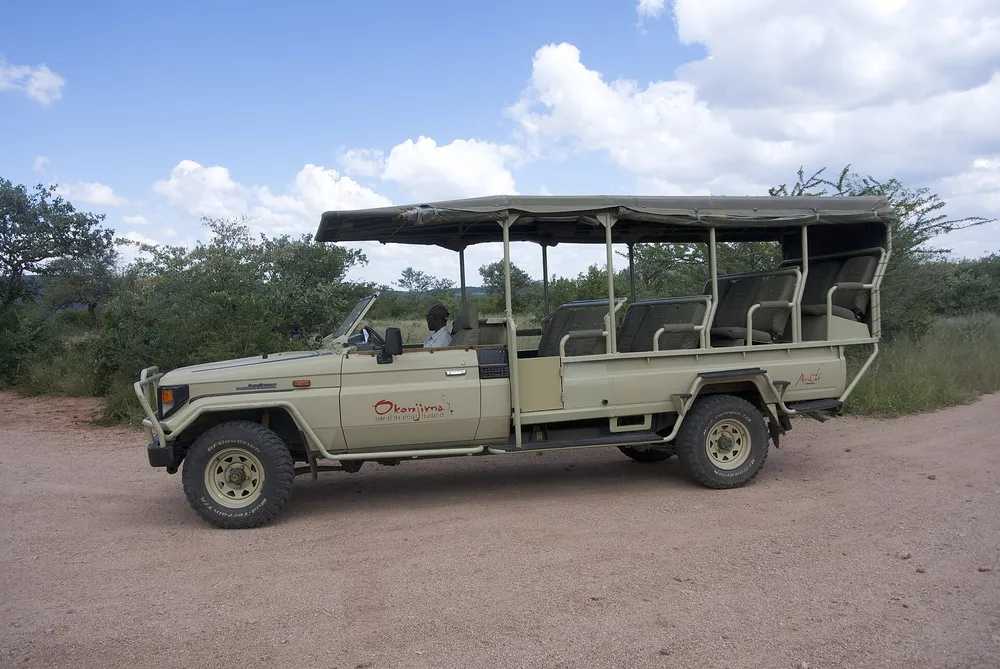
For visitors the result is the most reliable leopard viewing in Namibia. A number of the reserve's leopards wear tracking collars for research, and guides use telemetry to find them, then approach in an open vehicle; the cats, long accustomed to vehicles, carry on with their lives. You are likely, not certain, to see one in a two-night stay. Other activities listed by the reserve include tracking white rhino, pangolin and brown hyena outings, night drives, guided and self-guided walking trails, and a visit to AfriCat's information centre to hear about the research.
Two things to know before you plan. First, Okonjima does not accept day visitors: activities and access to the reserve are for overnight guests, so you must book a room or a campsite. Second, activities are priced separately from most accommodation and the popular ones fill up; reserve them when you book. Accommodation ranges from campsites and the mid-priced Plains Camp to the Luxury Bush Camp and private villas. Ask about minimum ages if you are travelling with children, as some activities have them.
Okonjima Plains Camp
Central NamibiaOn the Okonjima reserve near Otjiwarongo, home of the AfriCat Foundation; air-conditioned rooms, pool and restaurant.
9.5Booking.com guest score · as checked in November 2026
See on Booking.comOkonjima Luxury Bush Camp
Central NamibiaChalets each with a private open-sided sala on the Okonjima Nature Reserve; pool and restaurant.
9.7Booking.com guest score · as checked in November 2026
See on Booking.comSee all stays in Otjiwarongo on Booking.com
Accommodation links go to Booking.com, where you see live prices and availability. We do not list prices because they change daily; NamibiaSafaris.com may earn a commission.
The Cheetah Conservation Fund
Namibia has more cheetahs than any other country, an estimated 1,200, and nearly all of them live outside national parks on livestock and game farms. For most of the last century farmers trapped and shot them by the hundred. The Cheetah Conservation Fund (CCF), founded in 1990 by the American zoologist Dr Laurie Marker, set out to change that from a farm of its own east of Otjiwarongo, and it is now the best-known cheetah research and education centre in the world.
The centre is 44 km from Otjiwarongo on a gravel road, signposted from the town, and welcomes visitors 364 days a year (it closes on Christmas Day; check opening times before you set out). A visit starts with a guided tour of the centre and its museum, which explains cheetah biology and the conflict with farming, and takes in the model farm where CCF breeds livestock-guarding dogs, Anatolian shepherds and Kangals raised with goat herds and placed with Namibian farmers to keep predators off without killing them. It is the organisation's most influential idea.
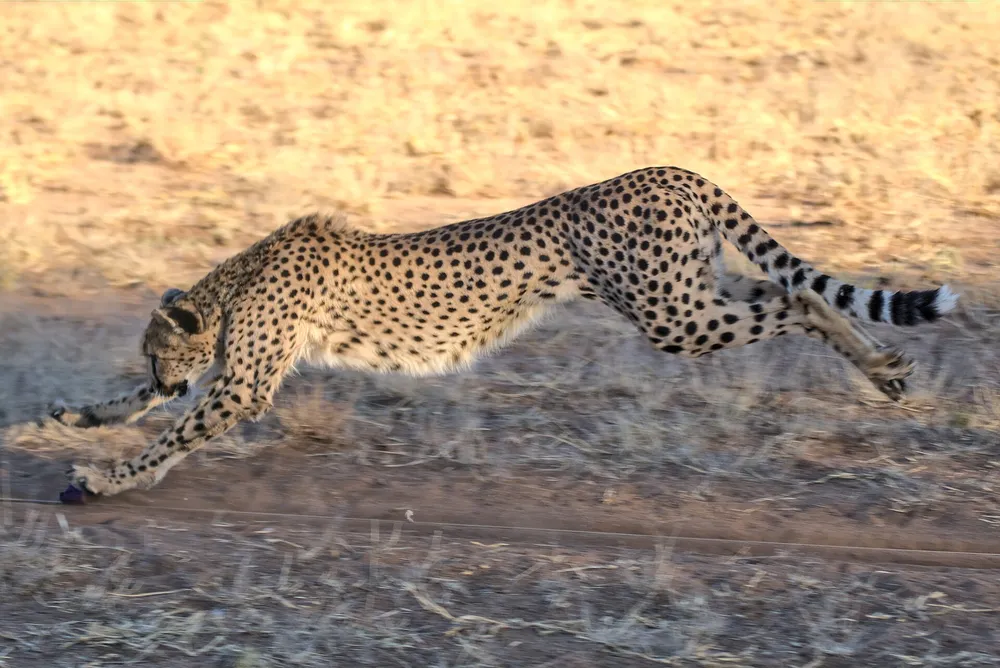
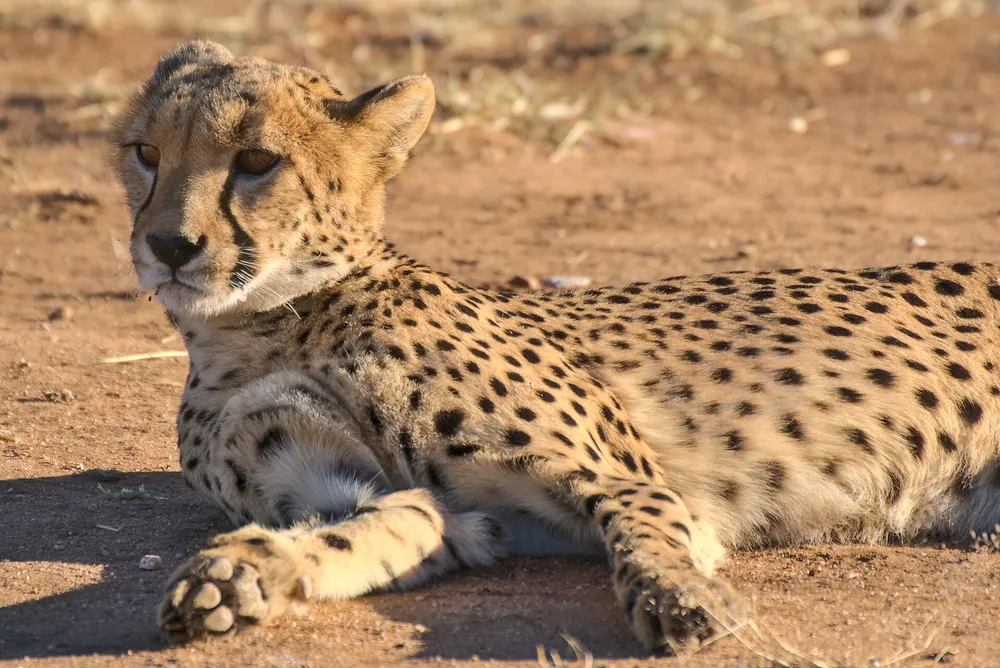
The cheetahs you see are residents that came to CCF as orphans or injured animals and cannot be returned to the wild. Visitors can watch feeding, join a drive through the large enclosures, and, by prior booking, watch the early-morning 'cheetah run', in which the cats chase a lure for exercise at full stretch. There is no touching or walking with cheetahs, which is as it should be. A café serves light lunches. Allow two to three hours, or stay overnight at the centre's own lodge for the morning run and a game drive on the reserve.
Cheetah View Lodge
Central NamibiaThe Cheetah Conservation Fund's own lodge east of Otjiwarongo, with air-conditioned rooms and a restaurant.
8.7Booking.com guest score · as checked in November 2026
See on Booking.comBabson House at Cheetah Conservation Fund
Central NamibiaThe exclusive guest house at the Cheetah Conservation Fund.
8.0Booking.com guest score · as checked in November 2026
See on Booking.comFrans Indongo Lodge
Central NamibiaLodge in the savanna near Otjiwarongo with a pool, a restaurant and a terrace.
9.4Booking.com guest score · as checked in November 2026
See on Booking.comOut of Africa Town Lodge
Central NamibiaTown lodge in Otjiwarongo with air-conditioned rooms, a pool and a restaurant; a practical overnight stop.
8.8Booking.com guest score · as checked in November 2026
See on Booking.comOtjibamba Lodge
Central NamibiaLodge at Otjiwarongo with a garden, a pool and a restaurant.
8.7Booking.com guest score · as checked in November 2026
See on Booking.comSee all stays in Otjiwarongo on Booking.com
Accommodation links go to Booking.com, where you see live prices and availability. We do not list prices because they change daily; NamibiaSafaris.com may earn a commission.
Waterberg Plateau Park
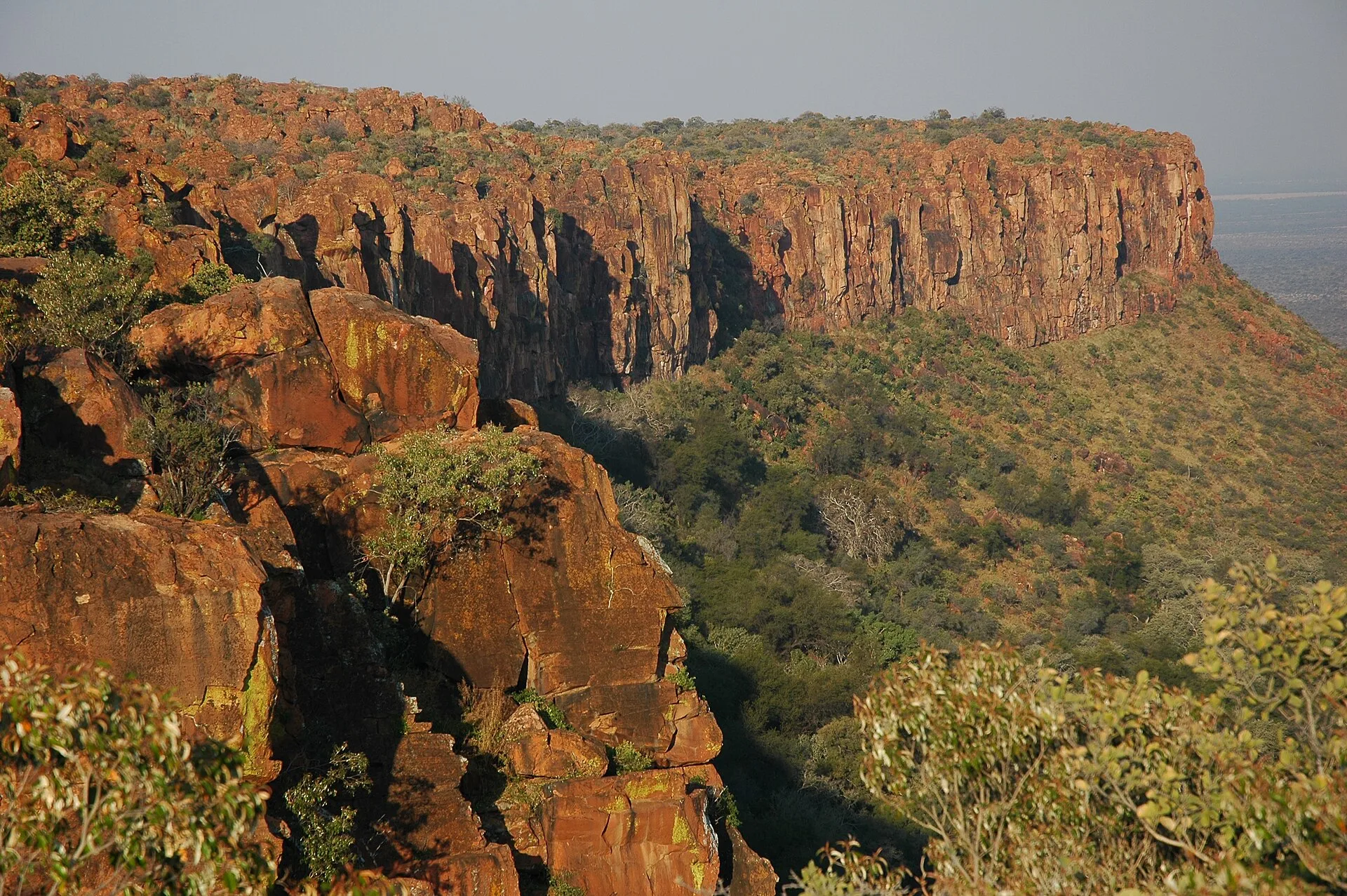
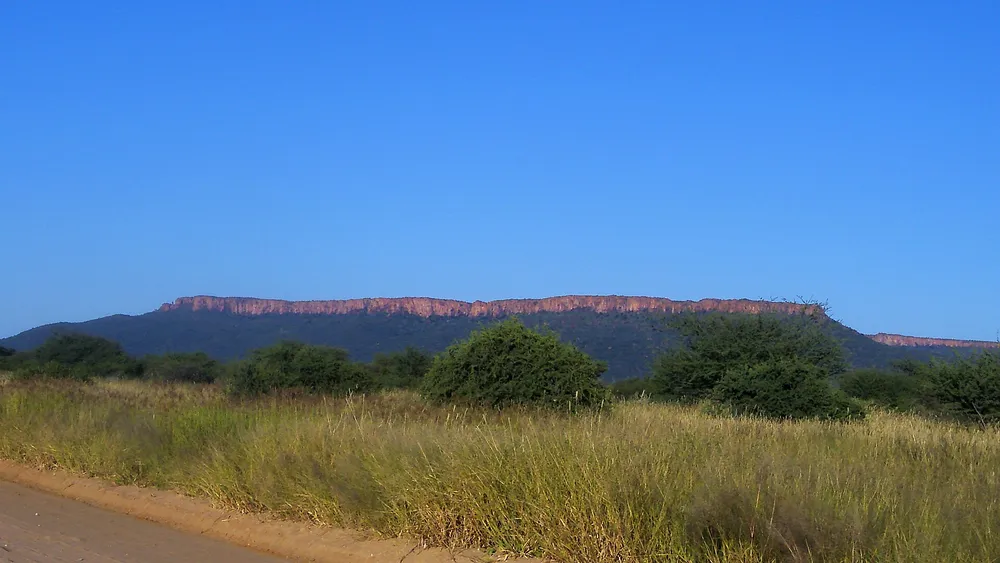
East of Otjiwarongo the flat thornveld is interrupted by a wall of brick-red sandstone some 50 km long, rising about 200 metres above the plain and topped with green. The Waterberg, 'water mountain', is named for the springs that emerge along the foot of its cliffs, where the porous sandstone meets a layer of impermeable rock. Wild figs, ferns and tall trees grow there in startling contrast to the dry bush below.
The plateau and the land around it, about 405 km², were declared a reserve in 1972 with a specific purpose. Because the cliffs make the top almost inaccessible, it could serve as a natural stronghold for species that were close to disappearing from Namibia. Eland, sable and roan antelope, tsessebe, buffalo and white rhino were released there in the following years, and black rhino in 1989; the park has since supplied animals to restock other parks and conservancies. More than 200 bird species have been recorded, and dinosaur footprints are preserved in the sandstone.
On top. You may not drive or walk on the plateau on your own. The only way up is on the guided game drives run by Namibia Wildlife Resorts from the rest camp, each morning and afternoon (N$650 per person on NWR's rate sheet for November 2026 to October 2027; book at reception, ideally the day before). The vehicle climbs a steep track to the top and visits hides at waterholes. The vegetation is dense and the animals wary, so sightings vary; treat it as a chance to see buffalo, rhino, sable and roan, not a promise.
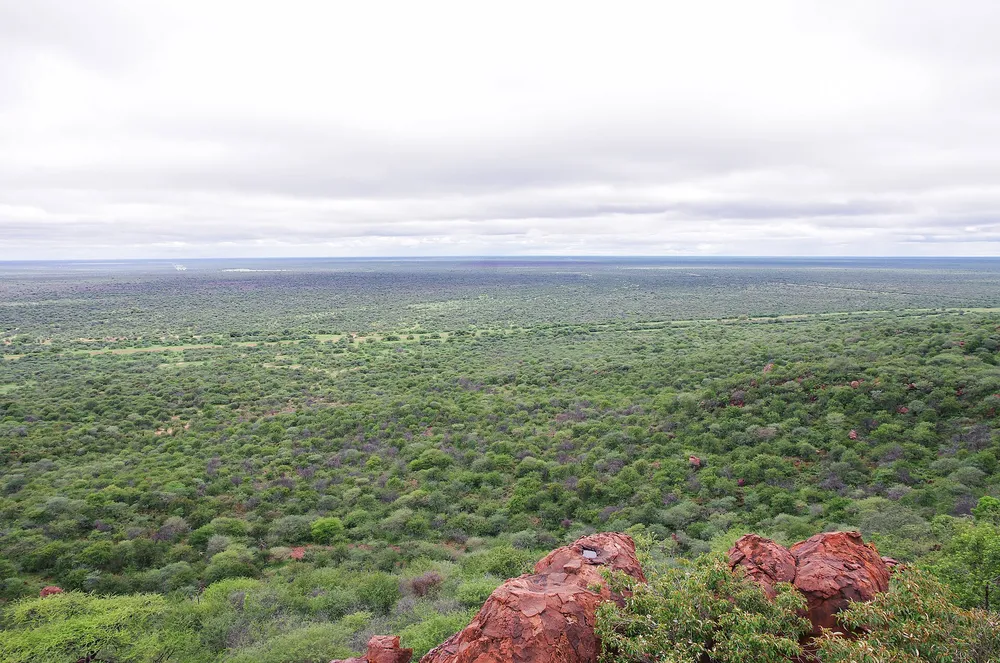
Below. Around the rest camp a network of marked walking trails, from twenty minutes to a couple of hours, leads through the fig forest and up to Mountain View, a lookout on the rim reached by a steep, rocky path, with the Kalahari plain stretching to the horizon. Go for sunrise or late afternoon. Damara dik-dik, banded mongoose, baboons and rock hyrax live around the chalets; the baboons will raid an open window or an unattended cool box. Longer guided and unguided wilderness trails on the plateau have run in the dry season by advance booking; ask NWR whether they are operating.
The NWR Waterberg Resort has chalets, rooms and a campsite, a restaurant in the old German police station, a pool and a shop with basics. Private lodges and guest farms on neighbouring land offer more comfort and their own walks and drives. Park fees are the same as Etosha's: N$280 per foreign adult per day from 1 April 2026.
- Location
- About 68 km east of Otjiwarongo; about 300 km from Windhoek
- Size
- ≈ 405 km², proclaimed 1972
- On the plateau
- Black and white rhino, buffalo, sable, roan, eland, tsessebe, leopard: NWR guided drives only
- Guided drive
- N$650 per person, morning or afternoon (NWR, Nov 2026–Oct 2027)
- Park fee
- N$280 foreign adult, N$180 aged 9–15, free 8 and under, N$60 per car (from 1 April 2026)
Waterberg Wilderness
Central NamibiaA private nature reserve on the slopes of the Waterberg, 90 km east of Otjiwarongo, with several lodges and plateau views.
8.2Booking.com guest score · as checked in November 2026
See on Booking.comWaterberg Guest Farm
Central NamibiaRooms and bungalows at the foot of the Waterberg, with a pool, a garden and a restaurant.
8.2Booking.com guest score · as checked in November 2026
See on Booking.comSee all stays in Waterberg on Booking.com
Accommodation links go to Booking.com, where you see live prices and availability. We do not list prices because they change daily; NamibiaSafaris.com may earn a commission.
The battle of 1904 and what followed
The Waterberg is also where one of the darkest chapters of Namibian history turned. In January 1904 the Ovaherero, who had lost land and cattle to German settlers and traders, rose against colonial rule. By August most of the Herero nation, tens of thousands of people with their herds, had gathered at the springs below the plateau. On 11 August German forces under General Lothar von Trotha attacked. The Herero broke through the lines to the east, into the waterless Omaheke sandveld, and the German troops sealed the waterholes behind them.
On 2 October 1904 von Trotha issued the order that every Herero found within the German borders, armed or not, would be shot. Those who did not die of thirst in the desert were later confined in concentration camps, as were the Nama, who rose in the south. By 1908 the great majority of the Ovaherero, and about half of the Nama, were dead. Historians regard it as the first genocide of the 20th century, and Germany formally acknowledged it as genocide in 2021; negotiations over reparations, and criticism of them by many descendants of the victims, continue.
At the rest camp a small cemetery holds the graves of German soldiers who died in the battle. A plaque also commemorates the Herero who fell; most of the Herero dead have no graves at all. More on the period is on our history page.
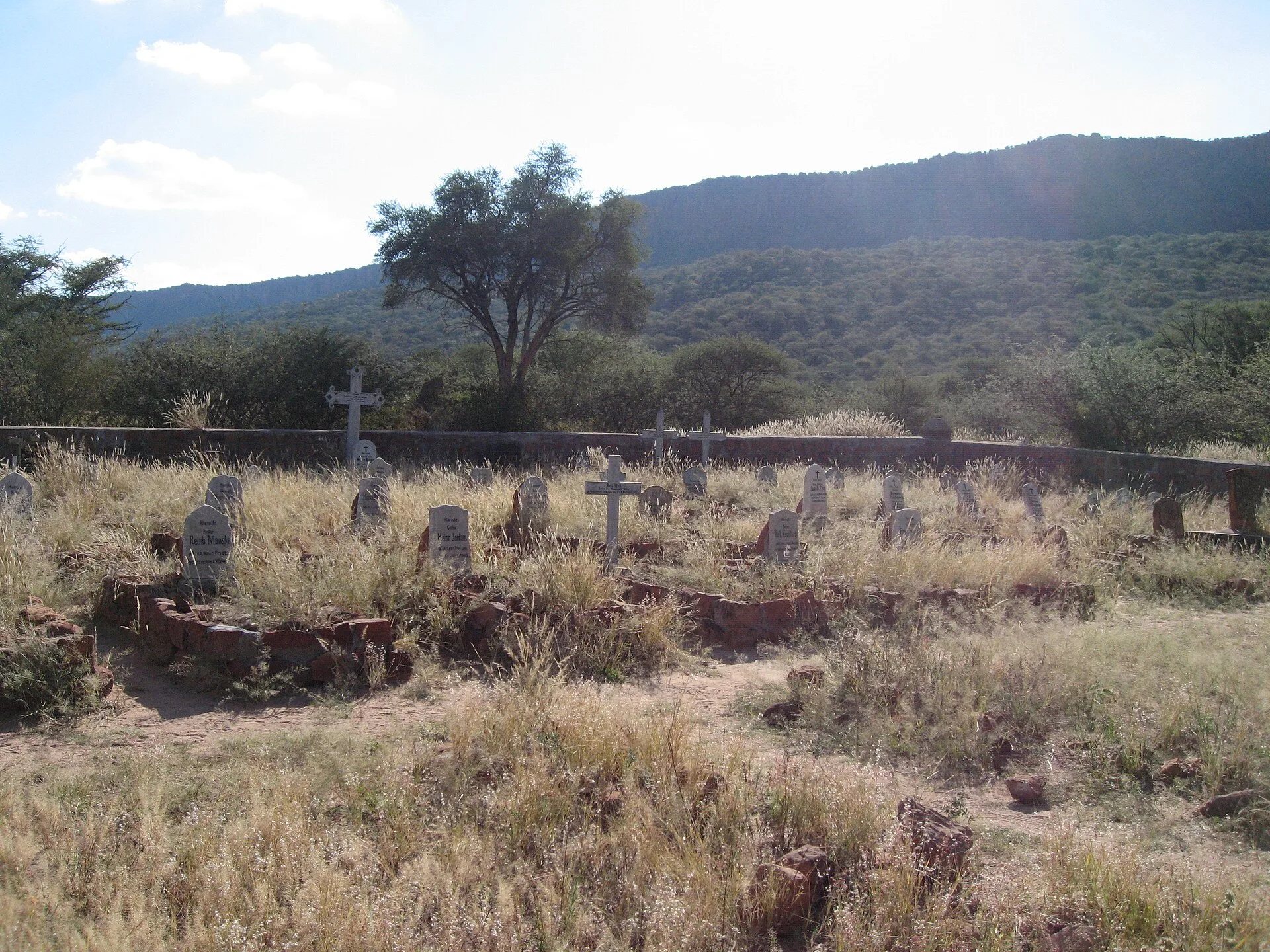
The German military cemetery below the plateau. Most of the Herero dead have no graves.
Further north: Otavi, Tsumeb, Grootfontein
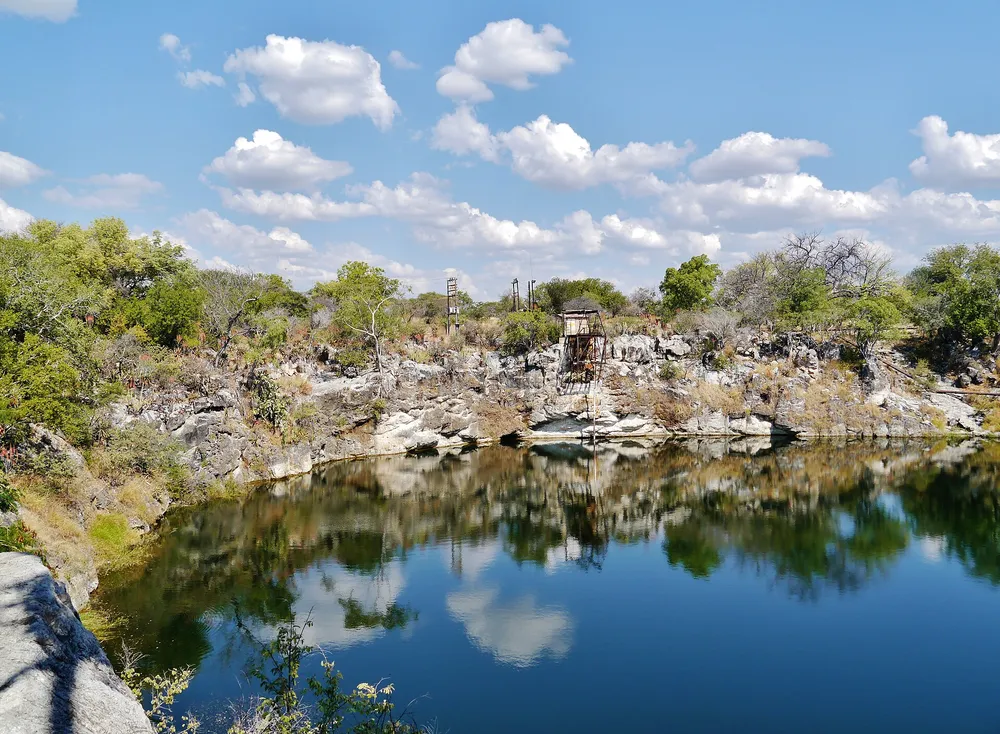
Travellers heading for Etosha's eastern gate, or on to the Zambezi Region, pass through the 'Otavi triangle', a better-watered pocket of maize farms and old mining towns. Tsumeb is the most attractive, with jacaranda-lined streets and a museum of minerals and colonial history. About 20 km north-west of it beside the B1, Lake Otjikoto is a flooded sinkhole into which retreating German troops dumped guns and ammunition in 1915; some of the recovered pieces are in the Tsumeb museum.
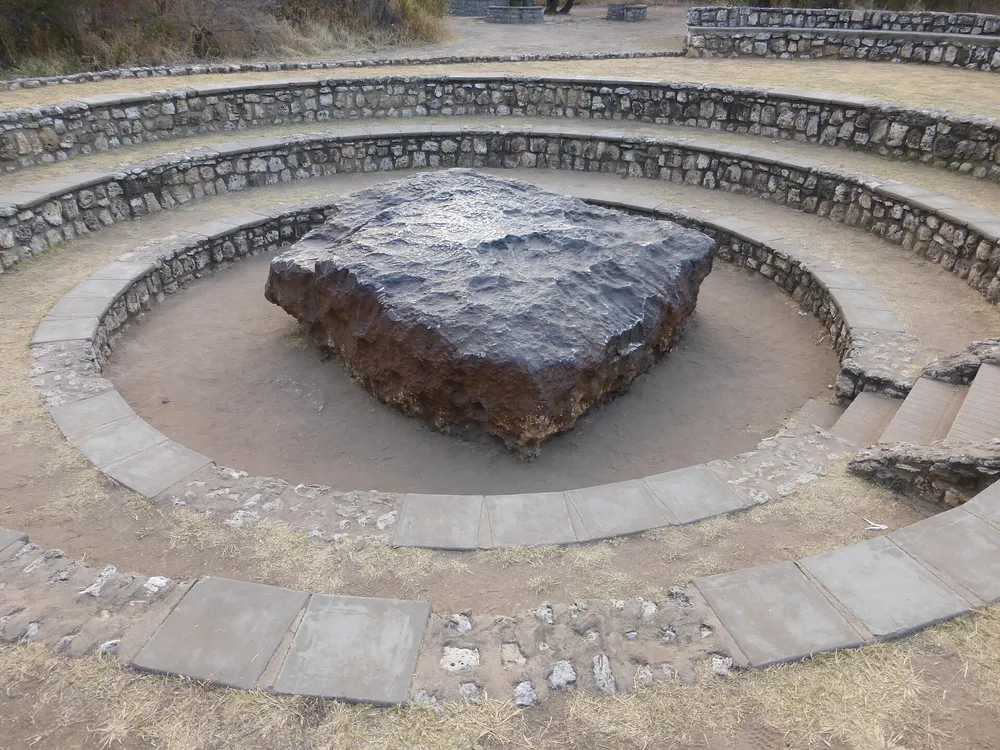
West of Grootfontein, the Hoba meteorite lies where it fell some 80,000 years ago: a slab of iron and nickel weighing about 60 tonnes, the largest known meteorite on Earth. It is a national monument with a small entrance fee, and takes half an hour to see. From Grootfontein the B8 runs north-east to Rundu and the Zambezi Region.
Minen Hotel
EtoshaHotel in the centre of Tsumeb with a pool, a restaurant and family rooms; 110 km from Namutoni.
8.4Booking.com guest score · as checked in November 2026
See on Booking.comHaus Mopanie
EtoshaHomestay-style guesthouse in Tsumeb with a garden and free WiFi.
8.8Booking.com guest score · as checked in November 2026
See on Booking.comGhaub Nature Reserve & Farm
Central NamibiaFarm and nature reserve in the Grootfontein area with family rooms, a pool and a restaurant.
8.3Booking.com guest score · as checked in November 2026
See on Booking.comSee all stays in Tsumeb on Booking.com
Accommodation links go to Booking.com, where you see live prices and availability. We do not list prices because they change daily; NamibiaSafaris.com may earn a commission.
Private reserves: what is open
Central Namibia has many private game reserves and guest farms, and their status changes. Check each one's own website shortly before you travel.
Erindi Private Game Reserve, between Okahandja and Omaruru and for years one of the most popular stops on this route, is the important case. As of November 2026 its website states that the Old Traders Lodge is closed for renovations until further notice, that Camp Elephant has closed permanently, and that day visitors are not being admitted. Until the reserve announces a reopening, leave it out of your plans.
Around Omaruru, on the alternative C33 route between the coast and the north, lodges on private reserves offer game drives among boulder-strewn hills, and the Erongo Mountains to the west are known for San rock paintings. Near Windhoek, several reserves run day visits and short game drives that suit a first or last day; they are listed on our tours page and in the Windhoek guide.
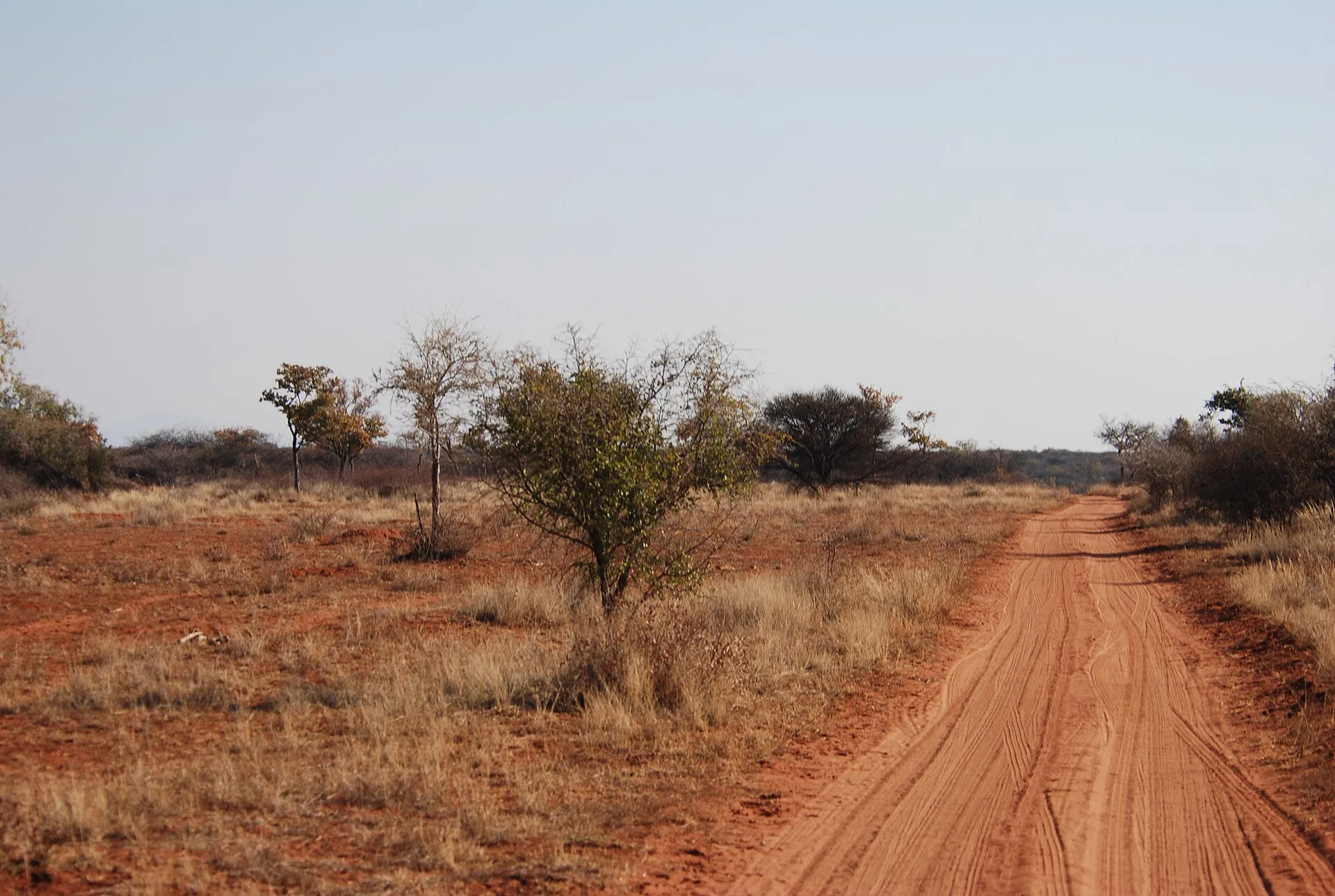
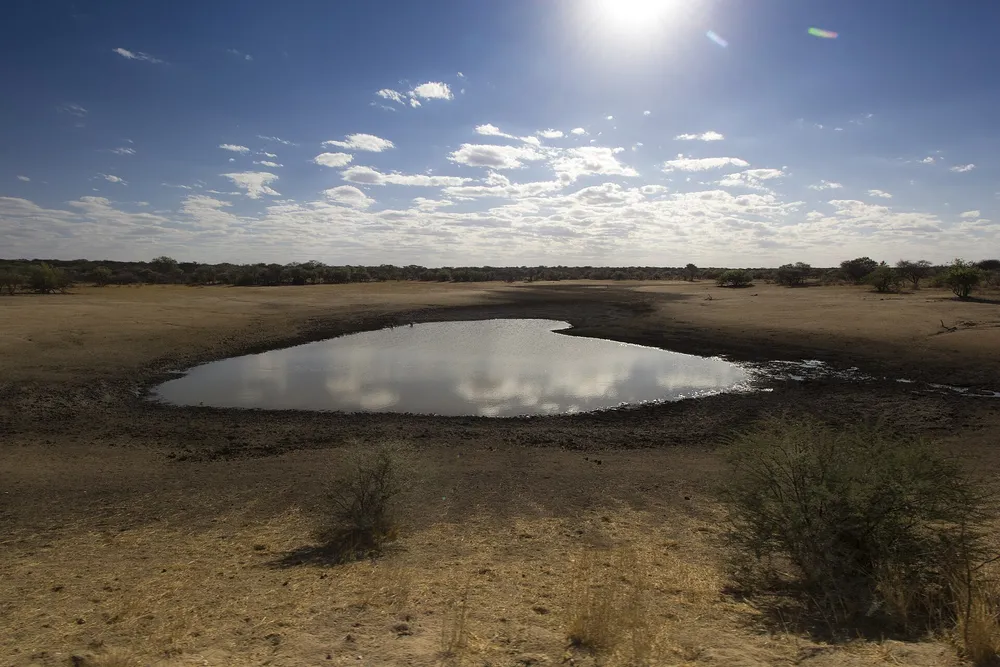
A sand track through the thornbush savanna of central Namibia.
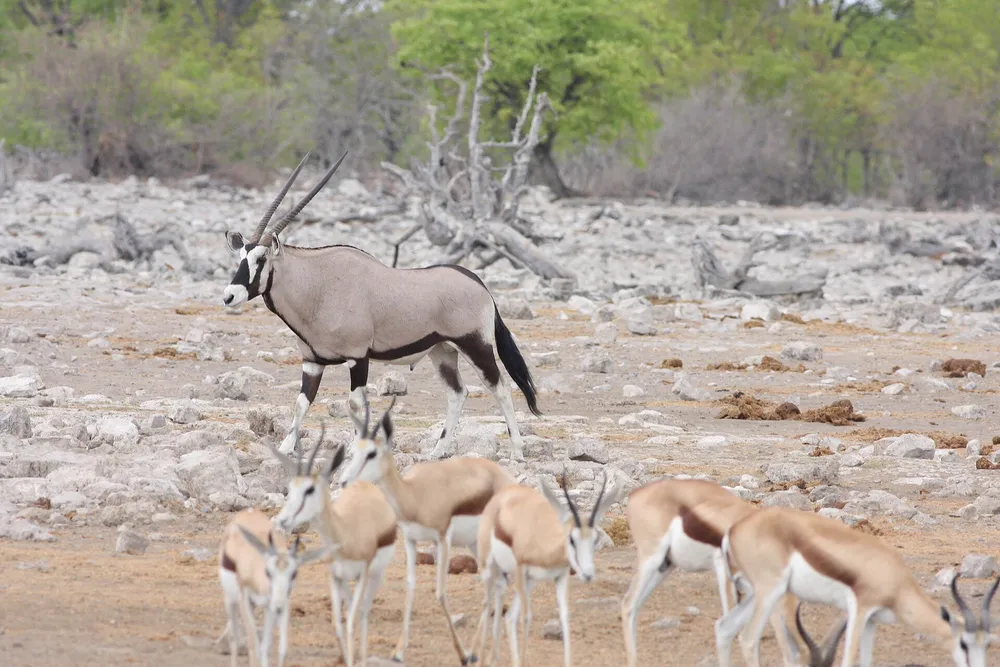
From Windhoek: Okapuka Safari Lodge Day Trip
A game drive on a private reserve a short drive north of the capital. An easy first or last afternoon, with antelope, giraffe and other plains game.
Check availabilityBook via GetYourGuide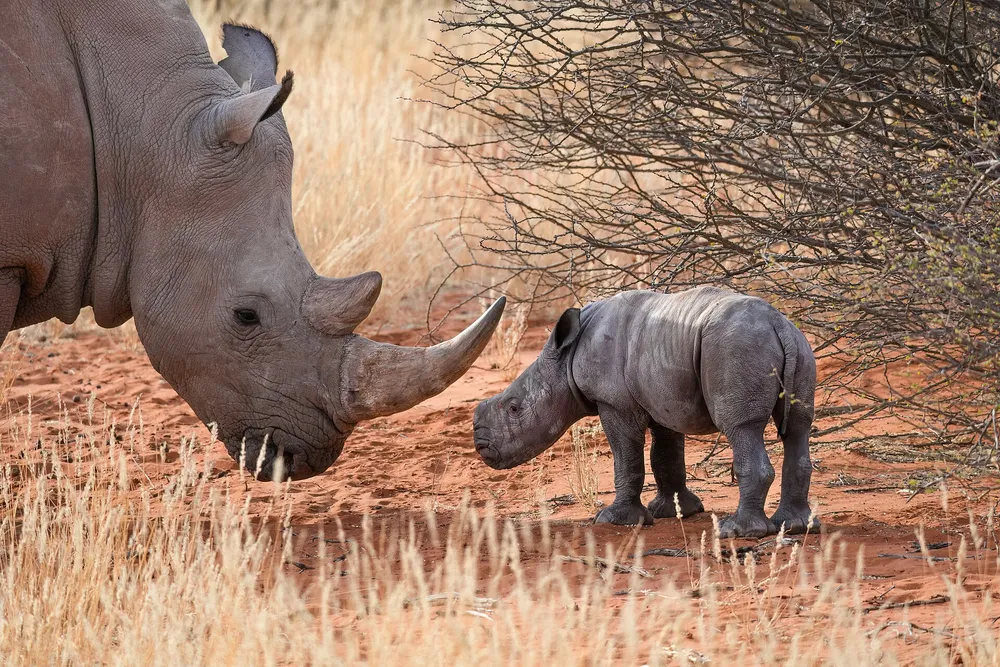
Windhoek: Okapuka Rhino Tracking Wildlife Safari
Track white rhino with a guide on a private reserve near Windhoek, the quickest way to see a rhino if your route does not include Etosha. Ask about minimum ages.
Check availabilityBook via GetYourGuide
Windhoek: Düsternbrook scenic game drive
A game drive through the hilly bush of one of Namibia’s oldest guest farms, north of Windhoek.
Check availabilityBook via GetYourGuideTour listings are on GetYourGuide. Prices, dates and cancellation terms are shown live on each listing and can change; NamibiaSafaris.com may earn a commission at no extra cost to you.
Omaruru Game Lodge
Central NamibiaGame lodge near Omaruru with air-conditioned rooms, a pool and two restaurants.
9.0Booking.com guest score · as checked in November 2026
See on Booking.comAi Aiba – The Rock Painting Lodge
Central NamibiaLodge in the Omaruru area named for the rock paintings nearby, with a pool with a view and a restaurant.
9.2Booking.com guest score · as checked in November 2026
See on Booking.comSee all stays in Omaruru on Booking.com
Accommodation links go to Booking.com, where you see live prices and availability. We do not list prices because they change daily; NamibiaSafaris.com may earn a commission.
How to fit it in
Malaria: the Otjozondjupa Region, which includes Otjiwarongo and the Waterberg, appears on the list of Namibian regions where malaria occurs, though the risk here is low and seasonal. Take advice for travel between November and June.
| If you have… | Do this |
|---|---|
| No spare night | Stop at the Okahandja craft market and, with a 6 AM start from Windhoek, visit the Cheetah Conservation Fund on the way to Etosha's eastern side |
| One night, northbound | Okonjima (arrive by early afternoon for the leopard drive), then Etosha next day |
| One night, southbound | Waterberg: afternoon walk to Mountain View, morning plateau drive, then 3.5 hours to Windhoek |
| Two nights | Okonjima on the way up, Waterberg or the Cheetah Conservation Fund on the way back |
| Children | Cheetah Conservation Fund and the Waterberg's short trails; check age limits at Okonjima |
Frequently asked questions
Is the Waterberg worth a stop on the way to Etosha?
Yes, particularly on the return journey. It breaks a long drive, the cliffs and spring-fed forest are unlike anything else on the route, and the guided plateau drive is the easiest way to look for buffalo, sable and roan in a classic itinerary.
Can I visit Okonjima or AfriCat for the day?
No. As of November 2026 Okonjima Nature Reserve states that it does not accept day visitors; activities are for overnight guests. For a day visit to see cheetahs, go to the Cheetah Conservation Fund near Otjiwarongo.
Can you self-drive on the Waterberg Plateau?
No. Private vehicles are not allowed on top. Game viewing on the plateau is only on guided drives run by Namibia Wildlife Resorts from the rest camp. You can walk the marked trails around the camp and up to the Mountain View lookout on your own.
Is Erindi open?
When we checked in November 2026, Erindi's website said the Old Traders Lodge was closed for renovations until further notice, Camp Elephant was permanently closed and day visitors were not allowed. Check erindi.com for the current position.
Can you touch or walk with cheetahs in Namibia?
Not at the Cheetah Conservation Fund or AfriCat, and responsible operators do not offer it. Hands-on contact habituates predators to people and has no conservation value. Choose places that keep visitors at a distance.
Where should I break the drive from Windhoek to Etosha?
Okonjima (2.5 hours from Windhoek) if you want leopard and can stay overnight; Otjiwarongo and the Cheetah Conservation Fund (2.5 to 3.25 hours) for cheetahs; or the Waterberg (about 3.25 hours) for walking and the plateau drive.
Sources and official information
Facts were checked against these official sources in November 2026. Park fees, gate times, visa rules and timetables change, so confirm before you go.
- okonjima.com
- africat.org
- cheetah.org
- cheetah.org
- nwr.com.na
- lac.org.na
- erindi.com
- nhc-nam.org
- auswaertiges-amt.de
- cdc.gov
NamibiaSafaris.com is an independent guide, not the official site of any tour operator, lodge, Namibia Wildlife Resorts or the Namibian government. Some links are affiliate links: tours go to GetYourGuide and accommodation goes to Booking.com, and we may earn a commission at no extra cost to you.