In short
- The place: a lagoon and wetland hemmed in by dunes around 100 m high, roughly 55 km south of Walvis Bay inside Namib-Naukluft National Park. There is no road; you drive the beach and the dunes.
- The tide decides. The narrow strip where the dunes fall into the sea can only be driven around low tide. At other times guides go over the dunes to viewpoints above the lagoon.
- Go with a guide. Self-driving is legal with a permit and a 4x4, but rental contracts exclude it and the sand and tides catch out experienced drivers.
- Half-day tours (4–5 hours) cover the essentials; full-day tours (7–8 hours) add lunch, more dune driving and time on foot. Combos pair it with a dolphin cruise or kayaking.
- For the full guide, our sister site SandwichHarbour.com covers tours, tides, seasons and wildlife in depth; links below.
What Sandwich Harbour is
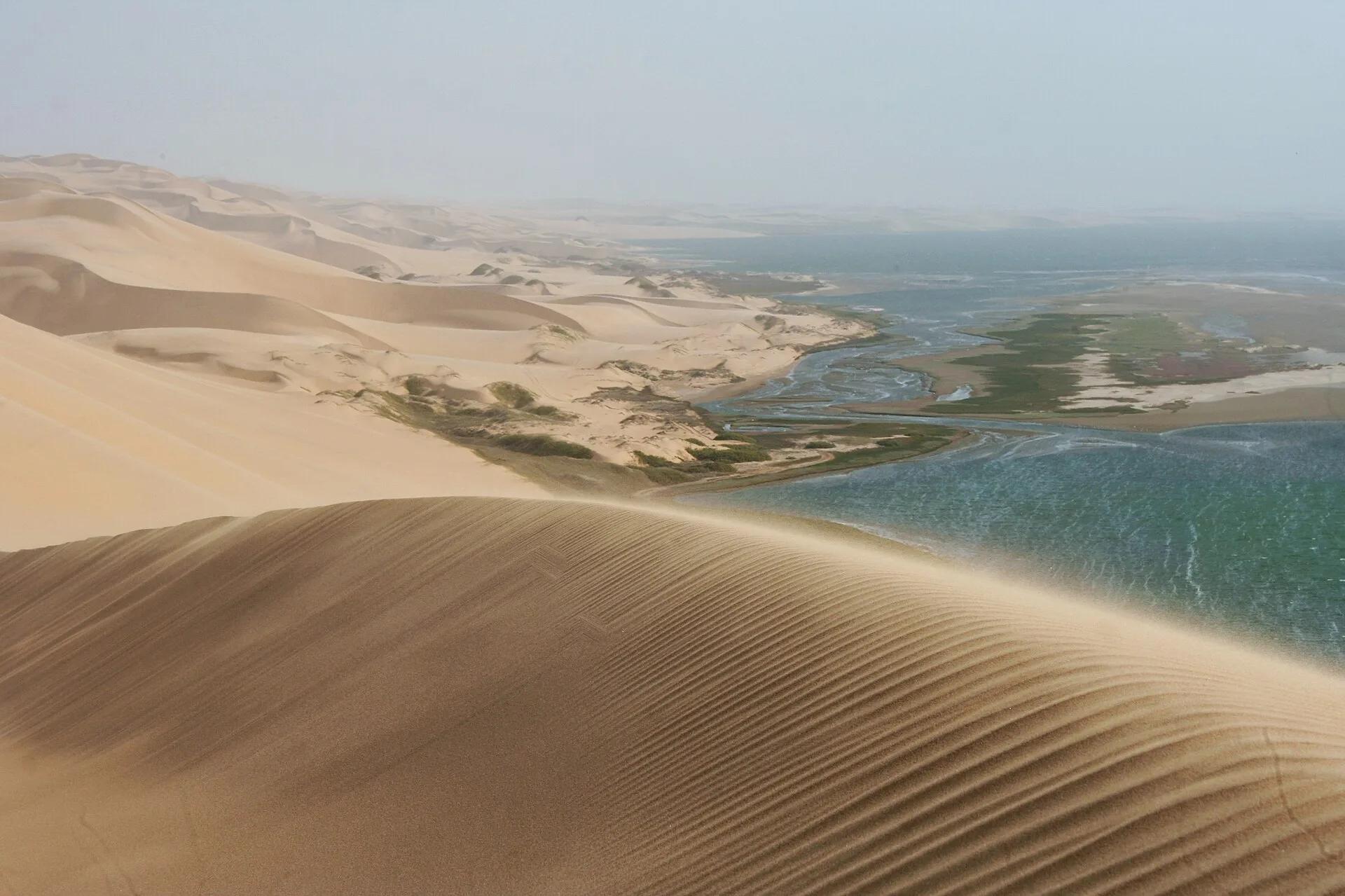
South of Walvis Bay the coastal road ends at the salt works, and the Namib Sand Sea takes over. For the next several hundred kilometres dunes run straight into the surf. Sandwich Harbour is the first great set piece on that coast: a shallow tidal lagoon a few kilometres long, sheltered from the ocean by a sand spit and backed on the landward side by a wall of dunes. Fresh water seeping from under the dunes feeds reed beds along its edge, which is why there is green at the foot of a sand mountain.
The view everyone comes for is from a dune crest high above the water: ocean to the west, lagoon and salt marsh below, and ridge after ridge of sand to the south and east with no building, road or power line in sight. Few places anywhere let you stand on a high dune and look straight down on the sea.
The lagoon has been a Ramsar wetland of international importance since 1995 and lies within the Namib Sand Sea World Heritage Site. It was once a harbour of sorts: nineteenth-century whalers and fishing crews anchored here, and in the 1930s there was a failed attempt to create a guano island in the lagoon. The origin of the name is uncertain, perhaps from an English whaling ship called Sandwich, perhaps from a corruption of a German word. Today nobody lives there and nothing remains but traces.
- Where
- Roughly 55 km south of Walvis Bay, Namib-Naukluft National Park
- Access
- 4x4 only, along the beach and over dunes; no road, no facilities
- Status
- Ramsar site (1995); part of the Namib Sand Sea World Heritage Site (2013)
- Typical tour length
- Half day 4–5 hours; full day 7–8 hours
- Park fee from 1 April 2026
- N$150 per foreign adult, N$100 SADC, N$50 Namibian; N$50 per vehicle (usually included in tours)
- Start point
- Walvis Bay; most operators also collect in Swakopmund (35 km)
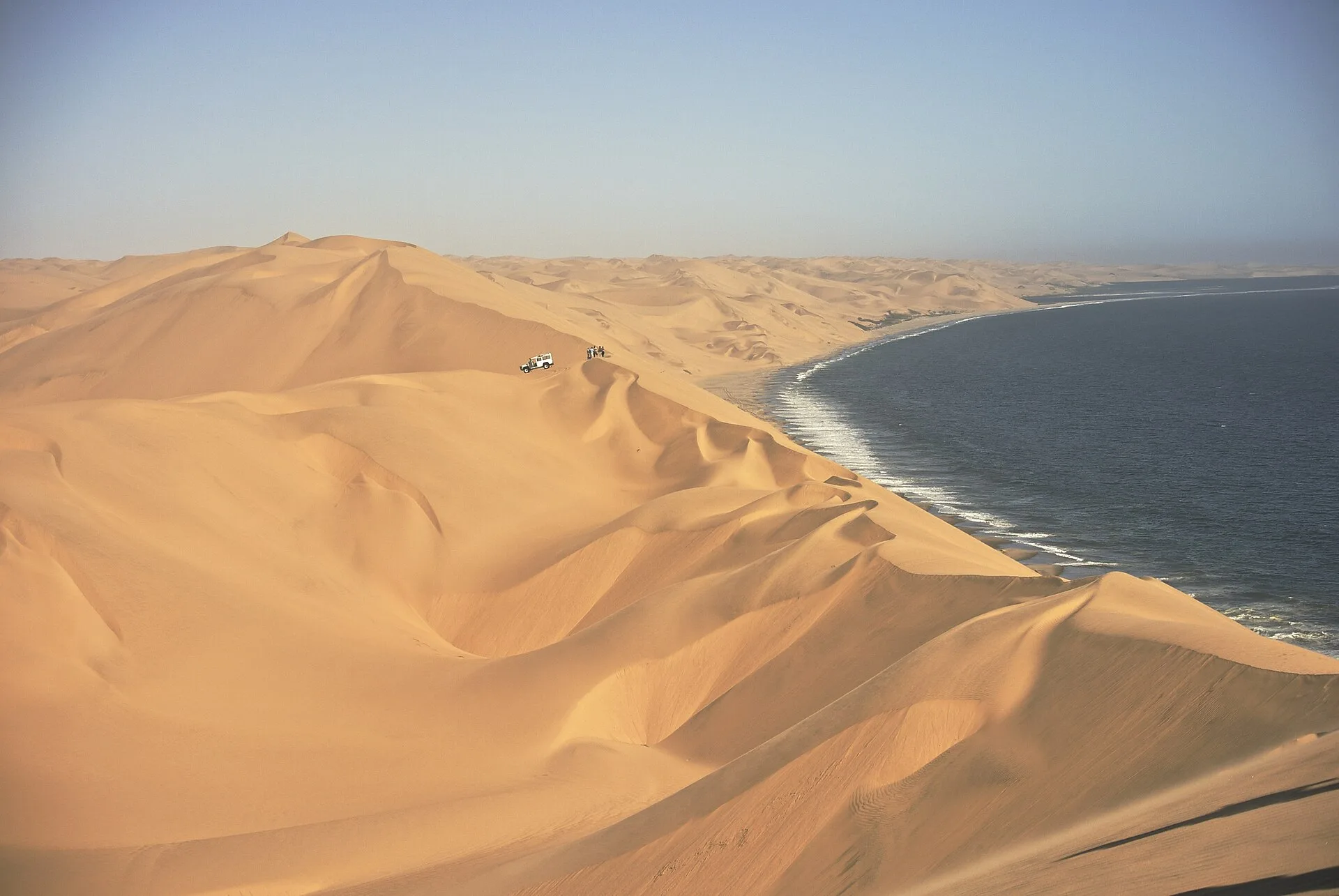
The drive, stage by stage
A stage-by-stage account of what happens on the day, with photographs of each section, is in the sister site’s complete Sandwich Harbour travel guide.
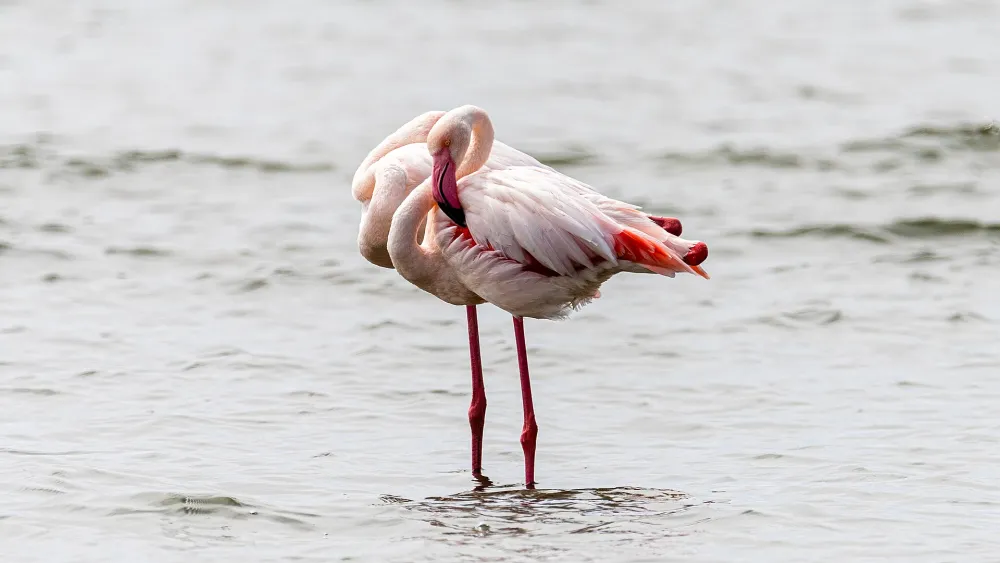
- Walvis Bay lagoon. Tours begin with a slow pass along the Esplanade for flamingos and pelicans.
- Salt works. The road runs between pink and green evaporation ponds and white salt stockpiles to the angling spot at Paaltjies.
- Park boundary and the Kuiseb delta. Tyres are let down. The track crosses the hummocky, bush-dotted delta of the Kuiseb River, where springbok, ostrich, jackal and sometimes oryx are seen and the Topnaar people harvest !nara melons.
- The beach. Hard wet sand at the water’s edge, with the first big dunes rising on the left. Guides stop for seals, jackals and, in summer, terns and waders.
- The narrows. Where the dunes meet the high-water mark there is, around low tide, a strip wide enough for a vehicle. This is the section that cannot be driven when the sea is up.
- The lagoon and the climb. From the beach near the northern end of the lagoon you walk or drive up to the crest for the view.
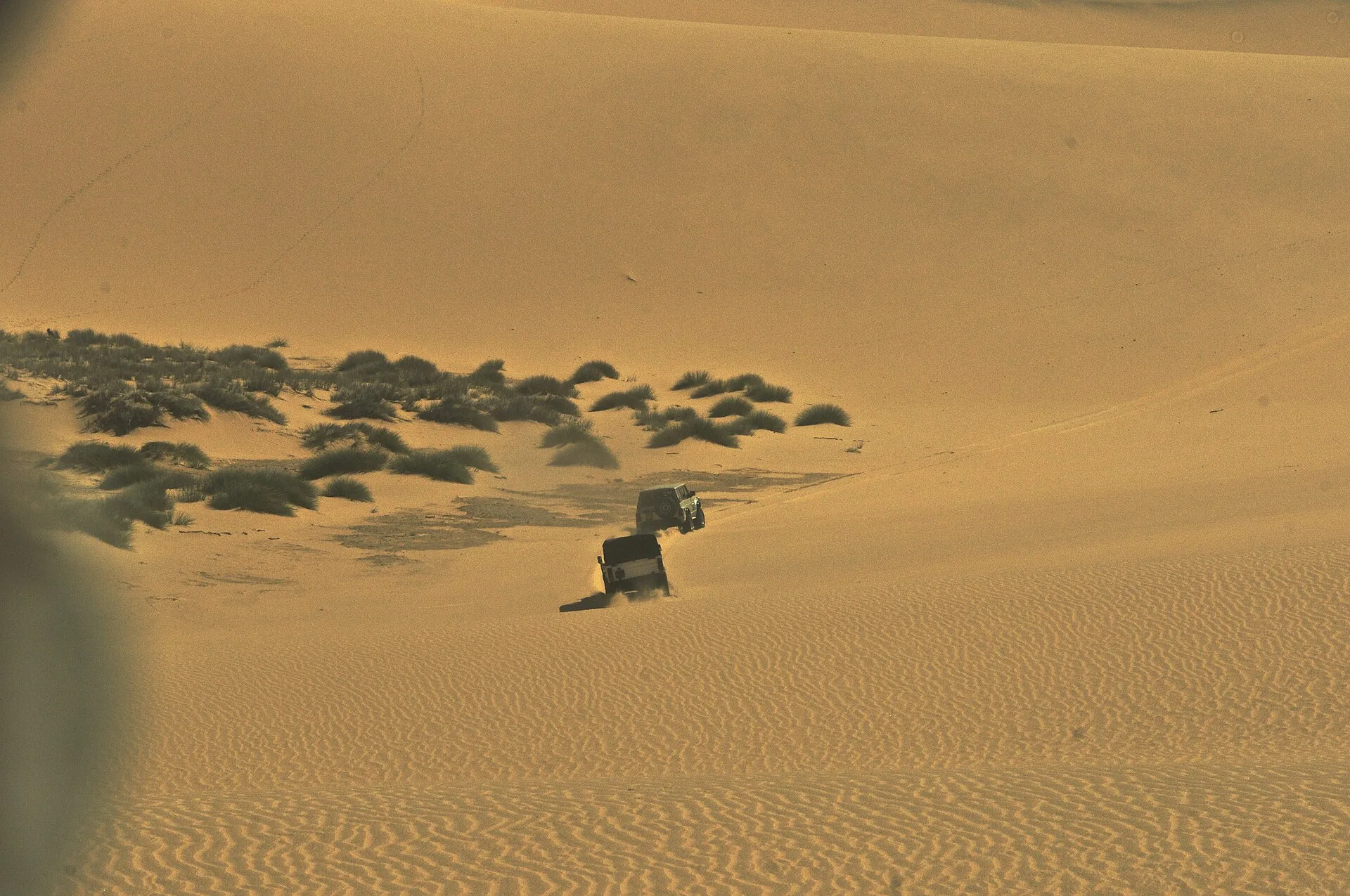
- The dunes home. The return is usually inland over the dune field itself: steep ascents, knife-edge crests and long controlled slides down slip faces.
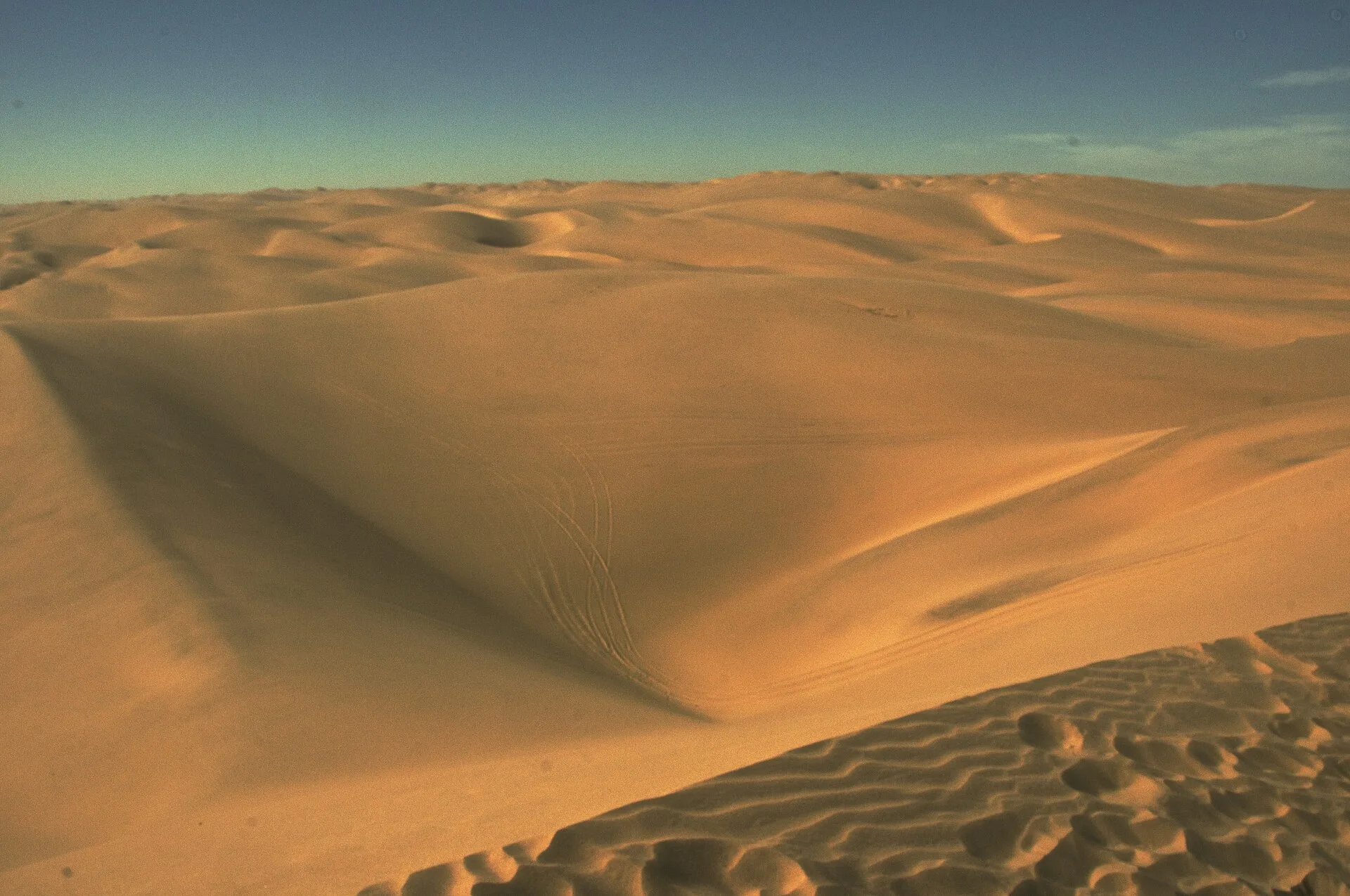
Tours return over the dune field, with long descents down the slip faces.
Tides, and why you want a guide
This coast has two high and two low tides each day, with the largest range at spring tides around full and new moon. Operators set each day’s departure time so that the beach section falls on the low. When the timing or the swell is wrong, the beach route is simply closed by the sea, and the guide takes the high route through the dunes to a lookout instead. Either way you see the lagoon; you may not drive along its shore.
Could you do it yourself? In law, yes: Sandwich Harbour is a restricted area of the national park that needs a permit obtained in advance from the Ministry of Environment, Forestry and Tourism (offices in Swakopmund and Windhoek). In practice there are three problems. Most rental contracts forbid beach and dune driving, so you are uninsured. The sand is soft and the dunes have blind crests and slip faces. And a vehicle bogged on the beach on a rising tide is lost; it happens to locals. If you still intend to go, study the tide tables, carry recovery gear and travel with a second vehicle.
Guides, by contrast, drive this ground daily, carry radios and recovery gear, know where the animals are and handle the permit. There are also guided self-drive tours, where you follow a lead vehicle in your own or a supplied 4x4, for people who want to do the driving.
Half day, full day or a combination
Our view: if the budget allows, take a full day or an afternoon tour that runs into the evening light. The half day spends a good part of its time getting there and back. When comparing listings, check group size (vehicles usually seat four to eight), whether Swakopmund pick-up costs extra, whether the park fee is included, and what happens if the tide or weather forces a change of route. The sister site keeps a regularly updated, operator-by-operator comparison of the best Sandwich Harbour tours.
| Tour type | Duration | What you get | Suits |
|---|---|---|---|
| Half-day 4x4 (morning or afternoon) | 4–5 hours | Lagoon, salt pans, beach or dune route, the viewpoint, dune driving, snacks and drinks | Most visitors; cruise passengers; families |
| Sunset 4x4 | about 4 hours | The same route timed for evening light on the dunes | Photographers; anyone who had fog in the morning |
| Full-day 4x4 with lunch | 7–8 hours | More time on foot at the lagoon, more of the dune field, a beach or dune-top lunch | People who want the place, not just the view |
| Cruise or kayak combo | about 8 hours | Dolphin and seal cruise or Pelican Point kayaking in the morning, Sandwich Harbour after lunch | Travellers with one day on the coast |
| Private or guided self-drive | 4–8 hours | Your own vehicle and pace; you drive behind a guide on self-drive versions | Photographers, keen drivers, groups |
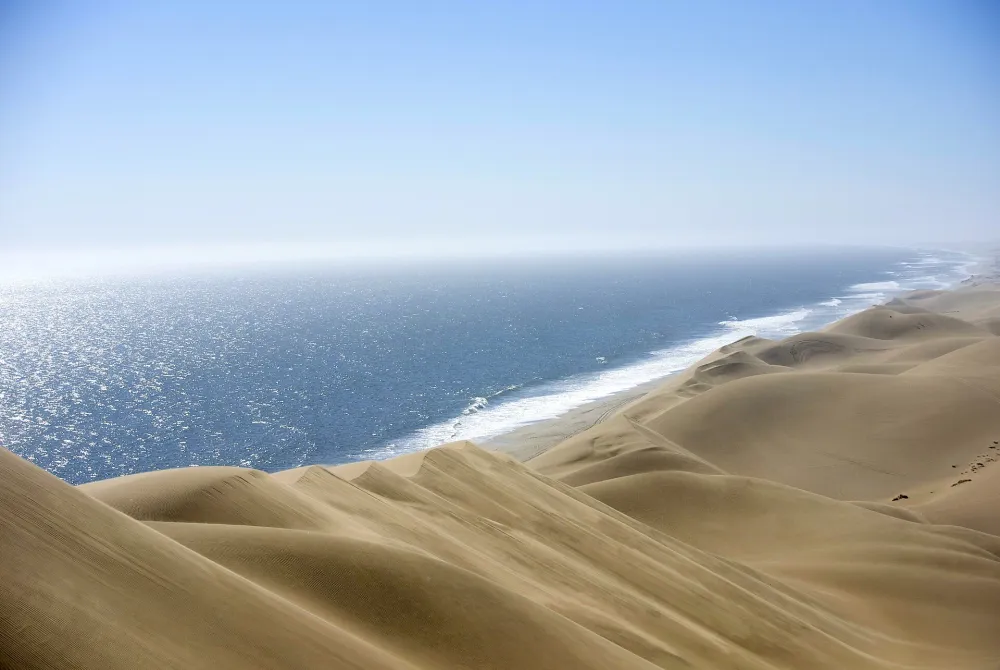
Sandwich Harbour 4x4 tour: where the sea and the dunes meet
The essential coast trip from Walvis Bay: lagoon and salt pans, the beach or dune route according to the tide, the viewpoint above the lagoon and a drive back over the dunes.
Check availabilityBook via GetYourGuide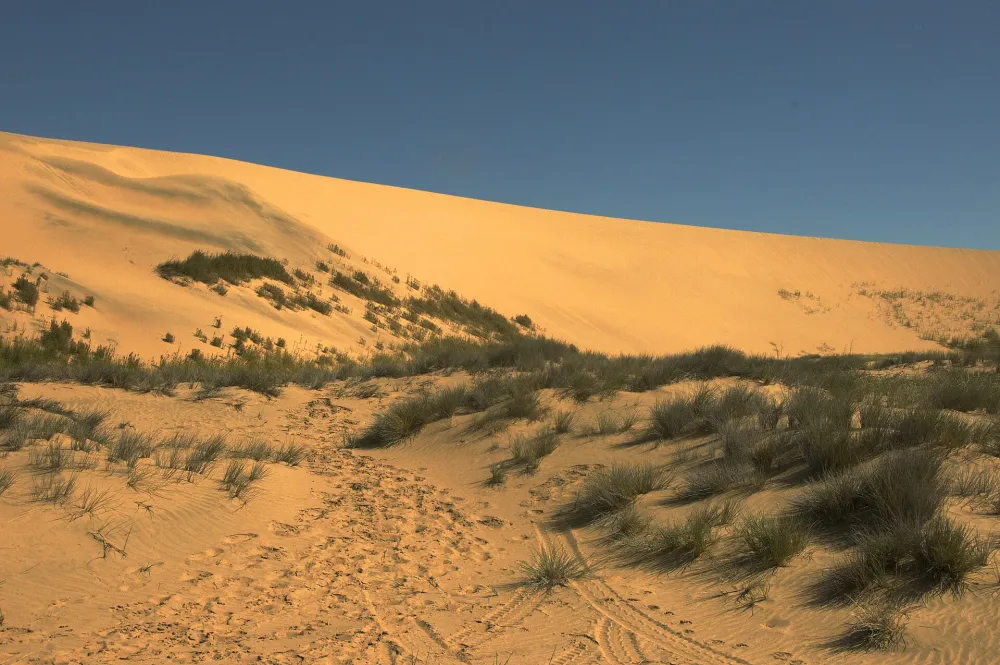
Sandwich Harbour half-day 4x4 excursion
A half-day guided 4x4 run to the Sandwich Harbour viewpoints with refreshments on the dunes.
Check availabilityBook via GetYourGuide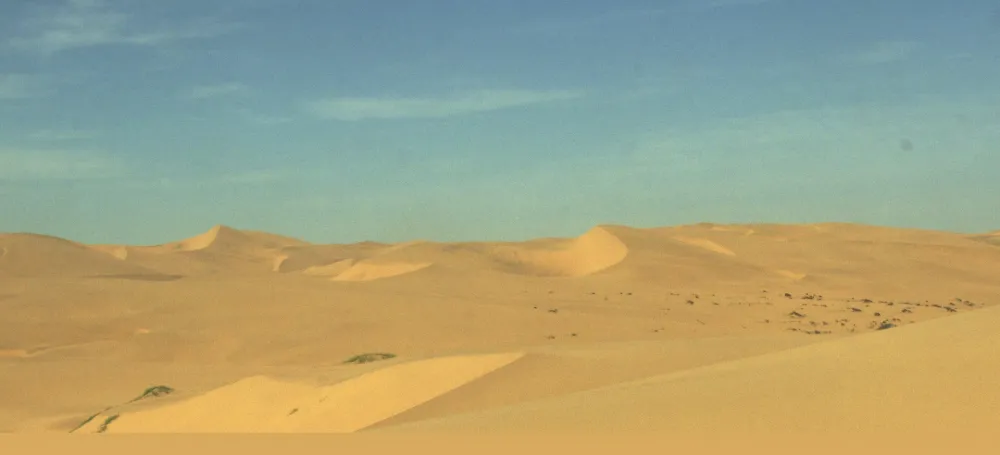
Sandwich Harbour full-day 4x4 adventure
A full day gives more time on foot at the lagoon and deeper into the dune field, with lunch out in the desert.
Check availabilityBook via GetYourGuide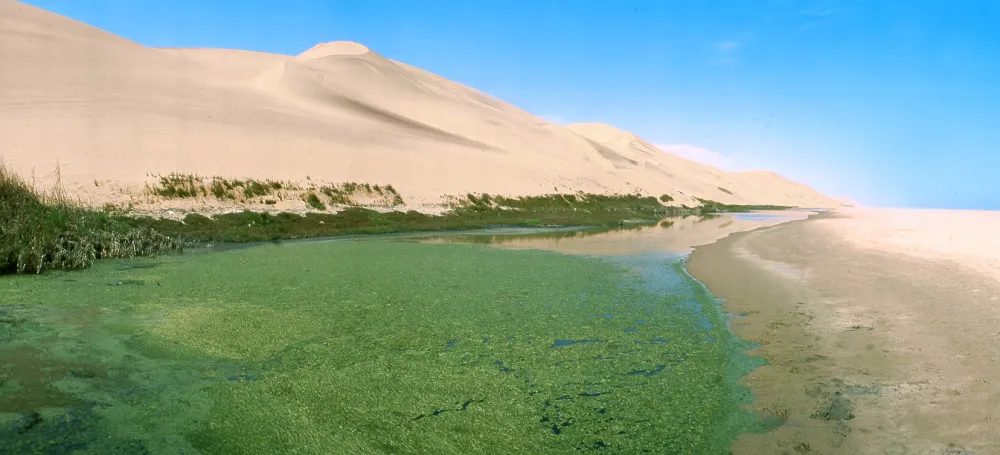
Walvis Bay: Sandwich Harbour sunset tour
The same route timed for evening light, when the fog has usually gone and the dunes turn gold.
Check availabilityBook via GetYourGuide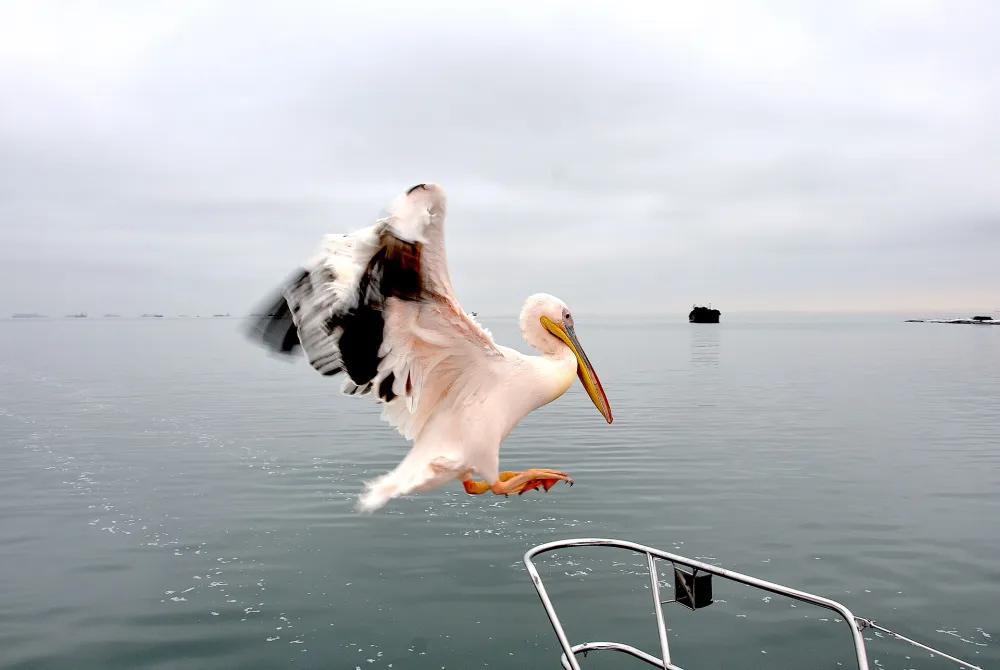
Kayak and Sandwich Harbour 4x4 combo
Seal kayaking at Pelican Point in the morning and Sandwich Harbour by 4x4 in the afternoon: the coast in one long day.
Check availabilityBook via GetYourGuide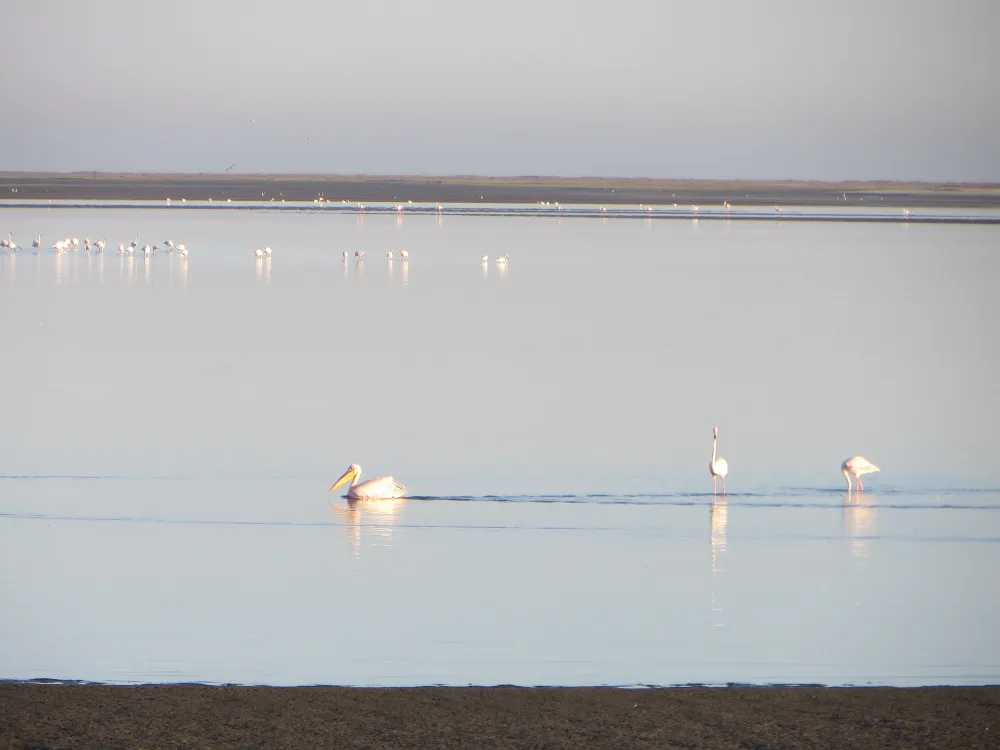
Catamaran dolphin cruise and Sandwich Harbour tour
A dolphin and seal cruise on the bay followed by the 4x4 trip to Sandwich Harbour.
Check availabilityBook via GetYourGuideTour listings are on GetYourGuide. Prices, dates and cancellation terms are shown live on each listing and can change; NamibiaSafaris.com may earn a commission at no extra cost to you.
Wildlife
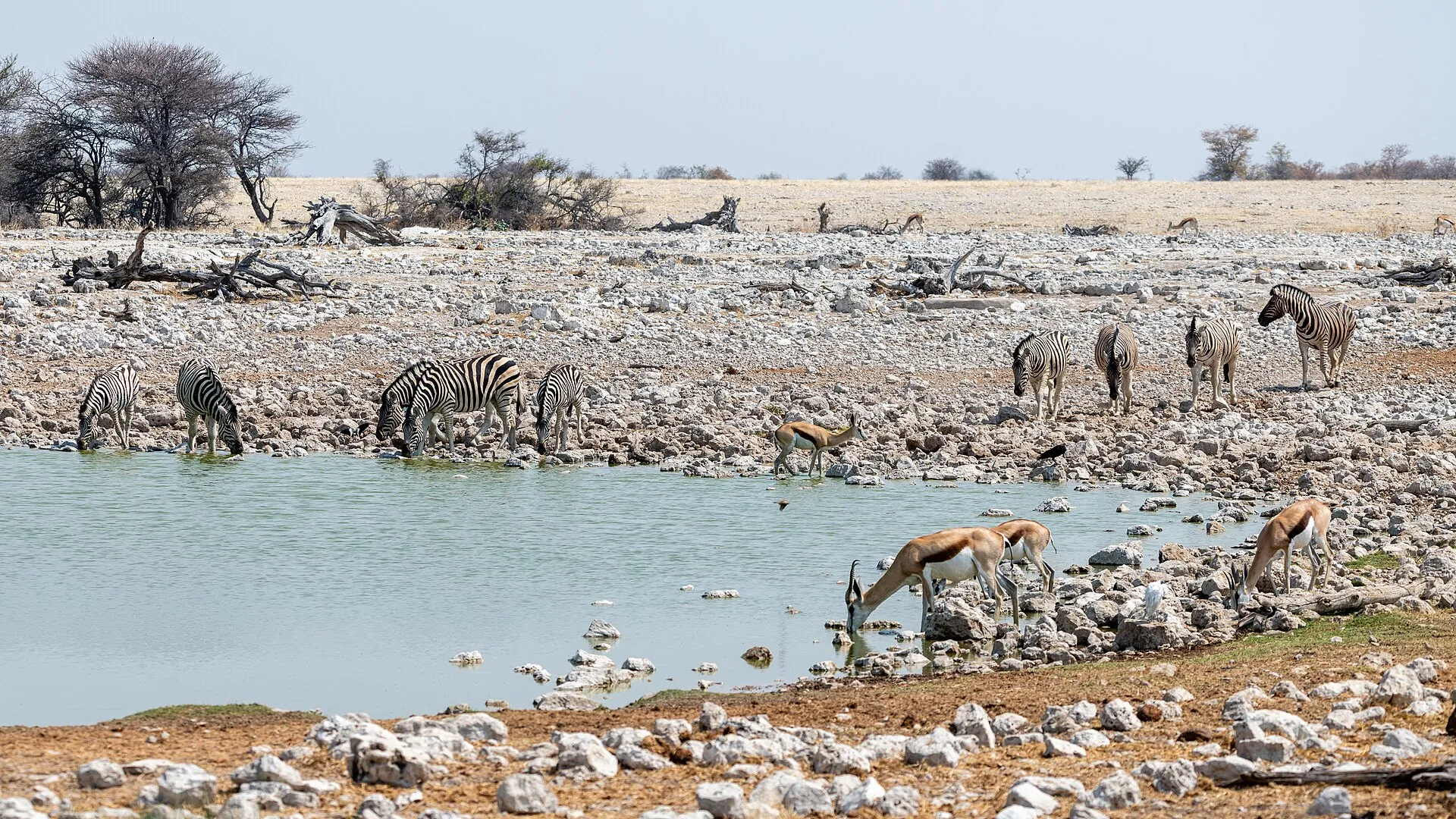
The lagoon and its mudflats hold flamingos, pelicans, cormorants, avocets, terns and many kinds of wader; numbers are highest in the southern summer (October–April), when migrants from the northern hemisphere are present, but there are birds in every month. On the beach, Cape fur seals rest above the tide line and black-backed jackals patrol for anything the sea delivers; brown hyena tracks are common, the animals themselves rarely seen by day. In the delta and among the dunes look for springbok, oryx and ostrich. Guides often stop to show the small things too: a Palmato gecko dug carefully out of a slip face, a sidewinder’s track, the !nara bushes.
Offshore, dolphins and, in season, whales are sometimes seen from the beach.
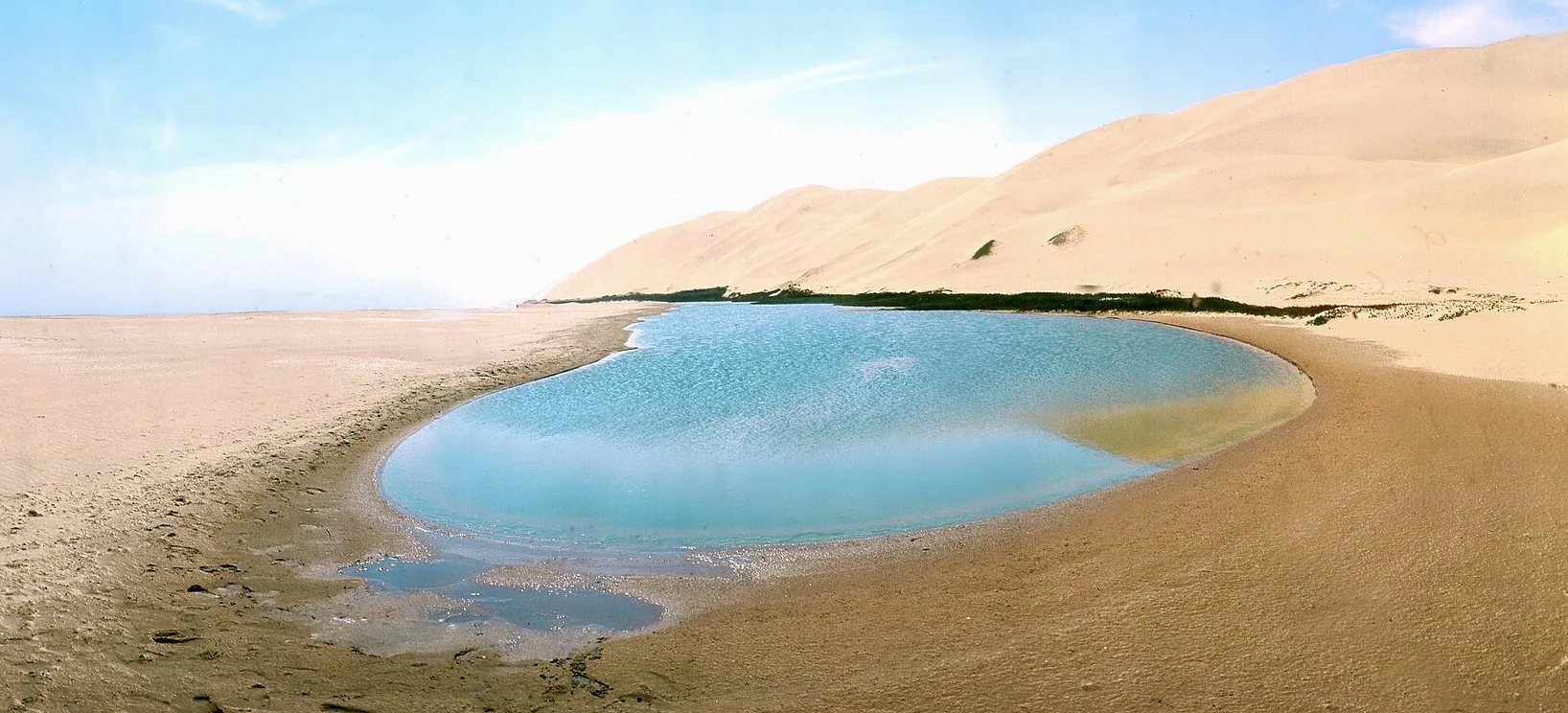
Fresh water seeping from under the dunes feeds reed beds at the edge of the lagoon.
Best time to go
Sandwich Harbour is visited all year, and the coast is mild in every month: typically somewhere between 10 and 25 °C, when the interior may be at 35 °C or more.
- Fog is the main variable. It often lies on the coast in the morning and lifts between about 10:00 and 11:00 AM. A morning tour may start in grey and end in sun; an afternoon tour usually has clear sky and more wind.
- Wind rises after midday in most months and is strongest in spring, around September to November. Blown sand stings bare legs and is hard on cameras.
- Winter east winds (May–August, a few days at a time) bring hot, very clear weather and occasionally sandstorms.
- Late summer and autumn, roughly February to April, tend to give the warmest, calmest conditions.
- Birds are most numerous from October to April.
The month matters less than the day’s tide and weather, which is another reason to book for your first day on the coast and keep a second in reserve. A month-by-month breakdown is on the sister site: best time to visit Sandwich Harbour.
What to bring
- A windproof jacket and a warm layer, whatever the forecast, plus sunglasses, hat and sunscreen for when the fog goes.
- Closed shoes you do not mind filling with sand; you will climb at least one dune on foot.
- A camera bag or dry bag that closes properly, and a cloth. Change lenses inside the vehicle.
- Motion-sickness tablets if you are susceptible: the dune descents are steep and the ride is lively.
- Tours supply drinks and snacks or lunch; there are no toilets after Walvis Bay.
The steep dune driving is not advised for people with serious back or neck problems or in late pregnancy; tell the operator, who can take a gentler line.
Where to stay
Tours leave from Walvis Bay, so staying there saves an early transfer and puts the flamingo lagoon on your doorstep; Swakopmund, 35 km north, has more restaurants and other activities, and most operators collect from hotels in both. On the lagoon front in Walvis Bay, consider Flamingo Villas Boutique Hotel, the Protea Hotel Pelican Bay or the apartments at Lagoon View Self Catering; in Swakopmund, the Strand Hotel on the Mole. There is no accommodation at Sandwich Harbour itself.
More choices are on our Walvis Bay and Swakopmund pages.
Flamingo Villas Boutique Hotel
Walvis BayA beachfront boutique hotel in Walvis Bay with sea views, a restaurant and a bar.
8.6Booking.com guest score · as checked in November 2026
See on Booking.comProtea Hotel by Marriott Walvis Bay Pelican Bay
Walvis BayFull-service hotel on the Esplanade with lagoon-view rooms, restaurant and bar.
7.7Booking.com guest score · as checked in November 2026
See on Booking.comLagoon View Self Catering
Walvis BayTwo-bedroom sea-view apartments on the Esplanade.
9.7Booking.com guest score · as checked in November 2026
See on Booking.comStrand Hotel Swakopmund
SwakopmundOn the beachfront at the Mole in Swakopmund, with three restaurants, a spa and sea-facing terraces.
8.9Booking.com guest score · as checked in November 2026
See on Booking.comSee all stays in Walvis Bay on Booking.com
Accommodation links go to Booking.com, where you see live prices and availability. We do not list prices because they change daily; NamibiaSafaris.com may earn a commission.
Frequently asked questions
How far is Sandwich Harbour from Walvis Bay?
Roughly 55 km to the south. Because the route is beach and dune, not road, it takes 1 to 1.5 hours each way by 4x4, depending on the tide and the sand.
Can you drive to Sandwich Harbour yourself?
Only with a 4x4, sand-driving experience and a permit from the Ministry of Environment, Forestry and Tourism obtained in advance. Most hire-car contracts exclude beach and dune driving, and vehicles are lost to the tide. Nearly all visitors go on a guided tour.
What happens at high tide?
The strip of beach below the dunes disappears. Guides then take a route over the dunes to viewpoints above the lagoon. Operators time departures to the tide so that the beach section is driven around low water whenever possible.
Is a half-day tour enough?
It shows you the lagoon, the viewpoint and some dune driving in four to five hours. A full day gives much more time at the lagoon and in the dunes and includes lunch; choose it if you can spare the time.
How much is the park fee?
From 1 April 2026 the Sandwich Harbour section has its own rate: N$150 per adult for foreign visitors from outside SADC, N$100 for SADC nationals and N$50 for Namibians, plus N$50 for a vehicle with up to 10 seats. Tours normally include it; check the listing.
Is the tour suitable for children?
Yes, children generally love the dune driving. Check the operator’s minimum age and whether child seats are available, and bring warm clothes for them.
When is the best time of day?
Afternoon and sunset tours usually have clearer skies and warmer light on the dunes; mornings are calmer but more often foggy until about 10:00 or 11:00 AM. The tide may limit which departures run on a given day.
Sources and official information
Facts were checked against these official sources in November 2026. Park fees, gate times, visa rules and timetables change, so confirm before you go.
- sandwichharbour.com
- sandwichharbour.com
- sandwichharbour.com
- lac.org.na
- meft.gov.na
- rsis.ramsar.org
- whc.unesco.org
- en.wikipedia.org
NamibiaSafaris.com is an independent guide, not the official site of any tour operator, lodge, Namibia Wildlife Resorts or the Namibian government. Some links are affiliate links: tours go to GetYourGuide and accommodation goes to Booking.com, and we may earn a commission at no extra cost to you.