In short
- Namibia is one of Africa's easiest safari countries for families: good roads, fenced rest camps with pools, self-catering options, and a large part of the country where malaria is not a concern.
- The south, the coast and Windhoek (Sossusvlei, Swakopmund, the Kalahari, Fish River Canyon) are free of malaria or nearly so. Etosha and the north are in the risk area, with the lowest risk in the dry winter months; take medical advice.
- Distances are the real challenge. Keep driving days to four hours where you can, stay at least two nights at each stop, and never drive after dark.
- Children aged 8 and under enter national parks free; those aged 9 to 15 pay N$180 a day in Etosha (foreign visitors, from 1 April 2026).
- Age limits apply to many activities (rhino tracking, walking safaris, some lodges' game drives) and are set by each operator. Ask before you book.
Why Namibia suits families
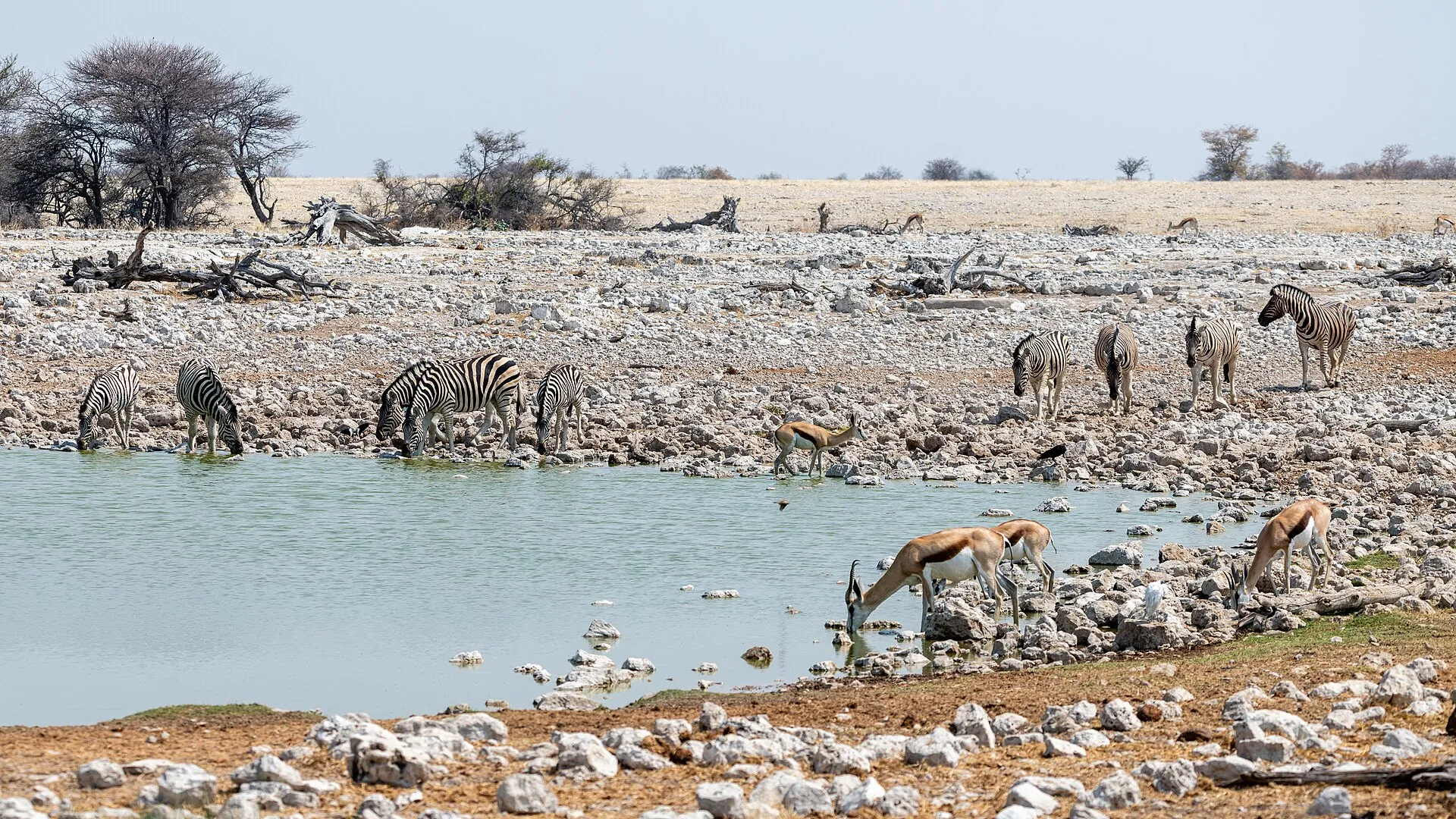
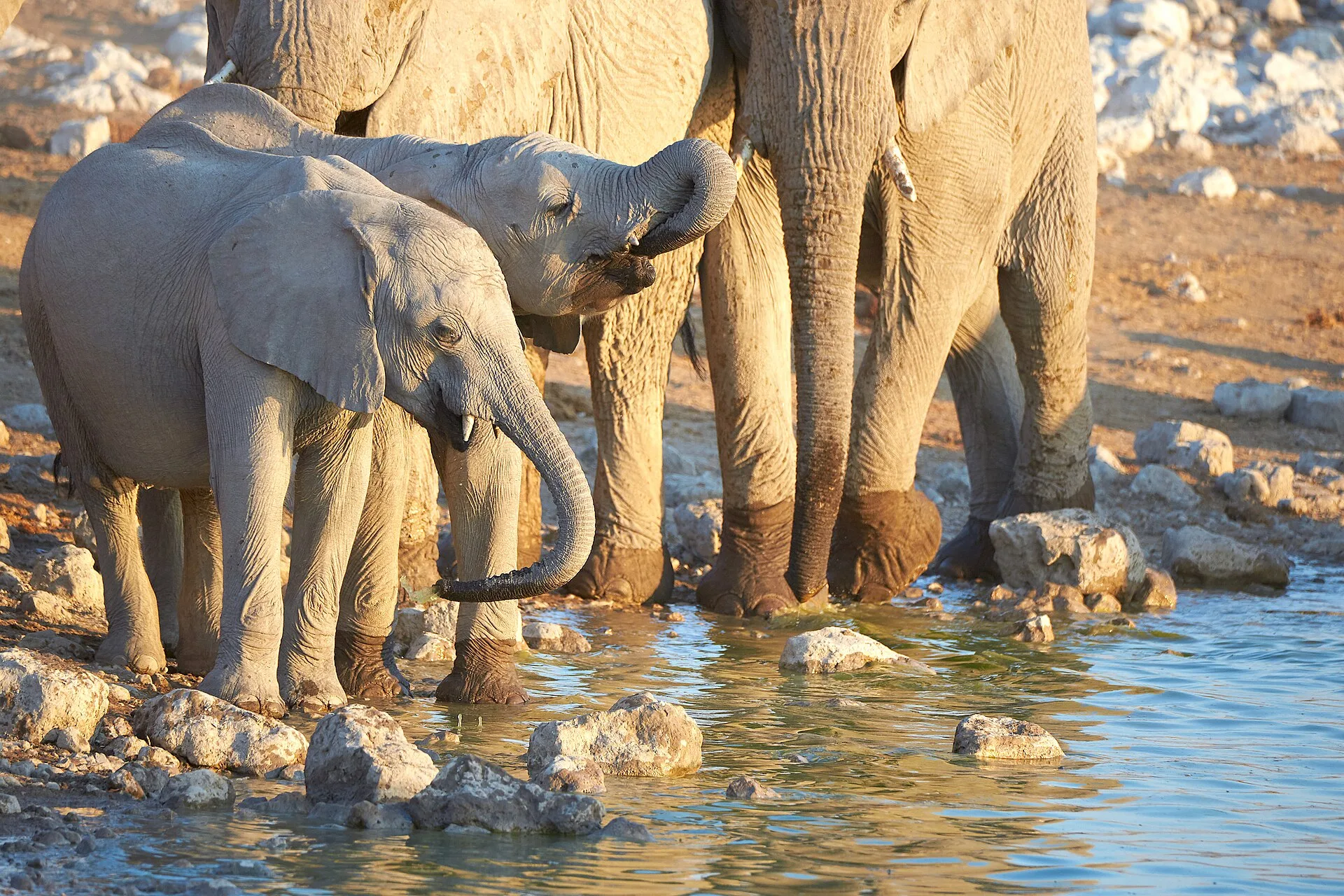
A safari with children fails for predictable reasons: long hours of sitting still, rules they do not understand, heat, and parents who are anxious about illness. Namibia removes several of these. You travel in your own vehicle on your own timetable, so a game drive ends when the youngest has had enough. In Etosha the animals come to waterholes in plain view; nobody needs to stay silent for an hour hoping for a leopard. The main rest camps are fenced, with lawns, swimming pools and a restaurant, and children can walk to a floodlit waterhole in their pyjamas. Self-catering chalets and furnished tents mean familiar food and early bedtimes.
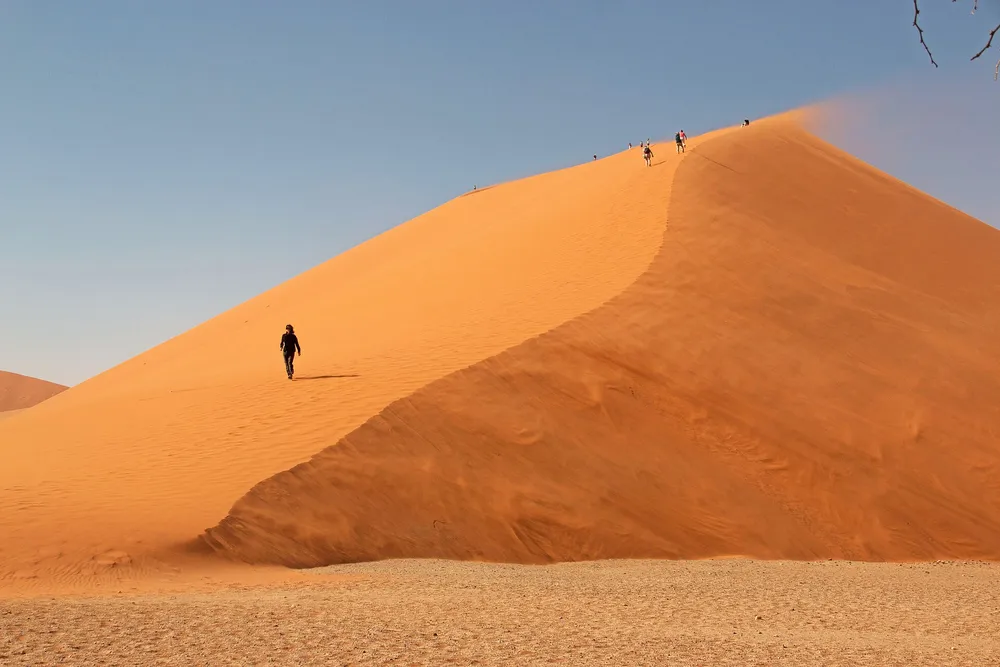
It is also a country of very different days. A child who is bored by antelope on day three can climb a dune, go looking for chameleons with a desert guide, watch seals from a boat or sandboard on the coast. Building that variety into the route matters more than any choice of lodge.
The honest drawbacks are distance, which is covered below; cost, since flights and car hire for four add up; and age. Under about five, children get little from game viewing and a lot from pools and sand. Six to twelve is the golden age. Teenagers can do everything, including the activities with age limits.
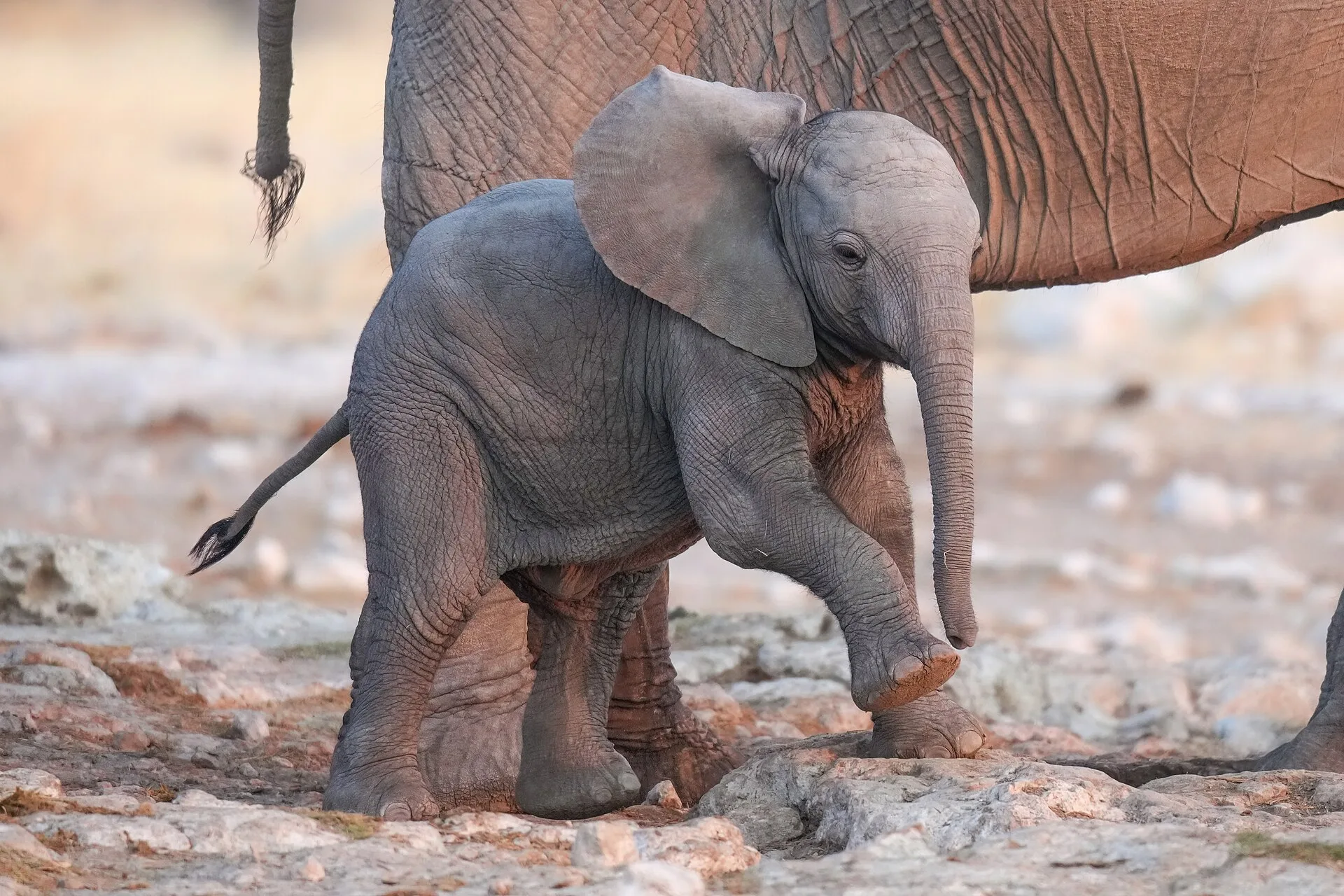
An elephant calf keeps close to its mother in Etosha.
Malaria: where it is and is not
For many parents this is the deciding question, and Namibia offers a real choice.
Not a malaria area: Windhoek, the coast (Swakopmund, Walvis Bay, Lüderitz), the Namib and Sossusvlei, the Kalahari in the south-east, and the far south including the Fish River Canyon. Health authorities list no malaria in Windhoek and only rare cases elsewhere outside the northern regions. A complete, satisfying family trip is possible within this zone: dunes, desert wildlife, seals and dolphins, the canyon and a private reserve in the Kalahari or the central highlands for game drives.
Malaria area: the northern regions, which include Etosha, the Waterberg area, Damaraland and Kaokoland (Kunene Region), the Owambo regions and, with the highest risk, the Kavango and Zambezi regions in the north-east. Transmission is seasonal across most of this zone, concentrated in and after the rains from about November to June and at its lowest from July to October, which is also the best time for game viewing. Along the northern rivers the risk lasts all year.
What that means in practice: many families visit Etosha in the dry season with preventive medication and sensible precautions, on their doctor's advice; some choose to keep young children out of the north altogether. That is a decision for you and a travel clinic, which can advise on prophylaxis suitable for your children's ages and weights, not for a website. Whatever you decide, use repellent, long sleeves and trousers from dusk, and nets or screened rooms. More on health and safety.
| Area | Malaria | Family notes |
|---|---|---|
| Windhoek and the central highlands | None in Windhoek; very low nearby | Good first and last nights; day visits to reserves |
| Sossusvlei and the Namib | Not a malaria area | Dunes to climb; very hot from October to March |
| Swakopmund and Walvis Bay | Not a malaria area | Cool climate; boats, seals, desert tours, sandboarding |
| Kalahari, Fish River Canyon, Lüderitz | Not a malaria area | Long distances between stops |
| Waterberg, Otjiwarongo | Low, seasonal | Cheetah centre; short walks |
| Etosha, Damaraland | Seasonal risk; lowest July to October | The main wildlife area; fenced camps in Etosha |
| Kaokoland, Kavango, Zambezi | Higher risk; all year along the rivers | Better left for older children |
Distances: how much driving is too much
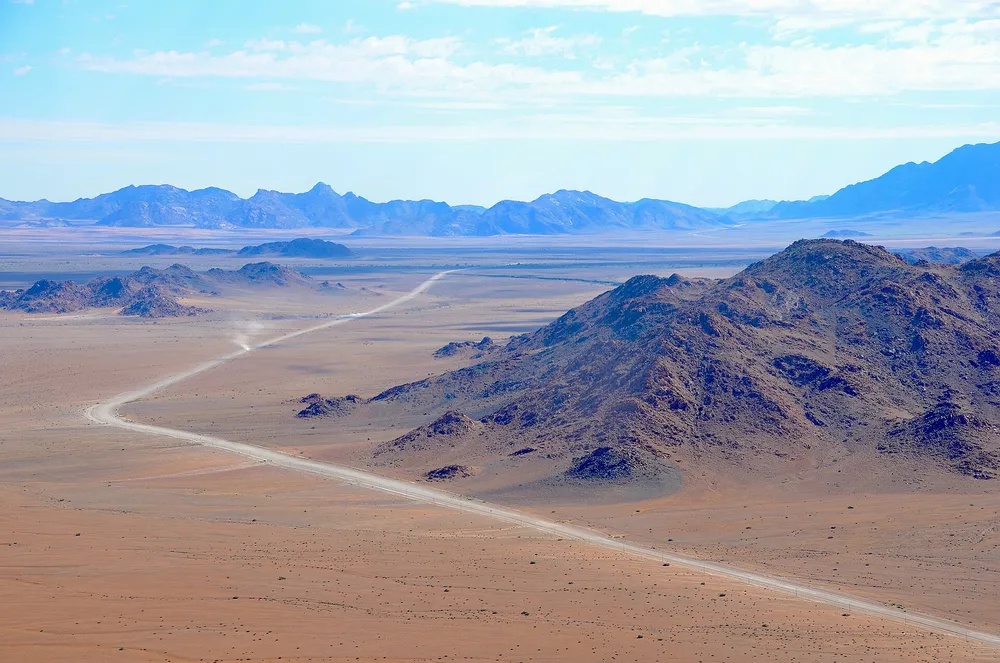
On a map the classic loop looks compact. On the ground it is roughly 2,500 km, much of it on gravel at 70 or 80 km/h, with few places to stop. The scenery is superb for adults and, after the first hour, invisible to most children.
- Cap most days at four hours of driving and plan no more than one or two longer days in the whole trip.
- Two nights minimum at every stop, three where there is a pool and plenty to do. A route with four bases in two weeks works far better than one with eight.
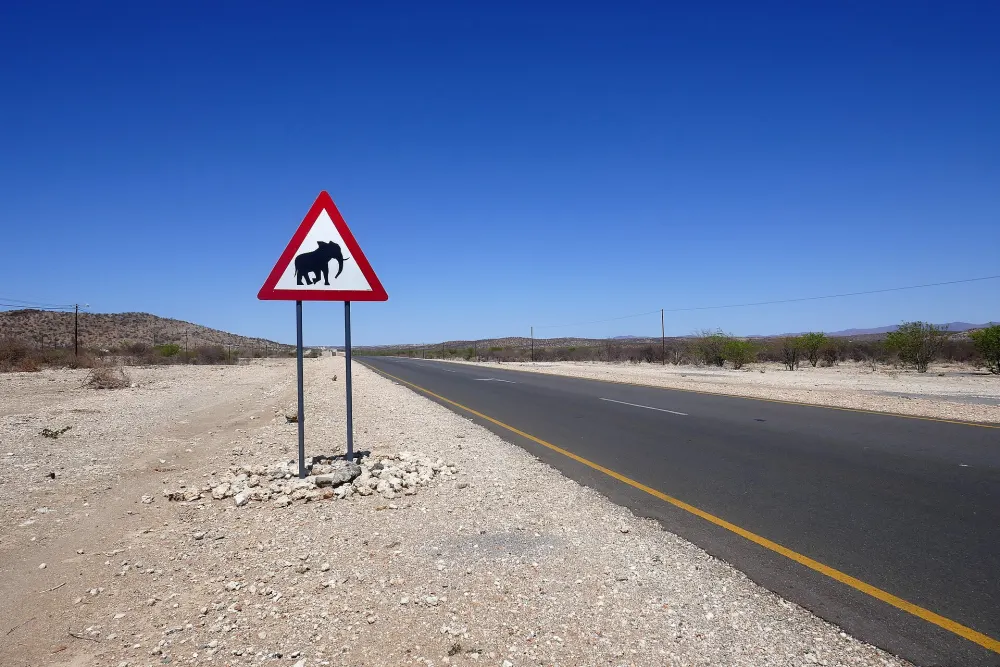
- Leave early, arrive by mid-afternoon. Mornings are cool, children sleep in the car, and you have the pool before dinner. Never plan to arrive at dusk: animals on the road make night driving dangerous.
- Break long legs at a town with a bakery or a playground rather than at a viewpoint: Solitaire for apple pie, Outjo and Otjiwarongo for cafés and supermarkets.
- Carry more water and snacks than seems reasonable, wet wipes, a football, and downloaded audiobooks. There is no mobile signal on most gravel roads.
A two-week family route that respects these rules: Windhoek (1 night), Sossusvlei area (3), Swakopmund (3), Damaraland or Erongo (2), Etosha (3 or 4, in two camps), Waterberg or Okonjima area (1 or 2), Windhoek. With ten days, drop either the desert or Damaraland, not both nights at the coast. Day-by-day versions are on our itineraries page.
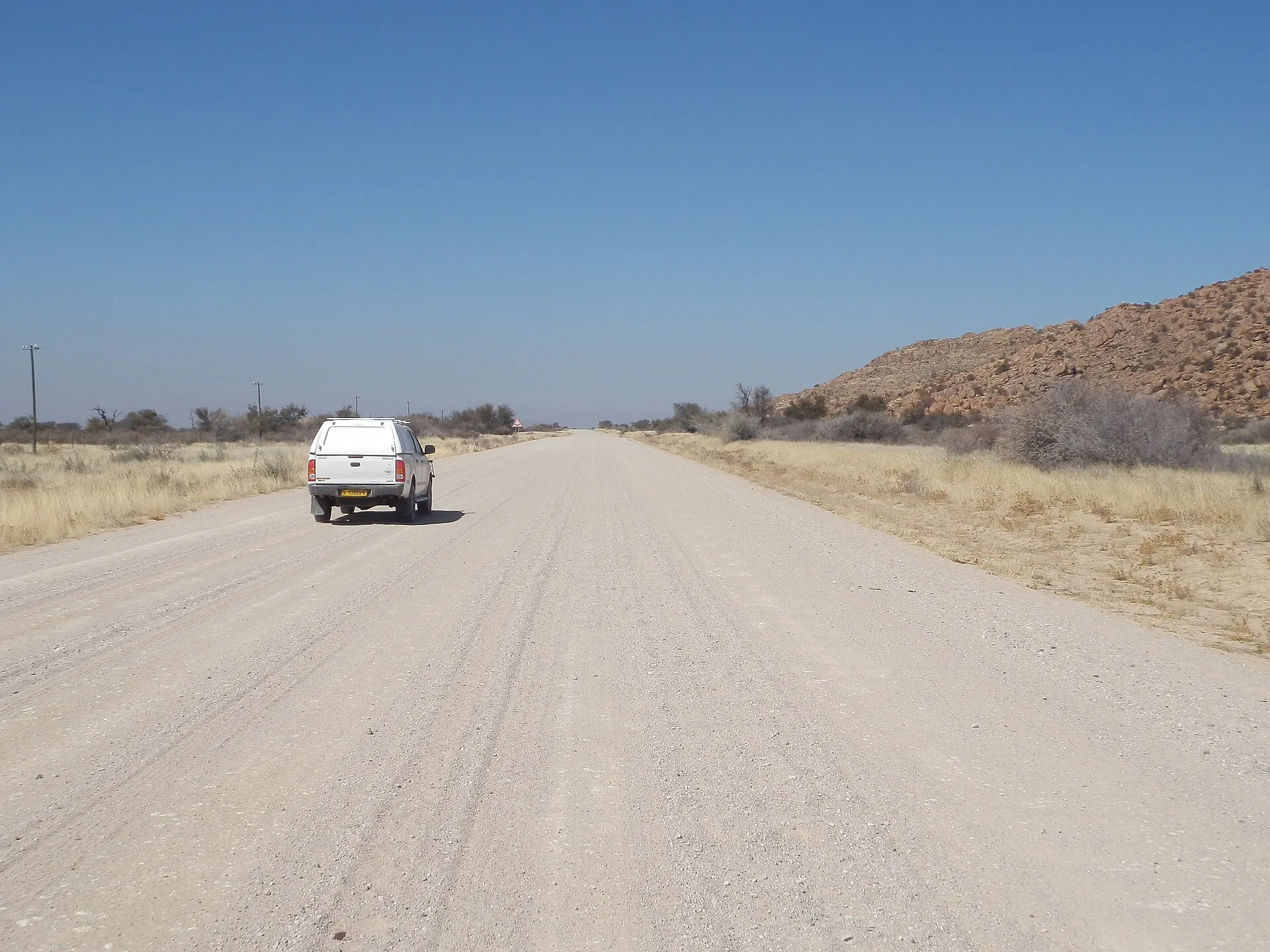
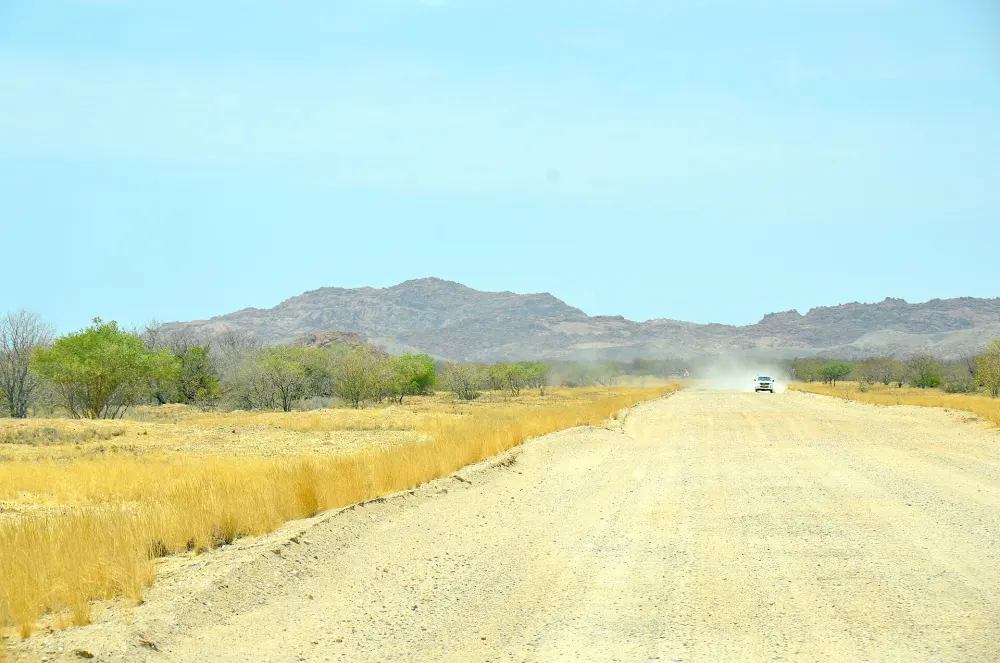
Long, empty gravel: the C24 west of Rehoboth. Plan short driving days.
Etosha with children
Etosha is the highlight for most children, provided the game drives are kept short. The rhythm that works is two drives of an hour and a half to two hours, early and late, each built around two or three waterholes close to camp, with the hot middle of the day at the pool. Give each child binoculars and a checklist; a small prize for the first to spot each species does more for concentration than any amount of pleading.
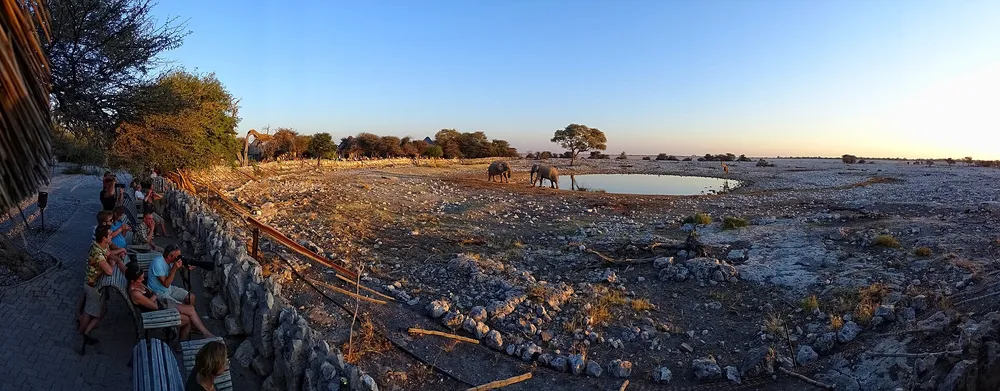
The three main camps inside the park, Okaukuejo, Halali and Namutoni, are fenced and have swimming pools, shops and restaurants. Okaukuejo's waterhole is a few steps from the chalets and busy all evening, which makes it the best single night in Namibia for a family. Remind children that the wall is there for a reason, that the waterhole is a quiet place, and that jackals and squirrels in camp must not be fed.
Outside the park, lodges with family units and space to run about are plentiful near Anderson and Von Lindequist gates. Among the properties whose Booking.com pages we have checked, Etosha Village has a children's pool, Etosha Safari Camping2Go has self-catering tents with four single beds, and Mushara Bush Camp has family rooms and a playground. Full details are on Etosha camps and lodges.
Park fees favour families: children of 8 and under enter free, and those aged 9 to 15 pay N$180 a day against N$280 for adults (foreign visitors, from 1 April 2026).
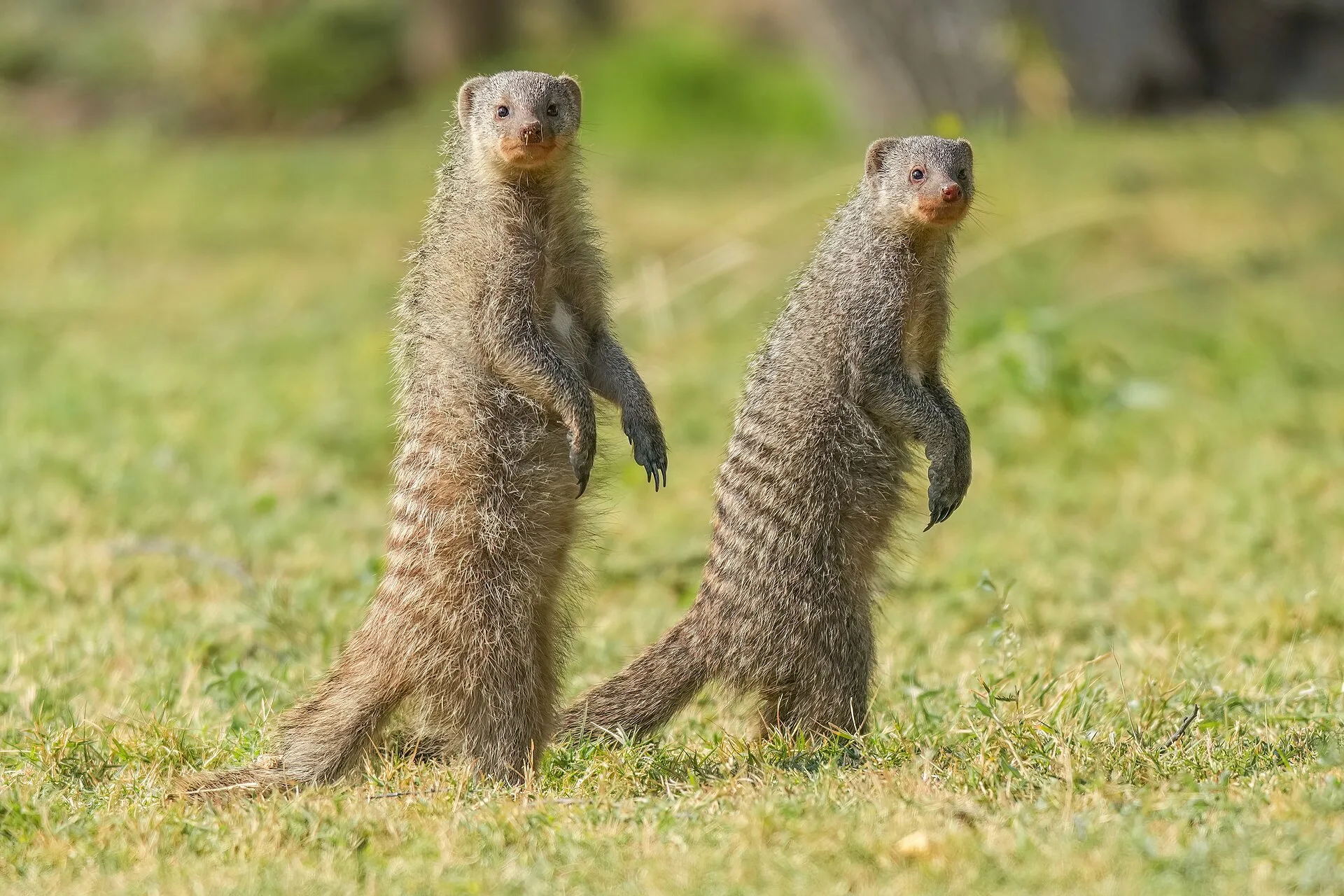
Banded mongooses on the lookout in Etosha: small animals are often the children's favourites.
Etosha Village
EtoshaTwo kilometres from Etosha’s Anderson Gate: air-conditioned units with patios, two pools, restaurant and bar.
8.7Booking.com guest score · as checked in November 2026
See on Booking.comGondwana Etosha Safari Camping2Go
EtoshaEight furnished self-catering tents 10 km from Anderson Gate, each with four single beds, a kitchenette and a private bathroom.
8.9Booking.com guest score · as checked in November 2026
See on Booking.comMushara Bush Camp
EtoshaRelaxed, family-friendly camp 8 km from Von Lindequist Gate, with family rooms, a pool and a children's playground.
9.2Booking.com guest score · as checked in November 2026
See on Booking.comMokuti Etosha
EtoshaBeside Etosha’s eastern Von Lindequist Gate near Namutoni: air-conditioned rooms, two pools, two restaurants and a fitness centre.
9.4Booking.com guest score · as checked in November 2026
See on Booking.comToshari Lodge
EtoshaA garden lodge south of the Anderson Gate with a pool, a restaurant and rooms with private patios.
8.8Booking.com guest score · as checked in November 2026
See on Booking.comEtosha Omusati Lodge
EtoshaAir-conditioned rooms with patios, family rooms, a garden pool and a restaurant south of Anderson Gate.
8.4Booking.com guest score · as checked in November 2026
See on Booking.comSee all stays in Etosha on Booking.com
Accommodation links go to Booking.com, where you see live prices and availability. We do not list prices because they change daily; NamibiaSafaris.com may earn a commission.
Activities that hold a child's attention
| Activity | Where | Good for ages | Why it works |
|---|---|---|---|
| Floodlit waterhole after dinner | Okaukuejo, Halali, Namutoni | All | Rhino and elephants a few metres away, no driving |
| Climbing a dune and running down | Sossusvlei (Dune 45, Elim Dune); Dune 7 near Walvis Bay | 5 and over | Go at sunrise; sand burns bare feet by late morning |
| Living-desert tour | Swakopmund | 5 and over | Guides dig up geckos, chameleons and snakes; hands-on and short |
| Dolphin and seal cruise | Walvis Bay | All | Seals often climb aboard the catamarans; calm lagoon water |
| Sandboarding or quad biking | Swakopmund dunes | Usually 10 and over; operators set limits | For teenagers who have had enough wildlife |
| Cape Cross seal colony | Skeleton Coast | All | Tens of thousands of seals; be ready for the smell |
| Cheetah Conservation Fund | Near Otjiwarongo | All | Cheetahs at feeding time; guard-dog puppies |
| Desert elephant drive | Damaraland | 6 and over | Open vehicle, real tracking; three hours or more, so not for toddlers |
| San-guided bush walk | Kalahari lodges; Erongo | 6 and over | Tracks, fire-making, bows; children are invited to try |
| Stargazing | Anywhere outside towns | All | Among the darkest skies on Earth; download a star map |
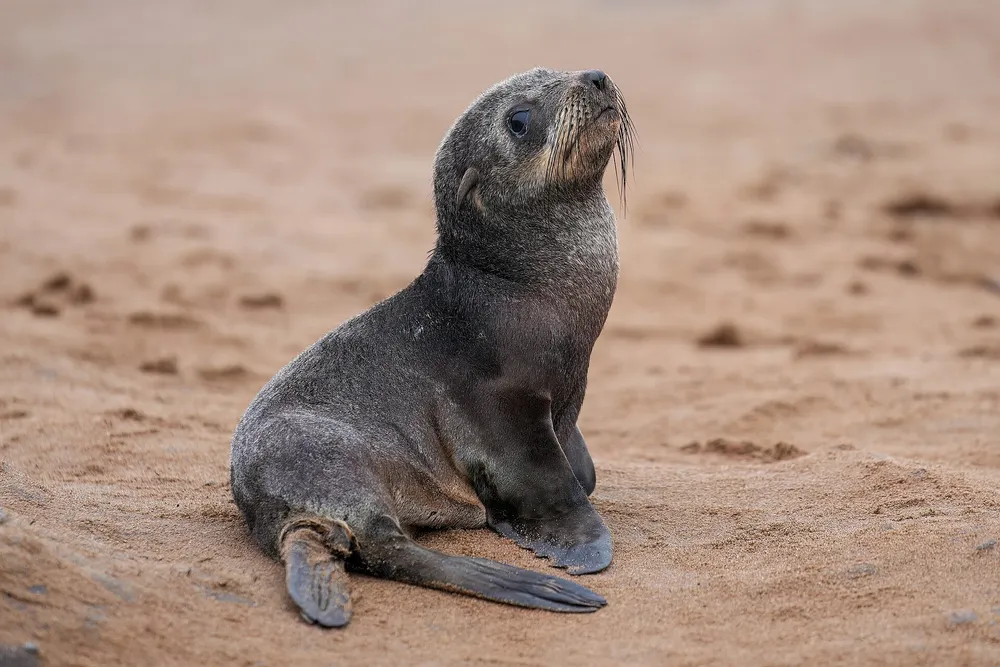
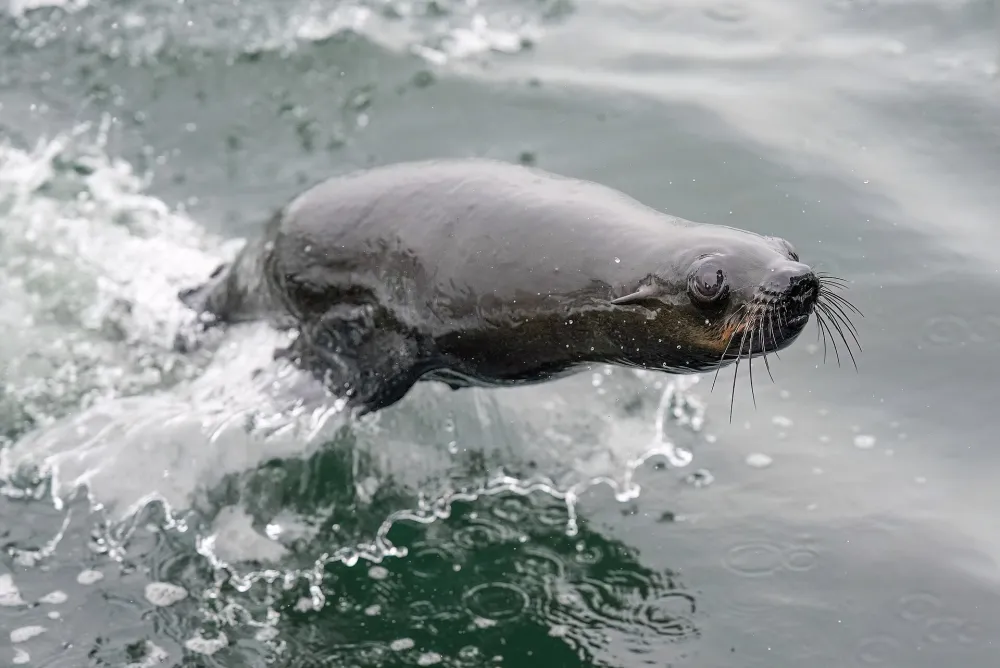
Walvis Bay: dolphin and seal catamaran cruise
The classic morning on the bay: seals and pelicans at close quarters, the Pelican Point colony, a search for Heaviside’s and bottlenose dolphins, and oysters on the way home.
Check availabilityBook via GetYourGuide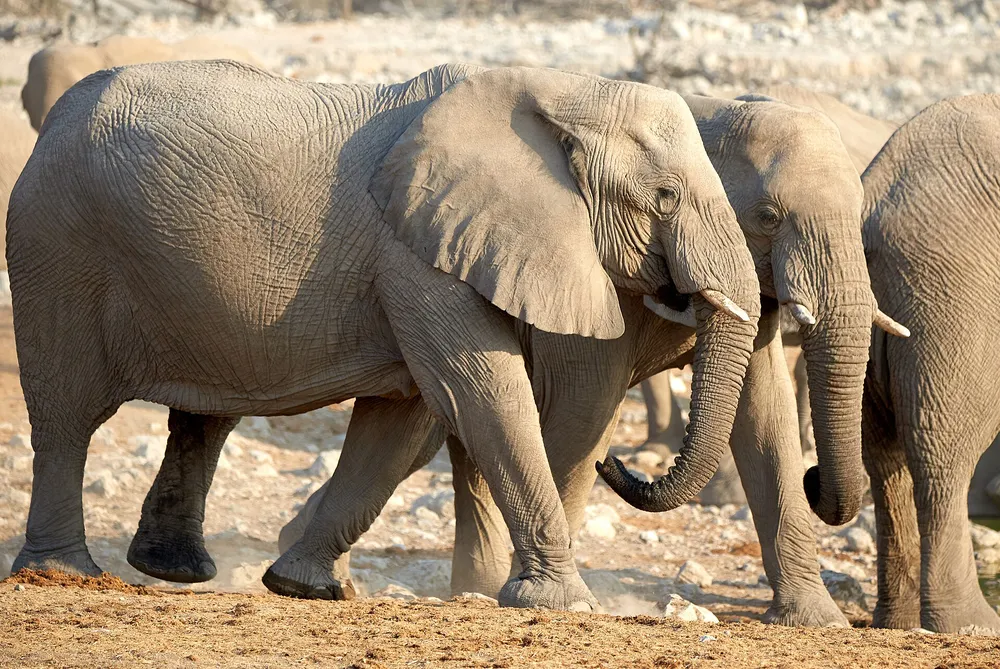
Etosha National Park: Full or Half-Day Game Drive
A guided game drive inside the park in a safari vehicle, for visitors already staying at or near Etosha. Half a day covers the waterholes around Okaukuejo; a full day reaches further along the pan. Check the meeting point and whether the park fee is included.
Check availabilityBook via GetYourGuide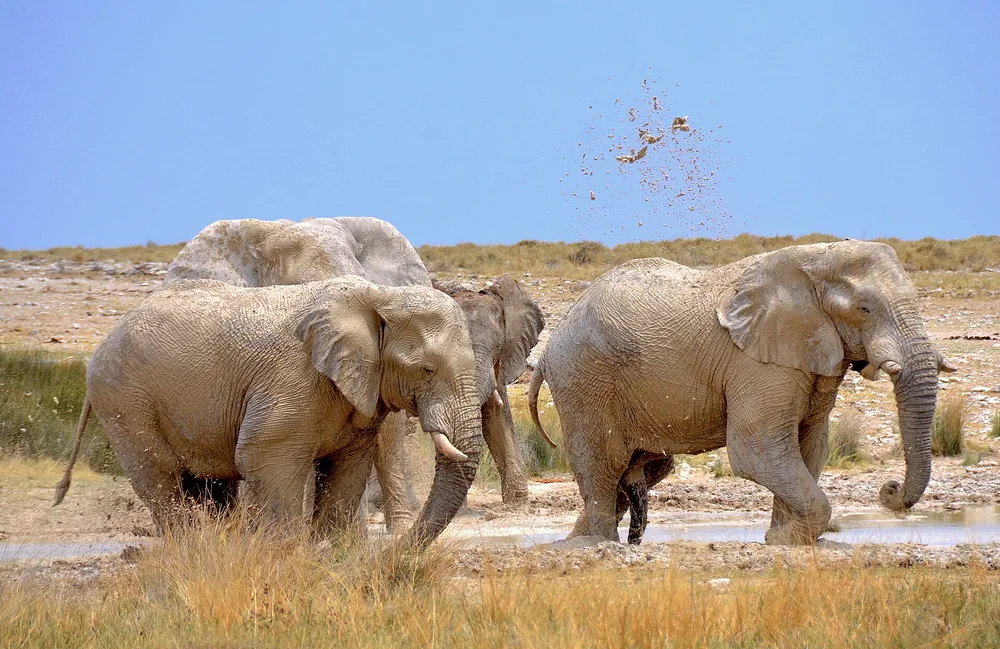
From Windhoek: 3-Day Etosha National Park Tour
The classic short safari: drive north from Windhoek, game drives on arrival, a full day among the waterholes and a final drive at sunrise before the road home. The simplest way to see Etosha without a car. Check the listing for the accommodation type and whether park fees are included.
Check availabilityBook via GetYourGuideTour listings are on GetYourGuide. Prices, dates and cancellation terms are shown live on each listing and can change; NamibiaSafaris.com may earn a commission at no extra cost to you.
Age limits and lodge policies
Namibia has no national rule on children and safaris; each operator sets its own, and they vary widely. Expect the following and check each one.
- Game drives in open vehicles: many lodges set a minimum age, commonly around six, for shared drives, and will suggest a private vehicle for families with younger children. NWR's guided drives in Etosha may also have a minimum age; ask at reception.
- Walking activities and rhino tracking on foot: usually restricted to older children and teenagers, often 12 or 16 and over, because the group must stay quiet and follow instructions near dangerous animals.
- Small luxury camps: some do not accept children under a certain age at all, or only when a family takes the whole camp. Others positively welcome them, with family tents and children's activities.
- Unfenced camps: in Damaraland, the Zambezi Region and on private reserves many lodges are open to wildlife. Children must be escorted after dark and may not wander. With under-eights, choose fenced camps.
- Scenic flights and balloons: minimum ages or heights are common for balloon flights; see balloon and scenic flights.
- Organised tours: scheduled small-group tours often have a minimum age. Families are usually better served by a private guided trip or self-drive; see the comparison of safari styles.
Health, sun and small hazards
Sun and dehydration are the everyday risks. The air is very dry and the sun fierce even in winter, so children need hats, long sleeves, sunscreen and regular drinks whether or not they say they are thirsty. Winter nights (June to August) are cold, near freezing in the desert and in Etosha before dawn, and open-vehicle drives at sunrise are colder still: pack fleeces, beanies and gloves.
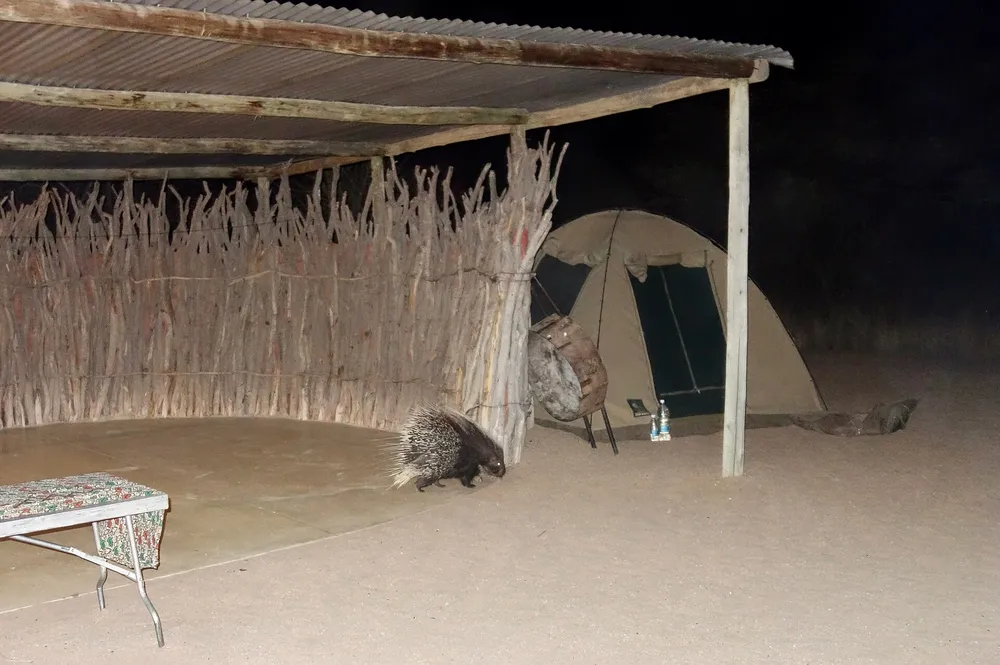
Teach three rules on the first day: shoes on after dark and a torch in hand, because of scorpions and the occasional snake; shake out shoes in the morning; and never approach or feed an animal, including the tame-looking ones in camp. Tap water in towns and lodges is generally safe to drink. Carry a basic first-aid kit and your children's usual medicines; pharmacies exist only in towns.
Namibia's private hospitals in Windhoek, Swakopmund and Otjiwarongo are good, but the country is large. Make sure your travel insurance includes emergency air evacuation. If you are travelling with a child and only one parent is present, or the child has a different surname, check the documents Namibia requires for minors on our visa page before you fly.
Self-drive, private guide or tour?
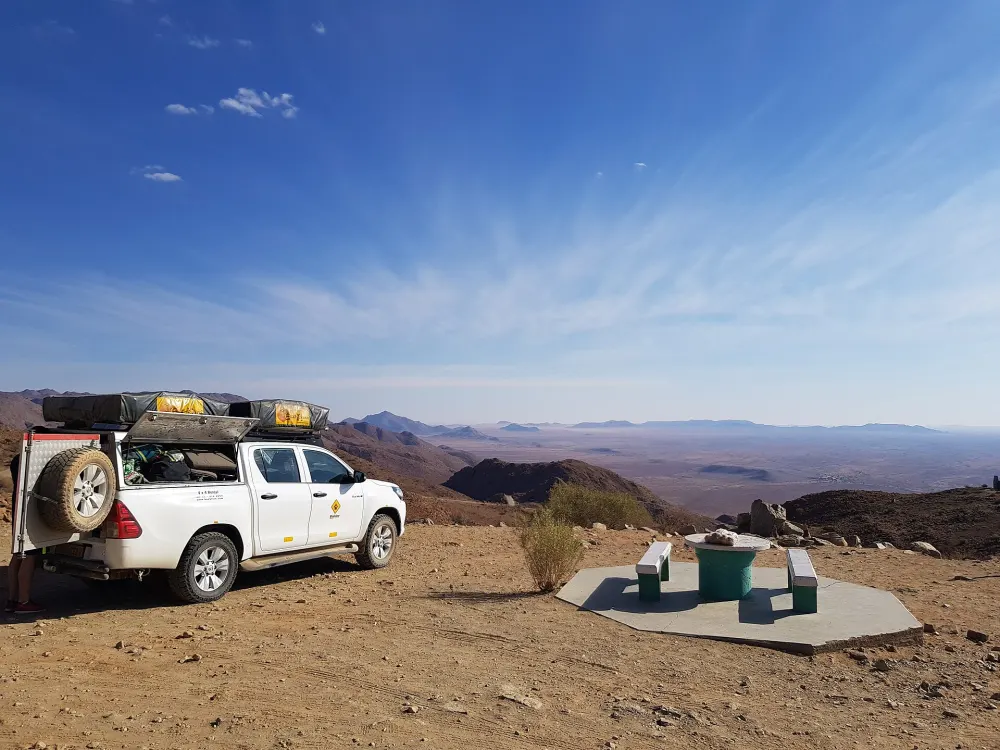
Self-drive suits most families: flexibility, self-catering, and the cost shared across the car. Rent a vehicle with a closed, air-conditioned cabin and a large boot or canopy; a double-cab 4x4 with a rooftop tent or two turns the trip into a camping adventure that older children love.
A private guide costs more but takes away the driving and adds someone whose job is to find animals and answer questions, which transforms game drives for curious children and lets both parents look out of the window.
Scheduled group tours rarely suit under-twelves: the days are long and the pace is set by adults. For a family that does not want to drive, a private version of the three-day Etosha safari from Windhoek is a better fit than a seat on a shared one.
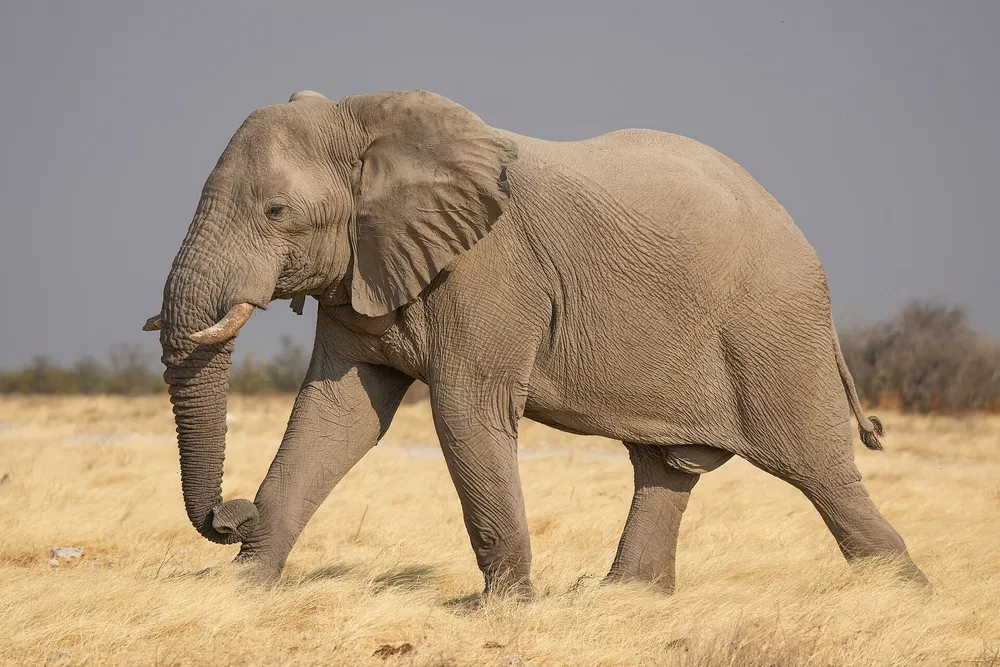
Etosha Private Safari Adventure: 3 Days from Windhoek
Your own guide and vehicle for three days: the pace, the waterholes and the stops are yours to decide. Best for families, photographers and anyone who wants to linger at a sighting.
Check availabilityBook via GetYourGuide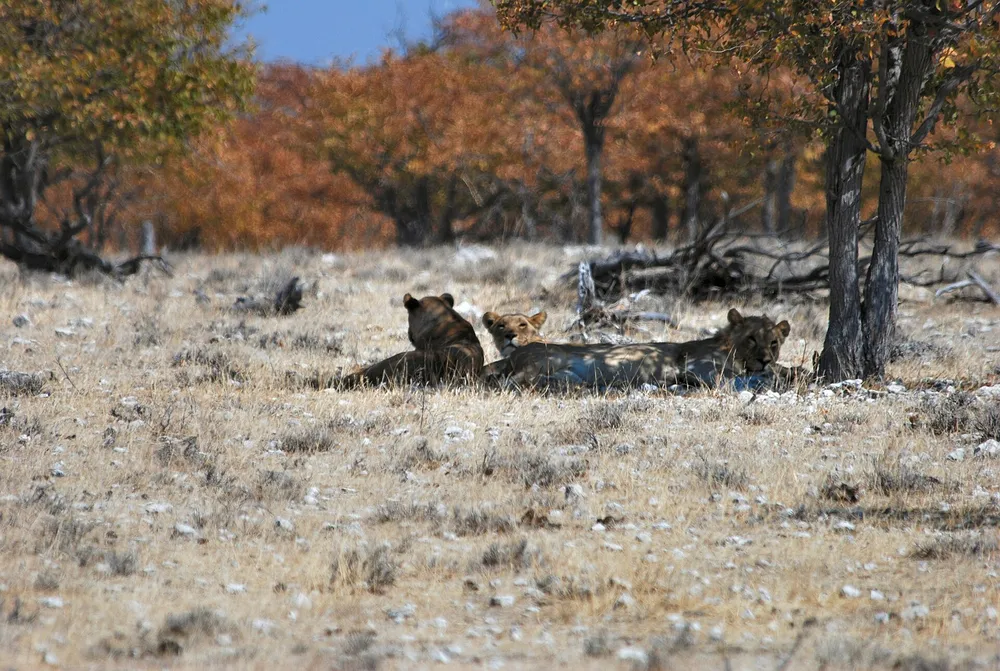
Windhoek: 5-Day Private Etosha Safari with Accommodation
Five days gives two or more full days inside the park and time for both the Okaukuejo and Namutoni sides, on a private basis with accommodation arranged. The unhurried way to do Etosha with a guide.
Check availabilityBook via GetYourGuideTour listings are on GetYourGuide. Prices, dates and cancellation terms are shown live on each listing and can change; NamibiaSafaris.com may earn a commission at no extra cost to you.
Okonjima Plains Camp
Central NamibiaOn the Okonjima reserve near Otjiwarongo, home of the AfriCat Foundation; air-conditioned rooms, pool and restaurant.
9.5Booking.com guest score · as checked in November 2026
See on Booking.comMadisa Camp
DamaralandOn the D2612 in Damaraland, with a pool, a bar and barbecue facilities.
8.8Booking.com guest score · as checked in November 2026
See on Booking.comTwyfelfontein Adventure Camp
DamaralandTwelve en-suite tents among granite boulders with a pool, about ten minutes' drive from the rock engravings.
9.1Booking.com guest score · as checked in November 2026
See on Booking.comSee all stays in Namibia on Booking.com
Accommodation links go to Booking.com, where you see live prices and availability. We do not list prices because they change daily; NamibiaSafaris.com may earn a commission.
Frequently asked questions
What is the best age to take children on safari in Namibia?
From about six upwards children are old enough to enjoy game viewing, follow safety rules and remember the trip. Younger children can come, especially on a self-drive trip using fenced camps with pools, but will get more from sand and water than from wildlife. Many activities have minimum ages between 6 and 16.
Can I do a malaria-free safari in Namibia?
Yes. The south, the Namib, the coast and the Windhoek area are not malaria areas, and private reserves in the Kalahari and central highlands offer game drives there. Etosha and the north are in the malaria zone, with low risk in the dry winter; discuss it with a travel clinic.
Is Etosha safe for children?
Yes, if you follow the rules: stay in the vehicle outside the camps and keep children seated and belted. The main camps are fenced, so children can move about freely inside, though they should be supervised at the waterhole walls and around the pools.
Do children pay park fees in Namibia?
Children aged 8 and under enter free. From 1 April 2026, foreign children aged 9 to 15 pay N$180 per day in Etosha and the other premium parks and N$150 in parks such as Bwabwata; from 16 they pay the adult fee.
How long should a family trip to Namibia be?
Two weeks is ideal for the classic loop at a child-friendly pace. Ten days works if you leave out one region. With one week, choose either the south (Sossusvlei and the coast) or the north (Etosha and the Waterberg), not both.
Are car seats required in Namibia?
Seat belts must be worn where fitted, and for safety on gravel roads young children should always travel in a proper child seat. Book seats through your rental company in advance or bring your own, and check the current legal requirements with the rental company.
Sources and official information
Facts were checked against these official sources in November 2026. Park fees, gate times, visa rules and timetables change, so confirm before you go.
NamibiaSafaris.com is an independent guide, not the official site of any tour operator, lodge, Namibia Wildlife Resorts or the Namibian government. Some links are affiliate links: tours go to GetYourGuide and accommodation goes to Booking.com, and we may earn a commission at no extra cost to you.