In short
- Namibia is the easiest country in Africa to safari on your own. Etosha's roads are open to ordinary rental cars, the camps are fenced and the animals come to the waterholes, so a guide is a choice here, not a requirement.
- Five ways to do it: self-drive, a small-group tour from Windhoek, a private guide, a fly-in safari between remote lodges, or a camping overland trip. The comparison below sets them side by side.
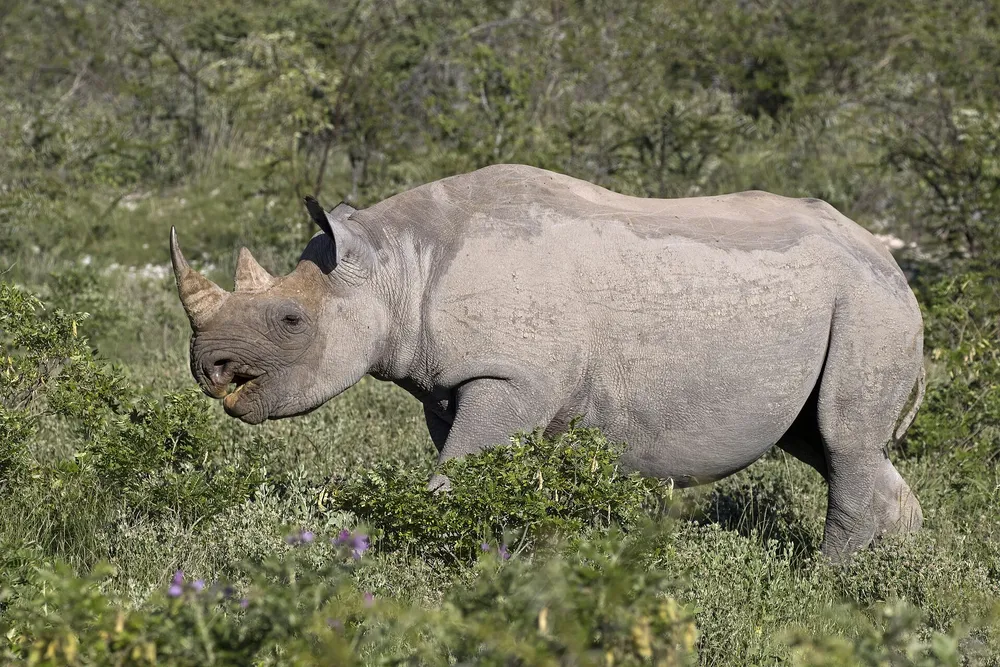
- What you see: elephant, lion, black rhino, giraffe, zebra, oryx and springbok in Etosha; desert-adapted elephants in Damaraland; hippo, buffalo and crocodile only in the far north-east. There is no great migration and no buffalo in Etosha.
- When: the dry season, May to October, concentrates game at water and is the classic time. November to April is hot and green, with rain, newborn animals, birds and lower rates.
- How long: three days covers Etosha from Windhoek; ten to fourteen days covers the classic loop of dunes, coast, Damaraland and Etosha. Park fees rose on 1 April 2026: a foreign adult now pays N$280 a day in Etosha.
What a safari means in Namibia
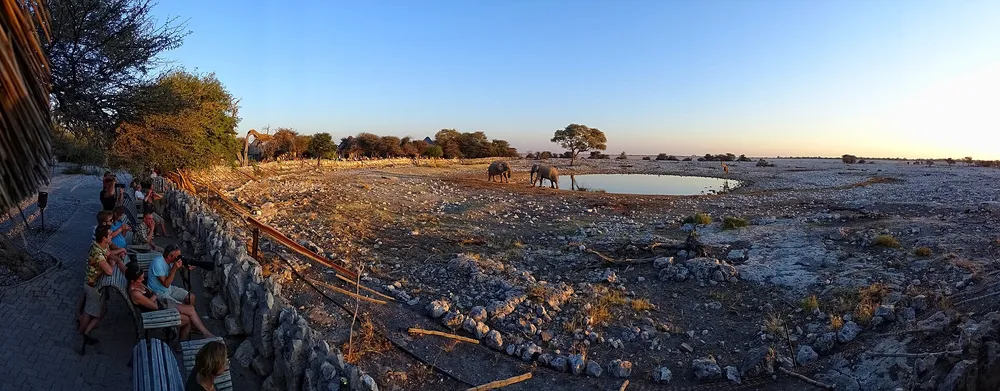
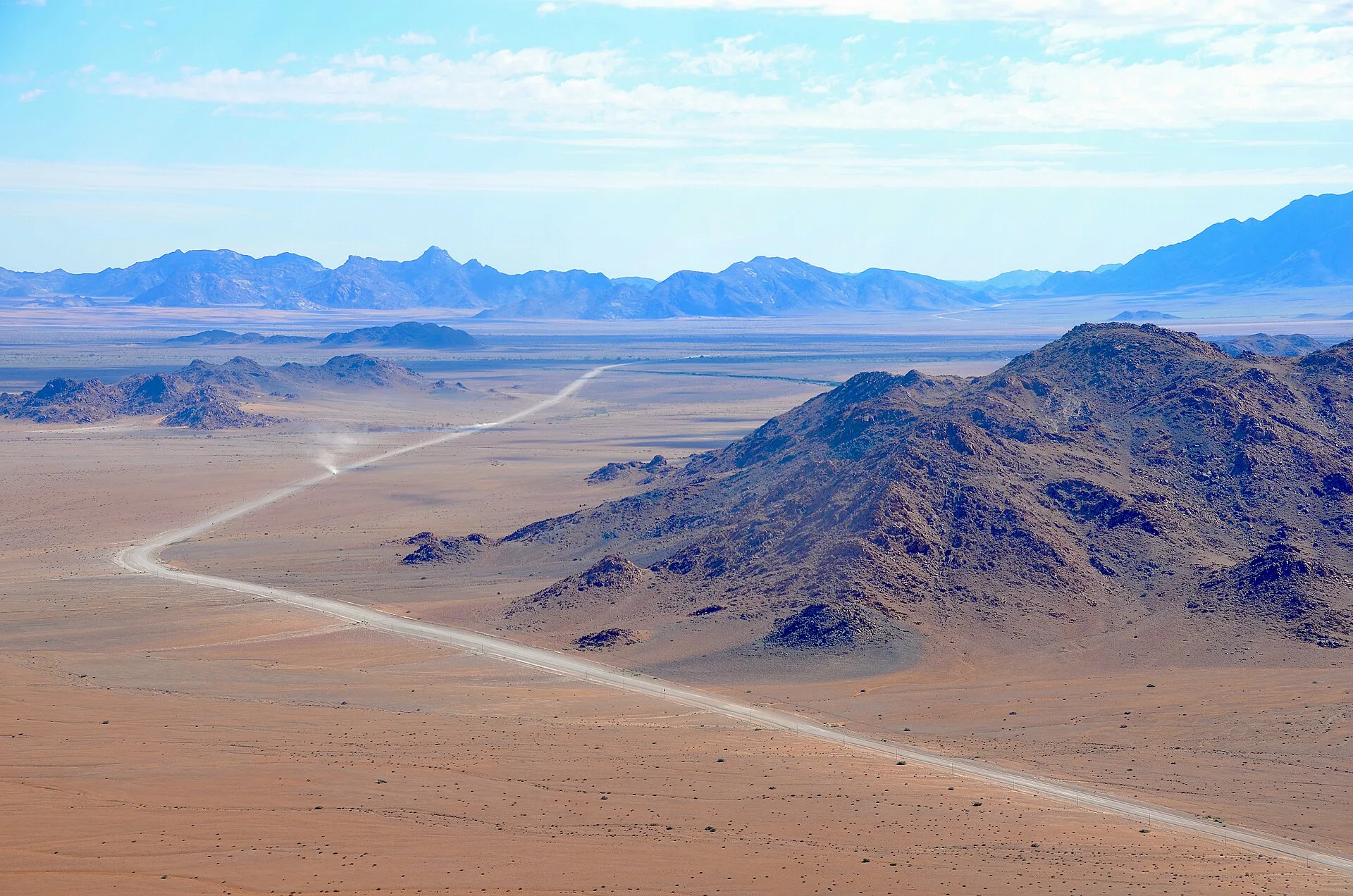
In Kenya or Tanzania a safari usually means a seat in a guided vehicle and a lodge chosen by a tour operator. Namibia works differently. The country is about 824,000 km² with roughly three million people, the main roads are tarred or well-graded gravel, and its flagship park, Etosha, was laid out for people driving themselves. You stop where you like, switch off the engine at a waterhole and wait. Many visitors never join a guided game drive at all.
That freedom is the main reason people choose Namibia, but it also means you have real decisions to make before you book anything. Who drives? How much gravel are you comfortable with? Do you want someone in the vehicle who can tell a steenbok from a duiker and knows which waterhole the lions used yesterday? The answer decides the style of trip, and the style decides the cost far more than the choice of lodge does.
A safari here is also rarely only about animals. The classic route joins the dunes of Sossusvlei, the Atlantic coast at Swakopmund and Walvis Bay, the rock engravings and desert elephants of Damaraland and then Etosha, with long, empty and often beautiful drives in between. Wildlife is one chapter of the trip. Plan for the distances and the country repays you; underestimate them and you will spend your holiday looking at a windscreen.
- Flagship park
- Etosha National Park, about 430 km north of Windhoek by tarred road (Okaukuejo is 432 km, per Namibia Wildlife Resorts)
- Driving
- On the left; tar on the B-roads, gravel on most C- and D-roads
- Best game viewing
- Dry season, May to October
- Etosha daily fee, foreign adult
- N$280 from 1 April 2026, plus N$60 per car (Government Gazette No. 8877)
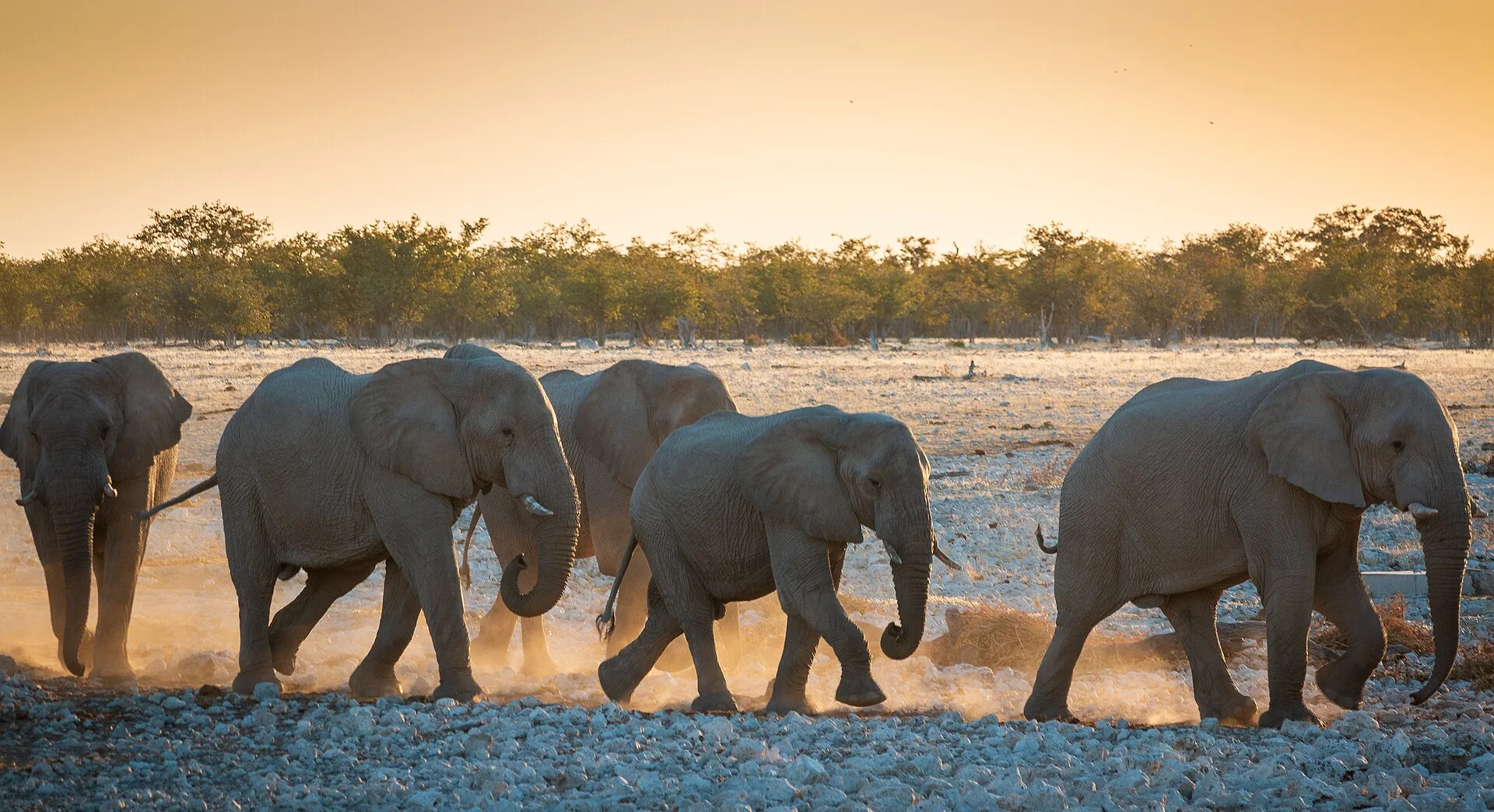
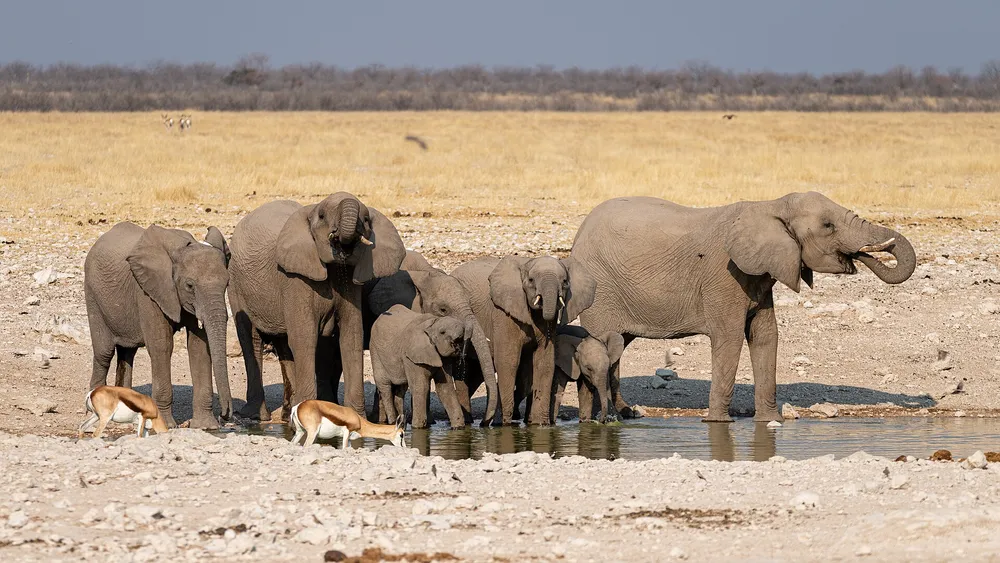
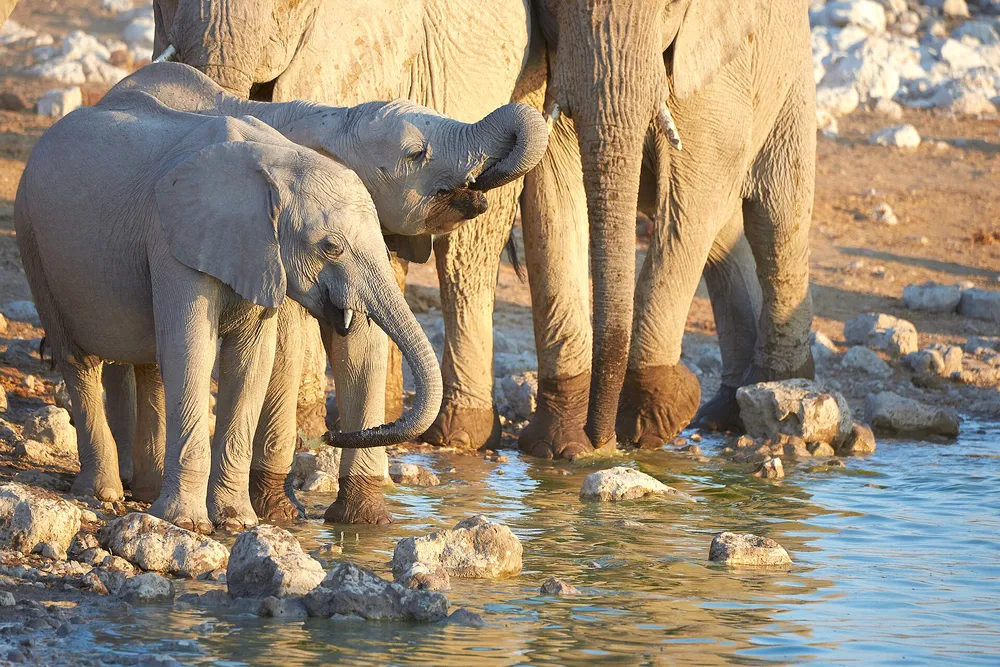
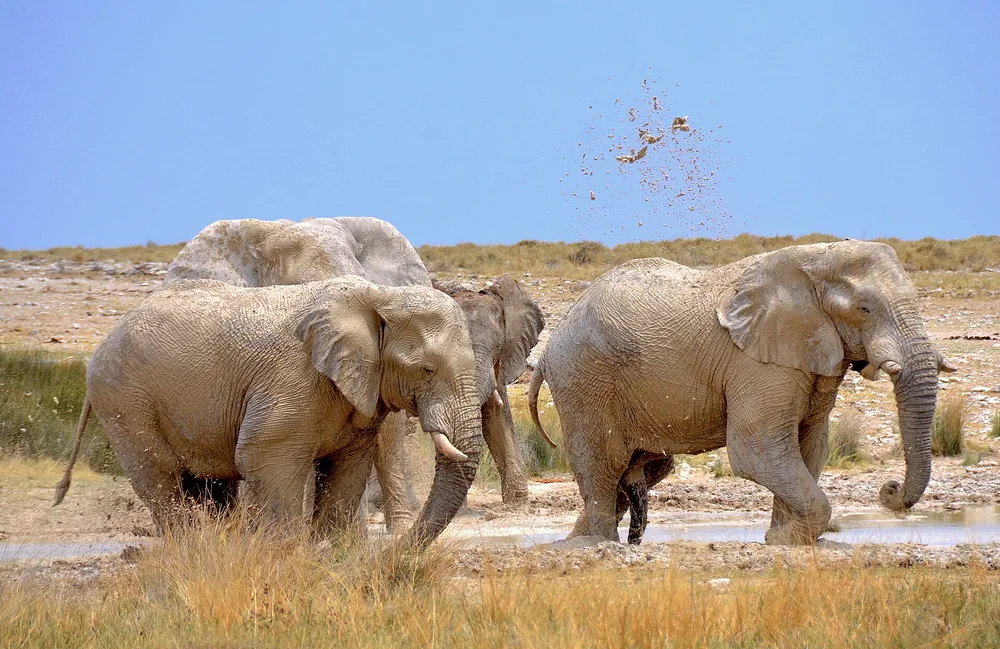
Elephants hurry the last few hundred metres to the Okaukuejo waterhole in Etosha. In the dry season the animals come to you.
The five safari styles compared
Every Namibia safari is a version of one of five styles, or a mix of them: it is common to self-drive the south and join guided drives in Etosha, or to fly one long leg and drive the rest. The ratings below are our editorial judgement of how each style performs for a first-time visitor, not a measure of quality. A camping tour can be the best trip of your life; it simply scores lower on comfort.
| Most popularSelf-drive | EasiestSmall-group guided tour | Private guided safari | Fly-in safari | Lowest costCamping overland tour | |
|---|---|---|---|---|---|
| Who drives | You, in a rental car or a 4x4 with a rooftop tent | A driver-guide, with other travellers | Your own driver-guide | Pilots between airstrips; lodge guides on the ground | A crew: driver-guide, often a cook |
| Cost levellower is better | ●●○○○Low to mid: car, fuel, park fees, rooms or campsites | ●●○○○Low to mid, fixed in advance | ●●●●○High: you pay for the whole vehicle and guide | ●●●●●Highest: charter flights and remote lodges | ●○○○○Lowest per day |
| Comfort | ●●●○○Whatever you book, from campsites to lodges | ●●●○○Lodge or camping versions of the same route | ●●●●●Lodges of your choice, door to door | ●●●●●Top lodges, almost no road time | ●●○○○Tents, shared chores on some trips |
| Flexibility | ●●●●●Total: stay two hours at one waterhole if you wish | ●○○○○Fixed dates and route | ●●●●○Your pace, your interests | ●●○○○Fixed by flight schedules and lodge stays | ●○○○○Fixed dates and route |
| Driving effort for youlower is better | ●●●●●Long days, gravel, punctures to change | ○○○○○None | ○○○○○None | ○○○○○None | ○○○○○None, but long days on the truck |
| Wildlife expertise on hand | ●○○○○Your own eyes and a field guide; add NWR guided drives | ●●●●○A guide who knows the park | ●●●●●A guide all to yourself | ●●●●●Resident lodge guides and trackers | ●●●○○A guide shared by the group |
| Reaches remote areas | ●●●○○Kaokoland and the Zambezi parks need a 4x4 and experience | ●●○○○Usually the main circuit only | ●●●●○Wherever a vehicle can go | ●●●●●Skeleton Coast, Hartmann's Valley, private concessions | ●●●○○Main circuit; some go to Kaokoland |
| Good for solo travellers | ●●○○○Costly alone, and no one to share the driving | ●●●●●Built for it | ●●○○○You carry the whole cost | ●●●○○Single supplements apply | ●●●●●Built for it |
| Best for | Couples, friends and families who like to set their own pace | Short trips, first-timers, anyone who would rather not drive | Photographers, families and travellers with special interests | Short on time, with a large budget; the far north-west | Backpackers, solo travellers and the budget-minded |
| Self-drive guide | 3-day Etosha tour | Private Etosha safari | Flying in Namibia | 7-day camping tour |
-
Self-drive
Most popular- Who drives
- You, in a rental car or a 4x4 with a rooftop tent
- Cost level
- ●●○○○Low to mid: car, fuel, park fees, rooms or campsites
- Comfort
- ●●●○○Whatever you book, from campsites to lodges
- Flexibility
- ●●●●●Total: stay two hours at one waterhole if you wish
- Driving effort for you
- ●●●●●Long days, gravel, punctures to change
- Wildlife expertise on hand
- ●○○○○Your own eyes and a field guide; add NWR guided drives
- Reaches remote areas
- ●●●○○Kaokoland and the Zambezi parks need a 4x4 and experience
- Good for solo travellers
- ●●○○○Costly alone, and no one to share the driving
- Best for
- Couples, friends and families who like to set their own pace
-
Small-group guided tour
Easiest- Who drives
- A driver-guide, with other travellers
- Cost level
- ●●○○○Low to mid, fixed in advance
- Comfort
- ●●●○○Lodge or camping versions of the same route
- Flexibility
- ●○○○○Fixed dates and route
- Driving effort for you
- ○○○○○None
- Wildlife expertise on hand
- ●●●●○A guide who knows the park
- Reaches remote areas
- ●●○○○Usually the main circuit only
- Good for solo travellers
- ●●●●●Built for it
- Best for
- Short trips, first-timers, anyone who would rather not drive
-
Private guided safari
- Who drives
- Your own driver-guide
- Cost level
- ●●●●○High: you pay for the whole vehicle and guide
- Comfort
- ●●●●●Lodges of your choice, door to door
- Flexibility
- ●●●●○Your pace, your interests
- Driving effort for you
- ○○○○○None
- Wildlife expertise on hand
- ●●●●●A guide all to yourself
- Reaches remote areas
- ●●●●○Wherever a vehicle can go
- Good for solo travellers
- ●●○○○You carry the whole cost
- Best for
- Photographers, families and travellers with special interests
-
Fly-in safari
- Who drives
- Pilots between airstrips; lodge guides on the ground
- Cost level
- ●●●●●Highest: charter flights and remote lodges
- Comfort
- ●●●●●Top lodges, almost no road time
- Flexibility
- ●●○○○Fixed by flight schedules and lodge stays
- Driving effort for you
- ○○○○○None
- Wildlife expertise on hand
- ●●●●●Resident lodge guides and trackers
- Reaches remote areas
- ●●●●●Skeleton Coast, Hartmann's Valley, private concessions
- Good for solo travellers
- ●●●○○Single supplements apply
- Best for
- Short on time, with a large budget; the far north-west
-
Camping overland tour
Lowest cost- Who drives
- A crew: driver-guide, often a cook
- Cost level
- ●○○○○Lowest per day
- Comfort
- ●●○○○Tents, shared chores on some trips
- Flexibility
- ●○○○○Fixed dates and route
- Driving effort for you
- ○○○○○None, but long days on the truck
- Wildlife expertise on hand
- ●●●○○A guide shared by the group
- Reaches remote areas
- ●●●○○Main circuit; some go to Kaokoland
- Good for solo travellers
- ●●●●●Built for it
- Best for
- Backpackers, solo travellers and the budget-minded
Ratings ●●●●● = most. Our editorial judgement, as of November 2026. Tour buttons open the live GetYourGuide listing for dates and what is included; we do not print tour prices because they change.
Self-drive: the classic way
Most visitors to Namibia rent a vehicle in Windhoek and drive themselves, and most of them have never driven in Africa before. It works because the conditions are forgiving: traffic is thin, signposting is good, towns with fuel and supermarkets sit a few hours apart on the main circuit, and inside Etosha the speed limit is 60 km/h on roads that an ordinary saloon car handles in the dry season.
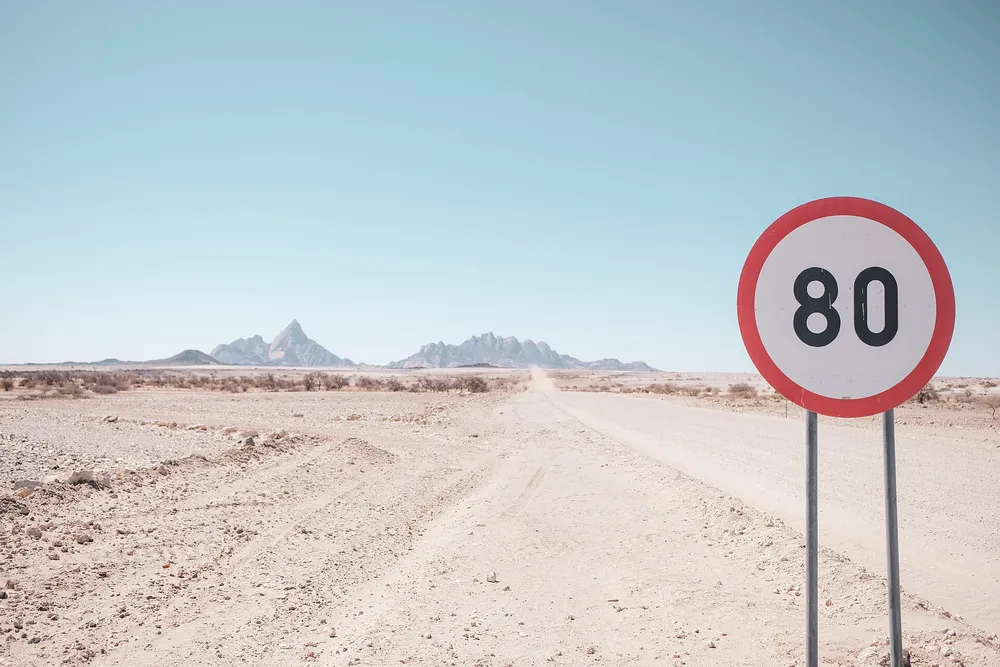
The effort lies between the parks. The roads to Sossusvlei, through Damaraland and along the Skeleton Coast are gravel, and gravel is where rental cars come to grief: usually a single vehicle that drifts wide on a bend at 100 km/h, corrects too sharply and rolls. Keep to 80 km/h or less on gravel, never drive after dark, when kudu and warthog stand in the road, and treat every day's distance as longer than the map suggests. A leg of 350 km on gravel is a full day once you add fuel stops, photographs and a puncture.
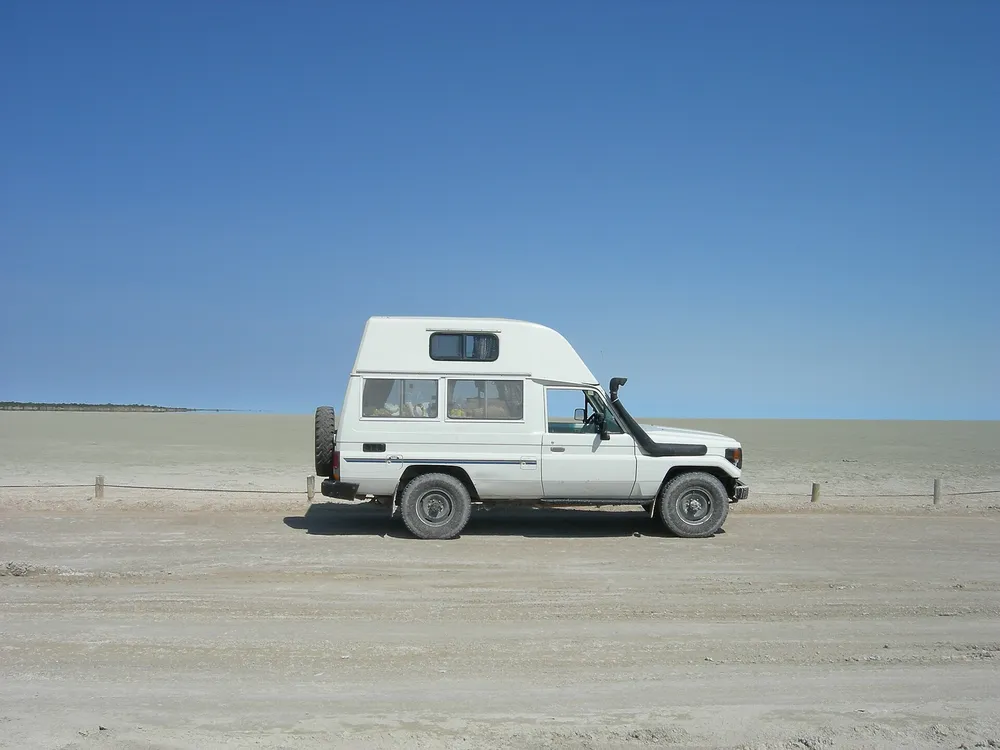
The second decision is the vehicle. A two-wheel-drive car with good clearance is enough for the main loop in the dry season. A 4x4 becomes necessary for the last five kilometres of sand to Deadvlei if you do not want to use the park shuttle, for Kaokoland beyond Opuwo and Epupa, and for the sandy tracks of the Zambezi Region parks. A 4x4 with a rooftop tent and a fridge turns the trip into a camping safari and gives you the campsites inside Etosha, which are far easier to book than the chalets.
Self-drivers pay for expertise in a different way: by adding guided activities where a guide changes what you see. Two are worth planning in from the start. Book a night drive with Namibia Wildlife Resorts at one of the Etosha camps, because private cars must be inside the camp gates by sunset, and take a morning with a local guide in Damaraland to find the desert-adapted elephants, which move along dry riverbeds that you should not try to navigate alone. Our self-drive guide covers vehicles, insurance, fuel gaps and gravel technique in detail.
Guided small-group tours: the least effort
If you have a week or less, do not want to drive, or are travelling alone, a small-group tour from Windhoek is the efficient answer. The standard product is a three-day Etosha safari: drive north on the first day, usually with a game drive on arrival; a full day in the park on the second; a final morning drive and the road back to Windhoek on the third. You get roughly a day and a half of game viewing, which in the dry season is enough to see elephant, giraffe, zebra, several antelope species and, with reasonable luck, lion and rhino.
Most operators sell the same route in two versions, camping (the crew pitch the tents; you may be asked to help) and lodging (rooms in a rest camp or a lodge near the gate). Check three things on the listing before you pay: whether accommodation is inside the park or outside it, because staying inside gives you the floodlit waterhole after dark; whether park fees are included, since they rose sharply in April 2026; and how many people share the vehicle. A pop-top or open-sided safari vehicle with a window seat for everyone is worth more than a slightly cheaper seat in a closed minibus.
Longer scheduled tours string Etosha together with Swakopmund and Sossusvlei over six to ten days and suit travellers who want the whole circuit without the driving. The trade-off is the fixed pace: the vehicle leaves the waterhole when the guide's timetable says so, not when the elephants do. We rank the bookable options on our Namibia tours page.
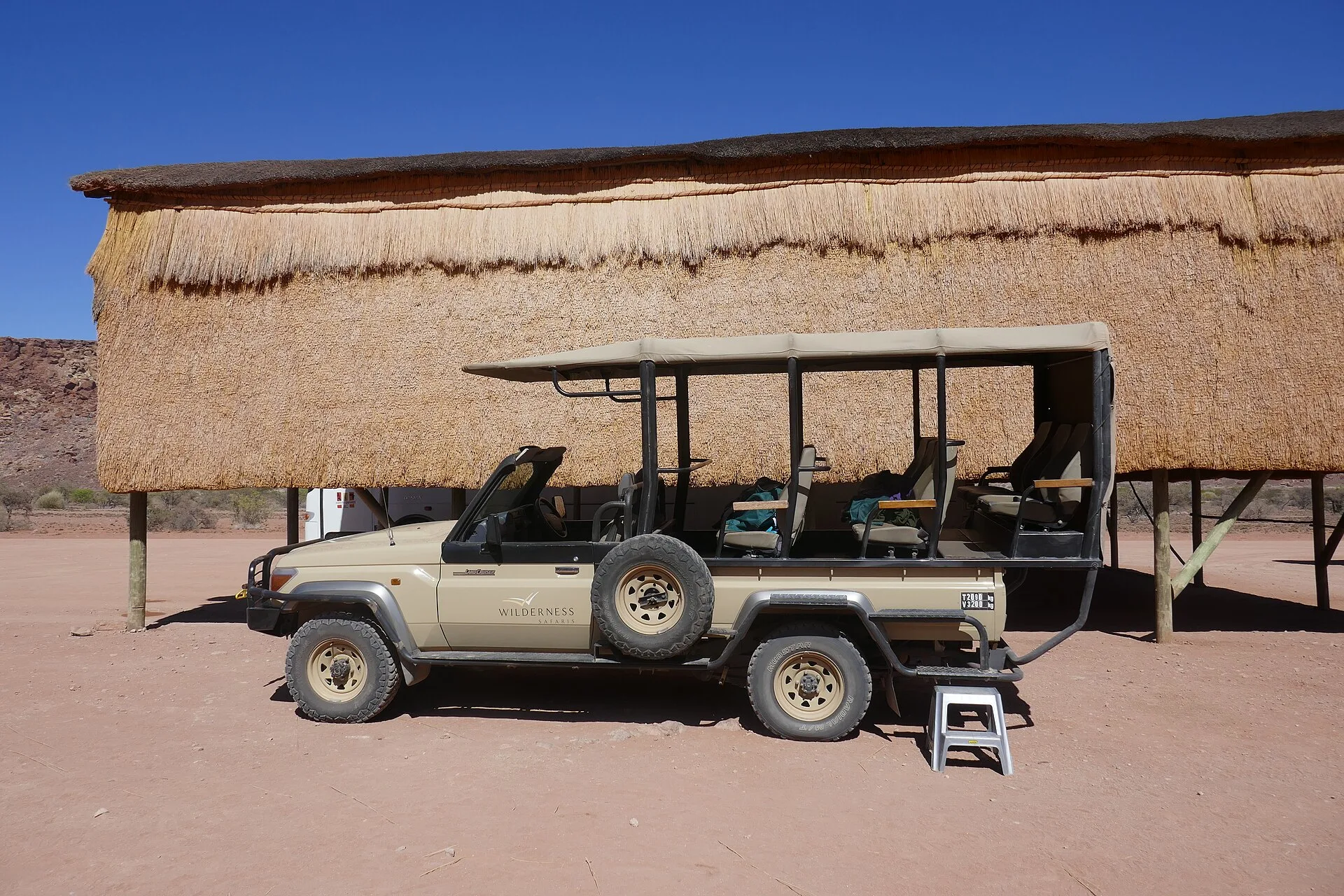
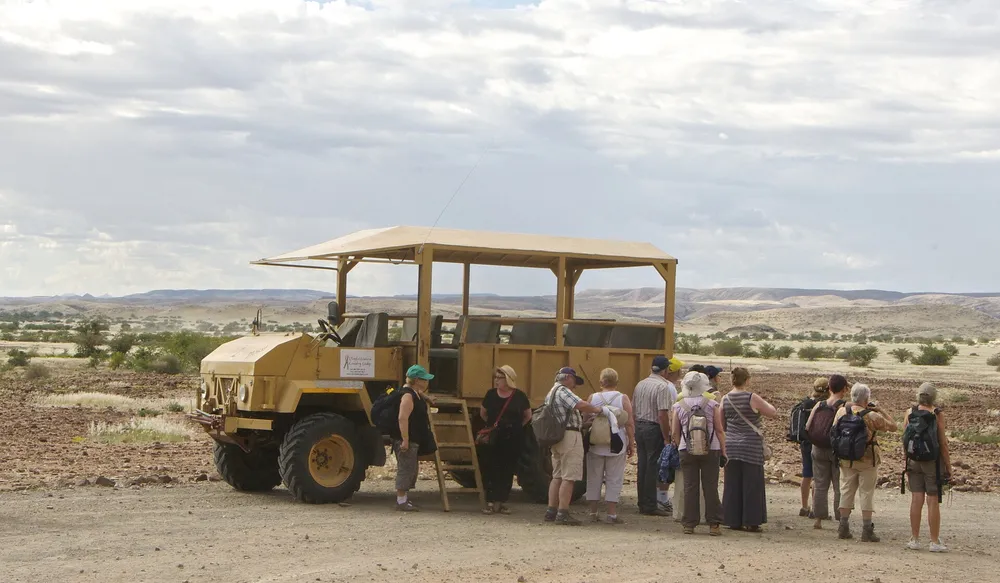
An open game-drive vehicle of the kind lodges and guides use, here at Twyfelfontein.
From Windhoek: 3-Day Etosha National Park Tour
The classic short safari: drive north from Windhoek, game drives on arrival, a full day among the waterholes and a final drive at sunrise before the road home. The simplest way to see Etosha without a car. Check the listing for the accommodation type and whether park fees are included.
Check availabilityBook via GetYourGuide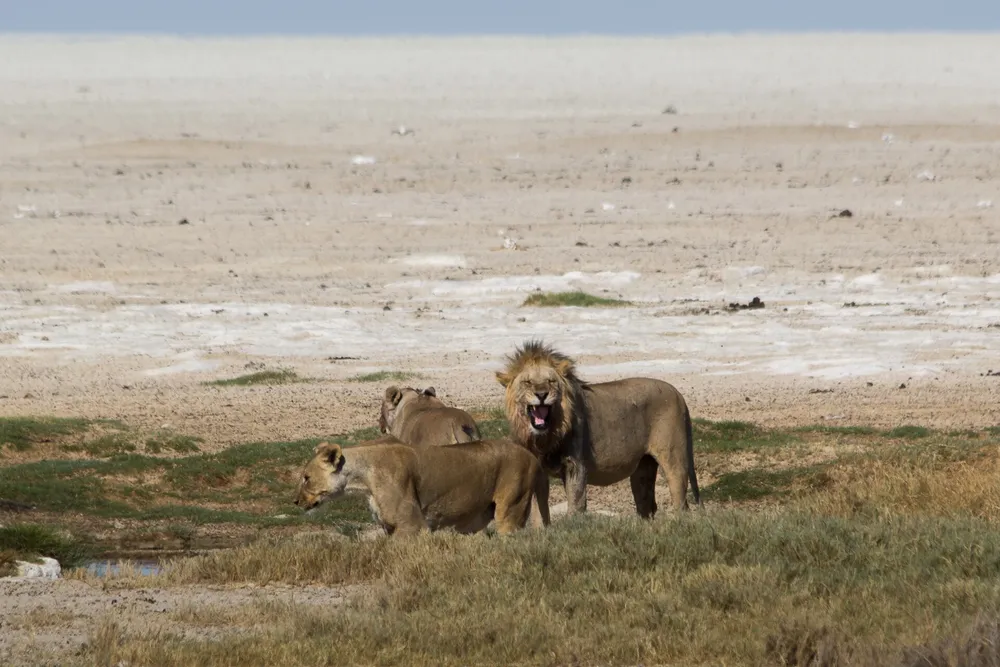
From Windhoek: 3-Day Etosha National Park Safari
A three-day guided Etosha safari from Windhoek on the standard route, with about a day and a half of game viewing in the park. Compare the vehicle, group size and overnight stops with the other three-day options.
Check availabilityBook via GetYourGuide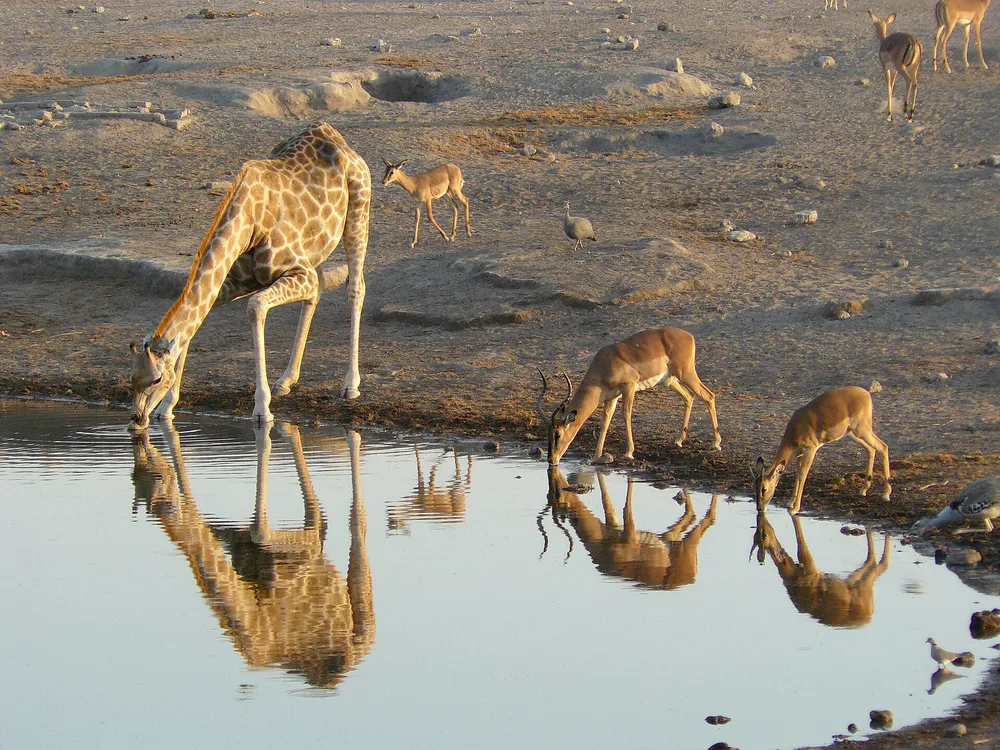
Windhoek to Etosha Park: 3-Day Shared Safari Tour
A shared-vehicle version of the three-day Etosha trip, aimed at solo travellers and couples who want to split the cost. Check group size and where the nights are spent.
Check availabilityBook via GetYourGuideTour listings are on GetYourGuide. Prices, dates and cancellation terms are shown live on each listing and can change; NamibiaSafaris.com may earn a commission at no extra cost to you.
Private guided safaris: your own guide and vehicle
A private guided safari is the same road trip with a professional at the wheel and nobody else in the car. You agree the route, the lodges and the pace beforehand, and on the road the day bends around you: a photographer can wait an hour for the light, a family can stop when the children have had enough, a birder can spend the morning at Fischer's Pan. A good guide also solves problems you never hear about, from a flat tyre to a double-booked room.
It costs more than any other road-based style because one group carries the whole cost of the vehicle, the fuel and the guide's time, meals and accommodation. For a group of four the price per person drops quickly, and for families it is often the best value of the upmarket options because there is no single supplement for the guide. Ask whether the guide holds a Namibia Tourism Board registration, what vehicle is used (closed 4x4 station wagon, or a converted safari vehicle with a pop-up roof) and whether activities such as rhino tracking are included or paid locally.
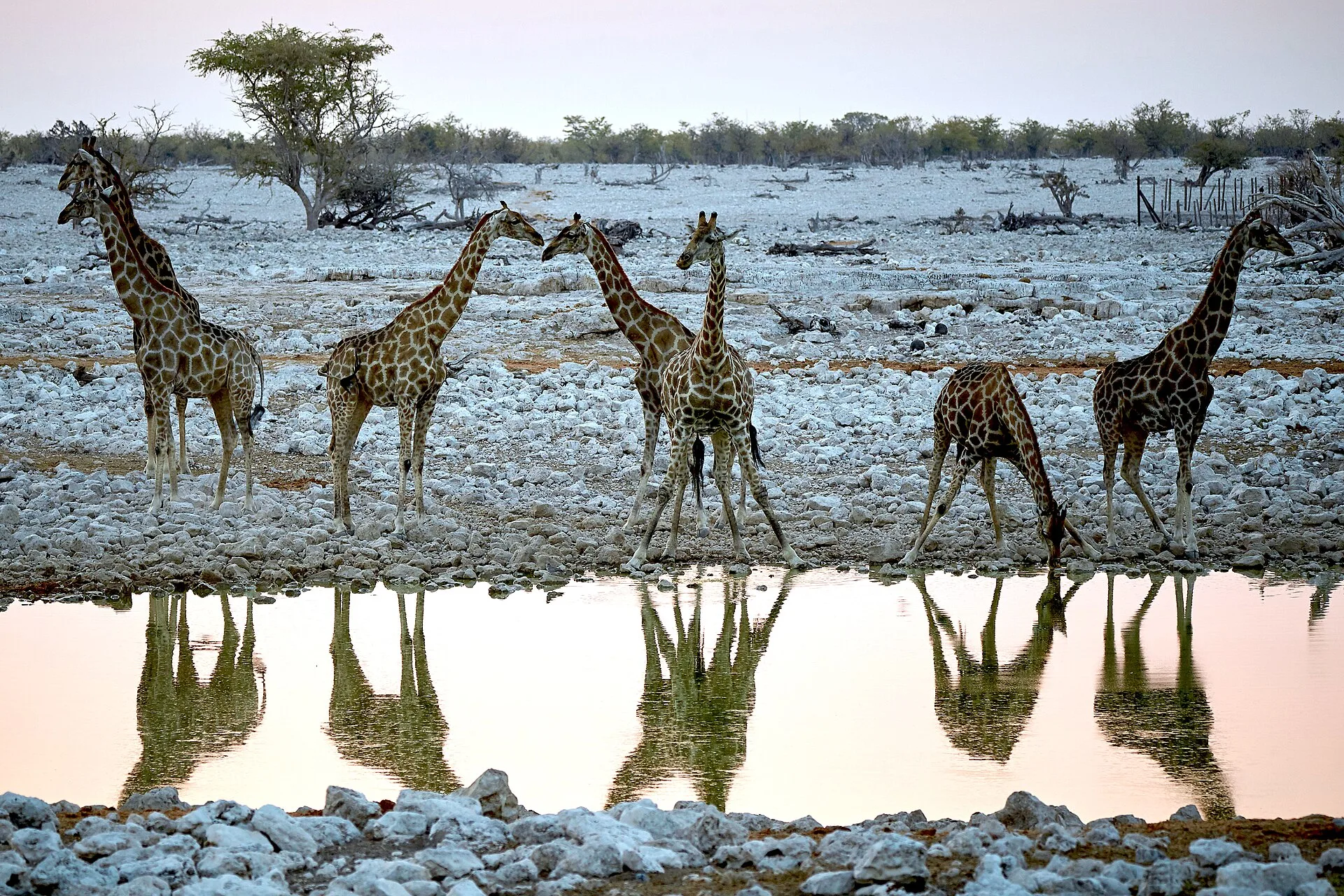
With your own guide you can stay with a sighting for as long as it holds your interest.
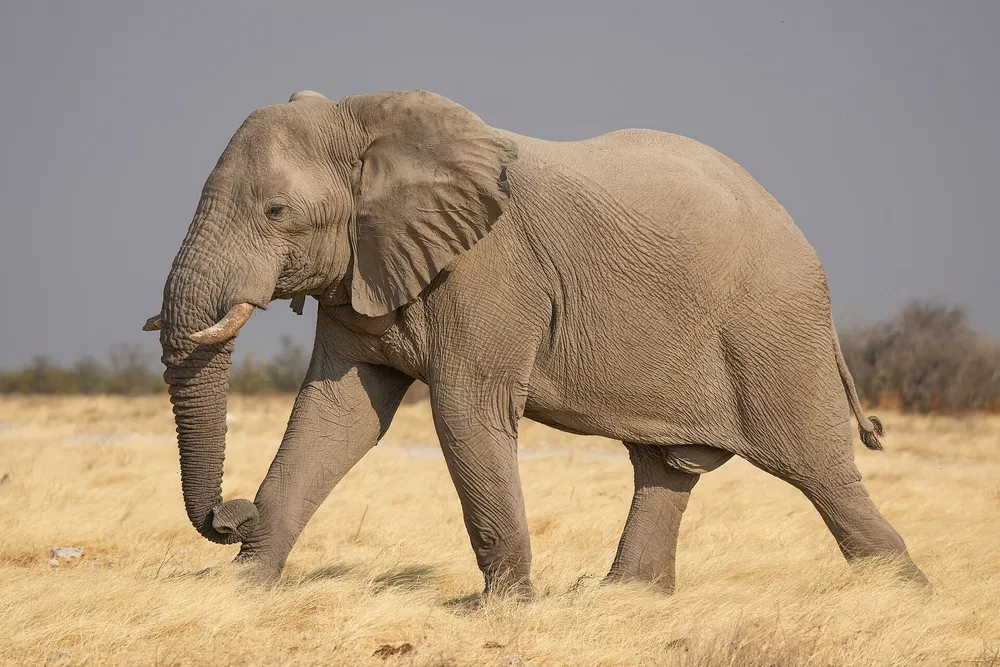
Etosha Private Safari Adventure: 3 Days from Windhoek
Your own guide and vehicle for three days: the pace, the waterholes and the stops are yours to decide. Best for families, photographers and anyone who wants to linger at a sighting.
Check availabilityBook via GetYourGuide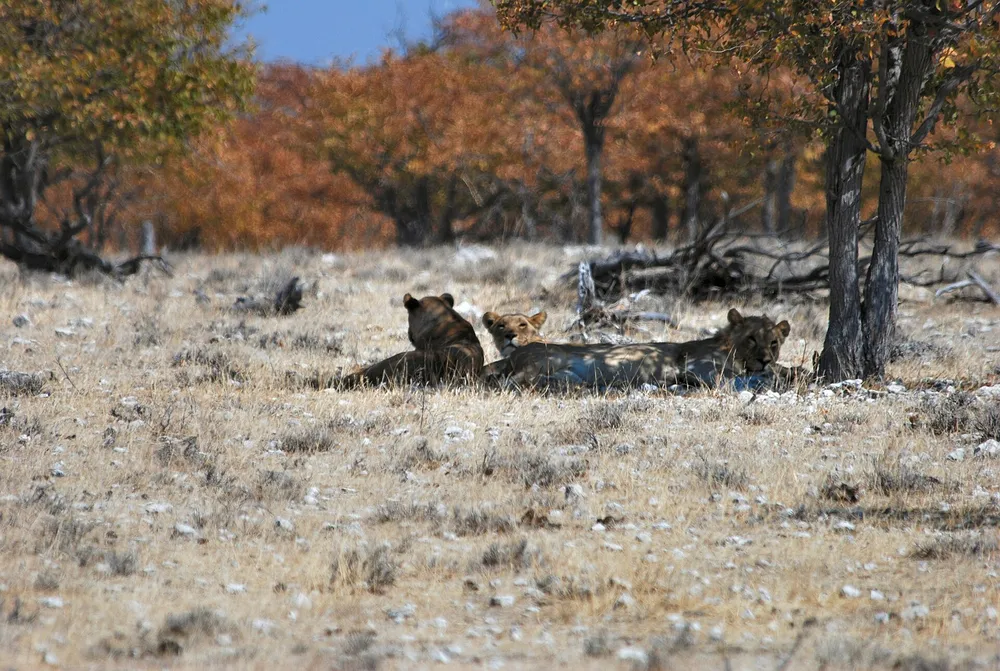
Windhoek: 5-Day Private Etosha Safari with Accommodation
Five days gives two or more full days inside the park and time for both the Okaukuejo and Namutoni sides, on a private basis with accommodation arranged. The unhurried way to do Etosha with a guide.
Check availabilityBook via GetYourGuideTour listings are on GetYourGuide. Prices, dates and cancellation terms are shown live on each listing and can change; NamibiaSafaris.com may earn a commission at no extra cost to you.
Fly-in safaris: the far corners, quickly
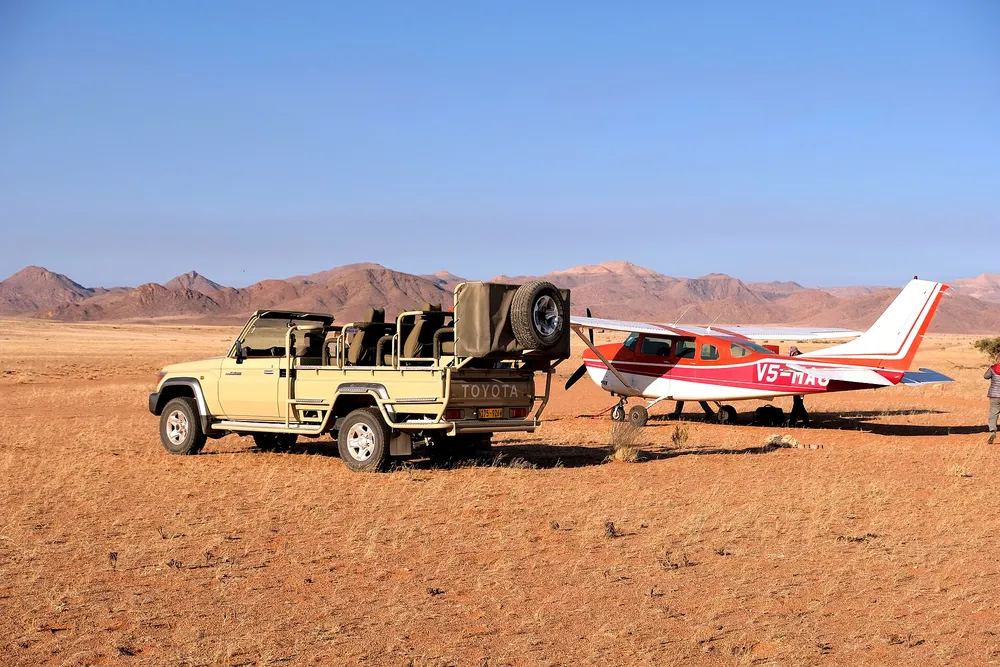
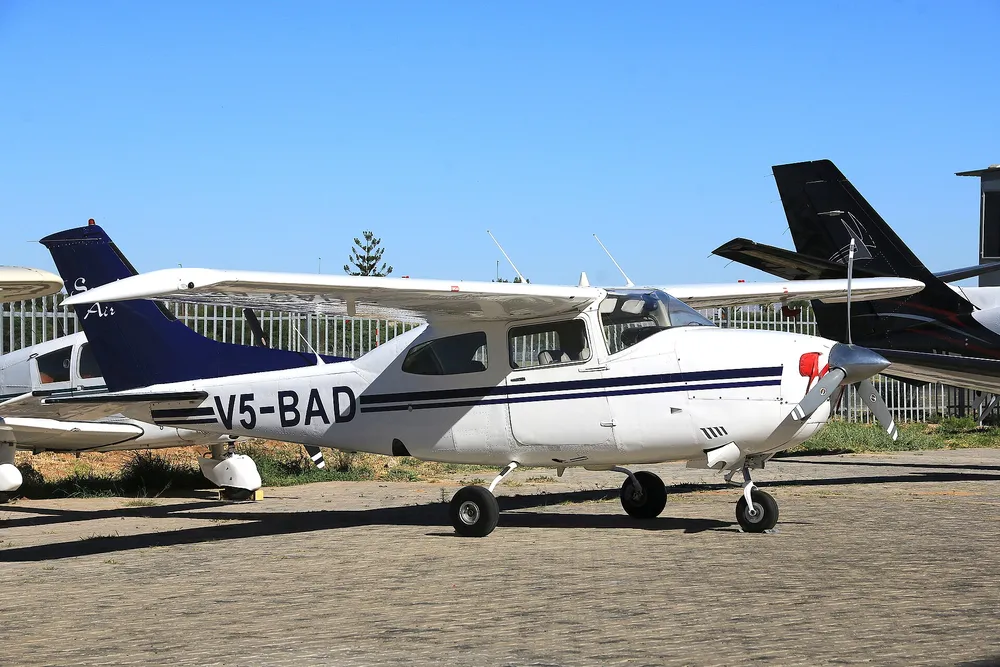
Namibia's distances make it a natural country for light aircraft. A fly-in safari links three or four lodges by scheduled or chartered flights in small single-engine planes, typically Sossusvlei or the NamibRand, a camp in Damaraland or the far north-west, and a private reserve on the edge of Etosha. A leg that takes seven hours by road takes a little over an hour by air, and the flights are part of the experience: the dune sea, the Skeleton Coast and the dry rivers of Kaokoland are at their most legible from a few thousand feet.
The style has limits you should know before paying for it. Luggage is restricted to soft bags, commonly around 20 kg including camera gear (the operator will give the exact figure). You see less of ordinary Namibia: no farm stalls, no small towns, no sense of how far apart things are. And the lodges that fly-in itineraries use are sold mostly through specialist safari companies as complete packages, not as individual rooms. If the budget does not stretch to a full fly-in, a single scenic flight from Swakopmund or a balloon flight at Sossusvlei gives you the view from above for a fraction of the cost; see balloon and scenic flights.
Camping overland tours: the budget route
Camping tours are how many younger and solo travellers see Namibia. A truck or a 4x4 with a trailer carries the group, the tents and the kitchen; a guide drives and a cook or the guide prepares meals; nights are spent on campsites, including the ones inside Etosha. Itineraries of six to ten days cover Sossusvlei, Swakopmund and Etosha, and some add Spitzkoppe or Damaraland.
What you give up is comfort and privacy: early starts, thin mattresses, cold desert nights between June and August (close to freezing at Sesriem, and not much warmer in Etosha before dawn), and long days in the vehicle. What you gain is price, company and the campsites themselves, which are often in better positions than the lodges. Read the listing for the group size limit and for what participants are expected to do. On a 'participation' tour you help pitch tents and wash up; on a 'serviced' one the crew does it.
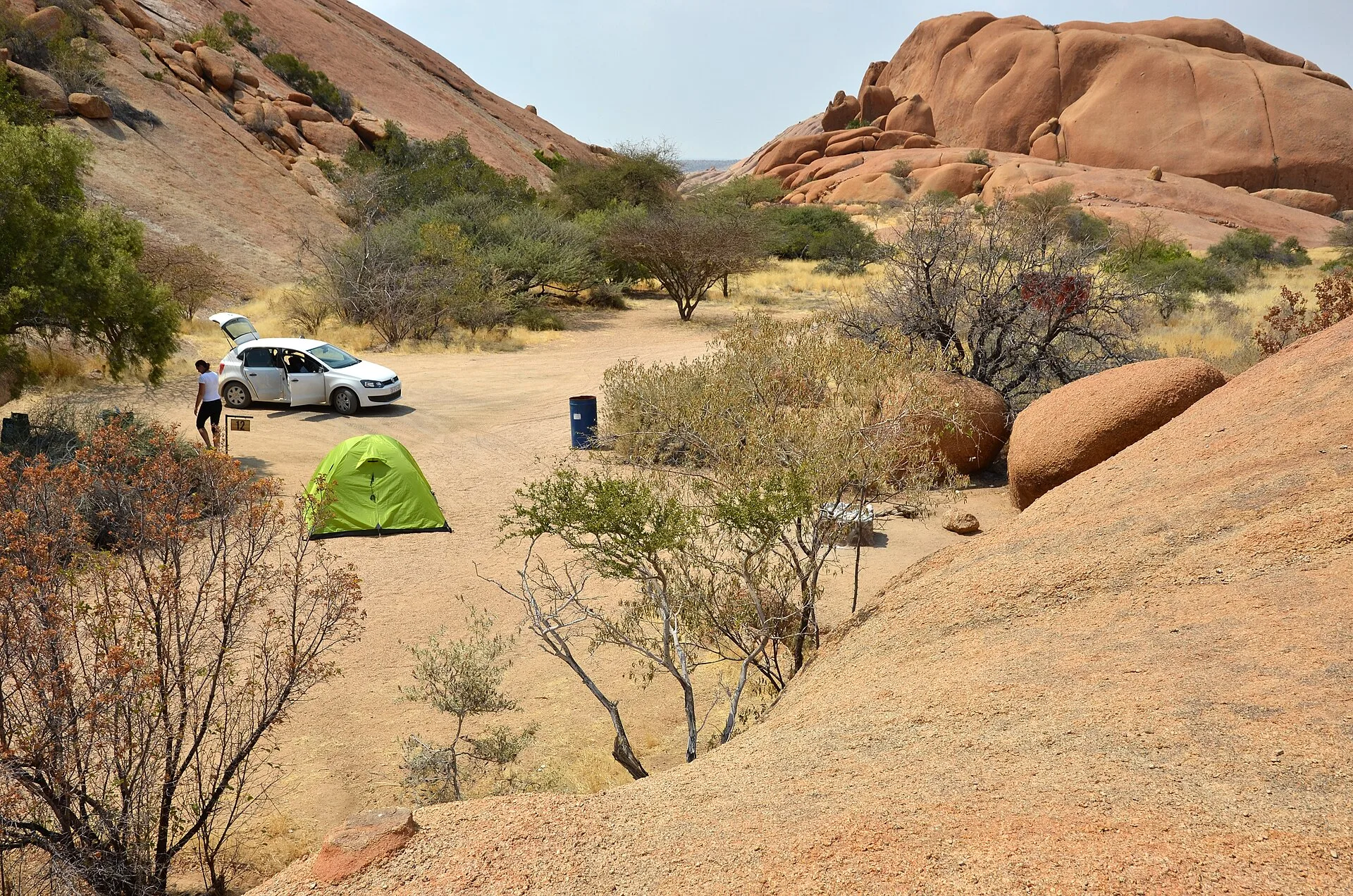
A campsite among the granite domes of Spitzkoppe. The best pitches in Namibia are often better placed than the lodges.
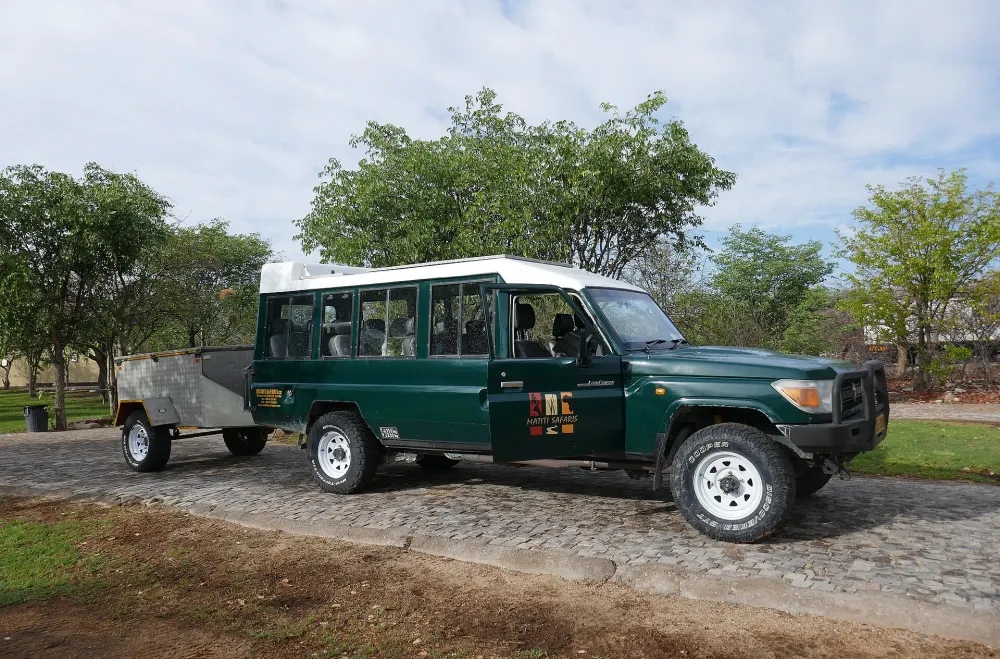
From Windhoek: 7-Day Namibia Camping Tour with Game Drive
A week under canvas covering the main highlights with at least one game drive: the budget-friendly way to see Namibia without a car. Nights are cold from June to August.
Check availabilityBook via GetYourGuide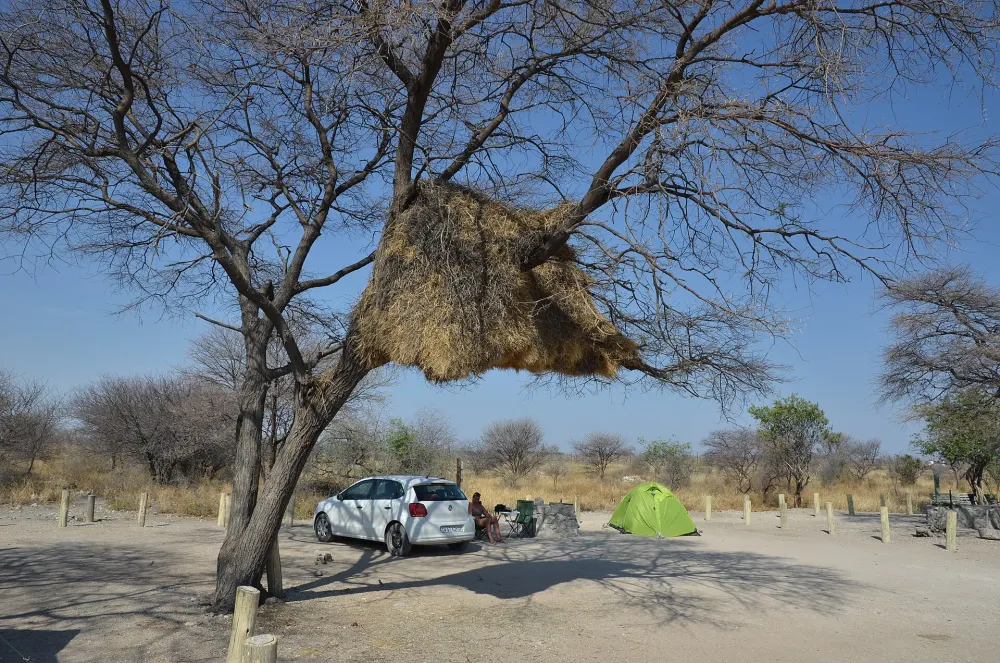
6 Days Sossusvlei, Swakopmund and Etosha: Camping
Dunes, coast and Etosha in six days on a camping basis, one of the lowest-cost ways to cover all three.
Check availabilityBook via GetYourGuide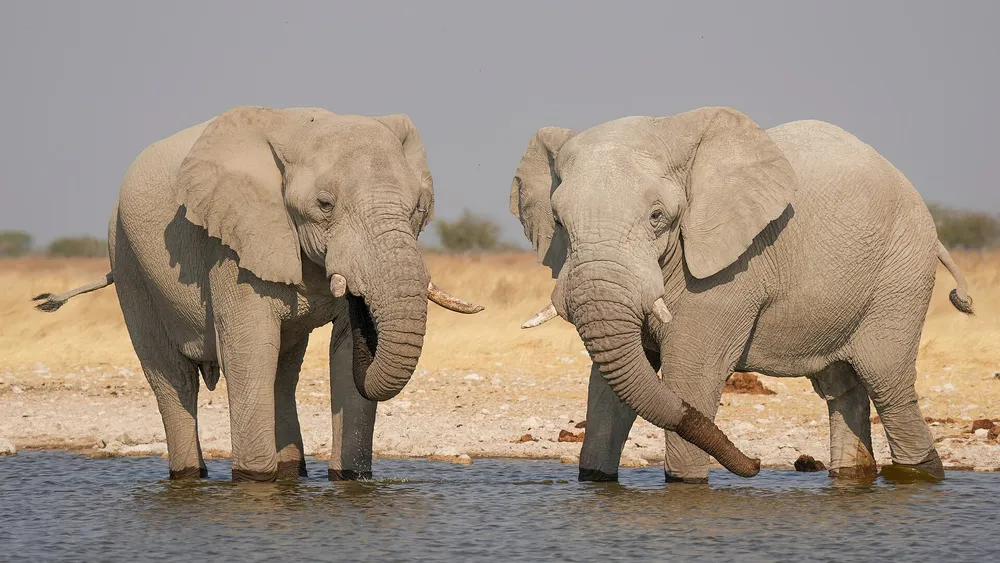
From Swakopmund: 3-Day Etosha National Park Camping Safari
A camping safari to Etosha that starts on the coast instead of in Windhoek, useful if your trip is based in Swakopmund. Expect long transfer days at either end.
Check availabilityBook via GetYourGuideTour listings are on GetYourGuide. Prices, dates and cancellation terms are shown live on each listing and can change; NamibiaSafaris.com may earn a commission at no extra cost to you.
What you will and will not see, compared with East Africa
Travellers who have been to the Serengeti or the Maasai Mara sometimes arrive expecting the same thing with fewer people. Namibia is a different kind of safari, and it is better to know how before you go.
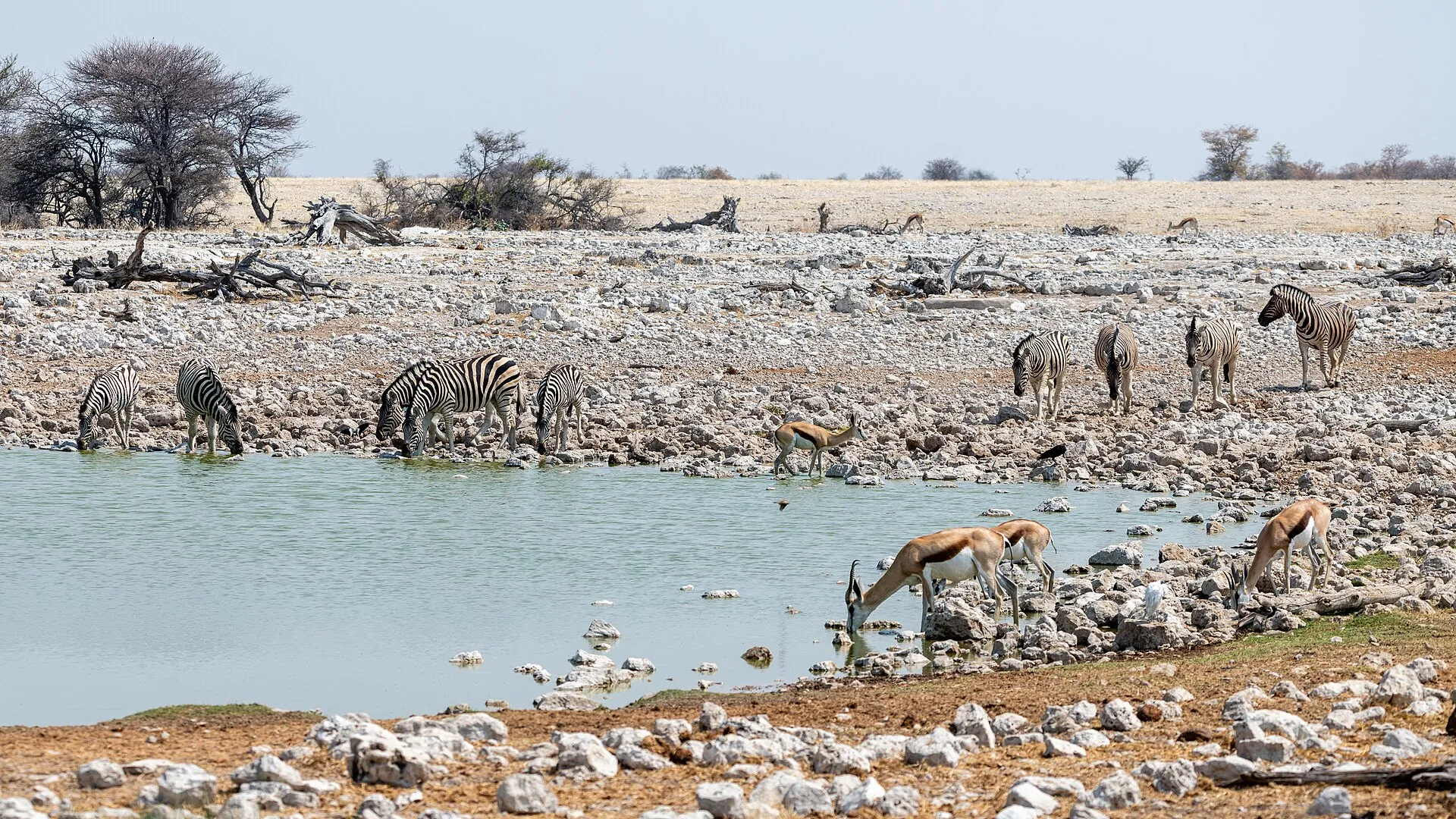
You will see animals gathered at water. Etosha in the dry season is a waterhole park: rather than driving for hours looking for game, you park beside a spring on the edge of the pan and watch a procession of zebra, springbok, oryx, kudu, giraffe and elephant come to drink, with lions lying up nearby because they know it too. Three of the camps have floodlit waterholes where black rhino drink after dark, a sight that is hard to find anywhere else in Africa at any price. Namibia is one of the best places on the continent to see black rhino, and it has more cheetah than any other country, although most of them live on farmland outside the parks.
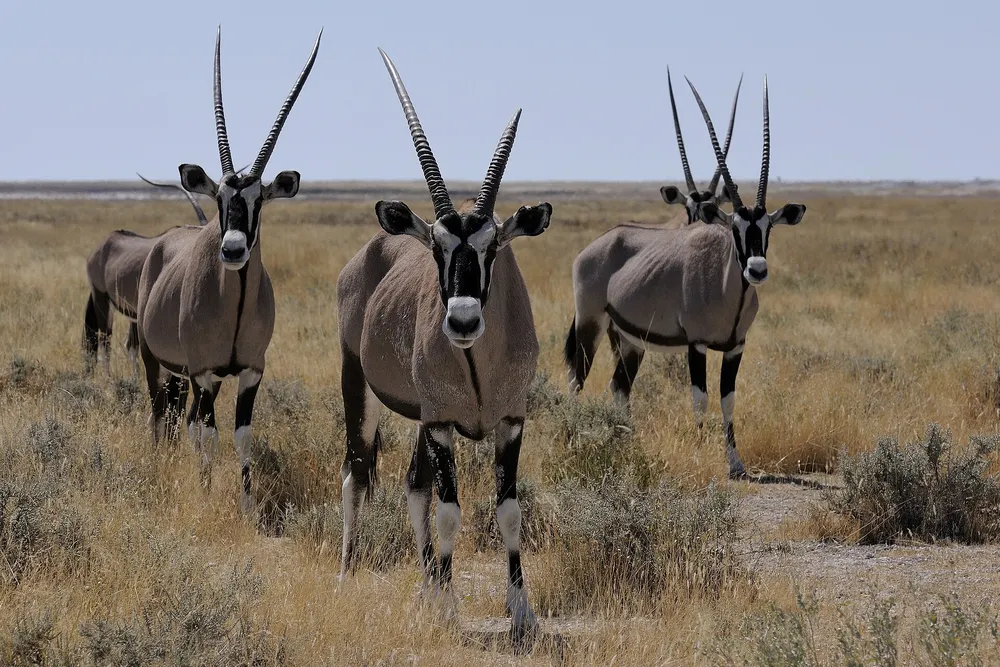
You will also see species that East Africa does not have: the gemsbok (oryx) with its metre-long horns, Hartmann's mountain zebra, the black-faced impala, the tiny Damara dik-dik, and animals living in true desert, including elephants and giraffes that walk the dry riverbeds of the north-west.
You will not see a great migration; there is no river crossing and no plain covered with wildebeest to the horizon. There are no buffalo, hippos or crocodiles in Etosha: for those you must go to the rivers of the Zambezi Region, or to the Waterberg Plateau for buffalo. Leopards are present but hard to see without a guide. Animal densities are lower than in the famous East African reserves, and in the rainy season the game scatters and a day's drive can be quiet.
The compensation is space. Outside the busiest waterholes in July and August you can sit alone with a herd of elephants for an hour, and off-road driving and crowding around a kill, the bane of some East African parks, are not part of the Etosha experience because everyone must stay on the roads. The full picture, species by species, is in our wildlife guide and the honest answer about the Big Five.
| Namibia | East Africa (Kenya, Tanzania) | |
|---|---|---|
| Typical style | Self-drive or guided, your choice | Guided vehicle and lodge package |
| Signature sight | Waterholes in the dry season; desert-adapted wildlife | The wildebeest migration; big predator numbers |
| Rhino | Black rhino regularly seen in Etosha, especially at floodlit waterholes | Possible in a few reserves |
| Buffalo, hippo, crocodile | Only in the north-east (and buffalo at Waterberg) | Widespread |
| Crowds | Light outside peak weeks at the main waterholes | Heavy at sightings in peak season |
| Malaria | None or very low in the south, centre and coast; risk in the north, mainly November to June | Present in most safari areas |
| Beyond wildlife | Dunes, canyon, coast, rock art, night skies | Culture, mountains, Indian Ocean coast |
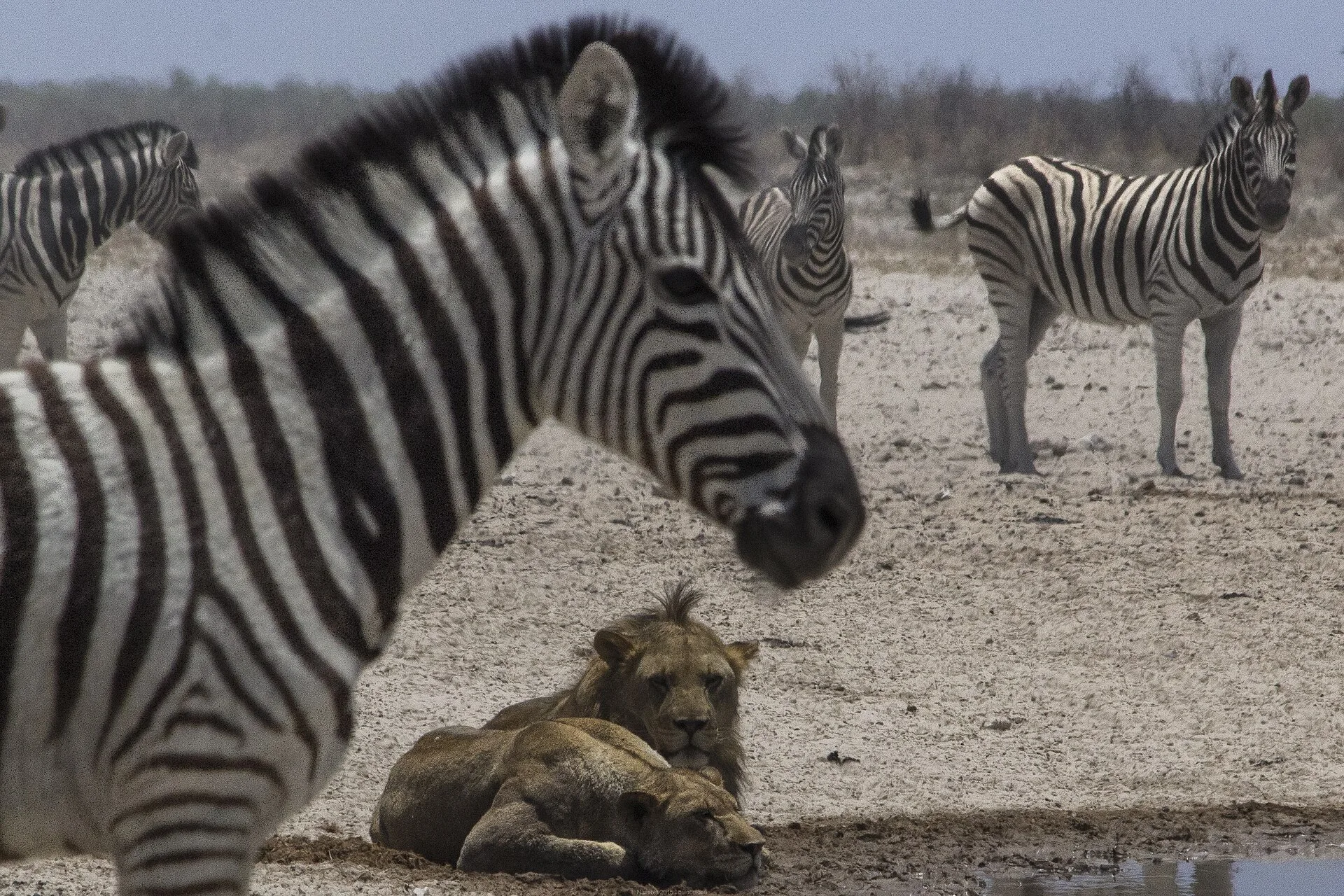
Zebras wait their turn while lions occupy an Etosha waterhole.
How many days you need
Distances set the minimum. From Windhoek it is about 430 km to Etosha's southern gate, roughly 330 km, much of it gravel, to Sesriem for Sossusvlei, and about 360 km to Swakopmund on tar. The table shows what fits into the time you have without turning the holiday into a rally. Day-by-day versions with distances and driving hours are on our itineraries page.
| Time | What fits | Style that suits |
|---|---|---|
| 3 days | Etosha from Windhoek and back | Small-group tour |
| 5–7 days | Etosha plus Swakopmund, or Sossusvlei plus Swakopmund | Tour, or a short self-drive |
| 10 days | The classic loop: Sossusvlei, Swakopmund, Damaraland, Etosha | Self-drive or private guide |
| 14 days | The loop at a humane pace, with Waterberg or a second Etosha camp | Self-drive, private guide, long camping tour |
| 21 days | The loop plus Fish River Canyon and Lüderitz in the south, or the Zambezi Region in the north-east | Self-drive, 4x4 camping |
When to go
May to October is the dry season and the standard answer. Rain stops, the bush thins, surface water disappears and animals are forced to the permanent waterholes. Game viewing improves every week until the first rains: August to October is the peak, and also the dustiest and, by October, the hottest. June to August brings cold nights and cool, clear days; July and August coincide with European holidays, so Etosha's camps and the lodges around Sossusvlei fill many months ahead.
November to April is summer and the rainy season, more so in the north than in the desert. Showers are usually afternoon thunderstorms, not all-day rain. The veld turns green, antelope drop their young, migrant birds arrive, and in a wet year water spreads across Etosha Pan and draws flamingos. The price is scattered game, heat, a higher malaria risk in the north, and gravel roads that can wash out. Rates are lower and the light is superb. The month-by-month detail is in best time to visit.
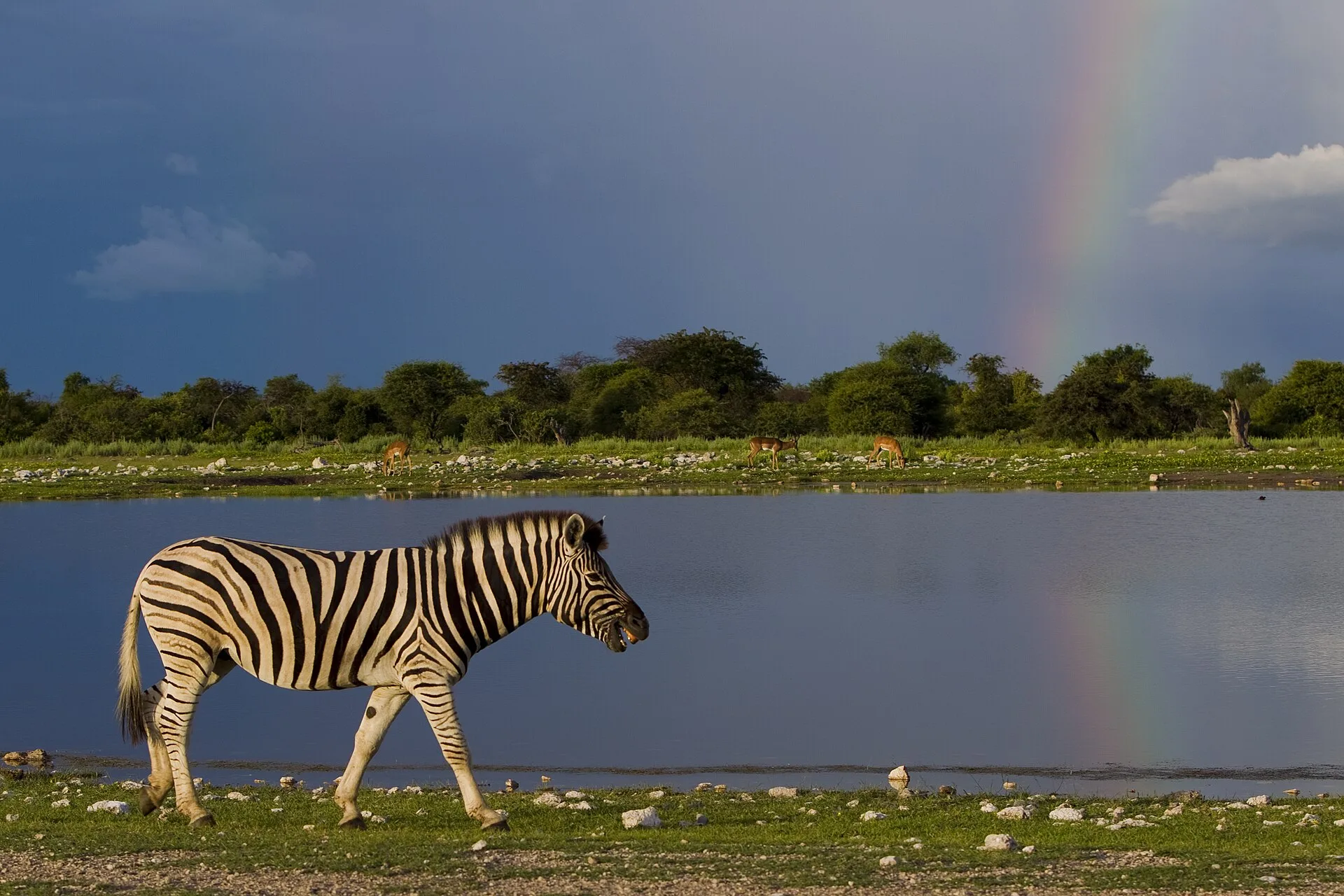
Green season at Klein Namutoni: storm light, standing water and far fewer vehicles.
Park fees and what a safari costs
Namibia revised its national park fees with effect from 1 April 2026 (Government Notice 115, Government Gazette No. 8877). For the premium parks, which include Etosha, Waterberg Plateau, Namib-Naukluft (Sossusvlei), Skeleton Coast, Cape Cross and Ai-Ais, the daily fee is now made up of an entrance fee and a conservation fee of equal size. Fees are charged per person per day, plus a daily fee per vehicle.
Namibia Wildlife Resorts (NWR), the state company that runs the camps inside the parks, sells guided game drives to anyone staying in its Etosha camps: its published rate for November 2026 to October 2027 is N$650 per person for a morning or afternoon drive and N$750 for a night drive. Everything else, from car hire to lodges, varies too much by season to print here; our safari costs page gives a framework by style.
| Etosha and other premium parks, per day | Namibian | SADC national | Other foreign visitor |
|---|---|---|---|
| Adult (16 and over) | N$60 | N$180 | N$280 |
| Child (9 to 15) | Free | N$100 | N$180 |
| Child (8 and under) | Free | Free | Free |
| Vehicle, 10 seats or fewer | N$60 | N$60 | N$60 |
How to book
Camps inside the parks (Okaukuejo, Halali, Namutoni and the others in Etosha; Sesriem; Waterberg) belong to Namibia Wildlife Resorts and are booked with NWR directly. As of November 2026 NWR's website states that its online booking system is unavailable and asks for requests by e-mail instead (the reservations address is on nwr.com.na); check the site for the current position. For July to October, book the Etosha camps as early as you can; chalets go first, campsites last.
Private lodges, guest farms and tented camps outside the parks can mostly be booked online. We link to Booking.com for properties whose pages we have checked, by area, on the Etosha camps and lodges page and on each destination page. Many of the lodges just outside Etosha's gates run their own guided drives into the park, which is a good compromise if the NWR camps are full.
Tours and day activities are bookable through GetYourGuide, with free cancellation on most listings up to 24 hours before (check each listing). Start with the three-day Etosha safari from Windhoek if you want the animals without the driving.
Before you fix dates, check the entry rules. Namibia introduced a visa-on-arrival and e-visa system for many nationalities on 1 April 2025; the current rules are on our visa page. Get medical advice about malaria if your route includes Etosha in the rainy season or anywhere in the far north; see health and safety.
- Choose the season, then the style, using the comparison above.
- Fix the nights inside Etosha first: they are the scarcest beds in the country in the dry season.
- Build the rest of the route around driving days of four to five hours, with at least two nights at each main stop.
- Book the vehicle (or the tour), then the lodges, then activities that sell out: night drives, rhino tracking, the balloon at Sossusvlei.
- Check visa rules, travel insurance with medical evacuation, and malaria advice for your dates.
Etosha Village
EtoshaTwo kilometres from Etosha’s Anderson Gate: air-conditioned units with patios, two pools, restaurant and bar.
8.7Booking.com guest score · as checked in November 2026
See on Booking.comMokuti Etosha
EtoshaBeside Etosha’s eastern Von Lindequist Gate near Namutoni: air-conditioned rooms, two pools, two restaurants and a fitness centre.
9.4Booking.com guest score · as checked in November 2026
See on Booking.comGondwana Etosha King Nehale
EtoshaThe lodge for the northern gate: 5 km from King Nehale Gate, with air-conditioned rooms, family rooms and a restaurant.
9.4Booking.com guest score · as checked in November 2026
See on Booking.comSee all stays in Etosha on Booking.com
Accommodation links go to Booking.com, where you see live prices and availability. We do not list prices because they change daily; NamibiaSafaris.com may earn a commission.
Frequently asked questions
Can you do a Namibia safari without a guide?
Yes. Etosha National Park is designed for self-drive visitors: you may drive your own or a rental car on the park's roads between sunrise and sunset, and the main camps have waterholes you can watch on foot from behind a wall or fence. A guide is still worth having for night drives, for finding desert-adapted elephants in Damaraland and for the remote north.
Is a 4x4 necessary?
Not for the main circuit in the dry season. A two-wheel-drive car with good ground clearance manages Etosha, the road to Sesriem and the main gravel roads of Damaraland. You need a 4x4 for deep sand (the last 5 km to Deadvlei, the Zambezi parks) and for Kaokoland beyond the main road to Epupa. Many travellers rent one anyway for the stronger tyres and the rooftop tent.
How does Etosha compare with Kruger or the Serengeti?
Etosha is drier, emptier and built around waterholes. Game viewing in the dry season is excellent and very easy; black rhino sightings are better than almost anywhere. It has no buffalo, hippo or crocodile, lower animal numbers overall than the Serengeti, and far fewer vehicles at sightings.
What is the best month for a Namibia safari?
For wildlife, August to October, when water is scarcest and animals crowd the waterholes; September is a good balance before the worst of the heat. For fewer people and lower prices with good viewing, May, June and early November. For birds, green landscapes and young animals, January to March.
How much are Etosha park fees in 2026 and 2027?
From 1 April 2026 a foreign adult pays N$280 per day (N$140 entrance plus N$140 conservation fee), SADC nationals N$180 and Namibian citizens N$60. Children aged 9 to 15 from outside the SADC region pay N$180; children of 8 and under are free. A vehicle with up to 10 seats costs N$60 a day. These figures are from Government Gazette No. 8877; confirm before you travel.
Is Namibia a good first safari?
It is one of the best, especially for independent travellers and families: the roads are manageable, the camps are fenced, large parts of the country are free of malaria, and the animals are easy to find in the dry season. Travellers who mainly want big cats and vast herds may prefer East Africa or Botswana and should treat Namibia as a landscape journey with very good wildlife.
Sources and official information
Facts were checked against these official sources in November 2026. Park fees, gate times, visa rules and timetables change, so confirm before you go.
NamibiaSafaris.com is an independent guide, not the official site of any tour operator, lodge, Namibia Wildlife Resorts or the Namibian government. Some links are affiliate links: tours go to GetYourGuide and accommodation goes to Booking.com, and we may earn a commission at no extra cost to you.