In short
- What it is: a town of about 76,000 people (2023 census) where the Swakop River meets the Atlantic, 352 km west of Windhoek on the tarred B2. It is the natural two- or three-night stop between Sossusvlei and Damaraland or Etosha.
- Why stop: cool air after the desert, a walkable centre of early-1900s German colonial buildings, good restaurants, and more organised activities than anywhere else in the country.
- The best single activity is a half-day living desert tour in the dune belt: geckos, chameleons, sidewinders and beetles found and explained by a specialist guide.
- Pack a jacket. The cold Benguela Current keeps Swakopmund at roughly 15–25 °C all year, and fog covers the coast on a great many mornings.
- Walvis Bay is 35 km south: dolphin cruises, kayaking with seals and the 4x4 trip to Sandwich Harbour all start there, and operators collect from Swakopmund hotels.
First impressions: a seaside town in the wrong place
You arrive across a hundred kilometres of gravel plain with nothing on it, and then there are palm trees, half-timbered gables, a lighthouse and people in fleeces eating cake. Swakopmund was founded in 1892 as the harbour of German South West Africa because Britain held the only good natural port, Walvis Bay, just down the coast. It never worked well as a harbour: there is no shelter, and ships anchored offshore while cargo came through the surf. After South African forces took the territory in 1915 the port trade moved to Walvis Bay and Swakopmund reinvented itself as the country’s holiday resort, which it still is. Windhoek empties onto this beach every December.
For a traveller on the classic loop it does three jobs. It is where you rest and eat well in the middle of a long drive. It is where you book the things that need an operator: desert tours, sandboarding, flights, boat trips. And it is where the Namib’s strangest feature, a desert that gets its water from fog, is easiest to understand.
- Population
- 75,921 (2023 census)
- From Windhoek
- 352 km on the tarred B2, about 4 hours
- From Sesriem (Sossusvlei)
- about 350 km via Solitaire and Walvis Bay, 5–6 hours, mostly gravel
- To Walvis Bay
- 35 km on the coast road, about 30 minutes
- Airport
- Walvis Bay International (about 45 km) for scheduled flights; Swakopmund airfield for charters and scenic flights
- Typical temperatures
- about 15–25 °C through the year
Why it is cold and foggy on the edge of a desert
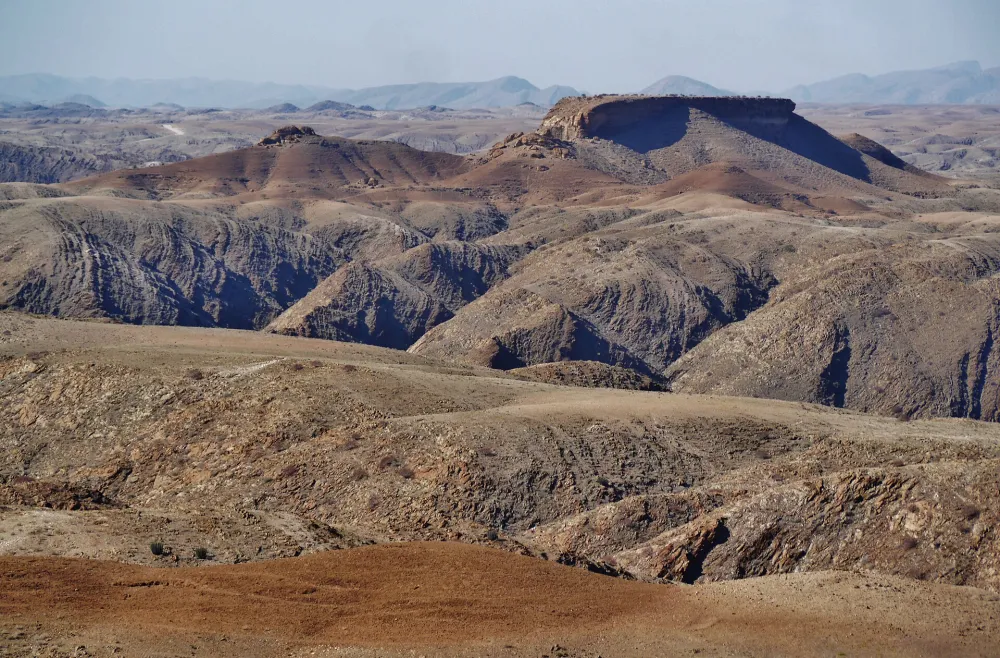
Offshore, the Benguela Current carries cold water north from the Southern Ocean and wind-driven upwelling brings even colder water to the surface. Moist sea air chilled over this water condenses into a low bank of fog and stratus that the sea breeze pushes ashore, sometimes as far as 100 km or more inland. The same cold sea stops rain clouds forming, so the coast receives almost no rainfall at all while being damp, grey and cool on a large share of mornings; more than 180 fog days a year are recorded on parts of this coast.
Practically: mornings are often overcast until about 10:00 or 11:00 AM, afternoons are usually bright with a stiff south-westerly breeze, and evenings are cold enough for a jacket in any month. A few times each winter the wind reverses and a hot, dry east wind blows off the desert, carrying sand and pushing the temperature above 30 °C for a day or two. The sea is cold all year, generally in the low to mid teens Celsius; people swim at the sheltered Mole beach, briefly.
A walk through the old town
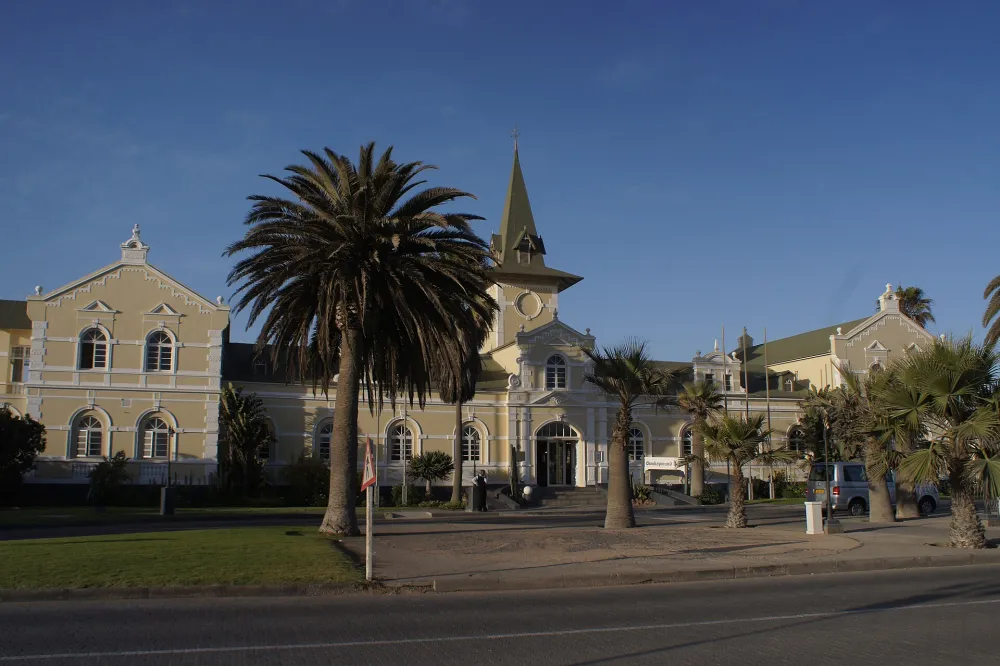
The centre is a grid about ten blocks square and is best seen on foot in an hour or two. Most of the landmark buildings went up between 1899 and 1914, in a mixture of Wilhelmine, neo-baroque and Art Nouveau styles, and are still in daily use.
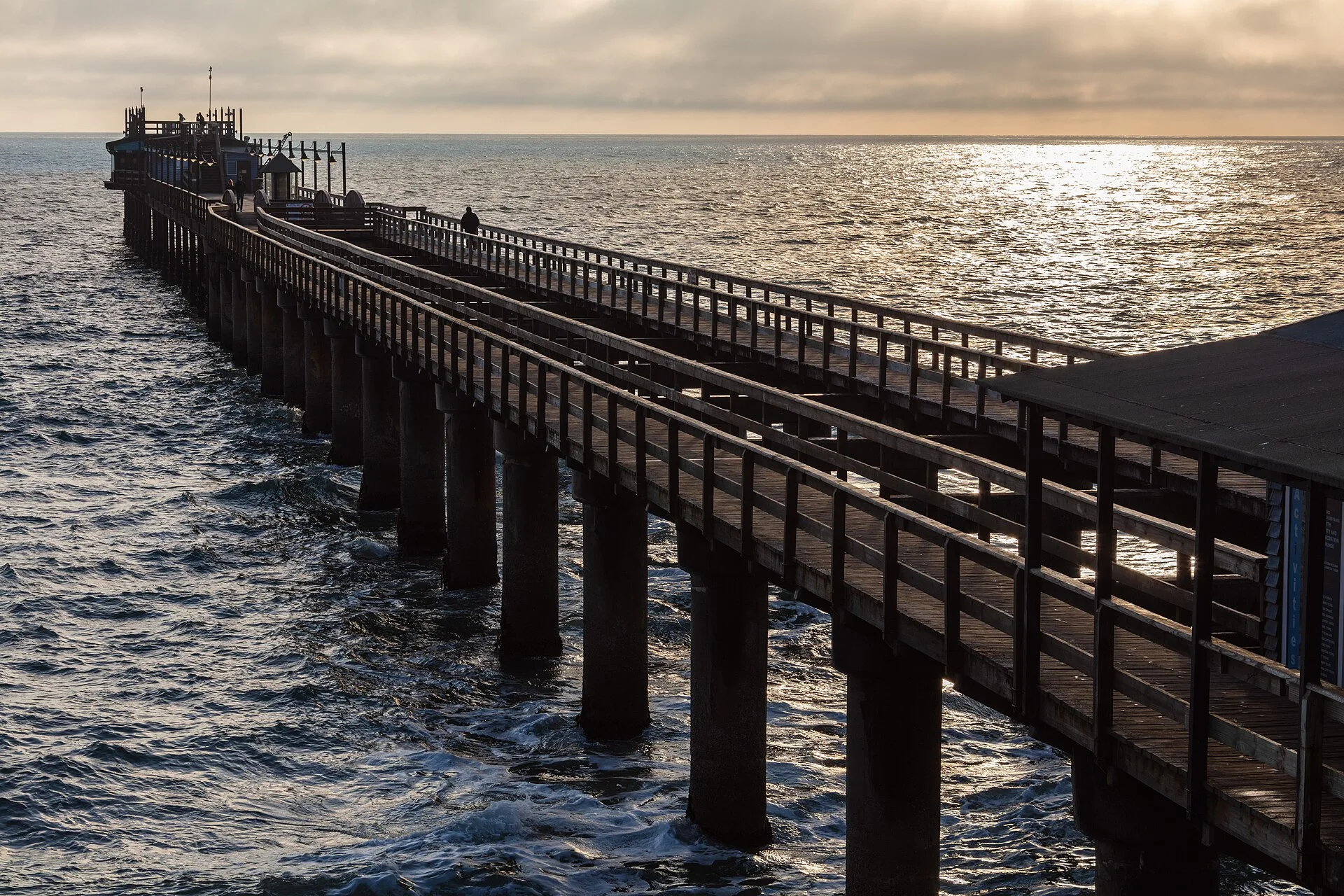
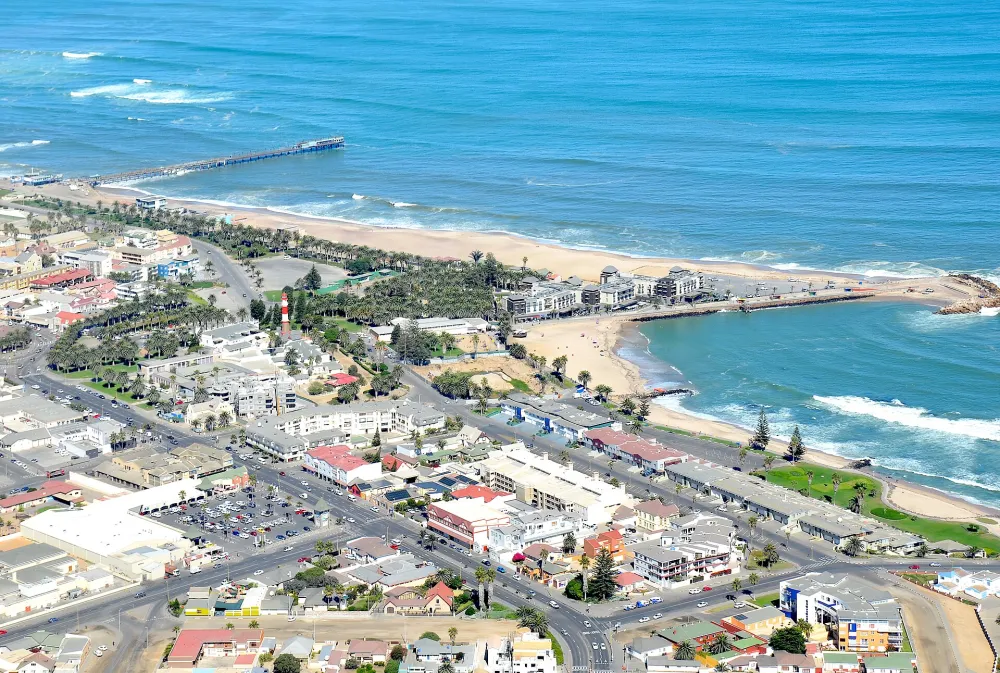
- The Jetty. A wooden landing pier was begun in 1905 and an iron replacement shortly before the First World War, which stopped the work with the iron jetty unfinished. Restored in stages this century, it is now a promenade over the surf, with a restaurant at the seaward end. Come for sunset.
- The Mole and the lighthouse. The breakwater of 1899–1903 was meant to make a harbour and promptly silted up, creating today’s swimming beach. Above it stand the red-and-white lighthouse (built in 1902–03 and heightened in 1910) and the former district court, now State House, the president’s coastal residence, which you can view from outside only.
- Swakopmund Museum. Beside the Mole in the old customs warehouse; founded by the dentist Alfons Weber in 1951 and the largest privately run museum in Namibia, with rooms on desert ecology, minerals, the peoples of Namibia, colonial-period interiors and transport. Recent listings give opening hours of 10:00 AM–5:00 PM daily; check locally.
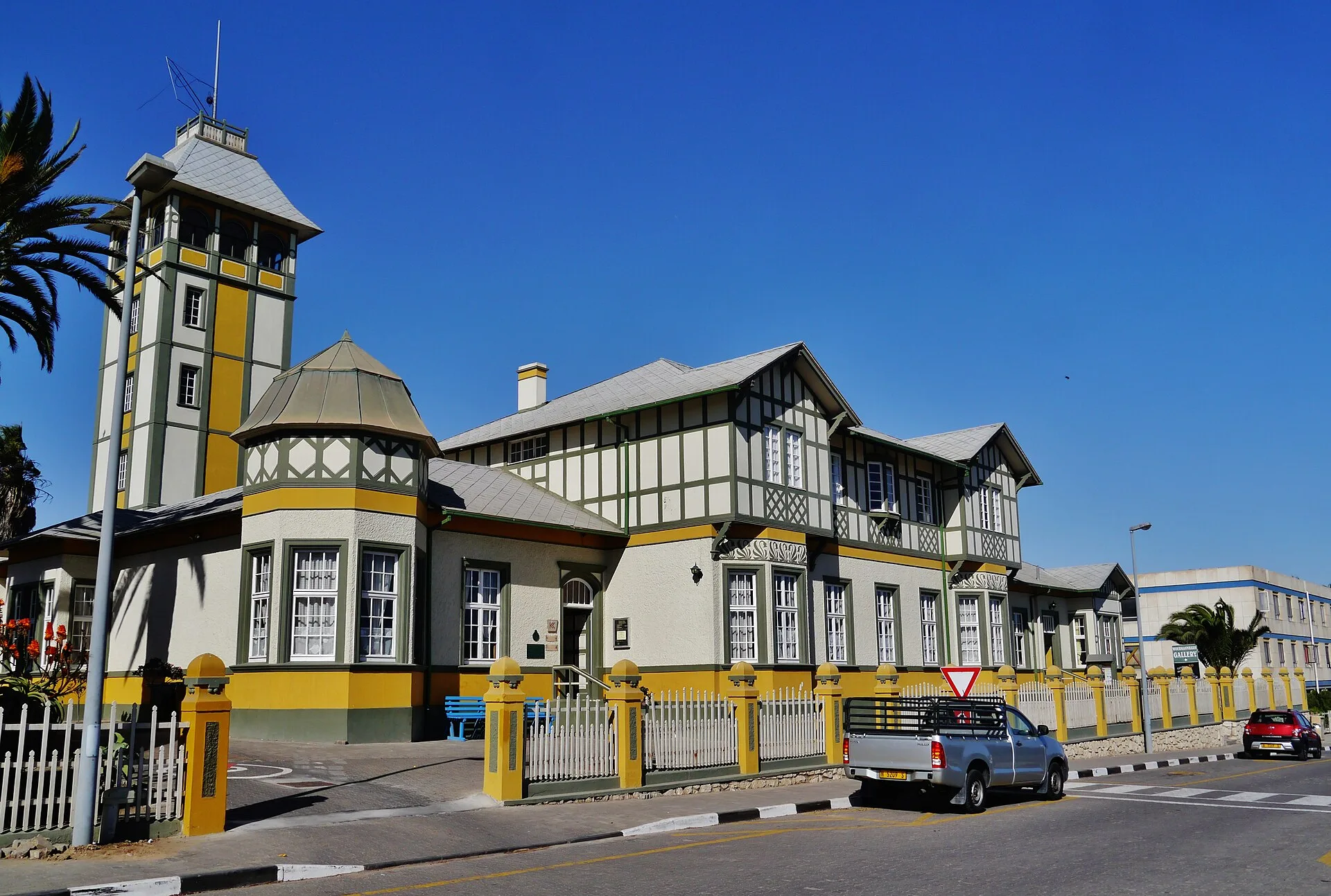
- Woermannhaus (Bismarck Street). The 1900s headquarters of the Woermann shipping line, with a courtyard and the Damara Tower, once a lookout for ships and now home to the public library and a gallery.
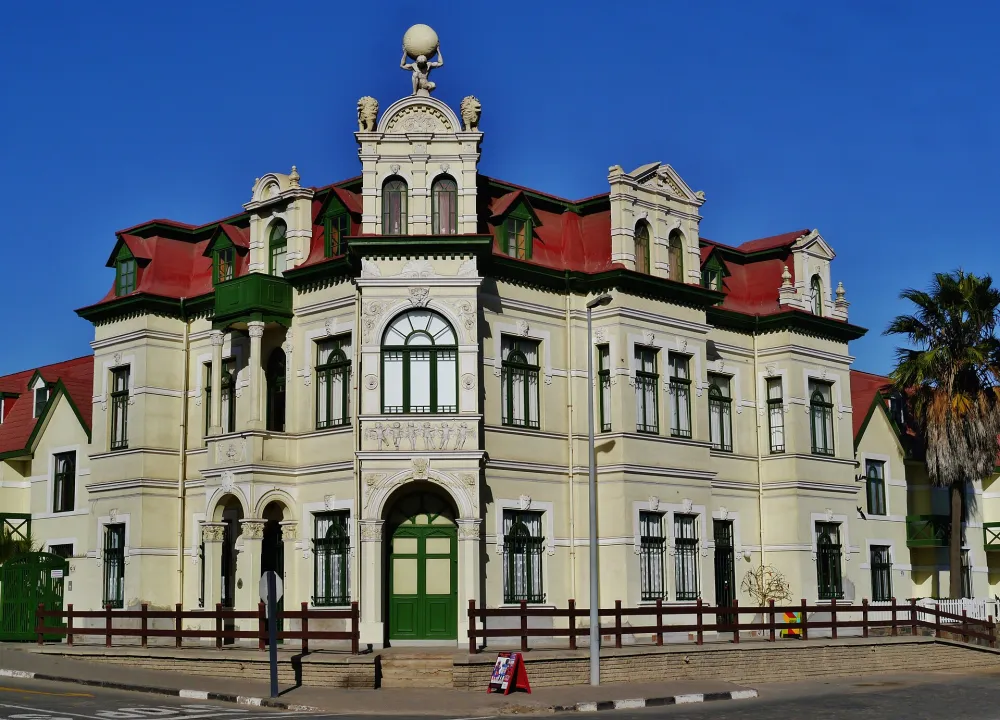
- Hohenzollernhaus. A former hotel of about 1906 on Libertina Amathila Avenue, the most exuberant façade in town, topped by a figure of Atlas holding up the globe.
- The old railway station (Bahnhof). Completed in 1901 as the terminus of the line to Windhoek; now part of a hotel and entertainment complex.
- Altes Gefängnis. The 1909 prison that looks like a country manor and is still a prison, so do not photograph it up close.
- Kristall Galerie. A private mineral museum whose centrepiece is a giant cluster of quartz crystals mined in Namibia.
The National Marine Aquarium on the beachfront has been closed for renovation since October 2023, and no reopening date had been confirmed in the latest reports we found (March 2026). Ask at your accommodation before walking down.
The harder history
The pretty gables come from a brutal period. During Germany’s war against the Ovaherero and Nama (1904–08), now recognised as the first genocide of the twentieth century, a concentration camp operated in Swakopmund; prisoners were used as forced labour on the harbour and railway, and around 2,000 Ovaherero are estimated to have died here. Their graves lie in a field of low, unmarked sand mounds beside the town cemetery, where a memorial stone now stands. The Swakopmund Genocide Museum, founded in 2015 by the artist and activist Laidlaw Peringanda, documents this history; visits are by arrangement.
The Marine Memorial near State House commemorates German marines who fought in that war and has been the subject of repeated protest and calls for removal. Seeing both sites gives a more honest picture of the town than the architecture alone. For the national story see history of Namibia.
Living desert tours: the Namib’s small animals
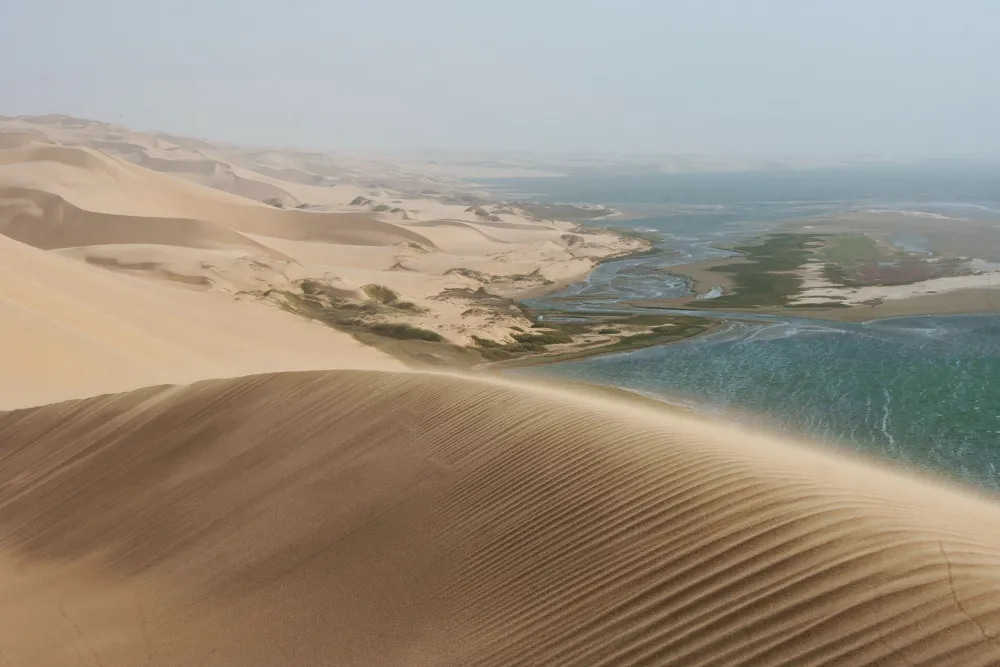
The dunes between Swakopmund and Walvis Bay look empty. A living desert tour, usually four to five hours in a 4x4 with a naturalist guide, shows that they are not. Guides read tracks in the sand and dig, gently, where they end. The animals most often found are known locally as the “Little Five”:
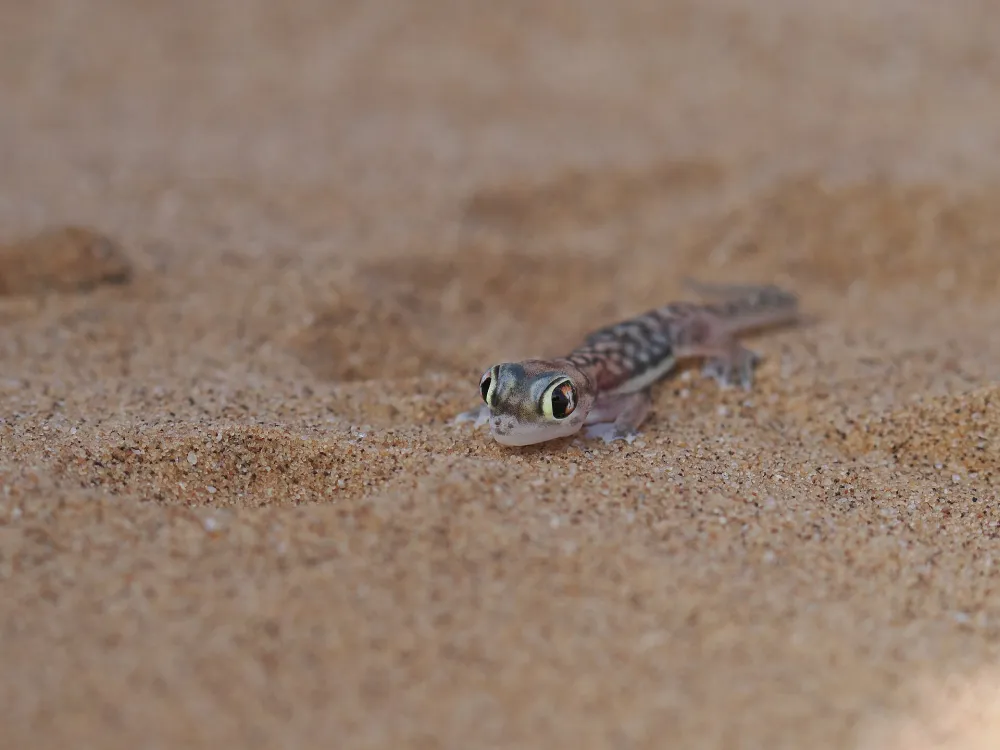
- the translucent, web-footed Palmato gecko, which licks fog droplets off its own eyes;
- the Namaqua chameleon, a ground-dwelling species that turns black in the cool morning to warm up;
- the sidewinder (Peringuey’s adder), which buries itself with only its eyes showing;
- the shovel-snouted lizard, which lifts alternate feet off hot sand in a “thermal dance”;
- the dancing white lady, a spider that escapes down dune faces by cartwheeling.
You will also be shown fog-basking beetles, the legless Fitzsimons’ burrowing skink, dollar bushes and the magnetic black sand that gives the dunes their grey streaks, and the tour ends with a drive over the high dunes for the view to the sea. Animals are handled briefly, if at all, and returned where they were found. Tours leave early (about 8:00 AM), run in small groups and are suitable for children. Responsible operators stay on existing tracks in designated zones of Dorob National Park; off-road driving elsewhere on these plains is illegal because it destroys lichen fields and the nests of the Damara tern.
Variations include a night walk with a UV torch for scorpions, e-bike and fat-bike versions, and a sundowner drive to the dune crests.
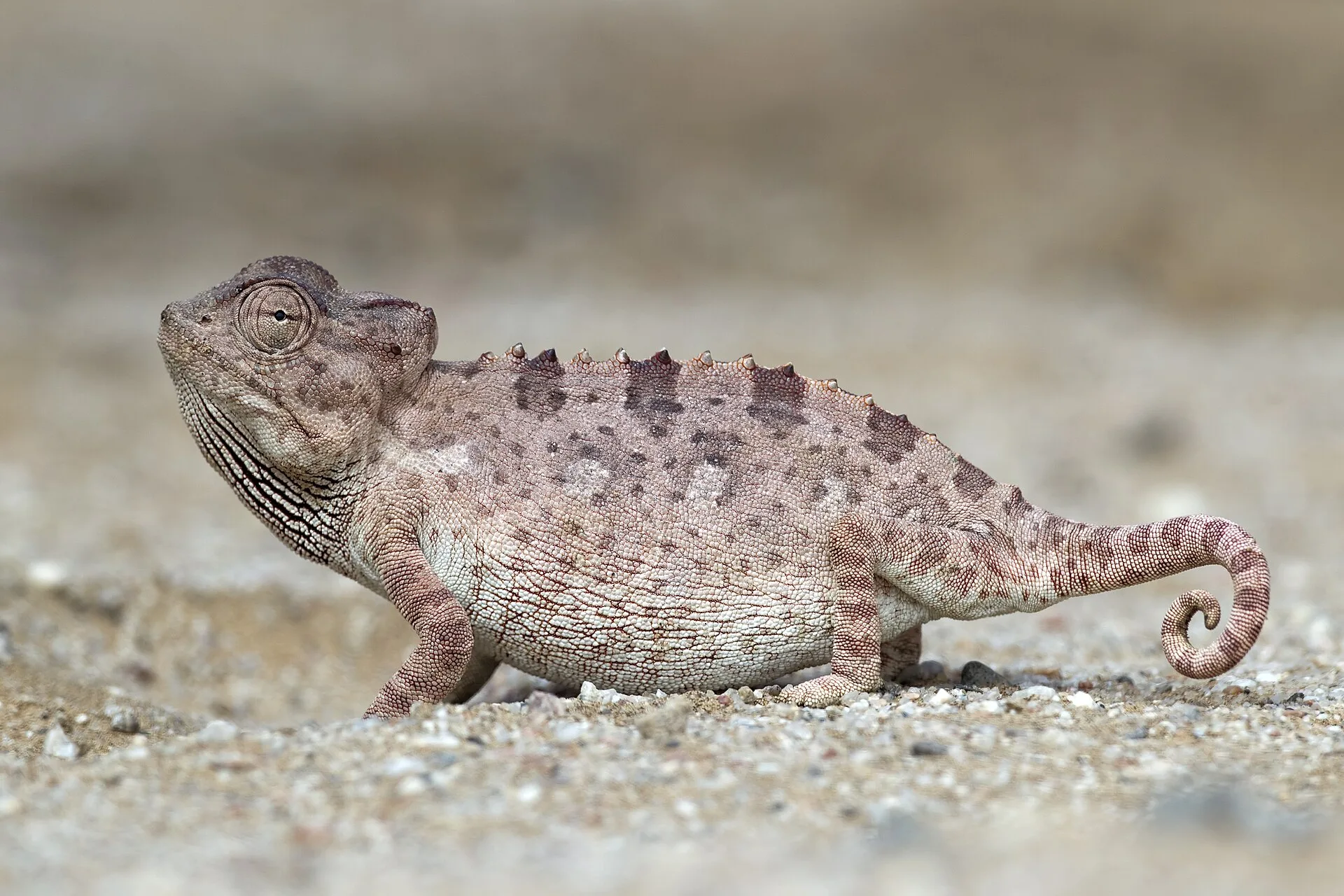
A Namaqua chameleon, one of the dune belt’s “Little Five”.
Swakopmund: living desert tour in the Namib
A morning in the dune belt with a naturalist guide who finds and explains the Namib’s small animals: Palmato gecko, Namaqua chameleon, sidewinder, shovel-snouted lizard and fog-basking beetles.
Check availabilityBook via GetYourGuide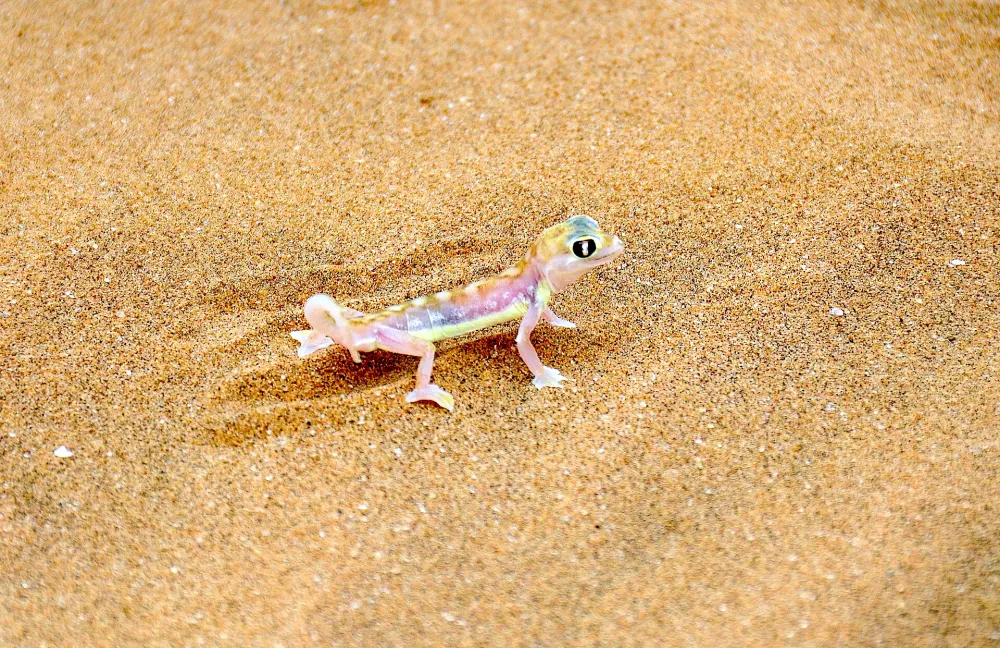
From Swakopmund: living dunes experience
Another specialist-guided search for the “Little Five” of the dunes, ending with a drive over the high crests for the view to the sea.
Check availabilityBook via GetYourGuide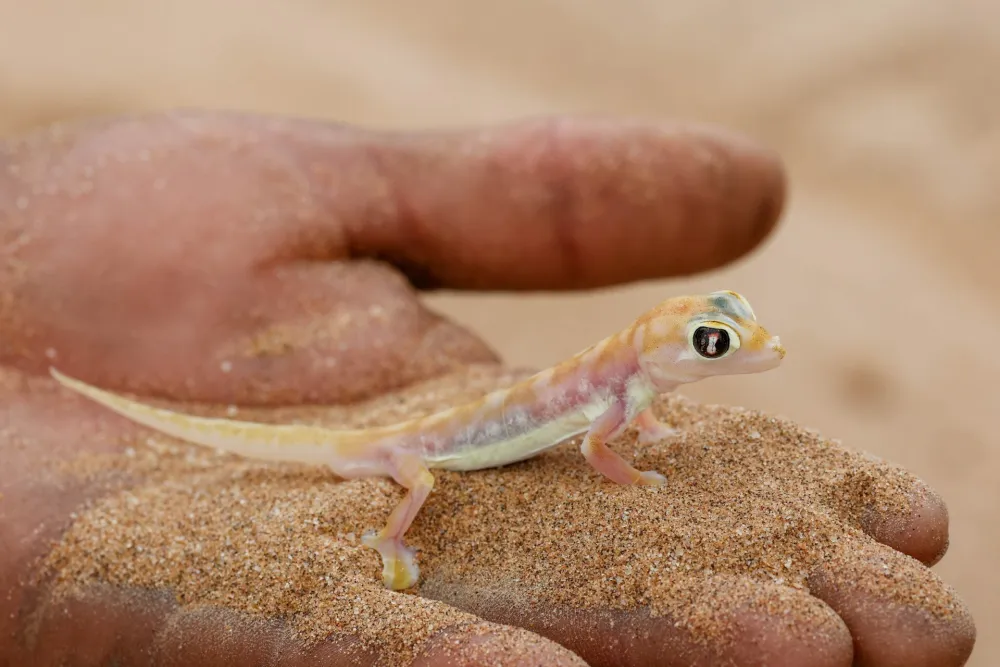
Namib Desert night walk
After dark the dunes change shift: a guided walk by torch to look for geckos, scorpions and other nocturnal desert life.
Check availabilityBook via GetYourGuideTour listings are on GetYourGuide. Prices, dates and cancellation terms are shown live on each listing and can change; NamibiaSafaris.com may earn a commission at no extra cost to you.
Quad bikes, sandboards, parachutes and surf
Swakopmund calls itself Namibia’s adventure capital, and the dune belt just south of the river is the playground.
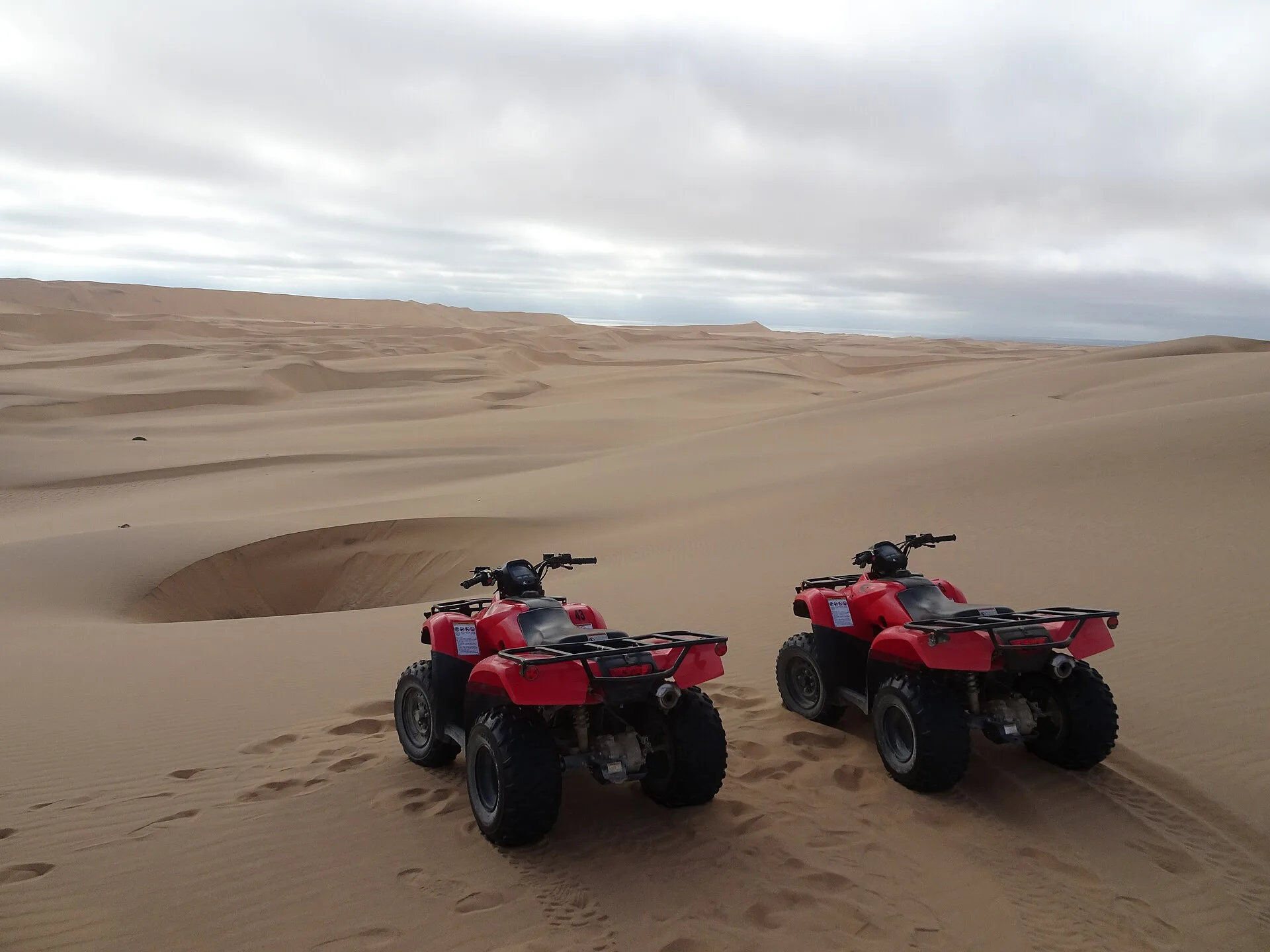
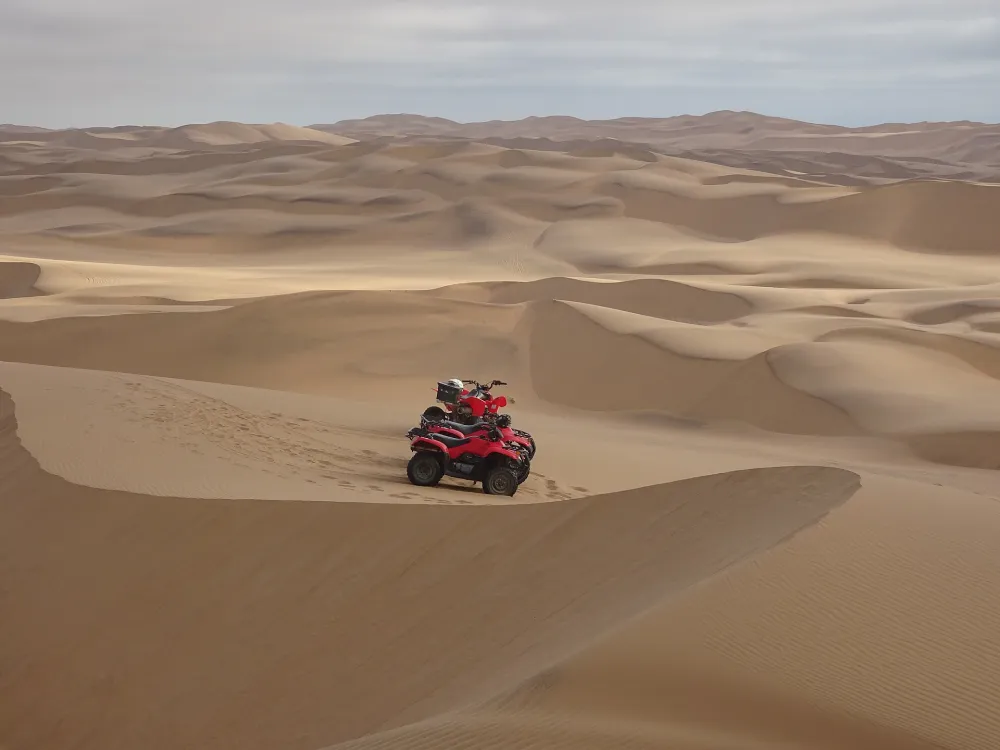
- Quad biking. Guided rides of one to two hours follow set routes through a designated part of the dunes; you are not allowed to ride off on your own. Automatic and semi-automatic bikes are offered, and no experience is needed. Combination tours add a search for desert wildlife or an hour of sandboarding.
- Sandboarding. Two styles: lie-down on a waxed sheet of hardboard, head first, which needs no skill and is fast, and stand-up on a snowboard with boots and bindings, which is easier if you already snowboard. There are no lifts: you walk up each time, though some tours shuttle you by vehicle. Expect sand everywhere; bring sunglasses and leave the good camera behind.
- Tandem skydiving. A light aircraft climbs over the coast for the view, then you jump with an instructor from around 10,000 feet above the line where the dunes meet the sea. Weight limits apply and fog can delay the first loads of the day.
- Surfing. Beach and reef breaks in and near town work for beginners’ lessons in a thick wetsuit; the famous wave at Skeleton Bay near Walvis Bay is for experts only.
- Scenic flights over the dune sea and the coast leave from the airfield: see balloon and scenic flights.
Swakopmund: desert dunes quad biking with optional sandboarding
A guided ride on set routes through the dune belt south of the Swakop River, with the option of adding lie-down sandboarding. No experience needed.
Check availabilityBook via GetYourGuide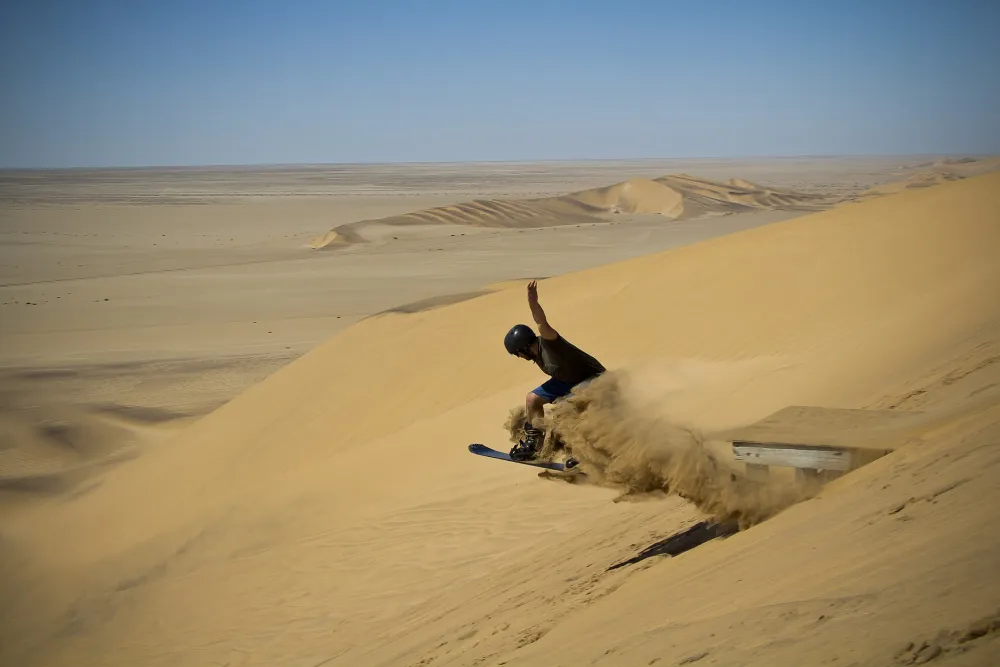
Swakopmund: sandboarding adventure (slide down, shuttle up)
Sandboarding on the big dunes with a vehicle to take you back up, which means more runs for less climbing.
Check availabilityBook via GetYourGuide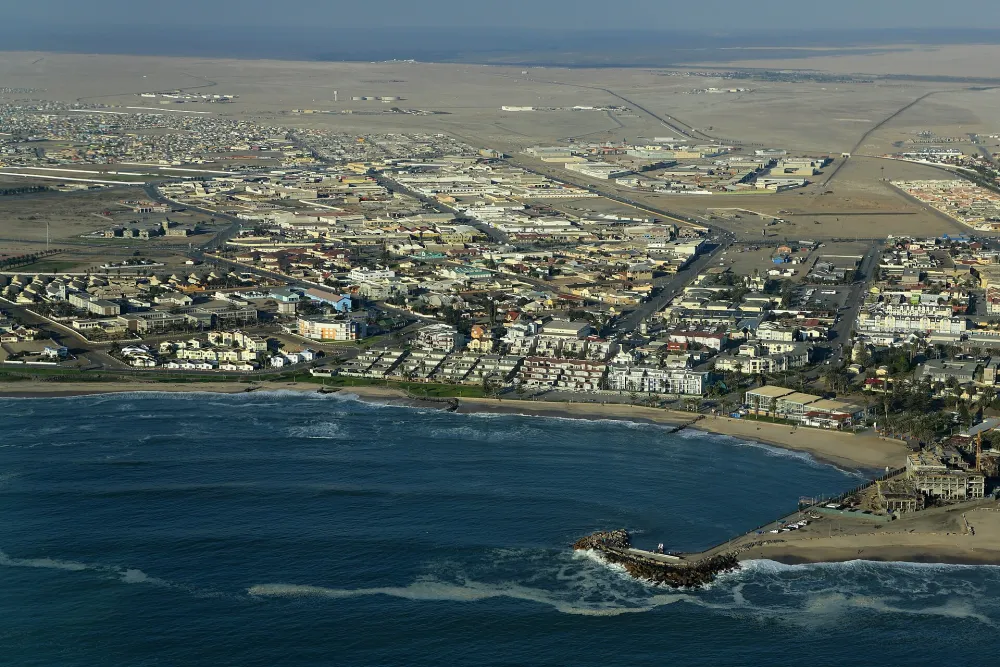
From Swakopmund: tandem skydiving
A scenic climb over the coast, then a tandem jump with an instructor above the line where the Namib meets the Atlantic. Weight limits apply; fog can delay the first loads of the day.
Check availabilityBook via GetYourGuide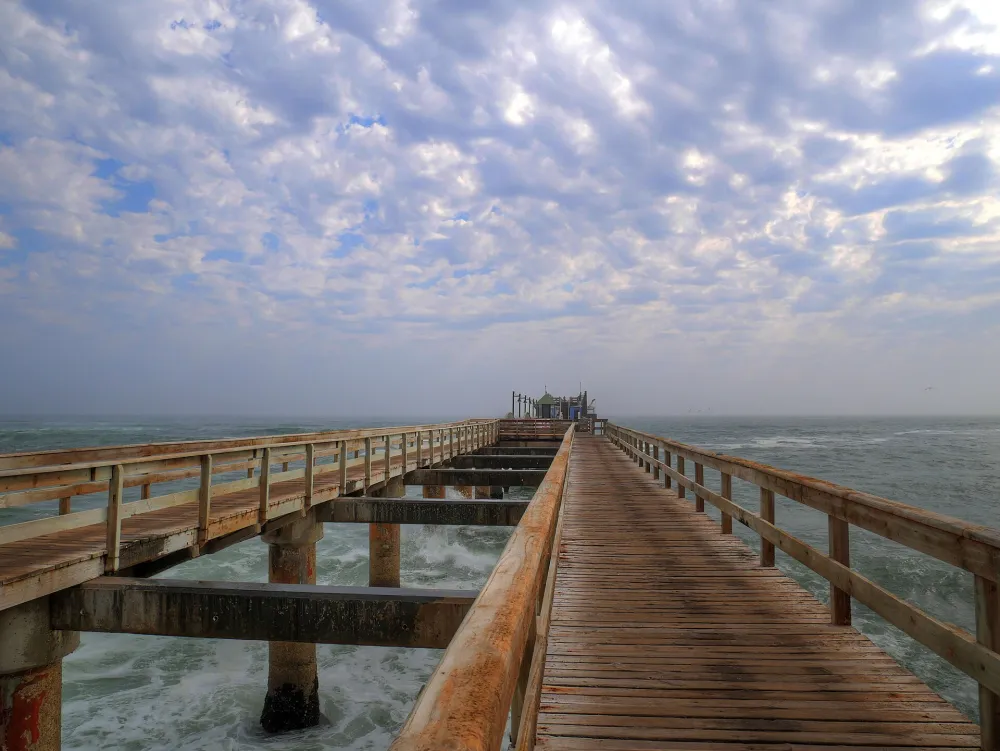
Swakopmund: group surf lesson for beginners
A beginners’ lesson in the cold Atlantic with board and thick wetsuit supplied.
Check availabilityBook via GetYourGuideTour listings are on GetYourGuide. Prices, dates and cancellation terms are shown live on each listing and can change; NamibiaSafaris.com may earn a commission at no extra cost to you.
Mondesa and the DRC: township tours
Most of Swakopmund’s residents live north-east of the centre in Mondesa, laid out under apartheid as the township for Black residents, and in the newer informal settlement known as the DRC (Democratic Resettlement Community). A guided visit, on foot, by bicycle or by car, is the way to meet the town beyond its tourist streets: a market, a shebeen, a kindergarten or community project, a home visit, and a tasting of everyday food such as oshifima (millet or maize porridge), wild spinach, beans, kapana (grilled beef) and, for the willing, mopane worms.
- Choose a tour led by a guide who lives in the community, and ask what share of the price stays there.
- Ask before photographing people, homes and children, and accept a no.
- Do not hand out sweets or money to children; if you want to give, the guide can point you to a school or project.
- Dress and behave as you would in any residential neighbourhood, because that is what it is.
Guides here are often of Ovaherero, Damara, Nama or Ovambo background and explain their own languages and customs, including the click sounds of Khoekhoegowab, better than any museum label.
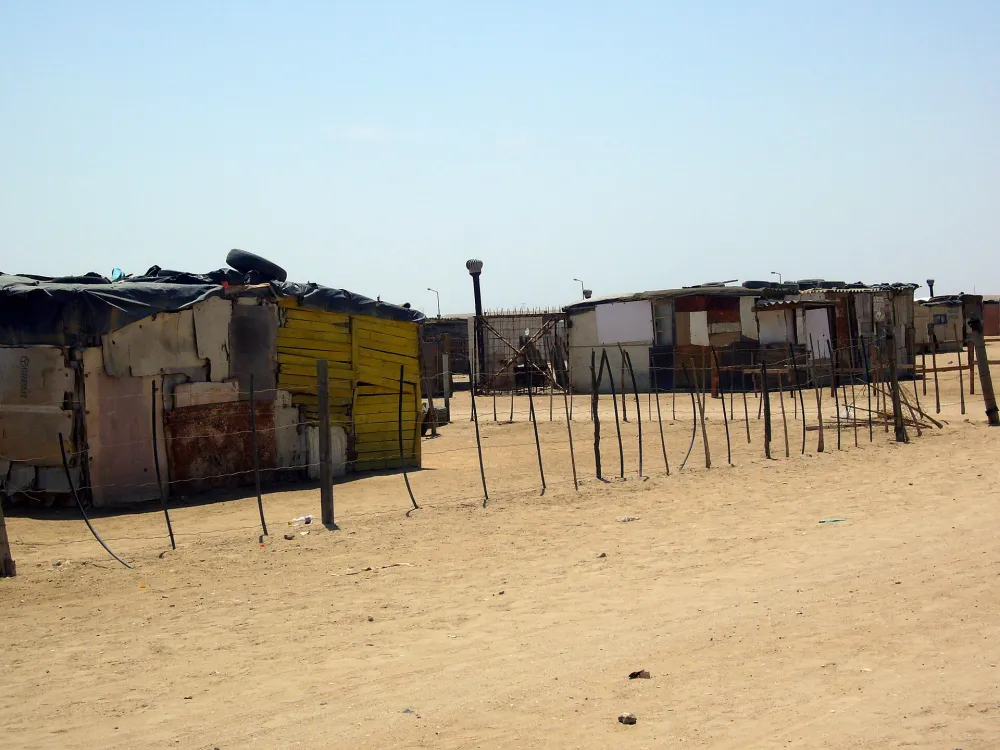
Mondesa township day tour experience
A guided visit to Swakopmund’s largest township: market, homes, a taste of local food and conversation with residents.
Check availabilityBook via GetYourGuide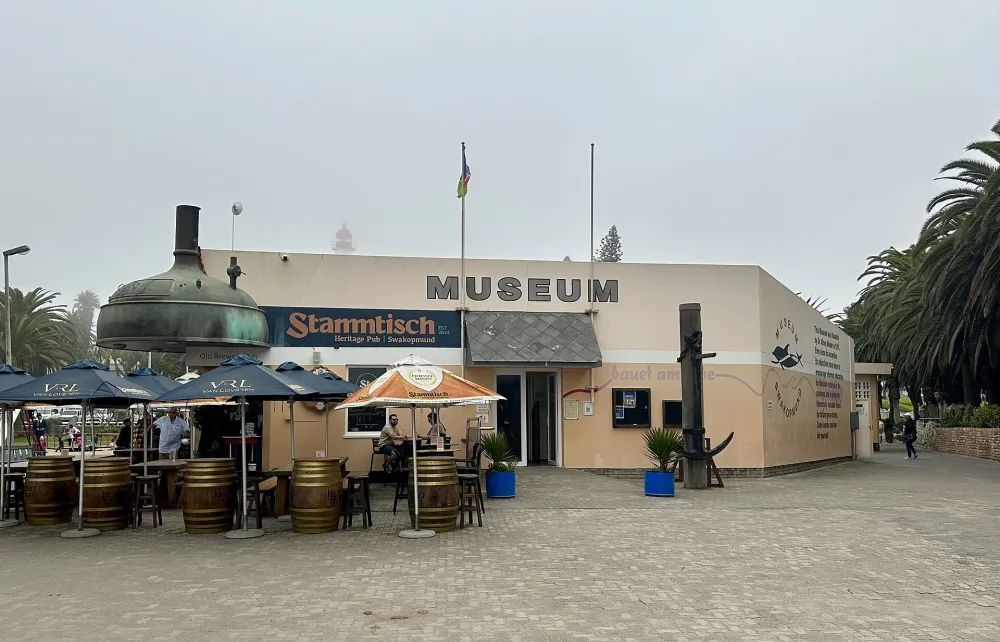
Swakopmund: guided city tour with museum entry
The German-era centre, the jetty and the Mole with a guide, plus entry to the Swakopmund Museum.
Check availabilityBook via GetYourGuideTour listings are on GetYourGuide. Prices, dates and cancellation terms are shown live on each listing and can change; NamibiaSafaris.com may earn a commission at no extra cost to you.
Day trips from Swakopmund
The one outing nobody should skip on this coast is Sandwich Harbour, where the dune sea drops straight into a lagoon. Our own overview is on the Sandwich Harbour page; for depth, our sister site has a complete Sandwich Harbour travel guide and a comparison of the best Sandwich Harbour tours, including those with pick-up in Swakopmund.
| Trip | Distance one way | Time needed | Notes |
|---|---|---|---|
| Walvis Bay lagoon, dolphin cruise or kayaking | 35 km | Half day | Boats and kayaks go out in the morning; hotel pick-ups are common |
| Sandwich Harbour by 4x4 | 35 km to Walvis Bay, then about 55 km of beach and dune | Half or full day | Guided 4x4 only in practice; tide-dependent |
| Moon Landscape and Welwitschia Drive | about 140 km round trip | Half day | Gravel; permit needed for the park section: see Namib-Naukluft |
| Cape Cross seal colony | about 120 km | Half to full day | Tarred or salt road via Henties Bay: see Skeleton Coast |
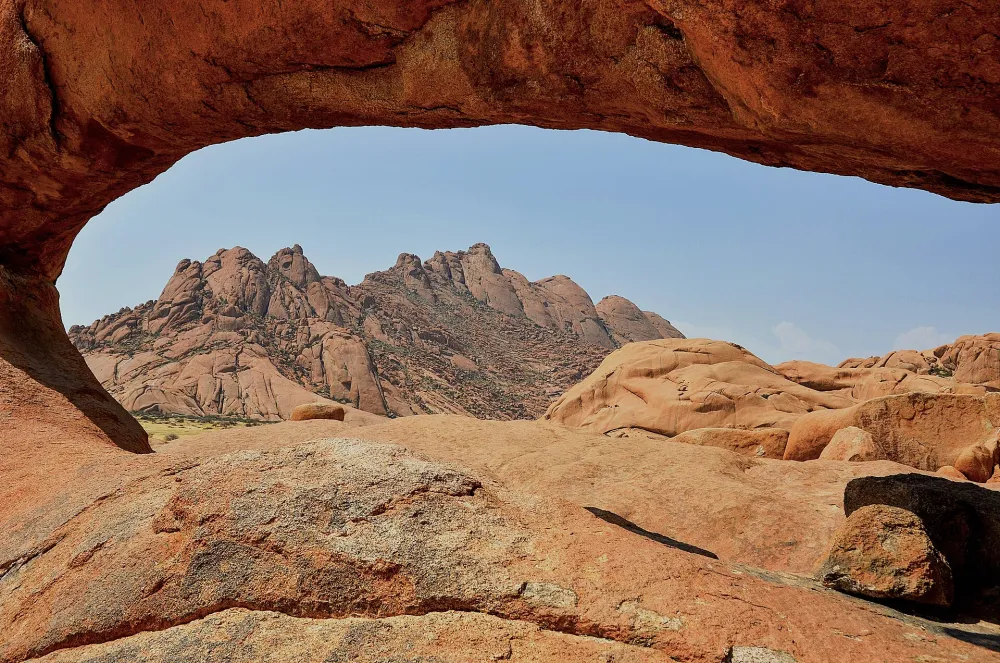
| Spitzkoppe | about 150 km | Full day, better overnight | Granite peaks, arches and rock art |
| Sossusvlei | about 350 km | Not a sensible day trip | Go for two nights: see Sossusvlei |
Where to eat and drink
Seafood is the thing to order: Walvis Bay oysters, farmed in the cold lagoon water and served raw or grilled, kabeljou (kob), steenbras, kingklip and calamari. The German bakery tradition survives in cafés serving Black Forest cake, apple strudel and Brötchen from early morning, and the beer is Namibian lager brewed to the German purity law.
- The Tug, built around an old tugboat at the foot of the jetty, is the best-known seafood restaurant in town; book ahead for a window table at sunset.
- Jetty 1905 sits at the far end of the pier itself, over the water.
- Kücki’s Pub, in the centre, is the long-running local for seafood platters, game and schnitzel.
- Cafés and bakeries along Sam Nujoma Avenue and around the pedestrian arcades cover breakfast and coffee; several hotels serve an old-fashioned afternoon Kaffee und Kuchen.
Kitchens tend to close early by European standards and some places shut one day a week, so check hours and reserve dinner in the June–October season and over Christmas. More on what to try in food in Namibia.
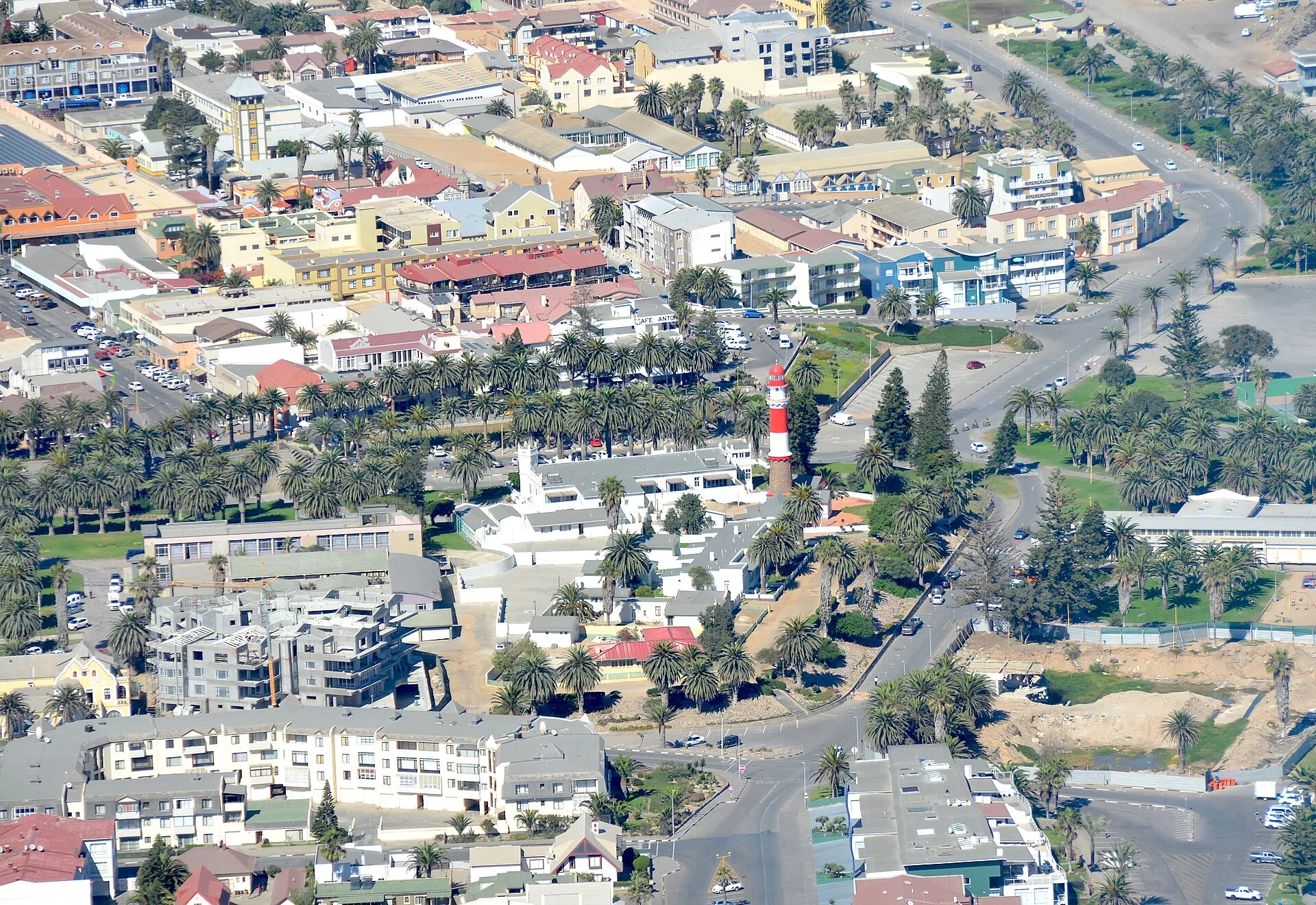
The lighthouse and the former district court, now State House, above the Mole.
Where to stay in Swakopmund
Stay within walking distance of the centre if you can; you will not need the car in the evening. The seafront is cooler and foggier; a few blocks inland is quieter and often sunnier.
- On the water: Strand Hotel Swakopmund stands on the Mole itself, with three restaurants and a spa; AT THE SEA Boutique Guesthouse on Strand Street has sea-view rooms and a pool.
- Central and mid-priced: Atlantic Garden Boutique Hotel and Hotel A la Mer are both a few minutes’ walk from the jetty and the museum; Fritz Manor Bed and Breakfast is a small B&B with family rooms.
- Out of town: Desert Breeze Lodge, on the bank of the Swakop River, looks straight across the dry riverbed to the dunes; you need a car or taxi for dinner in town.
Swakopmund is fully booked for the Namibian and South African school holidays from mid-December to early January; reserve months ahead for those weeks. If your interest is mainly the lagoon and Sandwich Harbour, compare bases with the sister site’s guide to where to stay for Sandwich Harbour, which sets Walvis Bay against Swakopmund.
Strand Hotel Swakopmund
SwakopmundOn the beachfront at the Mole in Swakopmund, with three restaurants, a spa and sea-facing terraces.
8.9Booking.com guest score · as checked in November 2026
See on Booking.comAT THE SEA Boutique Guesthouse
SwakopmundSea-view rooms and a pool on Strand Street, on the beachfront.
9.3Booking.com guest score · as checked in November 2026
See on Booking.comAtlantic Garden Boutique Hotel
SwakopmundSmall central hotel with a bar, a few minutes’ walk from the beach.
8.8Booking.com guest score · as checked in November 2026
See on Booking.comHotel A la Mer
SwakopmundGood-value hotel on Libertina Amathila Avenue near the jetty; some rooms with sea view.
8.2Booking.com guest score · as checked in November 2026
See on Booking.comFritz Manor Bed and Breakfast
SwakopmundBed and breakfast with double, twin and family rooms.
9.1Booking.com guest score · as checked in November 2026
See on Booking.comDesert Breeze Lodge
SwakopmundOn the bank of the Swakop River 2.5 km from town; some units have a private deck looking onto the dunes.
9.3Booking.com guest score · as checked in November 2026
See on Booking.comSee all stays in Swakopmund on Booking.com
Accommodation links go to Booking.com, where you see live prices and availability. We do not list prices because they change daily; NamibiaSafaris.com may earn a commission.
Getting there and around
- From Windhoek: the B2 via Okahandja, Karibib and Usakos is tarred all the way (352 km, about 4 hours). It is a busy truck route to the port; overtake with care and avoid it after dark. The scenic gravel alternatives, the C28 over Bosua Pass and the C26 over Gamsberg Pass, take most of a day.
- From Sossusvlei: via Solitaire and the C14 to Walvis Bay, then north along the coast; allow 5–6 hours plus stops.
- Onwards north: the C34 salt road to Henties Bay and Cape Cross, or the B2 and D1918 to Spitzkoppe and Damaraland.
- By air: scheduled flights use Walvis Bay International Airport; check current routes in getting to Namibia.
- By shuttle: daily minibus shuttles link Windhoek with Swakopmund and Walvis Bay, bookable in advance.
- In town: walk; taxis are cheap for evenings. A salt road (the C34 and some town approaches) is hard-packed and smooth when dry and slippery when damp with fog: slow down.
Frequently asked questions
How many days do you need in Swakopmund?
Two nights is the minimum to rest and fit in one desert activity and one trip to Walvis Bay or Sandwich Harbour. Three nights lets you add a township tour, the museum and a day trip to Cape Cross or Spitzkoppe.
Is Swakopmund or Walvis Bay the better base?
Swakopmund has far more restaurants, shops and character and suits most visitors. Walvis Bay is quieter and sits right on the lagoon, which is handy for early boat and kayak departures and for birdwatchers. They are only 35 km apart, and most operators collect from both.
Is it always foggy in Swakopmund?
No, but fog or low cloud is common on mornings throughout the year and usually clears by late morning. Afternoons are mostly sunny and breezy, and evenings are cool in every season.
Can you swim in the sea?
People do, at the sheltered Mole beach and the tidal pool, but the Atlantic here is cold all year. Elsewhere on the coast there are strong currents and no lifeguards.
What are the “Little Five” of the Namib?
The Palmato gecko, Namaqua chameleon, sidewinder (Peringuey’s adder), shovel-snouted lizard and the dancing white lady spider: small dune animals that specialist guides find on living desert tours.
Is the National Marine Aquarium open?
It has been closed for renovation since October 2023, and as of the most recent reports we found in 2026 no reopening date had been announced. Check locally.
Do you need a 4x4 to reach Swakopmund?
No. The B2 from Windhoek is tarred. A normal car also manages the gravel C14 from Solitaire in dry conditions, though a vehicle with higher clearance is more comfortable.
Sources and official information
Facts were checked against these official sources in November 2026. Park fees, gate times, visa rules and timetables change, so confirm before you go.
- nsa.org.na
- swakopmund-museum.de
- lac.org.na
- meft.gov.na
- namibian.com.na
- the-tug.com
- kuckispub.com
- en.wikipedia.org
- en.wikipedia.org
- en.wikipedia.org
- sandwichharbour.com
NamibiaSafaris.com is an independent guide, not the official site of any tour operator, lodge, Namibia Wildlife Resorts or the Namibian government. Some links are affiliate links: tours go to GetYourGuide and accommodation goes to Booking.com, and we may earn a commission at no extra cost to you.