In short
- One road in: everything is reached through the Sesriem gate of Namib-Naukluft National Park. From there a 60 km tar road runs down the Tsauchab valley to the 2x4 car park; the last 5 km or so to Deadvlei and Sossusvlei is deep sand (4x4 or shuttle).
- Sleep inside the gate if you can: the outer gate opens at sunrise; people staying inside the park pass the inner gate about an hour earlier, which is the only way to be on a dune when the sun comes up.
- Park fees rose on 1 April 2026: N$280 per adult per day for visitors from outside southern Africa, N$180 for SADC nationals, N$60 for Namibians, plus N$60 per car (Government Gazette No. 8877).
- Access to the last sand section has been argued over since late 2025. As this page was updated (November 2026) the ministry’s position was that 4x4 self-drivers and registered guides may still drive it; everyone else takes the concession shuttle from the 2x4 car park. Ask at the gate.
- Go early, carry water: by 11:00 AM the sand is hot enough to burn and the light has gone flat. Plan for 3 litres of water per person and be walking back to the car by late morning.
What Sossusvlei actually is
Sossusvlei is a white clay pan at the end of a river that never reaches the sea. The Tsauchab rises in the Naukluft Mountains and, on the rare occasions it carries enough water, runs about 150 km west until the dunes of the Namib close around it. The name mixes Nama and Afrikaans and means roughly “dead-end marsh”. Most years the pan is dry and cracked; after exceptional rain it holds a shallow lake for a few weeks and the camel thorn trees around it come into leaf.
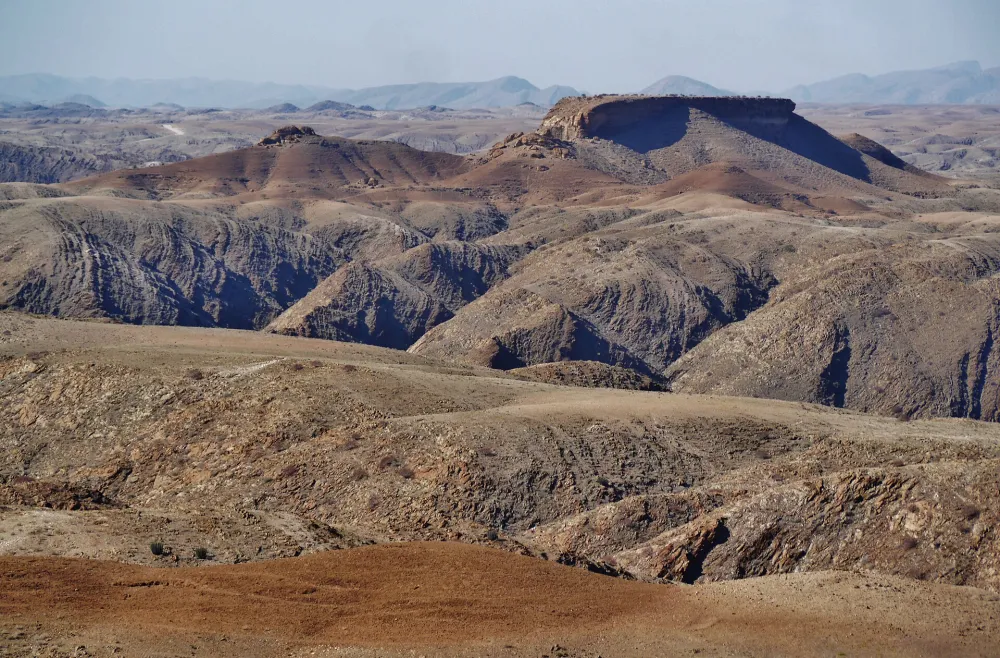
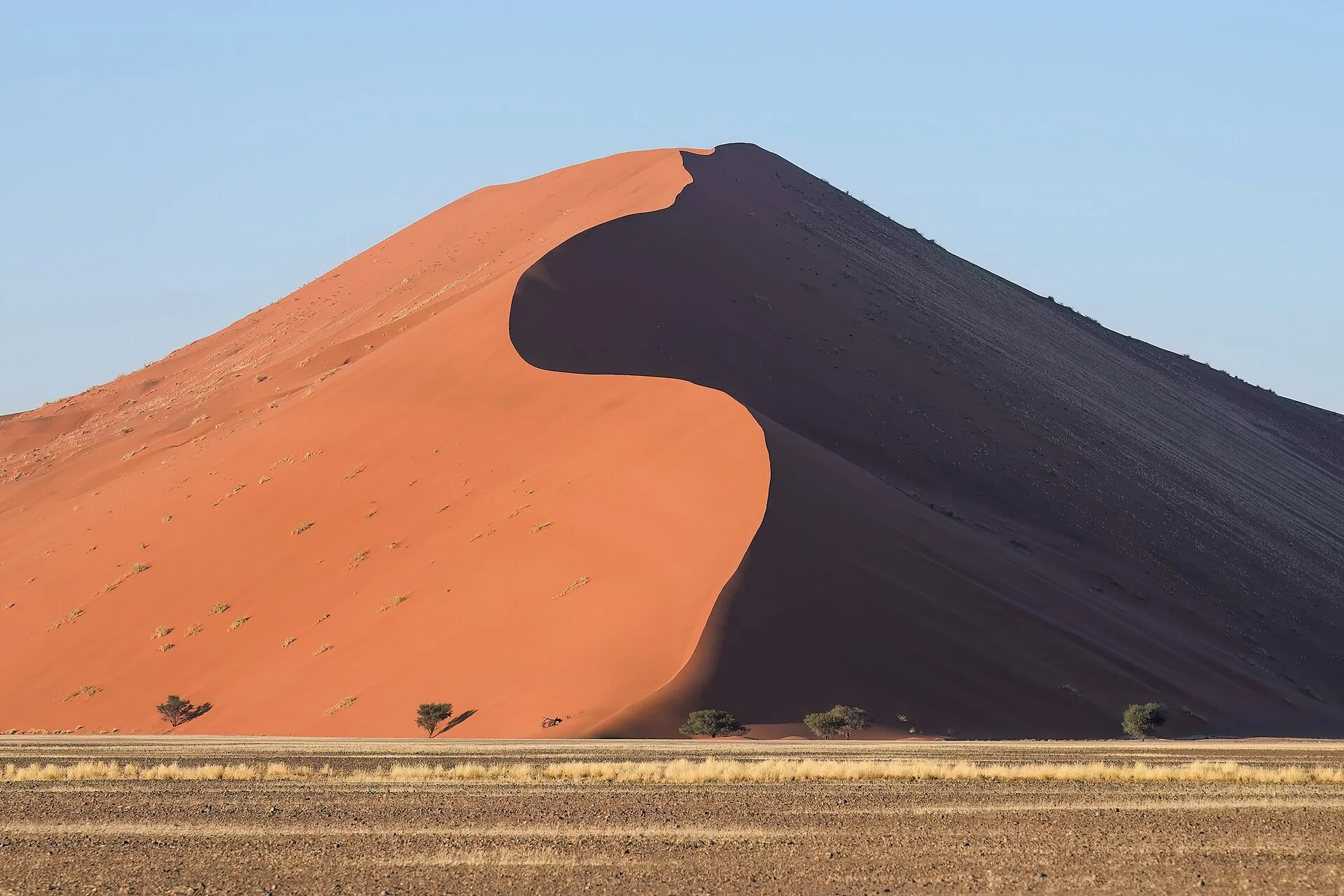
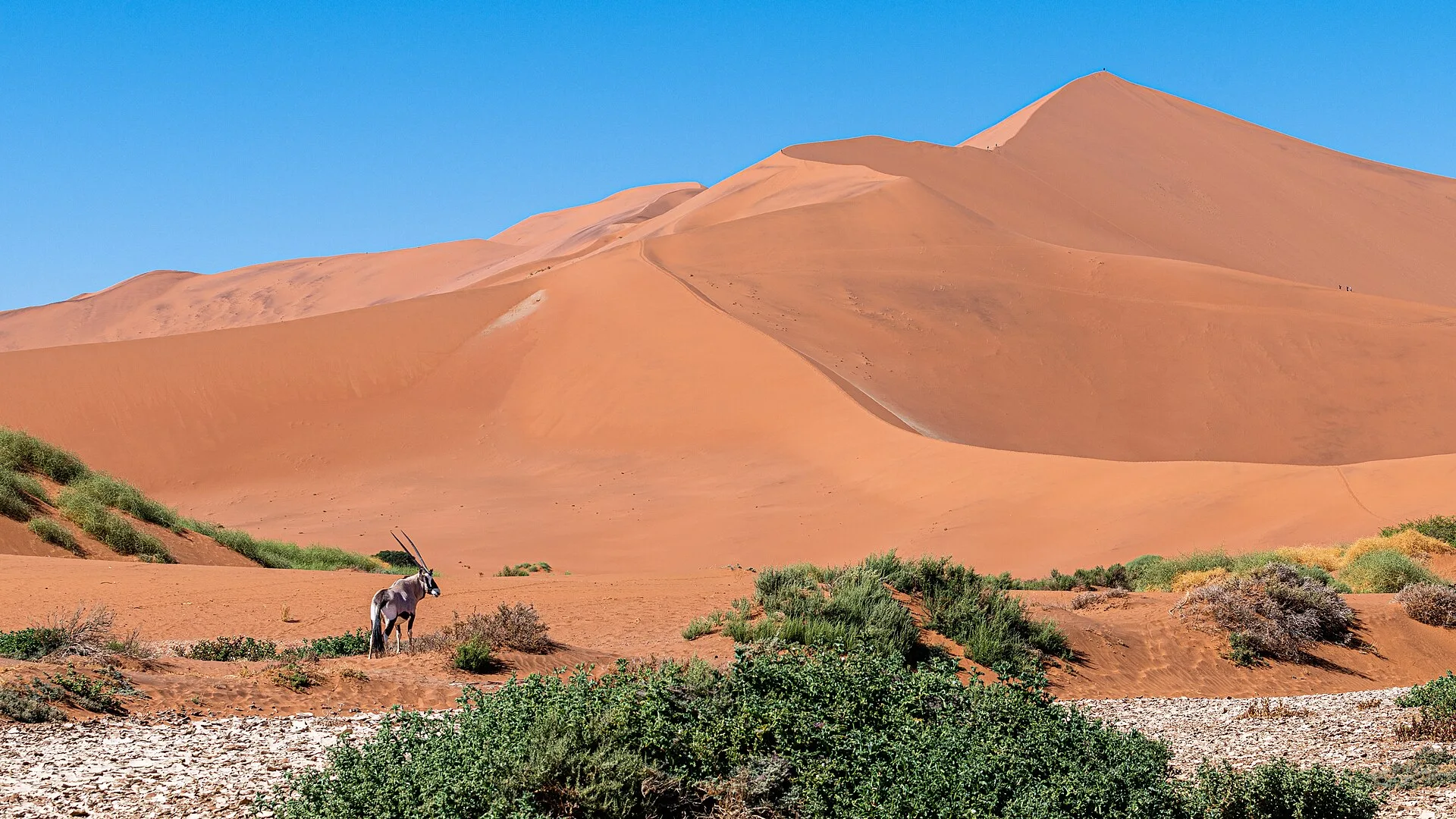
In everyday use “Sossusvlei” means the whole valley: a corridor of flat gravel and dry riverbed about 60 km long with star dunes on both sides, some of them more than 200 m high and the tallest, Big Daddy, about 325 m. The red comes from iron oxide coating the quartz grains; the further inland and the older the sand, the deeper the colour. The whole dune sea is part of the Namib Sand Sea, inscribed on the UNESCO World Heritage List in 2013, and lies inside Namib-Naukluft National Park (more on the rest of the park in Namib-Naukluft).
The practical point is that this is a single dead-end road with one entrance. How good your morning is depends almost entirely on where you slept and what time you got through the gate.
- Entrance
- Sesriem gate, Namib-Naukluft National Park
- Sesriem to the 2x4 car park
- 60 km of tar, about 1 hour at the park speed limit
- 2x4 car park to Deadvlei / Sossusvlei
- about 5 km of deep sand: 4x4 or shuttle
- Highest dune
- Big Daddy, about 325 m
- From Windhoek
- about 320–350 km, 4.5–5.5 hours depending on the route
- From Swakopmund
- about 350 km via Solitaire, 5 hours or more
- Fuel and shop
- at Sesriem (inside the gate at the NWR camp and at the gate)
The two gates, and why they decide your morning
Sesriem has a gate inside a gate. The outer gate on the D826 is the park boundary; it opens at sunrise and closes at sunset. Beyond it lie the Namibia Wildlife Resorts (NWR) Sesriem Campsite and Sossus Dune Lodge, and beyond them a second, inner gate on the road into the dunes. Guests sleeping inside the outer gate are let through the inner gate about one hour before sunrise and may come back up to an hour after sunset.
That hour is the whole game. From the inner gate it is 45 km to Dune 45 and 60 km to the end of the tar. With a pre-dawn start you can be on the crest of Dune 45, or walking into Deadvlei, as the first light hits the ridges and the shadow side of every dune is still black. From outside the park you reach the same places 60 to 90 minutes after sunrise: still beautiful, still cool enough to climb, but the low raking light is over and the first tour vehicles are already there.
Gate times shift through the year with the sun. In mid-June sunrise at Sesriem is about 7:40 AM and sunset about 6:15 PM; in mid-December about 6:00 AM and 7:40 PM (local time, UTC+2 all year). The exact opening times for the month are posted at the gate and at reception. There is usually a queue at the outer gate before it opens in the May–October high season; have your permit paid the afternoon before if the office is open, so that you only need to show it.
| Where you sleep | Earliest you can be driving to the dunes | What you get |
|---|---|---|
| Inside the outer gate (NWR Sesriem Campsite, Sossus Dune Lodge, other properties inside the gate) | About 1 hour before sunrise | Sunrise on Dune 45 or at Deadvlei; you can also stay out until after sunset |
| At the gate (Sesriem lodges and camps on the D826 / C27) | Sunrise, when the outer gate opens | On the dunes about 1–1.5 hours after sunrise; cool enough for Big Daddy if you go straight there |
| 30–60 km away (lodges on the C19 and C27) | Sunrise plus your drive to the gate | Mid-morning at Deadvlei; fine in winter, hard work in summer |
| Solitaire (83 km) or further | Leave in the dark; gate at sunrise | A long day; better as a guided excursion from your lodge |
The last 5 km: sand track, shuttle and the current rules
The tar ends at a large car park with toilets, known to everyone as the 2x4 parking. From here to the Deadvlei and Sossusvlei car parks is a strip of soft, churned river sand, about 5 km long (official notices have called it 4.5 km and 6 km). It is short, but it is the place where more hire cars get stuck than anywhere else in Namibia: the sand is deepest in the middle of the day and in the ruts everyone follows.
The rules for this section have changed several times and may change again. A long-term shuttle concession was awarded for the track, and twice, in December 2025 and again from 1 May 2026, notices announced that self-drivers would have to leave their vehicles at the 2x4 car park. Both times the Ministry of Environment, Forestry and Tourism stepped back after protests from the tourism industry; its public notice of 2 May 2026 said that Deadvlei remains accessible to Namibia Tourism Board-registered guides and to self-drive visitors in 4x4 vehicles. Ordinary cars, buses and trucks may not use the track.
- In a 2WD or an SUV without low range: park at the 2x4 car park and take the concession shuttle (open 4x4 vehicles running back and forth through the morning). The fare reported for 2026 is N$260 per adult and N$130 per child for the return trip; pay at the car park and keep the ticket for the ride back.
- Staying at the NWR camp: NWR also lists its own shuttle to Deadvlei for guests, run from Sesriem Campsite, at N$180 per person in its November 2026–October 2027 rates.
- In a 4x4: engage four-wheel drive (low range if you have it) before you leave the hard surface, drop your tyre pressures to roughly 1.5–1.8 bar if your rental company allows it, keep a steady momentum in second or third gear and do not brake hard or stop on the soft stretches. If you have never driven sand, take the shuttle: recovery is slow and expensive, and many rental contracts exclude it.
- On foot: it is legal to walk the track, but it is 5 km each way through loose sand with no shade. Only consider it in the cool of a winter morning, with water.
Because the situation has moved so often, ask your lodge the evening before and read the notice at the Sesriem gate. If you have booked a guided excursion from a lodge or a tour from Windhoek, the vehicle takes you all the way in and none of this is your problem.
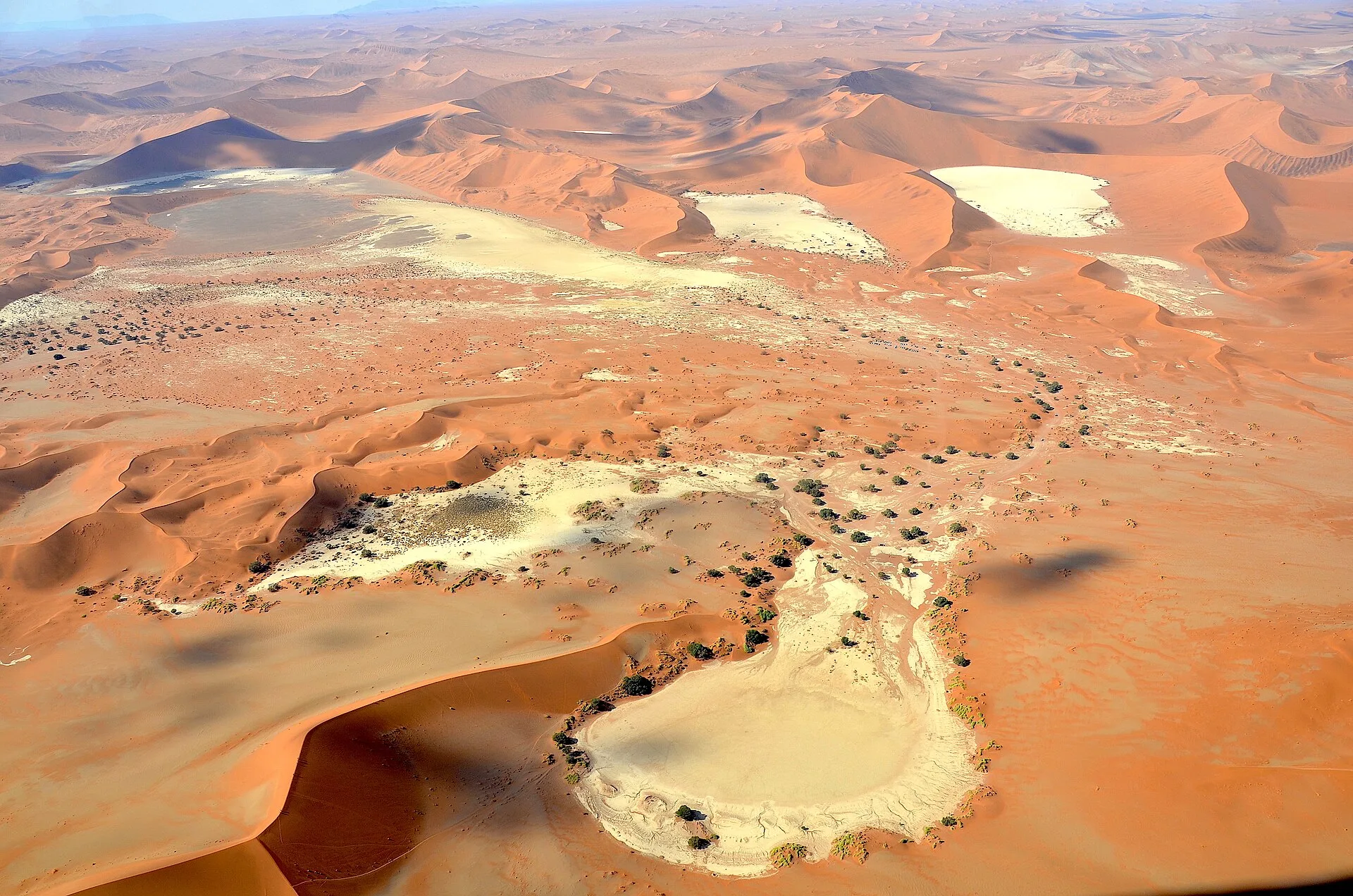
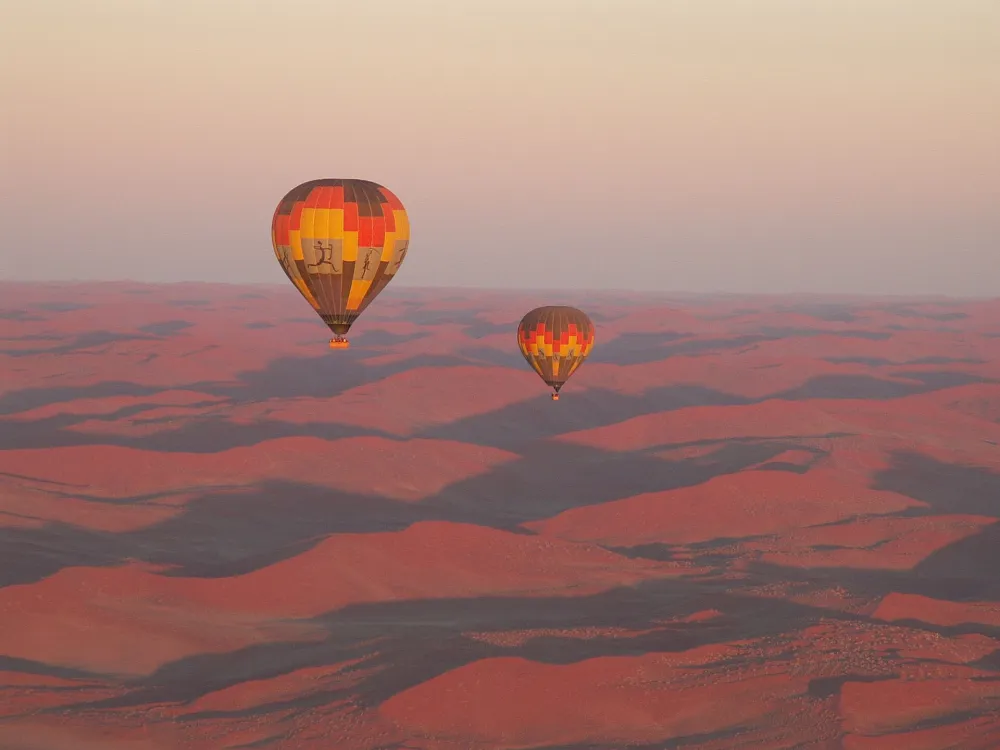
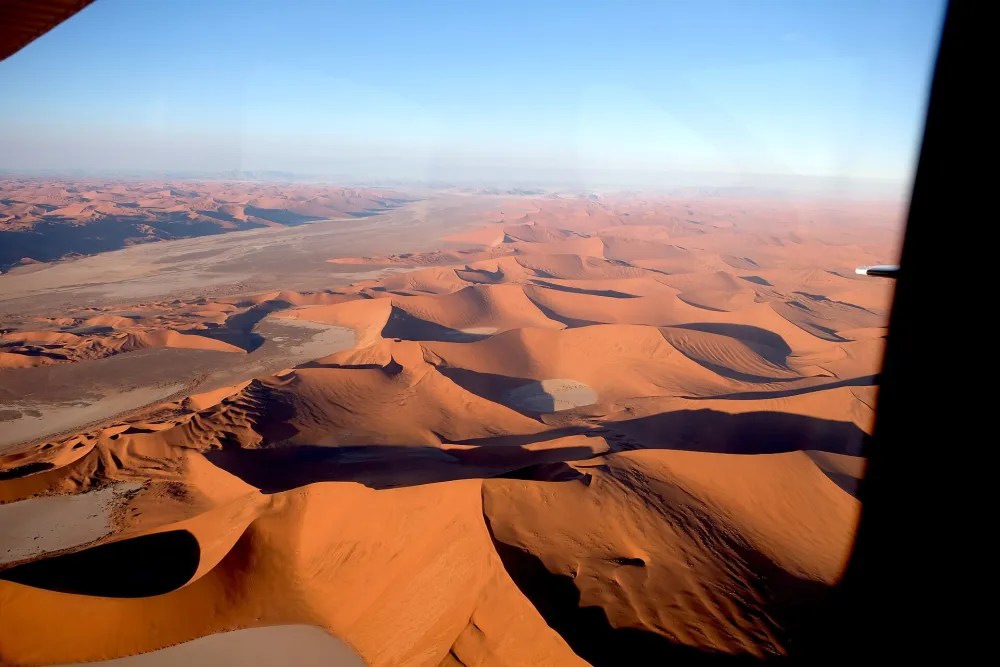
From the air: the pans at the end of the Tsauchab valley, where the tar road gives way to sand.
What to see, in the order you reach it
Distances are from the Sesriem gate along the tar road.
- Elim Dune (5 km, turn-off just inside the gate). A broad, partly vegetated dune that is the classic sunset spot for people staying at Sesriem, because you can be back at the gate in ten minutes. Allow 45 minutes to walk up; the view is east to the Naukluft Mountains and west down the dune corridor.
- The valley drive (km 10–45). The road follows the Tsauchab between ever taller dunes. Oryx, springbok and ostrich are common on the gravel flats early in the day. There are numbered lay-bys; a large dune at about km 39–40 is a good, quiet alternative to Dune 45.
- Dune 45 (45 km). A star dune that stands right beside the road, named for its distance from Sesriem. The climb up the ridge is about 80 m of height gain by the usual count (you will also see 170 m quoted) and takes 20–40 minutes; coming down the face takes two. It is the busiest dune in the park at sunrise.
- Hiddenvlei (from the 2x4 car park, 60 km). A pan reached by a marked walk of about 2 km each way across low dunes, starting at the 2x4 car park. Few people go, and you may have it to yourself; go early and follow the posts.
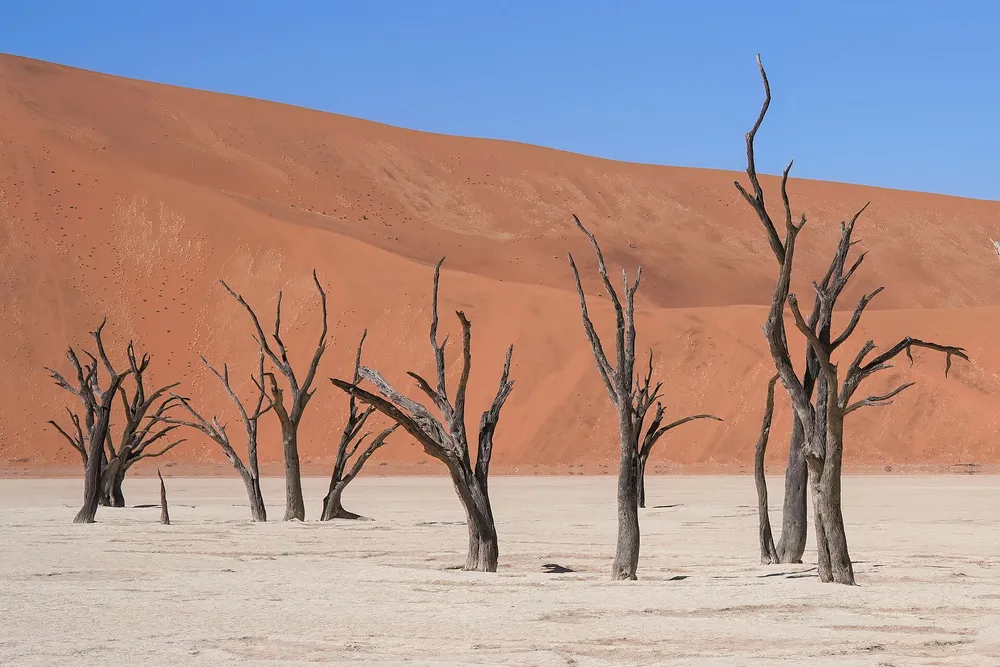
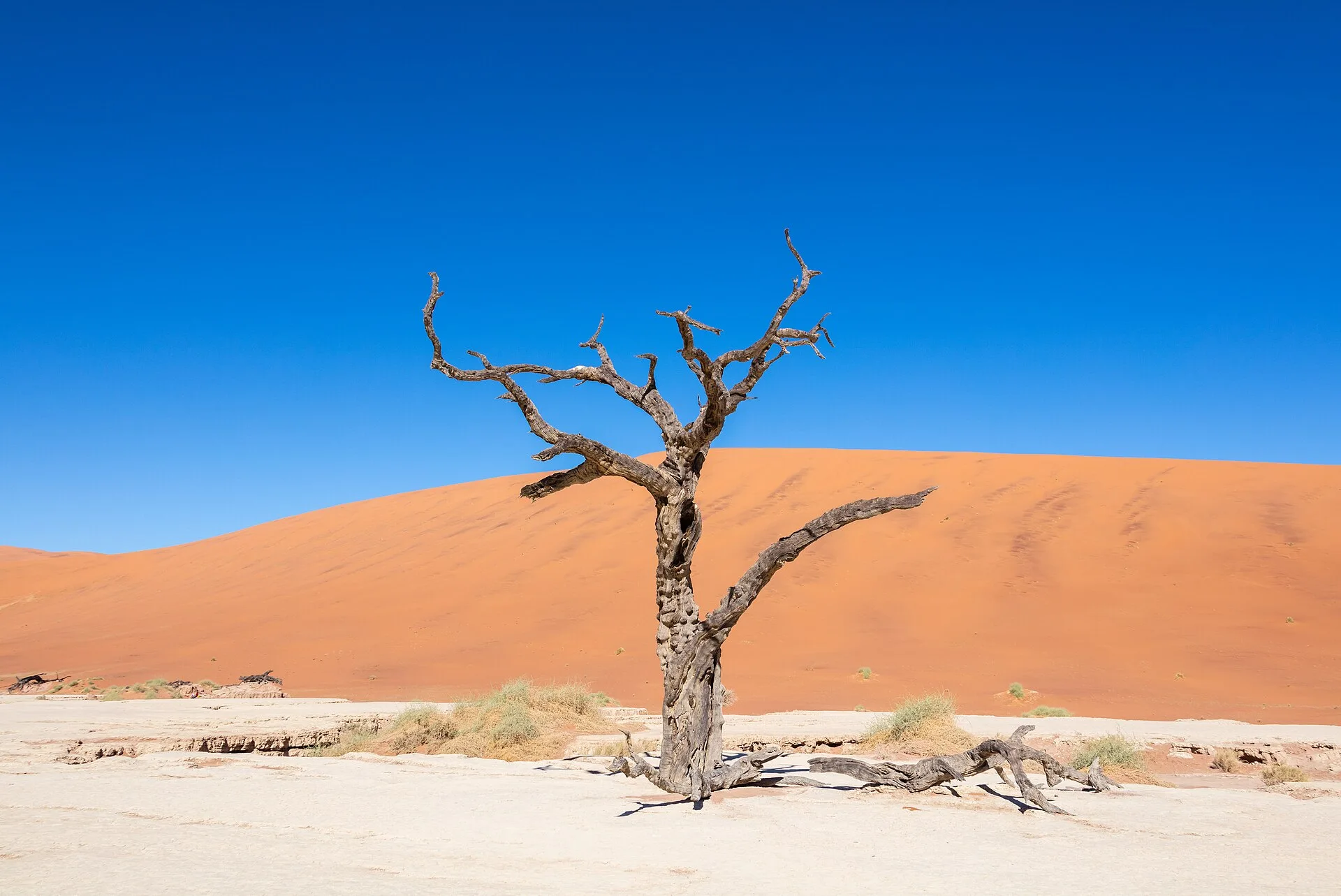
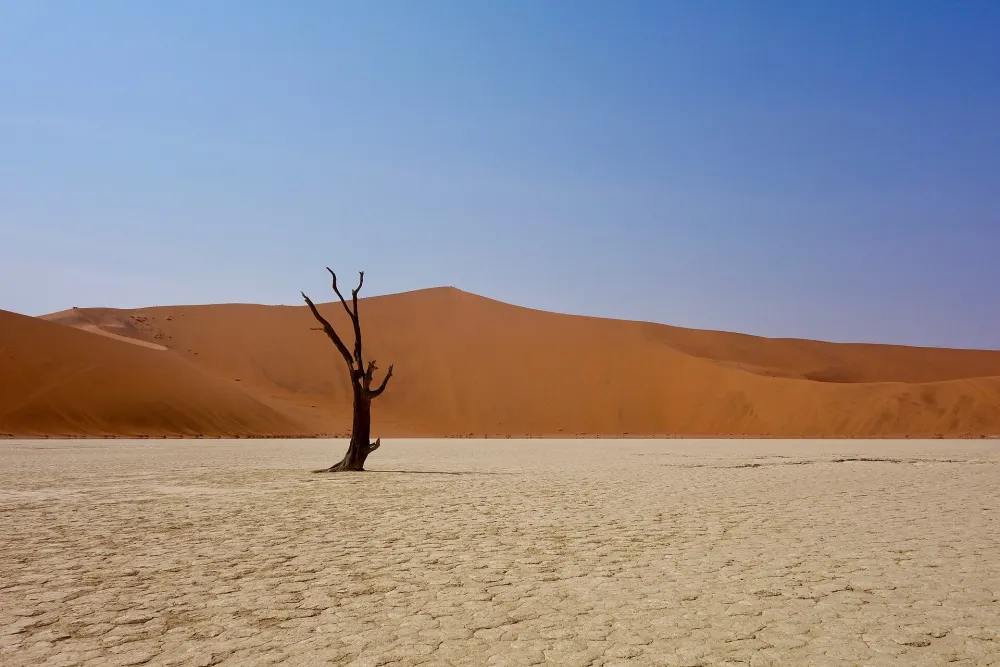
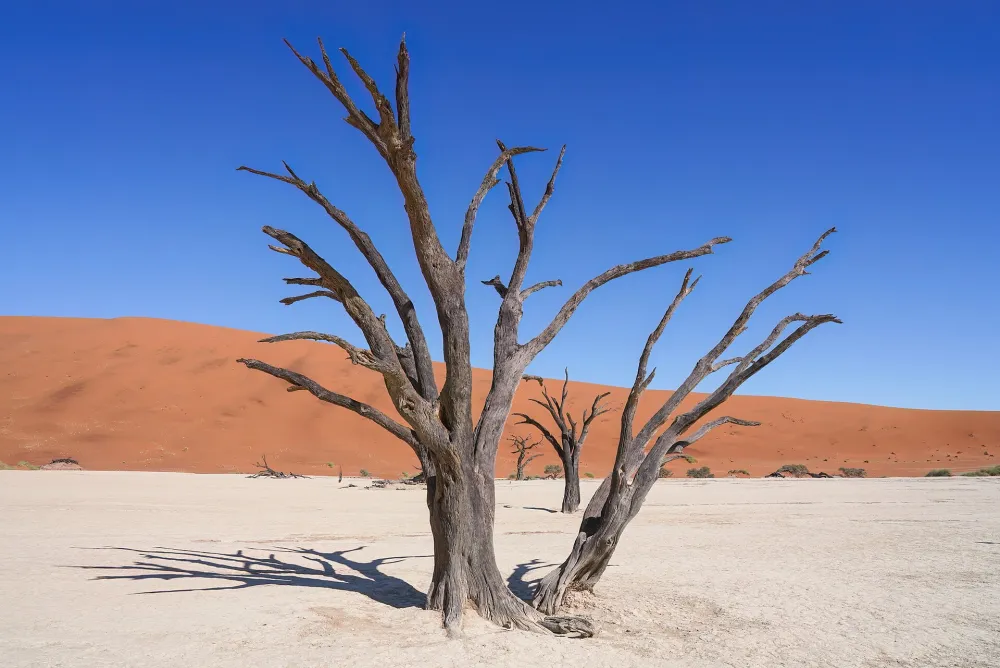
- Deadvlei (from the 4x4 car park). A walk of about 1.1 km over a low dune saddle brings you to a white clay pan shut in by dunes, with the black skeletons of camel thorn trees standing where they died. The Tsauchab once flooded this pan; when the dunes cut it off, the trees died, an estimated 600–700 years ago, and the air has been too dry for them to rot. Please do not touch, lean on or climb the trees.
- Big Daddy (above Deadvlei). The highest dune in the area at about 325 m. The route follows the ridge from the Deadvlei side; allow 1.5–2 hours up in soft sand and ten minutes to run straight down the slip face onto the pan. Start no later than an hour after sunrise in summer.
- Sossusvlei (end of the track). The pan itself, ringed by camel thorns, with Big Mama dune rising behind it. This is the easier big climb and the shadier place for a picnic.
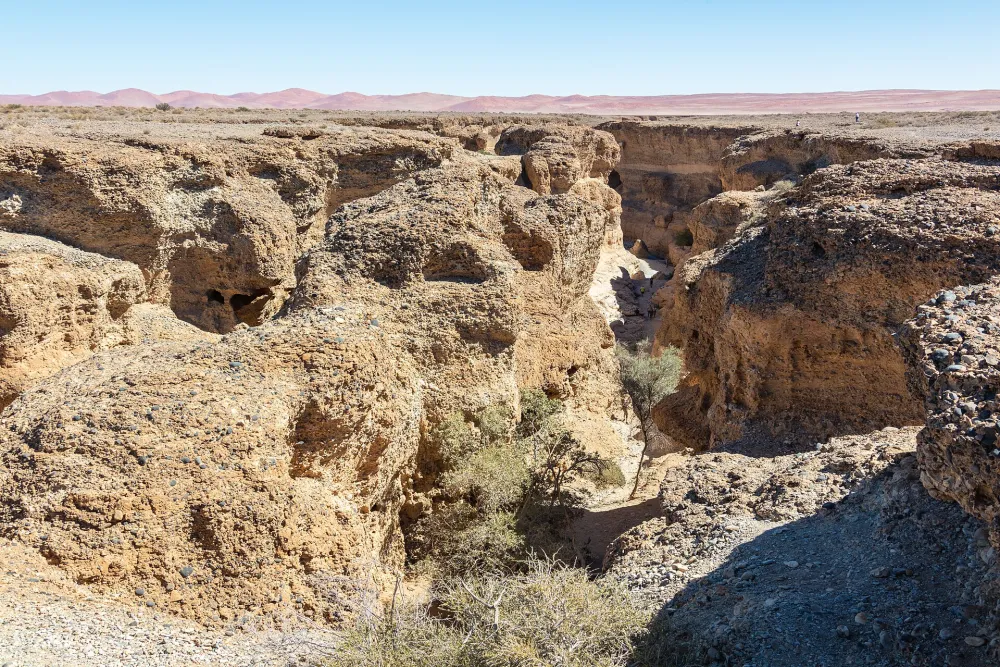
- Sesriem Canyon (4.5 km from Sesriem, on a separate gravel road). A slot about 1 km long and up to 30 m deep cut by the Tsauchab through layered conglomerate, in places only a couple of metres wide. A path leads down into it; pools linger for months after rain. It is cool at midday, which makes it the natural thing to do when the dunes are too hot.
A morning that works
One full morning covers the highlights. Two nights at Sesriem is the comfortable minimum: the drive in from Windhoek or Swakopmund takes most of a day, and a second morning lets you do the thing you had to skip.
- The afternoon before: arrive at Sesriem by mid-afternoon, pay the park fee, fill up with fuel, walk Sesriem Canyon and watch the sunset from Elim Dune.
- One hour before sunrise (inside the gate) or at sunrise (outside): be at the gate with breakfast and water packed. Drive the 60 km of tar at the posted limit; animals cross in the half-light.
- First stop: Dune 45 for sunrise if you are through the inner gate early; otherwise go straight to the end of the road.
- By about 8:00–8:30 AM: take the shuttle or drive the sand track, walk into Deadvlei, and climb Big Daddy if you mean to. Then cross to Sossusvlei.
- By 11:00 AM: be heading back. Stop at the dunes you passed in the dark, eat at the Sesriem end, and sit out the heat at a pool.
- Late afternoon: a second run down the valley for evening light is worth it if you are staying inside the gate; from outside, remember that the outer gate closes at sunset and it is an hour’s drive back.
Heat, water and when to go
This is a hot desert with big swings between day and night. In summer (roughly November to March) daytime temperatures of 35–40 °C are normal and the sand surface is far hotter than the air; by late morning it will burn bare feet and can melt the glue in cheap shoes. In winter (May to August) days are mild and clear, around 20–25 °C, but dawn can be close to freezing and a fleece, hat and gloves are not excessive on top of a dune at sunrise.
- Water: carry at least 3 litres per person for the morning; more if you climb Big Daddy. There is no drinking water beyond Sesriem.
- Footwear: closed shoes for the cold and the hot hours; many people climb barefoot or in socks while the sand is cool.
- Sun: there is no shade on the dunes. Hat, long sleeves, sunscreen, sunglasses.
- Wind: east winds in winter can blow sand hard along the crests; protect cameras and phones.
- Fog: on some mornings Atlantic fog reaches the dunes, around 60 km inland as the crow flies. It lifts by mid-morning and is the main water source for the beetles and lizards you will see tracks of everywhere.
The best months for comfortable climbing and clear air are May to September; they are also the busiest and the most expensive. April and October are good compromises. Summer is quiet and cheaper, and the afternoon thunderheads over the Naukluft make superb skies, but you must be off the dunes early. For the country as a whole see best time to visit.
Park fees and paperwork (from 1 April 2026)
Namibia’s park fees were raised on 1 April 2026 for the first time since 2021. Namib-Naukluft is in the higher band, with Etosha, Skeleton Coast and the Fish River Canyon. The daily fee now has two equal parts, an entrance fee and a conservation fee; the totals are below. A day’s permit is paid at the office at the Sesriem gate (cards are normally accepted, but carry cash in case the machine is offline) and must be shown at the gate each time.
| Visitor | Per day |
|---|---|
| Adult (16+), other foreign nationals | N$280 |
| Adult (16+), SADC nationals | N$180 |
| Adult (16+), Namibian citizens | N$60 |
| Child 9–15, other foreign nationals | N$180 |
| Child 9–15, SADC nationals | N$100 |
| Children 8 and under; Namibian children under 16 | Free |
| Vehicle with 10 seats or fewer | N$60 |
Sossusvlei tours from Windhoek and Swakopmund
If you are not driving yourself, the standard way to see the dunes is a three-day trip from Windhoek: day one is the drive over the escarpment to the Sesriem area, day two the sunrise run to Dune 45, Deadvlei and Sossusvlei plus Sesriem Canyon, day three the drive back. Shared departures keep the price down and solve the 4x4, permit and gate-time questions for you. Check each listing for where you sleep (camping, a lodge outside the gate, or inside the park), which meals are included and whether park fees are in the price.
From the coast there are two-day trips and a very long single-day option from Swakopmund. A day trip means around ten hours in a vehicle for two or three hours at the dunes in the hottest part of the day; take it only if there is no other way to fit Sossusvlei in. All options are listed on GetYourGuide under Sossusvlei; for how guided and self-drive trips compare, see how a Namibia safari works.
From Windhoek: 3-day Sossusvlei shared shuttle tour
The standard way to see the dunes without driving: a shared departure from Windhoek to the Sesriem area, a sunrise morning at Dune 45, Deadvlei and Sossusvlei, and the drive back. Check the listing for the accommodation level and what meals and park fees are included.
Check availabilityBook via GetYourGuide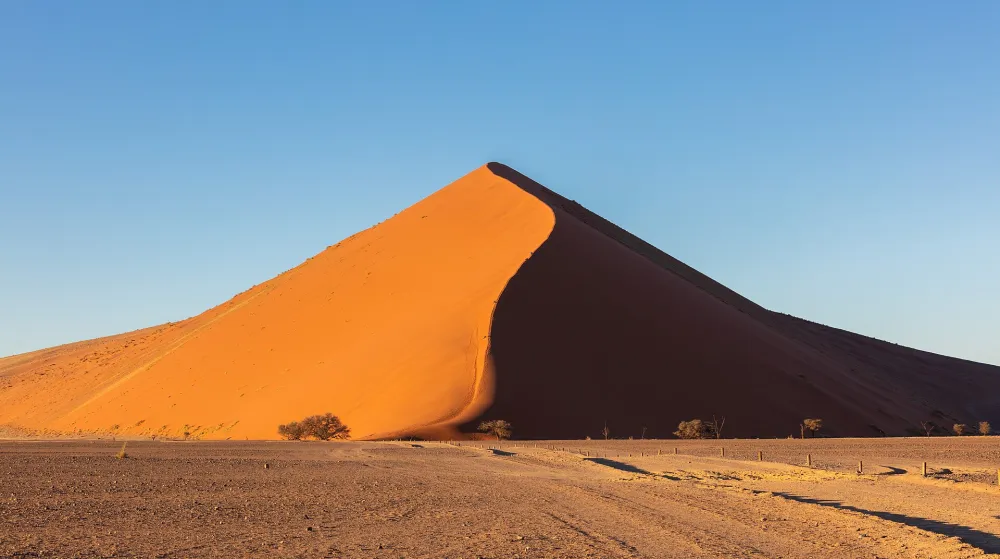
3-day Sossusvlei tour with lodge accommodation
The same three-day pattern from Windhoek with nights in lodge rooms instead of tents. A good fit if you want a proper bed and a pool after the dunes.
Check availabilityBook via GetYourGuide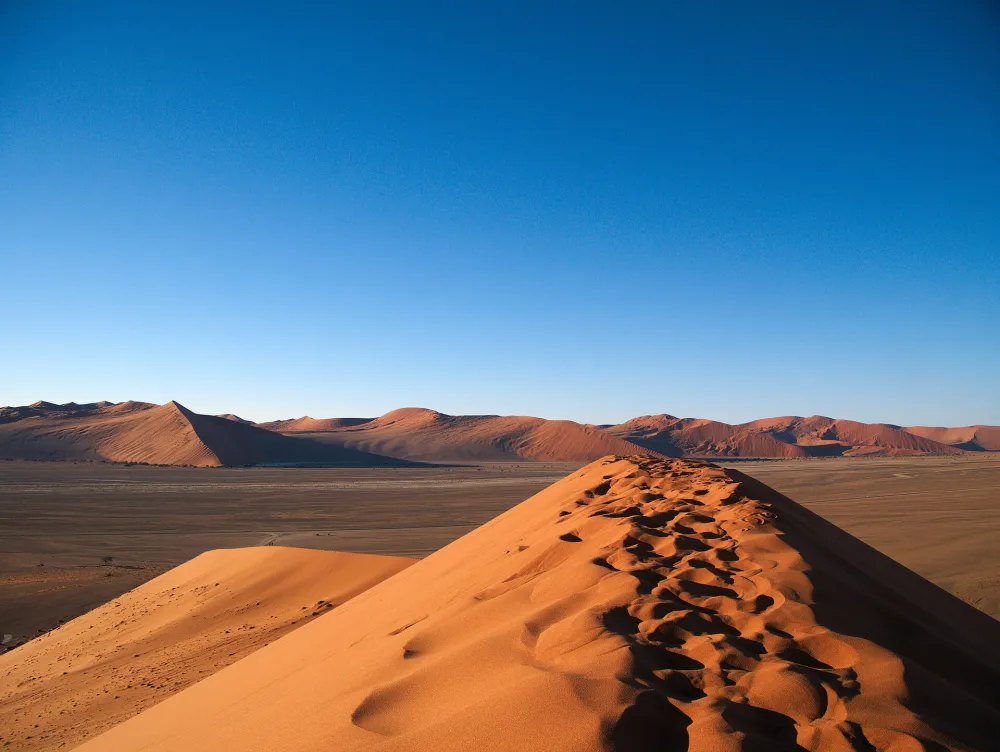
3-day Sossusvlei camping tour
Three days from Windhoek with camping near the park: the lowest-cost way to be at the dunes early. Expect to help pitch tents; check what equipment is supplied.
Check availabilityBook via GetYourGuide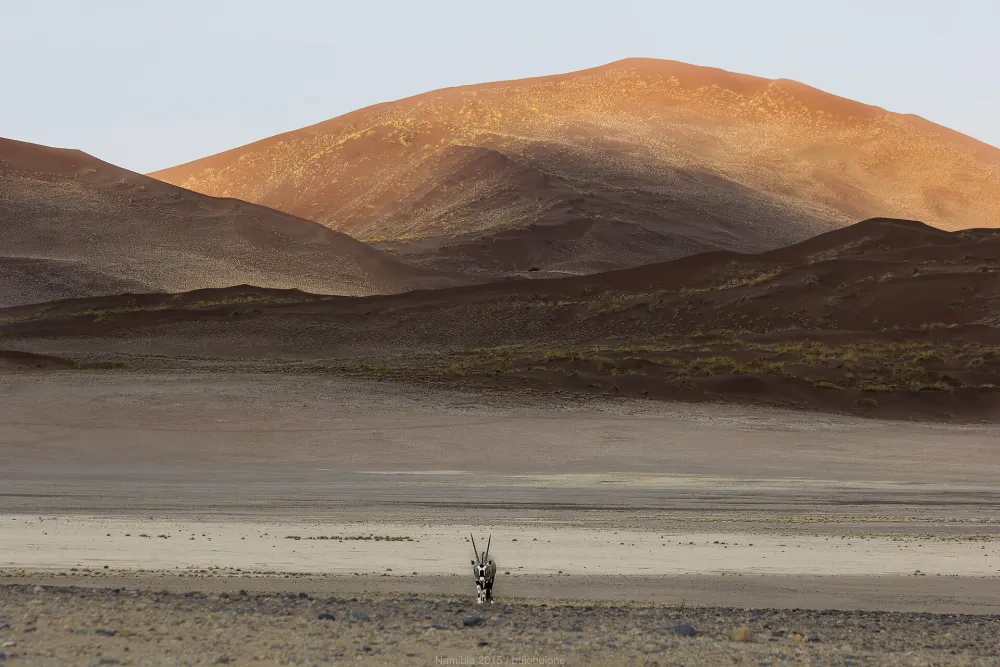
From Windhoek: budget guided 2-day Sossusvlei tour
A two-day version for travellers short of time: a long drive each way with one night near Sesriem and a morning in the dunes. Tight but workable.
Check availabilityBook via GetYourGuide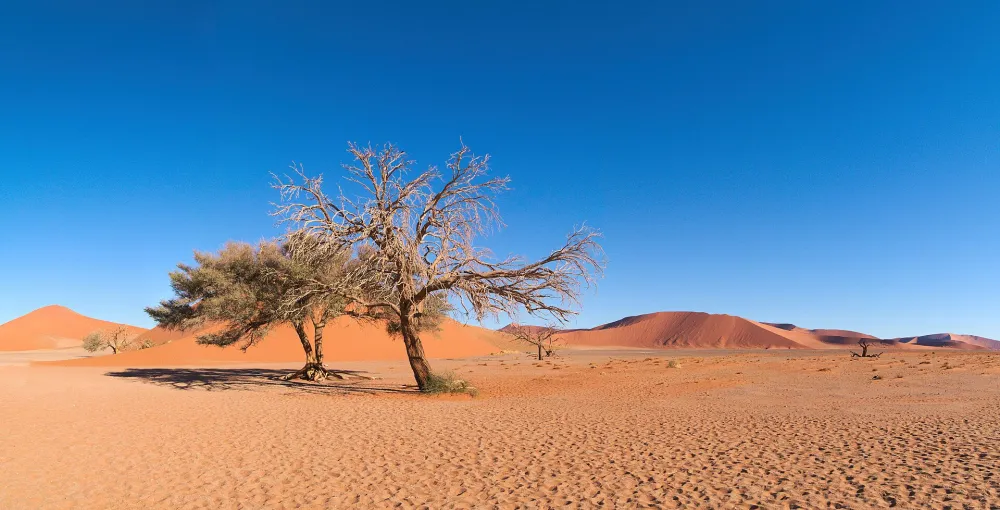
From Swakopmund: 2-day Sossusvlei scenic journey (1 night)
From the coast across the Namib plains and the Kuiseb and Gaub passes to the dunes, with one night in the Sossusvlei area. Far better than attempting it as a day trip.
Check availabilityBook via GetYourGuide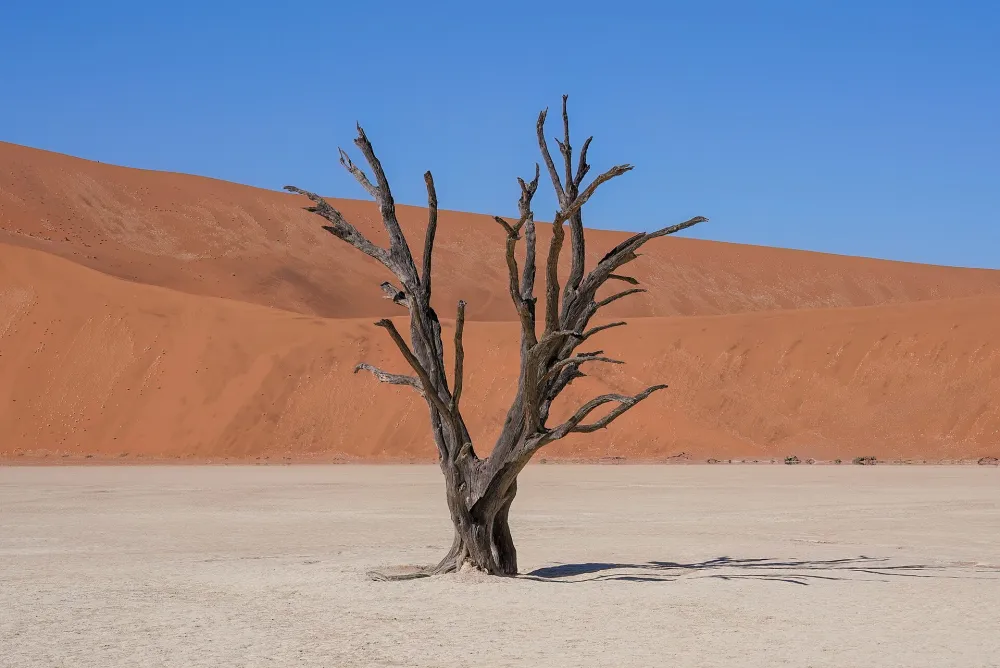
Sossusvlei: sunrise dunes and Deadvlei guided tour
A guided morning in the dune valley timed for first light, with Deadvlei and the big dunes. Check the listing for the meeting point and whether park fees are included.
Check availabilityBook via GetYourGuideTour listings are on GetYourGuide. Prices, dates and cancellation terms are shown live on each listing and can change; NamibiaSafaris.com may earn a commission at no extra cost to you.
Where to stay for Sossusvlei
Choose by distance to the gate first and comfort second.
- Inside the gate you get the early start. NWR’s Sesriem Campsite (44 pitches, with a shop and a filling station) and Sossus Dune Lodge (25 chalets of wood, canvas and thatch) are booked through NWR, not Booking.com; both sell out many months ahead for June to October. A few privately run properties also sit inside the outer gate, among them Dead Valley Lodge, a camp of twenty tented chalets facing Elim Dune; confirm when you book that the stay comes with early access through the inner gate.
- At the gate, within about 5 km, are Sossus Oasis Campsite (pitches with private bathroom and braai place next to the fuel station), Sossusvlei Lodge (the full-service lodge beside the entrance, with a floodlit waterhole), and the two self-catering camps Desert Quiver Camp and Desert Camp, each unit with its own kitchenette and braai. You will be in the queue when the outer gate opens.
- Within an hour’s drive the lodges spread out along the C27 and C19 and tend to be quieter, with bigger views and their own guided excursions into the park: Le Mirage Sossusvlei on the C27 south of Sesriem is one of the closest.
The whole area is short of beds in high season. Book the Sesriem nights first and build the rest of the route around them. More options between Sesriem and Solitaire are in Namib-Naukluft; for camping kit and etiquette see camping in Namibia.
Sossus Oasis Campsite
Sossusvlei & the NamibAt the entrance gate to the park at Sesriem; pitches with a barbecue and shower, and a pool.
9.3Booking.com guest score · as checked in November 2026
See on Booking.comDesert Quiver Camp
Sossusvlei & the NamibSelf-catering units with en-suite bathrooms 5 km from the entrance gate to Sossusvlei; pool and bar.
9.1Booking.com guest score · as checked in November 2026
See on Booking.comDesert Camp
Sossusvlei & the NamibSelf-catering units with private bathroom and kitchenette near Sesriem, with a pool and bar.
8.9Booking.com guest score · as checked in November 2026
See on Booking.comSossusvlei Lodge
Sossusvlei & the NamibAt Sesriem, with a pool and a dining terrace overlooking a floodlit waterhole; air-conditioned rooms with private patios.
8.7Booking.com guest score · as checked in November 2026
See on Booking.comDead Valley Lodge
Sossusvlei & the NamibTwenty climate-controlled tented chalets at Sesriem with a pool looking towards the dunes near Elim.
8.2Booking.com guest score · as checked in November 2026
See on Booking.comLe Mirage Sossusvlei
Sossusvlei & the NamibStone-built desert lodge on the C27 with a spa, pool and restaurant.
8.8Booking.com guest score · as checked in November 2026
See on Booking.comSee all stays in Sossusvlei & the Namib on Booking.com
Accommodation links go to Booking.com, where you see live prices and availability. We do not list prices because they change daily; NamibiaSafaris.com may earn a commission.
Getting to Sesriem
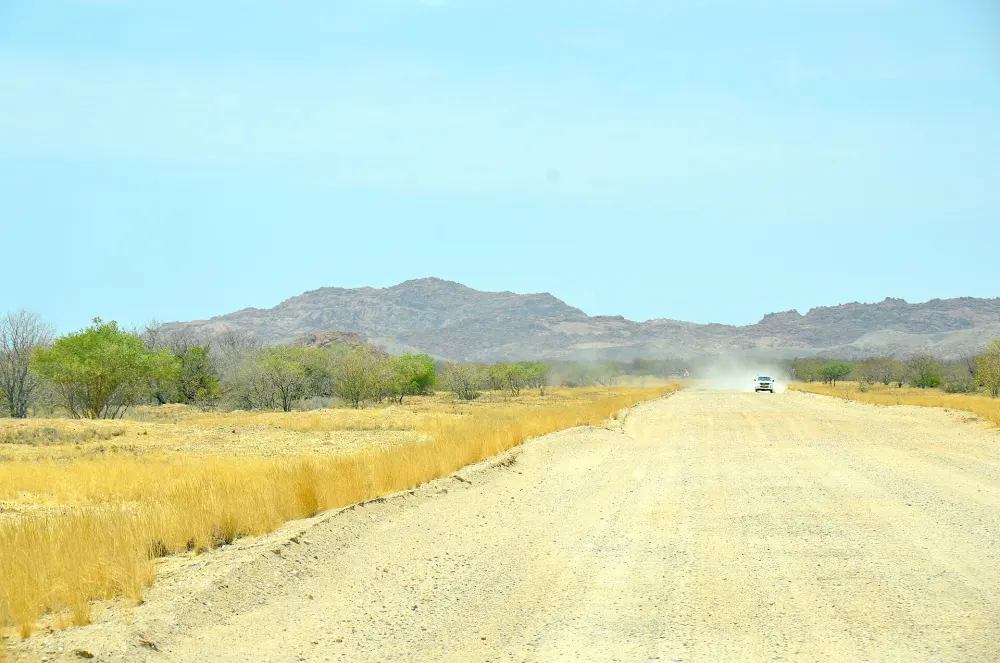
Every approach ends on gravel. The roads are wide and graded, and a normal car manages them in the dry season, but they are corrugated, dusty and hard on tyres; 80 km/h is a sensible maximum and less on bends and crests. Fill up whenever you pass a pump: Solitaire, Sesriem and Maltahöhe are the dependable ones on these routes. Driving technique, tyres and insurance are covered in self-drive Namibia.
- From Windhoek (about 320–350 km, 4.5–5.5 hours). The most used route is the tarred B1 south to Rehoboth, then the C24 and gravel roads west over Remhoogte Pass to the C14 and Solitaire, and south on the C19 to Sesriem. The alternative over Spreetshoogte Pass (D1275) has the best view in central Namibia from the top and a very steep, paved descent; it is not for trailers or nervous drivers. A third way stays on tar to Mariental and comes in through Maltahöhe (longer, but less gravel).
- From Swakopmund or Walvis Bay (about 350 km, 5–6 hours). Take the C14 from Walvis Bay across the gravel plains, through the Kuiseb and Gaub passes and past the Tropic of Capricorn sign to Solitaire (fuel, bakery), then the C19 for the last 83 km.
- From the south (Lüderitz, Aus, Fish River Canyon). Come up through Helmeringhausen or Maltahöhe to the C27 or C19. The C27 through the NamibRand Nature Reserve is one of the most beautiful roads in the country and one of the slowest.
- By air. Light-aircraft charters and scheduled safari shuttles use airstrips near Sesriem; this is how most fly-in safaris arrive. See balloon and scenic flights for the flightseeing options.
There is no public transport to Sesriem. Do not plan to arrive after dark: the gravel is harder to read, animals are on the road and lodge gates close.
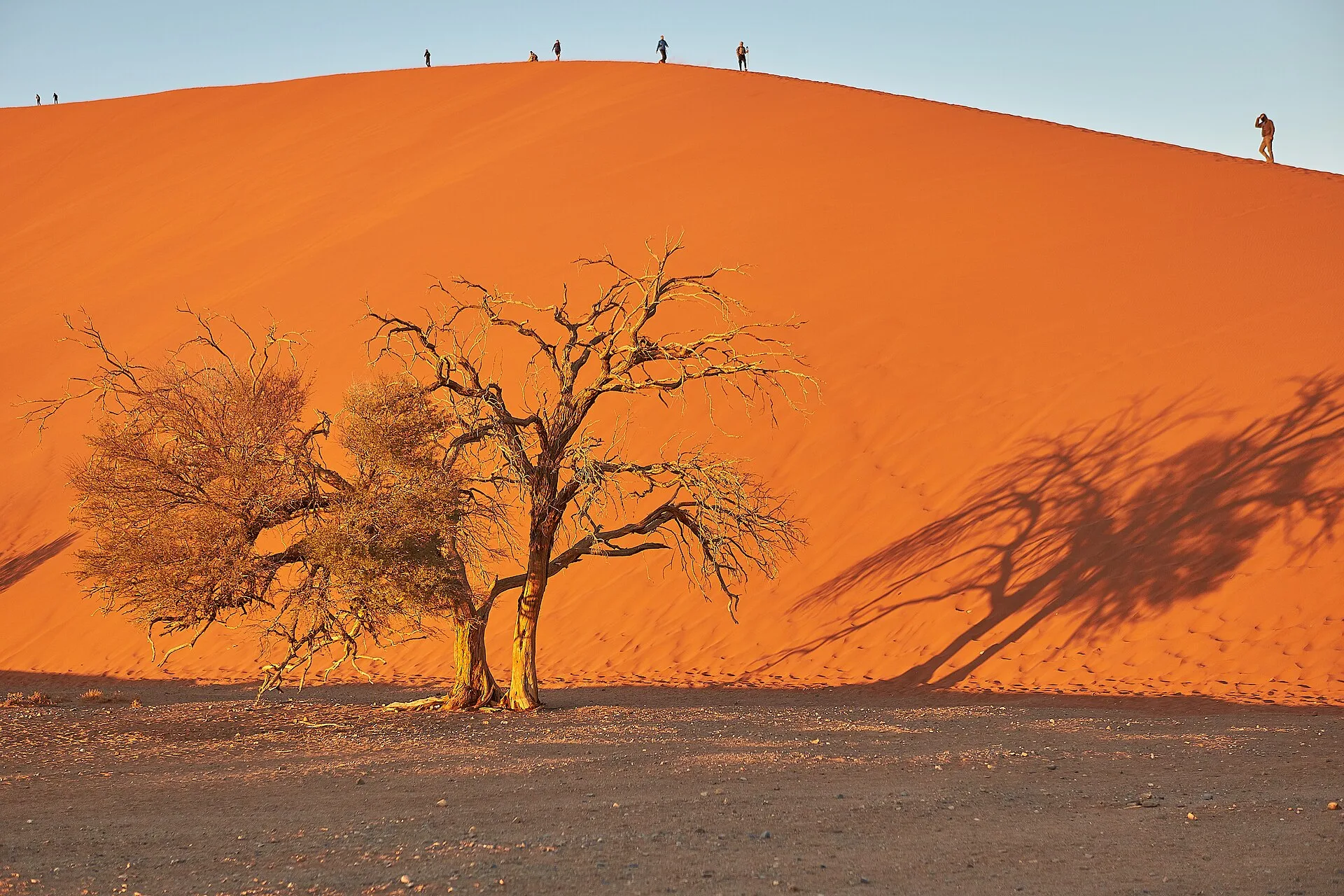
Dune 45 stands beside the tar road, 45 km from the Sesriem gate.
Frequently asked questions
Can you visit Sossusvlei without a 4x4?
Yes. The 60 km from the Sesriem gate to the 2x4 car park is tarred and fine for any car, and Dune 45 and Hiddenvlei are reached from it. For the last 5 km of sand to Deadvlei and Sossusvlei, leave the car and take the concession shuttle (reported at N$260 per adult return in 2026).
Are self-drivers still allowed to drive the 4x4 track to Deadvlei?
According to the Ministry of Environment, Forestry and Tourism’s notice of 2 May 2026, yes, in a 4x4 vehicle. Restrictions were announced in December 2025 and again for 1 May 2026 and then withdrawn, so check at the Sesriem gate or with your lodge shortly before your visit.
How much is the entrance fee for Sossusvlei?
From 1 April 2026: N$280 per adult per day for foreign visitors from outside the SADC region, N$180 for SADC nationals and N$60 for Namibians, plus N$60 for a normal vehicle. Children aged 8 and under are free.
What time does the Sesriem gate open?
The outer gate opens at sunrise and closes at sunset; the inner gate, used only by people staying inside the park, opens about an hour earlier. Sunrise is around 7:40 AM in June and 6:00 AM in December (local time). The exact times for the month are posted at the gate.
How long do you need at Sossusvlei?
One full morning in the park covers Dune 45, Deadvlei and Sossusvlei. Because the drive in takes most of a day, plan two nights at or near Sesriem.
How hard is the climb up Big Daddy?
It is about 325 m high and takes most people 1.5 to 2 hours up a soft sand ridge, with no shade. It is strenuous rather than technical. Start within an hour of sunrise, carry at least 1.5 litres of water for the climb alone, and descend the face directly into Deadvlei.
Is Sossusvlei worth it as a day trip from Swakopmund or Windhoek?
It is possible but poor value in time: roughly ten hours on the road for a short visit in the midday heat. A two- or three-day trip with a night near Sesriem is a far better experience.
Sources and official information
Facts were checked against these official sources in November 2026. Park fees, gate times, visa rules and timetables change, so confirm before you go.
- lac.org.na
- nwr.com.na
- nwr.com.na
- nwr.com.na
- meft.gov.na
- whc.unesco.org
- namibian.com.na
- namibian.org
- atta.travel
- en.wikipedia.org
- en.wikipedia.org
NamibiaSafaris.com is an independent guide, not the official site of any tour operator, lodge, Namibia Wildlife Resorts or the Namibian government. Some links are affiliate links: tours go to GetYourGuide and accommodation goes to Booking.com, and we may earn a commission at no extra cost to you.