In short
- Namibia has all of the Big Five, lion, leopard, elephant, rhino and buffalo, but not in one park.
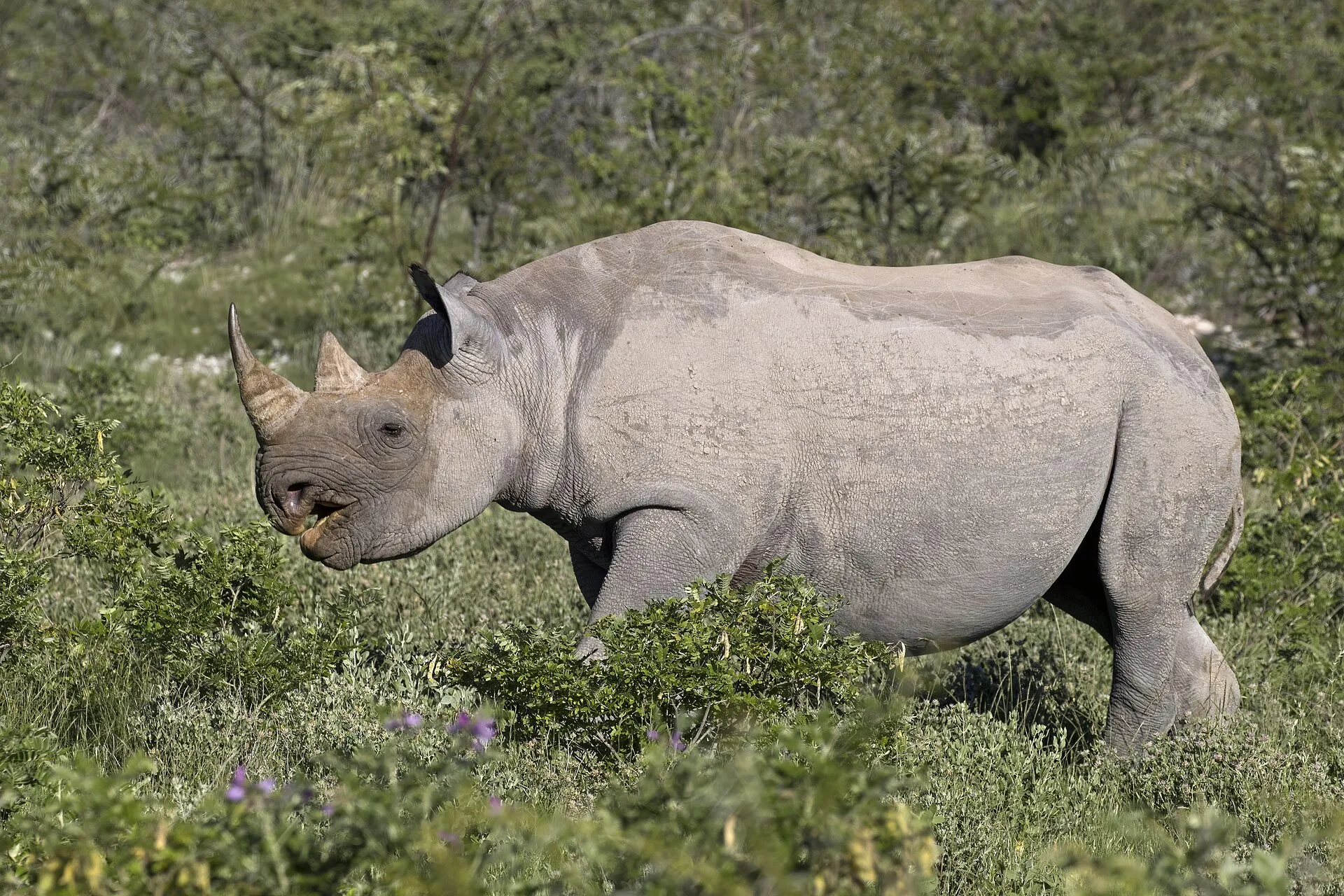
- Etosha has four. There are no buffalo in Etosha, whatever a brochure implies. Lion, elephant and black rhino are seen regularly; leopard is possible.
- Buffalo live on the Waterberg Plateau, seen on guided drives only, and in the river parks of the Zambezi Region, 800 km and more from Windhoek.
- To see all five: combine Etosha with the Waterberg on the way north, or add the Zambezi Region if you have three weeks.
- Namibia's strength is rhino. Black rhino at a floodlit waterhole, or tracked on foot in the desert, is the experience other safari countries cannot easily match.
What 'Big Five' means, and why it is a poor checklist
The phrase comes from hunting. In the days of the colonial hunting safari, lion, leopard, elephant, rhinoceros and Cape buffalo were counted as the five most dangerous animals to pursue on foot. It was never a list of the biggest animals, or the rarest, or the most interesting: hippo, giraffe and cheetah are not on it. Tourism borrowed the term, and it now sells safaris.
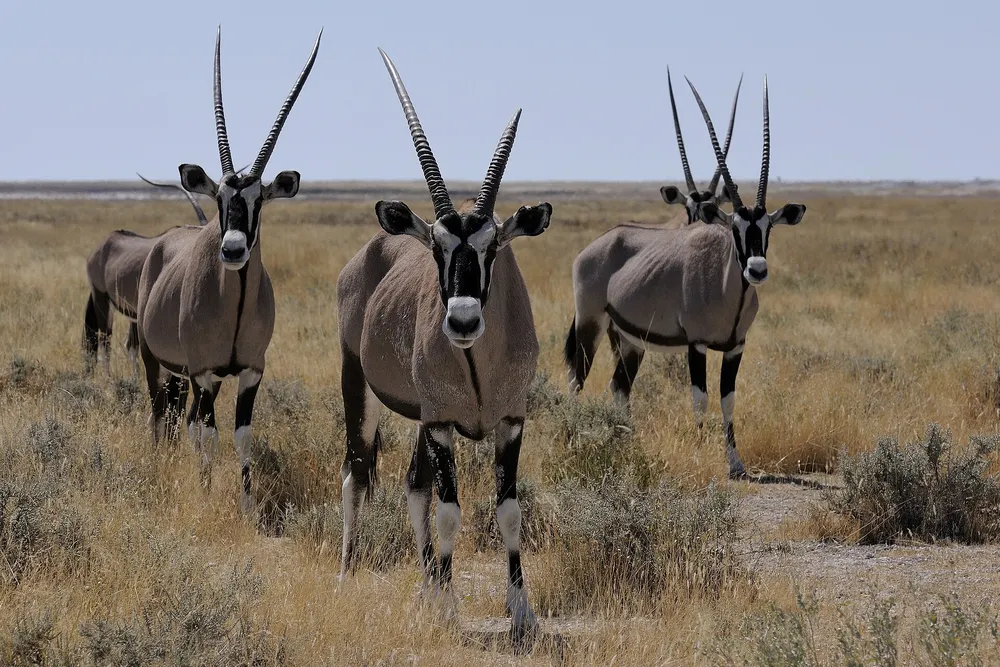
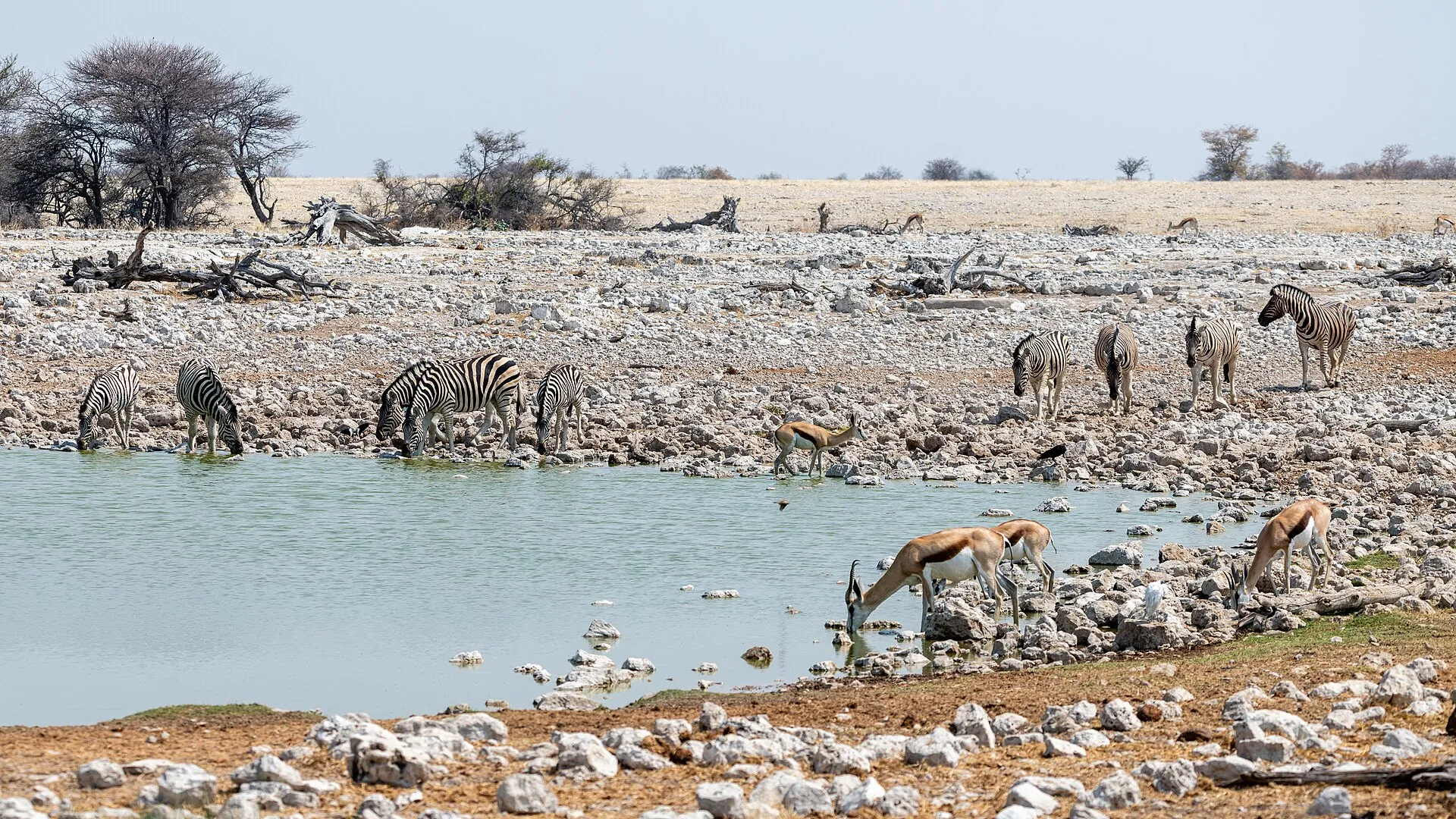
It suits Namibia badly. The country's great sights are animals the list ignores: a hundred zebra and oryx crowding a spring on the edge of a salt pan, a cheetah on a termite mound, elephants walking a dry riverbed between desert mountains, a seal colony 100,000 strong. A visitor who spends a trip chasing a buffalo to complete a set will drive a long way to see an animal that looks much like a cow. That said, it is a fair question, and it deserves a straight answer.
Which parks have which
The table shows where each of the five occurs in the places visitors actually go. 'Regular' means most visitors spending two or three days there in the dry season will see it; 'possible' means it lives there but needs luck or a guide.
| Place | Lion | Leopard | Elephant | Rhino | Buffalo |
|---|---|---|---|---|---|
| Etosha National Park | Regular | Possible | Regular | Black: regular; white: possible | None |
| Waterberg Plateau Park | None | Possible | None | Black and white, on guided drives | Yes, on guided drives |
| Zambezi Region (Bwabwata, Mudumu, Nkasa Rupara) | Possible | Possible | Regular | None to speak of | Regular |
| Damaraland and Palmwag | Rare | Rare | Desert-adapted, with a guide | Black, by tracking | None |
| Okonjima Nature Reserve | None | Regular, with guides | None | White | None |
| Sossusvlei, the coast, the south | None | Rare | None | None | None |
Etosha: four out of five
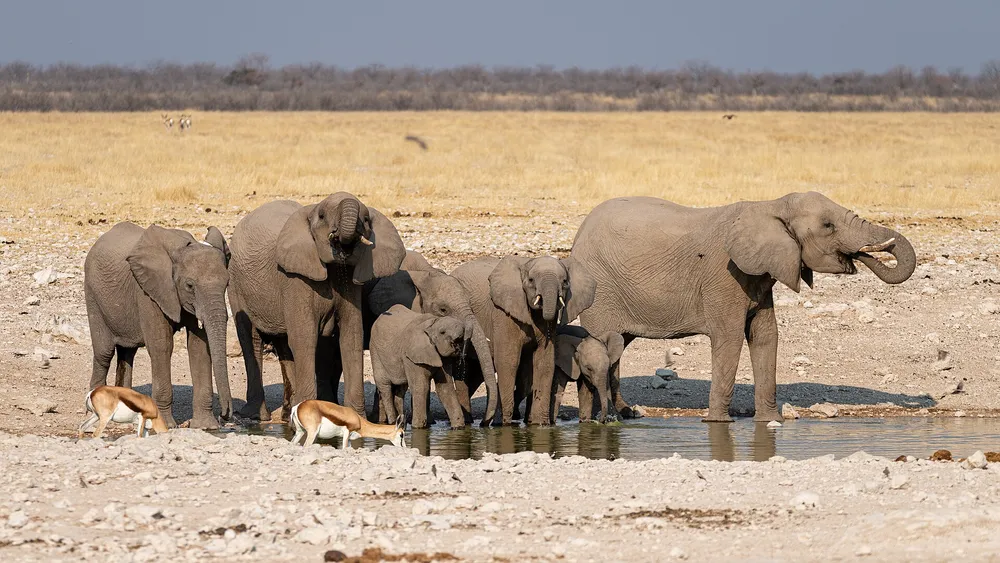
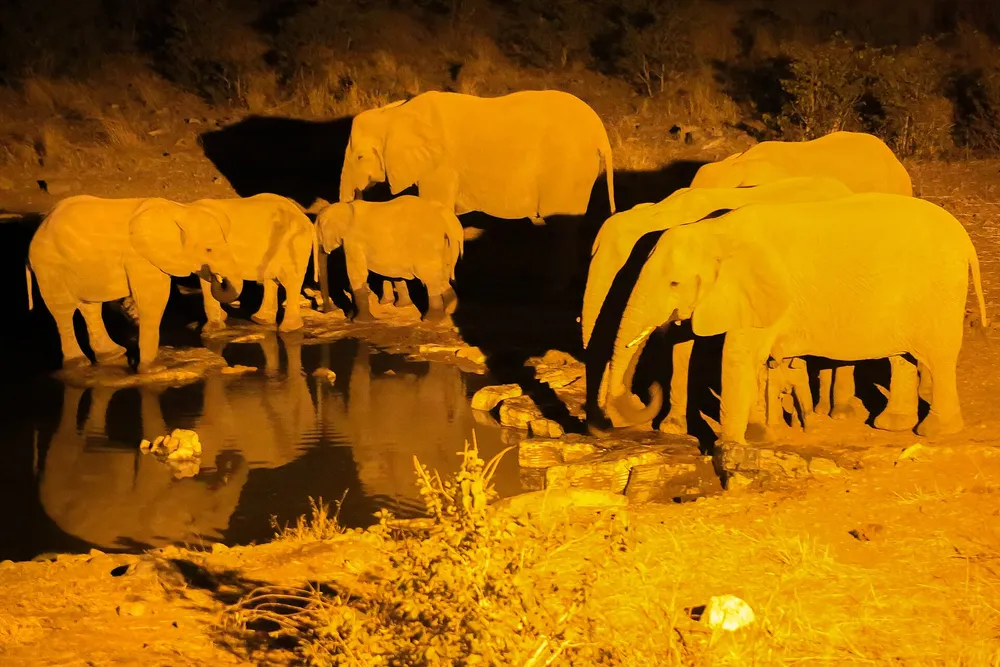
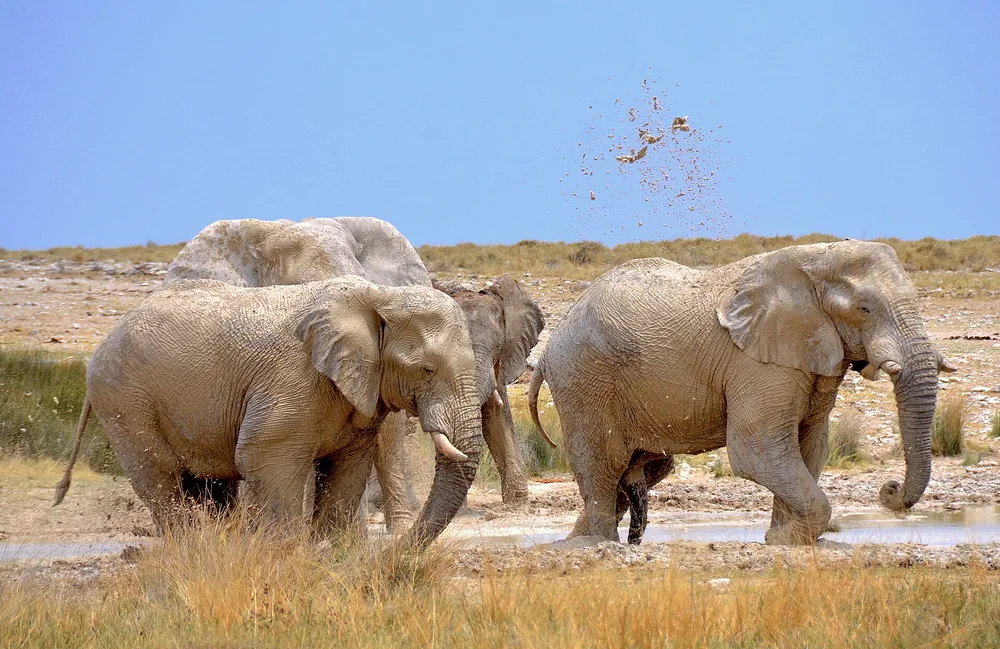
Elephant is the certainty. In the dry season herds drink daily at Okaukuejo, Nebrownii, Olifantsbad, Goas and many other waterholes, and lone bulls are everywhere.
Lion is likely over two or three days. Etosha has a healthy population, and because the country is open they are easier to spot than in bushier parks. Drive at first light to Okondeka, Rietfontein or the plains around Salvadora and Charitsaub, check the sightings book at reception, and watch the behaviour of zebra and springbok at a waterhole: when a whole herd stands staring in one direction and will not drink, follow their gaze.
Rhino is where Etosha excels. The park protects most of Namibia's black rhino, and although they are browsers that keep to the thickets by day, they come to water after sunset. At Okaukuejo's floodlit waterhole it is common in the dry months to see two or three in an evening; Halali's Moringa waterhole is nearly as good. White rhino, reintroduced to the park, are seen less often, mostly in the east.
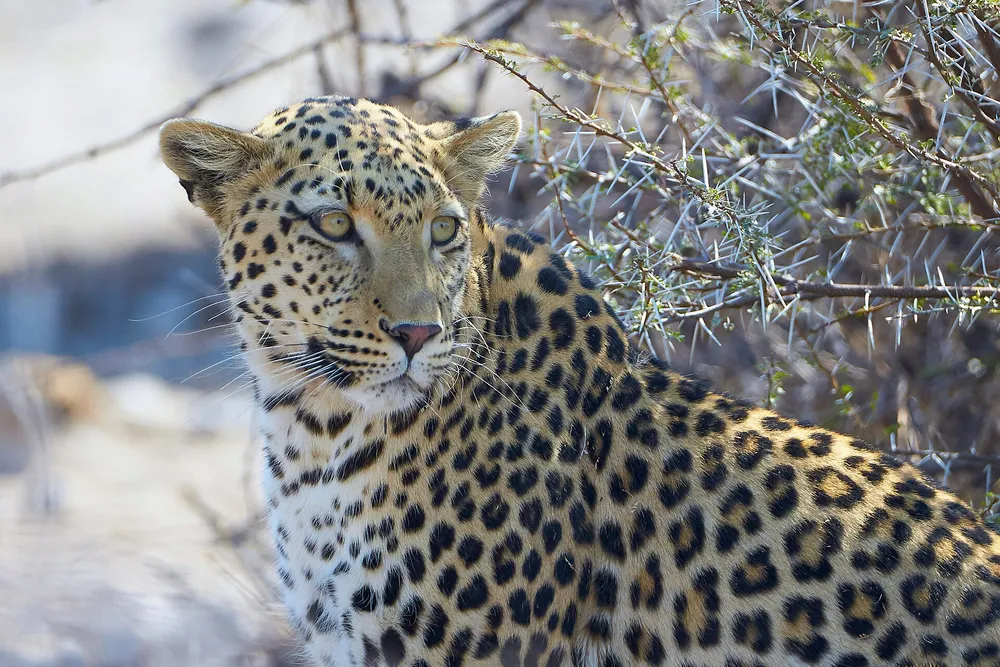
Leopard is the hard one. They are present throughout the park, and guides do find them, especially around Halali and the wooded east, but most self-drive visitors leave without a sighting. A night drive with Namibia Wildlife Resorts improves the odds.
Buffalo you will not see. The park has none: buffalo need to drink daily and graze tall grass, and they carry foot-and-mouth disease, which is why they are excluded from the farming areas south of Namibia's veterinary cordon fence. Full details of the park are in our Etosha guide.
From Windhoek: 3-Day Etosha National Park Tour
The classic short safari: drive north from Windhoek, game drives on arrival, a full day among the waterholes and a final drive at sunrise before the road home. The simplest way to see Etosha without a car. Check the listing for the accommodation type and whether park fees are included.
Check availabilityBook via GetYourGuide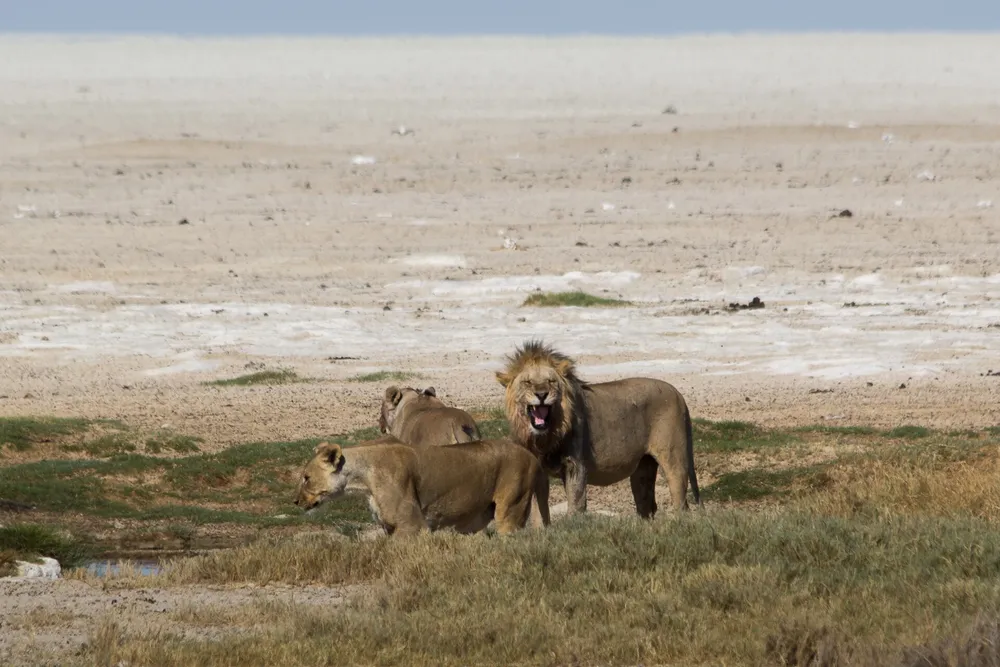
From Windhoek: 3-Day Etosha National Park Safari
A three-day guided Etosha safari from Windhoek on the standard route, with about a day and a half of game viewing in the park. Compare the vehicle, group size and overnight stops with the other three-day options.
Check availabilityBook via GetYourGuide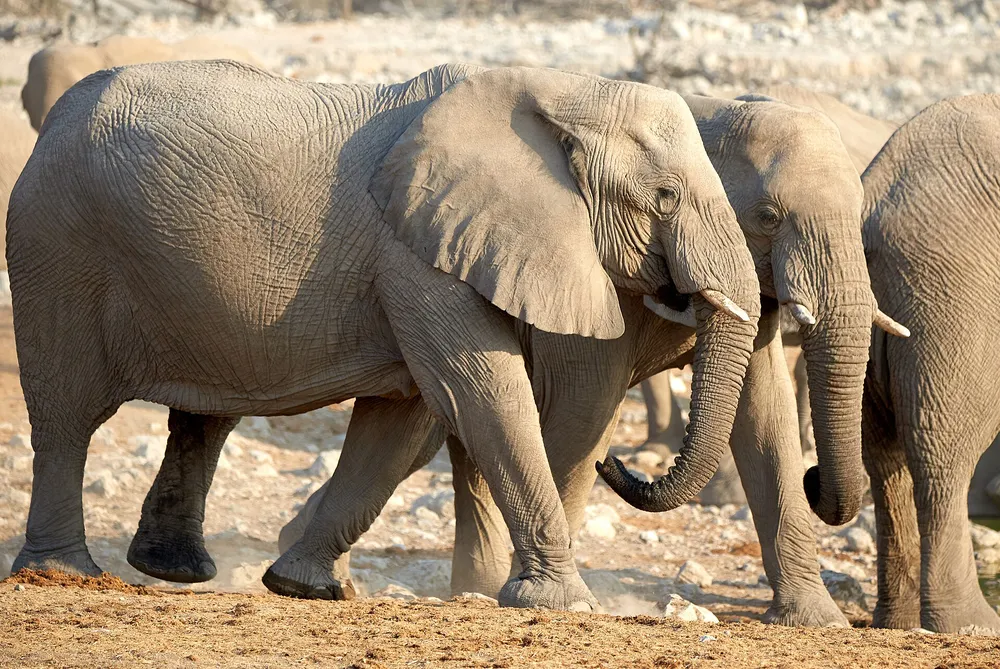
Etosha National Park: Full or Half-Day Game Drive
A guided game drive inside the park in a safari vehicle, for visitors already staying at or near Etosha. Half a day covers the waterholes around Okaukuejo; a full day reaches further along the pan. Check the meeting point and whether the park fee is included.
Check availabilityBook via GetYourGuideTour listings are on GetYourGuide. Prices, dates and cancellation terms are shown live on each listing and can change; NamibiaSafaris.com may earn a commission at no extra cost to you.
Where the buffalo are
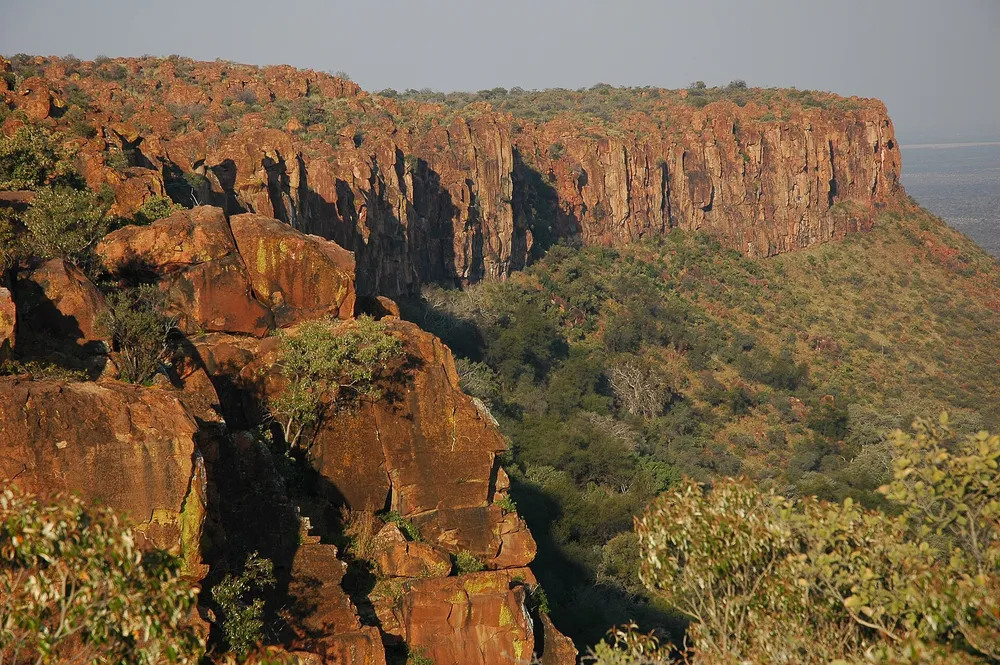
Waterberg Plateau Park, about 300 km north of Windhoek and an easy stop on the way to Etosha, is the nearest place. The flat top of the plateau, ringed by sandstone cliffs, has been used since the 1970s as a refuge and breeding ground for rare species, among them a herd of disease-free buffalo, black and white rhino, roan and sable antelope. You may not drive on the plateau yourself: the only access is on the guided game drives run by Namibia Wildlife Resorts from the rest camp (N$650 per person, morning or afternoon, on the 2026–27 rate sheet). The bush on top is thick and sightings are never guaranteed, but this is the practical way to add a buffalo to a classic itinerary. See Waterberg and central Namibia.
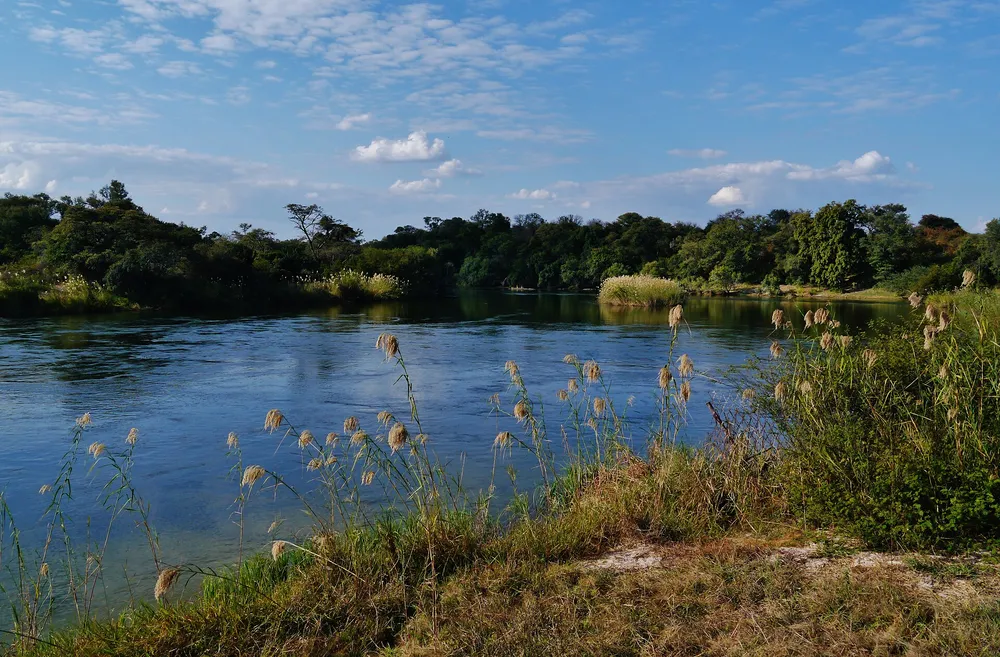
The Zambezi Region, the narrow strip of Namibia that runs east between Angola, Zambia and Botswana, is proper buffalo country. Herds of several hundred graze the floodplains of the Kwando and Okavango rivers in Bwabwata National Park, whose Buffalo Core Area is named for them, and in Mudumu and Nkasa Rupara. You will also see hippo and crocodile, which are not on the list but arguably should be. The catch is distance: Divundu, at the western end, is about 900 km from Windhoek. See the Zambezi Region guide.
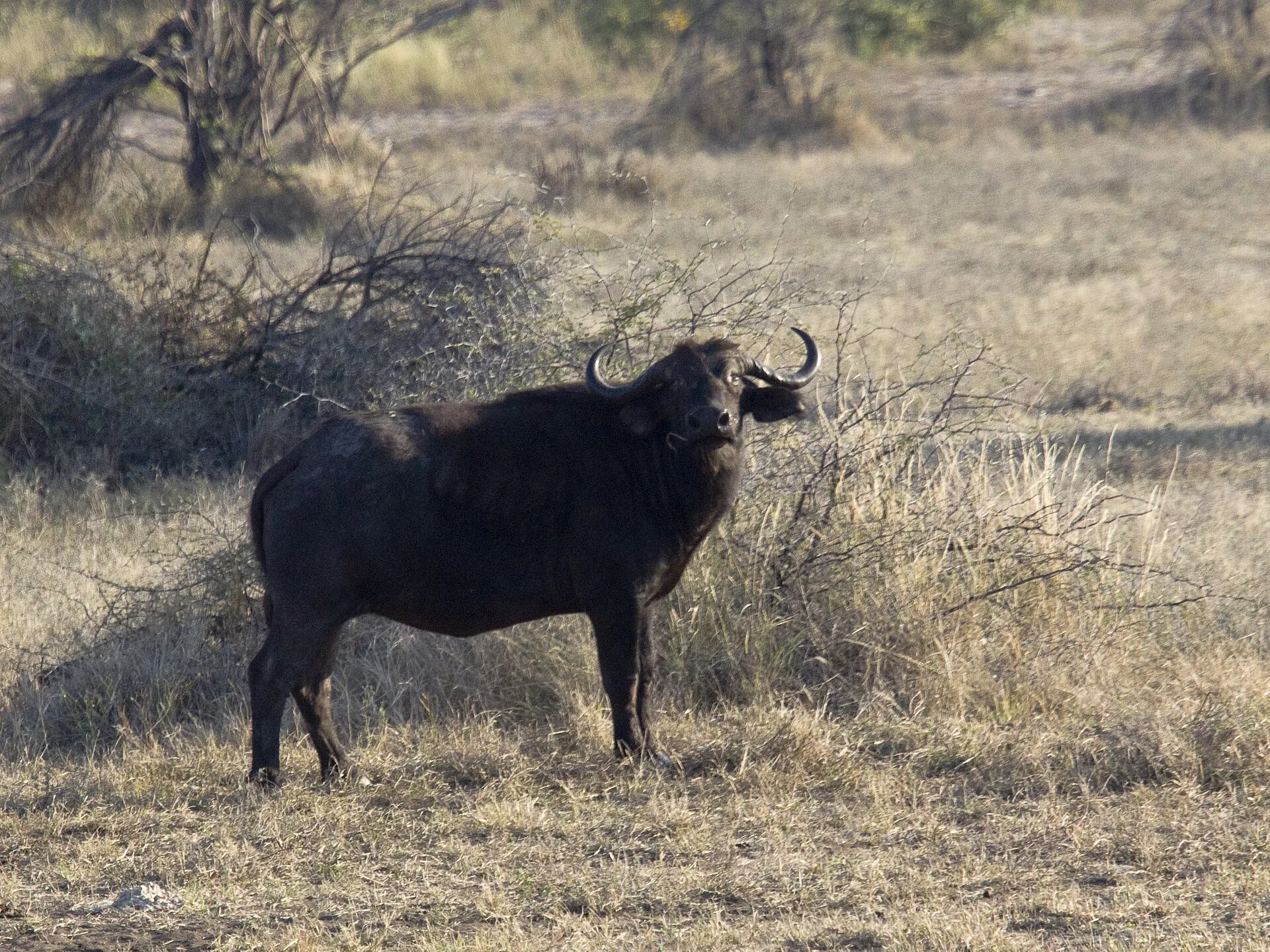
An African buffalo. In Namibia you must go to the Waterberg or the north-eastern rivers to see one.
Waterberg Wilderness
Central NamibiaA private nature reserve on the slopes of the Waterberg, 90 km east of Otjiwarongo, with several lodges and plateau views.
8.2Booking.com guest score · as checked in November 2026
See on Booking.comWaterberg Guest Farm
Central NamibiaRooms and bungalows at the foot of the Waterberg, with a pool, a garden and a restaurant.
8.2Booking.com guest score · as checked in November 2026
See on Booking.comGondwana Namushasha River Lodge
Zambezi RegionA riverside lodge on the Kwando 24 km south of Kongola; boat cruises on the channels, pool and restaurant.
9.2Booking.com guest score · as checked in November 2026
See on Booking.comSee all stays in Central Namibia on Booking.com
Accommodation links go to Booking.com, where you see live prices and availability. We do not list prices because they change daily; NamibiaSafaris.com may earn a commission.
How to see all five in one trip
Be realistic about leopard on any route. If you truly need all five, the reliable order is: Okonjima for leopard, Etosha for lion, elephant and rhino, the Waterberg for buffalo.
| Trip | Route | What you get |
|---|---|---|
| 10–14 days, classic loop | Windhoek, Sossusvlei, Swakopmund, Damaraland, Etosha (3 nights), Waterberg (1–2 nights, plateau game drive), Windhoek | Elephant, lion and rhino in Etosha; a chance of leopard; buffalo and more rhino on the Waterberg |
| Add leopard | Swap or add a night at Okonjima between Windhoek and the Waterberg | The best leopard odds in Namibia, with guides who track individual cats |
| 3 weeks, the north | Etosha, then Rundu, Divundu, the Kwando, Katima Mulilo; optionally on to Chobe or Victoria Falls | All five without relying on the Waterberg, plus hippo, crocodile and river birds |
Rhino tracking: better than a checklist
The most memorable Big Five experience in Namibia involves no vehicle at the sighting. In the north-west, between the Skeleton Coast and Etosha, black rhino live on open communal land in one of the driest places any rhino inhabits. Rangers of Save the Rhino Trust and the local conservancies monitor them daily, and a handful of lodges in and around the Palmwag concession take guests out with the trackers; Grootberg Lodge and Palmwag Lodge are two that offer rhino tracking, so confirm availability and cost when you book.
The day begins before sunrise. The trackers drive the tracks until they cut fresh spoor, then walk, reading scuffed stones and browsed euphorbia across hills of red basalt. When they find the animal, guests approach on foot, downwind and in silence, to a distance the trackers judge safe, watch for a short while and withdraw. It can take two hours or eight, the ground is rough and there is no shade, and now and then no rhino is found at all. Part of what you pay goes to the monitoring work, which is the reason these animals are still there.
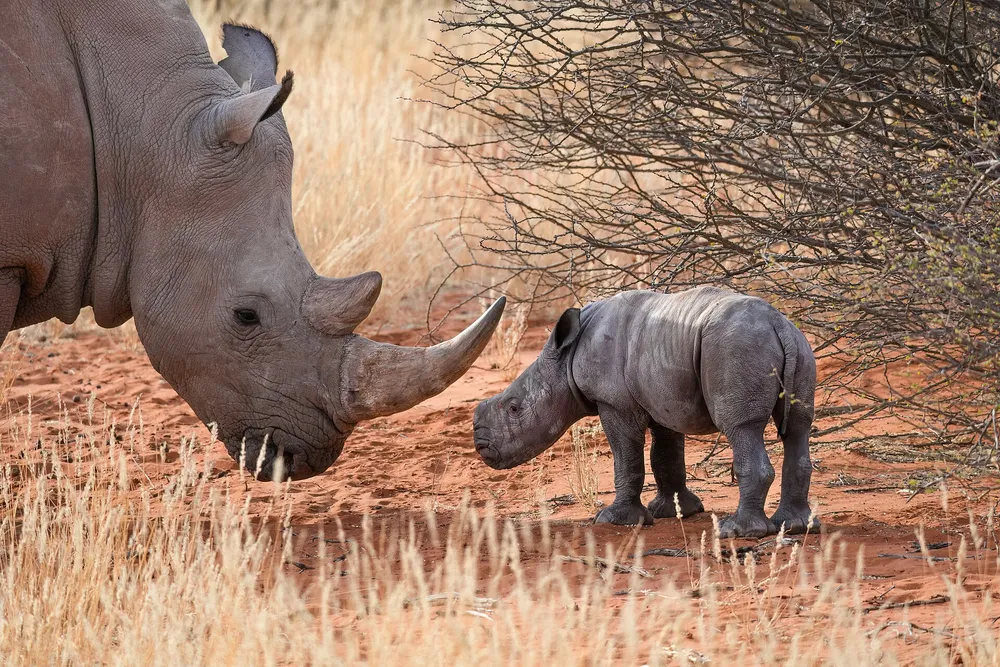
Closer to Windhoek, private reserves offer shorter walks to white rhino, which are calmer and live in easier country: Okonjima includes rhino tracking among its activities, and day trips from the capital visit reserves with white rhino. Ask any operator how close guests are taken and how many people go at once; good ones keep groups small and distances generous.
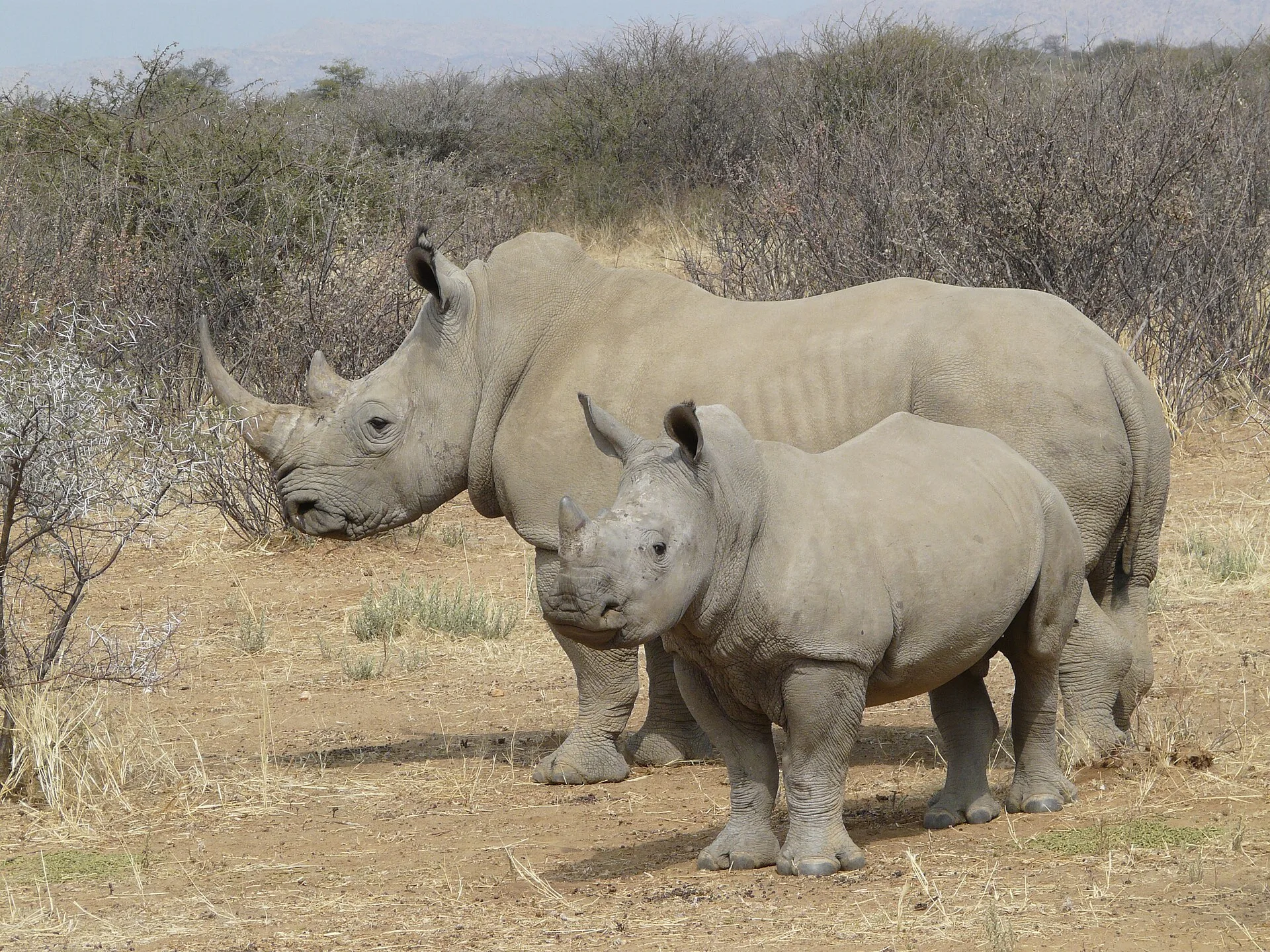
A white rhino cow and calf in Namibia. White rhino live mainly on private reserves and at the Waterberg.
Windhoek: Okapuka Rhino Tracking Wildlife Safari
Track white rhino with a guide on a private reserve near Windhoek, the quickest way to see a rhino if your route does not include Etosha. Ask about minimum ages.
Check availabilityBook via GetYourGuide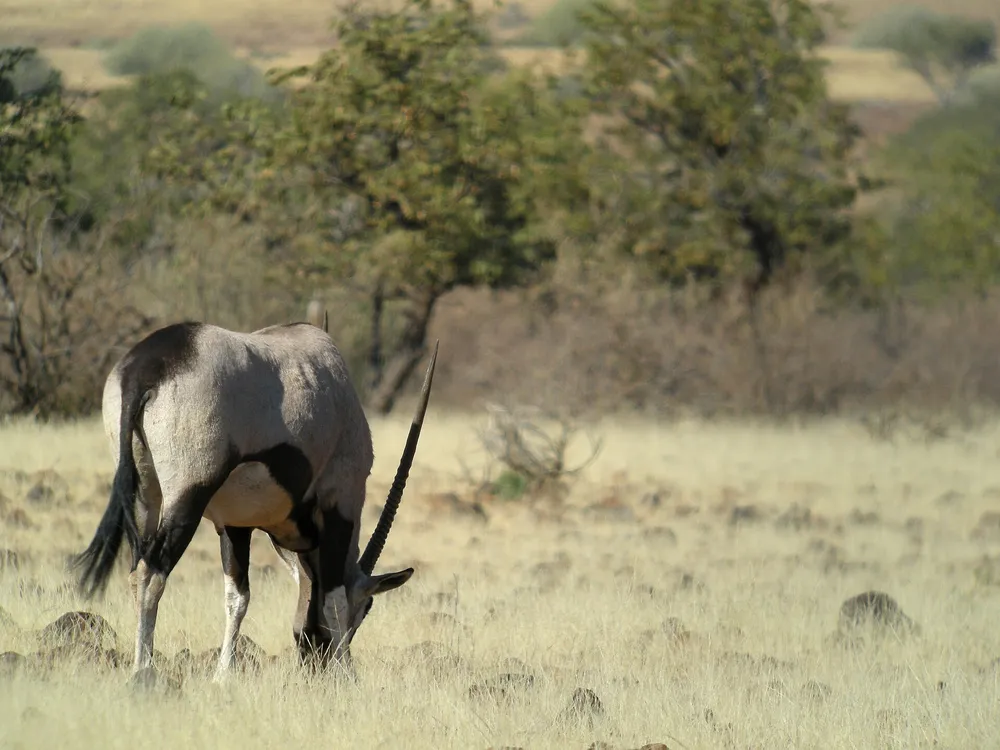
Ancient Damaraland Wildlife Escape: 4 Days, 3 Nights
A four-day trip from Windhoek concentrating on Damaraland: rock art, geology and desert-adapted wildlife at a slower pace than the big circuits allow.
Check availabilityBook via GetYourGuideTour listings are on GetYourGuide. Prices, dates and cancellation terms are shown live on each listing and can change; NamibiaSafaris.com may earn a commission at no extra cost to you.
Grootberg Lodge
DamaralandStone chalets on the edge of the Etendeka Plateau with far-reaching views; run to benefit the local community and conservation.
9.2Booking.com guest score · as checked in November 2026
See on Booking.comGondwana Palmwag Lodge
DamaralandLodge at Palmwag with two pools, a restaurant and air-conditioned rooms.
8.7Booking.com guest score · as checked in November 2026
See on Booking.comOkonjima Plains Camp
Central NamibiaOn the Okonjima reserve near Otjiwarongo, home of the AfriCat Foundation; air-conditioned rooms, pool and restaurant.
9.5Booking.com guest score · as checked in November 2026
See on Booking.comSee all stays in Damaraland on Booking.com
Accommodation links go to Booking.com, where you see live prices and availability. We do not list prices because they change daily; NamibiaSafaris.com may earn a commission.
Beyond the five
Once the list is out of the way, give your attention to what Namibia does best. Cheetah: the country has more than anywhere else, and the Cheetah Conservation Fund near Otjiwarongo is open to visitors every day but one. Desert-adapted elephant and giraffe in the riverbeds of Damaraland. Hartmann's mountain zebra and gemsbok, which you will not see in East Africa. And the 'Little Five' of the Namib dunes, including the palmato gecko, the sidewinding adder and the Namaqua chameleon, which guides in Swakopmund find on morning living-desert tours. The full list, with places and seasons, is in the wildlife guide.
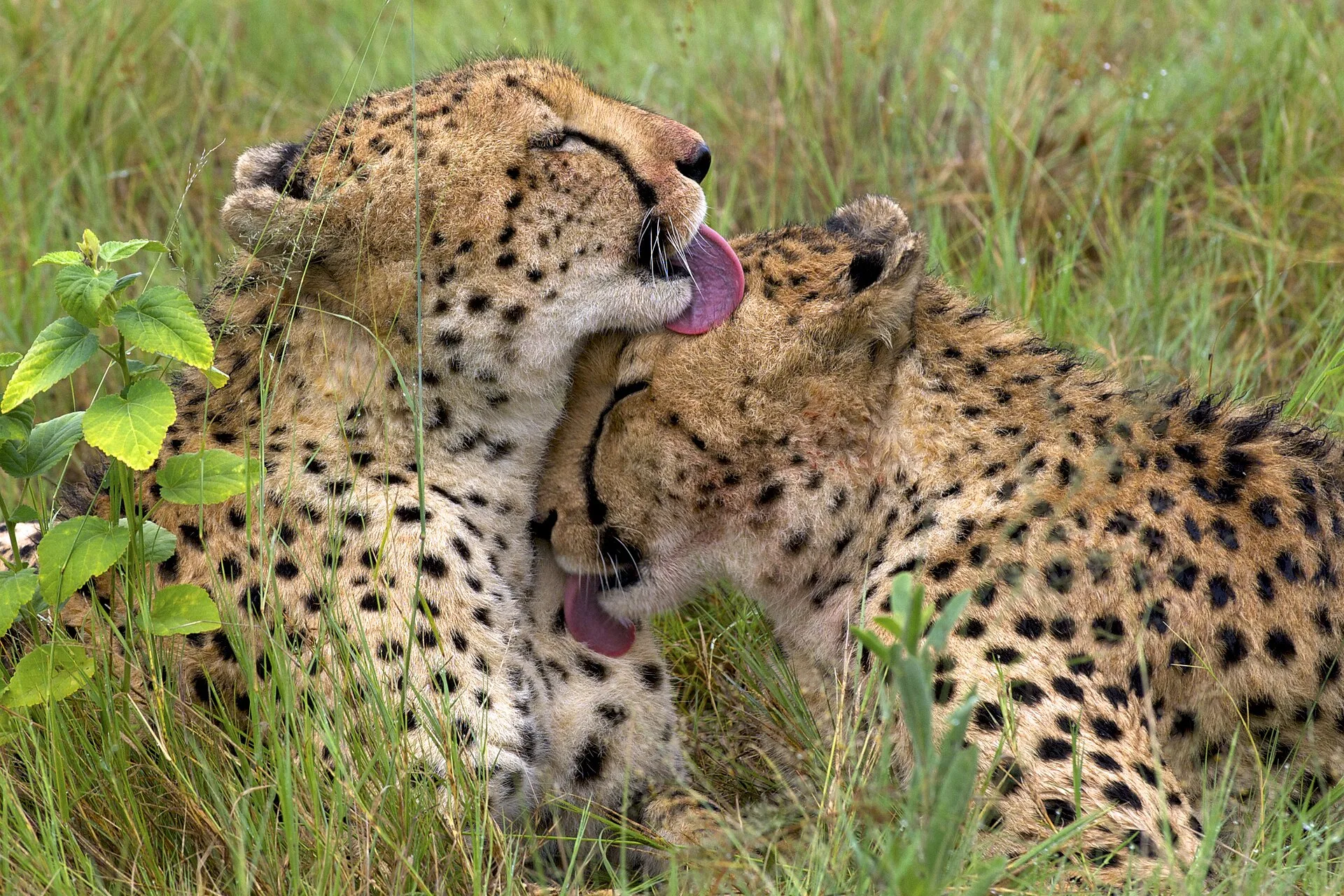
Not on the list, and Namibia has more of them than any other country: cheetahs.
Frequently asked questions
Does Namibia have the Big Five?
Yes, but not together. Lion, leopard, elephant and rhino live in Etosha National Park; buffalo are found on the Waterberg Plateau and in the Zambezi Region in the far north-east.
Are there buffalo in Etosha?
No. Etosha has no buffalo, no hippos and no crocodiles. Any tour advertising the Big Five in Etosha alone is using the term loosely.
Where can I see all of the Big Five in Namibia in one trip?
Combine Etosha (lion, elephant, rhino, possibly leopard) with a guided game drive on the Waterberg Plateau (buffalo, rhino), and add Okonjima for leopard. Alternatively, travel on from Etosha to the Zambezi Region, where buffalo are common.
What are my chances of seeing a rhino in Namibia?
Good. Black rhino drink at the floodlit waterholes of Okaukuejo and Halali on most dry-season nights, and patient visitors who spend two evenings there usually see one. Tracking on foot in the north-west also has a high success rate, though it is never guaranteed.
Is rhino tracking safe, and is there an age limit?
It is led by professional trackers who decide how close to approach, and incidents are very rare, but you are on foot near a wild animal and must follow instructions exactly. Lodges set their own minimum ages and fitness requirements, so ask when booking.
Is Namibia or South Africa better for the Big Five?
For ticking off all five quickly, South Africa's Kruger area or a private reserve is easier. Namibia is the better choice if you want open landscapes, self-drive freedom, black rhino and desert-adapted wildlife, and do not mind that buffalo requires a detour.
Sources and official information
Facts were checked against these official sources in November 2026. Park fees, gate times, visa rules and timetables change, so confirm before you go.
NamibiaSafaris.com is an independent guide, not the official site of any tour operator, lodge, Namibia Wildlife Resorts or the Namibian government. Some links are affiliate links: tours go to GetYourGuide and accommodation goes to Booking.com, and we may earn a commission at no extra cost to you.