In short
- Light is the subject. Namibia's air is dry and clear, and the best pictures are made in the first and last hour of the day. Plan where you sleep around where you want to be at sunrise.
- Deadvlei: stay inside the Sesriem gate to reach the pan while the dunes still shade it; the famous contrast lasts less than an hour after the sun clears the dune.
- Etosha: a lens of 300 to 400 mm, a beanbag on the window and patience at one waterhole beat driving. The floodlit waterholes at Okaukuejo and Halali allow night photography without flash.
- Dust is the enemy of cameras here. Change lenses as rarely as possible, never outside in wind, and keep everything bagged on gravel roads.
- Drones need authorisation from the Namibia Civil Aviation Authority, may not be flown in national parks without a permit, and since April 2025 may not even be carried into Etosha.
How Namibian light works
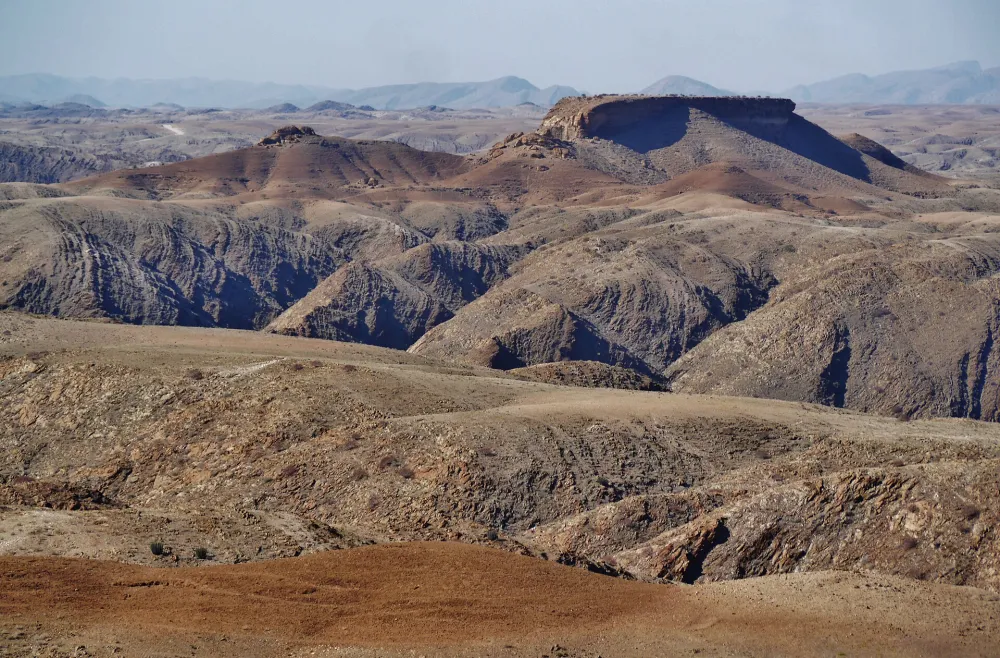
Photographers come to Namibia for a quality of light that is hard to find elsewhere: very low humidity, almost no haze away from the coast, strong colour in the land itself and, for most of the year, cloudless skies. That combination gives saturated reds and oranges at the ends of the day and a hard, bleached glare in the middle of it. Between about 10 AM and 4 PM the dunes go flat, animals lie under trees and shadows turn black. Use those hours to drive, sleep or scout.
The seasons change the picture more than visitors expect. Winter, May to September, is the dry season: clear dawns, cold blue shadows, golden grass, and by August a fine dust in the air that turns sunsets red and softens distant mountains. Skies are often blank, which simplifies compositions and makes for dull sunsets unless there is dust. Summer, November to April, brings thunderheads, rain curtains, rainbows and, after rain, green grass under red dunes; the light is more dramatic and the heat is hard on people and batteries alike. The coast has its own weather: fog on many mornings, which can be a gift at shipwrecks and in the dune belt.
Sunrise and sunset are quick at this latitude. The useful light lasts perhaps forty minutes on either side, so be in position before it starts. The strip at the top of each page of this site shows today's sunrise and sunset for Etosha.
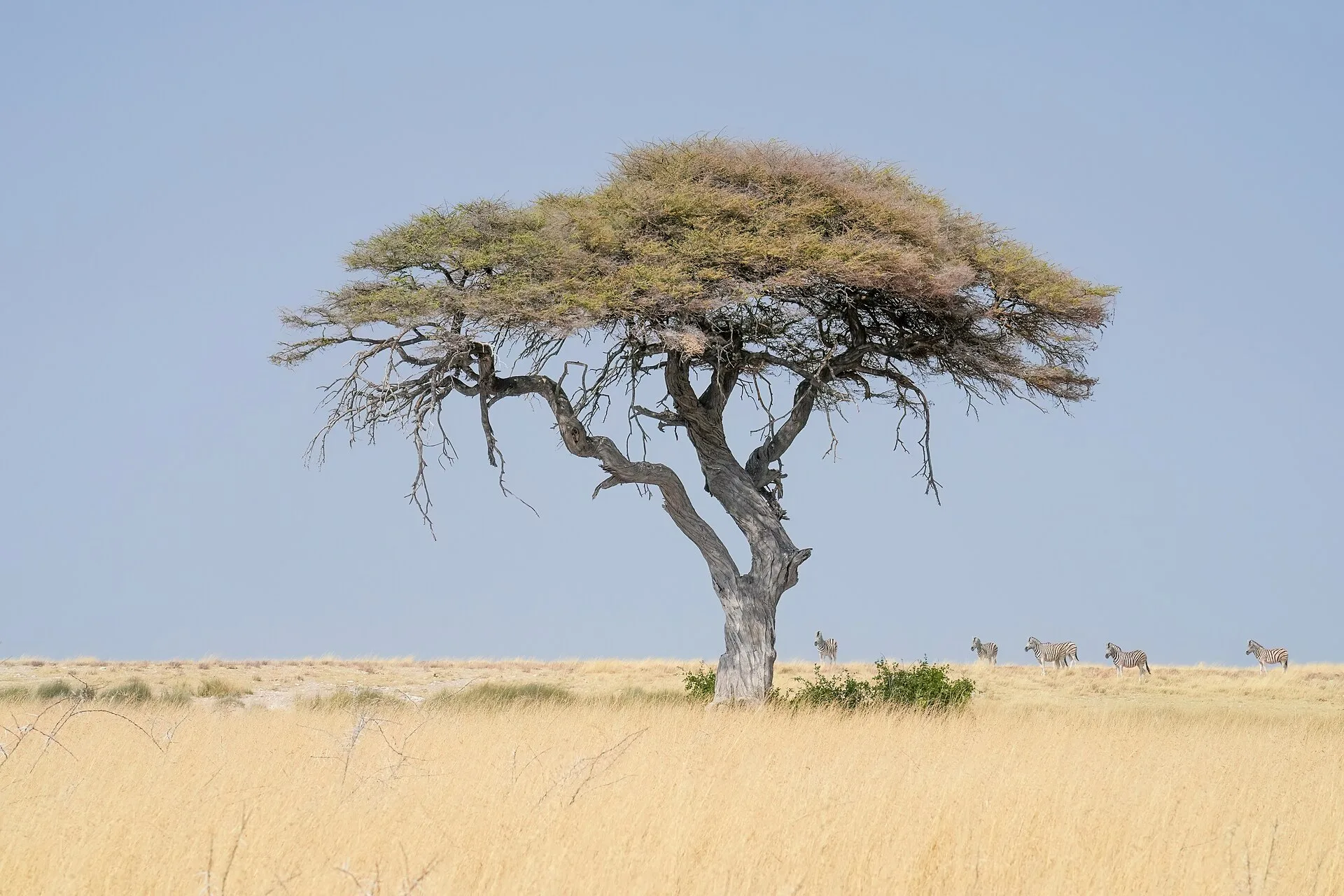
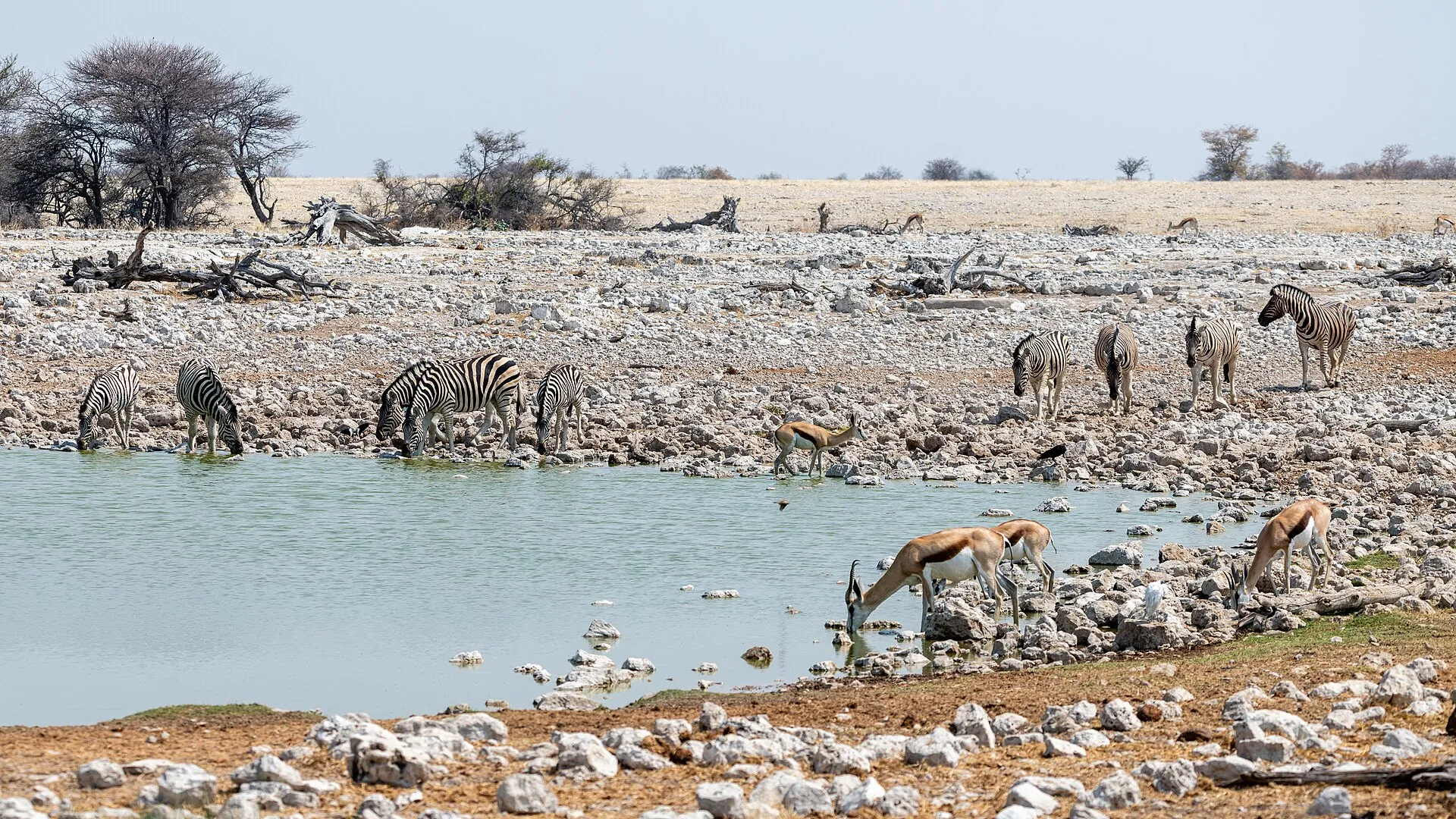
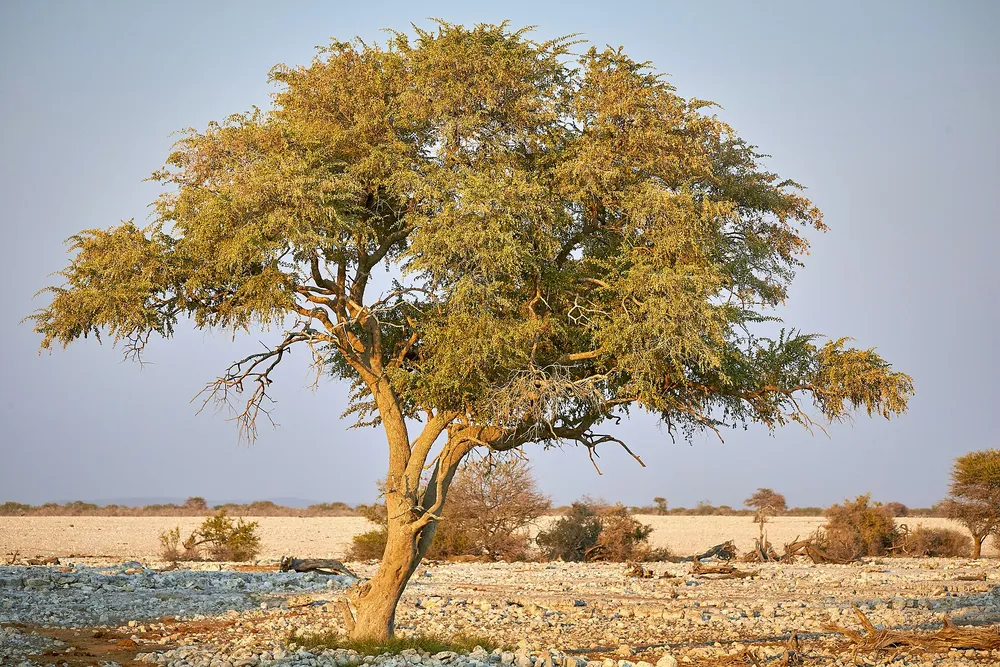
A camelthorn on the plains of Etosha, with zebra beyond.
Sossusvlei and Deadvlei at first light
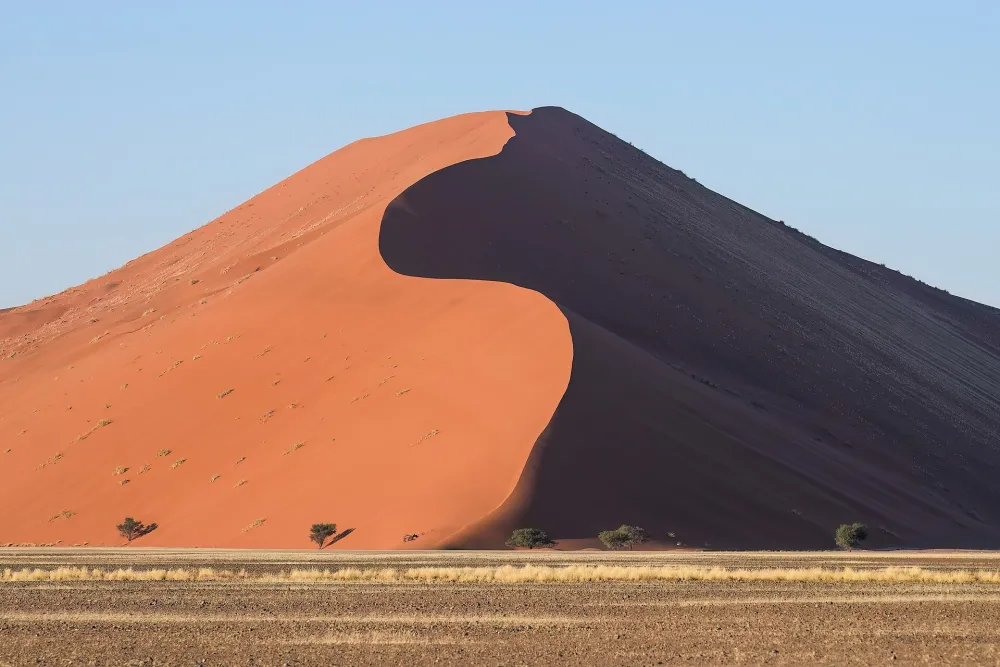
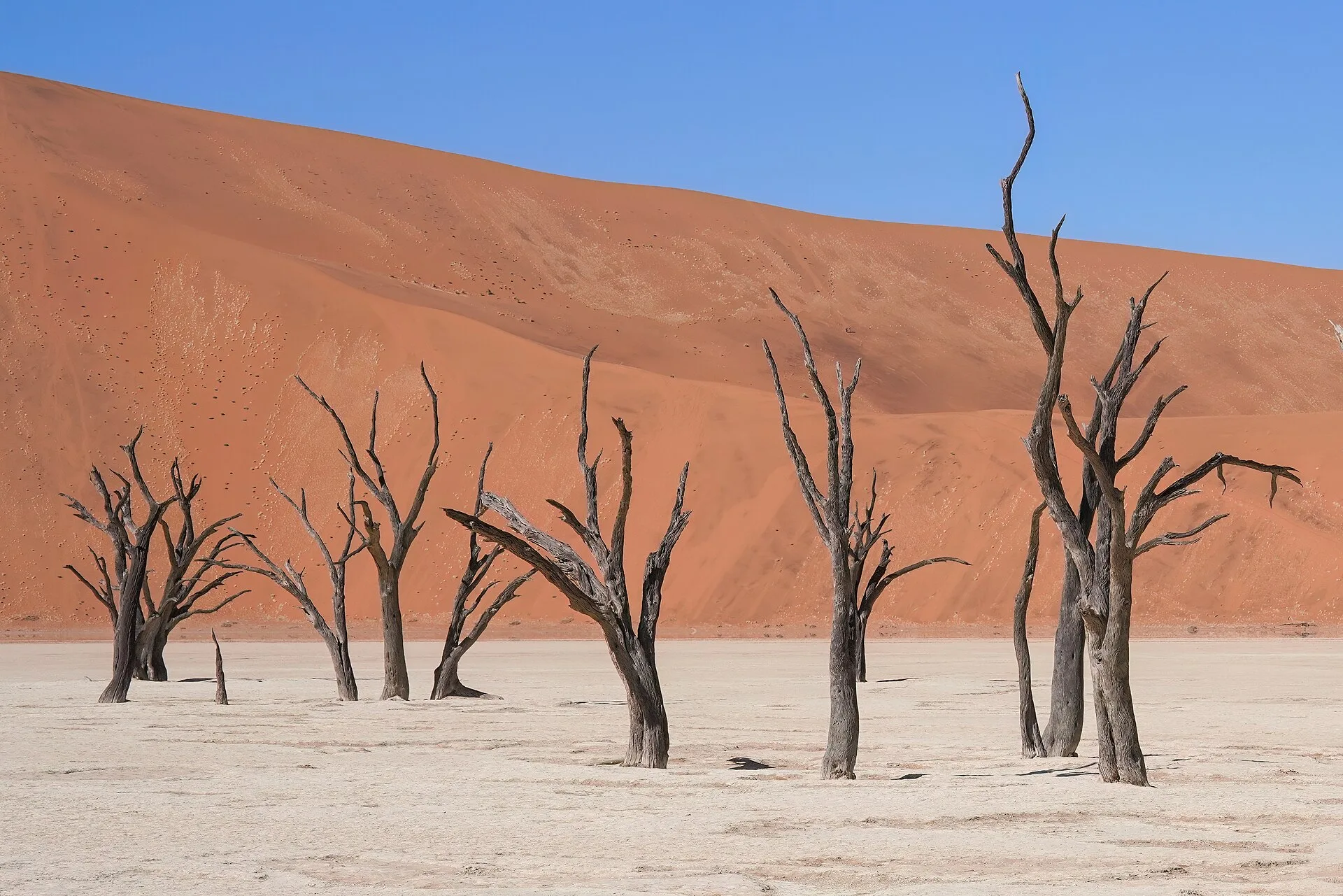
The image everyone wants, black camelthorn skeletons on white clay against an orange dune, depends on a few minutes of timing. Deadvlei lies in a hollow. When the sun first clears the dunes to the east it lights the great dune behind the pan while the floor is still in shadow, and then a line of light moves across the clay. The strongest pictures come in that window, when the trees are lit or half lit against a dune that is glowing but a pan that has not yet bleached out. Within an hour the contrast has gone.
To be there in time you need a head start. The outer gate at Sesriem opens at sunrise, and from it there are 60 km of tar to the 2x4 car park, then 5 km of deep sand (4x4 or the park shuttle) and a walk of about 1.1 km over a low dune. Visitors staying inside the gate, at the NWR campsite or lodge or the private lodge within the park boundary, may set off about an hour earlier and arrive in the dark. That hour is the single most valuable piece of planning for a photographer in Namibia. The details and current gate arrangements are in our Sossusvlei guide.
Once there, walk to the far end of the pan away from the entrance, where the trees are densest and footprints fewer, and work with a moderate telephoto (70 to 200 mm) to compress trees against the dune as well as the obvious wide angle. Do not climb, lean on or hang bags from the trees: they died centuries ago and are brittle.
Elsewhere in the dunes, the low sun on the way in or out gives the knife-edge crests their line of light and shadow: Dune 45, the dunes around the 2x4 car park and Elim Dune near the gate at sunset. For the dune sea from above, see balloon and scenic flights; shooting through an open window or a removed door is possible on some flights by arrangement.
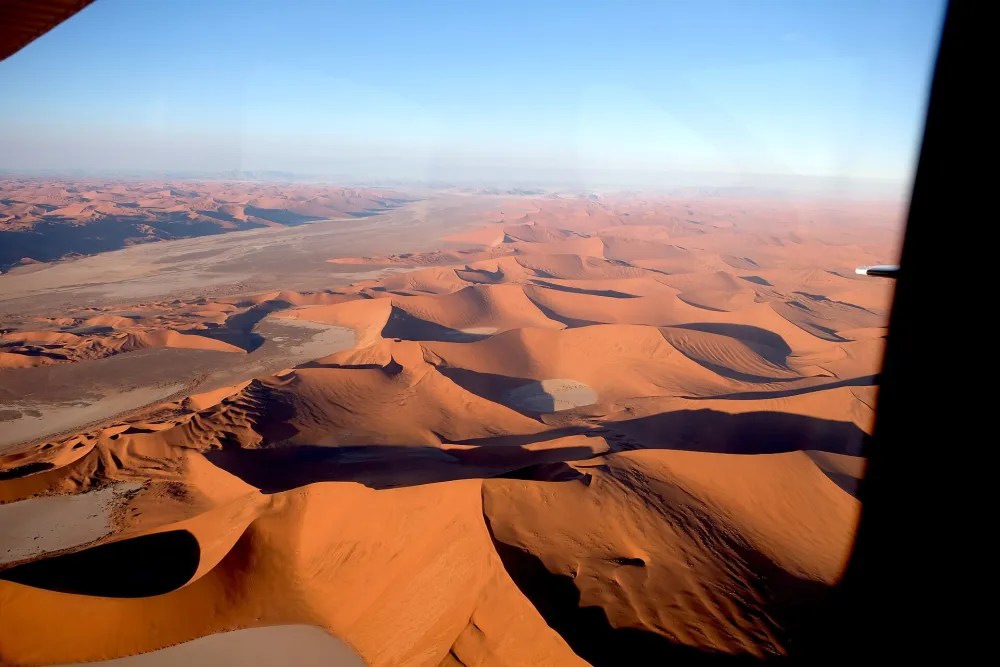
From Windhoek: 3-day Sossusvlei shared shuttle tour
The standard way to see the dunes without driving: a shared departure from Windhoek to the Sesriem area, a sunrise morning at Dune 45, Deadvlei and Sossusvlei, and the drive back. Check the listing for the accommodation level and what meals and park fees are included.
Check availabilityBook via GetYourGuide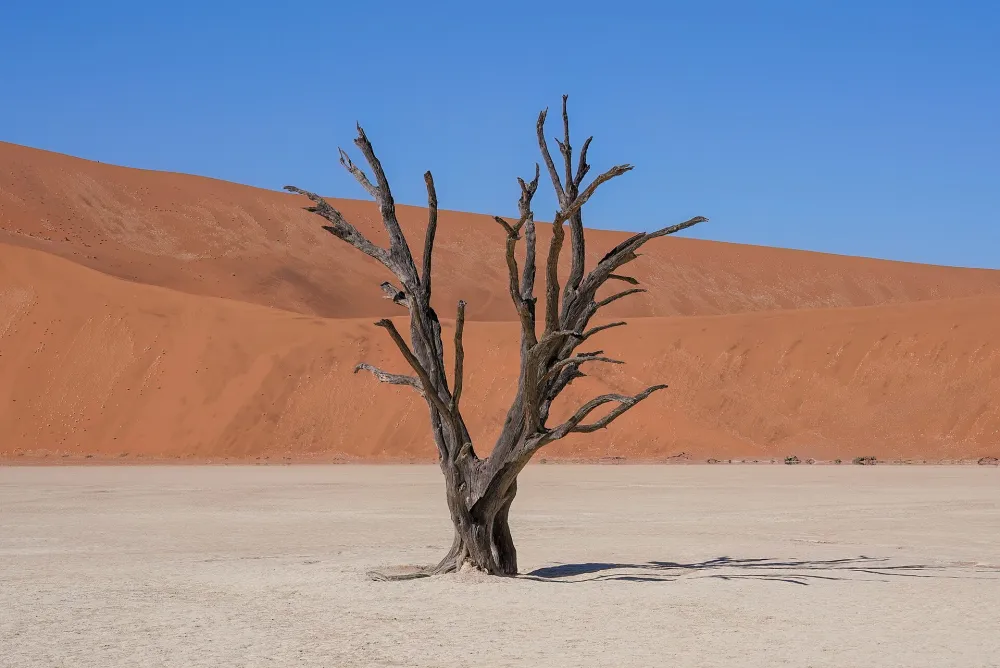
Sossusvlei: sunrise dunes and Deadvlei guided tour
A guided morning in the dune valley timed for first light, with Deadvlei and the big dunes. Check the listing for the meeting point and whether park fees are included.
Check availabilityBook via GetYourGuideTour listings are on GetYourGuide. Prices, dates and cancellation terms are shown live on each listing and can change; NamibiaSafaris.com may earn a commission at no extra cost to you.
Etosha: waterholes by day
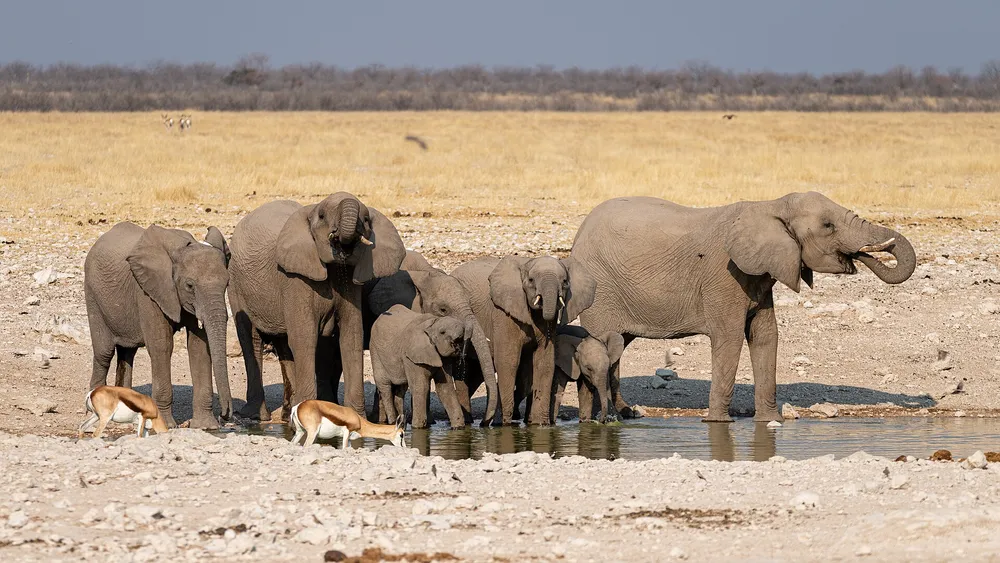
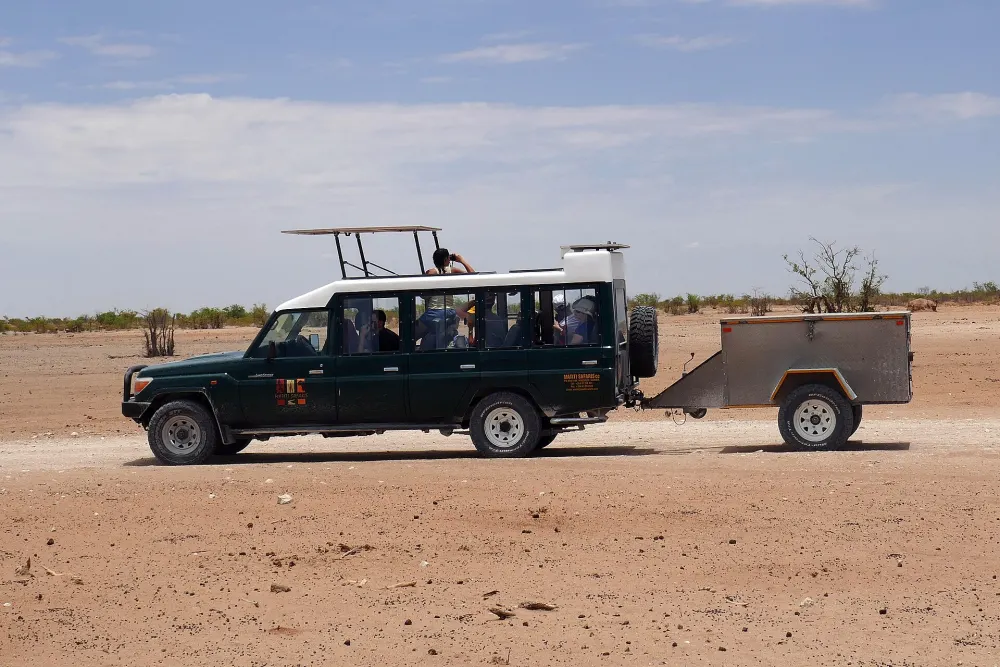
Wildlife photography in Etosha is a waiting game, and the car is your hide. Choose a waterhole for its light, not only its animals: you want the sun behind you and a clean background, which means east-facing parking in the morning and west-facing in the afternoon. Chudop and Okondeka are morning waterholes; Nebrownii, with its white ground acting as a giant reflector, works even at midday; Okaukuejo's waterhole is at its best from late afternoon into the blue hour.
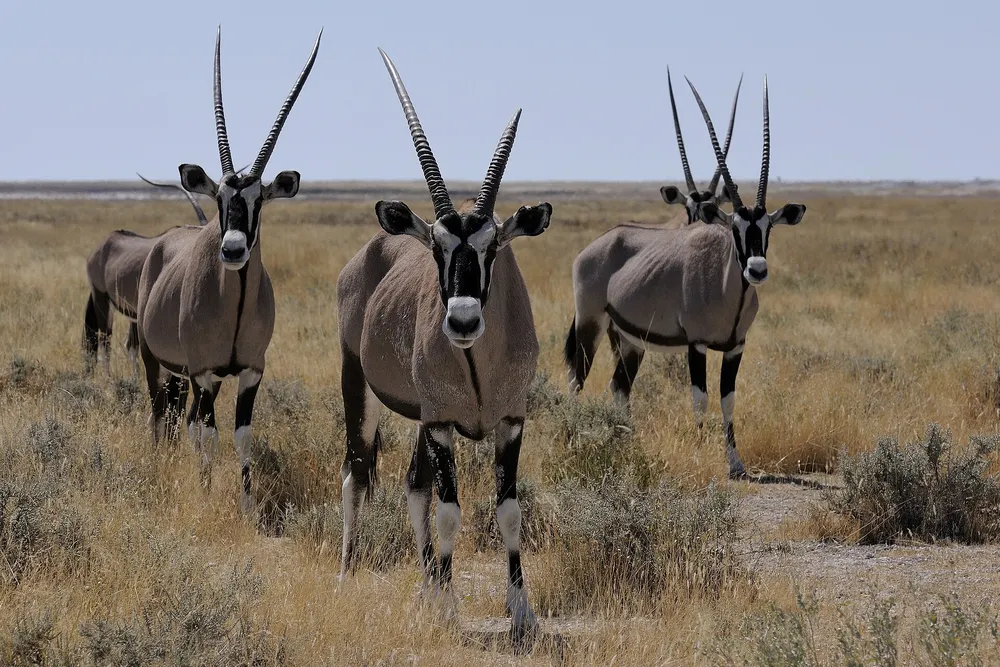
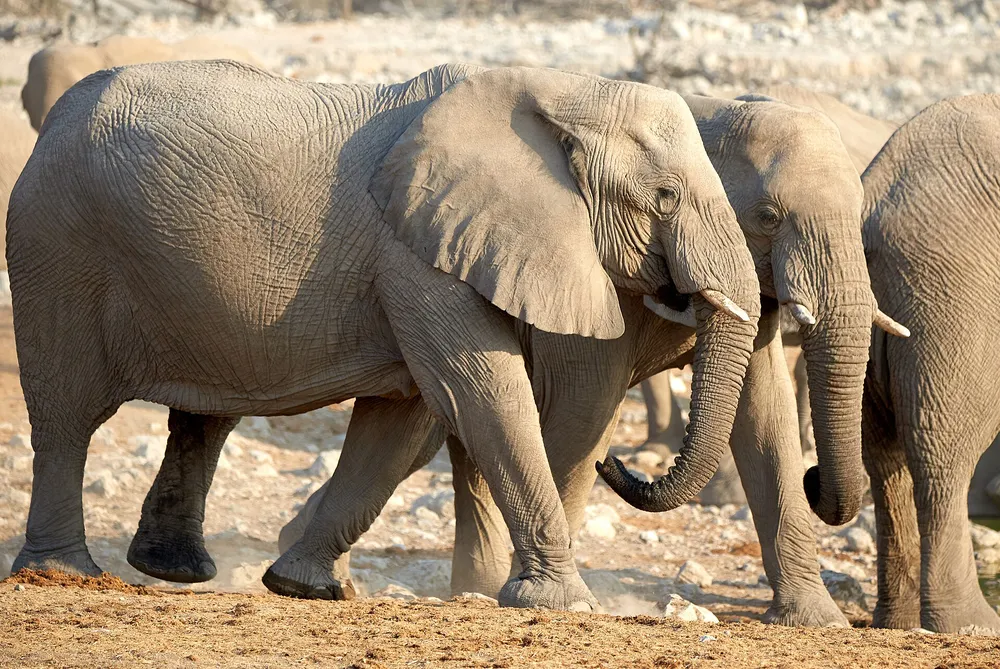
Arrive, park at an angle so that more than one window has a view, switch off the engine to stop vibration, and stay. Animals come in waves: springbok and zebra first, then oryx and kudu, elephants at a trot, and with luck the stillness that means a predator is near. The white calcrete dust kicked up by a herd in backlight is one of Etosha's signatures, so do not ignore shooting towards the sun late in the day.
A lens reaching 300 to 400 mm on a full-frame body, or its equivalent, covers most situations; 500 or 600 mm is useful for birds and distant cats. A zoom is more practical than a prime because you cannot move the car off the road to reframe. Rest the lens on a beanbag over the window sill (bring an empty one and fill it with rice or beans in Windhoek). Expose for the highlights: pale ground and white dust fool meters into underexposure of the animal or blown backgrounds, so check the histogram.
The pan itself rewards a wide lens: a single springbok on a white horizon, or the mirages at the Etosha Lookout road. In the green season, storm light over the pan and newborn animals make up for the scattered game.
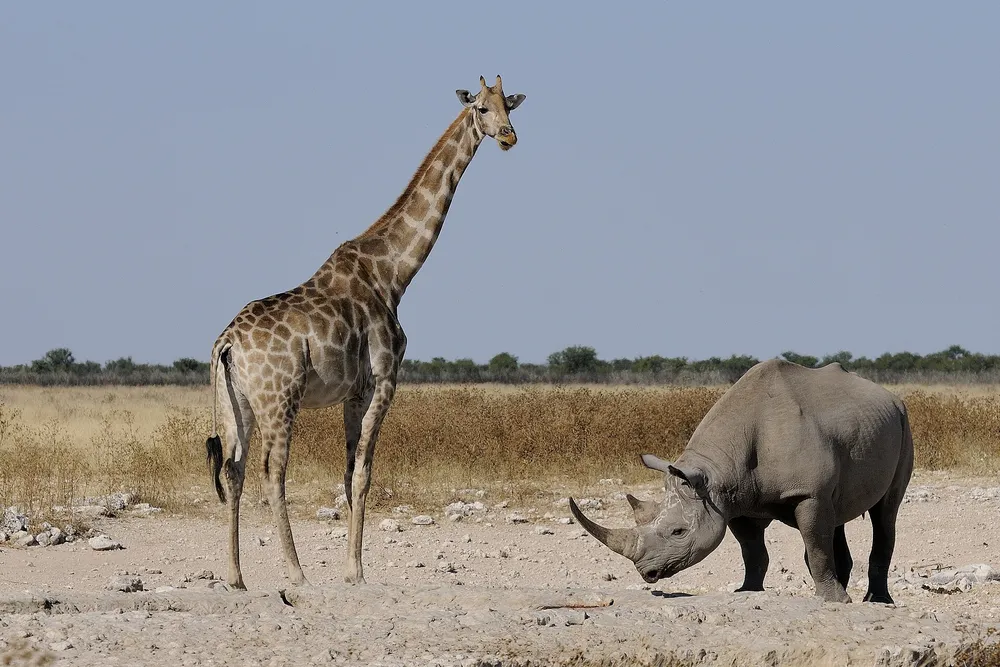
Etosha National Park: Full or Half-Day Game Drive
A guided game drive inside the park in a safari vehicle, for visitors already staying at or near Etosha. Half a day covers the waterholes around Okaukuejo; a full day reaches further along the pan. Check the meeting point and whether the park fee is included.
Check availabilityBook via GetYourGuide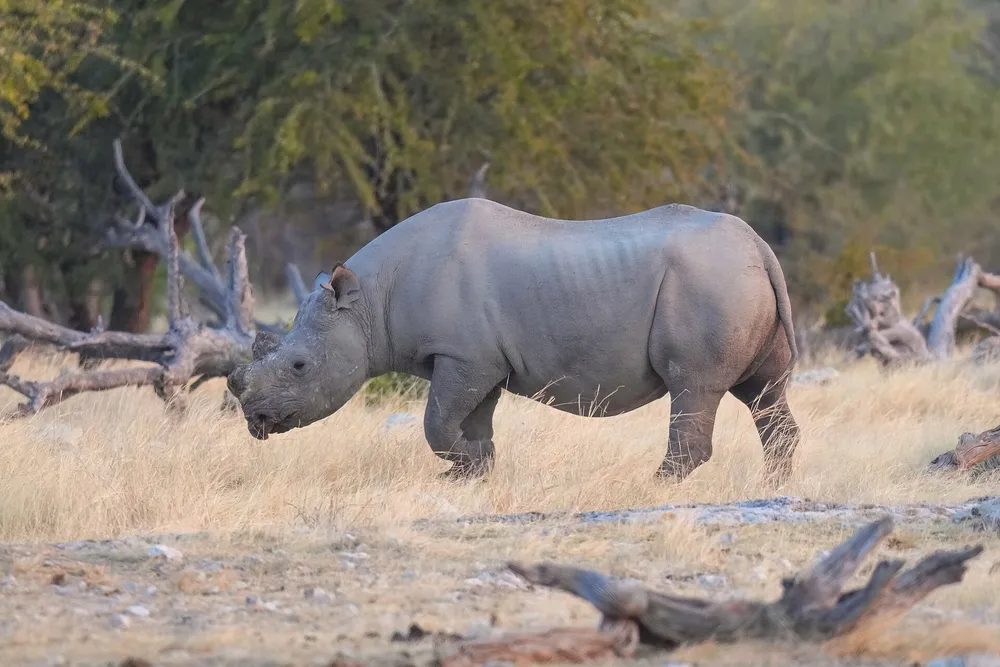
Etosha: 4x4 Open Private Safari, Full Day
A full day in an open 4x4 with a guide to yourselves: good for photographers, who can ask to wait for the light, and for families who want to set their own pace.
Check availabilityBook via GetYourGuideTour listings are on GetYourGuide. Prices, dates and cancellation terms are shown live on each listing and can change; NamibiaSafaris.com may earn a commission at no extra cost to you.
Floodlit waterholes and night photography
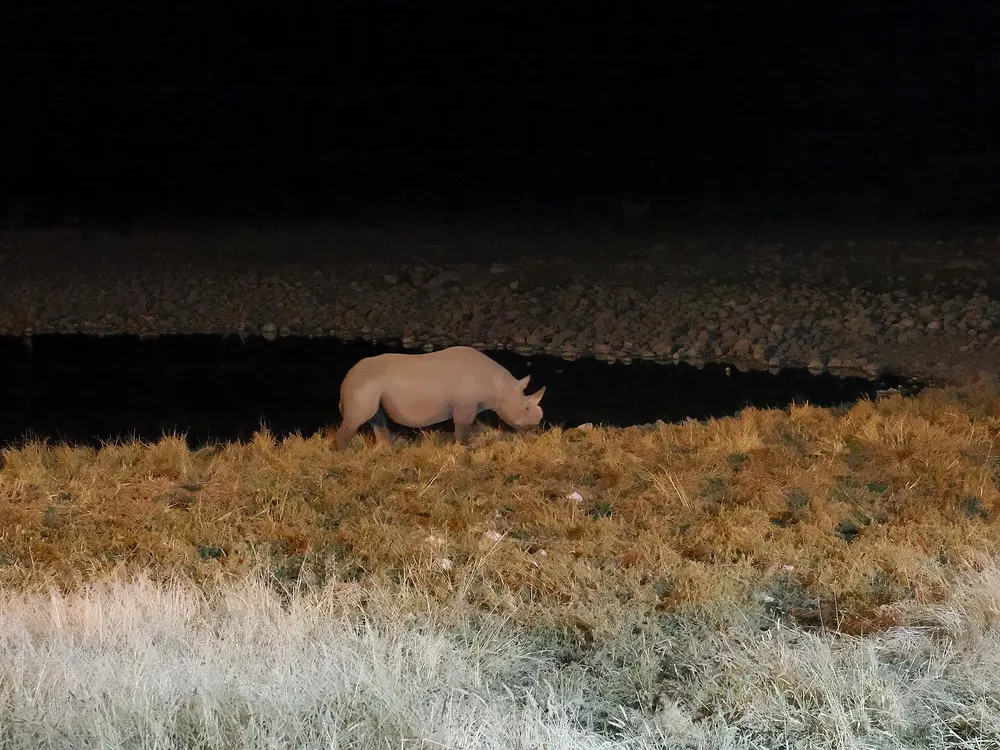
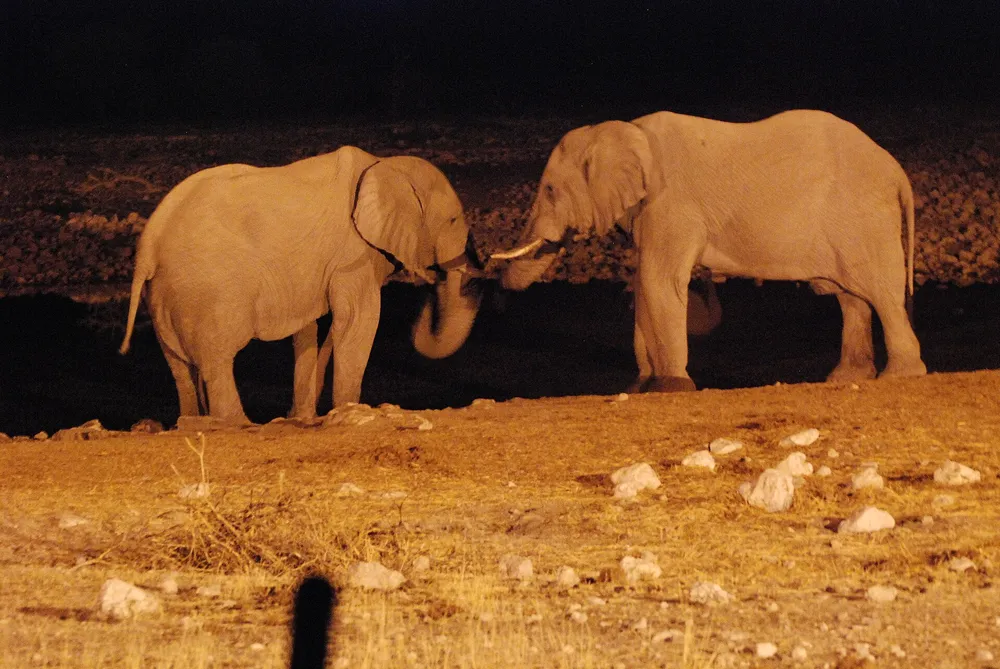
The floodlit waterholes at Okaukuejo, Halali (Moringa) and Namutoni are rare in Africa: places where you can photograph rhino, elephant and lion at night, on foot, with a tripod, for as long as you like. Flash is not permitted and would be useless at that distance anyway.
The lights are warm and not very bright. Expect to work at around ISO 3200 to 12800 with a fast lens (f/2.8 or f/4), at shutter speeds between 1/15 and 1/125 second. A rhino drinking stands still enough for a slow shutter on a tripod; elephants shuffle and need more speed. Set a custom white balance or shoot raw and correct the orange cast later. Reflections in the water are the picture at Okaukuejo on a windless night. Sit down, stay quiet, keep screens dim and red lights off other people's eyes.
At Olifantsrus, the hide over the waterhole puts you close to elephants at eye level. Night drives with NWR use a spotlight and are better for seeing than for photographing.
Quiver trees, night skies and the Milky Way
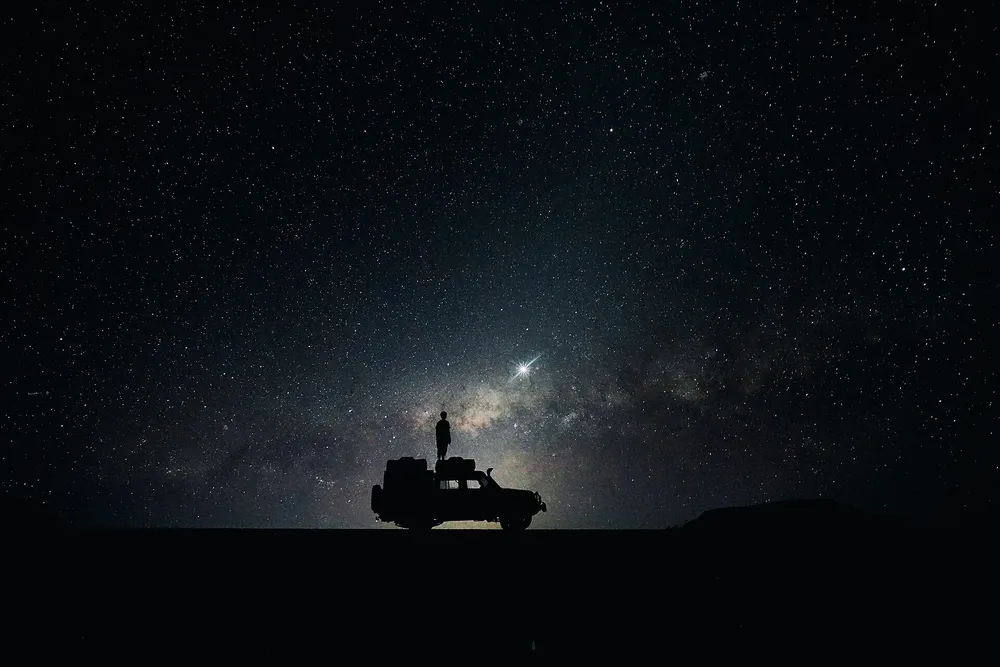
Namibia's night sky is among the darkest on Earth. There is almost no light pollution outside the towns, the air is dry, and much of the country lies above 1,000 metres. The centre of the Milky Way is high overhead in the southern winter, from about May to September, which coincides with the clearest weather. Plan night photography around the new moon; a week either side of full moon the sky is washed out, though moonlit dunes have their own appeal.
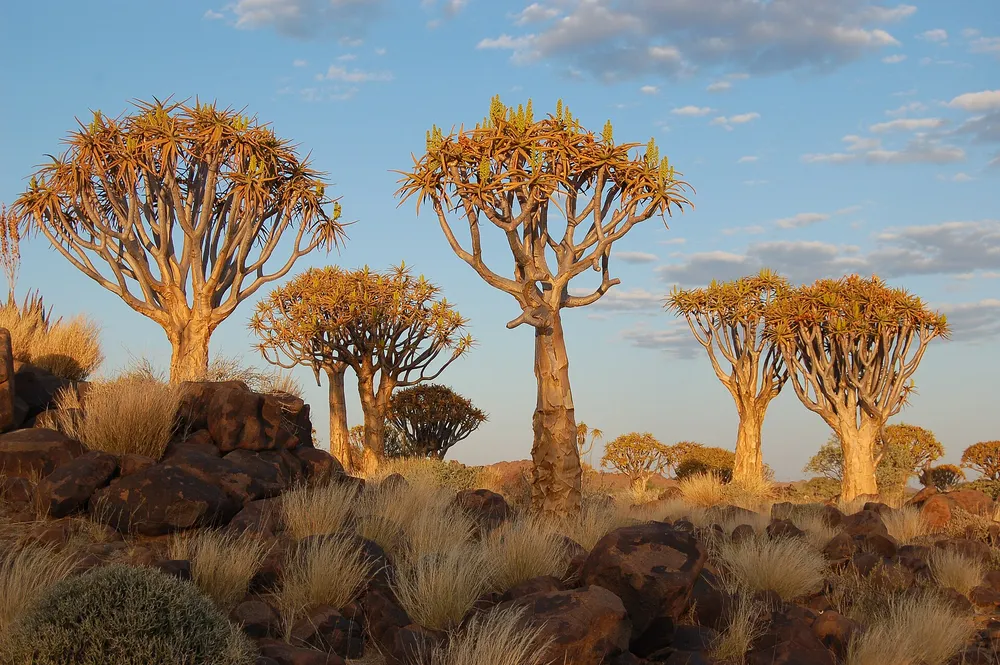
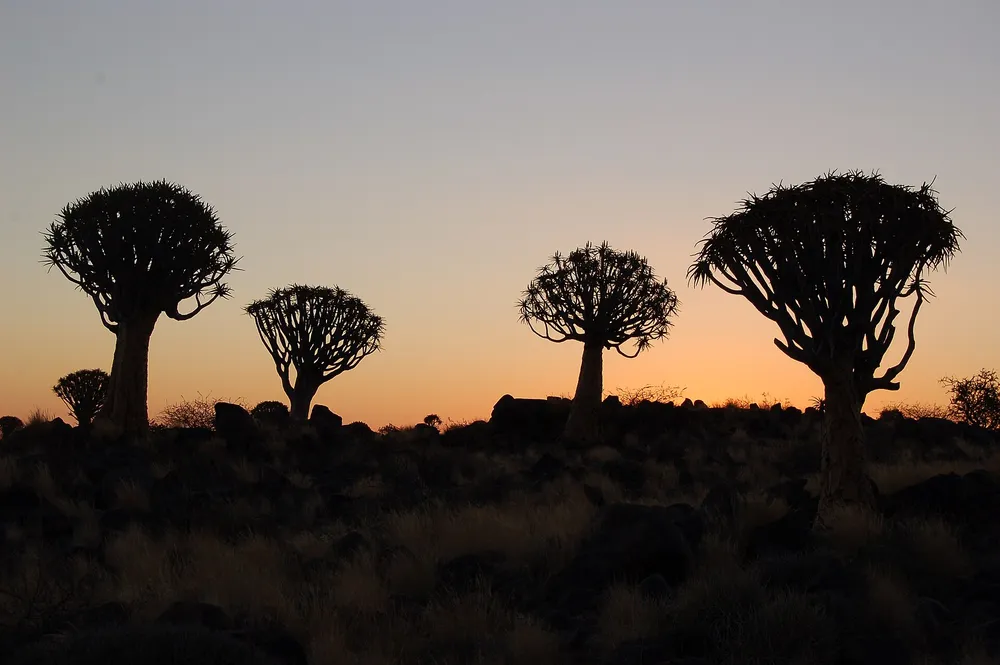
The classic foregrounds are the quiver trees (kokerboom, a tree aloe) of the south. The Quiver Tree Forest and the dolerite boulders of the Giant's Playground lie on private farmland north-east of Keetmanshoop; day visitors can stay for sunset, and guests of the farm's rest camp and campsite should ask about access after dark. See Fish River Canyon and the south. The NamibRand Nature Reserve, south of Sossusvlei, is an International Dark Sky Reserve where lodges are built around stargazing; see Namib-Naukluft. Spitzkoppe, where you can camp among the granite domes close to the rock arch, is the best night location within reach of Swakopmund; see Spitzkoppe.
Technique is standard: a solid tripod, a wide lens at f/2.8 or faster, 15 to 25 seconds at ISO 3200 to 6400, manual focus on a bright star. Bring a head torch with a red mode, spare batteries (cold winter nights drain them fast) and warm clothes: it can be near freezing at 2 AM in June. Watch where you put your feet and hands around rocks at night.
Kolmanskop, the coast and other set pieces
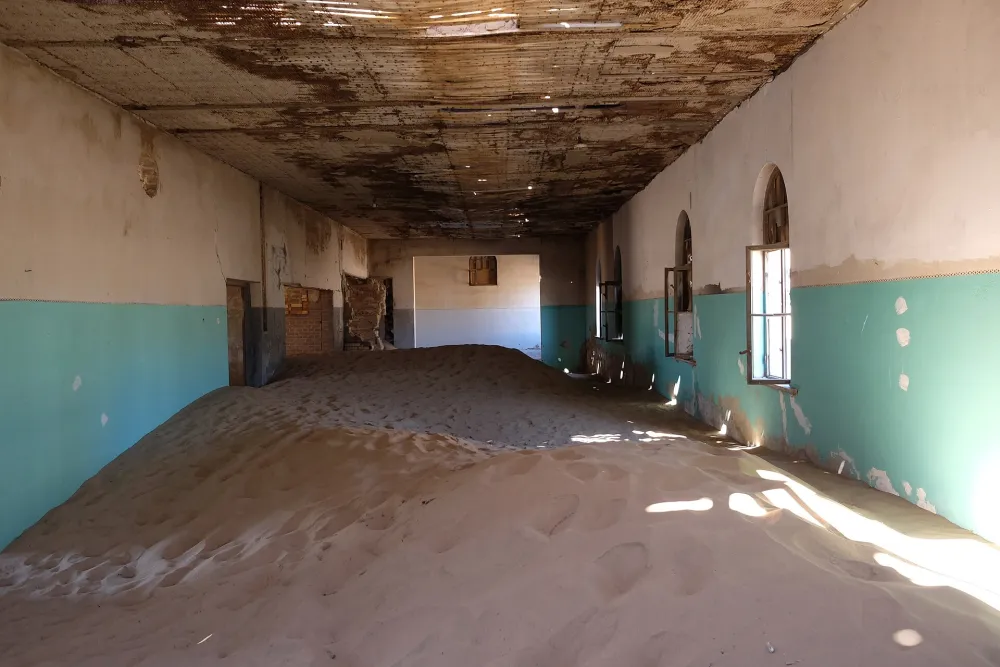
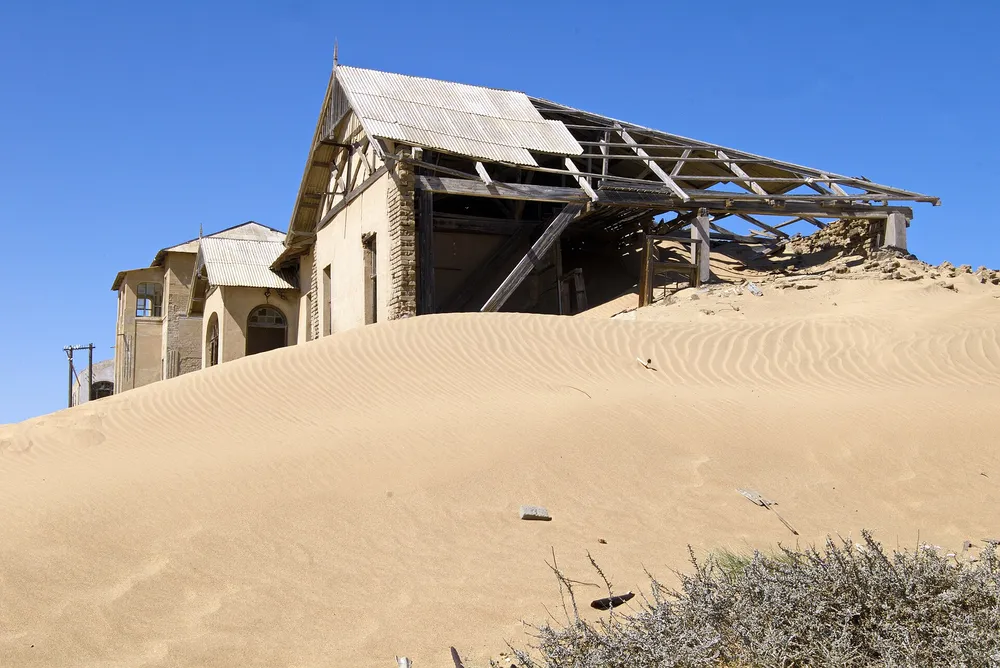
Kolmanskop, the abandoned diamond town outside Lüderitz, is the most photographed interior in Africa: rooms filled with dunes, peeling paint in pale blue and green, doors half buried. Standard entry covers the morning, with guided tours included. A separate photographer's permit allows access from sunrise to sunset, and it is the low early light slanting through the windows, and the hour before the tour groups arrive, that you are paying for. Wind rises most afternoons and fills the air with sand. Current hours and permit arrangements are on our Lüderitz and Kolmanskop page.
On the coast, Sandwich Harbour, where dunes drop straight into the Atlantic, is reached only with licensed 4x4 operators from Walvis Bay; afternoon and sunset departures give the best light on the dune faces, and tide and weather decide how far you get. Our Sandwich Harbour page explains the options, and the sister site SandwichHarbour.com has a detailed guide to the best time to visit. The Walvis Bay lagoon offers flamingos at close range from the esplanade, best at low tide in soft morning light. Cape Cross is chaos to photograph: go long and pick out individual seals.
In Damaraland, the Twyfelfontein engravings need raking light early or late to stand out from the rock; midday flattens them completely. Epupa Falls is a late-afternoon subject from the hill downstream. In the Zambezi Region, the boat is your platform: a 100 to 400 mm zoom handheld at high shutter speeds, and a dry bag.
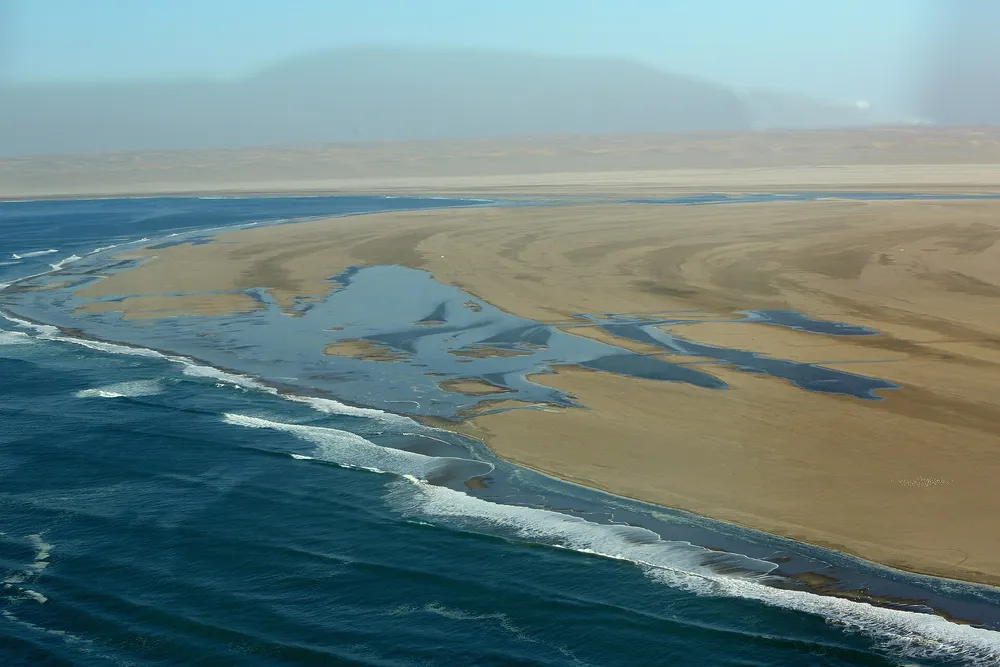
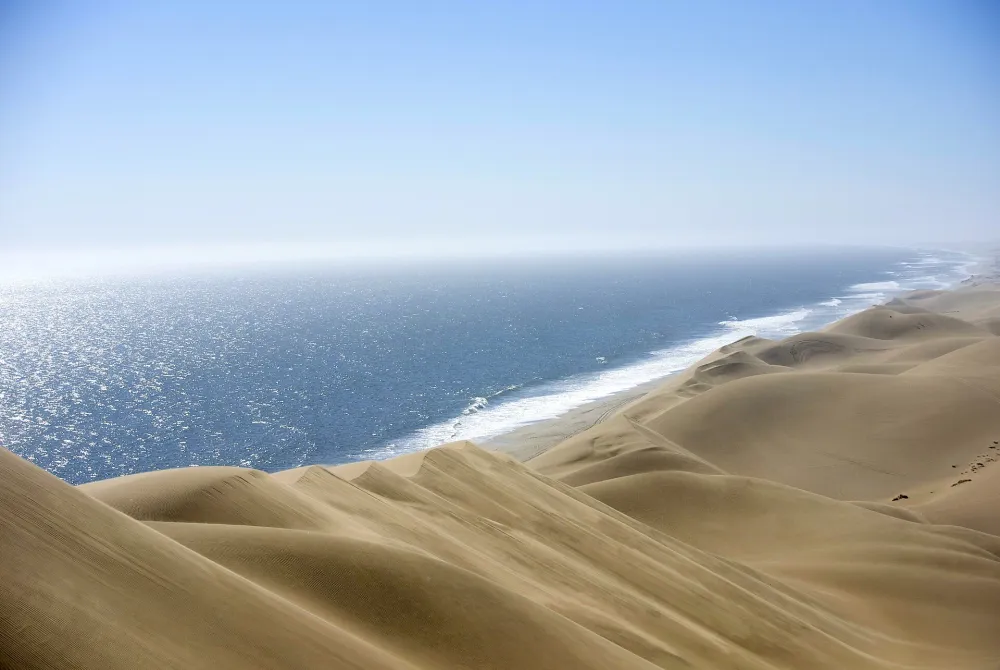
Sandwich Harbour 4x4 tour: where the sea and the dunes meet
The essential coast trip from Walvis Bay: lagoon and salt pans, the beach or dune route according to the tide, the viewpoint above the lagoon and a drive back over the dunes.
Check availabilityBook via GetYourGuide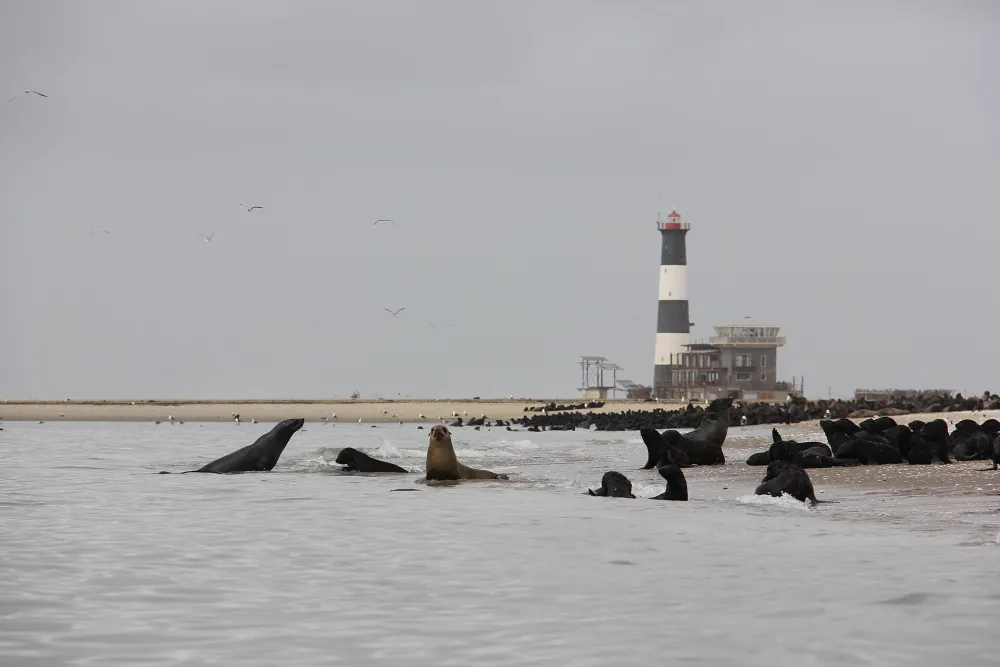
Walvis Bay: Pelican Point kayaking tour
A 4x4 transfer along the sandspit, then a paddle in sheltered water among curious young Cape fur seals. No experience needed.
Check availabilityBook via GetYourGuideTour listings are on GetYourGuide. Prices, dates and cancellation terms are shown live on each listing and can change; NamibiaSafaris.com may earn a commission at no extra cost to you.
Photographing people
Ask first, every time, and take no for an answer. That applies to Himba and Herero women in Opuwo, San guides in the Kalahari, market traders and children anywhere. In communities that receive visitors, photography is normally part of an arranged, paid visit with a local guide who will tell you what is and is not appropriate; do not photograph the sacred fire in a Himba homestead without permission. Do not pay children for pictures or hand out sweets. Show people the image on your screen, and if you promise to send a print, do it through the guide or lodge. Our Kaokoland guide sets out how to visit well.
Do not photograph border posts, police or military installations, airports or government buildings; it can lead to your camera being inspected or worse.
Gear, dust and power
Lenses. For a general trip: a wide zoom (16–35 mm) for dunes and night skies, a standard zoom, and a long zoom reaching 400 mm for Etosha. Two bodies save you from changing lenses in dust. If weight is limited, as on fly-in safaris where soft bags of about 20 kg are the norm, a body with a 24–105 mm and a 100–400 mm covers nearly everything.
Dust. Fine dust gets into everything on gravel roads, especially in the back of a 4x4. Keep cameras in closed bags inside the cabin while driving, wind the windows up when a vehicle approaches, and change lenses inside the closed car with the engine and fan off, never in the wind at Deadvlei or Kolmanskop. Bring a blower, lens cloths and sensor-cleaning swabs if you know how to use them, plus zip bags or dry bags for the worst days. Blowing sand at Sossusvlei and on the coast can scour a front element: use a filter you do not mind losing.
Support. A beanbag for the car, a tripod for night work and dunes at dawn. A window clamp is useful for the longest lenses.
Power and storage. Namibia uses 220–240 V with the large three-round-pin Type M socket (and Type D in places); bring adaptors. Many remote lodges and all campsites run on solar or generators with limited hours, and rooftop-tent travellers charge from the car, so carry several batteries, a 12 V car charger and a power bank. Back up cards every night to two separate drives: there is nowhere to buy memory outside Windhoek and Swakopmund.
Heat and cold. Do not leave gear in a closed car in the sun, where it can exceed 50 °C. On winter mornings, batteries fade quickly; keep spares in an inside pocket.
Drones: the rules
Namibia regulates drones (remotely piloted aircraft) through the Namibia Civil Aviation Authority (NCAA). The NCAA's position, repeated in public warnings in 2025, is that drone flights require its authorisation in advance, for visitors as well as residents, and that unauthorised flying can lead to confiscation and prosecution. The application takes time and paperwork and should be started well before travel; requirements and fees change, so read the NCAA's current guidance and do not rely on forum posts.
Separately, national parks are off limits without written permission from the Ministry of Environment, Forestry and Tourism, and in practice permission is not given for holiday flying. Etosha goes further: since April 2025 visitors may not bring a drone into the park at all, flown or not. If you have one in the car you must declare it and leave it at the entry gate, and collect it there when you leave, which rules out crossing the park. Private reserves, lodges and community areas set their own rules, and many ban drones for the sake of wildlife and other guests.
The practical advice for most visitors is to leave the drone at home. If aerial images matter, a scenic flight or a balloon gives you the view legally.
A photographer's route
If pictures are the purpose of the trip, shape the classic loop around light instead of sights. Spend three nights at Sesriem, inside the gate, for two dawns at Deadvlei and one in the dunes. Give the coast two nights with a Sandwich Harbour afternoon. Sleep at Spitzkoppe for the night sky. Take two nights near Twyfelfontein for the elephants and the rock at sunset. Then four nights inside Etosha, split between Okaukuejo and Halali, for the waterholes after dark. If you have three weeks, add Kolmanskop and the quiver trees in the south at the beginning.
A private guide who understands photography, positioning the vehicle for light and waiting when asked, is worth the cost on a trip like this; so is travelling in May or June, when the air is clearest and the camps are less crowded. The guided options are compared on our safari styles page.
Etosha Village
EtoshaTwo kilometres from Etosha’s Anderson Gate: air-conditioned units with patios, two pools, restaurant and bar.
8.7Booking.com guest score · as checked in November 2026
See on Booking.comMushara Lodge
EtoshaLodge 8 km from Von Lindequist Gate with a pool, a garden and a restaurant.
9.3Booking.com guest score · as checked in November 2026
See on Booking.comTwyfelfontein Adventure Camp
DamaralandTwelve en-suite tents among granite boulders with a pool, about ten minutes' drive from the rock engravings.
9.1Booking.com guest score · as checked in November 2026
See on Booking.comCamp Kipwe
DamaralandA small camp near Twyfelfontein with air-conditioned rooms, a pool, a restaurant and a bar.
9.5Booking.com guest score · as checked in November 2026
See on Booking.comSee all stays in Namibia on Booking.com
Accommodation links go to Booking.com, where you see live prices and availability. We do not list prices because they change daily; NamibiaSafaris.com may earn a commission.
Frequently asked questions
What lens do I need for Etosha?
A zoom reaching 300 to 400 mm (full-frame equivalent) is enough for most mammals at waterholes; 500 to 600 mm helps with birds and distant predators. Bring a wide-angle too, for the pan and for night skies.
What is the best time of day to photograph Deadvlei?
The first hour after sunrise, when the dune behind the pan is lit and the light is moving across the white floor. To be there you need to stay inside the Sesriem gate, which allows an earlier start than the public gate opening at sunrise.
Can I fly a drone in Namibia?
Only with prior authorisation from the Namibia Civil Aviation Authority, and not in national parks without a permit from the environment ministry. Since April 2025 drones may not even be taken into Etosha. Most visitors are best advised to leave the drone at home.
Can I use flash at the floodlit waterholes?
No. Flash disturbs the animals and other guests and is not allowed. Use a tripod, a fast lens and a high ISO instead.
Do I need a permit to photograph Kolmanskop?
Standard tickets cover the morning opening hours. A photographer's permit, sold separately, gives access from sunrise to sunset and is worth having for the early light. Check current prices and hours before you go.
When is the Milky Way best in Namibia?
From about May to September, when the galactic centre is high in the sky during the night and the weather is clearest. Plan around the new moon.
Sources and official information
Facts were checked against these official sources in November 2026. Park fees, gate times, visa rules and timetables change, so confirm before you go.
NamibiaSafaris.com is an independent guide, not the official site of any tour operator, lodge, Namibia Wildlife Resorts or the Namibian government. Some links are affiliate links: tours go to GetYourGuide and accommodation goes to Booking.com, and we may earn a commission at no extra cost to you.