In short
- Meat is the heart of it. Beef, lamb and game — oryx, kudu, springbok — grilled over wood coals at a braai, or stewed for hours in a three-legged potjie.
- Kapana is Windhoek’s street food: strips of beef grilled at open-air market stalls and eaten with chilli spice, salsa and a fat cake.
- In the north the staple is oshifima, a stiff porridge of mahangu (pearl millet), eaten with chicken, wild spinach or fish.
- On the coast: oysters farmed in the cold water at Walvis Bay and Lüderitz, plus line fish and crayfish.
- The German legacy is bread, cake and beer: Brötchen at breakfast, apple cake at Solitaire, and lager brewed in Windhoek to the 1516 purity law.
What Namibian food is
There is no single Namibian cuisine. There is the cooking of the north, built on millet, wild greens and river fish; the pastoral cooking of the Herero, Nama and Damara, built on meat and sour milk; the shared southern African habit of the braai; and a strong German and Afrikaner strand of sausages, bread, cakes and preserves. What unites them is the quality of the meat — cattle and sheep here range over huge natural pastures, and game is harvested from the same land — and an indifference to fuss.
Visitors meet this food in three settings: lodge dinners, usually a set menu or buffet built around a roast or grilled game; restaurants in Windhoek, Swakopmund and Lüderitz, where the range is widest; and their own campfire. The most distinctive dishes are found a little off that track, at markets and on township tours, and are worth seeking out.
The braai
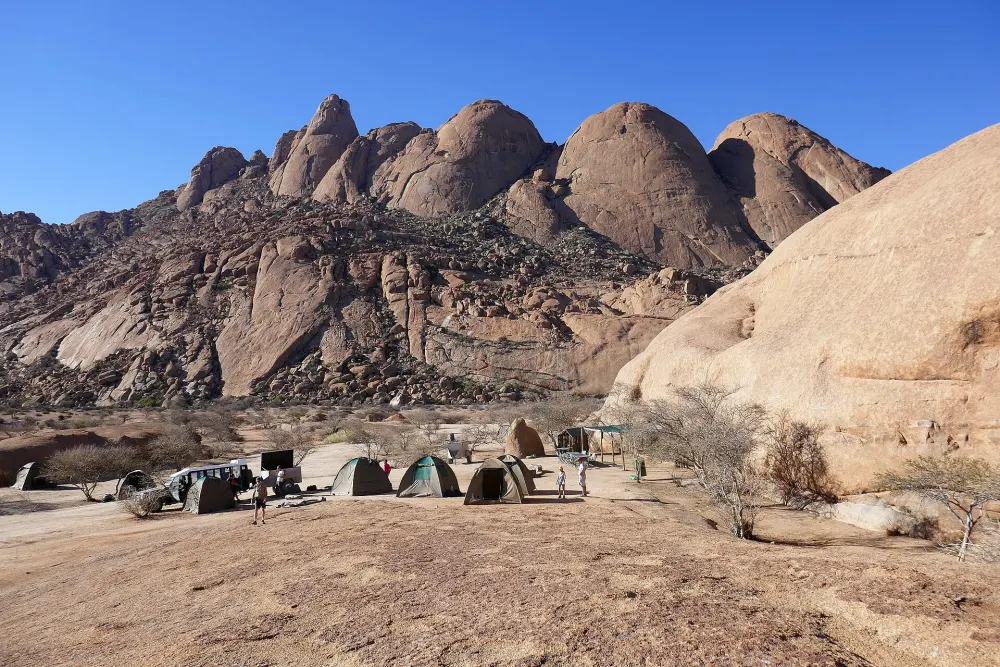
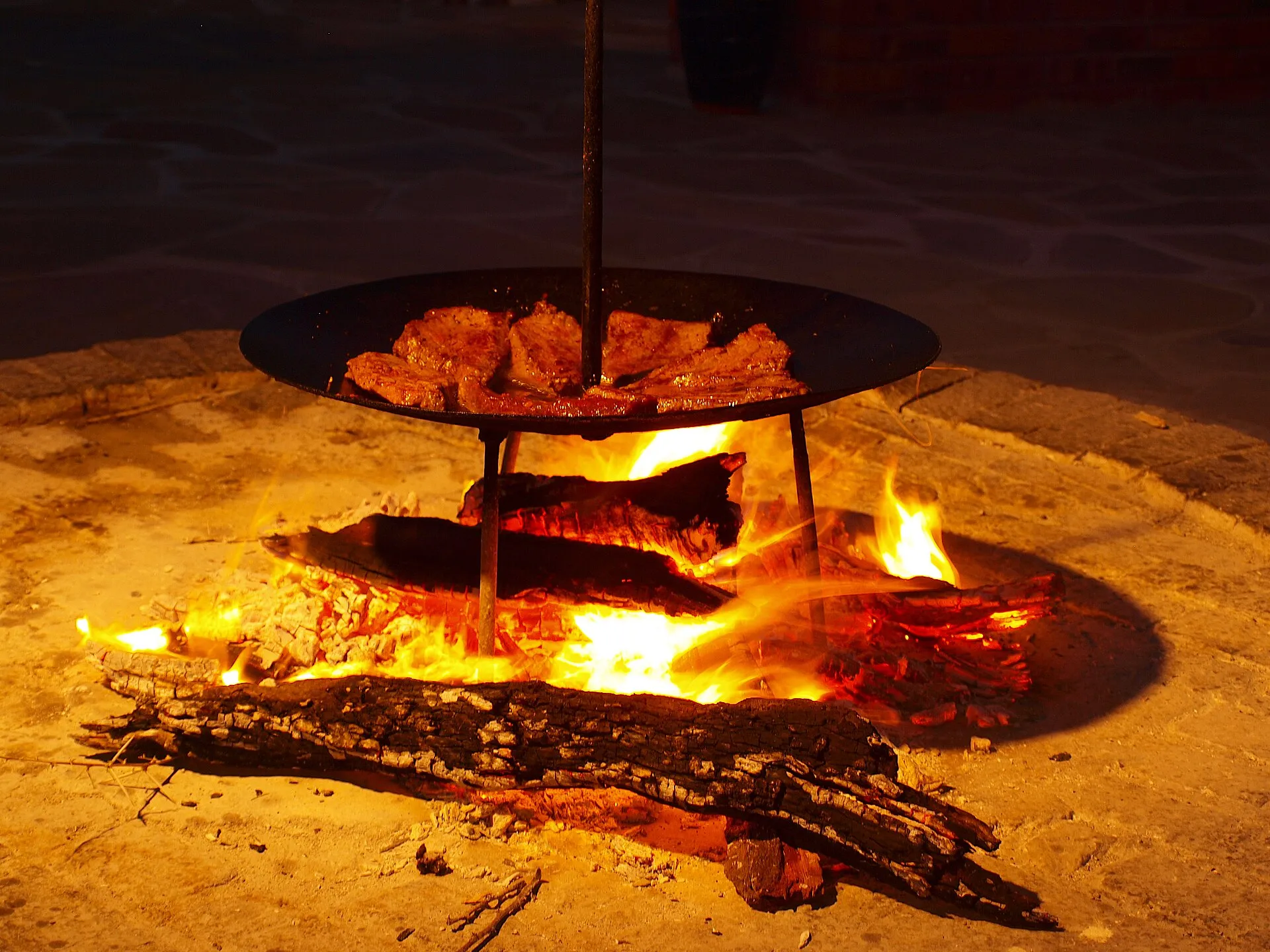
A braai is both the fire and the occasion. Wood — camelthorn for preference, dense and slow-burning — is burned down to coals, a grid goes over them, and meat is cooked slowly while people stand around with a drink. Every campsite pitch, picnic site and back garden has a braai place, and “bring and braai” is the standard invitation.
- Boerewors: a thick coiled sausage of coarsely minced beef seasoned with coriander, nutmeg and cloves.
- Lamb chops and beef steak: rump, sirloin and T-bone, generously cut and inexpensive by European standards.
- Game steaks and sosaties (skewers): oryx and kudu are lean and need little cooking.
- Braaibroodjie: a toasted sandwich of cheese, tomato and onion grilled on the grid.
- Roosterkoek: bread rolls baked over the coals.
- Pap: stiff maize-meal porridge, served with a tomato-and-onion relish.
For self-drivers the braai is dinner most nights. Buy vacuum-packed meat and firewood in town, and remember the veterinary rule against carrying raw meat south across the control fence north of Etosha; see camping.
Potjiekos
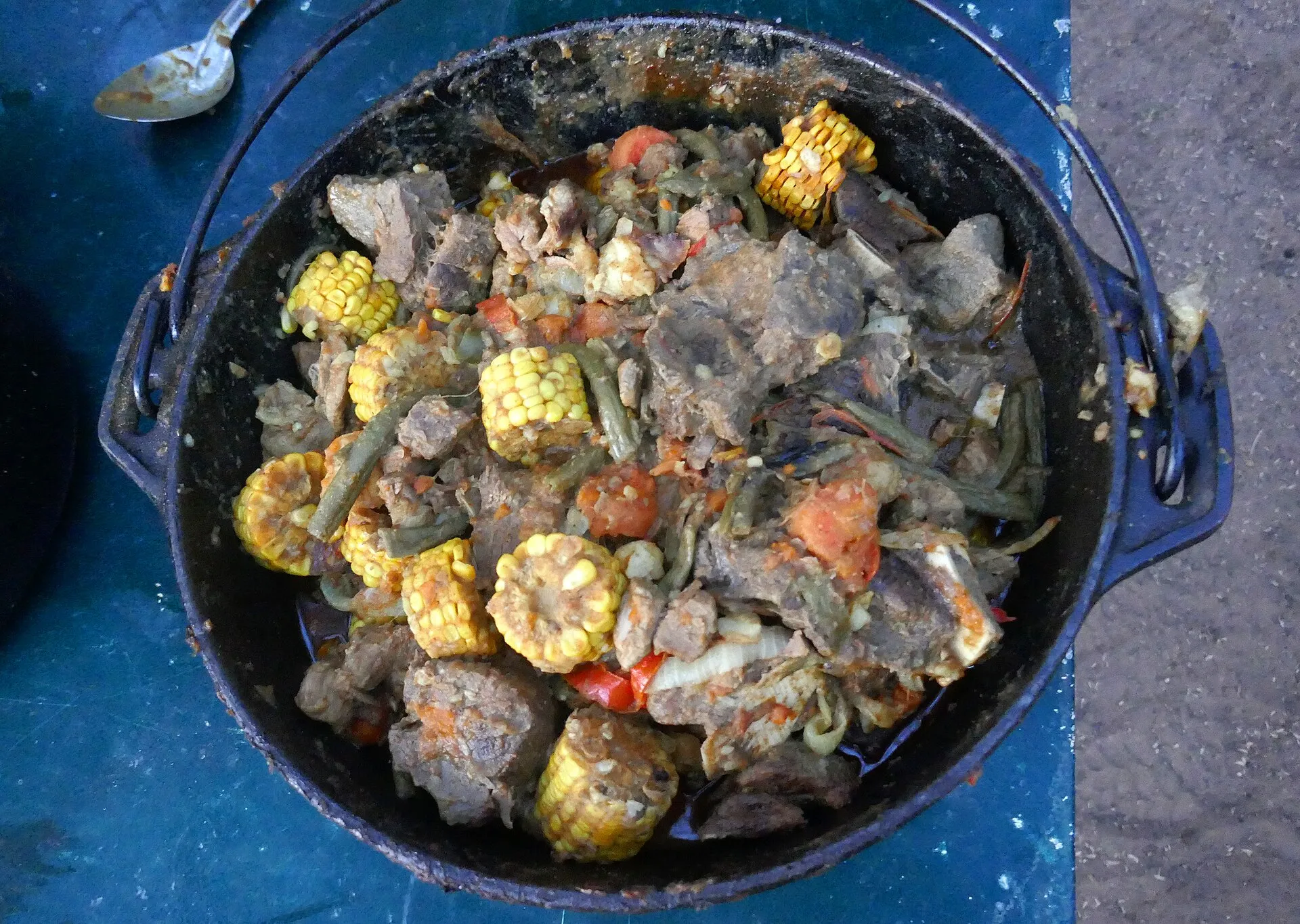
Potjiekos — “small-pot food” — is a stew layered in a round-bellied, three-legged cast-iron pot and left over low coals for three or four hours without stirring: meat at the bottom, then vegetables in order of cooking time, with stock, wine or beer. Oxtail, lamb neck, chicken and game all work. It is social cooking for a long afternoon, and several lodges and guest farms serve it on a set evening. The pots are sold in every hardware and camping shop if you want to try at your own fire.
Game meat
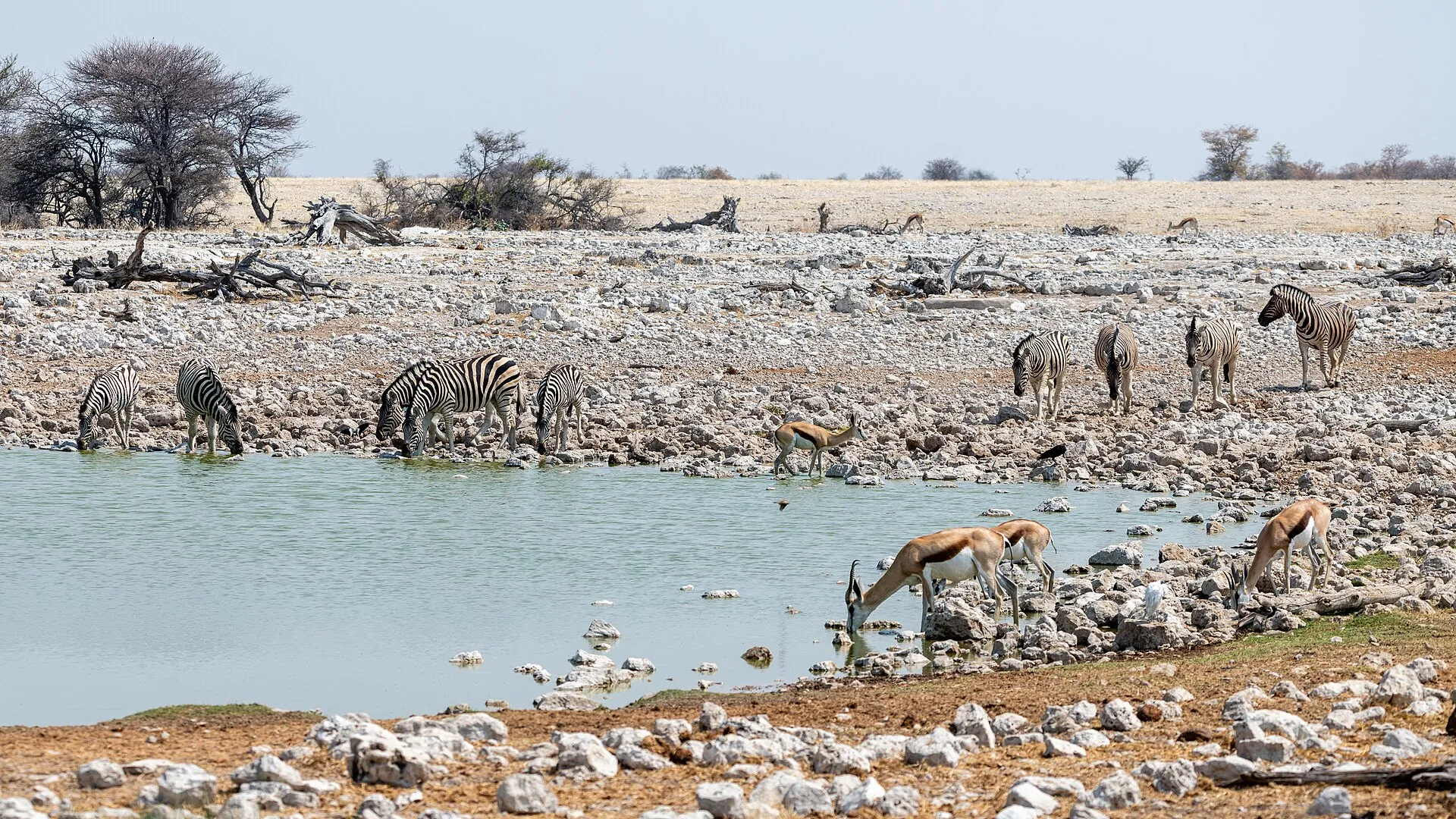
Game is everyday food in Namibia, not a novelty. It comes from regulated harvesting on farms and conservancies, where sustainable use of wildlife is part of the conservation model described in about Namibia, and it is lean, flavourful and low in fat.
- Oryx (gemsbok): the most common, with a clean beef-like flavour; best as steak, served pink.
- Kudu: fine-grained and mild; excellent as steak, loin or carpaccio.
- Springbok: tender and slightly sweet; often as loin or shank.
- Eland and zebra appear on some menus; ostrich is farmed.
- Biltong: air-dried strips of salted, spiced beef or game, sold by weight at butchers, supermarkets and fuel stations — the national road snack. Droëwors is its dried-sausage cousin.
If you are uneasy about eating the animals you came to watch, say so; every kitchen has beef, chicken and fish.
Kapana and the open markets
Kapana is the taste of urban Namibia. At open-air markets — the best known is in the Single Quarters area of Katutura, Windhoek — rows of vendors grill strips of fresh beef on wide steel braai stands. You walk the line, taste a sliver from several grills, choose one, and buy a portion cut to order. It is eaten with your fingers, dipped in a mix of salt and chilli spice, with a salsa of chopped tomato and onion and a vetkoek (fat cake), a ball of deep-fried dough.
Around the grills other stalls sell dried mopane worms, dried wild spinach, beans, spices and mahangu flour. Go at lunchtime, and for a first visit go with a local guide on a township or food tour: you will eat better, learn what you are looking at, and your money reaches more people. The Windhoek page lists options.
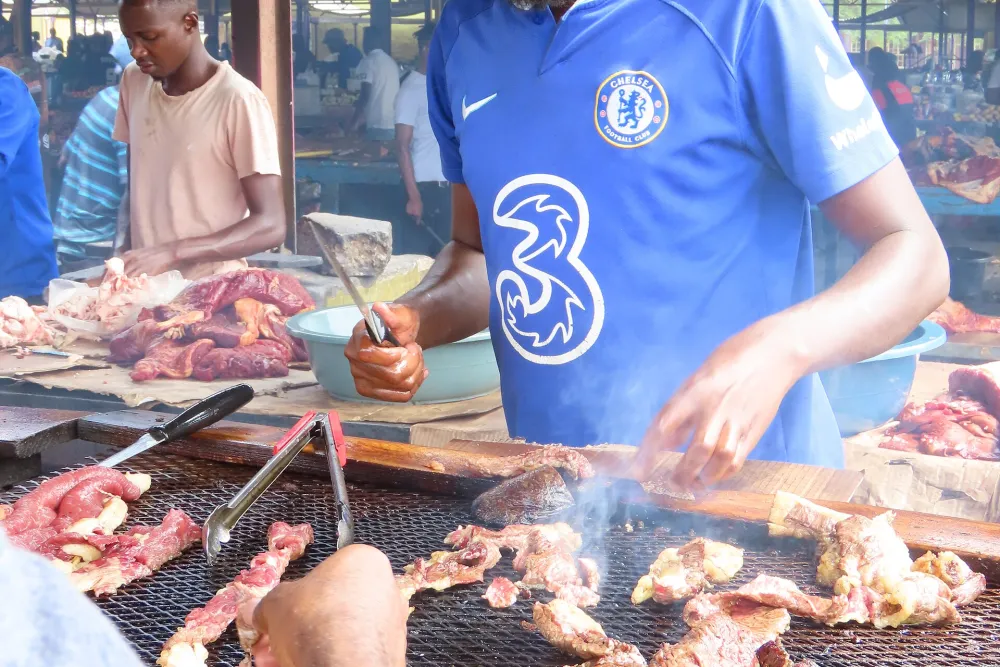
Kapana traditional food tour
Street food at the open-air market: grilled kapana beef with chilli salt and salsa, and other everyday Namibian dishes.
Check availabilityBook via GetYourGuideTour listings are on GetYourGuide. Prices, dates and cancellation terms are shown live on each listing and can change; NamibiaSafaris.com may earn a commission at no extra cost to you.
The food of the north
More than half of Namibians have roots in the north, and its cooking is the country’s home food.
- Oshifima: a firm porridge of mahangu (pearl millet) flour, slightly sour and nutty, eaten with the right hand — pinch off a piece, roll it, press a hollow with the thumb and scoop up the relish. Maize-meal pap is the equivalent elsewhere.
- Ombidi / ekaka: wild spinach, cooked fresh or sun-dried into cakes and rehydrated.
- “Marathon chicken”: free-range village chicken, tougher and far more flavourful than a broiler, stewed for a long time.
- Oshiwambo fish: dried or fresh bream and catfish from the seasonal floodwaters and the Kavango and Zambezi rivers.
- Omagungu (mopane worms): the caterpillar of the emperor moth, harvested from mopane trees, dried, then fried with onion, tomato and chilli. High in protein, chewy, earthy.
- Oshikundu: a lightly fermented drink of mahangu and sorghum, made daily at home; marula fruit is turned into juice, oil and a seasonal brew.
- Eembe and other wild fruits, and Kalahari truffles, which appear after good rain in the east.
In Windhoek several restaurants and home cooks serve these dishes, and cooking classes hosted in family homes are offered to visitors.
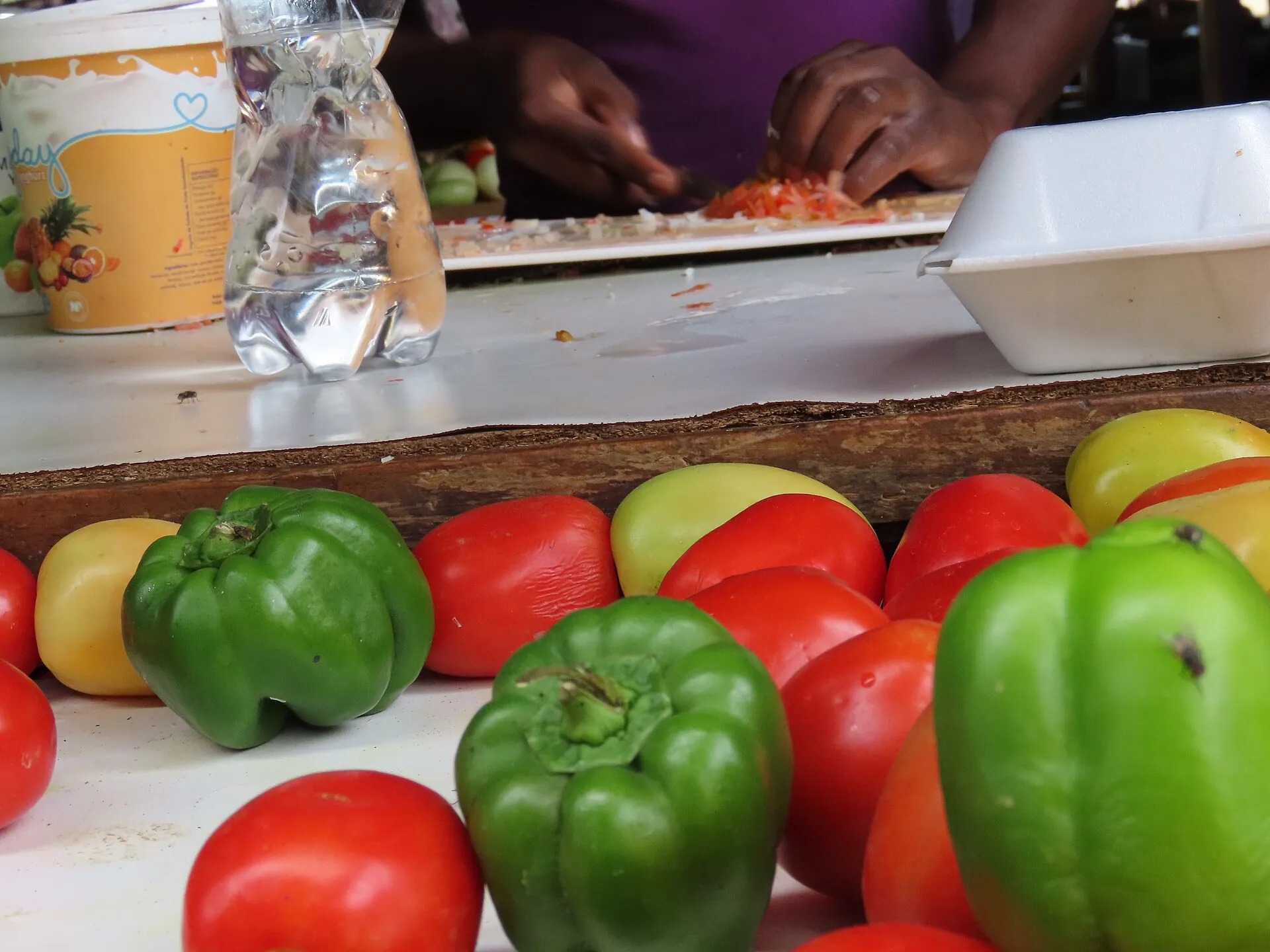
Preparing the tomato-and-onion salsa that goes with kapana at a Windhoek market.
From the Atlantic
The cold, nutrient-rich Benguela Current makes Namibia’s coast one of the world’s most productive fishing grounds, and the same cold water grows oysters quickly. They are farmed in the lagoon at Walvis Bay and at Lüderitz, and appear on every menu in Swakopmund — raw on ice, or grilled. Marine cruises from Walvis Bay traditionally serve them on deck with sparkling wine.
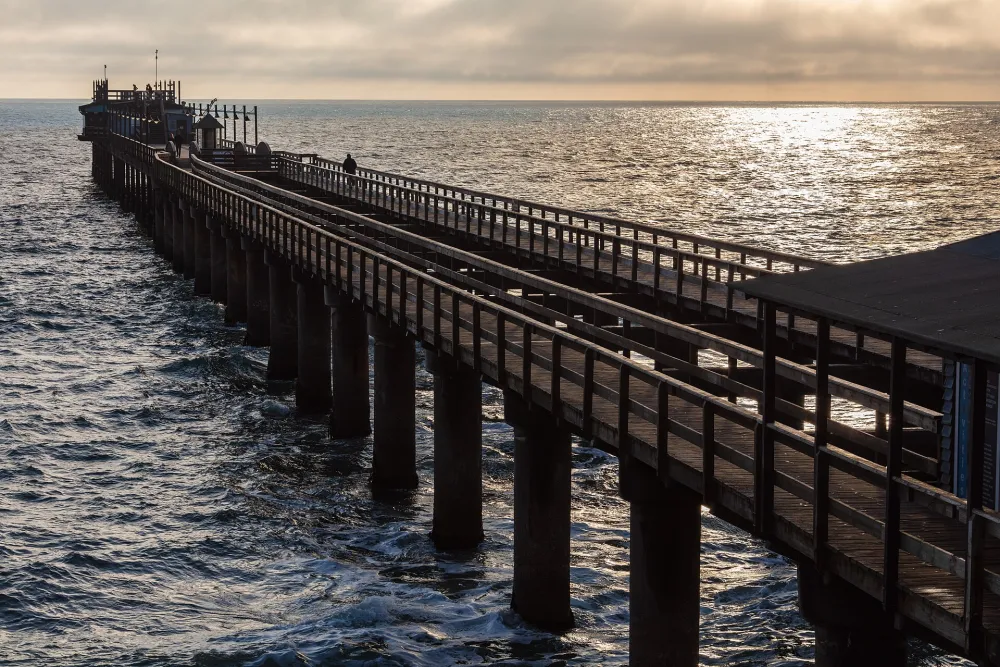
Beyond oysters, look for kabeljou (kob) and steenbras as line fish, hake, snoek, calamari, and Lüderitz rock lobster (“crayfish”) in season. Swakopmund has the best concentration of seafood restaurants in the country, including long-established places on and beside the old jetty; book ahead in December and at weekends.
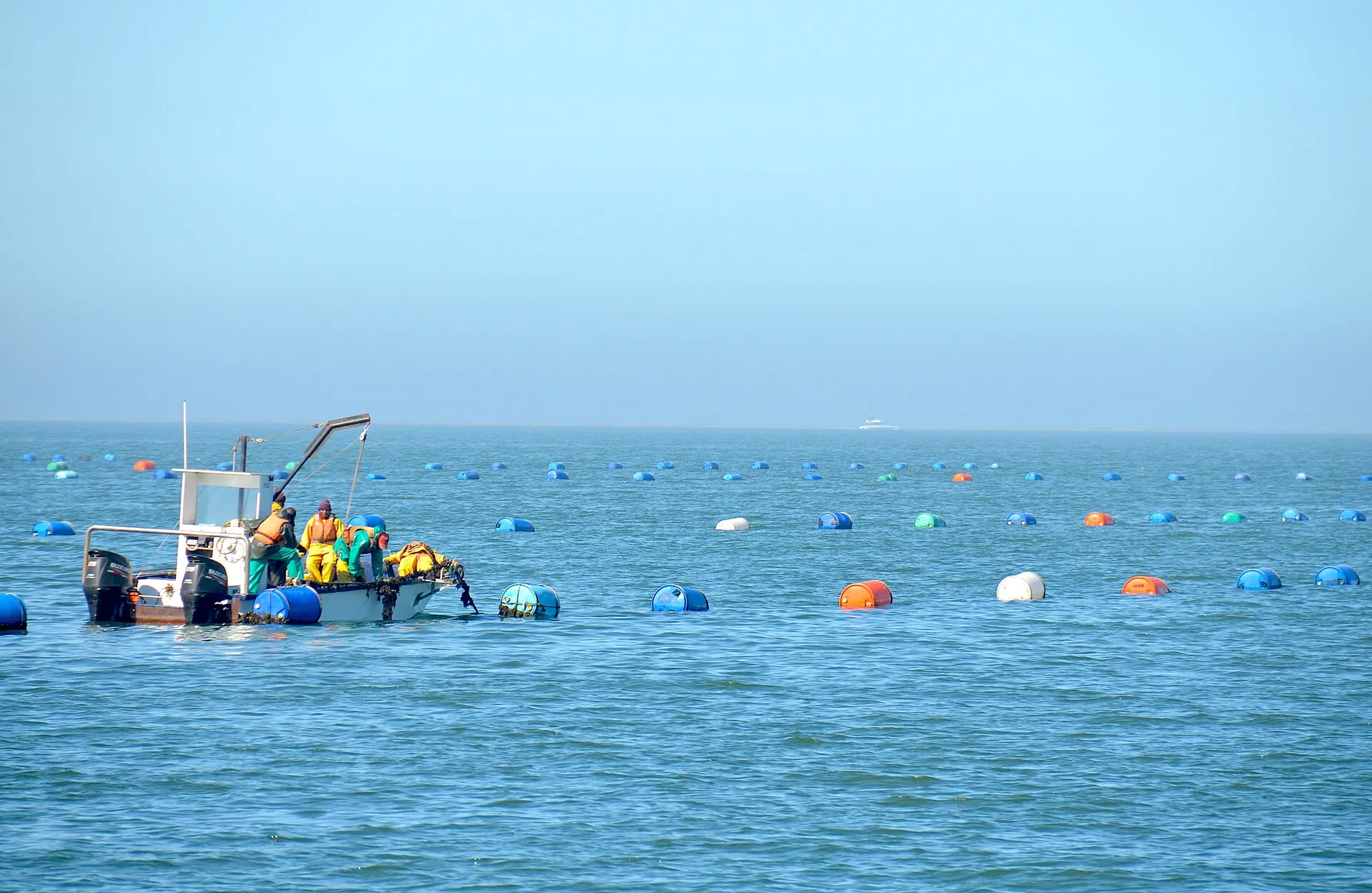
Oyster farming at Walvis Bay, where cold Atlantic water grows them fast.
The German and Afrikaner table
A century after German rule ended, breakfast at a Namibian guesthouse is still fresh Brötchen, cold meats, cheese and a boiled egg. Bakeries and cafés in Swakopmund and Windhoek sell Black Forest cake, Apfelstrudel and rye bread; butchers make Landjäger, Leberkäse and smoked sausages; menus offer Schnitzel and Eisbein. In the Namib, the bakery at the fuel stop of Solitaire has made its apple cake a fixture of the drive between Sossusvlei and the coast.
The Afrikaner contribution overlaps with the braai: rusks dunked in morning coffee, koeksisters (plaited, syrup-soaked doughnuts), melktert (milk tart), and preserves of every kind. Farm stalls along the main roads sell them.
Beer, wine and what else to drink
- Beer. Namibia Breweries in Windhoek brews Windhoek Lager, Windhoek Draught and Tafel Lager according to the Reinheitsgebot, the German purity law of 1516: malted barley, hops and water only. They are the national drink and are exported across southern Africa. Craft breweries operate in Windhoek and Swakopmund.
- Rock shandy: the classic non-alcoholic sundowner — lemonade, soda water and a few dashes of Angostura bitters over ice.
- Wine on lists is almost entirely South African, good and reasonably priced. A handful of small Namibian vineyards and distilleries exist; look for their bottles at lodges.
- Gin and tonic is the default sundowner at lodges, often with a Namibian craft gin flavoured with desert botanicals.
- Amarula-style cream liqueurs, and “springbokkie” shots (peppermint liqueur under cream liqueur) appear after dinner.
- Coffee is good in the towns; rooibos tea is everywhere.
- Water: see practical information.
Shops stop selling alcohol on Saturday afternoon and do not sell it on Sundays or public holidays; lodge and restaurant bars are unaffected. The legal drinking age is 18, and drink-driving limits are enforced at roadblocks.
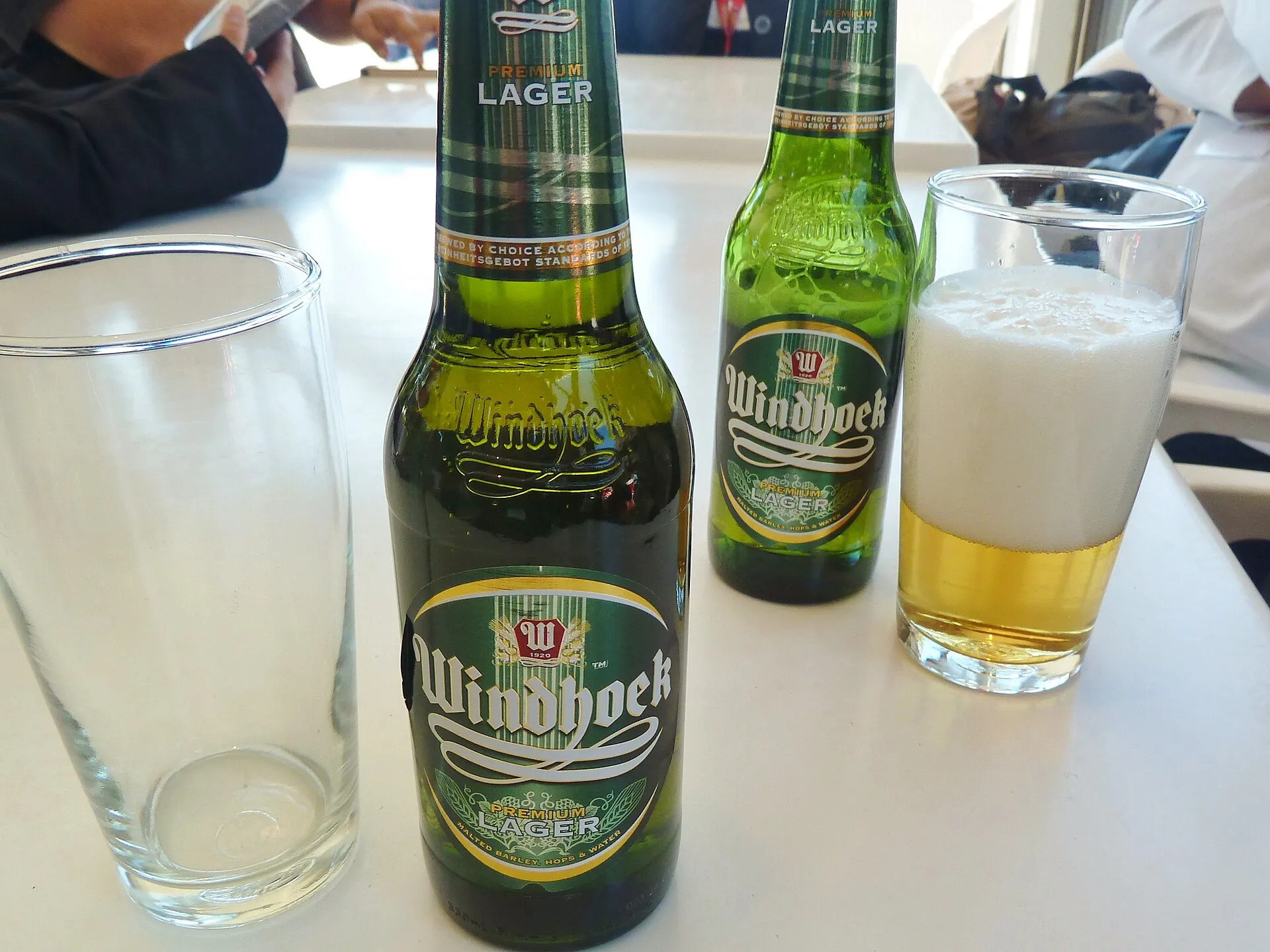
Windhoek Lager, brewed in the capital to the German purity law.
Eating as a vegetarian, vegan or with allergies
It is easier than the meat-heavy reputation suggests, with notice. Lodges cook to order for small numbers and cope well with vegetarian, vegan, gluten-free and other diets if told when you book, not at the table — supplies come from far away. Town restaurants have vegetarian dishes, and supermarkets stock what self-caterers need. In remote areas and on guided camping safaris choice is narrower; remind the operator before departure and carry a few staples of your own.
Practicalities
- Meal times are early: lodge dinner is typically at 19:00 or 19:30, and kitchens in small towns close by 21:00.
- Booking is advisable for dinner in Swakopmund and Windhoek at weekends and essential over Christmas.
- Tipping: about 10 % if service is not included.
- Hygiene in lodges and restaurants is generally good; at markets, eat food that is cooked in front of you and served hot.
- Stocking up: the large supermarkets are in Windhoek, Swakopmund, Walvis Bay, Otjiwarongo, Outjo, Tsumeb and Keetmanshoop.
Frequently asked questions
What is the national dish of Namibia?
There is no official one. The strongest candidates are meat grilled at a braai, potjiekos stew, kapana street-grilled beef, and oshifima — millet porridge — with chicken or wild spinach, which is the daily food of the populous north.
What is kapana?
Strips of beef grilled over open coals at market stalls, sold in small portions and eaten by hand with chilli spice, tomato-and-onion salsa and a fat cake. The best-known kapana market is in Katutura, Windhoek.
Is game meat in Namibia ethical to eat?
Game such as oryx, kudu and springbok comes from regulated harvesting on farms and conservancies, where income from wildlife is an incentive to keep land wild. It is a normal part of the Namibian diet. Protected species are not served.
Where can I eat oysters in Namibia?
In Swakopmund, Walvis Bay and Lüderitz, where they are farmed locally in cold Atlantic water. They are also served on board many dolphin and seal cruises from Walvis Bay.
Is Namibia difficult for vegetarians?
Not if you plan. Tell lodges and tour operators when you book, since supplies are ordered in advance; towns and supermarkets offer plenty of choice. The default menu is meat-based, so advance notice matters.
Sources and official information
Facts were checked against these official sources in November 2026. Park fees, gate times, visa rules and timetables change, so confirm before you go.
NamibiaSafaris.com is an independent guide, not the official site of any tour operator, lodge, Namibia Wildlife Resorts or the Namibian government. Some links are affiliate links: tours go to GetYourGuide and accommodation goes to Booking.com, and we may earn a commission at no extra cost to you.