In short
- Best for wildlife: June to October. Rain stops, the bush thins and Etosha’s animals gather at the waterholes; September and October are the peak, and the hottest.
- Best all-round months: May, June and September — dry, clear, warm days, and outside the July–August rush.
- Green season (roughly December to April): afternoon thunderstorms, newborn animals, migrant birds, lower prices and far fewer visitors; wildlife is harder to find and the desert is very hot.
- Coldest: June to August nights fall to freezing in the desert and highlands. Hottest: October to February, with 35–40 °C common in the Namib, the south and the north.
- The coast runs to its own calendar: cool and often foggy all year, busiest with Namibian and South African holidaymakers from mid-December to early January.
Two seasons, and why they matter
Namibia is one of the sunniest countries on earth, with around 300 clear days a year, and for most of the year the question of weather barely arises. What changes is water. Rain falls in summer, mainly from December to March, in short violent afternoon storms; winter, from May to September, is dry to the point that months pass without a cloud. The amount varies enormously across the country: the Namib coast gets almost nothing, Windhoek in the central highlands a modest summer rainfall, and the Zambezi Region in the far north-east several times more.
For a safari that pattern decides everything. In the dry season the natural pools vanish, grass dies back and animals must walk to the permanent springs and pumped waterholes of Etosha, where you can sit in your car and let them come to you. After good rain they scatter across a green park and have no need to show themselves. For the desert it matters less: Sossusvlei is open and photogenic all year, and the only real variable is heat.
The classic advice — come between May and October — is right for a first visit built around wildlife. It is not the whole story, and the rest of this page is about what you gain and lose in each month.
- Dry season
- May–October: clear, mild days, cold nights, best game viewing
- Rainy season
- December–March, tailing into April: hot, humid in the north, afternoon storms
- Peak visitor months
- July–October, and the coast over Christmas and New Year
- Quietest months
- January–March
- Time zone
- UTC+2 all year; no daylight saving
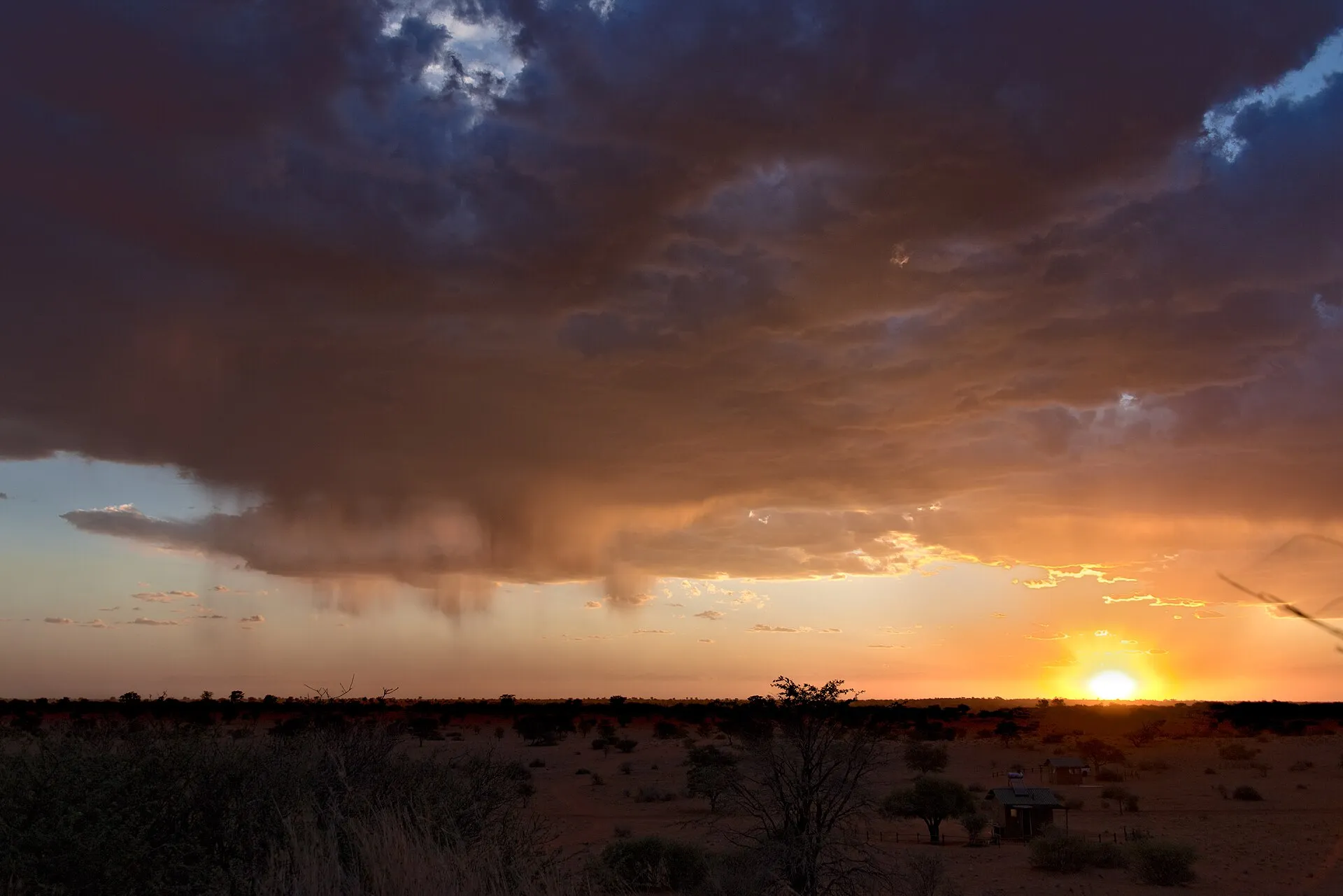
Month by month
| Month | Weather | Etosha wildlife | Crowds and prices |
|---|---|---|---|
| January | Hot; storms most afternoons in the north and centre. Coast mild. | Green and dispersed; many young animals; superb birding | Low inland; coast busy until mid-month |
| February | Usually the wettest month. Humid in the north-east; some gravel roads and river crossings affected. | Hardest month for big game; the pan may hold water and flamingos in good years | Lowest of the year |
| March | Rain easing in the south and centre, continuing in the north. Still hot. | Lush; zebra and springbok in large herds on the plains | Low |
| April | Showers fade; warm days, pleasant nights; landscapes at their greenest. | Improving as pools dry | Low to moderate; busier at Easter |
| May | Dry and clear; warm days, cool nights. Dust not yet a problem. | Good and getting better; grass still long in places | Moderate — a strong value month |
| June | Dry, sunny, 20–25 °C by day; nights near freezing in the desert. | Very good; waterholes busy | Rising; high-season rates begin at many lodges |
| July | As June; the coldest nights of the year. Short days. | Excellent | Peak — European summer holidays; book far ahead |
| August | Dry and warming; windy and dusty at times. | Excellent; large herds at waterholes all day | Peak |
| September | Hot days, mild nights; haze from dust. | Outstanding — the driest month, with big gatherings of elephant | High |
| October | Very hot, 35 °C and more in the north and the Namib; first clouds build. | Outstanding until the first rains | High, easing late in the month |
| November | Hot; first thunderstorms, unpredictable. Fine light and dramatic skies. | Still good until rain sets in; first calves and lambs | Moderate |
| December | Hot; storms increasing. Coast pleasantly cool. | Dispersing; springbok lambing; migrant birds arrive | Inland quiet; the coast is at its busiest and most expensive over the holidays |
Etosha and the north
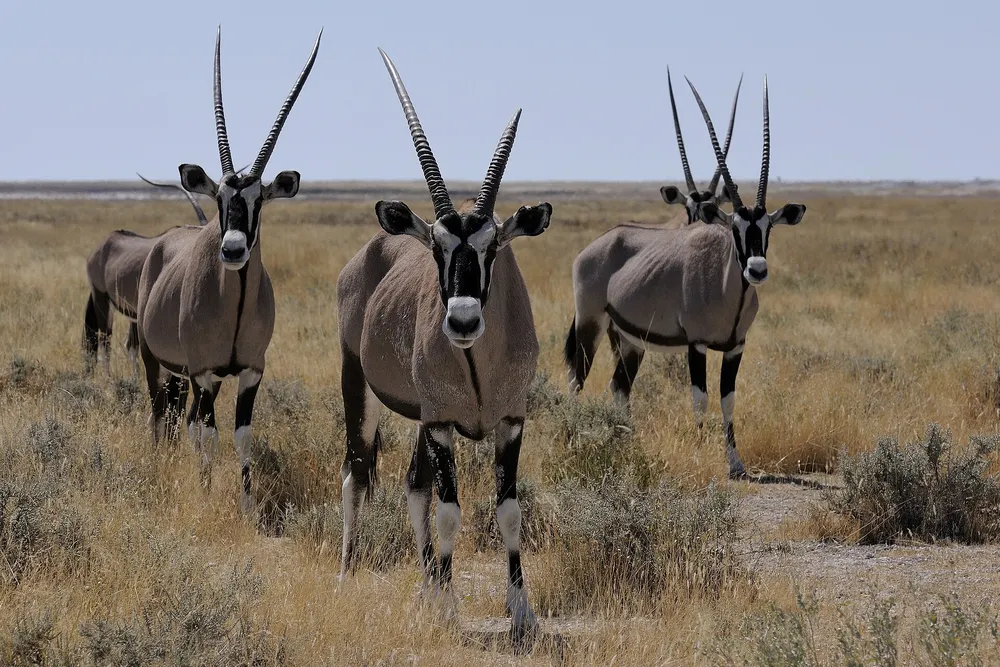
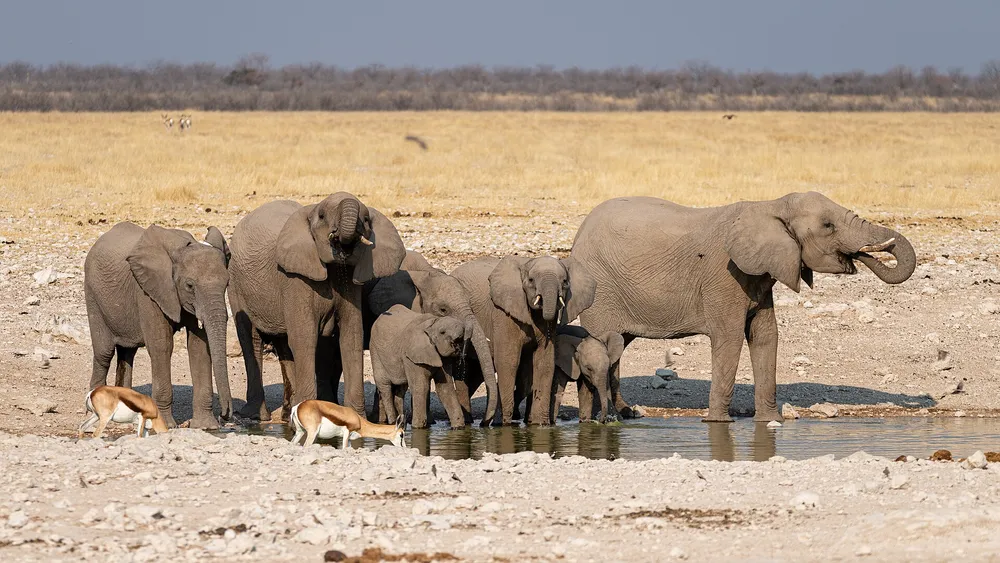
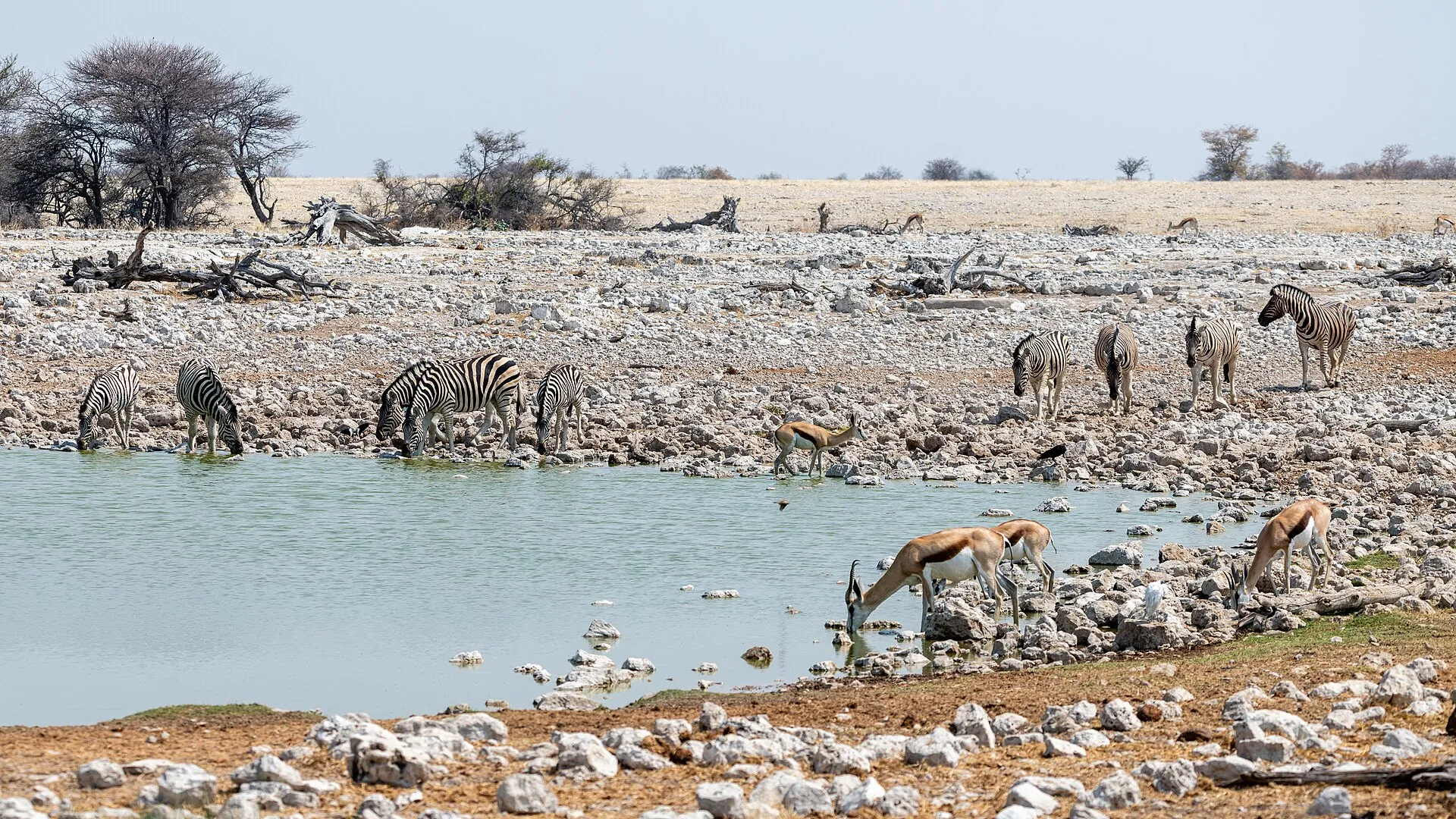
Etosha’s game viewing follows the water. From June the waterholes along the southern edge of the pan draw a steady traffic of zebra, springbok, gemsbok, wildebeest, giraffe and elephant, with lion and the occasional leopard in attendance. By September and October the park is at its harshest and most rewarding: white dust, heat haze, and sometimes several hundred animals at a single waterhole. The floodlit waterholes at the rest camps are at their best in the same months, when black rhino come to drink most nights.
The first proper rain, typically some time in November or December, changes the park within days. The pan’s edge turns green, breeding herds of elephant move away from the tourist roads, and plains game spreads north and west. Sightings take more driving and more luck. In exchange the park is nearly empty, the light is extraordinary, predators hunt the newborn springbok and wildebeest, and in wet years water lies on the pan itself and flamingos arrive to breed. Birders rate January to March above any other time.
Malaria risk in the regions that contain Etosha is higher from December to April and low from May to November, according to UK public-health guidance; see health and safety. What each animal does through the year is covered in the wildlife guide.
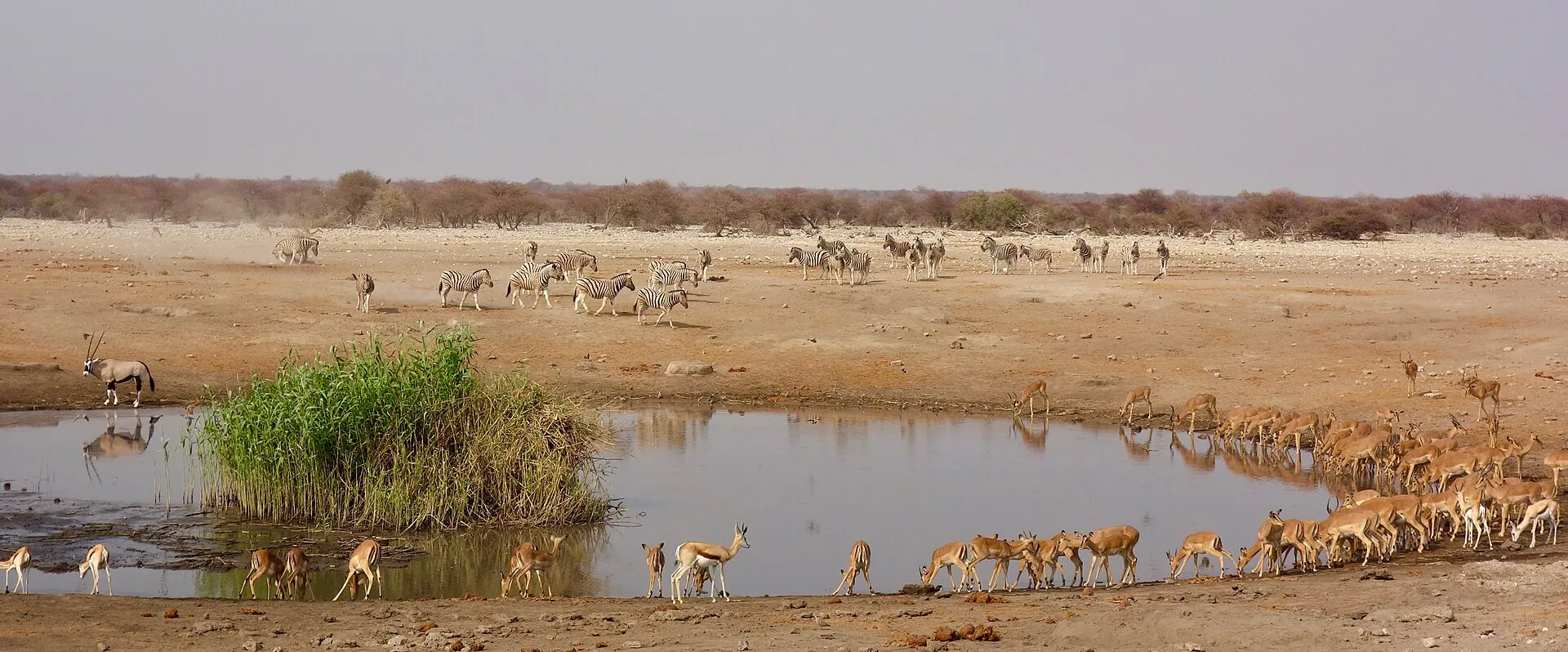
Late dry season at an Etosha waterhole: the reason most safaris are planned for June to October.
Sossusvlei, the Namib and the south
The dunes can be visited in any month. What changes is how long you can stay on them. From May to September mornings at Sesriem are cold — take a fleece and gloves for the drive in at dawn — and midday is comfortable for walking, so climbing Big Daddy or lingering in Deadvlei is a pleasure. From October to March the sand is too hot to walk on by late morning and air temperatures regularly pass 35 °C; the routine becomes a gate-opening start, off the dunes by 10:30, and a long siesta. Winter also brings the clearest night skies, which is when the NamibRand dark-sky reserve is at its best.
Rain in the Namib is rare and brief, but once every several years the Tsauchab River flows far enough to fill the pan at Sossusvlei, an event worth changing plans for. The far south — the Fish River Canyon, Lüderitz and the Kalahari — is a winter destination: the multi-day canyon hike is open only in the cool months because summer heat on the canyon floor is dangerous, and Lüderitz is at its windiest in summer.
The coast: Swakopmund, Walvis Bay and the Skeleton Coast
The cold Benguela Current keeps the coast between about 15 and 25 °C all year and lays a bank of fog over it on many mornings, burning off by midday. When the interior swelters in December, Swakopmund is the coolest place in the country — which is exactly why Namibians and South Africans fill it from mid-December to early January. Book coastal accommodation months ahead for that period, or avoid it.
The clearest, warmest beach weather tends to come between December and March. In winter the coast is cool and grey for much of the day, with occasional “east wind” days when hot, sand-laden air pours off the desert and temperatures briefly exceed those inland. Marine wildlife is present all year: Cape fur seals pup at Cape Cross in November and December, and flamingos are most numerous on the Walvis Bay lagoon in the dry months when inland pans are empty. For tide and season detail on the dune-and-lagoon excursion south of Walvis Bay, see the sister guide on the best time to visit Sandwich Harbour.
Damaraland and Kaokoland
The north-west is dry-season country. From May to October the gravel is at its most predictable and the desert-adapted elephants keep to the ephemeral riverbeds — the Huab, Aba-Huab, Ugab and Hoanib — where local guides know how to find them. In summer the heat in the valleys is fierce, and a storm in the mountains can send a flood down a dry riverbed with no warning and no rain where you are standing. The tracks of Kaokoland beyond Opuwo can become impassable for days. Epupa Falls on the Kunene is at its fullest from about March to May, after rain in the Angolan highlands, and at its lowest late in the dry season.
The Zambezi Region
The green north-east reverses some of the rules. It is a place of rivers — the Okavango, Kwando, Chobe and Zambezi — and the water level in them depends on rain that fell months earlier in Angola and Zambia, so floodplains can be at their highest in the middle of the local dry season. For wildlife, June to October is again best: elephant and buffalo concentrate along the rivers of Bwabwata and Mudumu, tracks are dry and mosquitoes fewer. From December to April the heat and humidity are high, some park tracks close, and malaria risk is at its peak; the reward is some of the best birdwatching in southern Africa, including the carmine bee-eater colonies that form on the Zambezi from about August to November. The Zambezi Region page has the detail.
The green season, honestly
Lodges and tour operators have rebranded the rainy months as the “green season”, and for once the marketing has substance. Storms build through the afternoon over a landscape that has turned from straw to emerald, the air is washed clean of dust, and photographers get skies that the winter never offers. It rarely rains all day. Many lodges drop their rates, sometimes substantially, and the gate queue at Sesriem shrinks to a handful of cars.
The costs are real too. It is hot everywhere except the coast. Big game is harder to see, and a three-day visit to Etosha in February can pass without a single elephant. Gravel roads can be closed for a few hours by a flowing river, so itineraries need slack. Some remote camps shut for a month or two. If the purpose of the trip is to see as many large animals as possible in ten days, come in the dry season; if it is landscape, birds, solitude and price, the green season is a good choice — especially April and May, when the rain has stopped and the country is still green.
Crowds, holidays and how far ahead to book
“Crowded” is relative in a country this empty, but the bottlenecks are real because beds are few. A rest camp inside Etosha has a fixed number of chalets; the lodges within reach of the Sesriem gate before sunrise can be counted on two hands.
- July to October: reserve Etosha, Sossusvlei and Damaraland accommodation and a 4x4 with camping equipment nine to twelve months ahead. August is the hardest month.
- European and southern African school holidays drive the peaks: July and August from Europe; late April to early May, August to early September and December to mid-January for Namibian and South African families. Dates change yearly — check the current school calendars.
- Easter and the May public holidays (Workers’ Day, Cassinga Day, Ascension Day and Africa Day fall within a month) fill campsites near Windhoek and on the coast. The 2026–27 holiday dates are in practical information.
- November to March (except Christmas on the coast): a few weeks’ notice is often enough, and last-minute offers appear.
Guided safaris with fixed departures are less sensitive to this, because the operator holds the rooms. If your dates are fixed and close, a scheduled tour may be the only way into Etosha in August.
What to pack for the season
Winter visitors are routinely caught out by the cold. An open game-drive vehicle at sunrise in July, with the air a degree or two above freezing, calls for a warm jacket, hat and gloves, even though you will be in shorts by 11:00. Summer visitors need sun protection above all, plus a light rain shell. The full list, by season and by trip type, is in the packing list.
Frequently asked questions
What is the best month to visit Namibia?
For a first trip centred on wildlife, September: Etosha’s waterholes are at their busiest, days are warm and nights no longer freezing. May and June are the best alternatives if you prefer cooler weather, greener scenery and fewer people.
When is the rainy season in Namibia?
Rain falls in summer, mainly from December to March, with the first storms in November and the last showers in April. It comes as afternoon thunderstorms, heaviest in the north and north-east; the coast and the Namib receive almost none.
Is Namibia worth visiting in December or January?
Yes, with adjusted expectations. The landscapes are green, birdlife and newborn animals are at their best and prices inland are lower, but it is very hot, big game in Etosha is scattered and the coast is crowded over Christmas and New Year.
How cold does Namibia get in winter?
Days from June to August are sunny and usually 20–25 °C, but nights in the desert, the south and the central highlands drop to around freezing, and occasionally below. Bring warm layers for dawn drives and camping.
When is the best time for Sossusvlei?
Any month works for photographs. For walking on the dunes in comfort, May to September is best; from October to March plan to be off the sand by late morning because of the heat.
Sources and official information
Facts were checked against these official sources in November 2026. Park fees, gate times, visa rules and timetables change, so confirm before you go.
- meteona.com
- nwr.com.na
- meft.gov.na
- travelhealthpro.org.uk
- whc.unesco.org
- climateknowledgeportal.worldbank.org
NamibiaSafaris.com is an independent guide, not the official site of any tour operator, lodge, Namibia Wildlife Resorts or the Namibian government. Some links are affiliate links: tours go to GetYourGuide and accommodation goes to Booking.com, and we may earn a commission at no extra cost to you.