In short
- Where: the western edge of the Kalahari reaches into Namibia east of the B1 between Kalkrand, Mariental and Stampriet, two and a half to three hours’ drive south of Windhoek on tar.
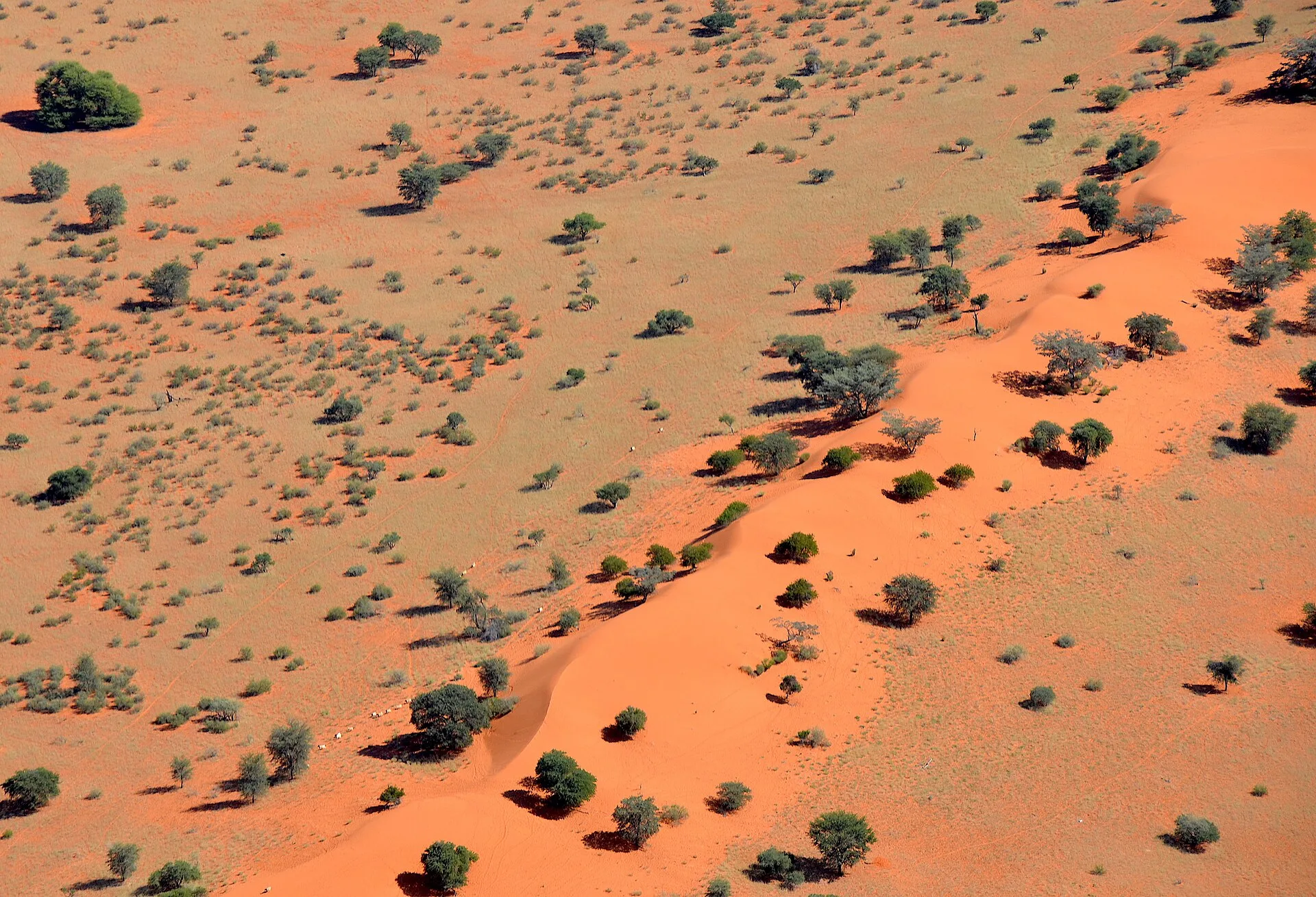
- What it looks like: long, parallel dunes of brick-red sand with grass and camel thorn trees on them and broad grassy valleys between. It is a dry savanna, not a sand sea.
- How you visit: by staying on a private game ranch or lodge. Sundowner drives up a dune, morning walks, and at some lodges meerkats or a walk with San guides are the activities.
- Why include it: it is the easy first or last night of a southern loop to the Fish River Canyon and Lüderitz, and a gentle introduction to Namibian wildlife and space.
- No national park here: the reserves are private, so you book a lodge, not a permit. Hardap Game Park near Mariental is the nearest state reserve.
A desert that is not quite a desert
The Kalahari covers some 900,000 km² of Botswana, Namibia and South Africa, a vast basin filled with wind-blown sand. Its name comes from a Tswana word usually glossed as “the great thirst”, because rain sinks straight into the sand and there is almost no surface water. But most of it receives between about 150 and 250 mm of rain a year in the Namibian part and more further north-east, enough to grow grass, shrubs and trees. Geographers call it a semi-desert or arid savanna, and after a good rainy season the dunes are green.
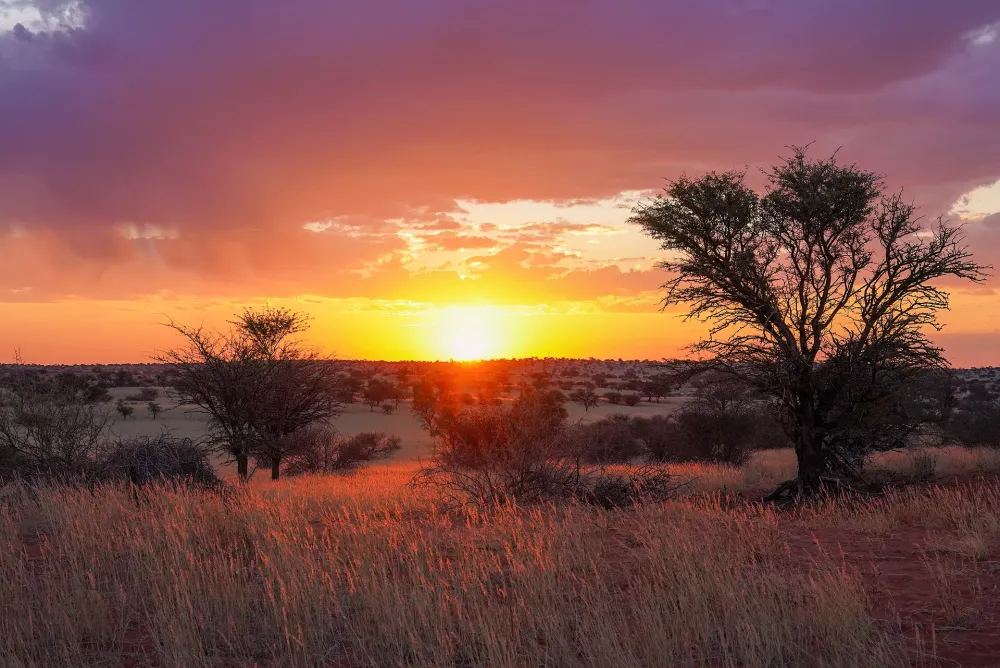
In Namibia the Kalahari begins a little east of the main B1 highway. Drive out from Mariental or Kalkrand and within half an hour the gravel road starts to rise and fall over low red ridges. These are linear dunes: fixed, vegetated sand ridges 10 to 30 m high that run parallel to one another from north-west to south-east for tens of kilometres, separated by flat valleys known locally as streets. Farm roads and game tracks run along the streets and cross the dunes at right angles, so a drive here is a slow roller-coaster. The colour, deepest at sunrise and sunset, comes from a film of iron oxide on each grain.
Two fossil rivers, the Auob and the Nossob, cut through the dune country on their way south-east to the Kgalagadi; they flow perhaps once in a generation. Under the sand around Stampriet lies an artesian basin that feeds boreholes and allows small-scale irrigation in the middle of the dunes.
- Gateway town
- Mariental (on the B1, roughly 260–270 km south of Windhoek)
- Lodge areas
- Kalkrand–Hoachanas, Mariental, Stampriet, Gochas
- Roads
- Tar to Mariental and Stampriet; good gravel to most lodges
- Rainfall
- Roughly 150–250 mm a year, falling mainly December–April
- Winter nights
- Often below freezing in June and July
- Malaria
- Not a malaria area
Kalahari or Namib?
Visitors often ask whether they need both. They are different landscapes and answer different wishes.
| Kalahari (south-east) | Namib (west) | |
|---|---|---|
| Type | Semi-arid savanna on sand | True coastal desert |
| Dunes | Low, parallel, fixed, covered in grass and trees | High, bare, shifting; star dunes of 200–300 m at Sossusvlei |
| Colour | Brick red with green or blond grass | Apricot to deep orange against white pans |
| Water | Summer thunderstorms; boreholes | Almost no rain; coastal fog |
| Wildlife | Plentiful on game ranches: antelope, giraffe, meerkats, many birds | Sparse and specialised: oryx, springbok, beetles, lizards |
| How you visit | Private lodge with guided drives and walks | National park, self-drive or guided |
| Best for | A relaxed first or last night; families; birders | The big scenery of a Namibia trip |
What you do at a Kalahari lodge
A stay follows a pleasant routine, and most of it is included in or easily added to the room rate.
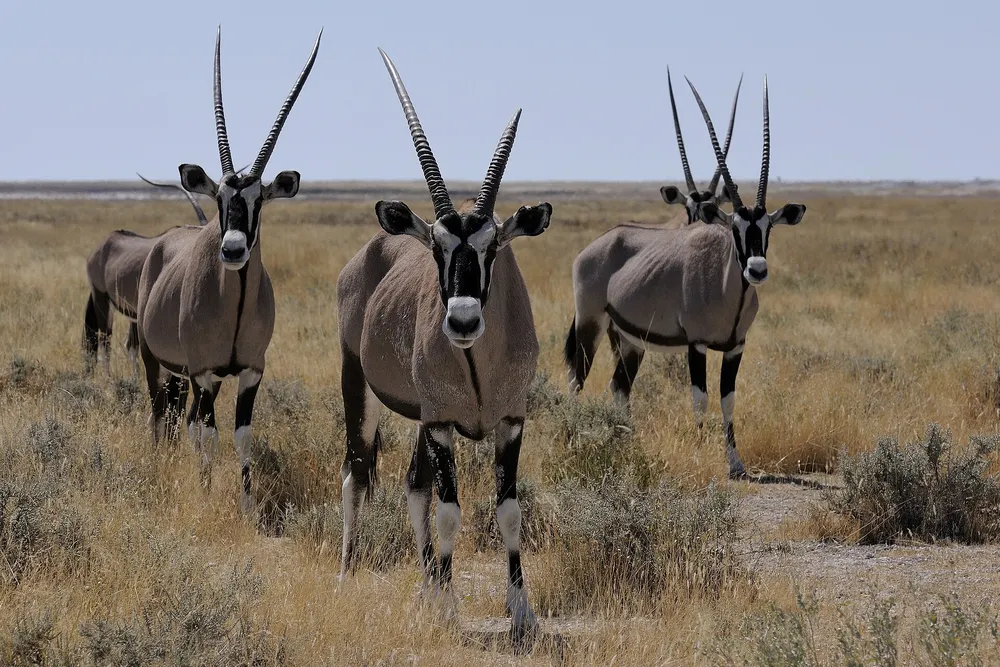
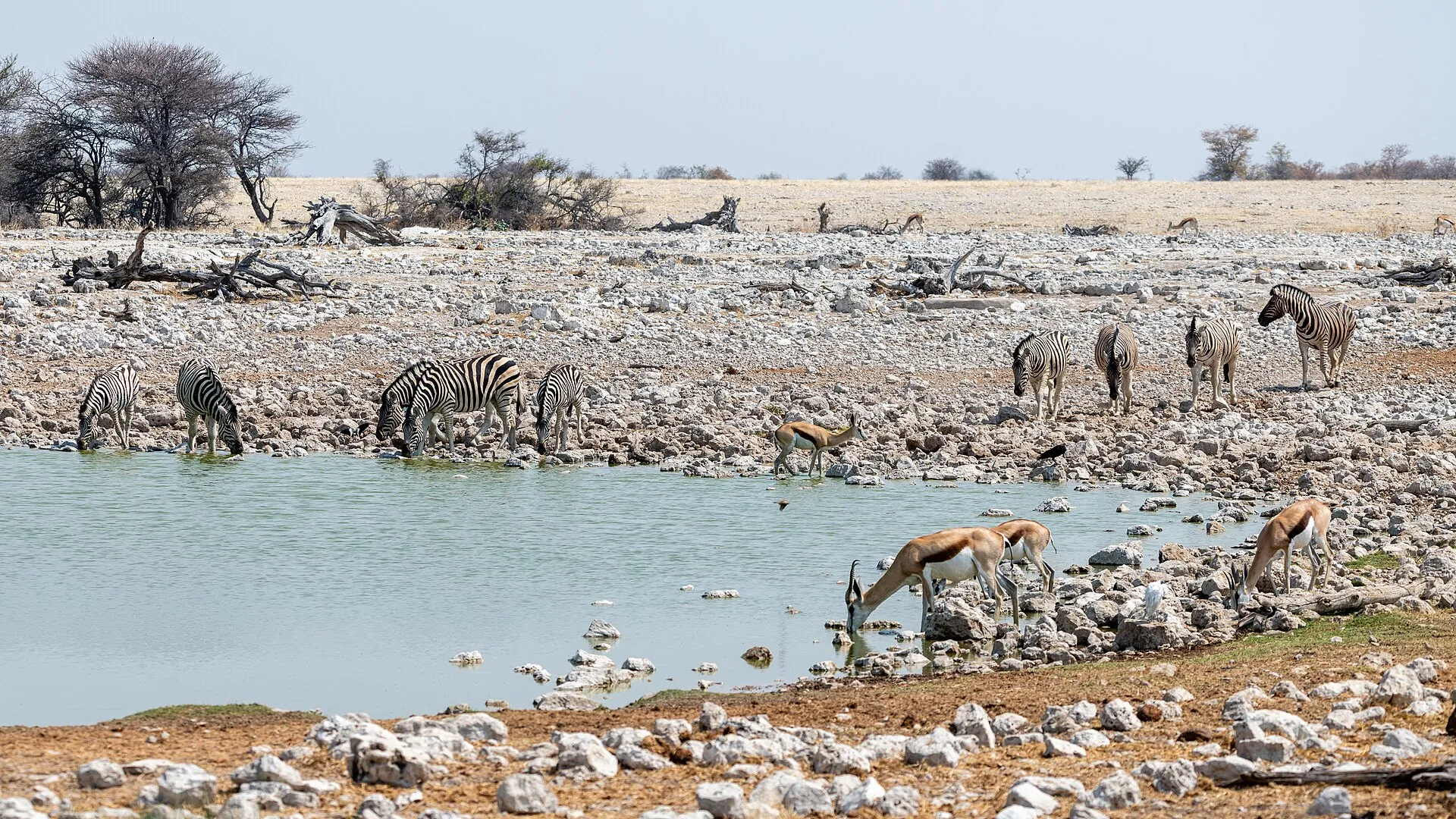
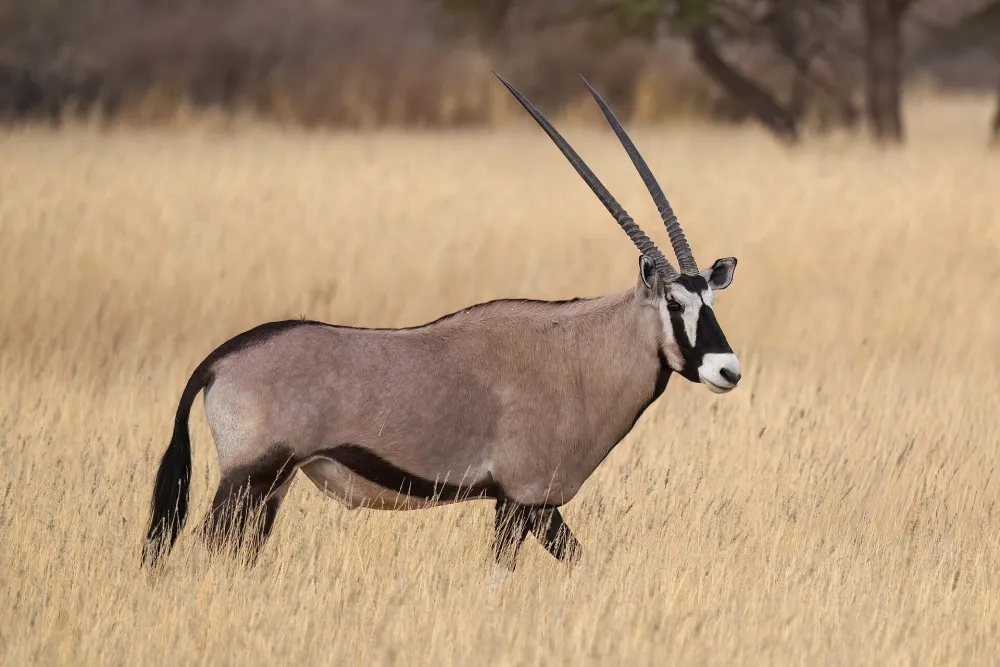
- Sundowner drive. An open vehicle takes you through the dune streets in the late afternoon, looking for oryx, springbok, red hartebeest, blue wildebeest, eland, zebra, ostrich and, on many properties, giraffe, and ends on a dune crest with a drink while the sand turns from orange to crimson. Predators are few on fenced ranches; this is about antelope, landscape and light.
- Morning walk. In the cool hour after sunrise the sand is a newspaper of tracks: beetle, gecko, mongoose, porcupine, jackal. Guides explain how plants such as the tsamma melon and the gemsbok cucumber store water, and why a camel thorn pod matters to almost everything.
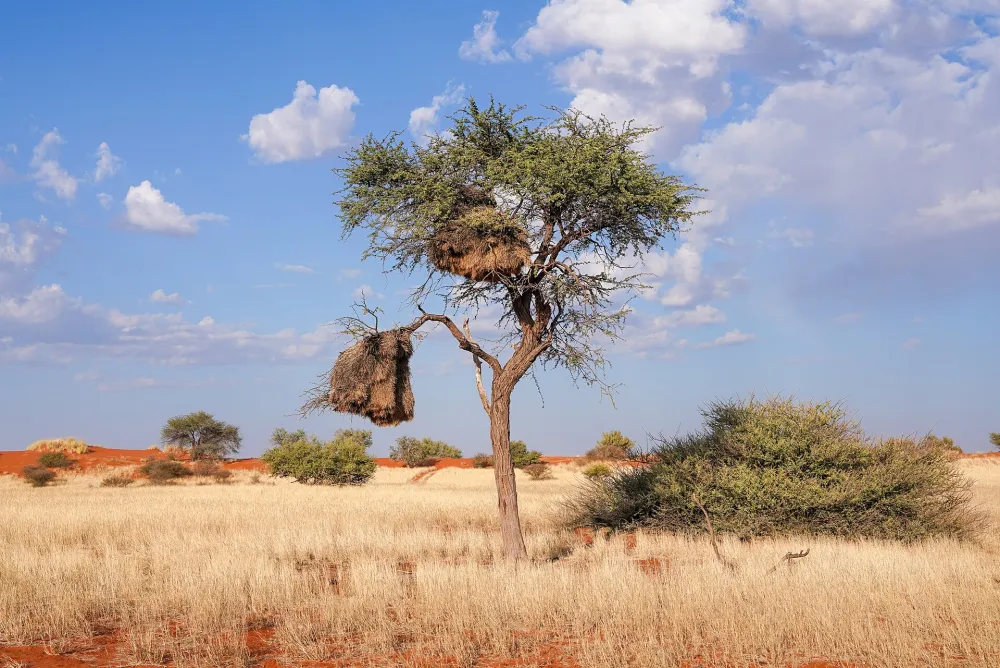
- Sociable weavers. The haystack-sized communal nests of these small birds weigh down camel thorns and telephone poles all over the south. One nest can house hundreds of birds for decades, with pygmy falcons as lodgers.
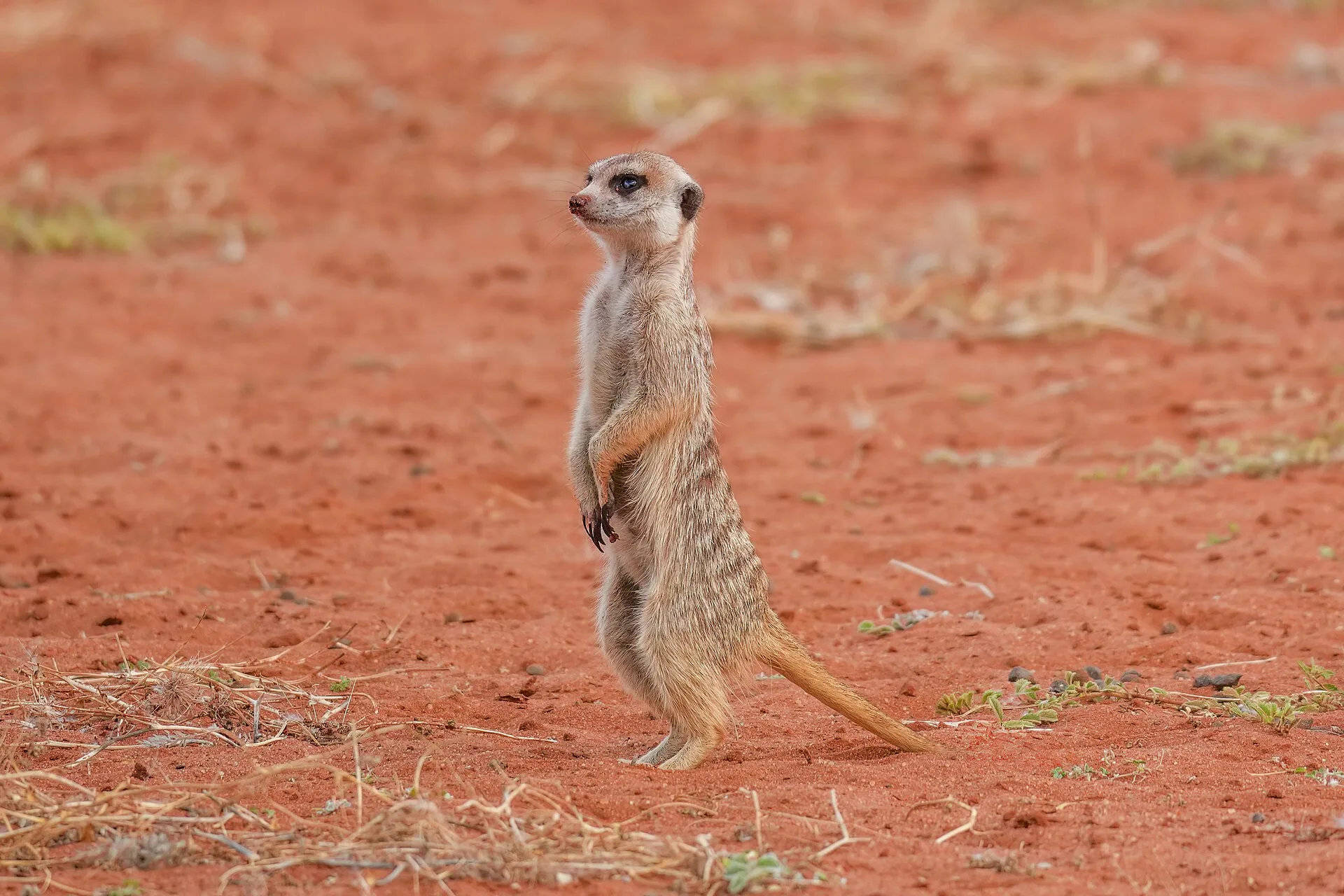
- Meerkats. A few lodges and farms have colonies that are used to people, and you can watch them emerge at sunrise, warm their bellies and post a sentry. Ask when booking; wild meerkats elsewhere are shy.
- Night sky. With no town for 50 km and dry winter air, the stars are superb. Some lodges offer a guided look at the southern constellations.
Some ranches also keep rescued cheetahs or other carnivores that cannot be released. Standards vary. A good operation will tell you plainly where the animals came from, will not let visitors handle them and does not breed them for display.
Walking with San guides
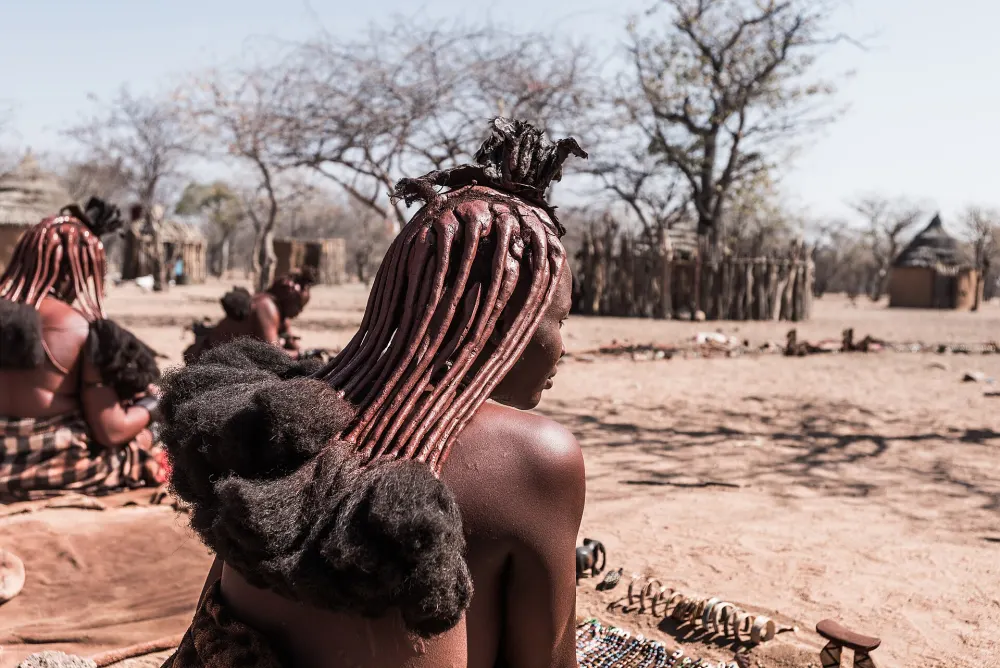
The San are the descendants of the hunter-gatherers who lived across southern Africa long before any other people arrived, and the Kalahari is the region where their languages and knowledge survived longest. In Namibia most San now live in the north-east and east of the country, many in poverty and with little land of their own. In the southern Kalahari some lodges employ San guides, or work with San families living on or near the property, to lead short walks on which they show how to find water-bearing roots, set a snare, make fire and read tracks, and talk about how life has changed.
These walks can be a highlight or an awkward performance, and the difference lies in how they are run. Before you book, ask:
- Who are the guides, where do they live, and are they employees or partners of the lodge?
- How are they paid, and does a fee go to the community as well as the individuals?
- Is traditional dress their choice for the walk? (Often it is, as a matter of pride and of work; nobody lives in skins.)
- Is there time to talk, with translation, or is it a demonstration only?
On the walk, ask before taking photographs, do not treat people as scenery, and buy crafts directly from the makers if they are offered. Use the name a group uses for itself where you know it; “San” is the accepted general term in Namibia, and “Bushman” is considered derogatory by many, though some individuals use it of themselves. For the wider picture, including the community-run “living museums” in the north-east, see culture and peoples of Namibia.
A similar experience is available as a day outing from Windhoek, and there are multi-day camping tours to San and Ovaherero communities in the east.

Windhoek: bushman walk with the San
A guided walk on which San guides show tracking, plant knowledge and fire-making. Ask how the guides are paid and who runs the visit.
Check availabilityBook via GetYourGuide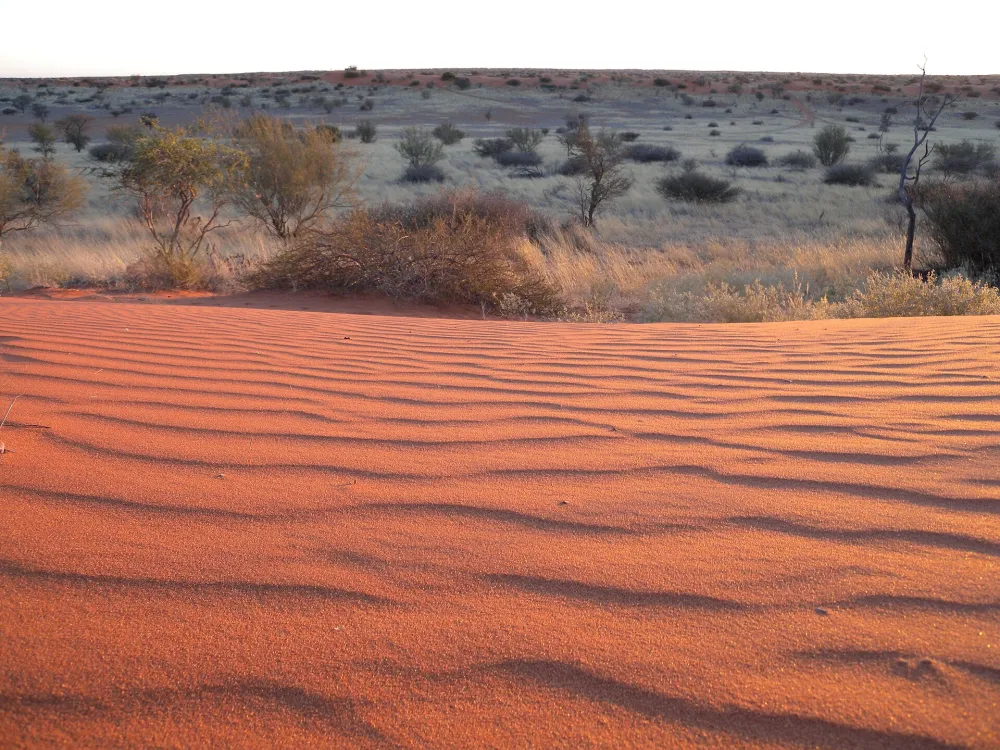
Namibia: Herero and San 3-day camping tour
Three days of camping in eastern Namibia with visits to Ovaherero and San communities.
Check availabilityBook via GetYourGuideTour listings are on GetYourGuide. Prices, dates and cancellation terms are shown live on each listing and can change; NamibiaSafaris.com may earn a commission at no extra cost to you.
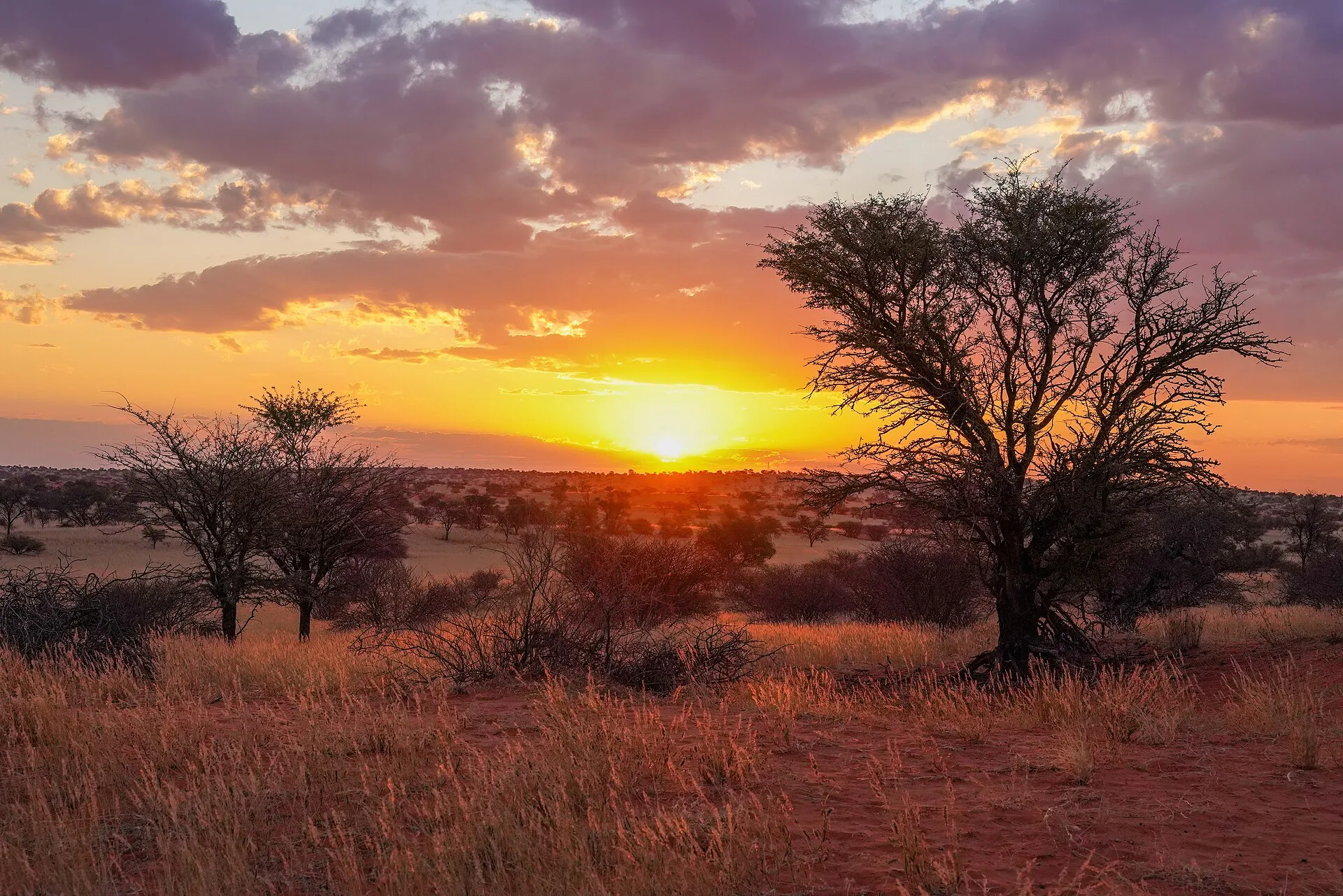
Where to stay
All of these are reached from the B1 in under an hour; most serve dinner at a fixed time, so arrive by late afternoon in time for the sundowner drive.
- North-east of Mariental: Gondwana Kalahari Anib Lodge, about 30 km from town on the C20, is the large, dependable choice, with two pools, a restaurant, game drives and marked walking trails; its Camping2Go tents nearby are furnished safari tents with private bathroom and kitchenette for self-caterers.
- North of Mariental: Bagatelle Kalahari Game Ranch, on the D1268, has chalets with wide views over the dunes, plus garden rooms, a restaurant with a wine cellar, a pool and a spa.
- Near Mariental: Lapa Lange Game Lodge is built around a waterhole that game comes to drink at, with a pool, a restaurant and game drives.
- Stampriet: Gondwana Kalahari Farmhouse is a green surprise: cottage-style chalets in a palm-lined garden watered by the artesian basin, with a restaurant and pool, on the edge of the dune country.
- In town: Mariental has guesthouses for travellers who only need a bed on the long haul south; search the town on Booking.com.
Further north, the eastern Kalahari around Gobabis, on the Trans-Kalahari Highway to Botswana, has its own guest farms; Africa Awaits Lodge and Safaris is a well-reviewed stop on that route (Booking.com guest score 9.4, as checked in November 2026).
Gondwana Kalahari Anib Lodge
KalahariIn the Kalahari near Mariental: air-conditioned rooms with patios, two pools, a restaurant and game drives.
8.6Booking.com guest score · as checked in November 2026
See on Booking.comGondwana Kalahari Anib Camping2Go
KalahariPre-erected tents with private bathroom, terrace and kitchenette, 30 km east of Mariental.
9.0Booking.com guest score · as checked in November 2026
See on Booking.comBagatelle Kalahari Game Ranch
KalahariChalets with dune views and garden rooms among the red dunes, with restaurant, pool and spa.
9.1Booking.com guest score · as checked in November 2026
See on Booking.comLapa Lange Game Lodge
KalahariGame lodge near Mariental built around a waterhole, with pool, restaurant and game drives.
9.2Booking.com guest score · as checked in November 2026
See on Booking.comGondwana Kalahari Farmhouse
KalahariCottage-style chalets in a palm-lined garden at Stampriet, with restaurant and pool.
9.0Booking.com guest score · as checked in November 2026
See on Booking.comAfrica Awaits Lodge and Safaris
KalahariLodge on a farm near Gobabis with two pools, restaurant and bar.
9.4Booking.com guest score · as checked in November 2026
See on Booking.comSee all stays in Kalahari on Booking.com
Accommodation links go to Booking.com, where you see live prices and availability. We do not list prices because they change daily; NamibiaSafaris.com may earn a commission.
Fitting it into a route
- First night of a southern loop. Windhoek to the Mariental lodges is 270–300 km, nearly all on the tarred B1: an easy first day in a new vehicle. Next day continue to Keetmanshoop’s quiver trees and the Fish River Canyon.
- Last night before flying home. Coming up from the south or from Sossusvlei via Maltahöhe, a Kalahari lodge leaves a three-hour tar drive to Windhoek or the airport on the final morning.
- On the way to the Kgalagadi. From Stampriet and Gochas the C15 follows the Auob valley to the Mata-Mata border post into South Africa’s side of the Kgalagadi Transfrontier Park. The post is a tourist access point with its own conditions, including proof of a booking of at least two nights inside the park; check current rules with SANParks before relying on it.
- Hardap. The Hardap Dam, 22 km north-west of Mariental, is Namibia’s second-largest reservoir, with a game park around it (pelicans, fish eagles, and antelope on the plains; park fee N$200 per foreign adult from 1 April 2026) and an NWR resort.
Tours from Windhoek to the far south usually break the journey in the Kalahari on the way down. Day-by-day routes are in Namibia itineraries.
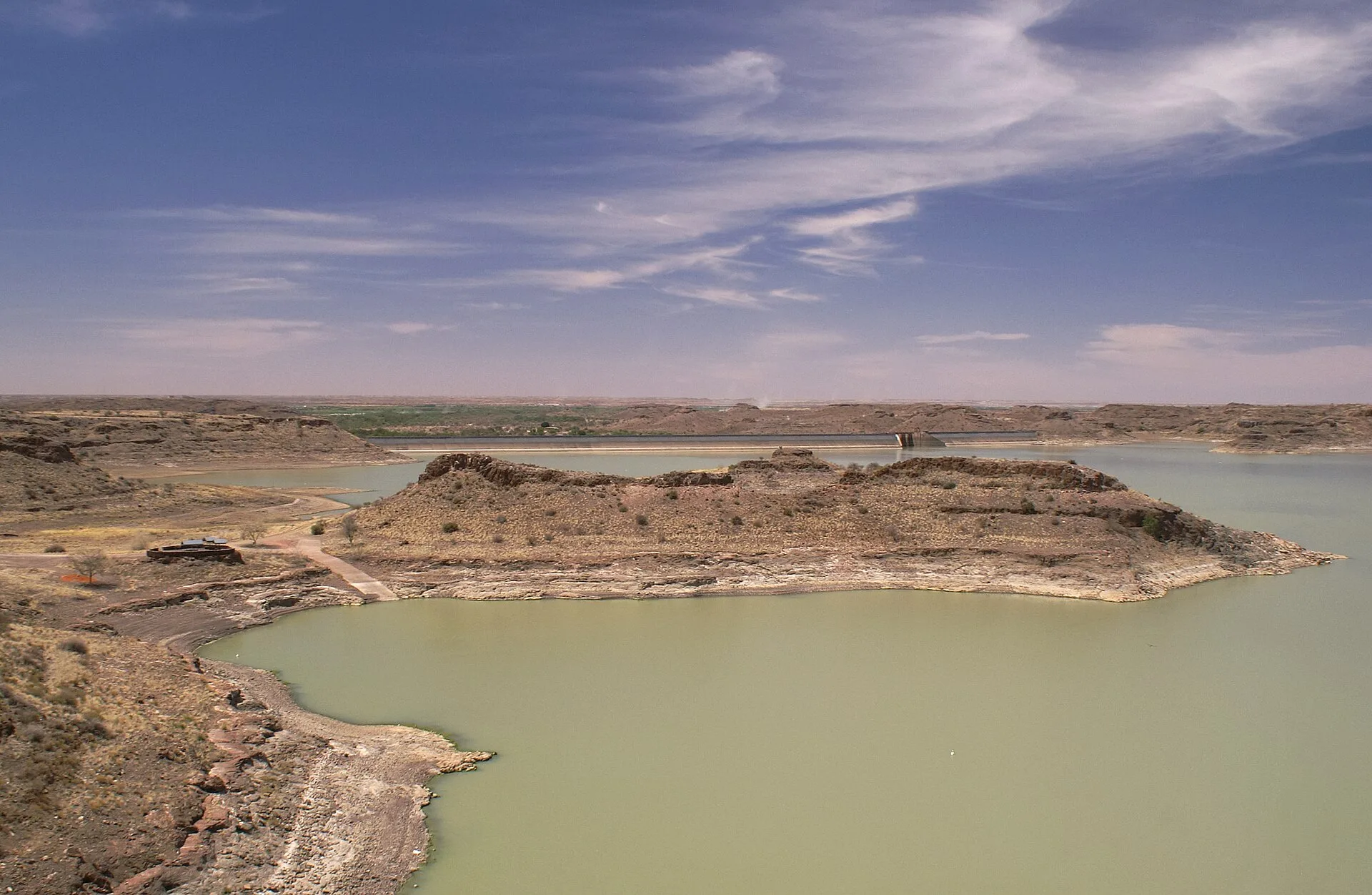
Hardap Dam near Mariental, on the Fish River.
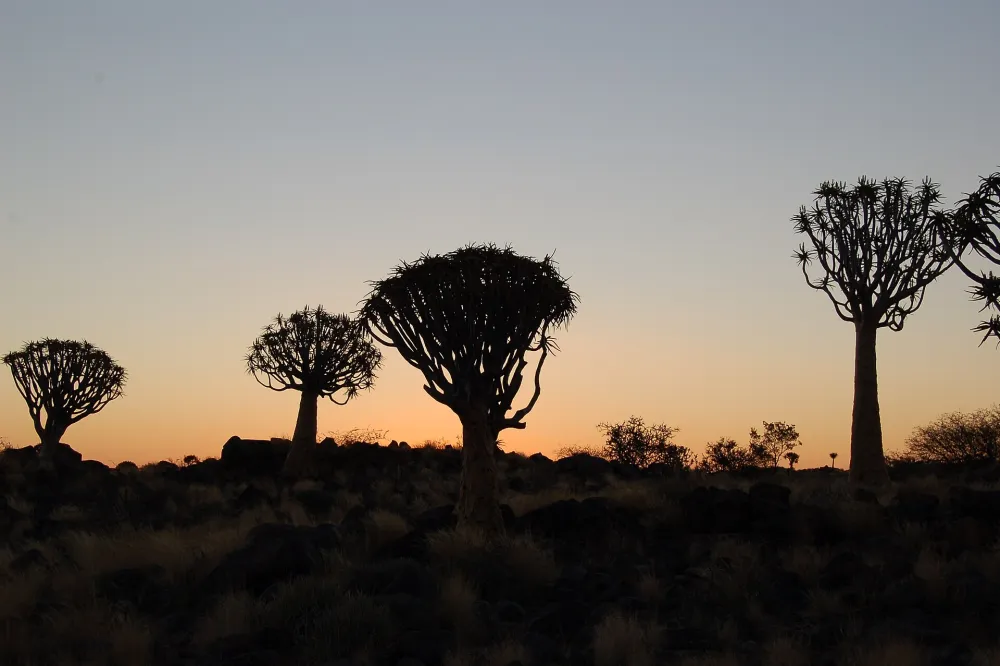
Windhoek: 3-day Fish River Canyon and Quiver Tree Forest guided tour
The far south without driving yourself: down the B1 to Keetmanshoop’s quiver trees and on to the canyon viewpoints.
Check availabilityBook via GetYourGuideTour listings are on GetYourGuide. Prices, dates and cancellation terms are shown live on each listing and can change; NamibiaSafaris.com may earn a commission at no extra cost to you.
When to go
May to September brings clear, mild days of 20–25 °C and very cold nights; frost on the dunes at sunrise is common in June and July, and open-vehicle drives need a thick jacket, hat and gloves. Grass is blond and short, so animals are easy to see. October and November are hot and dry. From December to April thunderstorms build in the afternoons, temperatures reach 35–40 °C, and, if the rains are good, the dunes turn green and yellow devil’s-thorn flowers carpet the streets; many antelope calve at this time and migrant birds are present. Storms can briefly flood gravel roads; ask the lodge about conditions before setting out.
Frequently asked questions
Where is the Kalahari in Namibia?
Along the eastern side of the country. The most visited part is the red-dune belt east and north-east of Mariental and around Stampriet and Gochas, about 270–330 km south-east of Windhoek. The Kalahari sands continue north through Gobabis to the Botswana border and beyond.
Is the Kalahari worth visiting if you are going to Sossusvlei?
Yes, if it fits your route. The landscapes are quite different: vegetated red dunes with plenty of antelope and birds, compared with the huge bare dunes of the Namib. It works best as a first or last night on a southern loop.
How long should you stay?
One night gives you a sundowner drive and a morning walk, which is the essence. Two nights suits travellers who want to slow down, walk the trails and add a San-guided walk or meerkat visit.
Can you see meerkats in the Kalahari?
Yes, but reliably only where a colony is habituated to people, which a few lodges and farms have. Ask before you book. Elsewhere you may spot them on a drive, but they keep their distance.
Are there lions in the Namibian Kalahari?
Not on the fenced game ranches around Mariental and Stampriet. Kalahari lions live in the Kgalagadi Transfrontier Park across the border in South Africa and Botswana.
Do you need a 4x4?
No. The B1 and the road to Stampriet are tarred, and the lodge access roads are maintained gravel suitable for an ordinary car. Lodge drives on the dunes are in their own vehicles.
Sources and official information
Facts were checked against these official sources in November 2026. Park fees, gate times, visa rules and timetables change, so confirm before you go.
- lac.org.na
- nwr.com.na
- sanparks.org
- en.wikipedia.org
- en.wikipedia.org
- en.wikipedia.org
- en.wikipedia.org
- nacso.org.na
NamibiaSafaris.com is an independent guide, not the official site of any tour operator, lodge, Namibia Wildlife Resorts or the Namibian government. Some links are affiliate links: tours go to GetYourGuide and accommodation goes to Booking.com, and we may earn a commission at no extra cost to you.