In short
- Money: Namibian dollar (N$, NAD), pegged 1:1 to the South African rand, which is also accepted everywhere. Cards work in towns and lodges; carry cash for remote fuel, campsites, markets and tips.
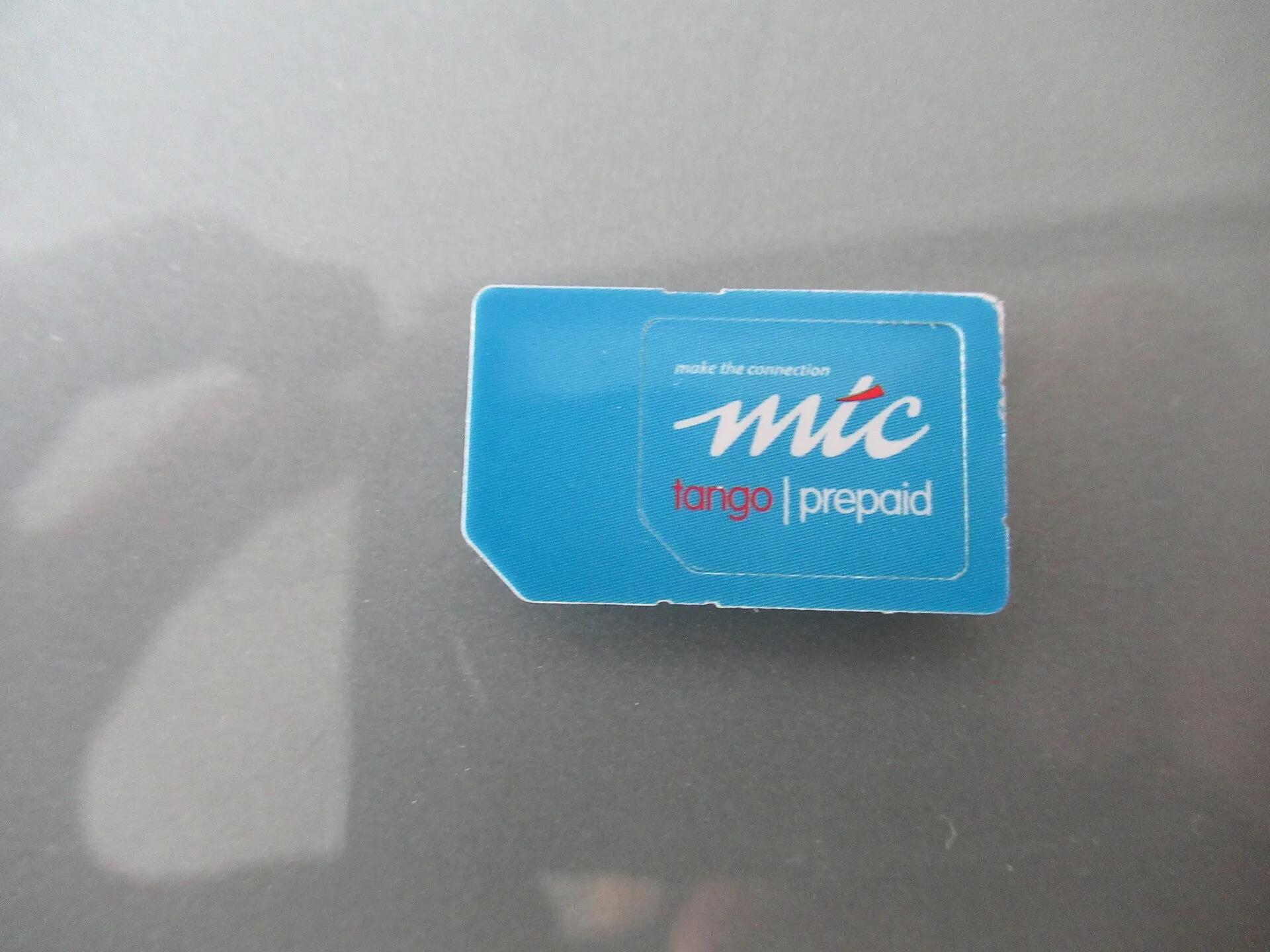
- Connectivity: buy a local SIM (MTC has the widest coverage) with your passport at the airport or in town. Expect signal in towns and along much of the tar, and none in between.
- Power: 220–240 V, 50 Hz; South African three-round-pin sockets (type M, some type D).
- Time: UTC+2 all year, with no daylight saving. Language: English is the official language; Afrikaans and German are widely understood in tourism.
- Public holidays 2026–27 are listed below; banks and many shops close, and campsites near towns fill.
Namibia at a glance
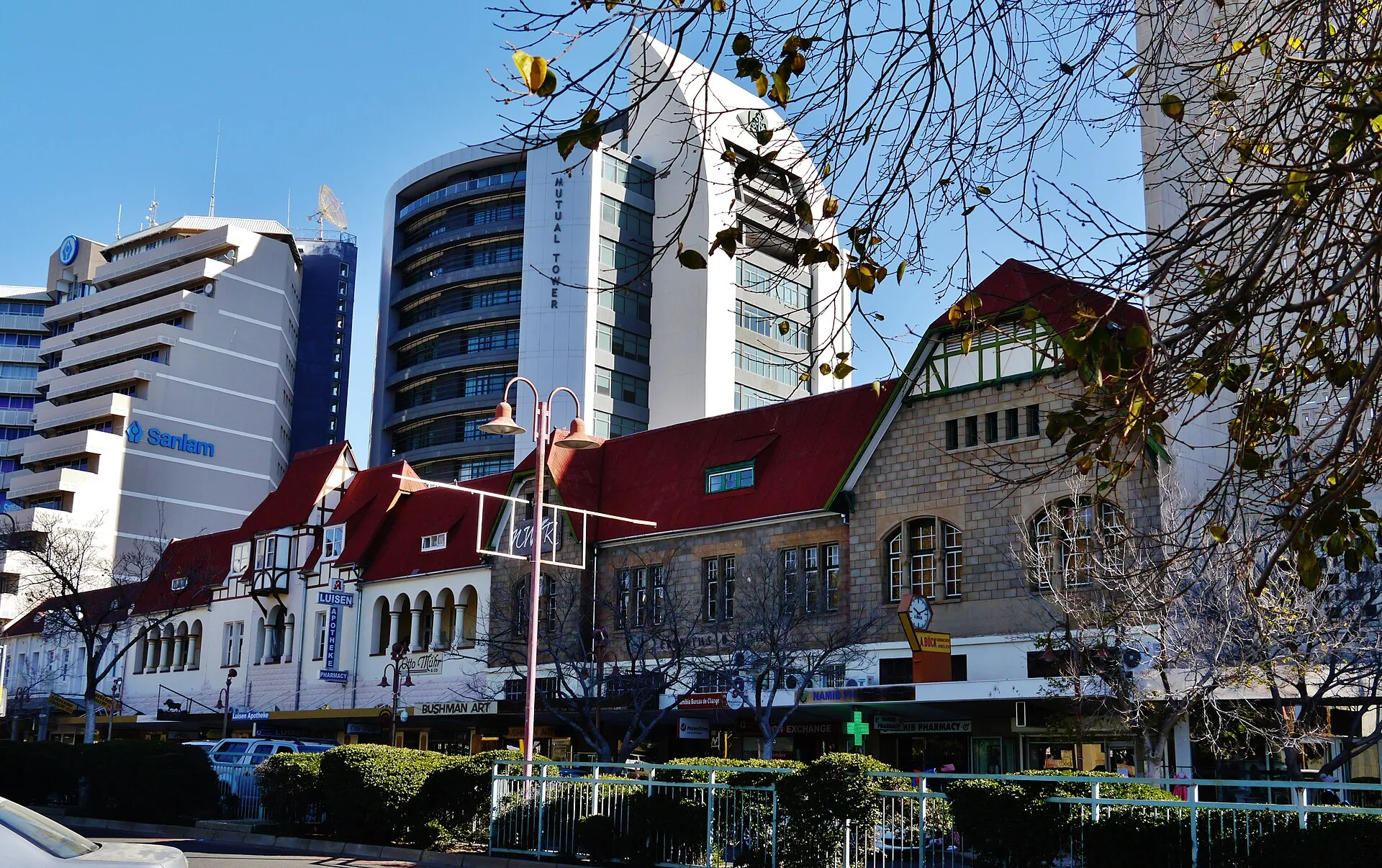
Namibia is an easy country to travel in: English is spoken wherever visitors go, the banking system and supermarkets are those of South Africa, and things generally work. What catches people out is not complexity but distance — the next ATM, pharmacy or phone signal may be 200 km away. Most of this page comes down to doing things in town before you leave it.
- Capital
- Windhoek
- Population
- 3,022,401 (census of 24 September 2023)
- Area
- ≈ 824,000 km²; about 3.7 people per km²
- Currency
- Namibian dollar (N$) = 1 South African rand
- Official language
- English
- Time zone
- Central Africa Time, UTC+2, all year
- Electricity
- 220–240 V, 50 Hz, plug types M and D
- Dialling code
- +264
- Driving
- On the left
- Police emergency
- 10111
Money: dollars, rand, cards and cash
The Namibian dollar is tied one-to-one to the South African rand through the Common Monetary Area, and rand notes and coins circulate freely alongside it; you will receive both in change. The reverse is not true — Namibian dollars are not accepted in South Africa and are hard to exchange abroad — so use them up before you leave, or ask for rand when you withdraw your last cash. In mid-November 2026 one US dollar bought about N$16.60; check a live rate for the euro and pound.
- Cards. Visa and Mastercard are accepted at lodges, hotels, restaurants, supermarkets, national-park offices and most fuel stations. American Express is much less widely taken. Contactless payment is common in towns.
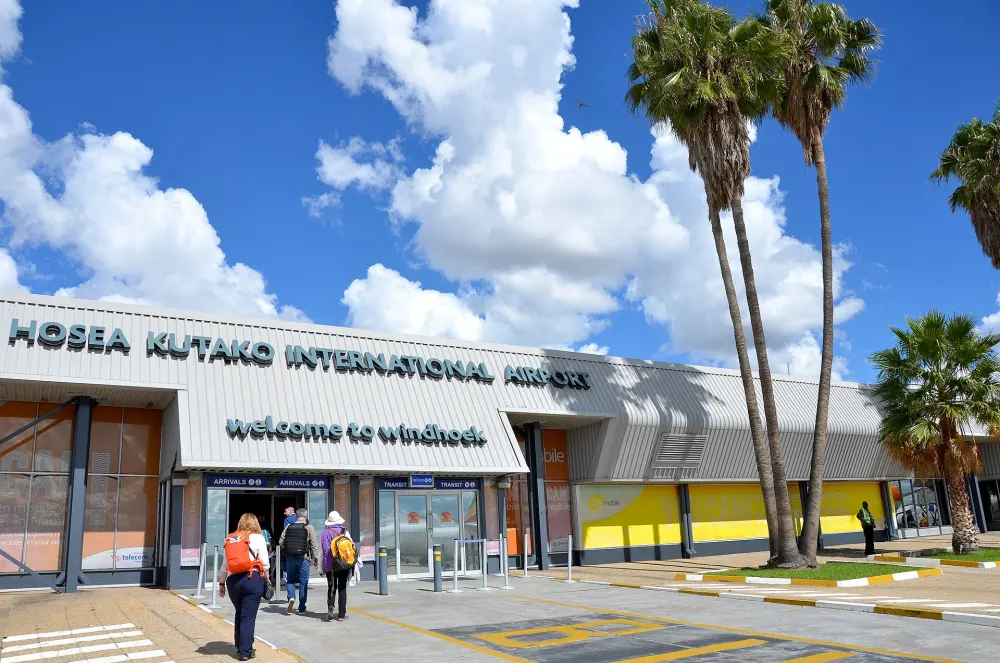
- ATMs. All towns have machines belonging to the main banks — FNB, Bank Windhoek, Standard Bank and Nedbank — and there are ATMs at Hosea Kutako airport. They dispense Namibian dollars. Withdraw in daylight, inside a bank or shopping centre where possible, and decline offers of “help”.
- Cash you will need. Community-run campsites and heritage sites, craft markets, roadside stalls, tips, car guards, and the occasional fuel pump whose card terminal is down. Keep enough for a full tank and two nights’ camping.
- Exchange. Banks and bureaux in Windhoek, Swakopmund and at the airport change major currencies; you will need your passport. There is rarely any reason to bring large amounts of foreign cash.
- Tell your bank you are travelling, and bring two cards. A card swallowed in Opuwo is not replaced before you fly home.
Keep your card in sight when paying: the UK Foreign Office notes cases of card skimming at some hotels and lodges. What things cost is set out in safari costs.
Tipping
Tipping is customary and wages in tourism are modest, so it matters. It is also discretionary; nobody will chase you.
- Restaurants: about 10 % if service is not already on the bill.
- Fuel attendants, who fill the tank, check oil and tyres and wash the windscreen: a few dollars.
- Car guards in town car parks, identifiable by a bib: a few dollars on your return.
- Porters: a small note per bag.
- Lodges: most have a communal staff tip box, shared among everyone including those you never see, and suggest tipping your guide separately. Lodges usually print a guideline in the room information; follow it.
- Guides on multi-day safaris: tipped at the end of the trip, per traveller per day; the operator’s pre-departure notes give the going rate.
Tip in Namibian dollars or rand. Do not give money or sweets to children who approach the car, however kindly meant; see culture and etiquette.
SIM cards, eSIMs and coverage
Two things are true of mobile coverage in Namibia: it is better than visitors expect in towns and along the main tar roads, and it is absent across most of the map. Plan to be offline for hours each day and for whole days in Damaraland, Kaokoland and the Namib.
- Networks. MTC is the largest operator with the widest coverage; TN Mobile (Telecom Namibia) is the alternative.
- Buying a SIM. Prepaid SIM cards and data bundles are sold at operator kiosks in the arrivals hall at Hosea Kutako airport and at shops in every town. Namibia requires SIM cards to be registered to an identified person, so take your passport; the shop does the registration. Bundles are cheap by European standards.
- eSIM. Travel eSIMs bought online work by roaming on a Namibian network and save the kiosk queue, usually at a higher price per gigabyte. Check that the provider lists Namibia specifically, not just “Africa”.
- Roaming on a home contract is expensive from most countries; check before you switch data on.
- Wi-Fi is offered by most lodges and guesthouses, often only in the main building and often slow, since many run on satellite or long-range links. Treat it as a way to send messages, not to stream.
- Where there is nothing. For remote routes, hire a satellite phone or messenger with the vehicle; see the self-drive guide.
Download offline maps, your booking confirmations and this guide’s pages before leaving Windhoek.
Electricity and plugs
Mains power is 220–240 V at 50 Hz. The standard socket is the South African type M — three large round pins in a triangle — with the smaller three-pin type D occasionally found in older buildings. Some lodges fit additional European two-pin sockets or USB ports by the bed, but an adaptor is the only safe assumption; they are sold at the airport, in supermarkets and in camping shops. Appliances from North America need to be dual-voltage (most phone and camera chargers are; check the label for “100–240 V”).
Many remote lodges and camps run on solar power with battery storage. That means lights and charging are available but hairdryers, kettles and other high-draw appliances may not be, and a few camps provide charging only in the main area. Campsites vary: larger ones have a power point at each pitch, bush camps have none, so charge from the vehicle while you drive.
Language
English has been the sole official language since independence in 1990, chosen as a neutral language in a country with more than a dozen. It is the language of government, schools, road signs and tourism, and you will be understood everywhere on the visitor circuit. It is the first language of only a small minority.
Afrikaans remains the most widely shared second language, especially in the centre and south. German is spoken by a small community descended from colonial-era settlers and is heard in Swakopmund, Windhoek and on many guest farms. The most widely spoken home languages are the Oshiwambo group in the north, followed by Khoekhoegowab (Nama/Damara), the Kavango languages, Otjiherero and Silozi; the peoples and languages are described in culture.
A greeting goes a long way. In any language, start an exchange with “Good morning, how are you?” before asking for what you want; launching straight into a request is considered abrupt.
Time zone and daylight
Namibia keeps Central Africa Time, UTC+2, throughout the year. It abolished its seasonal clock change in 2017, so it now matches South Africa and Botswana in every month. It is level with Central European Summer Time, one hour ahead of Central Europe in the northern winter, and two hours ahead of the UK in winter and one in summer.
Daylight is the planning constraint. Around the June solstice the sun rises at about 07:30 and sets at about 18:15 in Windhoek; around the December solstice at about 06:05 and 19:35 (local time). National-park gates and rest-camp gates open at sunrise and close at sunset, and the times are posted daily at each gate.
Public holidays 2026 and 2027
On public holidays government offices, banks and many shops close; supermarkets in towns usually open for reduced hours, and fuel stations, lodges and national parks operate normally. Under the Public Holidays Act, when a holiday falls on a Sunday the following Monday is also a holiday. Genocide Remembrance Day, commemorating the victims of the 1904–1908 genocide of the Ovaherero and Nama, was observed as a national holiday for the first time on 28 May 2025.
| Holiday | 2026 | 2027 |
|---|---|---|
| New Year’s Day | Thursday 1 January | Friday 1 January |
| Independence Day | Saturday 21 March | Sunday 21 March (Monday 22 March also a holiday) |
| Good Friday | Friday 3 April | Friday 26 March |
| Easter Monday | Monday 6 April | Monday 29 March |
| Workers’ Day | Friday 1 May | Saturday 1 May |
| Cassinga Day | Monday 4 May | Tuesday 4 May |
| Ascension Day | Thursday 14 May | Thursday 6 May |
| Africa Day | Monday 25 May | Tuesday 25 May |
| Genocide Remembrance Day | Thursday 28 May | Friday 28 May |
| Heroes’ Day | Wednesday 26 August | Thursday 26 August |
| Human Rights Day / Namibian Women’s Day | Thursday 10 December | Friday 10 December |
| Christmas Day | Friday 25 December | Saturday 25 December |
| Family Day | Saturday 26 December | Sunday 26 December (Monday 27 December also a holiday) |
Opening hours and shopping
- Shops: typically Monday to Friday 08:00 or 09:00 to 17:00 or 17:30, Saturday until about 13:00, closed on Sunday. Shopping centres in Windhoek and Swakopmund keep longer hours.
- Supermarkets (Spar, Checkers, Pick n Pay, Woermann Brock, OK): open daily in towns, with shorter hours on Sundays and holidays.
- Banks: weekday mornings to mid-afternoon and Saturday mornings.
- Alcohol: supermarkets and bottle stores stop selling alcohol at about 13:00 on Saturdays and do not sell it on Sundays or public holidays under licensing rules, so buy wine and beer for the weekend by Friday. Lodge bars and restaurants are unaffected.
- Fuel stations: long hours on the tar, many 24-hour; daylight hours at remote stops.
- Small towns close for lunch, roughly 13:00 to 14:00.
Stock up in Windhoek, Swakopmund, Otjiwarongo, Outjo or Tsumeb. The shops inside national-park rest camps and at desert fuel stops sell cold drinks, firewood, tinned food and little else.
Water, toilets and rubbish
Town tap water is treated and generally safe to drink; at lodges ask on arrival, since supplies come from boreholes of varying taste and quality. Namibia is the driest country south of the Sahara and Windhoek recycles its waste water into drinking water; take short showers and reuse towels without being asked.
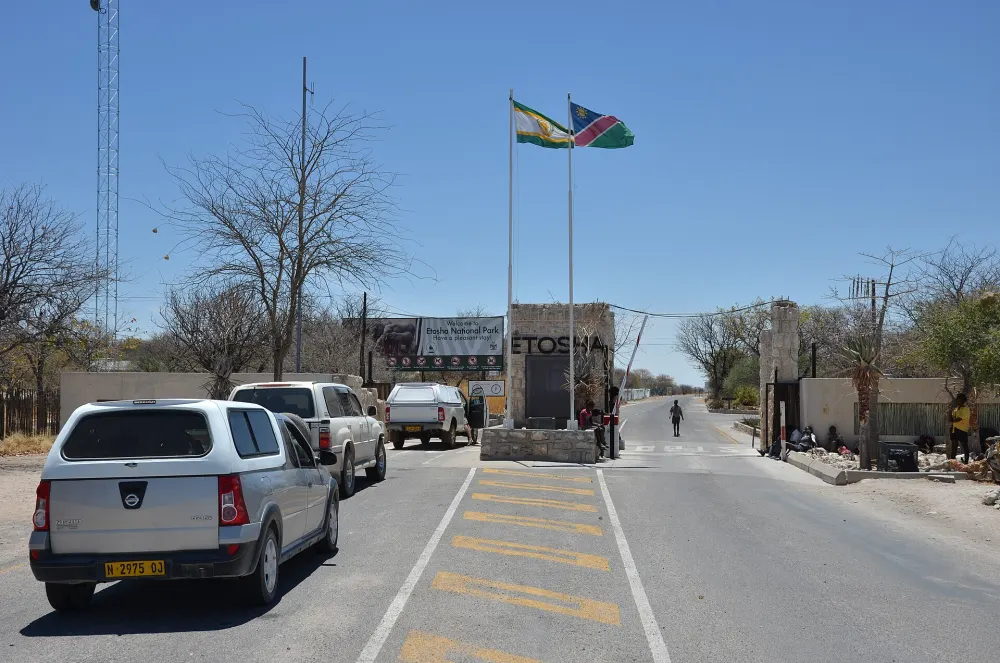
Clean toilets are found at fuel stations and at the fenced picnic sites inside Etosha. On long gravel stages there is nothing: go well off the road, bury waste and carry paper out in a bag. Take all rubbish to a town or camp bin — baboons and jackals empty anything left at a picnic spot.
Photography, drones and permits
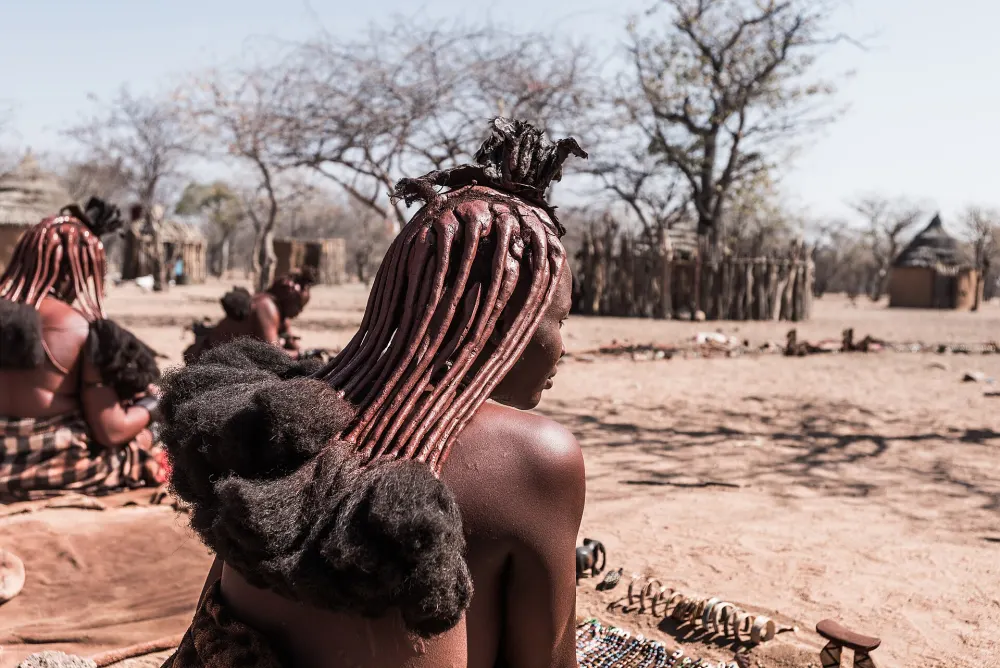
Photograph landscapes and wildlife freely. Ask before photographing people, and expect to pay a fee where a community has organised visits on that basis; see culture. Do not photograph State House, military or police installations, or border posts.
Flying a drone requires authorisation from the Namibia Civil Aviation Authority, and drones are prohibited in national parks without a specific permit from the environment ministry. Commercial filming and photography need a permit from the Namibia Film Commission. The photography guide has more.
Useful contacts
Health preparation and what to do in an emergency are covered in health and safety.
- Police emergency
- 10111
- Ambulance and fire, Windhoek
- 061 211 111
- Tourist Protection Unit, Windhoek
- +264 61 209 3111
- Visa enquiries (MHAISS)
- +264 81 951 0064 · eservices.mhaiss.gov.na
- National parks (MEFT)
- meft.gov.na
- Park rest camps (Namibia Wildlife Resorts)
- nwr.com.na
- Namibia Tourism Board
- namibiatourism.com.na
- This guide
- [email protected]
Frequently asked questions
What currency is used in Namibia?
The Namibian dollar (N$ or NAD), which is pegged one-to-one to the South African rand. Rand are accepted everywhere in Namibia at par, but Namibian dollars are not accepted in South Africa.
Can I use credit cards in Namibia?
Yes, Visa and Mastercard are widely accepted at lodges, restaurants, supermarkets and most fuel stations. Carry cash for community campsites, markets, tips and as a fallback at remote fuel pumps.
Is there mobile coverage and internet in Namibia?
In towns, at most lodges and along much of the tarred road network, yes. Large areas between towns have no signal at all. A local prepaid SIM, bought with your passport, is the cheapest way to get data.
What language do they speak in Namibia?
English is the official language and is used throughout tourism. Afrikaans is widely spoken as a common second language, German is heard in several towns, and Oshiwambo is the most common home language.
What time zone is Namibia in?
UTC+2 all year. Namibia abolished its winter clock change in 2017 and now keeps the same time as South Africa and Botswana in every season.
How much should I tip in Namibia?
About 10 % in restaurants if service is not included, a few Namibian dollars for fuel attendants and car guards, and a daily amount for lodge staff and guides in line with the guideline each lodge or tour operator provides.
Sources and official information
Facts were checked against these official sources in November 2026. Park fees, gate times, visa rules and timetables change, so confirm before you go.
NamibiaSafaris.com is an independent guide, not the official site of any tour operator, lodge, Namibia Wildlife Resorts or the Namibian government. Some links are affiliate links: tours go to GetYourGuide and accommodation goes to Booking.com, and we may earn a commission at no extra cost to you.